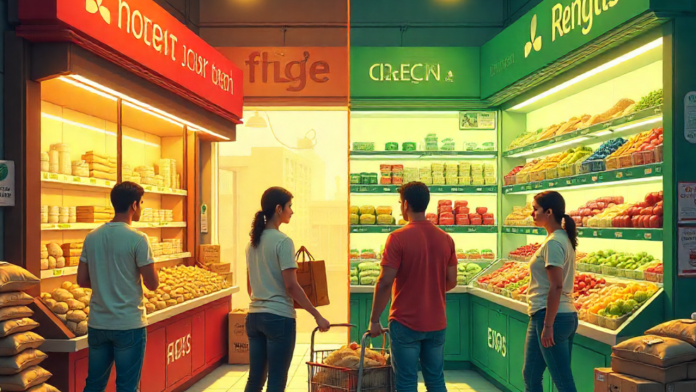
Walk down any Indian street and you’ll notice two kinds of shops that often blur into each other: the grocery store and the general store. Both are neighborhood essentials, but they aren’t the same. While people casually use the terms interchangeably, the difference lies in the products they sell, the business model they follow, and the way they serve customer needs.
Grocery Store: The Food & Essentials Specialist
A grocery store, whether it’s a tiny kirana or a larger mini-mart, is primarily focused on edible and household essentials. Think rice, wheat, pulses, oil, packaged snacks, dairy, bread, fruits, vegetables, spices, and cleaning items like detergents or soaps. Their strength is repeat purchases—items people buy daily or weekly. Grocery stores run on thin margins (3–12% depending on product categories), but high frequency makes up for it. In towns and cities, kiranas still dominate because of their personal touch—home delivery, credit (udhaar), and quick access.
General Store: The Jack of All Trades
A general store, on the other hand, is wider in scope but shallower in necessity. It stocks a variety of products that go beyond daily food needs—stationery, toys, plastic goods, hardware, cosmetics, seasonal items, and sometimes even clothing. A general store focuses on diversity over frequency. Customers might not come daily, but when they need a school notebook, a bucket, or a comb, the general store becomes the go-to. Margins are usually higher (10–30%) since many of these products aren’t commoditized like rice or flour.
Why the Confusion?
In smaller towns, many shopkeepers blur the line, mixing grocery staples with general merchandise to maximize earnings from limited retail space. That’s why you might find a packet of Maggi, a nail cutter, and a birthday candle under the same roof. Big chains, however, keep the distinction sharper—Reliance Fresh and More lean towards grocery, while local bazaars or mom-and-pop general stores cater to miscellaneous needs.
Which Model Works Better?
If you’re planning a business, the choice depends on your location and target audience. Grocery stores are safer, with constant cash flow, but they demand daily restocking and tight inventory control. General stores have less pressure on daily sales but require understanding trends and customer demand beyond food essentials. Many successful small-town shops operate as a hybrid, blending the reliability of groceries with the higher-margin products of general retail.
The Bottom Line
A grocery store feeds households; a general store fills in the gaps of daily life. Both are indispensable, but their economics and customer pull work differently. For entrepreneurs, knowing the difference can help decide what to stock—and how to position the business for steady growth.