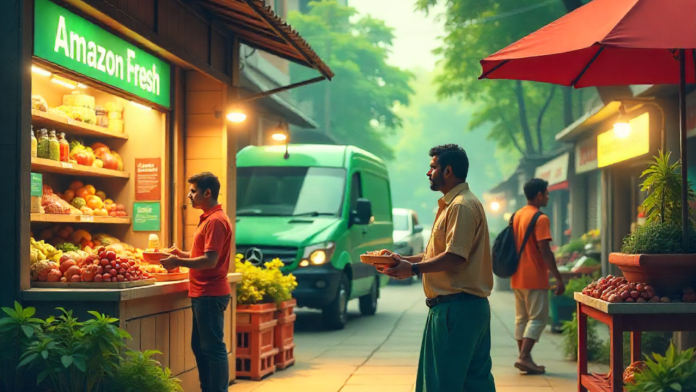
Step inside a mini grocery store in any Indian town, and you’ll see the real engine of the country’s retail economy. From dawn until late night, these compact outlets—often no bigger than 300–800 sq. ft.—keep households running with rice, wheat, pulses, soaps, snacks, and dairy stacked neatly on shelves. They may look small, but they operate on finely tuned systems built on trust, quick turnover, and razor-thin margins.
Core Operations: Daily Essentials and Fast Turnover
Mini grocery stores survive on volume, not margins. Staples like flour or oil move quickly, even with margins as low as 5–8%. Packaged foods, confectionery, and toiletries bring in higher margins (10–20%). The mix is carefully curated to ensure that cash keeps flowing every single day.
Most stores operate on a cash-and-carry model. Customers buy daily or weekly needs in small quantities, which means inventory moves fast, minimizing the risk of unsold stock.
Supplier and Credit Cycles
Owners typically source goods from wholesale markets, distributors, or company salesmen. Payment often happens in short credit cycles—anywhere from 7 to 21 days. This balance between credit received from suppliers and cash sales to customers is what keeps the mini grocery’s cash flow healthy.
Customer Relationships: The Real USP
Unlike supermarkets, mini grocery stores thrive on personal connections. Shopkeepers often:
- Extend short-term credit (udhaar) to trusted families.
- Offer home delivery via phone or WhatsApp orders.
- Remember customer preferences (brands, pack sizes).
This personal touch builds loyalty that big chains struggle to match.
Technology and Modern Shifts
Even small stores are modernizing. UPI payments and QR codes are now common, reducing the reliance on cash. Some owners use simple POS software to track sales and inventory. WhatsApp has become an informal ordering platform—customers send a list, and the shop delivers within hours.
Challenges of Mini Grocery Stores
Running a mini store isn’t without hurdles:
- Thin margins make profits highly dependent on volume.
- Competition from supermarkets and online players like Zepto or Blinkit is rising.
- Inventory management is tricky; stocking too much leads to waste, too little risks lost sales.
Yet, mini grocery stores remain resilient because they blend accessibility, trust, and convenience.
Why They Still Thrive
Despite the retail revolution, mini grocery stores continue to dominate in India, accounting for over 85% of the grocery market share. Their success lies in being hyperlocal—knowing their customers better than any app or supermarket. In towns and neighborhoods, these stores aren’t just businesses; they’re part of the community’s daily rhythm.
The Bottom Line
A mini grocery store operates on simplicity: fast-moving goods, personal customer service, and smart cash flow management. It may not have the scale of D-Mart or the technology of Amazon Fresh, but its neighborhood trust and adaptability make it one of the most resilient business models in India.
For aspiring entrepreneurs, understanding how these small stores function offers lessons in efficiency, customer loyalty, and survival in a highly competitive market.