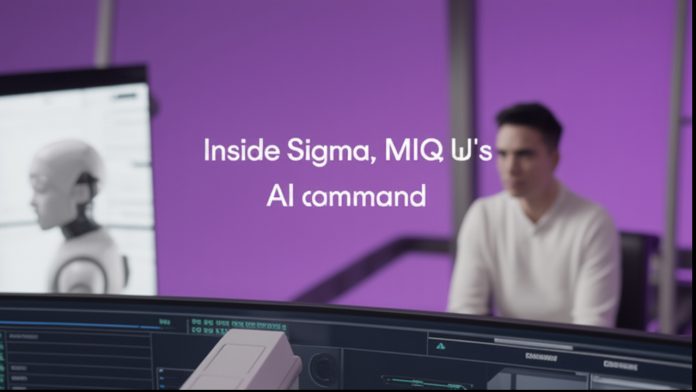
People say that AI can’t replace marketers because too much creativity is involved. That’s been the claim for years but things are changing now. On June 25, MiQ, a global programmatic media powerhouse, unveiled MiQ Sigma. It’s an AI-integrated advertising platform that might just redraw the entire map. It’s an AI-driven, full-stack command center for media planning, activation, and optimization.
Sigma taps into 300+ data sources. It crunches through over 700 trillion behavioral signals—like TV viewership, web browsing, and in-store purchases. Built from the inside out for programmatic, it’s engineered to give brands and agencies a brutal edge. It helps with faster planning, sharper targeting, and smarter spending in less time. Gurman Hundal, Global CEO and Co-Founder of MiQ, said it’s “the pinnacle” of 15 years of MiQ’s innovation. It’s the result of obsession, not iteration. He’s right, it’s not a product, it’s a system, built on open collaboration, raw data intelligence, and relentless focus on performance.
But is it Better Advertising or Just Faster Advertising?
On paper, MiQ Sigma is clean, efficient, and undeniably powerful. It runs on what MiQ calls a trinity architecture: data, tech, and placement. And from a performance marketing lens, it’s gold, but that’s just one side of the coin. If smooth advertising is reduced to cheaper clicks, smoother funnels, and predictive reach, then yes, Sigma is the future. But if “smooth” still includes creative unpredictability, cultural nuance, and gut-level emotional insight, then the future is looking shaky. Because AIs still don’t get timing, tone, and human weirdness. It can replicate and predict with precision. But it can’t do imagination, especially not when brand voice is at stake.
Another question: can Sigma optimize campaigns, work as a media planner, or be a trading desk operator? Now the human role is shifting from doing to prompting, from executing to overseeing. You don’t plan the media anymore, you instruct the machine. Yes, that frees up time, but it also alters control. The expertise gets absorbed by the system, and even the agency talent pool starts to look very different.
Well, there’s no denying that Sigma will simplify advertising. It will merge fragmented data into one clean intelligence layer, automate tedious workflows, and give marketers precision, scale, and speed. But it also risks a creative flattening, overdependence on historical data, and the exit of agency talent. Most importantly, a gradual erosion of human insight from consumer strategy. In short, Sigma is the future, but only if we drive it well. Otherwise, we’re just fast-forwarding into something empty.