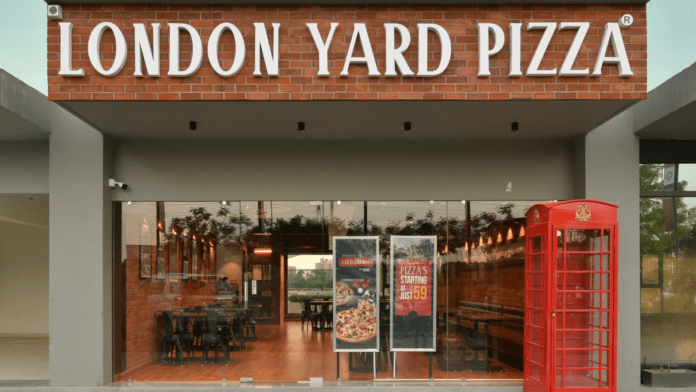
Cloud-kitchen brand London Yard Pizza, drawing inspiration from travel and a profound love for extraordinary cuisine, is poised for a significant entrance into Mumbai’s dynamic dining scene.
Spanning across more than 50 locations throughout India, the brand is embarking on an expansion into Maharashtra, unveiling their showstopper: the astonishing 30-inch Monster Pizza.
Anand Thakkar, Founder, London Yard Pizza, said, “London Yard Pizza is not merely about food; it is a homage to the art of pizza-making and a jubilation of the limitless creativity that the culinary world presents. Embark on this thrilling journey with us, where every bite narrates a tale of exploration, passion, and the relentless pursuit of excellence.”
At the heart of their allure lies their intricately crafted pizza. The dough, a true masterpiece, undergoes a 48-hour fermentation journey, yielding a celestial delicacy that distinguishes it. Showcasing the brand’s unwavering dedication to providing unparalleled taste sensations, their diverse array of pizzas caters to both vegetarians and non-vegetarians alike.
The selection for vegetarians features delectable options such as the smooth and enticing Cream Cheese Pizza, the bold and spicy Bhut Jholakia Pizza, and the refreshing ode to nature with the Farm Fresh Pizza, among several others. Non-vegetarian enthusiasts can indulge in the Hot Tandoor Pizza, a modern twist on tradition, or savor the lively spirit of a worldwide festivity with the London Fiesta Pizza. Redefined classics encompass the irresistible Chicken Tikka Pizza and the harmonious blend of flavors found in the Butter Chicken Pizza, just to highlight a couple.
“Each pizza creation is a canvas for us to infuse global inspirations with local flavours, resulting in a tantalising journey of taste. Our commitment to excellence drives us to craft pizzas that are not only visually stunning but also deliver an explosion of flavours with every bite,” added Chef Rahul Kokitkar, the culinary maestro at London Yard Pizza.
With an investment strategy ranging from INR 40 to INR 50 crore and an anticipated revenue between INR 135 to INR 150 crore, the brand has a vision of setting up 50 to 75 outlets throughout Maharashtra in the upcoming months. This initiative aims to extend the enchantment of their delightful pizzas to a broader audience.
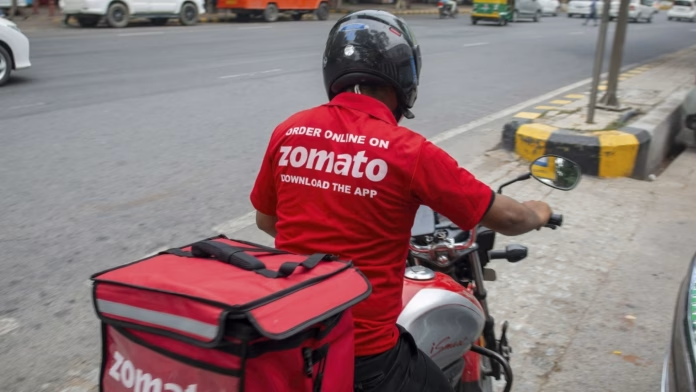
Zomato, the online platform for ordering and delivering food, announced a collaboration with Battery Smart on Monday. This partnership aims to offer Zomato’s delivery partners convenient access to battery-swapping services through the Battery Smart network.
Through this alliance, Zomato’s delivery associates will gain entry to Battery Smart’s extensive network comprising over 800 swap stations spread across more than 30 cities, as stated by the company.
Battery Smart offers battery swapping infrastructure tailored for electric two and three-wheelers.
Rinshul Chandra, Zomato COO, Food Ordering & Delivery Business, said “This association with Battery Smart adds further momentum to our commitment as our delivery partners can now leverage a vast and accessible network of battery swapping stations.”
He added that Zomato has pledged to achieve complete electric vehicle (EV) adoption by 2030 and has become a participant in the EV100 initiative led by the Climate Group.
Pulkit Khurana, Co-Founder of Battery Smart, stated that the partnership with Zomato enables both current and prospective delivery partners to actively participate in the electric vehicle revolution.
The statement highlighted that the food delivery market in India primarily relies on two-wheelers, presenting a significant potential to transition delivery fleets to electric vehicles. This shift would not only lead to cost savings but also promote sustainability.
The statement further noted that Battery Smart possesses an extensive array of battery swapping stations spanning Tier I, II, and III cities. This expansive network will empower Zomato’s delivery partners to facilitate environmentally-friendly deliveries.
GoodvedaHealth Labs Pvt Ltd, a pioneering Health Tech Startup, has made its official debut in the Indian market. The company brings forth groundbreaking health and wellness programs along with innovative supplement solutions designed to tackle the urgent issues of diabetes and obesity. With India facing an alarming surge in these persistent health challenges, Goodveda’s entrance offers a new and proactive stance on preventive healthcare.
Newly released statistics uncover a sobering reality: more than 77 million adults in India are grappling with diabetes, signifying a profoundly significant health concern. Furthermore, the prevalence of obesity has escalated to a distressing extent, affecting roughly 135 million individuals across the country.
The introduction of Goodveda into the market brings forth an array of meticulously designed health and wellness programs aimed at effectively addressing the complexities associated with diabetes and obesity. These programs are enhanced by customized strategies focused on achieving diabetes remission and obesity reversal, skillfully amalgamating modern scientific progress with the timeless insights of Ayurvedic traditions.
Abhishek Gaggneja, Founder and CEO of Goodveda Health Labs Pvt Ltd stated, “Our journey began with a mission to alleviate the burden of chronic diseases. By synergizing cutting-edge scientific progress with the time-honored wisdom of Ayurveda, our programs offer a transformative approach.”
Moreover, Goodveda envisions the launch of initiatives dedicated to Cardiac Health and Women’s Wellness, highlighting its steadfast dedication to all-encompassing health solutions. At the core of Goodveda’s inventive approach lies the harmonious blend of cutting-edge research and age-old Ayurvedic traditions. These meticulously crafted programs, firmly rooted in well-founded techniques, seamlessly integrate contemporary approaches with time-honored practices, furnishing individuals with a holistic avenue to take charge of their well-being.
Goodveda prioritizes the delivery of measurable outcomes, skillfully fusing modern scientific advancements with the wisdom of Ayurvedic heritage. This commitment encompasses meticulously validated programs and a thoughtfully curated selection of products, all intended to assist customers in realizing their health aspirations.
Goodveda’s unwavering commitment to safety, quality, and genuineness resonates in its products, which undergo thorough testing within advanced GMP-certified facilities. These products hold certifications from both AYUSH and FSSAI, further solidifying Goodveda’s assurance of effectiveness, security, and reliability.
Currently, Goodveda’s primary emphasis lies in assisting individuals on their journey towards Diabetes and Obesity remission, accompanied by ambitious aspirations for future expansion into the United States market.
Utilizing a well-planned Direct-to-Consumer (D2C) strategy, Goodveda upholds a strong online presence, guaranteeing effortless accessibility for customers to access its revolutionary health solutions. By means of digital channels, the company adeptly connects with its audience, providing individualized care that is finely attuned to specific requirements.
Sachin Parikh, Founder of HyugaLife and Rashmi Putcha, Founder of Inaari
HyugaLife.com, the e-commerce platform focusing on health and wellness, is further solidifying its commitment to promoting well-being in India. The company has decided to invest INR 4 crore in Inaari, a brand dedicated to women’s wellness. This strategic decision highlights the considerable opportunities present within the women’s health sector. Notably, this investment closely follows HyugaLife.com’s triumphant fundraising endeavor, securing $5 million in a Pre-Series A Round.
Founded by Rashmi Putcha, a Certified Hormonal Health Coach, Inaari fills a notable gap in women’s health assistance. Through its carefully crafted range of products, the brand attends to women’s holistic wellness needs across diverse life phases, encompassing the journey from puberty to menopause. Inaari adeptly addresses crucial matters like menstrual care, PCOS/PCOD, fertility, and menopause support.
With HyugaLife.com’s strategic investment in Inaari’s expansion, both brands are poised to create a more significant imprint in the realm of women’s wellness. This collaboration bolsters Inaari’s capabilities and extends its reach, while also affording HyugaLife.com the opportunity to tap into Inaari’s extensive knowledge and proficiency in women’s health.
The funds from this investment will be directed towards augmenting Inaari’s range of products and strengthening its position within the women’s wellness market. The brand is resolute in amplifying its research and development initiatives, prioritizing the development of even more potent wellness remedies customized to cater to the distinct self-care requirements of women.
Men and women display discernible hormonal patterns, as men’s cycles encompass a 24-hour span, while women’s bodies adhere to an approximately 28-day cycle. Despite this intrinsic contrast, women frequently adjust their lifestyles to synchronize with men’s schedules, prompting inquiries about whether healthcare adequately addresses women’s unique biology and wellness needs.
Rashmi Putcha, Founder of Inaari, shared, “Inaari’s health supplements are meticulously crafted for women’s specific needs. Since our inception, we’ve witnessed incredible transformations. Women have shared stories of overcoming challenges related to PCOS, achieving regular menstrual cycles, and discovering newfound confidence in their bodies. These stories drive our mission – to empower and uplift women by offering comprehensive wellness solutions.”
In India, a noticeable void exists in addressing the issues faced by women coping with hormonal irregularities. Startling data discloses that 1 in 5 women confront hormonal difficulties like Polycystic Ovary Syndrome (PCOS). These figures emphasize the vital role that brands like Inaari play in this context.
Backed by Surge from Peak XV (previously known as Sequoia) and Early Spring, HyugaLife.com perceives this investment as more than a mere financial pledge. Instead, it symbolizes a substantial step towards empowering women through comprehensive wellness solutions.
Sachin Parikh, Founder of HyugaLife.com said, “We firmly stand behind Inaari’s mission of empowering women through health. Women are integral to any economy, and it’s high time they no longer have to fit into a world primarily designed for men. Inaari retails its supplements through e-commerce platforms like HyugaLife.com, Amazon, and Flipkart.”
Anand Sweets, the beloved Mithai haven of South India, has taken the art of gifting and celebration to new heights with the launch of their innovative ‘Wish App’ for this festive season. This cutting-edge web application has been meticulously crafted to facilitate a seamless exchange of sentiments among loved ones, ingeniously melding video messages with Mithai gift boxes through the use of ‘Wish Cards.’ These exceptional cards come embedded with a QR code and are conveniently available at all Anand Sweets outlets. With a longstanding tradition of being a vital part of diverse festivities, Anand Sweets has now embraced technological advancement by introducing their personalized ‘Wish App,’ designed to nurture meaningful connections like never before.
The ‘Wish App’ stands as a user-friendly online platform, accessible through a distinct QR Code presented on ‘Wish Cards.’ These cards are readily procurable at all Anand Sweet’s outlets, both in their physical stores and online. Procuring a ‘Wish Card’ is a breeze for customers, who can effortlessly affix it to their Anand Sweets gift box and proceed to scan the QR Code. Once the application is initiated, customers have the liberty to craft a sincere video message and input the recipient’s contact particulars. Upon the delivery of the gift box, the recipient can swiftly scan the same QR Code, instantly gaining access to the touching personalized message. Additionally, recipients hold the choice to share the video across their social media platforms or download it for a cherished keepsake.
Arvind Dadu, MD at Anand Sweets and Savouries remarked, “Anand Sweets has always been an inseparable part of our celebrations, and now, with the introduction of the ‘Wish App,’ which incorporates cutting-edge technology, we are able to add an even more personal touch to each occasion. This innovative app beautifully embodies our commitment to preserving traditions while enthusiastically embracing the possibilities of the future.”
The ‘Wish App’ serves as a flexible answer for those aiming to express their feelings via tailor-made video messages, regardless of whether they’re buying gifts on the web or at a physical store. Anand Sweets enables online shoppers to mark momentous life occasions, festivals, and festivities with an indelible and individualized gifting encounter. Likewise, visitors to their brick-and-mortar establishments can enhance their holiday well-wishes and special moments by employing the ‘Wish App’ to add a personal dimension through video messages. Furthermore, corporate clientele now have the opportunity to enrich their giveaways and events by integrating personalized video messages, fostering deeper employee engagement and a stronger sense of connection.
The Indian food and beverage packaging sector, experiencing a yearly growth of 14.8 percent, is anticipated to achieve a valuation of USD 86 billion by 2029. This projection comes in light of the swift urbanization, increasing disposable incomes, and evolving consumption trends, as reported by the All India Food Processors Association on Saturday.
“Post-Covid-19, the demand for natural food ingredients has surged. FSSAI’s new regulations for nutraceuticals and organic foods are driving growth in the sector. Packaging has evolved from protection to marketing and sustainability. Trends like natural, organic, vegan, and GI-tagged products are reshaping the landscape,” All India Food Processors Association, Western Region, chairman Prabodh Halde said in a statement on the last day of the Food Ingredients (Fi India) and ProPak India.
The organised packaged ingredients market is valued at about INR 20,000 crore annually, indicating a shift from loose to packaged products, he stated at the 17th edition of Food Ingredients (Fi India) and the 5th edition of ProPak India, organised by Informa Markets in India from August 17-19.
Fi India saw participation from over 230 exhibitors and featured a lineup of more than 1,000 brands, whereas ProPak India boasted the involvement of 85 exhibitors and showcased a diverse array of over 300 brands.
The exhibitions saw the engagement of global exhibitors, hailing from countries such as the Netherlands, Denmark, France, Belgium, the USA, Poland, Japan, Hong Kong, Singapore, and Thailand.
“The Indian food and beverage packaging industry is currently valued at USD 32 billion in 2022, and is projected to grow at a CAGR of 14.8 per cent to USD 86 billion by 2029. The shift towards plastic-free and mono-packaging materials reflects the industry’s dedication to sustainability,” Halde said.
This industry is expected to add 9 million jobs by 2024, and by 2030, India’s annual household consumption is believed to quadruple, making it the fifth-largest consumer in the world, he said.
The sector’s size is estimated to be around USD 322 billion, and it is expected to reach USD 543 billion by 2025, growing at a CAGR of 14.6 per cent, he added.
The industry should focus on developing new and innovative products, especially in the organic and health food categories, to cater to the changing consumer preferences, Halde stated.
“The food processing industry’s vision for the next five to ten years should be to increase the sector’s contribution to the GDP from the current 8 per cent to 20 per cent,” he added.
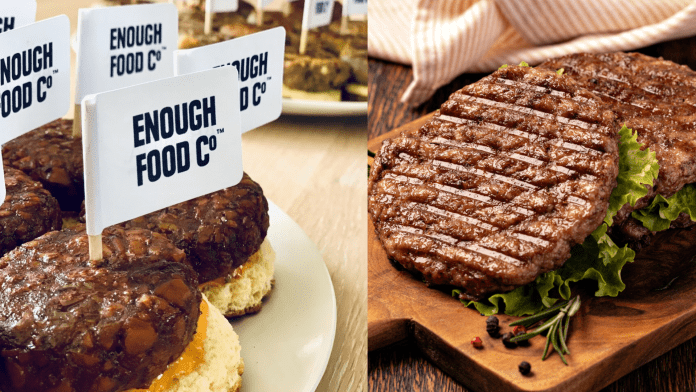
ENOUGH employs fungal fermentation to generate protein for its plant-based chicken, mince, and dairy items.
ENOUGH, a food technology firm in collaboration with Unilever (ULVR.L) and Marks & Spencer (MKS.L), has successfully secured 40 million euros ($43.5 million) in funding. This achievement comes amidst indications of a deceleration in the alternative meat and protein industry, showcasing the company’s strong appeal to investors.
ENOUGH employs fungal fermentation to generate protein for its plant-based chicken, mince, and dairy items. The company announced that the recent funding cycle was spearheaded by World Fund, a venture capital entity, alongside CPT Capital. Notably, CPT Capital was an initial backer of Beyond Meat (BYND.O) and holds an interest in Upside Foods.
Other participants in the funding campaign for ENOUGH, a company based in Britain and the Netherlands, encompassed existing investors including AXA IM Alts (AXAF.PA) and the Onassis shipping family-affiliated Olympic Investments.
“ENOUGH has made great strides in the past few years to launch our new factory in the Netherlands and scale up to work with customers across the UK and Europe,” said CEO Jim Laird, a former chief executive of plant-based meat producer Quorn.
“With this new funding, we will accelerate that growth,” he added.
Entities engaged in the creation of alternative meat and protein sources assert their contribution to the climate preservation endeavor, as lab-grown meat exerts a lesser environmental footprint compared to conventional farming practices.
However, there are indications that the consumer appetite for plant-based meat might be diminishing, as evidenced by Beyond Meat’s recent adjustment of its yearly revenue projection.
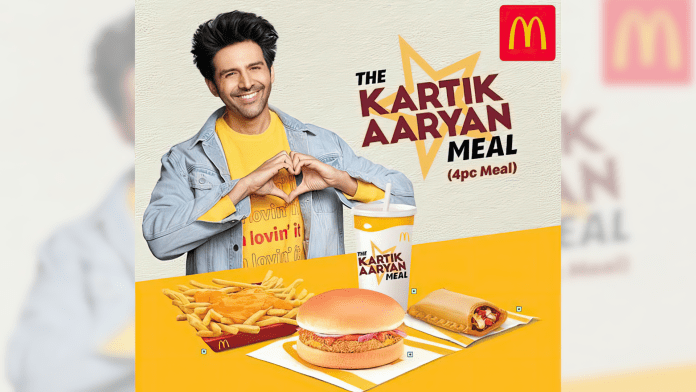
The Kartik Aaryan Meal can now be relished at McDonald's outlets situated in the North and East regions of India.
The well-known Orders platform, acclaimed worldwide for its successful collaborations such as the Travis Scott Meal and BTS Meal at McDonald’s, is currently bringing joy to customers in India, specifically at McDonald’s India – North and East.
They’ve launched the Kartik Aaryan Meal, showcasing a range of menu items preferred by Kartik Aaryan. This exclusive meal includes his favorites like the McAloo Tikki Burger, Cheesy Fries, and the Pizza McPuff, served alongside a Regular Beverage, all offered as a complete 4-piece meal.
“I have always been a McDonald’s fan and having a meal at McDonald’s named after meis truly abig moment! For many years, I have enjoyedthe McAloo Tikki burger, beverages and Pizza McPuff I truly hope people will enjoy my favourite McDonald’s order as much as I do.” said, Kartik Aaryan.
This unique collaboration provides an opportunity for Kartik’s fans to experience the exact McDonald’s meal he personally takes pleasure in, further enhancing their connection with the Bollywood icon.
“We are super excited about this collaboration with Kartik to bring his favourite go-to McDonald’s order for our customers. Our delicious food served in an exclusive packaging inspired by Kartik’s own style, with opportunities to engage with him, will help bring our customers closer to their favourite superstar.” said, Ranjan, Managing Director, McDonald’s India – North and East.
The Kartik Aaryan Meal can now be relished at McDonald’s outlets situated in the North and East regions of India.
It is also conveniently accessible through delivery platforms such as Swiggy, Zomato, and Magic Pin. Furthermore, the meal can be acquired either through take-out or the drive-thru option, although this option is available for a limited time.
On Sunday, the government declared an increase in this year’s onion buffer to five lakh metric tonnes, following the successful attainment of the initial procurement goal of three lakh metric tonnes.
The Consumer Affairs Department has additionally instructed the National Cooperative Consumers’ Federation (NCCF) and the National Agricultural Cooperative Marketing Federation of India Ltd. (NAFED) to secure approximately one lakh metric tonnes of onions. This directive aims to further fulfill the supplementary procurement objective.
In conjunction with the procurement efforts, these organizations will make onions available to consumers through NCCF outlets and mobile vans starting from August 21, 2023, at a price of INR 25 per kilogram.
“Retail sale of onion will be suitably enhanced in coming days by involving other agencies and e-commerce platforms,” the government said in a release.
During the previous week, in response to escalating onion prices in certain regions of India, the federal government initiated the release of the essential vegetable from its reserve supply.
According to the most recent data furnished by the government, the distribution of onions from the reserve has initiated, focusing on prominent markets in various States and Union Territories. These specific markets have been selected based on their retail prices surpassing the national average and/or exhibiting notable increases compared to the previous month.
“As on date, about 1,400 MT of onions from the buffer has been dispatched to the targeted markets and are being continuously released to augment the availability,” as per the release.
Based on official statistics, the nationwide average retail cost of onions stood at INR 29.73 per kilogram on Sunday, marking a 19 percent increase compared to the price of INR 25 per kilogram during the corresponding period a year ago. In Delhi, the retail price of onions has risen from INR 28 per kilogram to INR 37 per kilogram within the same period.
The reserve supply is upheld within the Price Stabilisation Fund (PSF) to address unforeseen circumstances, in case prices surge notably during periods of limited supply. In the fiscal year 2022-23, the government upheld a buffer stock of 2.51 lakh tonnes of onions.
The Fast-Moving Consumer Goods (FMCG) sector experienced a rise in sales volume and an increase in gross margins during the June quarter. This growth was supported by a decrease in inflation, which also provided a boost to smaller players in specific product categories. A number of these smaller players, who had previously withdrawn from certain market segments due to high inflation rates, reentered the market and heightened competition at the local level. As a result, several major FMCG companies had to adjust their prices in response to this intensified competition.
The majority of the FMCG companies listed on the stock exchange indicated growth in terms of product volume within the sectors of home care, personal care, beauty, and food products. However, the ice cream and beverages segment experienced a setback due to unexpected rains in April and early May, affecting performance during the quarter.
With a shift in material inflation from high single digits to low single digits, there has been a noticeable increase in sales volumes across both urban and rural markets. This uptick signifies encouraging indications of demand recovery. Leading companies such as HUL, ITC, Godrej Consumer, Dabur, Marico, and Tata Consumer are responding to this trend by boosting their investments in advertising and promotional activities.
Furthermore, FMCG manufacturers are currently transmitting the advantages of decreased input expenses to consumers, leading to a gradual decline in price escalation. In light of the projected decrease in prices, FMCG firms are also observing distributors and retailers diminishing their inventory levels by only 1 to 3 days. This insight was shared by a prominent industry leader during their earnings conference call.
Dabur India CEO Mohit Malhotra said, “During Q1/FY24, most of the economies witnessed a moderation in inflation. In India too, inflation showed signs of easing, as witnessed in both CPI and WPI data. With this moderation in inflation, there has been an uptick in volumes in both urban and rural markets, indicating promising signs of recovery in demand.”
He further said, “Now inflation is kind of abated in our portfolio” and will be “investing money back into advertising for surging demand”.
In the June quarter, Dabur posted a 5 percent rise in net profit, reaching INR 464 crore, while the total income surged to INR 3,240 crore.
Britannia Industries, a bakery food enterprise, disclosed a substantial 35.65 percent increase in its combined net profit, reaching INR 455.45 crore. Concurrently, net sales experienced an 8.64 percent upswing, totaling INR 3,969.84 crore.
However, Britannia Executive Vice Chairman & Managing Director Varun Berry also said, “In this quarter, commodity prices marginally softened & hence, the local competition intensified. In view of that situation, certain price corrections were initiated to remain competitive & continue to drive topline while maintaining profitability,” said Berry.
During the earnings conference call, he mentioned that local players have managed to acquire a slight increase in market share due to their localized pricing strategies.
Leading FMCG maker HUL CFO Ritesh Tiwari in the earnings call said, “We are also seeing the resurgence of small and regional players in select categories and price points, many of whom had vacated the market during peak of inflation.”
HUL announced an underlying sales expansion of 7 percent alongside an underlying volume increase of 3 percent. The consolidated sales for the June quarter surged by 6.34 percent, reaching INR 15,240 crore.
“Market volumes are recovering, although gradually. Rural market volume growth has just turned positive in the quarter, and we are seeing sequential improvements,” said HUL CEO and MD Rohit Jawa.
In the June quarter, ITC, a diversified conglomerate, witnessed a 16 percent upsurge in revenue generated from FMCG products, amounting to INR 5,172.71 crore. This growth was primarily propelled by robust performance in various categories including staples, biscuits, noodles, beverages, dairy, agarbatti, and premium soaps.
“The businesses continued to drive improvement in profitability through multi-pronged interventions viz premiumisation, supply chain optimisation, judicious pricing actions, digital initiatives, strategic cost management and fiscal incentives,” said ITC in its earning statement.
Godrej Consumer Products Ltd (GCPL) achieved a ten percent increase in volume growth within its Indian operations, driven by a well-rounded performance across its Home Care and Personal Care divisions.
Excluding exceptional items, the consolidated net profit of the Godrej group’s FMCG division exhibited a 19 percent year-on-year expansion, while its sales recorded a growth of 10.45 percent, reaching INR 3,417.86 crore.
According to GCPL CEO & MD Sudhir Sitapati, “Our performance in Q1 FY ’24 was ahead of our expectations on both volume and profit growth.”
Nonetheless, Saugata Gupta, the Managing Director and CEO of Marico, noted that the FMCG sector’s volume growth remained in positive territory for the second consecutive quarter. This growth was primarily driven by consistent expansion in urban areas, although noticeable signs of recovery in rural areas were still not apparent.
Marico, known for its well-loved products including Saffola, Parachute, and Livon, disclosed a 15.64 percent increase in its combined net profit, reaching INR 436 crore. However, the revenue generated from its operations experienced a decline of 3.16 percent, totaling INR 2,477 crore during the June quarter. This decrease was attributed to pricing reductions in significant domestic portfolios and challenges posed by currency fluctuations in international markets.
Tata Consumer Products Ltd (TCPL) announced a notable 29.67 percent increase in its combined net profit, reaching INR 358.57 crore. Concurrently, its revenue stemming from operations displayed a growth of 12.45 percent, totaling INR 3,741.21 crore.
Regarding the future perspective, Jawa from HUL commented that the operational landscape remains characterized by volatility.
“On the weather front, the situation remains challenging. We have seen some extreme weather events playing out in the last few months, such as the unseasonal rains in the summer, followed by the heat phase and delayed onset of monsoon. El Nino has set in early and hence, that could impact the latter part of the monsoon,” he said.
Another FMCG manufacturer noted that the influence of irregular weather patterns and the uneven distribution of rainfall on rural agricultural earnings could also play a role in shaping sentiment in the immediate future.
We use cookies to ensure that we give you the best experience on our website. If you continue to use this site we will assume that you are happy with it.