NOTO, a renowned brand recognized for revolutionizing dessert experiences, has unveiled its latest creation: the Macaron Ice Cream Sandwich.
Blending sophistication with a diverse range of flavors, this exquisite treat presents a dessert that caters to health-conscious individuals.
NOTO has built a name for itself by creating irresistible delights that encourage guilt-free enjoyment.
Ashni Shah, Co-Founder of NOTO, affirms that the Macaron Ice Cream Sandwiches flawlessly capture the equilibrium between opulence and exceptional quality. With the introduction of this delightful innovation, the company remains enthusiastic about upholding their commitment to guilt-free pleasure, all the while unwaveringly prioritizing the essence of flavor.
Encompassing gelatos, ice creams, miniature delights, and popsicles within their diverse assortment, they manifest their dedication to redefining the notion of indulgence.
Each box contains four flavours, each a testament to the marriage of exquisite taste and guilt-free indulgence.
From the captivating depths of Dark Chocolate to the enticing aroma of Coffee flavors, the symphony of macarons harmoniously merges with creamy ice cream swirls. Chocolate Hazelnut takes center stage, conducting a rich ensemble of flavors, while the Mango Cheesecake variation elegantly combines delectable tastes within a crunchy macaron shell.
The unveiling of the Macaron Ice Cream Sandwich underscores NOTO’s ongoing mission to reshape the concept of guilt-free indulgence.
Licious, your ultimate destination for all meat and seafood needs, has recently marked a successful 8-year journey of delivering delectable meaty experiences. In recognition of the unwavering affection and loyalty of its customers, the brand has proudly introduced Licious Infiniti – an exclusive rewards program designed for Licious enthusiasts. True to its name, this program promises boundless advantages to its members, completely devoid of any restrictive conditions.
Participants in this program can now relish a guaranteed 10% cashback on every order, regardless of the order’s total. Elevating the offer even further, all orders will be accompanied by complimentary delivery and a foolproof money-back assurance.
Exclusively accessible through the Licious App, Licious Infiniti presents consumers with the flexibility of choosing between 3, 6, or 12-month subscriptions, empowering them to select the option that aligns perfectly with their needs. What sets this program apart from others of its kind is the promise of boundless advantages, completely devoid of any restrictive conditions. Notably, there exists no requirement for a minimum order value to unlock the perks of free delivery or cashback.
The guaranteed 10% cashback is promptly deposited into your Licious wallet upon the successful completion of your order. Thus, the more orders you place, the greater your benefits accumulate. The assurance of a money-back guarantee ensures that the difference between your savings and the program’s fee is refundable. Furthermore, the benefits bestowed by Licious Infiniti complement other existing offers, discounts, and coupons applicable on the App.
For existing Meatopia users, there’s no need for concern, as their ongoing Meatopia membership seamlessly upgrades to the Infiniti Program subscription, without any additional charges. For a captivating insight into the prowess of Infiniti, you can view the captivating campaign video on the brand’s YouTube channel, showcasing the ‘Power of Infiniti.’
Sharing about the brand’s journey and gratifying consumers with Licious Infiniti, Vivek Gupta, Co-Founder, Licious said, “8 years on, we continue in our endeavour to redefine the category, powered by our strong belief that India deserves better meat. One key learning in our journey has been how distinct this category is from everything else in the consumer’s grocery cart. Meat & seafood witness high engagement with consumers feeling personally involved right from buying to preparation & consumption. Even coming together over a meal of choicest meat & seafood dishes is a celebration in itself. Licious is humbled to be a part of such special occasions & moments with our consumers; with 90% of our business coming from repeat consumers, the brand love & loyalty coming our way is overwhelming. The Infiniti program is specifically designed to add a zing of meaty delights to these special moments, not just for our existing consumers but also for those keen on experiencing Licious.”
Vakul Agarwal, Vice President, Growth at Licious, said, “The Licious App has always been the exclusive meat store offering an extensive range of meat & seafood products. And now with Licious Infiniti our aim is to offer exclusive benefits every time you order from the App. The program is rewarding in more ways than one, with unlimited benefits & without any hidden terms & conditions. The simple subscription-based model places the power in the hands of our consumers, enabling them to earn rewards with every order; now they can enjoy juicy delicious Licious products with even juicier benefits.”
Established by Abhay Hanjura and Vivek Gupta, Licious stands as India’s inaugural Direct-to-Consumer (D2C) Unicorn, dedicated to bringing unparalleled selections of meat and meat products to the world. The enterprise is forged with the ambition of becoming India’s cherished meat food brand, distinguished by its commitment to delivering products of the utmost quality. With a presence spanning more than 20 Indian cities, Licious caters to a customer base that generates 1.2 million monthly orders, boasting an impressive 90% recurring patronage across diverse markets. The Licious team, numbering over 6000 members, is composed of skilled professionals hailing from various disciplines and roles.
An exclusive fine dining experience will soon be available aboard a stationary metro coach stationed along the Aqua Line. The restaurant, previously situated near the Depot station, has been moved to a spacious 300 sqm area close to the Sector 137 station. Presently undergoing renovations, it is anticipated to welcome guests in approximately one month.
The Noida Metro Rail Corporation (NMRC) intends to enhance its non-fare revenue by means of the restaurant. Within the Sector 137 station vicinity, there are already three restaurants, a car showroom, and a salon in operation.
In March of the current year, the NMRC granted the contract for the commercial utilization of the metro coach to the private company City Supermart, as informed by NMRC spokesperson Nisha Wadhwan. The contract was secured through an open bidding process.
“Recently, the company shifted the metro coach from Depot station to Sector 137 station and started work on setting up a restaurant near the Sector 137 metro station. It is arranging the required infrastructure for starting the restaurant,” she said.
City Supermart is currently in the process of refurbishing the metro coach in alignment with its business concept. The restaurant’s kitchen will be situated outside the coach. Additionally, the company has obtained approval from the NMRC to create a circular landscape area around the coach, complete with seating arrangements.
Wadhwan explained that the license duration for the combined metro coach and restaurant spans nine years, with the possibility of extension for a suitable period upon mutual agreement between the involved parties.
Sector 137 predominantly comprises residential establishments and has experienced notable real estate growth in recent times. Dwellers from adjacent high-rise buildings, such as Vishnu Saini from Supertech Ecociti, have expressed their approval of this initiative.
“The initiative will enhance the commuter experience and positively contribute to urban mobility. Earlier, people visited restaurants in Sector 18 as this sector lacked good restaurants. But now, it has become a residential and commercial hub. We also have a bio-diversity park and a medicinal park, which attract many visitors, but they did not have proper dining arrangements earlier. The metro coach cum restaurant will surely help commuters, residents, and visitors,” Saini said.
The Aqua Line, linking Noida Sector 51 to the depot station in Greater Noida, maintains an average daily ridership of 50,000 passengers.
In an effort to further alleviate pricing concerns, the government will be making tomatoes available at a cost of INR 40 per kilogram starting from August 20.
Due to the ongoing decrease in tomato prices in both wholesale and retail markets, the consumer affairs department has instructed NAFED and NCCF to commence selling tomatoes at a rate of INR 40 per kilogram starting from August 20th.
The Consumer Affairs Ministry on Friday announced the decision, saying that till date more than 15 lakh kg of tomatoes have been procured by NAFED and NCCF since July 14.
Over the past month, the two agencies have provided tomatoes at subsidized prices across various regions in the country, including Delhi-NCR, Rajasthan, Uttar Pradesh, and Bihar.
Initially set at INR 90 per kilogram, the retail cost of tomatoes acquired by NAFED and NCCF has witnessed a reduction over the past month, reaching INR 50 per kilogram as of August 15. The government now intends to offer them for sale at INR 40 per kilogram starting August 20th.
In response to a significant escalation in tomato prices over the past two months, the government initiated the procurement of tomatoes from Andhra Pradesh, Karnataka, and Maharashtra to mitigate the price surge.
Retail inflation experienced an upswing in July, reaching 7.44 percent, primarily attributed to elevated food prices. This surge led to food inflation reaching 11.51 percent during the same period.
In the sprawling landscape of business, where the quest for profit often seems like the sole driving force, there emerges a refreshing perspective – one that champions values over mere monetary gains. Meet the creators of Lahori Zeera, the beloved Indian beverage brand that has woven a tale of community, commitment, and culinary artistry into every bottle.
“Business can never be conducted just for profit! The real worth lies in the value that is created and transferred down the chain. The local community and the larger outreach are all links in this value chain that have to be nurtured, upgraded & maintained with dedication, love, and expertise. It is our earnest endeavor and commitment to ensure that all stakeholders benefit and blossom by virtue of our actions and ideas.” – A sentiment that could easily be found on some millionaire’s Tumblr account, but these aren’t just words; they encapsulate the ethos of the founders of Lahori Zeera.
Creating for the Masses: A Journey of Culinary Exploration
“When we started, the idea was pretty clear – we wanted to create something for the masses,” reveals Nikhil Doda, the COO of Lahori Zeera, in an exclusive interview with Snackfax. What began as an aspiration to carve their entrepreneurial path soon transformed into the birth of an ethnic Indian beverage brand, thanks to the creativity and dedication of three cousins: Nikhil Doda, Saurabh Mujal, and Saurabh Bhutna.
Intriguingly, their journey commenced without a precise product in mind. The cousins were resolute about crafting something accessible to the masses. As they delved into research, a revelation struck them – various nations like Korea, Japan, China, and Africa had established their own native drinks with global acclaim, akin to beverage giants like Pepsi. A sense of astonishment arose; India, with its rich tapestry of local and flavorful beverages, lacked such representation on the world stage. This realization birthed their brainchild: Lahori Zeera.
Setback to Soaring Success: A Resilient Climb
Back in 2015, Lahori Zeera embarked on its journey with a modest production capacity of 50,000 bottles per day – a small-scale operation by industry standards. Nikhil reflects on those initial days, “Beverage is a very difficult product to establish, but for us, the product itself solved the whole purpose.” Despite the uphill struggle, their creation captivated consumers, fueling rapid market growth from day one. The turning point arrived with backing from a Belgium-based private equity fund, a moment that shifted their gears and propelled them toward their audacious vision – making Lahori Zeera the quintessential pan-Indian brand and the nation’s premier non-alcoholic beverage company.
Winning Hearts: A Flavorful Symphony of Tradition and Innovation
In the rapidly expanding non-alcoholic beverage industry of India, Lahori Zeera’s journey stands out as more than just a tale of overcoming business challenges. It symbolizes a dedicated mission to redefine perceptions and spread the rich tapestry of local flavors across the nation. This endeavor has been underpinned by a focus on quality and affordability, two paramount factors that have solidified their position in the competitive Indian market.
Lahori Zeera’s allure, deeply rooted in its choice of ingredients, is a result of their commitment to sourcing all-natural elements, even down to the water used, to create a bottled elixir that authentically captures the essence of India. This meticulous approach has resonated strongly, particularly as the non-alcoholic beverage sector in India is on a trajectory of phenomenal growth, projected to surpass US$ 18+ billion by 2026.
Navigating the diverse landscape of India, Lahori Zeera recognized the critical importance of price points, especially in Tier II and III cities where a majority of the population resides. This strategic understanding has been pivotal in penetrating markets and cultivating a brand that thrives on customer loyalty. Despite the vast population, the per capita consumption of non-alcoholic beverages in India remains relatively low at approximately 5.5 liters per annum, highlighting the immense growth potential in contrast to the significantly higher per capita consumption observed in the United States.
The success story of Lahori Zeera, which has firmly established its stronghold across northern India, including states like Delhi, Punjab, and Haryana, extends beyond regional boundaries. Crafted by Indians, for Indians, with an emphasis on authentic Indian flavors, Lahori Zeera’s journey is far from over. Their ambitious vision transcends the confines of geography as they aspire to captivate palates all across the country. Fuelled by their journey of passion, unwavering values, and relentless dedication, it’s undeniably evident that the enchantment held within each bottle will continue to weave its magic, sip by sip.
Watch our exclusive conversation with Nikhil Doda here:
Yulu will furnish Zepto's delivery associates with 20,000 cutting-edge shared DeX electric vehicles (EVs).
Yulu, a leading provider of shared electric two-wheeler mobility, and Zepto, an e-grocery service provider, have revealed a significant partnership. In this collaborative effort, Yulu will furnish Zepto’s delivery associates with 20,000 cutting-edge shared DeX electric vehicles (EVs).
This partnership will empower the organization to extend its hyperlocal delivery services in pivotal urban centers including Bengaluru, Mumbai, Navi Mumbai, Delhi, and Gurugram. This strategic step is in harmony with Zepto’s transition to a completely electric vehicle fleet, fostering environmentally conscious deliveries.
Moreover, the company expressed its intention to establish sustainable livelihoods for these collaborators, particularly those who lack a driver’s license or personal vehicle.
Pradeep Puranam, Head of Revenue and Operations at Yulu, said, “Our full-stack micro-mobility solution improves operational efficiencies for hyperlocal logistics companies and lowers their delivery costs, while simultaneously unlocking better livelihoods and earnings for their delivery partners. We look forward to jointly working with Zepto to make hyperlocal deliveries greener, smarter, and more inclusive.”
Furthermore, as outlined in the collaborative agreement, both enterprises will mutually endorse each other’s offerings through both physical and digital channels, as stated in an official announcement. This partnership is also anticipated to inspire greater participation of women in the delivery sector as a career choice.
“A majority of Zepto deliveries are now powered by environmentally friendly vehicles. Partnerships like these not only help us further this effort but also help bring in a workforce by providing them with vehicles, thereby increasing employability. We are excited to unlock the next milestone in sustainable deliveries with Yulu,” said Vikas Sharma, COO of Zepto.
WickedGud, a direct-to-consumer (D2C) startup specializing in food and snacks, has announced its ambitious goal of achieving a net revenue of INR 700 crore, along with an EBITDA of INR 100 crore, over the course of the next seven years.
The company noted that Indian consumers are now displaying heightened awareness regarding health, hygiene, sustainability, and ingredient scrutiny. This is coupled with a significant increase in the demand for naturally sourced, organic, and environmentally friendly fast-moving consumer goods (FMCG) products.
Bhuman Dani, Founder and CEO of WickedGud, said, “We have grown three times in revenues over the past four months and with a clear roadmap to achieve EBITDA positivity. Currently selling across all major e-commerce and quick-commerce platforms and in 400 retail stores, we plan to target 3000 retail outlets in the next 18 months, resulting in a six times revenue growth.”
The producer of noodles and pasta has expressed its intention not to focus solely on achieving substantial market share within a single category. Instead, the company aims to diversify its product portfolio across three to four prominent fast-moving consumer goods (FMCG) segments, aiming for a 2-3% share in each segment.
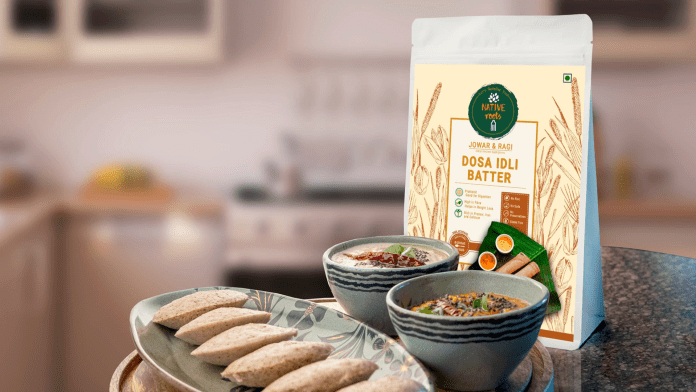
“We have created pasta and noodles out of dal, chawal, chana, atta, oats and jowar, so it’s significantly better in macronutrient profile when compared to incumbents,” added Dani.
The firm aims to secure INR 15 crore in funding, propelling them towards an annual recurring revenue of INR 60 crore, and ensuring a two-year operational runway. Notably, it has recently secured INR 2.25 crore from renowned actor, entrepreneur, and serial investor Shilpa Shetty, as well as an additional INR 2 crore from the financing platform GetVantage. As of now, the food company’s cumulative funding stands at approximately INR 15.6 crore.
“WickedGud has strong business fundamentals to scale aggressively. The plant-based food space is growing rapidly and with WickedGud’s 100% plant-based pasta, they have smartly created a niche in a fast-growing market,” said Bhavik Vasa, Founder and CEO, GetVantage adding that a report indicates the Asia-Pacific region to register the highest CAGR in the plant-based segment, at 6.3% between 2017 and 2025.
Over the past three years, there has been a notable surge in the proliferation of online-only brands within various new-age categories. These brands have been proactive in introducing innovative products that cater to specialized market gaps, strategically harnessing consumer data and insights. However, in response to this trend, traditional companies are taking steps to enter these emerging spaces or are opting to acquire smaller brands to secure their presence and relevance.
Nearly two years ago, Tata Consumer made a significant move by acquiring a complete 100% stake in Kottaram Agro Foods. This company is known for producing the Soulfull brand, which includes breakfast cereals and millet-based snacks. Interestingly, even competitors like Marico, ITC, and HUL have joined the trend of investing in direct-to-consumer (D2C) brands.
For instance, Marico took a considerable step by acquiring a 54% stake in HW Wellness Solutions. This particular company owns True Elements, a brand specializing in healthy breakfast options and snacks. Likewise, ITC directed its investment towards Sproutlife Foods (SFPL), the parent company of Yoga Bar. In a similar vein, Hindustan Unilever Limited (HUL) made strategic investments in Zywie Ventures, the company behind the plant-based supplement brand Oziva, and Nutritionalab, the entity responsible for the Wellbeing line of nutritional products.
Taki Taki, the renowned rooftop dining establishment situated in Bangalore, is thrilled to unveil its much-anticipated Unlimited Dimsum & Sushi Festival. This exciting event spans from August 12 to 31 and showcases an extensive array of delectable dim sum and sushi creations, all of which are yours to savor in limitless portions.
The festival’s culinary selection presents a blend of timeless favorites and inventive renditions within the realm of dim sum and sushi. Notable offerings include lobster har gow, ginger mint prawn dumpling, Japanese shumai, truffle edamame silkening dumpling, mushroom gyoza, charsui bao, dragon roll, warm n tender, tofu panda, and yasai tempura maki.
The festival is tiered in pricing: INR 899++ for the vegetarian dim sum/sushi option, INR 999++ for the non-vegetarian dim sum/sushi selection, and INR 1499 for a choice between mixed sushi (vegetarian and non-vegetarian) or exclusively vegetarian/non-vegetarian dim sum. This delightful offer is applicable during lunch hours from Monday to Friday, specifically from 12 pm to 4 pm.
The Unlimited Dimsum & Sushi Festival provides an ideal opportunity to savor the finest culinary delights that Taki Taki has to offer.
Speaking about the launch, Dawn Thomas, CEO & Co-Founder, VRO Hospitality, said, “We are excited to launch our Unlimited Dimsum & Sushi Festival. This festival is the perfect way to enjoy a delicious and satisfying lunch with friends or family. We have curated a menu that features a variety of Dim Sum and Sushi dishes, so there is something for everyone to enjoy.”
Emerging from Bengaluru, VRO Hospitality stands as a rapidly expanding player in the hospitality sector. With a stronghold in Bengaluru and Mumbai, the company possesses a collection of upscale bars and restaurants. In a remarkable journey that commenced during their college years, two enterprising friends, Dawn Thomas and Safdhar Adoor, kickstarted an event management agency known as Rices Obliquity, setting ablaze the party scene in Bengaluru. Later, with the addition of seasoned restaurateur Sharath Rice, the trio co-founded VRO Hospitality in May 2018.
From its inception, VRO Hospitality has introduced a lineup of widely acclaimed brands including Badmaash Lounge, Hangover, Mirage, Nevermind, One Night in Bangkok, and Tycoons. These establishments provide patrons with a multifaceted culinary journey. Beyond the realm of traditional eateries, VRO Hospitality has also ventured into popular cloud kitchens — Burgers and Beyond, Holy Doh Pizzas, and Smashed and Whacky Chang.
Adding to their portfolio, the founders embarked on another endeavor, SteppinOut, an online platform curating events and experiences. This venture garnered attention and was eventually acquired by Times Internet Limited in the early months of 2021.
According to a report from JM Financial Institutional Securities, Zomato’s stock is expected to experience volatility in the short term due to market speculation regarding potential divestments by certain pre-IPO shareholders (including venture capitalists, private equity firms, and Chinese investors) of the company. This speculation also extends to former shareholders of Blinkit who had obtained their shares through a share swap arrangement.
“While we cannot accurately predict when (if at all) these shareholders would want to exit, we note that several of them are already sitting on sizeable gains, albeit a large chunk of it is unrealised. A few cues from past actions of these investors suggest that at least some of them would be eager to book profits post the recent run-up in the stock”, the report said.
Consequently, a significant portion of Zomato’s shares might become accessible for trading in the coming period. To provide context, the collective value of Zomato’s stock held by these investors, based on the current market price, amounts to INR 180 billion. Even if we were to consider that only half of the stake held by venture capitalists, private equity firms, and Chinese investors would be eligible for trading, the potential near-term capital outflows could approach the size of Zomato’s entire initial public offering (IPO), which was INR 93.75 billion, as indicated in the report.
“We strongly suggest that long-term investors use these liquidity events to build a sizable position in Zomato as it not only offers a strong play on India’s online food services market but is also, post the Blinkit acquisition, shaping up into a formidable diversified play on online retail”, it said.
Starting from August 28, shares held by former Blinkit investors will become eligible for trading. In the previous year, as part of the merger and acquisition, Zomato had issued new equity shares to the selling shareholders of Blinkit, valuing each share at approximately INR 70.76. Following this transaction, Zomato had successfully negotiated a 12-month lock-in period for these shares, surpassing the mandatory statutory lock-in period of 6 months. According to information sourced from BSE filings and the company’s official disclosures, these shares are anticipated to gain trading eligibility on August 28, as highlighted in the report.
The majority of these shares are under the ownership of three prominent venture capital investors: SoftBank, Tiger Global, and Sequoia. It’s important to highlight that only half of the shares linked to the Blinkit founder’s holdings will be open for trading within the upcoming days. The remaining 50 percent will remain subject to a lock-in period for an additional 12 months, as detailed in the report.
Numerous pre-IPO and former Blinkit investors are currently holding significant unrealized profits. Evaluating the acquisition costs of shares held by these Zomato pre-IPO and ex-Blinkit shareholders reveals that they are currently in possession of considerable gains from their investments. Nonetheless, a substantial portion of these gains remains unrealized at this point in time.
Considering the magnitude of these profits and drawing from the historical behaviors of these venture capital, private equity, and Chinese shareholders in relation to recently listed internet companies, it is reasonable to suggest that a considerable portion of Zomato’s stock might become accessible for trading in substantial quantities in the foreseeable future, as highlighted in the report.
Dunzo, the homegrown quick-grocery delivery provider, currently embroiled in a controversy for its failure to compensate employees for several months, is reportedly in the advanced stages of negotiations to secure an investment between $80 million to $100 million for its series G funding round.
Reports from the prominent startup coverage platform, Inc42, indicate that Dunzo, the hyperlocal delivery startup headquartered in Bengaluru, is currently engaged in discussions with its current investors, which include Lightbox and Lightrock, with regards to raising additional funds.
The funding round “mostly comprises equity funding and can have a small debt element”, the report mentioned.
Dunzo was yet to comment on the report.
If the fundraising materializes, it could provide the startup with the means to address both salary disbursements to its employees and the settlement of outstanding payments to its vendors.
Since March of this year, Dunzo has been served with legal notices from no fewer than seven companies.
It had reportedly received legal notices from Google India, Nilenso, Clover Ventures, Facebook India Online Services Private Limited, Cupshup, Koo and Glance.
In total, Dunzo’s outstanding debts to vendors amount to around INR 11.4 crore, which is nearly double the previously estimated figure of INR 5-6 crore.
The quick-grocery delivery provider Dunzo has reportedly promised employees to pay an interest of 12 per cent per annum on the salary component that it held back from June.
In addition, the startup assured them that it was on track to pay off all outstanding debts by September 4, according to earlier reports.
The company was supposed to clear all pending dues by July 20, but an email was sent out, pushing the deadline to September 4.
“Thank you for your patience and continued support. We understand the inconvenience this (delay in salaries) has caused and want to ensure that we provide the possible support for the delay,” Dunzo’s payroll team said in an email to employees.
“There will be interest paid of 12 per cent per annum,” it added.
We use cookies to ensure that we give you the best experience on our website. If you continue to use this site we will assume that you are happy with it.