Saturday, December 27, 2025
Home Blog Page 935

Nestlé plans to launch budget-friendly Starbucks stores in South Korea

0
Starbucks
Starbucks (Representative Image)

Nestlé S.A., the world’s largest food company, is gearing up to introduce compact Starbucks-branded stores in South Korea, as reported by sources in the investment banking industry on Monday. The goal is to attract Starbucks cafe goers who are mindful of their budgets.

The distributor of the Swiss company in South Korea is exploring the possibility of establishing Starbucks-branded stores within moderately sized supermarkets, grocery stores, and university campuses. This approach deviates from the strategy of creating new standalone outlets.

Back in 2018, Nestlé secured the rights for $7.15 billion from Starbucks, granting them the authority to distribute Starbucks coffee and tea beverages through grocery stores and retail establishments.

This arrangement permits Nestlé to offer Starbucks coffee capsules compatible with its Nespresso and Nescafé Dolce Gusto coffee machines, along with an assortment of Starbucks food and drinks, across 80 nations.

Presently, it aims to maximize the utilization of its rights to vend beverages crafted from Starbucks’ coffee beans and ingredients sourced from the coffee chain. This will be implemented in the upcoming Starbucks stores that Nestlé is getting ready to establish in South Korea.

The sources based in Seoul indicated that the Starbucks branded stores will adopt a “store-in-store” approach, avoiding a focus on main streets where Starbucks operates its own directly managed outlets.

Nestlé has initiated discussions with multiple food store operators in South Korea, which encompass entities like the fresh food distributor Oasis, the organic food label Chorokmaeul, and the University of Suwon. These conversations revolve around the prospect of establishing Starbucks branded stores within the available spaces of these entities.

The Starbucks brand stores are expected to feature a modest setup with just two to three tables and a minimal staff presence. This streamlined approach will empower the operators to offer coffee at a reduced price, approximately 3,000 won ($2.3) per cup.

Nestlé has clarified that the coffee brewed within these stores will be marketed under the Starbucks brand, and there will be no distinction in terms of taste, quality, or branding when compared to coffee purchased at Starbucks’ directly managed outlets.

Starbucks generates royalties through the sale of trademark rights across various product categories. In South Korea, companies like E-Mart Inc. (a supermarket chain), Dongsuh Foods Corp., and Seoul Milk offer Starbucks products under the terms of royalty agreements.

E-Mart and its parent company Shinsegae Inc. possess exclusive rights for the production and sale of Starbucks beverages and the operation of stores. Meanwhile, Dongsuh Foods and Seoul Milk are responsible for the manufacturing and distribution of Starbucks bottled beverages, including ready-to-drink products.

The distribution of Starbucks coffee beans and coffee capsules is managed by Lotte Nestlé Korea Co.

Given this context, Nestlé’s intention to establish Starbucks brand stores distinct from their directly operated counterparts might encounter resistance from South Korea’s retail conglomerate, Shinsegae Group.

A representative from Starbucks Coffee Korea (SCK), which is owned by Shinsegae, emphasized that the company holds the exclusive domestic business rights for Starbucks stores.

Observers within the food and beverage industry speculate that if Nestlé introduces compact and affordable Starbucks brand stores, it could potentially reshape the dynamics of the local franchise coffee market.

“With the domestic coffee market being divided into premium and low-end markets, if Starbucks advances into the low- to mid-price market with its brand awareness, it will threaten existing franchise brands,” said a coffee industry official.

Advertisement

JW Marriott Bengaluru teams up with INJA for a unique Indian-Japanese culinary fusion

0
JW Marriott Hotel Bengaluru
The unique dining affair will consist of an 8-course menu

The JW Marriott Hotel Bengaluru, renowned for its opulence and exceptional guest services, has officially announced a collaboration with INJA, a culinary venture that seamlessly blends the rich flavors of Indian and Japanese gastronomic legacies.

Spanning the course of two days, starting from September 15th to 16th, 2023, this delectable gastronomic experience will take place within the luxurious confines of the JW Marriott Hotel Bengaluru.

Mr. Gaurav Sinha, General Manager, JW Marriott Hotel Bengaluru, said, “We are excited to join forces with INJA and create a one-of-a-kind culinary journey that showcases the artistry of Indian and Japanese cuisines, This collaboration reflects our commitment to offering our guests unique and memorable experiences that redefine luxury.”

Through this collaboration, an extraordinary amalgamation will emerge, intertwining the daring spices and sumptuous tastes of Indian cuisine with the sophisticated methods and subtle elegance inherent in Japanese culinary craftsmanship.

Diners will have the chance to indulge in INJA’s culinary mastery through a thoughtfully crafted set menu, leading them on a culinary adventure meticulously curated by Chef Adwait Anantwar.

“INJA is our debut restaurant in India, and we are extremely overwhelmed with the response in such a short time. As we strive to deliver this unique dining experience to enthusiasts all over the world, we are glad to collaborate with JW Marriott Hotel Bengaluru for these exclusive dinners.” said Panchali Mahendra, President, Atelier House. Hospitality.

The unique dining affair will consist of an 8-course menu (with a vegetarian option available upon request), accompanied by a selection of wine pairings expertly presented by JW Marriott Bengaluru’s in-house sommelier.

Advertisement

Karnataka govt dismisses dip in liquor sales after tax hike, expects demand to rebound

0

The Karnataka state government on Monday brushed aside the decrease in liquor sales observed in the last days of July as a routine phenomenon. They asserted that this dip does not necessarily indicate reduced demand due to the recent tax hike on liquor. Chief Minister Siddaramaiah had announced a 20% increase in the additional excise duty (AED) on Indian made liquor (IML) for all 18 price categories in his budget on July 7, a move that sparked protests within the industry.

The International Spirits and Wines Association of India expressed concerns that the tax hike could potentially drive individuals to purchase items from neighboring states using unofficial distribution channels. This could negatively impact the operations of licensed retailers.

In his July 8 budget, the Chief Minister set a goal of INR 36,000 crore in revenue from liquor and beer sales. The updated tax rates became operational on July 20. The Excise department clarified that retailers procure excess inventory in advance from the Karnataka State Beverages Corporation (KSBCL) in the days leading up to tax revisions announced by the government. They will subsequently continue to sell these stocks even after the revised tax rates come into effect.

Due to this recurrent pattern observed nearly every year, the demand for liquor cartons from the state-owned primary distributor KSBCL tends to decrease for a period following the implementation of revised taxes. The Excise department statement clarified that this is a transient occurrence and the demand is expected to return to its regular levels after a few days.

During this fiscal year, from April 1 to August 25, the department has gathered INR 13,515 crore in taxes, representing 37.5% of the intended revenue. The collected amount reflects a 13.7% increase in revenue compared to the corresponding period of the previous year, as stated by the Excise department. They further affirmed their commitment to achieving the revenue goal set by the Chief Minister.

The budget anticipates that the five guarantee schemes will require approximately INR 52,000 crore for a full year, and the government has looked to the liquor industry to contribute partially to the funding of these ambitious programs.

Advertisement

Juvee energy drinks by gaming icon Nadeshot now available in Canada!

0
Juvee Blue Raspberry

Juvee, the revitalizing energy beverage created by Matthew “Nadeshot” Haag, the Founder and CEO of 100 Thieves, is gearing up for its global introduction as the company ventures into Canada. The drink can now be conveniently purchased throughout the country via Amazon.ca, complete with complimentary Prime shipping benefits. Residents of Canada can now relish in the invigorating and nostalgic essence of Juvee’s top two flavors: Kiwi Strawberry and Blue Raspberry. This move into Canada represents Juvee’s inaugural step beyond the borders of the United States, primarily driven by the enthusiastic demand of the company’s devoted fan base and online community.

“We’ve been blown away by the outpouring of requests from our Canadian fans to have Juvee available for purchase in their country,” stated Sam Keene, Co-Founder and VP, General Manager of Juvee. “Our team has been working diligently for months to ensure consumers receive the same high quality drinking experience they’ve come to love in the U.S. while adhering to Health Canada’s specific product and labeling guidelines.”

Juvee goes beyond the conventional energy drink concept by incorporating a unique blend of ingredients that not only provide long-lasting and natural energy, but also uplift mood. Each 355 mL (12 oz.) can of Juvee boasts a combination of B Vitamins, Taurine, and 128 mg of Caffeine for sustained vitality, while L-Theanine enhances emotional well-being. Panax Ginseng ensures consistent focus, and the inclusion of Vitamin C promotes overall health and wellness. Notably, Juvee stands out with its commitment to health, containing zero sugar and merely 5 calories per can for the Kiwi Strawberry flavor, and just 10 calories for the Blue Raspberry variant exclusive to Canada.

Both the delightful Kiwi Strawberry and the enticing Blue Raspberry flavors of Juvee will be up for grabs in individual 12-pack options, priced at $38.99 CAD each. For enthusiasts who relish both flavors, a fantastic choice comes in the form of a two-flavor variety 12-pack, available at $39.99 CAD. To commemorate Juvee’s entrance into the Canadian market, customers have the opportunity to revel in a 15% discount on their Amazon.ca purchase until September 10th. This can be availed by simply selecting the “coupon” box featured under the listing.

Advertisement

Café Coffee Day leads India’s coffee store network with 400+ locations: GapMaps Report

0
Café Coffee Day
Café Coffee Day (Representative Image)

According to the first Cafe Retail Network Report by GapMaps, a cloud-based data intelligence platform, Café Coffee Day continues to hold the most prominent coffee store network, boasting over 400 locations, despite up to 1,000 store closures over the past three years.

The report discovered that Barista possesses the second-largest network of stores in India, spanning 350 locations across the nation, closely pursued by Starbucks, which operates 340 stores.

While the leading three brands have established store networks in a significant number of the 26 cities with over 20 lakh residents, the report indicates that they have presence in only half of the Tier-1c cities with populations ranging from 10 to 20 lakhs. Additionally, their coverage extends to just 20% of the 75 Tier 2 cities, where populations range from 5 lakhs to 10 lakhs.

The Café Retail Network Report for 2023 in India meticulously observes the store counts and market penetration of nine leading café brands across nearly 1,800 locations throughout the nation. Furthermore, the report takes into account notable names such as Chaayos and Theobroma, both of which maintain significant store networks, each comprising of over 150 locations.

Andrew Smith, Director of economics and research, GapMaps, said, “Even after adjusting for incomes, the store provision of the major brands is relatively low by international standards and there remains ample opportunity for store growth within major cities across India. In addition, continued income growth across the country will further increase the addressable market and store potential for these brands.”

GapMaps’ first Café Retail Network Report for India in 2023 outlines the remarkable growth prospects that exist for brands seeking to expand their store networks within the region. Additionally, the favorable economic conditions are predicted to expedite and facilitate this growth, creating new avenues for brands to establish their presence in the country.

Established in 2013, GapMaps is an Australian company dedicated to aiding businesses in making informed location-based choices. They achieve this by seamlessly integrating up-to-date socio-demographic, economic, customer, and competitor data into a user-friendly platform known as GapMaps Live. This innovative platform is accessible in 23 countries and serves over 500 clients across various industries such as fast food, cafes, health and fitness, and more. These clients rely on GapMaps Live to shape their network expansion and optimization strategies. For those seeking further assistance, GapMaps Advisory experts are available to provide additional support in areas like market planning and location intelligence strategies.

Advertisement

Reliance Retail to challenge Coca-Cola and PepsiCo with global expansion of Campa

0
Campa Cola
Campa Cola (Representative Image)

During the annual general meeting (AGM) of Reliance Industries on Monday, Isha Ambani announced that Reliance Retail is set to introduce its Campa brand to the global market, commencing its expansion in Asia and Africa.

Campa, a domestic contender against international cola giants Coca-Cola and PepsiCo within India, is poised to become the inaugural indigenous cola brand to venture into international markets.

“We are scaling it (Campa) up further in India, and have also started work to take it global, starting with Asia and Africa,” Ambani, Director at Reliance Retail Ventures, said in her address at the AGM.

Back in April, Reliance Consumer Products Ltd (RCPL), the FMCG segment of Reliance Retail Ventures, established a significant collaboration with Ceylon Beverages, a beverage can and filling company led by former cricketer Muttiah Muralitharan. This partnership was aimed at jointly producing and packaging Campa soft drinks. According to knowledgeable sources, this association is anticipated to play a crucial role in facilitating Campa’s expansion into international markets beyond India.

Read More: Reliance Consumer Products partners with Ceylon Beverage to manufacture Campa soft drinks cans in India

Ceylon Beverages has formed alliances with global, national, and local enterprises, encompassing manufacturers of mineral water, energy drinks, soft drinks, and fruit juices.

Reliance Retail had made the acquisition of Campa from the Pure Drinks group for an estimated INR 22 crore around the middle of the previous year. This heritage brand, originally introduced by the Indian company Pure Drinks in the 1970s, garnered significant popularity as the aerated drink with the memorable tagline ‘The Great Indian Taste’. Nonetheless, the brand’s standing dwindled following the entry of Coca-Cola and PepsiCo into the Indian market, capitalizing on the nation’s liberalization program.

“Campa is also exploring exclusive partnerships and alliances with other retail channels, besides setting up its own manufacturing plants which may also service markets outside of India,” said one of the executives, who did not wish to be identified.

Reliance, which initiated the expansion of Campa through retail channels earlier this year, is now taking the brand nationwide. However, the domestic soft drinks category encountered a notable setback in the important April-June quarter. This was due to unseasonal rains affecting business during the key summer months, which usually contribute to more than half of the annual soft drink sales.

On Reliance Retails’s overall FMCG plans, Ambani said, “This (FMCG) business made a strong start by entering several categories through multiple brands and strategic partnerships. A key pillar of our FMCG business is to make heritage Indian brands contemporary for today’s Indian consumers, keeping the age-old brand promise intact.”

Over the last year, Reliance has ventured into various daily packaged goods segments. These include introducing soft drinks like Campa, Sosyo, and Raskik, offering chocolates under the Lotus brand, entering the western snacks category through General Mills, introducing confectionery products under Toffeeman, offering biscuits under the Maliban brand, and launching home and personal care brands Glimmer and Dozo. To establish its presence, Reliance is strategically adjusting prices for entry-level packs to compete effectively with well-established FMCG manufacturers such as Coca-Cola, Britannia, Mondelez, and Hindustan Unilever.

In June, the company extended the reach of its grocery brand “Independence” to northern India. This expansion aims to offer a range of essential products such as staples, processed foods, soaps, detergents, and household hygiene items. The brand, initially introduced in Gujarat towards the end of the previous year, is committed to delivering locally crafted products at accessible price points.

Read More: Reliance’s FMCG arm to launch ice cream brand “Independence” in Gujarat market soon

Also Read: Reliance expands ‘Independence’ FMCG brand to North India, intensifying competition with established players

Industry analysts predict that the company’s foray into mass-market segments like soft drinks, chocolates, and soaps could trigger price competition. However, displacing well-established brands in these sectors is expected to pose a significant challenge.

“RIL has huge financial muscle but FMCG players know how to deal with new entrants,” Nuvama Equities wrote in a report.

Read More: Reliance’s expanding reach could pose a significant threat to D2C FMCG brands, says Kantar research

Advertisement

Britannia aims for over twofold expansion of cheese business in next 3 years, prioritizing e-commerce and MT channel growth

0
Britannia Cheese
Britannia Cheese (Representative Image)

Britannia Industries, a leading player in the Fast-Moving Consumer Goods (FMCG) sector, has ambitious plans to achieve over a twofold expansion of its cheese business within the upcoming three years. This strategic endeavor stems from the company’s active efforts to operationalize its joint venture (JV) with Bel SA, a prominent French cheese manufacturer, with a strong focus on meeting consumer demands. Abhishek Sinha, the CEO of Britannia Bel Foods, shared these insights during an interview.

In the previous financial year, Britannia and Bel established a joint venture with a ratio of 51:49. This was accomplished by divesting a portion of their ownership in the wholly-owned subsidiary BDPL (Britannia Dairy Private Limited), which was subsequently rebranded as Britannia Bel Foods.

During the most recent quarter, the company introduced collaborative packaging alongside Bel Foods. Sinha conveyed that within this current quarter, the two companies are set to unveil novel joint products.

Speaking on its overall cheese business, he said, “The cheese category in India is a Pareto business. This means that the top metros contribute almost 80-90% of the sales. So, the focus is going to be the top metro cities.”

He stated that within metropolitan areas, the cheese category remains insufficiently tapped and its consumption within households is low. As a result, there exists a tremendous opportunity for growth within these cities.

To establish a stronger presence within households, Britannia Bel Foods is actively focusing on enhancing both accessibility and affordability. The company intends to introduce Rs 10 sachet options and significantly amplify its distribution network in metropolitan areas.

The company is aiming for a robust expansion of its market share, emphasizing that its strategies for growth will revolve prominently around innovative product offerings, distribution enhancements, and continuous product refinement.

Additionally, the brand intends to provide consumer education regarding the utilization and intended benefits of its cheese products.

As per Sinha’s assessment, the category has become more accessible to a broader audience over the past 2-3 years. The pandemic has played a role in this, as consumer dining options were limited due to restaurant closures. Both e-commerce and modern trade (MT) channels have significantly contributed to the overall growth during this period.

He mentioned that these channels will serve as the primary catalysts for the growth of the cheese segment, complemented by the traditional trade, where the focus will be on expanding distribution efforts.

Within the organized retail sector, the combined efforts of e-commerce and MT currently account for 50 percent of the total segment revenue. Britannia Bel Foods has a goal to achieve full 100 percent contribution from these two channels, and it intends to invest in their further development.

Sinha shared, “We are going to leverage these channels to be visibly present and also to generate trials and various sampling activities. And as consumers shop from these channels, it becomes crucial to invest in and grow these channels.”

Talking about strategies and investments to scale its business, Sinha said, “We are looking at a multimedia strategy and the lead is going to be through digital because that’s where you can shop and leverage data”

Further, he said, “Our investments are going to be allocated across the touch points for consumers, to not only engage but also to experience the product and the brand.”

Britannia established a dairy facility in Ranjangaon, Pune, Maharashtra, with an investment of approximately INR 600 crore. This facility sources milk from local farmers in the region. The joint venture’s cheese items are also produced at this plant, and they are jointly branded under the trademarks Britannia and The Laughing Cow.

Advertisement

How Lazy Cocktail Co. is making waves in the beverage scene with their innovative approach

0
Lazy Cocktail Co.

In a world where the relentless pace of life leaves little room for respite, a refreshing trend has emerged – one that celebrates the lost art of unwinding. Enter Lazy Cocktail Co., a brand that has not just reinvented the cocktail experience, but has also managed to captivate the beverage scene with its innovative approach. What started as a visionary idea has now transformed into an iconic brand that has reshaped our perception of cocktails, all while prioritizing simplicity, creativity, and the pursuit of leisure. In a society often fixated on efficiency and productivity, Lazy Cocktail Co. stands as a beacon, reminding us of the joy of slowing down and savoring life’s moments.

In a world of mixologists and craft cocktails, Lazy Cocktail Co. has dared to embrace a different philosophy: that the heart of a memorable party isn’t just in its setup, but in the enjoyment it brings. By offering an array of classic cocktail premixes, the brand has paved a seamless path for individuals to channel their inner bartender without grappling with the complexities of intricate recipes. It’s about more than convenience; it’s about enabling hosts to effortlessly dazzle their guests with expertly crafted beverages, and in doing so, create an atmosphere of relaxation and connection. 

The Birth of a Vision:

The genesis of Lazy Cocktail Co. can be traced back to Himanshu Gupta, an entrepreneur who owned a bar exchange in CP, Delhi, providing him not only with a deep understanding of cocktails but also insights into the desires of millennials. The idea of cocktail mixers dawned upon him during this time. “That’s how the idea of Lazy Cocktail Co. was born,” Himanshu reveals in his interview with SnackFax.

Himanshu Gupta, Founder of Lazy Cocktail Co.

However, the Covid-19 pandemic brought their aspirations to a halt. Like many other businesses, Lazy Cocktail Co. suffered significant losses. “Literally all of our inventory expired and we had to let go of the company,” Himanshu recalls. Yet, spurred by his visionary nature, Himanshu recognized the untapped potential of cocktail mixers. With the support of his spouse and business partner, both avid cocktail enthusiasts, they collaborated with food consultants to reinvent their venture.

From this turning point, fortune smiled upon them. Himanshu realized that “cocktail mixers are a substantial market demand,” leading them to expand their offerings and subsequently witness a remarkable growth trajectory.

Crafting Convenience and Quality:

Lazy Cocktails & Co.’s essence lies in the belief that a successful party revolves around enjoyment, not elaborate arrangements. This philosophy shines through in their array of classic cocktail premixes, offering a seamless channel for unlocking your inner bartender. No longer do hosts need to grapple with intricate recipes and ingredient hunts. The brand’s mantra, “Pick – Pour – (& Spike) Drink,” encapsulates the effortless experience they offer. This liberates hosts to focus on meaningful connections and unforgettable moments at their gatherings.

Central to Lazy Cocktail Co.’s appeal is their unwavering commitment to excellence. Each cocktail premix is a testament to their dedication to delivering bar-quality drinks. Made with premium real fruit juice, these premixes capture the authentic flavors of upscale bars. The absence of artificial flavors, colors, or excessive sweetness ensures a refreshing, natural taste that lingers delightfully.

A Sip of Versatility:

Lazy Cocktails & Co.’s offerings are more than just a nod to classic cocktails; they extend into the realm of mocktails, making them accessible to all. For those seeking an elevated experience, the option to add your favorite liquor transforms these premixes into spirited concoctions. The brand embodies the power of choice, inviting consumers to curate their beverage journey with a simple pour.

In a world dominated by haste and complexity, Lazy Cocktail Co. emerges as a beacon of leisure. It challenges the norms of cocktail culture, inviting us to slow down, savor the moment, and revel in the art of unwinding. With every bottle of Lazy Cocktails & Co., we raise not just a toast, but a glass to a newfound perspective—one that celebrates relaxation, creativity, and the joy of letting go.

Watch our exclusive conversation with Himanshu Gupta here:
Advertisement

Burma Burma: India’s first Burmese culinary establishment opens in Ahmedabad

0
Burma Burma

Commemorating the rich culture, delectable cuisine, and diverse cooking techniques of an enchanting and predominantly undiscovered nation, India’s inaugural and unique Burmese culinary establishment and tea lounge, Burma Burma, has unveiled its doors at Palladium in Ahmedabad.

Burma Burma showcases the genuine culinary heritage of Burma, blending it seamlessly with contemporary innovation. Accompanied by a curated assortment of artisanal teas, the setting is a fusion of traditional Burmese elements and modern aesthetics. The ever-evolving menu showcases a medley of dishes and beverages sourced from street food culture, tribal traditions, and cherished family recipes handed down over generations. Infused with robust and vibrant flavors tailored to Indian tastes, you can explore a diverse range of delectable appetizers, revitalizing salads, substantial main courses, thirst-quenching coolers, non-alcoholic cocktails, and refreshing bubble teas, in addition to indulgent desserts and carefully crafted, nostalgia-infused small-batch ice creams at Burma Burma in Palladium, Ahmedabad.

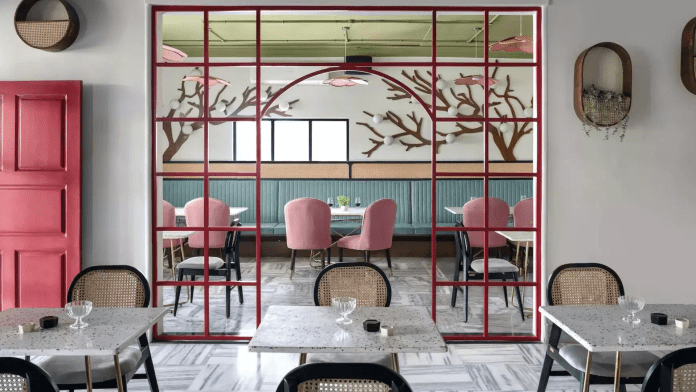
Featuring a blend of contemporary and minimalist design elements, which elegantly honor both Burma’s timeless allure and its captivating textile legacy, the newly unveiled 72-seat restaurant and tearoom stands as a delightful addition to Ahmedabad’s burgeoning array of international dining options. Merging the finest components of traditional Burmese culinary traditions with a medley of fresh components and distinctive flavors, the innovative menu at Burma Burma showcases a selection of signature dishes rooted in Co-Founder Ankit Gupta’s maternal heritage, alongside culinary endeavors stemming from the team’s extensive explorations throughout Burma.

This establishment embodies a unique fusion of Burma’s migrant gastronomic influences, street fare tapestry, and time-honored familial cooking methods, harmoniously intertwined with native ingredients, all presented through a contemporary lens.

Founded in 2014, Burma Burma (Hunger Pangs Pvt. Ltd.) emerged as the creative vision of childhood companions and restaurateurs, Chirag Chhajer and Ankit Gupta. With a presence spanning eight eateries across Bengaluru, Delhi-NCR, Mumbai, and Kolkata, this venture introduces Burmese culture in an unprecedented manner, breathing life into its essence like never before.

Advertisement

PepsiCo joins govt-backed ONDC, expanding its digital commerce reach

0
pepsico
Pepsico (Representative Image)

PepsiCo, the renowned food and beverage company, has become a part of the state-backed Open Network for Digital Commerce (ONDC), as revealed in a press release on Monday.

T Koshy, MD and CEO, ONDC, said, “As ONDC Network aims to create a transparent e-commerce ecosystem creating equal opportunities for all, we are happy to see PepsiCo India on board. PepsiCo India can now reach a wider customer base while offering expanded choices for buyers on the network.”

As a result of this collaboration, the entire range of products offered by PepsiCo will be accessible through all ONDC-affiliated applications. This strategic step underscores the company’s objective of broadening its reach to customers.

“The integration with ONDC marks a pivotal step in this journey as it not only helps us to leverage latest technology platform solutions that will make us faster and flexible in our speed to market but also helps us to solidify our commitment to elevating consumer experiences,” said Ahmed ElSheikh, President, PepsiCo India.

Advertisement