Internet Is Loving These Two Founders on a Mission to Build a ₹1 Crore Brand—Selling Thekua and More
Social media often gets a bad rap—and not without reason. But scroll past the noise, and you’ll find stories of people using the platform as a launchpad for creativity, business, and influence. One such story is that of Shuddh Swad, a homegrown food brand that found its audience long before it even had a website.
At the heart of the brand are two friends—Jayanta and his co-founder—who decided to bottle nostalgia and tradition. Their offerings include classic Indian snacks like thekua, banana chips, and makhana—recipes many of us associate with childhood, family, and festivals. But what sets them apart isn’t just the food—it’s how they’ve told their story.
Through a steady stream of engaging Instagram reels, behind-the-scenes glimpses, and storytelling that feels personal, they’ve managed to create a loyal following. Their content doesn’t scream for attention; it draws you in with its warmth and simplicity. The result? A fanbase that was ready to buy even before the shop officially opened.
Shuddh Swad’s early success is a reminder that social media isn’t just about trends and filters—it’s about connection. And when used with authenticity, it can turn two passionate founders and a few traditional snacks into the next big thing on your feed.
Rohit Sharma Renews TCL Brand Deal for 2nd Year: A Power Move in India’s ₹25,000 Crore Consumer Electronics Market
TCL, one of the most recognizable names in the world of consumer electronics, has decided to extend its partnership with cricket icon Rohit Sharma for another year. This renewed collaboration reflects more than just a brand endorsement—it’s a shared journey built on values like consistency, innovation, and a deep connection with Indian audiences.
Represented by Rise Worldwide, Rohit has long been admired for his composed leadership and sharp game sense. Whether he’s anchoring a chase or pulling off a captain’s masterstroke, his presence on the field mirrors TCL’s approach—smart, steady, and designed to deliver when it matters most. That alignment makes Rohit a natural fit for TCL’s philosophy of living fully in the moment.
Speaking on the continued partnership, Philip Xia, General Manager of TCL India, shared, “It’s a pleasure to have Rohit as part of our journey for a second consecutive year. He brings not just star power but also a work ethic and mindset that echoes what we strive for as a brand. We’re excited about what lies ahead and the impact we can make together.”
Rohit Sharma added his thoughts as well: “I’m glad to carry forward this relationship with TCL. I admire their focus on staying ahead of the curve with technology, and that’s something I relate to personally. Our goal is simple—to encourage people to find meaning in the everyday and make the most of every moment.”
As TCL continues growing its footprint in India, it’s not just about tech specs or product lines. The brand is doubling down on its mission to be part of people’s daily lives—through smarter TVs, AI-driven appliances, and experiences that make homes feel more connected. With Rohit on board, TCL is poised to make that connection even more personal.
This extended partnership isn’t just a marketing move—it’s a celebration of those who perform with heart, lead with integrity, and inspire millions along the way.
Bengaluru Riders Call Out ‘Forced Tipping’ on Namma Yatri, Ola, and Rapido as Govt Probes Uber and Others
As the Central Consumer Protection Authority (CCPA) begins looking into Ola and Rapido for allegedly pushing riders to tip before confirming bookings, voices in Bengaluru are urging officials to widen the net. Many riders claim that Namma Yatri, a homegrown favorite in the city, was the first to introduce this tactic — and is still using it aggressively, especially during peak hours.
The controversy centers around a feature that encourages, and in some cases pressures, users to add a tip before the ride even begins. What was once a voluntary thank-you at the end of a trip is now being seen by many as a way to game the system — tipping upfront to simply get a ride.
On May 21, Union Consumer Affairs Minister Pralhad Joshi asked the CCPA to formally question Uber about the same practice. A day later, he confirmed that Ola and Rapido were next. In his words, “Tips were never meant to become part of the booking process. When platforms start using them to influence ride allocation, that crosses the line.”
Many app users say they’ve been nudged — sometimes subtly, sometimes not — into adding a tip just to avoid delays or cancellations. Some even say drivers now expect it, making the base fare feel meaningless. The frustration is particularly high in Bengaluru, where wait times and no-shows have become routine.
While platforms have defended the feature as optional, users insist the experience feels anything but. With complaints piling up, there’s growing public demand for stricter scrutiny across all platforms — not just the big players.
BigBasket Rolls Out 10-Minute Food Delivery in Bengaluru, Tapping Into Tata Group’s F&B Arsenal
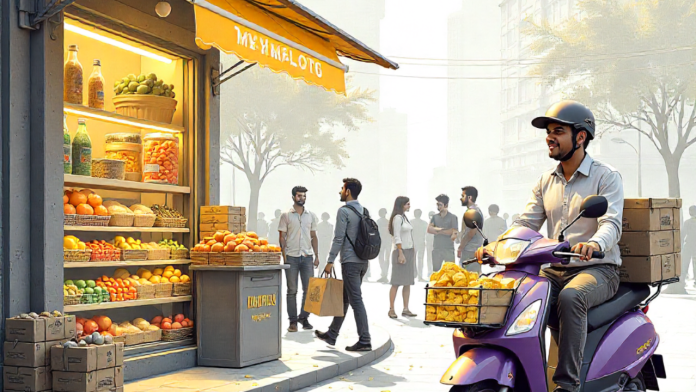
BigBasket has officially entered the ultra-fast food delivery race, quietly launching a 10-minute service in select Bengaluru neighborhoods. The service features a tight, curated menu of drinks, snacks, and heat-and-eat meals—many sourced directly from the Tata Group’s extensive food and hospitality ecosystem, according to a report by The Economic Times.
This move had been in the pipeline for a while. Back in December 2024, BigBasket’s co-founder and CEO, Hari Menon, hinted that the company would soon go beyond groceries—branching into quick-service food, expanding its catalogue to over 30,000 SKUs in major metros, and even exploring pharmaceutical deliveries via Tata 1mg.
Now that plan is taking shape, starting with food. BigBasket is drawing on some major names under the Tata umbrella: Starbucks India, a 50:50 joint venture with Starbucks Corporation, and Qmin, the delivery vertical from the Indian Hotels Company Limited (IHCL), known for Taj Hotels. Qmin delivers cuisine from top-tier restaurants and runs its own line of Qmin Cafes, including 11 in Bengaluru alone.
This rapid delivery rollout adds BigBasket to the list of players betting big on instant food gratification, a space that’s heating up fast in urban India. While the pilot phase is currently limited to certain parts of Bengaluru, sources suggest a phased expansion is already in the works.
By leveraging Tata Group’s rich F&B assets and deep logistics expertise, BigBasket isn’t just dipping a toe—it’s diving headfirst into a segment dominated by speed, taste, and convenience.
Swiss Men’s Grooming Brand TAILOR’S Enters ₹20,000-Crore Indian Market with Premium Line, Available Now at Looks Salon and Online
TAILOR’S, the high-end men’s grooming label born in Switzerland, has officially stepped into the Indian market, bringing its signature blend of precision, style, and substance to salons and shelves across the country.
The brand’s debut range, now stocked in all Looks Salon locations across India and available online at tailorsgrooming.in, is built around the idea that grooming isn’t just about upkeep—it’s about identity. From nourishing shampoos to styling solutions, every product in the line has been crafted with detail and intention.
A spokesperson for TAILOR’S commented on the launch, saying, “Grooming for men has gone from being an afterthought to a lifestyle statement. The Indian market, in particular, is seeing a major shift—men today want products that do more than just work. They want them to align with their personal style and standards. That’s the space TAILOR’S fits into perfectly.”
Launched in 2015, TAILOR’S Grooming was built around a single principle: no one-size-fits-all approach. Its formulations are tailored—hence the name—to the unique needs of men’s hair and scalp. With a focus on clean, high-performance ingredients and sleek, functional packaging, the brand has carved a niche in Europe and is now aiming to capture a new audience in India: the modern man who takes pride in how he looks and feels.
With the market for men’s personal care in India expected to cross ₹20,000 crore in the coming years, TAILOR’S isn’t just here to participate—it’s here to lead.
Suhana Khan Bags Major Adidas Deal: Becomes the New Face of ₹7,000-Crore Global Sneaker Icon — Adidas Originals Superstar
Suhana Khan has taken her first bold step into the world of global fashion with Adidas, becoming the newest face of their Originals Superstar sneaker campaign. The rising actor, already making waves in film and pop culture, now finds herself at the center of a brand known for merging street style with legacy.
Reflecting on the partnership, Suhana shared how deeply personal this moment is for her. “I’ve worn Adidas sneakers for as long as I can remember — they’re not just shoes, they’re memories. The Originals line is all about individuality and staying grounded in who you are, which is something I really connect with,” she said.
Her calm confidence and fashion-forward aesthetic bring a refreshing edge to the campaign. Adidas India’s general manager, Neelendra Singh, shared his enthusiasm about Suhana’s involvement: “She brings a new kind of energy to Adidas — youthful, sharp, and rooted in culture. Suhana doesn’t just wear the Superstar, she reinterprets it for today’s world. That’s exactly the kind of spirit we want to celebrate.”
The Adidas Superstar isn’t just a sneaker — it’s a global symbol that has walked through music, sports, and subcultures for decades. With Suhana in the spotlight, the campaign takes a step into the future while honoring everything that’s made the Superstar iconic.
With her film debut, The Archies, already generating buzz and another theatrical release (King) on the way, Suhana continues to shape her identity on her own terms. This collaboration marks another milestone — one that blends legacy and a bold new voice ready to lead the next generation.
Snitch Raises $40M in Series B Led by 360 ONE Asset, Plans 100+ Stores and Quick Fashion Deliveries Across India
In a bold move that signals its growing ambitions, men’s fashion label Snitch has secured $40 million in Series B funding, setting the stage for a dramatic expansion both within India and beyond.
The investment round was led by 360 ONE Asset, a Mumbai-based wealth and investment management firm. Joining them were existing backers IvyCap Ventures and SWC Global, along with the Ravi Modi Family Office—known for founding ethnic wear giant Manyavar—and a few seasoned angel investors.
At the heart of Snitch’s growth blueprint is a rapid retail rollout. The Bengaluru-based brand, which currently operates 55+ outlets, aims to nearly double that footprint to over 100 stores by the end of 2025. This comes on the back of strong unit economics and a loyal consumer base that’s been fueling the brand’s 120% year-on-year growth.
“This isn’t just capital—it’s conviction,” said Siddharth Dungarwal, Snitch’s founder. “It reaffirms our belief that Indian fashion doesn’t have to follow—it can lead. We’re building a high-velocity, homegrown brand that’s sharp, global, and unapologetically Indian.”
Beyond retail, Snitch is gearing up to enter quick commerce, with plans to deliver fashion to doorsteps within hours, aiming to match the urgency of modern shopping behavior. The brand also has its sights set on international markets and new lifestyle categories, extending its reach far beyond shirts and chinos.
Chetan Naik, Senior Fund Manager and Strategy Head – Technology at 360 ONE Asset, praised Snitch’s nimble structure: “They’ve cracked a rare code—blending rapid product launches with end-to-end control and smart manufacturing. The result is a brand that’s growing fast without burning through cash. That’s not easy to pull off.”
Founded in 2020, Snitch has quickly evolved from a pandemic-born D2C startup to a street-smart fashion disruptor. Its catalog now spans apparel, shoes, bags, perfumes, and sunglasses, designed to speak the language of Gen Z and millennial men.
Back in December 2023, Snitch raised ₹110 crore in Series A, using it to beef up tech infrastructure, expand product lines, and plant the seeds for its offline journey. That round paved the way for today’s momentum—and now, with a fresh $40 million in hand, the brand is moving fast, thinking global, and keeping its roots firmly in Indian soil.
IKEA to Boost India Sourcing from €400 Million to New Highs; Local Contribution to Jump from 30% to 50%
India has steadily climbed the ranks to become one of IKEA’s key sourcing partners — and now, the Swedish home furnishing giant is doubling down on its commitment to the country. The company plans to raise the share of locally sourced products for its Indian retail operations from the current 30% to 50%, while also scaling up exports from India for its global supply chain.
“This isn’t just about buying more from India,” said Christina Niemelä Ström, Head of Sustainability for Supply at Inter IKEA Group. “It’s about building deeper partnerships, expanding the product range we source here, and supporting local communities through job creation.”
At present, IKEA sources roughly €400 million worth of products from India each year, making it one of the top ten countries in its global procurement network. The current portfolio includes textiles, plastics, and metals — but that’s about to broaden. IKEA now plans to add larger categories such as sofas, mattresses, and storage units to its India-made product lineup.
Ström noted that India’s role is expanding on two fronts: helping meet the demand from Indian customers through higher local sourcing, and supporting global retail operations through exports. “The idea is to grow together,” she explained. “As India grows, so do our opportunities to collaborate and invest further.”
Although IKEA only entered the Indian retail market in 2018 with its first store in Hyderabad, it has had manufacturing and sourcing ties with the country for over 50 years. Since then, it has launched stores in Navi Mumbai and Bengaluru, with additional locations in Delhi-NCR and other cities under development.
“We’ve had a long-standing relationship with India — one we’re proud of. It’s not a short-term play for us,” said Ström. “We’re here for the long run and we believe deeply in what India has to offer.”
Sustainability is also a key pillar of IKEA’s India strategy. The company currently works with over 110,000 farmers to grow cotton using fewer pesticides, less water, and more eco-friendly practices — efforts that, Ström pointed out, help both the planet and the farmers’ incomes. “This isn’t a trade-off between cost and sustainability. It’s a win-win.”
Through its supply chain in India, IKEA directly supports around 100,000 workers at its supplier sites and another 270,000 indirectly through second-tier suppliers. Most of the cotton used in IKEA products today is sourced through certified schemes, ensuring it meets the company’s strict sustainability standards.
As part of its global climate goals, IKEA is aiming to cut its emissions by 50% by 2030 and reach net-zero status by 2050.
The Inter IKEA Group, which includes the global franchisor Inter IKEA Systems BV as well as the product development and supply arms, is the backbone that links the brand’s global franchisees with its manufacturing and sourcing network. And with India stepping into an even more central role, that backbone just got a bit stronger.
From Critic to Creator: Food Pharmer Revant Himatsingka Launches Clean Nutrition Brand ‘Only What’s Needed’
After years of calling out misleading food labels and exposing shady marketing tactics in the grocery aisle, Revant Himatsingka — better known on Instagram and YouTube as Food Pharmer — is finally flipping the script. He’s stepping out of the role of watchdog and into the founder’s chair with the launch of his clean-label nutrition brand, Only What’s Needed (OWN).
The debut product? A whey protein powder stripped of all the usual fluff — no artificial sweeteners, no fillers, and no unpronounceable ingredients. The soft launch is set for June, with a full rollout planned for July.
“I’ve always been the guy pointing out what’s wrong with food products. But now I want to be part of the solution,” Revant told Moneycontrol. “People often tell me, ‘We get it — this brand is bad, that brand is worse. But what should we actually buy?’ This brand is my answer to that.”
But OWN isn’t just Revant’s solo venture. It’s been built from the ground up with his online community — nearly every major decision has been crowdsourced. From the brand name (he originally considered calling it Take Charge) to the product category and even the ingredient list, it’s all been influenced by thousands of comments and polls from followers who wanted something better on the shelves.
“The name ‘Only What’s Needed’ came straight from a follower,” he says. “And the ingredients? People literally told us what they wanted — and what they didn’t.”
True to its name, OWN aims to keep things brutally simple. No extra sugar. No unnecessary additives. Just the basics, done right. Revant says that’s the entire point — giving people food that doesn’t require a PhD to understand.
“You should be able to look at a label and not feel like you’re decoding a science experiment,” he says. “The moment you put garbage in your body, you give up control. This is about taking back control — ownership, literally — over what you eat.”
But that simplicity doesn’t mean cheap. Revant is upfront: the product won’t be the lowest-priced option on the market. “Quality costs money,” he says. “But what we won’t do is burn crores on advertising. If I can cut down marketing costs by 20–30%, I’d rather pass that benefit to the customer.”
Initially, OWN will be available online via the brand’s website, as well as through Amazon, Flipkart, and quick commerce platforms. Offline expansion isn’t on the cards just yet. “Retail is a different beast,” he says. “And right now, we’re not trying to be everywhere — we’re trying to be right where it matters.”
To bring the idea to life, Revant has tied up with a manufacturing unit in Tirupati, which is also putting skin in the game by investing in the brand. That initial backing should keep the venture afloat for the first six months. After that, depending on traction, he’s open to raising more capital.
Kiranakart Technologies Pvt Ltd, the company behind quick-commerce platform Zepto, has landed in hot water with Maharashtra’s Food and Drug Administration (FDA), which has suspended its food business license following a surprise inspection of its Dharavi warehouse in Mumbai.
Regulators found multiple violations during the site visit—including moldy food items, unsanitary storage conditions, and food products stacked dangerously close to clogged, stagnant water. Inspectors also observed that cold storage units were not functioning at the required temperatures, and expired products had not been clearly separated from items still within their shelf life.
In its statement, the FDA said the infractions reflect a clear breach of food safety norms and licensing conditions. The suspension will remain in effect until the agency is satisfied that Zepto has addressed the issues and improved its facility standards.
A Zepto spokesperson acknowledged the situation, saying, “We take this matter seriously. A full internal audit is underway, and we’re cooperating closely with authorities to resolve all concerns as quickly as possible. Food safety is a core priority for us.”
The regulatory action marks a significant setback for Zepto, which has built its reputation on fast deliveries and convenience. But the findings at its dark store in Dharavi raise questions about how the company is maintaining quality and hygiene while scaling rapidly.
We use cookies to ensure that we give you the best experience on our website. If you continue to use this site we will assume that you are happy with it.