South Indian film star Nayanthara and director Vignesh Shivan
South Indian film star Nayanthara and director Vignesh Shivan, in collaboration with serial entrepreneur Daisy Morgan, have introduced their skincare brand called ‘9Skin.’
While the specific investment details for the project remain undisclosed, a joint statement has conveyed its commitment to reimagining skincare with a renewed focus on self-care and beauty.
Nayanthara and Vignesh have previously made investments in the beverage chain Chai Waale.
9Skin is set to introduce its premium product line in three markets: Singapore, Malaysia, and India.
Nayanthara said, “I am passionate about products that ensure the well-being of the skin without harming it in any way and this was also the inception point for 9Skin. Our investment in this brand is testament to the fact that we want everyone to be able to experience the magic of a healthy skincare routine with products that match their needs.”
Vignesh Shivan, Co-Founder, 9Skin, said, “We have put our hearts into creating a brand that stands for authenticity, quality, and inclusivity, because we believe that everyone deserves access to skincare that empowers and uplifts.”
According to projections from Research and Markets, the skincare products market in India is expected to achieve a valuation of $10.31 billion by 2028, with a compound annual growth rate (CAGR) of 8.25 percent.
Dressfolk, an ethical clothing brand specializing in Indian handloom, recently celebrated a prosperous seed funding round. The company secured an impressive investment of INR 3.3 crore, with All In Capital taking the lead as the primary investor. This funding round also witnessed strategic contributions from notable industry luminaries, including Sidhant Keshwani from Libas, Sidhesh Chauhan of Jade Blue, and Riju Jhunjhunwala from RSWM Ltd.
With this new injection of funds, Dressfolk aims to enhance its range of products, broaden its distribution networks, and expand both its workforce and operational capacity.
Aditya Singh, Co-Founder of All In Capital, expressed, “Dressfolk’s unique designs and distinct product range are reviving the popularity of Indian handloom. Sarees have emerged as one of the largest and fastest-growing segments in apparel, and we have confidence that Nitin and his team at Dressfolk will make a significant impact in the ethnic wear sector.”
Founded in 2017, Dressfolk was established with the goal of revitalizing traditional Indian weaves and uplifting local artisan communities. The company operates based on the belief that ethical business practices need not sacrifice speed, and scalability in fashion can be achieved without excessive haste.
Nitin Mehrotra, Founder and CEO of Dressfolk shared, “At Dressfolk, we draw inspiration from the past but create for the future. We design and co-produce all our garments with our artisan community from scratch. We are delighted that investors recognize the immense potential in our long-term vision of establishing the most captivating destination for luxurious and high-quality Indian handloom products. We take pride in being not just ‘Made in India’ but ‘Made of India’.”
At present, Dressfolk partners with more than 600 weavers and 120 artisans spanning six different states, catering to a global customer base. In addition to its official website, dressfolk.com, customers have access to its products through a variety of offline multi-brand outlets and online marketplaces.
Sidhant Keshwani, Founder of Libas commented, “India’s direct-to-consumer (D2C) market is growing, with fashion and clothing players claiming a significant share. However, this substantial opportunity comes with stiff competition, and we believe Dressfolk possesses all the essential elements to become a true disruptor and challenger brand in the luxury handloom segment.”
The funding round also attracted angel investors, such as Vikrampati Singhania from JK Family Office, FinFirst Advisors, Apurva Ramesh Damani from Damani Family Office, and Pranav Sanghvi of Petronas. Notable individuals on Dressfolk’s list of investors include Prabhtej Singh Bhatia, a serial entrepreneur and co-founder of Falcon, Vidur Kataria, the founder of MasterChow, Arjit Johri from Marshot Ventures, Harbir Singh Banga of Victoria Group, Samyak Deora of Deora Group, Adit Desai of Doc Tutorials, and Megha Vishwanath, a former business journalist and marketer.
Looking ahead, Dressfolk’s long-term vision is to position itself as the ultimate destination for luxurious and top-quality Indian handloom products.
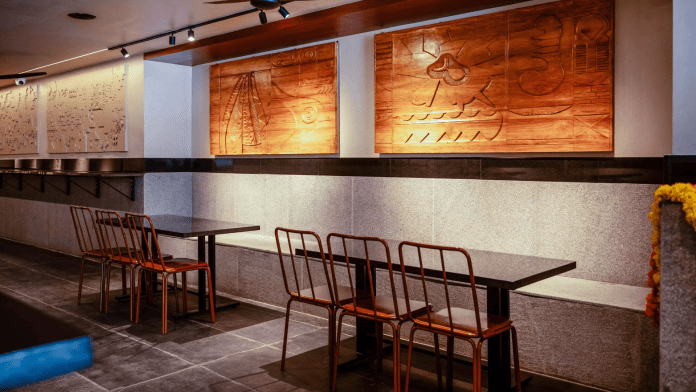
Vedam, a dining establishment that draws inspiration from the rich historical and traditional heritage of South Indian cuisine, has officially opened its doors to the public in the vibrant city of Bengaluru.
Located within the Goldsand Building, in close proximity to Wipro Gate, Kaikondrahalli, Bengaluru, Vedam is a fast-casual culinary treasure that guarantees a delightful expedition into the essence of South Indian cuisine. Fueled by a dedication to authenticity, purity, and innovation, Vedam’s expert chefs have meticulously crafted a menu that highlights the lively tastes of South India. This menu not only upholds time-honored traditions but also embraces modern culinary techniques.
Vedam transcends the definition of a mere restaurant; it represents a vibrant cultural tribute to South Indian cuisine. Its founders, Rohin Razdan, Praveen Singh, and Methil Razdan, bring a wealth of culinary expertise and a profound connection to the flavors of South India. Their unwavering commitment to culinary mastery has culminated in a dining experience where each bite narrates a rich and flavorful story.
Discussing the launch, Rohin Razdan, Founder of Vedam, spoke on behalf of his co-founders, stating, “Our restaurant is a testament to our deep-rooted passion for South Indian cuisine, and we are elated to embark on this culinary journey with the Bengaluru community. Our primary goal is to provide an experience that authentically respects the traditions of South India while embracing the evolving tastes of today’s diners. Currently, we are dedicated to introducing Bengaluru residents to the rich diversity of our cuisine, adding a contemporary twist to beloved traditional flavors at Vedam.”
With seating for 42 guests and additional standing space for over 60, Vedam harmoniously blends tradition and innovation to offer a captivating and authentic South Indian dining experience. From its atmosphere to its interior design, Vedam pays a heartfelt tribute to the vibrant heritage of South India, embellished with intricate patterns, soothing color palettes, and cultural motifs that transport diners straight to the heart of South India.
The restaurant has ambitious expansion plans, as the founders intend to launch new branches in the next 12-18 months. These expansions won’t be limited to Bengaluru alone; they’re also eyeing other locations for growth.
Just a day before the commencement of its festive season sale, Meesho disclosed that it had secured approximately 1 crore orders from its pre-festive season promotions during Onam, Raksha Bandhan, and Ganesh Chaturthi. Moreover, during this four-day sale event, the ecommerce unicorn stated that it had successfully attracted over 50 lakh new customers.
Notably, Meesho revealed that a substantial 75% of the demand came from Tier II cities, which encompassed places like Amravati, Aurangabad, Dehradun, Nellore, Solapur, and Warangal. Within the last two months, the platform asserts that it has successfully welcomed 2 lakh new sellers into its community.
Commenting on the development, Megha Agarwal, CXO, Growth at Meesho said, “As we gear up for the upcoming festivities, we are certain to see the momentum uplift for categories such as Personal Care & Beauty, Home & Kitchen as well as Electronic Accessories to grow by more than 100%, when compared to 2022.”
Additionally, she mentioned that the company’s strategic initiatives, such as enhancing product selection and improving product discovery, played a significant role in boosting order growth.
Established in 2015 by Vidit Aatrey and Sanjeev Barnwal, Meesho operates as an ecommerce marketplace catering to both consumers and resellers. Since its inception, the company has successfully secured nearly $1 billion in funding from notable investors, including Peak XV, SoftBank, Prosus & Naspers, and Meta, among others.
The platform takes pride in its impressive statistics, with 1.4 million sellers and around 120 million product listings spanning across 30 different categories.
Earlier this week, the company made another announcement about its decision to onboard non-GST registered sellers on the platform. This move is in accordance with the recent announcement by the GST Council, which allows ecommerce platforms to include sellers with a turnover of up to INR 40 lakh, thus aiming to expand its seller base.
The launch precedes the ‘Meesho Mega Blockbuster Sale,’ scheduled to begin tomorrow, October 6th. In order to actively involve both customers and sellers during this sale event, Meesho has introduced a loyalty program. Under this program, eligible users can accumulate Smart Coins that can be later redeemed for product purchases on the platform.
In the meantime, Flipkart, Amazon, and Snapdeal are all gearing up for their upcoming festive sales set to kick off on October 8th.
According to a study by Redseer, approximately 140 million shoppers are anticipated to make purchases during the festive season this year. The study also indicates that the gross merchandise value (GMV) of the Indian ecommerce sector is projected to increase by 18-20%, reaching INR 90,000 crore compared to INR 76,000 crore last year.
Hospitality firm Atmosphere Core on Thursday made a noteworthy announcement, disclosing their ambitious plans to enter the Indian market. As part of this strategic move, they proudly confirmed the signing of contracts for eight hotels and resorts. The first of these properties is poised to open its doors in Kolkata between April and June of 2024. Subsequently, Atmosphere Core will unveil seven more properties, strategically positioned in popular destinations such as Goa, Bengaluru, Bhopal, Coorg, Kannur, Bhubaneswar, along with an additional one in Kolkata.
The company announced that they will manage certain properties under their own brand, while others will fall under a different brand. However, they did not provide any additional information regarding this arrangement.
“India’s rich cultural tapestry and diverse landscapes offer immense potential for extraordinary hospitality. With our commitment to sustainability and the ‘Joy of Giving,’ we aim to create a hospitality legacy in India,” Atmosphere Hospitality’s Chairman Dipti Ranjan Patnaik stated.
The company, having introduced three brands and established eight resorts in the Maldives over the past decade, revealed its intention to expand its portfolio to a total of 25 properties in India by 2025.
“Our commitment to organic growth, sustainable development, and distinctive brand experiences has transformed the Maldives, and we are thrilled to bring this transformation to India,” said Salil Panigrahi, Managing Director of Atmosphere Core.
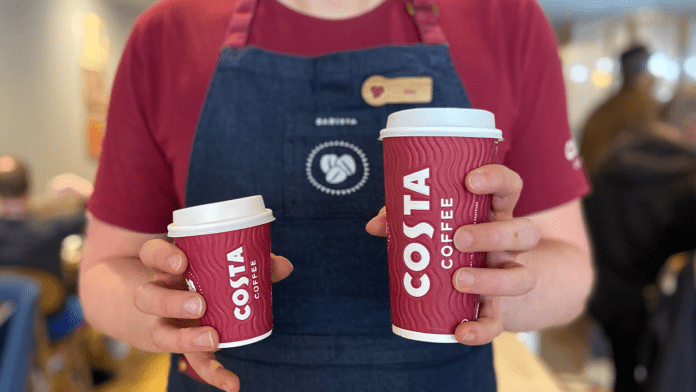
PVR Inox, the prominent multiplex chain, has forged a strategic partnership with Devyani International Ltd, the franchise holder for Costa Coffee, to offer high-quality coffee at designated premium locations.
“PVR INOX Ltd has entered into an arrangement with Devyani International Ltd on October 4, 2023, for introducing Costa Coffee’s handcrafted hot and cold coffees at some of the Company properties,” PVR Inox said in a regulatory filing.
In a similar filing, Devyani International Ltd (DIL) said it has entered into an arrangement with PVR INOX, for introducing Costa Coffee’s handcrafted hot and cold coffees at some of the PVR INOX properties.
Costa Coffee, a British coffee chain brand under the ownership of Coca-Cola, is extending its footprint in the Indian market.
Devyani International Ltd (DIL), the master franchiser, is pursuing an “accelerated expansion” strategy and has inaugurated 57 new stores during FY23, increasing the total store count to 112. The primary focus of this expansion is on metropolitan and tier 1 cities, where the coffee culture is flourishing.
In response to this development, Abneesh Roy, Executive Director of Nuvama Institutional Equities, mentioned that PVR INOX will be launching Costa Coffee outlets in their upscale properties.
“Given that hot beverages till now have been a small business for PVR INOX, we see this as an attempt to make it bigger. We see this as another move by PVR to premimise and diversify its F&B offerings to consumers and maintain BUY on PVR. PVR already is one of the large F&B retailers in India,” he said.
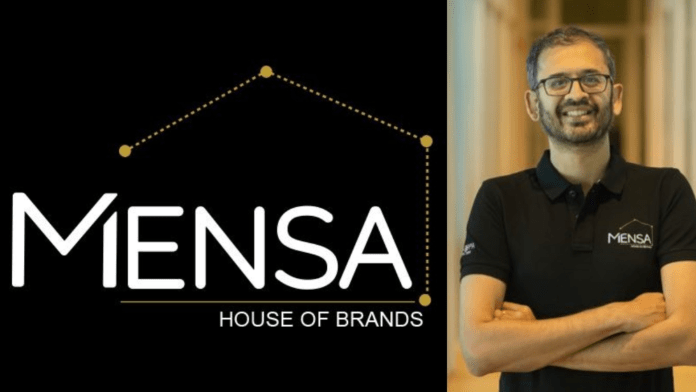
Mensa Brands, a unicorn in the realm of house of brands, has secured $40 million in growth capital from EvolutionX Debt Capital. This financing comprises a mix of debt facility and convertible investment.
With this recent injection of funds, Mensa Brands intends to further its investments in brand development.
“In the last 2 years, we have profitably scaled more than 20 brands across beauty and FMCG, fashion, home and consumer electronics. We plan to use this new funding to continue building consumer-loved brands for the next-generation of India,” said Ananth Narayanan, Founder and CEO of Mensa Brands.
Established in 2021 by Narayanan, the former CEO of Myntra, Mensa Brands presently manages a diverse portfolio of brands such as Pebble, MyFitness, Dennis Lingo, and Villain. With $200 million raised solely in equity, the company boasts prominent global investors including Accel Partners, Falcon Edge Capital, Prosus, and Tiger Global Management.
The company has previously secured debt financing from notable firms such as Alteria Capital, InnoVen Capital, Stride Ventures, and TradeCred.
In November 2021, Mensa Brands secured $135 million in funding, resulting in a valuation of the company at more than $1 billion.
Rahul Shah, a partner at EvolutionX Debt Capital, expressed his confidence in Mensa’s ability to enhance the revenues and margins of digital-first consumer brands through the strategic use of technology and brand-building initiatives.
“Mensa has proven its execution capabilities with successful acquisition of multiple brands, and we look forward to supporting the company’s journey as it continues to grow its brands both in domestic and international markets,” said Shah.
Mensa Brands recently made its entry into the UAE market, unveiling three of its brands – Villain, Pebble, and Folkulture – on both Amazon and the Saudi e-commerce platform Noon.
Meanwhile, it’s important to highlight that this recent fundraising effort follows the company’s decision to reduce its workforce by approximately 30 employees at India Lifestyle Network (ILN), a brand it acquired in December of the previous year.
In its first year of operations in FY22, Mensa Brands reported a net loss of INR 96.62 crore while generating a total income of INR 217.89 crore.
Baskin Robbins, the renowned global ice cream manufacturer, anticipates a potential 25% year-on-year growth during the upcoming festive season.
The company pioneering innovative ice cream concepts has experienced increased demand from metropolitan and tier-one cities within the country.
“We have already witnessed promising early festivities and the momentum suggests a robust festive season ahead. It appears to be even better than the previous year, and our growth trajectory remains strong. We should anticipate a growth rate of atleast 20-25 per cent compared to last year,” said Mohit Khattar, CEO, of Graviss Foods Pvt Ltd.
Graviss Foods, the franchise partner of Baskin Robbins in India, is set to expand its footprint by opening 100 new stores in various cities this year. Additionally, they will introduce a novel concept called the ‘plant sundae,’ featuring edible soil made entirely from ice cream, presented in the form of a potted plant.
“The new stores are strategically spread across the country. By the end of the year, we anticipate reaching a total of approximately 950 parlours. Our approach has evolved over the years and we encompass fresh formats, innovative products and unique sundaes. Earlier this year we introduced ice cream pizzas and ice cream rocks. One can enjoy our ice cream pizzas at our parlours in more than 250 cities,” said Khattar.
Baskin Robbins anticipates a 30% year-on-year growth in the first half of the year, with an impressive 100% growth observed in the quick commerce sector.
“While the numbers for the recently concluded H1 are still being compiled, This is particularly impressive considering that last year itself was marked by robust growth. The festive season, coupled with events like the World Cup, is expected to contribute positively to the brand. Additionally, with elections on the horizon, there could be a further boost in the last quarter of the year. The growth in quick commerce has been substantial, consistently exceeding 100 per cent year-on-year for the past two years. We are on track for another 100 per cent or more increase over the previous year. quick commerce is thriving in metro cities, we haven’t observed a similar uptick in smaller cities,” added Khattar.
One essential reality persists in the shifting business landscape: identifying your target audience is critical. However, it is astonishing how often this important phase is neglected or rushed.
Imagine trying to hit a target with a bow and arrow without knowing where the bullseye is. It’s not just challenging; it’s nearly impossible. In the business world, your target audience is your bullseye. Hitting it with your products or services requires precision, and that precision comes from a deep understanding of who your audience truly is.
Defining Your Target Audience
Defining your target audience is a nuanced process that involves more than just demographic data. It’s about understanding the core characteristics, motivations, needs, and behaviors of the people most likely to engage with your brand. Here’s how to go from vague to valuable:
1. Start with Research
Begin by conducting thorough research. Analyze your existing customer base, collect data on their demographics, and survey them to understand their preferences and pain points. Look for patterns and trends that can help you identify commonalities.
2. Segment Your Audience
Not all customers are the same, and that’s where segmentation comes in. Divide your audience into distinct segments based on shared characteristics. For example, you might have segments like “young professionals,” “families,” or “retirees.”
3. Create Customer Personas
Personas are detailed, fictional representations of your ideal customers within each segment. They go beyond demographics and delve into psychographics, such as values, interests, and behaviors. Personas humanize your audience and make it easier to tailor your messaging.
4. Analyze Your Competitors
Study your competitors and their audiences. What types of customers are they targeting, and how are they doing it? This can provide valuable insights into potential gaps or opportunities in the market.
5. Identify Pain Points and Needs
What problems can your products or services solve for your audience? What needs can you fulfill? Understanding these pain points and needs will help you align your offerings with what your target audience truly values.
6. Refine Your Messaging
Crafting the right message is essential. Your messaging should resonate with your target audience’s values, aspirations, and challenges. Speak their language and show how your brand can make a meaningful difference in their lives.
7. Test and Iterate
Defining your target audience is not a one-time task. It’s an ongoing process. Continually test your assumptions, gather feedback, and refine your audience definitions as you gain more insights and data.
The Benefits of Precision
Precision in defining your target audience yields numerous benefits:
Efficient Marketing: Targeted marketing efforts are more cost-effective and yield higher conversion rates.
Stronger Brand Loyalty: When your audience feels understood, they are more likely to become loyal customers.
Innovative Product Development: A deep understanding of your audience’s needs can lead to innovative product or service offerings.
Clearer Decision-Making: Knowing your target audience guides decision-making at all levels of your business.
The Bottom Line
Defining your target audience is a journey that transforms vagueness into a valuable asset. It’s about peeling back the layers to reveal who your customers truly are, what they need, and how you can provide it. By investing time and effort into this process, your business can better connect with the people who matter most and, in turn, achieve greater success in the competitive business landscape.
In a world overflowing with culinary options, standing apart in the food market may be a difficult endeavor. However, for those who have perfected the art of specialized marketing, the rewards are both tasty and profitable.
Catering to a specialized, well-defined target population with distinct tastes, interests, and dietary needs is what niche marketing in the food sector entails. It’s all about providing a one-of-a-kind culinary experience for a restricted group of foodies. Here are some ideas for creating culinary exclusivity:
1. Define Your Niche
The first step in niche marketing is to clearly define your target audience. Who are the food lovers you want to attract? Consider factors such as age, location, dietary preferences (e.g., vegan, gluten-free), and culinary interests (e.g., Italian cuisine, gourmet burgers). The more specific and detailed your niche, the better.
2. Develop a Signature Offering
Once you’ve identified your niche, create a signature offering that caters to their unique tastes. This could be a specialty dish, a unique cooking technique, or an exclusive ingredient that sets your brand apart. Make it a centerpiece of your menu and branding.
3. Tell a Compelling Story
Every successful niche brand has a compelling story to tell. Share your journey, your passion for food, and the inspiration behind your culinary creations. Authentic storytelling helps create an emotional connection with your audience and reinforces your brand’s exclusivity.
4. Embrace Visual Storytelling
In the age of Instagram and food blogs, the visual appeal of your dishes is paramount. Invest in professional food photography and create a consistent visual style for your brand. High-quality, appetizing images can attract and retain customers in the digital era.
5. Cultivate an Online Presence
Leverage the power of digital marketing to reach your niche audience. Create a captivating website, engage on social media platforms popular with your target demographic, and consider email marketing to keep your audience informed about special offerings and events.
6. Collaborate and Network
Building culinary exclusivity often involves collaborating with like-minded businesses or food influencers who share your niche’s interests. Collaborations can introduce your brand to a wider audience and create a buzz around your unique offerings.
7. Host Exclusive Events
Organize exclusive events, such as pop-up dinners, cooking workshops, or food tastings, to engage directly with your niche audience. These events can create a sense of community and excitement around your brand.
8. Listen to Feedback
Pay close attention to feedback from your niche audience. Use their comments, reviews, and suggestions to refine your offerings and enhance the customer experience continually.
9. Be Consistent
Consistency is key to building a strong niche brand. Maintain the quality and uniqueness of your offerings, both in terms of taste and presentation. Consistency reinforces your brand’s exclusivity and reliability.
10. Evolve and Adapt
The food industry is ever-changing, and staying relevant requires adaptability. Keep an eye on industry trends and be willing to evolve your offerings to meet the evolving tastes and preferences of your niche audience.
Niche marketing in the food industry is a recipe for success when executed thoughtfully. By defining your niche, creating signature offerings, telling a compelling story, embracing visual storytelling, and cultivating a strong online presence, you can craft culinary exclusivity that sets your brand apart. With dedication, creativity, and a deep understanding of your target audience, your food venture can not only survive but thrive in the competitive world of culinary delights.
We use cookies to ensure that we give you the best experience on our website. If you continue to use this site we will assume that you are happy with it.