Sunday, January 25, 2026
Home Blog Page 895

Amul predicts price stability for the year amid beneficial conditions

0
Amul milk
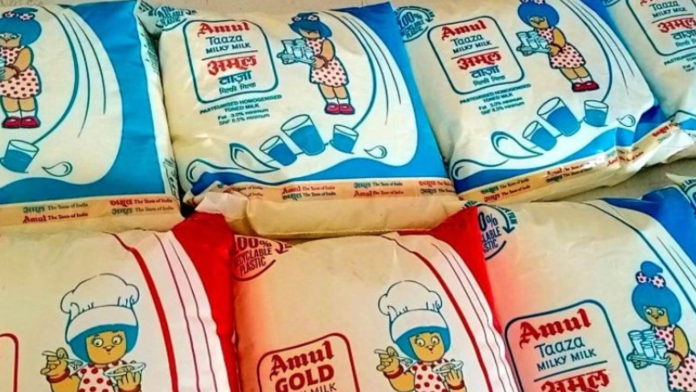
Amul milk (Representative Image)

Amul is not expecting any price increases this year due to favorable conditions. According to Jayen S Mehta, the Managing Director of the Gujarat Cooperative Milk Marketing Federation (GCMMF), timely monsoon rains in Gujarat and the commencement of a robust milk procurement season have contributed to a positive outlook. GCMMF markets its dairy products under the renowned Amul brand.

“The situation is pretty good this year because of timely monsoon in Gujarat at least which means the pressure on producers for the feed and fodder cost is not high, and we are entering the flush season of milk procurement, so we are not anticipating any hike,” Mehta said.

He made this statement in response to an inquiry regarding the possibility of price increases in the upcoming months.

Regarding their investment strategy, he mentioned that they are currently allocating approximately INR 3,000 crore annually, and this commitment is expected to continue for the foreseeable future.

“…with increase in milk procurement and processing facilities also need expansion, we will be announcing a new dairy plant at Rajkot…with a capacity of more than 20 lakh litres per day, and a new packaging and processing units also there,” Mehta said.

He also noted that they intend to allocate a minimum of INR 2,000 crore for the Rajkot project, with several additional projects simultaneously in progress.

In response to inquiries regarding specific trading partners such as the European Union (EU) seeking import duty concessions within the context of free trade agreements (FTAs), Mehta emphasized that milk serves as a livelihood for over 100 million families in the nation, with the majority of producers being small-scale and subsistence farmers.

“If the developed countries want to dump their surpluses into our country, it becomes a problem for our farmers and that’s what Amul has represented several times to the government,” he said adding the government also understood this the core issue and that is why the dairy sector has been kept out in all FTAs.

“India allows import of dairy goods like European cheese at a marginal 30 per cent duty…Those countries do not reciprocate this. It is difficult to export dairy products to EU … The US has duties from 60-100 per cent…India is an open market but here we don’t want their surpluses to come at a cheaper rate and harm the livelihood of our small farmers,” he said.
Advertisement

Meatable set to debut cultivated pork products in Singapore by Q2 2024

0
Meatable
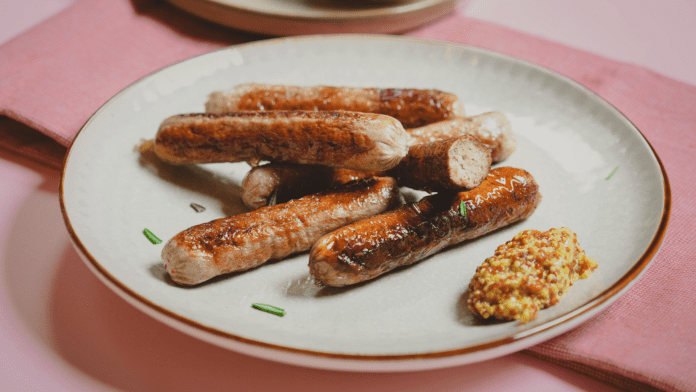
Meatable's cultured pork offerings feature sausages comprising 33 percent cultivated meat, with the remaining ingredients sourced from plants.

Meatable, a Dutch food-tech company, plans to introduce its first line of cultured pork products in Singapore by the second quarter of 2024, pending the necessary regulatory approvals.

The company selected Singapore as its initial market because it was the first country to legalize and authorize the sale of cultured meat products.

Caroline Wilschut, Chief Commercial Officer at Meatable, acknowledged the support of the Economic Development Board of Singapore and the local food authorities during the company’s journey.

These intentions follow Meatable’s successful funding round of $35 million, which was secured in August.

Meatable is collaborating with contract manufacturer Esco Aster to produce cultivated pork in Singapore. Esco Aster secured a license from the Singapore Food Agency for the production of cultured animal cells in September 2021.

Utilizing its patented technology, the company can cultivate a product from pig stem cells in just eight days.

Meatable’s cultured pork offerings feature sausages comprising 33 percent cultivated meat, with the remaining ingredients sourced from plants.

The predominant flavor of pork is largely derived from the pork fat, constituting the major portion of the 33 percent cultivated meat.

The initial rollout in the second quarter of 2024 will be on a limited scale, with chosen restaurants and retailers offering the cultivated pork products. The transition to full-scale industrial operations is planned for sometime in 2025, when Meatable intends to make its products widely available throughout Singapore.

To cut production expenses, Meatable has opted for off-the-shelf bioreactors instead of creating and constructing custom ones, which sets it apart from its counterparts in the cultivated meat industry. This approach presents fewer challenges when it comes to expanding production capacity.

“Our process works in off-the-shelf bioreactors… It is very common in the pharmaceutical industry and we don’t expect any problems in scaling with them,” said Hans Huistra, chief operating officer, Meatable.

However, the most substantial expenses at present are related to the growth media and the initial capital investment required for establishing manufacturing facilities. Nonetheless, Meatable has managed to alleviate a portion of these costs through its collaboration with Esco Aster.

The price of the products will be similar to that of organic meats, said Wilschut.

“We are not adding a premium to what restaurants normally sell their dishes for,” she said.

Sausages are what Meatable will be selling at its launch, but other products may be added based on feedback from customers.

Advertisement

Cut+Dry breaks new ground with ‘Yes, Chef’ AI tool tailored for US food distributors

0
Cut+Dry
Cut+Dry

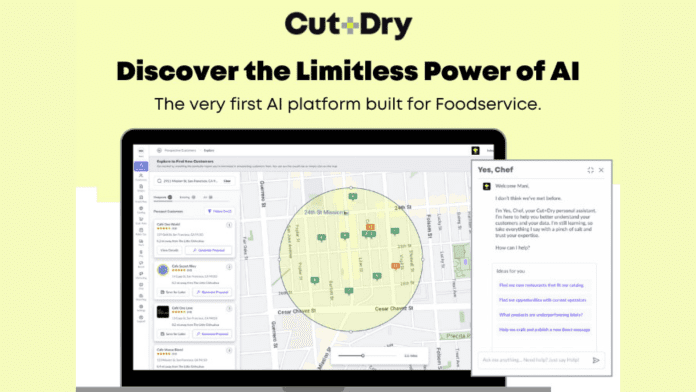
Cut+Dry, a leading provider of e-commerce solutions for the foodservice industry, has unveiled its latest artificial intelligence (AI) tool, ‘Yes, Chef,’ tailored specifically for the foodservice sector.

Exclusively crafted for foodservice distributors within the US, ‘Yes, Chef’ is aimed at assisting distributors in boosting revenue while reducing operational costs.

Cut+Dry co-founder and CEO Mani Kulasooriya said, “Artificial Intelligence is the natural next step to support distributors as they grow their business with Cut+Dry.

“We’re the first in the industry to combine an e-commerce platform with AI applications, providing a unique and applicable solution to challenges faced every day by foodservice distributors.”

‘Yes, Chef’ is the company’s first AI tool for foodservice distributors, meticulously designed to tackle customer support challenges.

According to the company, it will guarantee that each sales representative possesses the appropriate tools for enhanced marketing to restaurant operators.

Furthermore, the tool provides insights into customer behavior, order patterns, product catalogs, and marketing solutions. It also includes utilities for identifying underperforming SKUs.

Cut+Dry COO and Co-Founder Jim O’Connor said, “The foodservice industry is undergoing a big but long overdue transition of blending traditional operations with a digital-first customer experience mindset.

“Artificial Intelligence is an amazing opportunity for distributors of all sizes to catch up with the large broadliners who have a head start in developing digital customer experiences. The range of applications to the traditional distributors business is incredibly broad, from enhancing the customer experience to boosting their bottom lines.

“Going through a digital transformation is no longer optional and these new opportunities will allow you to catch up with your counterparts with lightning speed.”

Advertisement

Liquor revenue surges despite efforts to reduce consumption in Andhra Pradesh

0

On Tuesday, the state government conveyed to the assembly that the revenue generated from liquor sales in Andhra Pradesh has consistently increased over the last five years.

Revenue has seen a substantial growth of almost 36 percent since 2019. Nonetheless, Deputy Chief Minister (Excise) K. Narayana Swamy emphasized the government’s unwavering commitment to a policy aimed at reducing alcohol consumption levels in the state, affirming its continuity in the future.

He mentioned that the state government has undertaken various initiatives to curtail alcohol consumption. This includes the closure of approximately 43,000 belt shops and a reduction in the number of retail outlets from 4,380 to 2,934. In response to questions from TDP members Adireddy Bhavani, Anagani Satyaprasad, Dola Balaveeranjaneya Swamy, Nimmala Ramanaidu, Bendalam Ashok, and K Atchannaidu during the question hour on Tuesday, the Deputy Chief Minister also noted that the government has eliminated permit rooms, which were facilities for consuming liquor adjacent to retail shops.

He mentioned that they have additionally reduced the operating hours of retail liquor outlets, which were previously exclusively managed by the state beverages corporation.

He stated that the government had increased penalties for excise violations in order to deter illegal sales.

“We are committed by an owed policy to reduce alcohol consumption and are taking all possible measures to bring down consumption,” said Narayana Swamy.

Nevertheless, the Deputy Chief Minister pointed out that revenue from liquor sales has shown an upward trend over the past five years. Specifically, he mentioned that in 2019, revenues stood at approximately INR 17,473 crore, which increased to INR 17,890 crore in 2020. Furthermore, the figures climbed to INR 21,432 crore in 2021 and reached a remarkable INR 23,785 crore in 2022.

He indicated that the state government had accumulated INR 10,764 crore up to August 2023, covering the first five months of the current fiscal year. This translates to an average of approximately INR 2,152 crore per month. If this ongoing pattern persists, it is anticipated that the total revenue from liquor sales for the fiscal year 2023-24 could surpass the INR 25,000 crore milestone.

Advertisement

Lotte invests INR 185 Crore to ramp up Choco Pie production at Chennai factory

0
Choco Pie
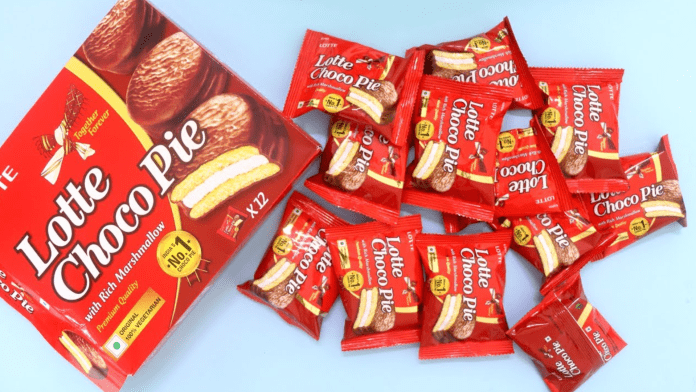
Choco Pie (Representative Image)

LOTTE India, a prominent chocolate manufacturer and supplier, has significantly boosted its production capacity at its Tamil Nadu factory through a substantial investment of INR 185 crore. Situated on an expansive 85,562 sq ft parcel of land in the vicinity of Nemam, this facility is poised to significantly augment the production of LOTTE’s esteemed Choco Pie range.

“The investment will play a key role in strengthening LOTTE India’s strong leadership in the Indian confectionery market,” a company statement here said. The facility would generate 200 jobs in the region.

“This expansion builds on LOTTE India’s rich history in India and comes at an exciting time for our overall investment and growth in the country.” said company managing director Milan Wahi.

The facility has undergone significant expansion, adding an extra 85,562 sq ft, resulting in a substantial growth from 18 to 32 percent. This transformation solidifies its position as one of India’s largest factories, now encompassing a total area of 516,398 sq ft for LOTTE India, as stated by Wahi.

“Our state-of-the-art factory in Nemam has been accoladed for maintaining the highest safety and hygiene standards since its inception in 2010. With a 99 per cent retention rate at the factory, Lotte India is now set to warmly welcome 200 workmen in its expanded factory,” he said.

With the enhanced production capacity now reaching 1,420 tonnes per month, this substantial increase positions LOTTE India to effectively address the growing demand for its products within the domestic market. Moreover, it opens up potential opportunities for future exports, as mentioned by Wahi.

In addition to its advanced Choco Pie manufacturing plants in Chennai and Rohtak (Haryana), LOTTE India operates its own confectionery production facility in Nellikuppam, near Puducherry. The company also collaborates with seven other manufacturing units located across the country to outsource the production of confectionery products, as outlined in the statement.

Advertisement

Dia Mirza invests in BabyChakra to promote sustainable parenting and safe baby care products

0
Dia Mirza
Dia Mirza

UN Goodwill Ambassador Dia Mirza has made an investment in BabyChakra, a company specializing in parenting communities and baby care products.

In her capacity, Mirza will spearhead efforts at BabyChakra to integrate sustainable and eco-friendly care practices into their product lines. This initiative aims to ensure the incorporation of natural, dermatologically tested, toxin-free, and allergen-free ingredients while adhering to global safety standards, as stated by the company.

“Dia Mirza’s passion for sustainable and clean care aligns perfectly with our vision of providing the safest and best possible care for mothers and babies. She has been an inspiring and globally respected advocate of all things good, clean label and sustainable and reflects the aspirations of mothers across India for something exponentially better for themselves, their families and the planet,” Naiyya Saggi, Group Co-Founder, Good Glamm Group and CEO, Good Community, said.

Furthermore, Mirza will engage with more than 30 million mothers through the Good Community division, fostering connections, sharing personal narratives, gaining insight into transformations, and offering support to mothers and children nationwide.

“As a new mother, I have experienced the transformative journey of motherhood first-hand. I resonate with BabyChakra’s community-first mission to co-create the safest, cleanest label care for children. I am also inspired by the transparency that BabyChakra has fostered in India for the first time through its National Label Literacy campaign: Label Padho Moms,” actor and UN Goodwill Ambassador Dia Mirza added.

Established in 2015 by Naiyya Saggi, BabyChakra is a direct-to-consumer (D2C) baby care brand that links 39 million mothers and 10,000 doctors across India, delivering them pertinent information and customized content.

In August 2021, the Mumbai-based startup was purchased by the direct-to-consumer cosmetic brand MyGlamm.

In May 2022, the company introduced a series of baby products that are free from phenoxyethanol and artificial fragrances, featuring organic active ingredients. These products were collaboratively developed with input from both mothers and doctors.

Advertisement

Nat Habit to secure $9 Million in new funding round led by Bertelsmann

0
Nat Habit
Nat Habit

Natural personal care D2C brand Nat Habit is set to conclude a recent funding round, with leading participation from both new and existing investors. This marks the company’s first funding round of 2023 and its second in the past 18 months, as reported by three knowledgeable sources.

“Bertelsmann is in late-stage talks to lead a $8-9 million Series A round in Nat Habit,” said one of the sources requesting anonymity. “The terms of the deal are in the final leg of negotiation. If things remain on track, then the transaction is likely to materialize in less than a month.”

As per insider information, Nat Habit is anticipated to attain a valuation of approximately INR 300 crore, equivalent to $35-36 million, in the prospective funding round.

Established in 2019, Nat Habit asserts that its range of beauty and wellness products falls under the Ayurvedic category, boasting an absence of any chemicals or preservatives. In April 2022, the company successfully secured $4 million in funding, spearheaded by Fireside Ventures, along with continued support from existing investors. In its initial financing round in 2021, Nat Habit attracted $2 million in investments, with contributions from Surge Ventures, Titan Capital, Whiteboard Capital, as well as a group of angel investors that included Neeraj Kakkar, Devendra Chawla, and Suhasini Sampath.

In June 2022, Bertelsmann India announced a $500 million fund to support new startups and provide follow-on investment in their existing portfolios. Nat Habit is set to receive funding from this fund.

Inquiries directed to Nat Habit and Bertelsmann yielded no response.

As of now, Nat Habit has not submitted its audited financial statements for FY23. However, according to data obtained from the startup intelligence platform TheKredible, the company recorded INR 16.29 crore in revenue during FY22, alongside a loss of INR 4.99 crore.

Over the past year, there has been a slowdown in funding for Direct-to-Consumer (D2C) brands. According to TheKredible, in 2021, D2C startups secured $1.73 billion across 135 deals. However, this figure saw a minor decline in 2022, with 132 startups raising $1.38 billion. So far in 2023, 101 startups have raised a little over $1 billion.

Advertisement

Unveiling the Unknown: How to Educate Consumers About Your Product

0
Educate Consumers

Understanding your ideal customer is one of the core pieces of the jigsaw in the ever-changing environment of business and marketing. Identifying and engaging with the correct audience is critical for every company that wants to succeed and expand. 

The Importance of Product Education

Effective product education is more than just marketing; it’s about empowering consumers with the knowledge they need to make informed choices. Here’s why it’s essential:

  • Reduce Uncertainty: When consumers understand your product or service thoroughly, they are less likely to have reservations or uncertainties about its value.
  • Boost Confidence: Educated customers have greater confidence in their purchasing decisions, leading to increased trust in your brand.
  • Minimize Returns and Complaints: Proper product education can help prevent misunderstandings and dissatisfaction, leading to fewer returns and complaints.
  • Differentiation: Highlighting the unique features and benefits of your offering through education can set you apart from competitors.
Strategies for Effective Product Education
  • Create Comprehensive Product Documentation

Develop detailed product documentation that includes user manuals, how-to guides, FAQs, and troubleshooting resources. Make these materials easily accessible on your website and within the product’s packaging.

  • Leverage Visual Content

Use visuals such as images, infographics, and videos to explain how your product works and its benefits. Visual content is often more engaging and easier to understand than text alone.

  • Implement Interactive Tutorials

Create interactive tutorials or onboarding sequences for complex products or software. These step-by-step guides can help users get started and feel confident in using your product.

  • Host Webinars and Workshops

Organize webinars or workshops where you can provide in-depth information about your product, answer questions in real-time, and demonstrate its value to attendees.

  • Engage in Content Marketing

Develop a content marketing strategy that includes blog posts, articles, and case studies that showcase the benefits and use cases of your product. Optimize this content for relevant keywords to improve SEO.

  • Customer Support and Training

Offer customer support channels and training programs that cater to customers’ needs. Ensure that your support team is knowledgeable and responsive.

  • User-Generated Content

Encourage satisfied customers to share their experiences and insights about your product through reviews, testimonials, and user-generated content. This adds authenticity to your product education efforts.

  • Personalized Recommendations

Leverage customer data to provide personalized product recommendations and usage tips based on individual needs and preferences.

  • Highlight Success Stories

Share success stories and case studies that demonstrate how your product has helped customers solve real-world problems or achieve their goals.

  • Feedback Loops

Create feedback loops that allow customers to provide input and suggestions for product improvements. Show them that you value their insights.

  • Measure and Iterate

Use analytics and feedback data to assess the effectiveness of your product education efforts. Adjust your strategies based on the insights you gather.

Educating consumers about your product is a continuous process that requires dedication and creativity. By creating comprehensive documentation, leveraging visual content, hosting webinars, and engaging in content marketing, your business can successfully unveil the unknown and empower consumers to make informed decisions. Effective product education not only boosts confidence and minimizes uncertainty but also fosters trust and loyalty among your customer base. So, embark on the journey of product education today, and watch your customers become more than buyers—they become informed advocates for your brand.

Advertisement

The Audience Puzzle: Strategies for Identifying Your Ideal Customer

0

Understanding your ideal customer is one of the core pieces of the jigsaw in the ever-changing environment of business and marketing. Identifying and engaging with the correct audience is critical for every company that wants to succeed and expand. 

Why Identifying Your Ideal Customer Matters

Understanding your ideal customer is more than just a marketing exercise; it’s a strategic imperative with several compelling reasons:

  • Targeted Marketing: Knowing your ideal customer allows you to tailor your marketing efforts precisely to their needs and preferences, increasing the likelihood of conversion.
  • Cost Efficiency: Focusing on your ideal customer saves resources by preventing wasteful spending on marketing that doesn’t resonate with your core audience.
  • Enhanced Product Development: Insights from your ideal customer can guide product development and innovation, ensuring your offerings align with their desires.
  • Loyalty and Advocacy: Building a strong relationship with your ideal customer can lead to loyalty and advocacy, turning them into brand ambassadors.
Strategies for Identifying Your Ideal Customer
  • Market Research

Start with comprehensive market research to gain insights into your industry, competitors, and potential customer segments. Identify trends, pain points, and gaps in the market.

  • Create Customer Personas

Develop detailed customer personas based on demographic, psychographic, and behavioral data. Include factors like age, gender, income, interests, values, and pain points.

  • Analyze Existing Customers

Examine your current customer base to identify common traits among your most profitable and satisfied customers. Look for patterns in demographics, purchase history, and behaviors.

  • Conduct Surveys and Interviews

Reach out to your customers through surveys or interviews to gather their feedback and preferences. Ask about their challenges, needs, and what they value in products or services like yours.

  • Competitor Analysis

Study your competitors and analyze their customer base. Identify gaps in their offerings and opportunities to target customers they may be missing.

  • Leverage Analytics Tools

Use web analytics tools to gather data about your website visitors. Track user behavior, including pages visited, time spent, and conversion paths. This data can reveal insights into your audience’s interests.

  • Social Media Insights

Analyze your social media followers and engagement. Pay attention to the demographics of your most engaged audience members and the type of content that resonates with them.

  • Keyword Research

Perform keyword research to understand the search terms and queries your potential customers use. This can help you create content that aligns with their interests and needs.

  • Segmentation

Segment your audience based on common characteristics and behaviors. Create distinct marketing strategies for each segment to maximize relevance.

  • Test and Refine

Implement marketing campaigns targeting your ideal customer segments and continuously monitor their performance. Use A/B testing and gather feedback to refine your strategies.

Identifying your ideal customer is an ongoing process that requires diligent research, analysis, and adaptation. By understanding the needs, preferences, and behaviors of your target audience, you can create marketing campaigns and products that resonate deeply with them. In the puzzle of business success, your ideal customer is the cornerstone that helps you build lasting relationships and achieve sustainable growth. Start the journey of identifying your ideal customer today, and watch your business thrive as you connect with the audience that matters most.

Advertisement

Taste the Difference: How Niche Marketing Elevates Your Food Brand’s Appeal

0

Standing out in the ever-changing world of food and beverage is critical. As customers become more sophisticated in their culinary choices, niche marketing has developed as a potent method for increasing the attractiveness of your food brand. You can establish a brand that connects strongly with your target audience by focusing on certain market groups and adapting your messaging and products to their individual tastes.

The Power of Niche Marketing in the Food Industry

Niche marketing is about finding your own unique slice of the market and catering to a specific, often smaller, group of consumers. Here’s why it’s vital in the food industry:

  • Targeted Appeal: Niche marketing allows you to address the distinct tastes and preferences of a specific audience, making your brand more appealing to them.
  • Less Competition: In niche markets, you often face less competition compared to broader segments, giving your brand a chance to shine.
  • Brand Loyalty: When you create products that resonate deeply with a niche audience, you’re more likely to build a loyal customer base that keeps coming back.
  • Word-of-Mouth Marketing: Satisfied niche customers can become your brand advocates, helping you gain visibility through word-of-mouth recommendations.
Strategies for Leveraging Niche Marketing in the Food Industry
  • Identify Your Niche Audience

Start by researching and identifying the niche audience that aligns with your brand’s values and offerings. This could be vegans, gluten-free enthusiasts, keto followers, or any other specialized group.

  • Craft a Unique Value Proposition

Differentiate your brand by offering something unique that appeals specifically to your niche audience. Whether it’s unique flavors, ingredients, or preparation methods, ensure it aligns with your target audience’s preferences.

  • Tailor Your Messaging

Develop marketing materials, including website content, social media posts, and advertisements, that speak directly to your niche audience’s needs and aspirations. Use language and visuals that resonate with them.

  • Product Innovation

Create new products or adapt existing ones to cater to your niche market’s specific dietary or taste requirements. Highlight these products as the solution to their needs.

  • Collaborate with Influencers

Partner with influencers or experts within your niche market to promote your brand. Their endorsement can lend credibility and reach to your marketing efforts.

  • Participate in Niche Events

Attend and participate in events, trade shows, and online communities that are relevant to your niche. It’s an excellent opportunity to connect with potential customers and showcase your products.

  • Online Presence

Build a strong online presence through social media, blogs, and forums where your niche audience congregates. Engage with them, answer questions, and share valuable content.

  • Customer Feedback and Adaptation

Listen to customer feedback from your niche audience and be willing to adapt. Adjust your offerings based on their preferences and needs.

  • Leverage Packaging and Labeling

Use packaging and labeling that clearly communicates your niche focus. Highlight certifications, ingredients, and benefits that matter to your target audience.

  • Measure and Refine

Track the success of your niche marketing efforts through metrics like website traffic, conversion rates, and social engagement. Use the data to refine your strategies continually.

In the competitive world of food and beverage, niche marketing can be a recipe for success. By identifying a specific audience, crafting a unique value proposition, and tailoring your messaging and products to their preferences, your food brand can stand out, attract a loyal customer base, and create a distinct identity in the market. In the end, the difference lies in your ability to cater to the unique tastes and desires of your niche audience. So, embark on a niche marketing journey today, and let your brand’s unique flavors and offerings tantalize the taste buds of your specialized audience.

Advertisement