Sunday, January 18, 2026
Home Blog Page 886

Nestlé to boost white chocolate production with a €6.5 Million investment in Italian factory

0
Nestle’s Milkybar
Nestle’s Milkybar

Nestlé has announced a €6.5 million ($6.9 million) investment in expanding its white chocolate production capabilities at its San Sisto plant in Italy.

This strategic decision will establish the San Sisto factory as the exclusive manufacturer of the Galak and Milkybar white chocolate brands for European markets.

Nestlé has announced plans to “modernize” one of its white chocolate production lines at the facility, with the upgraded line expected to be operational by mid-2024.

“The packaging phase of the bars will be strengthened with more advanced and high-performance technology,” Nestlé said in a statement.

Nestlé anticipates a 15% boost in production volumes by 2025 when compared to its current production levels.

“The San Sisto plant plays an increasingly central role in the growth strategy of the Nestlé group, as demonstrated by this new investment in the white chocolate line, which will contribute to making the factory even more competitive within the group on an international level,” said Marco Travaglia, the CEO of Nestlé’s business in Italy.

This year marks Nestlé’s 110th anniversary of operations in Italy. As per the company’s 2022 annual report, it maintains a presence with seven factories in the country, covering the production of bottled water, confectionery, culinary foods, and pet food.

Earlier this month, the Swiss conglomerate finalized an agreement to acquire a controlling interest in the Brazilian chocolate company Grupo CRM.

The direct-to-consumer enterprise operates over 1,000 chocolate boutiques in Brazil, operating under the Kopenhagen and Brasil Cacau brand names.

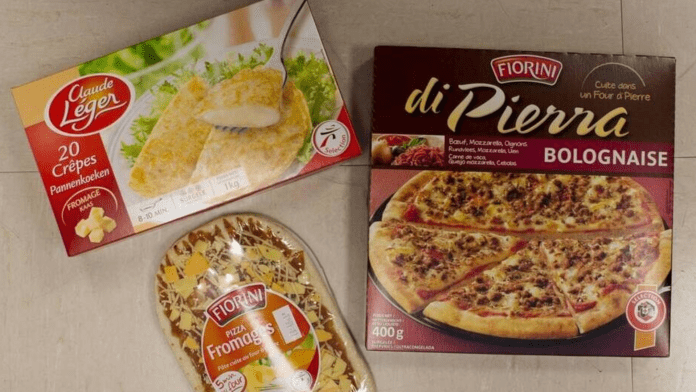
Among the products offered by Nestlé in Italy is pizza. In April, the company formed a new partnership with the private equity firm PAI Partners, creating a venture dedicated to consolidating its frozen pizza assets in Europe.

Nestlé will “retain a non-controlling stake with equal voting rights alongside PAI Partners”, the Buitoni pizza maker said in a statement.

Advertisement

Tata Consumer Products takes on India’s branded coffee market with regional specializations

0
Tata Consumer Products
Tata Consumer Products (Representative Image)

Recognizing the comparatively lower coffee consumption rates in regions outside of South India, Tata Consumer Products is resolute in its efforts to enter India’s branded coffee market, which is estimated to be worth around INR 3200 crore. To cater to the northern region, the company has rolled out specialized products.

Numerous research studies indicate that more than 70 percent of coffee consumption is centered in the southern regions.

The data reveals that the coffee market in Tamil Nadu, encompassing both rural and urban areas, commands an impressive 90 percent share, with an average monthly consumption of around 85 grams.

Conversely, throughout urban and rural regions in India, coffee exhibits a penetration rate of 39 percent, with an average monthly consumption of 38 grams, according to findings from the Kantar World Panel.

In anticipation of International Coffee Day, celebrated on October 1, Puneet Das, President of Packaged Beverages India and South at Tata Consumer Products, discussed the company’s branded coffee business and outlined the diverse market strategies aimed at establishing a significant presence in the country.

At present, the Indian branded coffee market is estimated to be worth around INR 3,200 crore, with the instant coffee segment contributing to 80-85 percent of its total value.

“In the non-south market, consumers do not understand what chicory is and hence 100 per cent of coffee blends and decoctions work better in those markets,” explained Das.

The brand initially offered a coffee chicory mix, primarily catering to the South market. However, last year, they introduced Tata Coffee Premium, a 100 percent coffee blend targeted at non-South markets. Furthermore, he mentioned that Coffee Grand and Premium are the key contributors to the volume in the instant coffee business.

“The idea is to grow and eventually become a serious player in the coffee segment. So, we intend to scale up some of the offerings much faster,” Das said. The business grew 31 per cent last year and 21 per cent in the last quarter, he added.

In relation to the prevailing demand patterns for tea and coffee, Puneet Das observed that rural consumption and expansion had encountered obstacles because of inflationary pressures until the previous year. Nevertheless, starting from December 2022, there has been a relatively optimistic increase in volume, although it remains within the single-digit range.

Advertisement

Godrej Agrovet to invest INR 300 Crore in integrated palm oil complex in Telangana

0
Godrej Agrovet
Godrej Agrovet (Representative Image)

Godrej Agrovet Ltd (GAVL) on Saturday unveiled its ambitious plan to develop an integrated palm oil complex in Telangana. This project involves a substantial investment of INR 300 crore over the next 3-4 years. Located in the Khammam district of Telangana, the palm oil complex will encompass 125 acres of land and will feature a crude palm oil mill. Additionally, GAVL has expressed its intention to potentially establish a refinery in the near future, as stated in their official announcement.

In addition to the seed production and research unit, the company will also set up a nursery with the capacity to cultivate up to 700,000 saplings annually, as indicated.

“Telangana’s ambitious oil palm mission aims to bring 20 lakh acres under cultivation across the state. The mission will improve income for more than 5 lakh farm households, while at the same time contributing to the nation’s deficit for edible oils.

“Along with being the rice bowl for the country, Telangana is all set to become the largest edible oil producer in India,” Telangana Municipal Administration and Urban Development, Industries and Commerce and Information Technology minister K T Rama Rao said.

He expressed that GAVL’s proficiency in the oil palm industry will assist the state in realizing its aspirations for a “yellow revolution.”

Over the course of the next 3-4 years, GAVL intends to invest INR 300 crore in establishing the integrated palm oil complex and expanding its Samadhan Centers, which serve as a comprehensive solution hub for oil palm farmers.

The company will offer advisory services encompassing best practices and modern technologies, as well as a wide range of farm inputs including fertilizers, drip irrigation systems, pesticides, seeds, and harvesting tools, all conveniently available under a single roof.

The statement also highlighted that the company’s collaboration with the public sector bank, State Bank of India, would provide crucial support to oil palm plantation farmers during the initial gestation period.

At present, GAVL has 65,000 hectares of palm oil cultivation across the nation and aims to expand this to 1.2 lakh hectares by the year 2027.

“… we intend to handhold oil palm farmers by providing them access to quality seedlings and nursery. With our plans of commissioning of Crude Palm Oil mill in the coming years, it is our honour to set up the country’s first integrated palm oil complex in Telangana,” GAVL Managing Director Balram Singh Yadav said.

Advertisement

Marco’s Pizza partners with Magna to revolutionize last-mile food delivery in North America

0
Marco’s Pizza
Marco’s Pizza

US-based pizza restaurant chain Marco’s Pizza has partnered with mobility technology company Magna to explore new last-mile food delivery solutions in North America.

The companies will trial a diverse range of last-mile delivery platform possibilities, including autonomous and electric solutions, in collaboration with Marco’s franchisees at selected North American locations.

Marco’s Pizza anticipates that each last-mile delivery platform will deliver tailor-made, cost-effective delivery solutions that prioritize environmental sustainability for its franchisees.

Marco’s Pizza chief information officer Rick Stanbridge said, “As one of the largest pizza brands, we invest in innovations that drive our franchisees’ businesses forward while meeting the needs of today’s modern customer.

“Our strategic collaboration with Magna exemplifies this forward-thinking approach and we plan to leverage their expertise to amplify our operations and elevate customer satisfaction.”

With participating franchisees on board, Magna and Marco’s aim to complete the proof-of-concept phase before embarking on in-market test projects in the upcoming months.

Marco’s Pizza expects that these initial projects will yield valuable insights and pertinent data pertaining to last-mile delivery utilization rates, customer reception, and overall operational efficiency.

Magna new mobility global lead and Magna executive vice-president Matteo Del Sorbo said, “As we look at how people and goods will move in the future, we are continuously identifying new applications and technologies to match the needs of the expanded mobility landscape, the last-mile delivery market being one of them.

“By collaborating with a company like Marco’s, we want to not only create an exceptional experience for their franchisees and customers but continue to evolve our last-mile delivery offerings.”

Advertisement

California to raise minimum wage for fast food workers to $20 per hour

0
Fast food worker
Fast food worker (Representative Image)

Governor Gavin Newsom of California has recently approved a bill to raise the minimum hourly wage for fast food workers from $16.21 to $20.

As per a Restaurant Dive report, the newly enacted legislation will mandate that restaurants affiliated with brands boasting 60 or more establishments must raise their wage rates.

The recently revised AB 1228 bill, sponsored by Assembly Member Chris R. Holden (D-Pasadena), is slated to take effect on April 1, 2024. This legislation grants authority to the fast food council to establish minimum wage standards for fast food restaurants.

Holden said, “Today, we witnessed the signing of one of the most impactful fast food wage laws that this country has ever seen. We did not just raise the minimum wage to $20 an hour for fast food workers.

“We helped a father or mother feed their children, we helped a student put gas in their car and helped a grandparent get their grandchild a birthday gift.

“Last month, when we were knee-deep in negotiations, hundreds of workers slept in their cars and missed pay days to come give their testimony in committee and defend their livelihood. Sacrifice, dedication and the power of a government that serves its people is what got us to this moment.”

The amended legislation will also encompass the formulation of proposals addressing other aspects of working conditions, including health and safety standards and training.

The signing of the new legislation prevents the original fast food council law, AB 257, or the Fast Recovery Act, from undergoing a referendum process.

Gavin Newsom said, “California is home to more than 500,000 fast-food workers who – for decades – have been fighting for higher wages and better working conditions.

“Today, we take one step closer to fairer wages, safer and healthier working conditions and better training by giving hardworking fast-food workers a stronger voice and seat at the table.”

Advertisement

Meridian Restaurants divests 70 Burger King outlets across the U.S. following bankruptcy

0
burgerking
Burger King (Representative Image)

Meridian Restaurants Unlimited (Meridian), a franchisee of Burger King, recently declared bankruptcy and subsequently sold off 70 of its restaurants.

According to QSR Magazine, the franchisee reportedly sold off most of its stores several months after initiating bankruptcy proceedings, which were prompted by the challenges brought about by the Covid-19 pandemic.

Meridian, purportedly one of the largest franchisees of the Burger King brand, attributed its bankruptcy to rising labor costs, increased wages, food inflation, higher shipping expenses, reduced staff availability, and a decline in customer foot traffic.

At the time of its March bankruptcy filing, the company was running a total of 120 restaurants.

In the recent auction held this month, the franchisee had a total of 91 restaurants, and Burger King successfully acquired 32 of them.

Other franchisees, such as Kansas King, Dakota Restaurant Partners, Kraf, and Snake River Foods, acquired the remaining 38 stores for a total of $17 million.

Burger King added restaurants in Utah, Montana, and Wyoming to its portfolio, while Kansas King secured restaurants in Kansas and Nebraska.

Dakota Restaurant Partners acquired a dozen restaurant outlets situated in Minnesota, Montana, and North Dakota, while Kraf obtained seven restaurant units in Arizona.

Snake River Foods obtained three restaurants located in Montana.

Meridian is reported to have submitted a motion to the court, seeking approval for the sale of the remaining 21 outlets.

Advertisement

Magicpin teams up with NCCF and ONDC to offer affordable essential groceries in Delhi-NCR

0
magicpin
Magicpin (Representative Image)

Magicpin, a hyperlocal e-commerce company, announced on Friday that it has teamed up with the government-supported NCCF to offer groceries such as onions and pulses at affordable prices through the Open Network for Digital Commerce (ONDC).

This partnership comes after magicpin’s previous collaboration with the National Cooperative Consumers Federation of India (NCCF), where they sold tomatoes at INR 70 per kilogram when market prices were exceeding INR 100 per kilogram.

Read More: Magicpin and NCCF collaborate to offer tomatoes at INR 70/kg via ONDC; witness overwhelming response in Delhi-NCR

“We are thrilled to continue our partnership with NCCF and leverage ONDC to serve the community by making essential commodities easily accessible,” magicpin said, adding, “we’re committed to ONDC’s mission to democratise the e-commerce system.”

Under the new arrangement, magicpin has introduced the sale of Chana Dal at INR 120 per kilogram and onions at INR 50 for 2 kilograms, extending its services to over 100 pin code areas within the National Capital Region (NCR).

Initially, this service is accessible to residents of Gurugram and Delhi.

“This sale will be further extended to over 10 cities in a phased manner. In line with the government’s mission to utilise the potential of digital platforms and bolster e-commerce accessibility, magicpin, acting as the buyer app, will facilitate the purchase of 2 kg of Chana Dal at INR 120 plus delivery charges and 2 kg of onions at INR 50 plus delivery charges,” the statement said.

As part of the collaboration, magicpin will take on various responsibilities, including establishing the catalog, determining pricing, allocating margins, communicating delivery schedules and messages, formulating return policies and procedures for non-delivery with other buyer apps, and managing coordination with third-party logistics for order dispatch and handling.

Orders submitted prior to 3 pm will be delivered on the following day, while those placed after 3 pm will be delivered two days later. The delivery of the order will be finalized within a 48-hour timeframe, as per the statement.

Advertisement

Coca-Cola HBC unveils €12M eco-friendly bottling line in Austrian facility

0
Coca-Cola HBC
The addition of the new line substantially broadens Coca-Cola HBC's lineup of returnable products

The Coca-Cola Hellenic Bottling Company recently inaugurated a state-of-the-art returnable glass bottling line at its facility located in Edelstal, Austria.

Coca-Cola HBC invested €12 million in the project, with an additional €4 million grant provided by the Austrian government through its initiative to promote a circular economy in packaging for beverage companies and retailers.

The newly installed production line, known for its enhanced water and energy efficiency, is dedicated to manufacturing 400ml returnable and resealable glass bottles tailored for the Austrian market. Coca-Cola HBC asserts that this innovation is unique among its 29 markets and caters to the needs of both on-the-go and at-home consumers.

The addition of the new line substantially broadens Coca-Cola HBC’s lineup of returnable products, now encompassing 400ml glass bottles of Coca-Cola and Coca-Cola Zero Sugar.

This investment aligns with the company’s commitment to achieving net-zero emissions throughout its entire value chain by 2040. Coca-Cola HBC has expanded its range of returnable packaging in response to increasing consumer interest in sustainable packaging solutions in Austria. Additionally, this move will aid customers in meeting upcoming retail quotas for returnable packaging, set to be implemented by 2024.

Coca-Cola HBC CEO, Zoran Bogdanovic, said, “For some years now, Coca-Cola HBC Austria has been at the forefront of pioneering new sustainable solutions, and we’re delighted that our focus on investment, innovation and partnerships are helping us to meet our goal of delivering our drinks in more sustainable ways. Austria is already one of our fastest-growing markets for reusable packaging, and this new line will further accelerate this packaging type, which is in demand by our customers and consumers alike.”

He continued, “As returnable packaging options offer a reduced carbon footprint, this new line in Austria further supports our Net Zero by 2040 goal. We’re grateful for the partnership with the Austrian Government as we work together towards a common goal of a greener business model and a better environment.”

Over the past twelve years, Coca-Cola HBC has achieved a 30% reduction in emissions within Scope 1, 2, and 3. Notably, packaging constitutes 34% of Scope 3 emissions within Coca-Cola HBC’s complete supply chain, making it a pivotal element in the company’s strategy for reducing carbon emissions.

Advertisement

BigMuscles Nutrition announces Hardik Pandya as brand ambassador

0
Hardik Pandya
Hardik Pandya

BigMuscles Nutrition, a prominent player in the health and fitness sector, has appointed Hardik Pandya, a well-known international cricketer, as the brand ambassador for its extensive lineup of nutritional supplements. This partnership underscores the joint dedication of fitness influencer Hardik Pandya and BigMuscles Nutrition to advocating for a healthier lifestyle through top-notch protein nutrition.

Premium Gold Whey Protein, its marquee product which is Informed Choice certified, a global quality assurance program for dietary supplement products, provides 25 gm protein and 11 gm of essential amino acids per serving. It is designed for fitness enthusiasts, gym goers and high performance athletes who need global quality-assured products to meet their fitness goals.

Suhel Vats, Managing Director, BigMuscles Nutrition said, “We are thrilled to have Hardik Pandya, a high performing international athlete on board as our brand ambassador. Hardik’s reputation, dedication and passion for fitness and his commitment to excellence, perfectly align with our values at BigMuscles Nutrition. Our products are aligned with our performance personified ambassador and are a part of his workout regime.Our campaign #PerformanceHiPehchaan reflects the high-quality performance of our products that makes them acknowledged market leaders.”

Premium Gold Whey Protein, a derivative of milk, is a high biological value protein that contains essential amino acids necessary for muscle building and repair, and recovery. This concentrated source of amino acids facilitates muscle protein synthesis, essential for athletes and gym goers who undertake high intensity workouts.

Commenting on his association with BigMuscles Nutrition, Hardik Pandya, said, “As a professional athlete, I am very particular about my fitness and dietary regime. BigMuscles Nutrition’s Premium Gold Whey Protein is the perfect protein companion for individuals focusing on high intensity muscle-building workouts and looking for global standards in their supplement. I am excited about this campaign and look forward to having fitness enthusiasts experience this high-performance video.”

Advertisement

Licious records INR 748 Cr in meat sales for FY23 as growth plateaus

0
Licious
Licious (Representative Image)

Bengaluru-based meat delivery startup Licious experienced a 9.5% rise in operating revenue for the financial year 2022-23, increasing from INR 682.5 Cr in the previous fiscal year to INR 748 Cr.

The D2C brand generates income by offering a range of products including meat, seafood, cold cuts, and pre-cooked meat items.

Taking into account other sources of income, Licious posted a total revenue of INR 808.8 Cr in the financial year 2022-23, compared to INR 706.1 Cr in the prior fiscal year.

Meanwhile, the startup successfully reduced its net loss by over 38% to INR 528.5 Cr in FY23, down from INR 855.6 Cr, attributed to a decrease in cash burn.

Licious saw a 9.8% increase in its total expenditures, climbing from INR 1,191.4 Cr in the prior fiscal year to INR 1,309.2 Cr in FY23.

The largest expense for Licious was the procurement of meat. The startup allocated INR 644.6 Cr for this in FY23, marking a 16% increase from the INR 554.3 Cr spent in the previous fiscal year. This procurement cost made up 49% of the startup’s overall expenditures for the year in question.

Expenses related to employee benefits climbed 14.5% to INR 240 Cr in FY23, up from INR 209.5 Cr in the previous fiscal year. These costs include elements such as employee salaries, provident fund contributions, and gratuity.

The D2C brand allocated INR 128.5 Cr for advertising and promotional activities, showing a 24% decrease from the INR 169.8 Cr spent in the prior fiscal year. D2C companies are typically known for investing heavily in advertising to expand their customer reach.

In terms of unit economics, Licious expended INR 1.7 to generate each rupee from its operations. The startup’s EBITDA margin saw improvement, moving to -58.9% in FY23 from an earlier -115.1% in FY22.

Established in 2015 by Abhay Hanjura and Vivek Gupta, Licious achieved unicorn status in 2022 following a Series G funding round of $52 million. The round was spearheaded by IIFL AMC’s Late Stage Tech Fund and included participation from multiple other private equity investors.

After this milestone, the company secured $150 million in a funding round in March of the previous year, with Amansa Capital leading the charge. Subsequent to this capital infusion, the D2C brand expanded into the plant-based meat sector with the introduction of UnCrave.

Earlier this month, Licious found itself drawing media attention for less than positive reasons. Reports suggested a growing tension between the cofounders and stated that the company was engaged in raising a bridge round because it failed to meet its monthly goals. However, these allegations were later refuted by the cofounders in a subsequent interview.

Licious competes with several other brands in the market, including FreshtoHome, Captain Fresh, Zapp Fresh, and TenderCuts.

Last month, TenderCuts faced a distress sale as it couldn’t raise a new round of capital. Meanwhile, Bengaluru’s CaptainFresh has redirected its entire focus towards exports. Earlier this year, the Chennai-based meat retail brand Fipola also closed its operations.

Advertisement