Friday, December 19, 2025
Home Blog Page 85

Prisha Dhatwalia’s Bridal Fashion in Meri Bhavya Life Is Bold, Beautiful—and Long Overdue

0
Image of Prisha-Dhatwalia
Prisha Dhatwalia’s Bridal Fashion in Meri Bhavya Life Is Bold, Beautiful—and Long Overdue

Indian television just gave plus-size fashion a major win. On Meri Bhavya Life, actress Prisha Dhatwalia is starring in a storyline that has her preparing for a wedding—and doing it in unapologetically stunning bridal couture, created for her curves, not despite them.

    Every episode feels like a rejection of outdated bridal rules. Gone are the tight bustiers and restrictive lehengas. Instead, Prisha’s looks are designed for her body type—flowy kalidars with detailed mirror work, shararas that highlight movement, and dupattas that drape with elegance, not constraint. And it’s not just a costume. It’s emotionally aligned styling—empowering and personal.

    She’s also speaking up about it off-screen. In a recent interview, Prisha said, “The outfit should fit you—you shouldn’t have to fit into it.” That statement, though simple, hit hard. Social media has exploded with support. Brides-to-be are tagging designers, stylists are resharing, and bridalwear labels are (finally) listening.

    What’s even more powerful is how viewers are connecting to her confidence. Her walk, her smile, the way she owns every frame—it’s rewriting the narrative that beauty is about fitting in. Instead, it’s about fitting out, unapologetically.

    Final Take: Prisha’s character may be fictional, but her fashion impact is very real. Her bridal looks aren’t just pretty—they’re political. And hopefully, they mark the start of a more inclusive era in Indian bridal couture where every bride gets to feel seen, styled, and celebrated.

    Advertisement

    Rashmika Mandanna Is Turning Every Promotional Appearance into a Cultural Fashion Parade – Here’s Why It Works

    0
    Image of Rashmika Mandana
    Rashmika Mandanna Is Turning Every Promotional Appearance into a Cultural Fashion Parade – Here’s Why It Works

      If there’s one actress who’s using her promotional wardrobe as a cultural canvas right now, it’s Rashmika Mandanna. While promoting her latest film Kuberaa, Rashmika has been serving major looks that are deeply rooted in Indian tradition—think timeless sarees, regal anarkalis, and structured kurta sets with a hint of modern drama.

      But it’s more than styling—it’s strategy. Rashmika is blending the glamour of red-carpet-ready fashion with India’s rich textile heritage. From intricately embroidered raw silk sarees to jewel-toned chikankari sets, each look carries an intentional nod to regional craft. And she’s not doing it alone—behind every outfit is a team of young Indian designers and stylists eager to reintroduce handloom, Banarasi, and Zardozi to Gen Z through someone as widely loved as Rashmika.

      What makes her looks really click is the accessibility. They feel wearable, yet aspirational. Social media is buzzing with breakdowns of her outfits, and designers are being tagged left, right, and center. This is not fast fashion—it’s fashion that connects.

      She’s reminding us that Indian wear isn’t limited to Diwali or weddings. It can be part of daily glam, public appearances, and even street style. Her ‘Srivalli’ essence—graceful, earthy, yet powerful—is showing up in every drape, tuck, and jhumka.

      Final Take: Rashmika isn’t just promoting Kuberaa—she’s promoting culture, designers, and India’s deep design vocabulary. This is celebrity styling done right. With every lehenga twirl, she’s putting the spotlight back on local design houses and heritage crafts—proving that tradition and trend can absolutely walk the red carpet together.

      Advertisement

      Rapido, Uber Booked for Illegal Bike Taxi Ops in Mumbai After RTO Sting; Face Action Under BNS and Motor Vehicles Act

      0
      Image of rapido
      Rapido, Uber Booked for Illegal Bike Taxi Ops in Mumbai After RTO Sting; Face Action Under BNS and Motor Vehicles Act

      Mumbai’s transport crackdown just escalated. On Tuesday, city police registered FIRs against app-based bike taxi operators Rapido and Uber, accusing them of running passenger transport services without the required government approvals.

      The complaints came after officials from the Regional Transport Office (RTO) posed as customers, booking test rides through both platforms. Their findings triggered formal police complaints at the Azad Maidan police station, alleging that both companies are operating in clear violation of existing transport rules.

      According to officials, the Maharashtra Transport Commissioner had earlier directed enforcement teams to take strict action against aggregators offering unauthorized services. “The instructions were clear — these companies can’t continue to transport passengers unless they’re properly licensed,” said a senior RTO official familiar with the matter.

      Continue Exploring: “Kuch Nahi Hoga”—Anupam Mittal Challenges This Dangerous Mindset in Policy Bazaar’s New Ad

      Back in April, Rapido had already received a notice from the RTO warning them about similar violations. But despite the warning, operations appear to have continued, prompting officials to finally escalate the issue to the police.

      The complaint outlines that neither Uber nor Rapido has obtained the necessary approvals from the state government or the RTO, yet they continue to run app-based bike taxi services openly. As a result, both companies now face charges under Section 318(3) of the Bharatiya Nyaya Sanhita (BNS) and multiple provisions of the Motor Vehicles Act.

      Continue Exploring: Lahori Beverages Nears ₹450 Crore Fundraise as Valuation Soars to ₹2,500 Crore – A New Challenger in India’s Booming Drinks Market

      Police confirmed that an investigation is underway.

      So far, there has been no official response from either company. Meanwhile, the case adds fuel to an ongoing debate over the legal status of bike taxis in India — a regulatory limbo that’s raising concern for both commuters and policymakers.

      Advertisement

      Devyani International to Bring Warren Buffett’s Favourite Dairy Queen to India Amid ₹14.7 Cr Loss and ₹420 Cr Biryani Bet

      0
      Image of dairy queen
      Devyani International to Bring Warren Buffett’s Favourite Dairy Queen to India Amid ₹14.7 Cr Loss and ₹420 Cr Biryani Bet

      Devyani International, the company behind your neighborhood KFC, Pizza Hut, and Costa Coffee outlets, is now quietly working to bring another global favorite to Indian cities—Dairy Queen. According to insiders who spoke to Digital Street Post, discussions are underway to introduce the American chain as part of Devyani’s push to win over more burger-and-dessert-loving Indian consumers.

      For those unfamiliar, Dairy Queen isn’t just another fast-food joint. It’s a name etched in American pop culture, with a fan club that includes none other than Warren Buffett. The billionaire investor bought the brand through Berkshire Hathaway back in 1997, shelling out $585 million in a mixed cash-and-stock transaction. Since then, he’s been an unofficial ambassador for the chain, often treating guests in Omaha to DQ’s soft serve and his favorite: the banana split.

      Continue Exploring: Lahori Beverages Nears ₹450 Crore Fundraise as Valuation Soars to ₹2,500 Crore – A New Challenger in India’s Booming Drinks Market

      His fondness isn’t limited to business partners—Buffett and his late wife Susan were longtime regulars. With Dairy Queen now eyeing India, dessert fans might soon get to try his go-to treats without flying across the globe.

      Devyani International, meanwhile, declined to comment when reached out for confirmation.

      Turning Around the Menu and the Numbers

      This potential tie-up comes at a crucial time for the company. Devyani International has been aggressively tweaking its strategy as it struggles with losses. In the quarter ending March 2025, the company posted a loss of ₹14.7 crore, nearly double from the ₹7.5 crore reported in the same quarter last year. Still, revenues grew to ₹1,213 crore—up 16% year-on-year from ₹1,047 crore.

      The firm has been signaling its intent to shake things up. It recently sealed partnerships with international names like Tealive, Sanook Kitchen, and New York Fries. Top executives hinted earlier this year that more such brand tie-ups were on the horizon.

      Continue Exploring: “Kuch Nahi Hoga”—Anupam Mittal Challenges This Dangerous Mindset in Policy Bazaar’s New Ad

      Just weeks ago, Devyani made another bold move: acquiring a majority stake in Biryani By Kilo for ₹420 crore. The deal is part of a larger play to strengthen its hold across multiple food categories—beyond fried chicken and coffee.

      If the Dairy Queen deal is finalized, it could mark a high-profile entry into India’s ever-growing quick-service restaurant market—and a dessert war might just be on the horizon.

      Advertisement

      Fake ‘Jio Eat’ Website Dupes Users with ₹500 Meal Offer for ₹99, Steals Big via OTP Scam: Over 2.4 Million Cases of Digital Fraud in FY25

      0
      Image of jio eat
      Fake ‘Jio Eat’ Website Dupes Users with ₹500 Meal Offer for ₹99, Steals Big via OTP Scam: Over 2.4 Million Cases of Digital Fraud in FY25

      A new online scam disguised as a food delivery platform called Jio Eat is targeting consumers across India, using fake branding and deceptive offers to steal money, according to a report by AngleOne. The fraudulent website misuses the Reliance Jio logo and falsely claims affiliation with Reliance Retail, despite no such association existing.

      The fake platform lists 15 major Indian cities as serviceable locations and tempts users with a hard-to-resist offer—any meal worth up to ₹500 for just ₹99 with free delivery and no hidden charges. It even includes fabricated privacy policies and terms to appear authentic.

      Continue Exploring: “Kuch Nahi Hoga”—Anupam Mittal Challenges This Dangerous Mindset in Policy Bazaar’s New Ad

      The Scam Mechanism: A Familiar Trap with a New Mask

      As reported by AngleOne, the fraud unfolds during the payment stage. The site only allows credit or debit card payments. Once a customer initiates a transaction, an OTP is sent—but the amount tied to the OTP is far higher than expected. Victims, unaware of the discrepancy, often enter the OTP and unknowingly authorize a large withdrawal.

      YouTube Ads Push Fake Platform into Public Eye

      Adding to its reach, the scam is being aggressively promoted through paid YouTube ads. Several users have shared experiences online, reporting significant amounts being deducted from their accounts without authorization. Reliance Retail has categorically denied launching any food delivery business, making this scam even more misleading.

      Wider Context: Alarming Rise in India’s Cyber Frauds

      According to AngleOne, this case highlights the broader crisis of rising cybercrime in the country. Data from the Finance Ministry shows over 2.4 million incidents of digital fraud were reported in the first 10 months of FY25, leading to financial damages exceeding ₹4,245 crore. RBI Governor Shaktikanta Das has called on financial institutions to ramp up cybersecurity and vigilance across digital platforms.

      Continue Exploring: Lahori Beverages Nears ₹450 Crore Fundraise as Valuation Soars to ₹2,500 Crore – A New Challenger in India’s Booming Drinks Market

      Consumers are advised to verify the authenticity of any platform before sharing sensitive payment information, no matter how credible the branding may appear.

      Advertisement

      Inside the Rise of Indie Indian Designers Who Are Ditching Bollywood Glam and Redefining Streetwear with Culture and Chaos

      0
      Image-of-Famous-designer
      Inside the Rise of Indie Indian Designers Who Are Ditching Bollywood Glam and Redefining Streetwear with Culture and Chaos

      For years, Indian fashion was either runway couture or wedding glam—no in-between. But 2025? It’s serving something way more real. A wave of homegrown indie designers is taking over, mixing streetwear, heritage, protest, and play into pieces that actually feel like us.

      Take Delhi-based label NorBlack NorWhite or Mumbai’s Bobo Calcutta. They’re not following rules—they’re making clothes that talk. Bright colours. Genderless cuts. Textiles that have something to say. And a strong rejection of everything that’s polished and predictable.

      This isn’t anti-fashion—it’s anti-fake. The new Indian streetwear is rooted in identity, rebellion, and craftsmanship. These brands are loud without being tacky, Indian without being ethnic caricatures.

      What’s fresh? They’re collaborating with artists, tattoo studios, underground musicians, even meme pages. It’s not just clothes anymore—it’s community. The kind that feels like a house party, a protest, and an art installation all rolled into one.

      And Gen Z is buying into it—not just because it’s cool, but because it’s conscious. They’re done with mass production. They want something with a pulse.

      What we’re watching is the start of a new fashion language—bold, chaotic, and uniquely Indian. And the best part? It’s happening outside the pages of Vogue and inside Instagram DMs, pop-up thrift markets, and warehouse shows in Versova.

      Advertisement

      ITC Acquires 24 Mantra Organic in ₹472.5 Cr Deal, Eyes Bigger Slice of Organic Market

      0
      Image of itc
      ITC Acquires 24 Mantra Organic in ₹472.5 Cr Deal, Eyes Bigger Slice of Organic Market

      ITC has officially taken over Sresta Natural Bioproducts, the company behind the popular organic food brand 24 Mantra Organic, in a deal worth ₹472.5 crore. This marks a bold step by the diversified conglomerate to deepen its presence in the booming organic foods space.

      The acquisition, finalized on June 13, 2025, gives ITC full ownership of Sresta Natural Bioproducts Private Limited (SNBPL). Out of the total deal value, ₹400 crore was paid upfront, with the remaining ₹72.5 crore set to be paid out over the next two years.

      Continue Exploring: “Kuch Nahi Hoga”—Anupam Mittal Challenges This Dangerous Mindset in Policy Bazaar’s New Ad

      SNBPL, founded in 2004, is one of the early movers in the Indian organic food market. Its portfolio features over 100 certified organic products—from staples like rice and pulses to spices, oils, and ready-to-drink beverages. It also boasts a strong international footprint, especially among Indian communities abroad, with two subsidiaries—Fyve Elements LLC in the US and Sresta Global FZE in the UAE.

      According to ITC, this acquisition aligns with its plan to build a “future-ready” food business that caters to evolving consumer preferences. Health-focused eating, sustainability concerns, and premium grocery habits are driving more Indian consumers toward organic options. ITC wants to be front and center in this shift.

      SNBPL isn’t just a retail brand; it’s deeply rooted in organic farming. The company works directly with around 27,500 farmers across 10 Indian states, covering nearly 1.4 lakh acres of certified organic farmland in 71 farming clusters. In FY 2023–24, it posted a revenue of ₹306.1 crore.

      Continue Exploring: Lahori Beverages Nears ₹450 Crore Fundraise as Valuation Soars to ₹2,500 Crore – A New Challenger in India’s Booming Drinks Market

      By bringing 24 Mantra Organic under its wing, ITC is not only acquiring a brand—it’s tapping into a movement that’s reshaping how India eats.

      Advertisement

      Inside India’s $85 Billion Food Biz: Ananya Malhotra of Anicut Capital Dishes Out Market Secrets and Surging Trends

      0
      Image-of-anicut
      Inside India’s $85 Billion Food Biz: Ananya Malhotra of Anicut Capital Dishes Out Market Secrets and Surging Trends

      From biryanis to sushis, what we see on our plates today is the result of an industry undergoing massive transformation. In a post that quickly gained traction on LinkedIn, Ananya Malhotra, VC at Anicut Capital, peeled back the layers of glam and revealed the real story behind India’s food service sector. Her firm’s 37-page deep-dive report lays out how the sector is set to grow to $85.2 billion by 2025, and nearly $140 billion by 2030.

      But this isn’t just about numbers. It’s about a fundamental shift in how Indians are eating, ordering, and even thinking about food.

      One of the most striking takeaways from the report is the rise in demand for global cuisines. Millennials, in particular, are driving this change—60% of them eat Chinese food about five times a month. Sushi sales on Swiggy touched 2.6 lakh orders in 2022 alone. Global food chains aren’t just entering the market—they’re adapting menus to suit Indian palates.

      The digital wave is another major force. In 2023, food delivery platforms hit 50 million monthly active users, up from 20 million in 2019. People are discovering restaurants through Instagram, using self-order kiosks in QSRs, and increasingly opting for online ordering, which now stands at 12% penetration—up from 8% in 2019.

      Meanwhile, the concept of health and sustainability is gaining ground. By 2026, India is expected to have 176 million health-conscious consumers. Many restaurants are now offering plant-based options and adopting waste-reduction and recycling practices.

      Cloud kitchens are also having their moment. With a projected growth rate of 16.6%, they are becoming the go-to model for speed, convenience, and scale.

      Continue Exploring: Lahori Beverages Nears ₹450 Crore Fundraise as Valuation Soars to ₹2,500 Crore – A New Challenger in India’s Booming Drinks Market

      Ananya’s post makes one thing clear: while the food might be beautifully plated, the business behind it is intense, fast-changing, and packed with opportunity. Whether you’re in the industry or just watching it unfold, this report gives a sharp view of where things are headed.

      Advertisement

      Canara HSBC Life Insurance Ropes in Jasprit Bumrah and Sanjana Ganesan as Brand Ambassadors to Reinforce Trust and Commitment

      0
      Image-of-canara-lifeinsurance
      Canara HSBC Life Insurance Ropes in Jasprit Bumrah and Sanjana Ganesan as Brand Ambassadors to Reinforce Trust and Commitment

      Canara HSBC Life Insurance has brought on board cricketing ace Jasprit Bumrah and sports presenter Sanjana Ganesan as its new brand ambassadors, tapping into the power couple’s credibility and connection with modern India.

      The company is weaving the duo into its messaging around trust, reliability, and support—qualities it believes are essential both in relationships and in choosing a life insurance partner. The campaign draws from their real-life dynamic as a couple who support each other through personal and professional highs and lows.

      Continue Exploring: “Kuch Nahi Hoga”—Anupam Mittal Challenges This Dangerous Mindset in Policy Bazaar’s New Ad

      “Life doesn’t always follow a script. Plans evolve, goals shift, and challenges show up uninvited. What matters is having someone you can count on through it all,” said Rishi Mathur, Chief Distribution Officer – Alternate Channels and Chief Marketing Officer at Canara HSBC Life Insurance. “That’s what we aim to be for our customers. And that’s what Jasprit and Sanjana represent—steady, grounded, and deeply committed.”

      The company’s latest campaign leans into its identity as a brand that walks beside people in their life journeys—not just as a financial provider, but as a partner in every sense. Bumrah’s calm under pressure and steady performance on the cricket field reflect the consistency Canara HSBC aims to deliver. Ganesan’s clarity and communication skills echo the brand’s emphasis on transparency and connection.

      With this partnership, Canara HSBC isn’t just adding celebrity faces—it’s telling a story about standing by the people who trust you, no matter what life throws their way.

      Advertisement

      TATA Starbucks Breaks Silence on Dolly Chaiwala Rumor: No Brand Ambassador Appointed, Meme Blamed for Viral Hoax

      0
      Image-of-starbucks
      TATA Starbucks Breaks Silence on Dolly Chaiwala Rumor: No Brand Ambassador Appointed, Meme Blamed for Viral Hoax

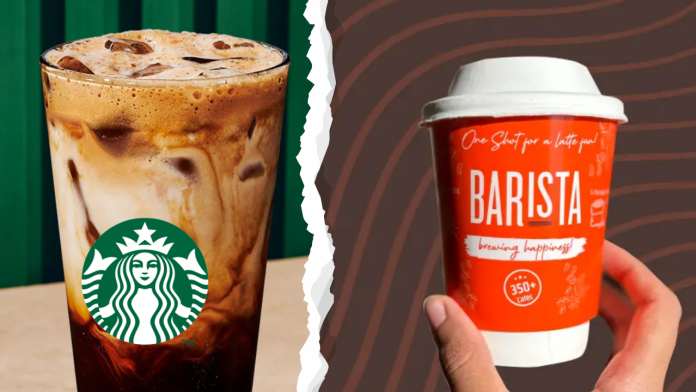
      TATA Starbucks has shut down swirling rumors that it had roped in internet sensation and tea vendor Dolly Chaiwala—real name Sunil Patil—as its brand ambassador in India. The company issued a firm clarification on Monday, stating that there’s no truth to the claims and that the chatter stemmed from a viral prank gone too far.

      “We’ve seen the social media buzz around an alleged brand ambassador. Let us be clear: TATA Starbucks has not appointed anyone in that role, and there is no collaboration with Dolly Chaiwala,” the company said in an official statement.

      The confusion began after influencer Aditya Oza posted an April Fools’ Day prank featuring a doctored image and an entirely fictional tale suggesting that Starbucks had brought Dolly Chaiwala onboard as their brand face in India. The post quickly spread like wildfire, picked up by pages and platforms without verification. Some even published AI-generated summaries, further fueling the false narrative.

      Continue Exploring: “Kuch Nahi Hoga”—Anupam Mittal Challenges This Dangerous Mindset in Policy Bazaar’s New Ad

      The viral image, Starbucks said, “was a meme, created independently by a third party.” It emphasized that the company had nothing to do with the post and that it wasn’t tied to any marketing initiative, formal or otherwise.

      Despite the original content being deleted, screenshots and repurposed versions continue to circulate, prompting the coffee giant to issue a public statement to nip the rumors in the bud.

      “We believe in transparent communication and maintaining the trust of our customers,” the company noted, while also alluding to the broader challenge of misinformation spreading unchecked across digital spaces.

      This incident underlines how a harmless joke can snowball into something far more misleading—especially when shared in an era where fiction can easily pass for fact.

      Advertisement