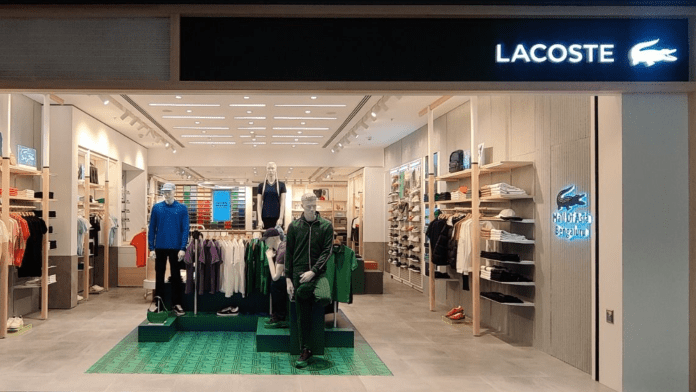
Lacoste, the French clothing brand, has announced the opening of a new store in Bengaluru, Karnataka, as disclosed by a company official in a LinkedIn post on Wednesday.
“Another addition to the Garden City Bengaluru…Mall of Asia now open” said Abhishek Raj, COO of Lacoste India in a LinkedIn post.
The store can be found within the recently inaugurated Phoenix Mall of Asia situated in Bengaluru.
Currently, the company has over 40 exclusive stores in India, with five of them located in Bengaluru.
Despite being one of the pioneers to enter the Indian market three decades ago, the French casualwear giant Lacoste has adopted a cautious strategy, having opened approximately 40 stores in the country during this period. However, Lacoste is now poised to take a more assertive stance, with plans to inaugurate around 50 standalone stores in the country over the next five years.
Established in 1933 by the renowned French tennis player René Lacoste and his co-founder, André Gillier, Lacoste is a French clothing brand recognized as the first in the world to prominently display its logo on its apparel.
Presently, the company boasts a global presence with more than 1,000 stores and 15,000 sales points across 98 countries. Additionally, its products are accessible through 32 online stores worldwide.
CaratLane, the omni-channel jewellery brand, has achieved a notable milestone by expanding its retail footprint to 250 stores across 100 Indian cities. The company proudly shared this accomplishment on social media alongside the inauguration of its newest store in Gujarat. The 250th outlet now stands in Sargasan, Gandhinagar, Gujarat.
“We are thrilled to announce we are now 250 stores strong in 100 cities across the country just in time for Diwali! This journey has been nothing short of extraordinary, and it’s all thanks to our incredible team and the support of our loyal customers,” the jewellery retailer said in a LinkedIn post on Friday.
Throughout the current year, CaratLane has been in a phase of dynamic expansion, exemplified by its successful opening of over nine stores in October. These new establishments have been strategically positioned in diverse locales such as Bengaluru, Gandhinagar, Udaipur, Chennai, Darbhanga, Patna, Nellore, New Delhi, and Asansol.
In 2008, Mithun Sacheti and Srinivasa Gopalan founded a Chennai-based jewelry brand. Initially, they launched it as an online brand, specializing in a wide range of jewelry items, including rings, earrings, bracelets, bangles, and solitaires.
During July 2016, the Tata Group made a significant investment in the company via its subsidiary Titan. Following this development, in September 2018, the retailer introduced “Shaya by CaratLane,” a silver jewelry brand affiliated with CaratLane as part of the Tanishq Partnership.
At the end of the fiscal year (FY) 2023, the company achieved impressive results, surpassing INR 2,000 crore in revenue. It reported a revenue of INR 571.24 crore for FY 2023, demonstrating a substantial growth of 56.7% over Q4 FY22, as per a previous filing.
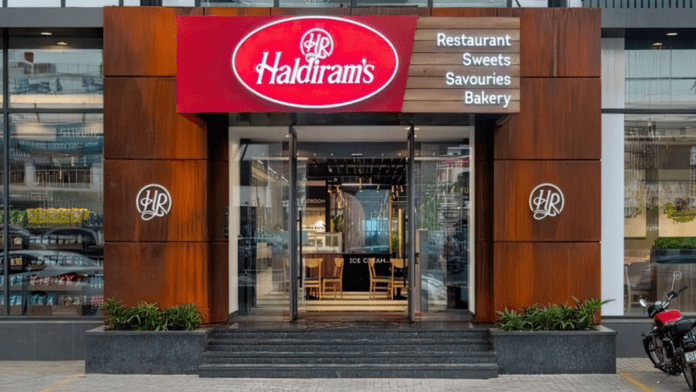
Haldiram’s has inaugurated its first outlet at the Hyderabad International Airport, as announced by a company official in a LinkedIn post on Tuesday.
“Haldiram’s Opening Today!! @ Hyderabad International Airport,” said Amol Ramteke, head of business development at Haldiram Foods International Ltd.
Ganga Bishan Agarwal established Haldiram’s in Bikaner, Rajasthan, in 1941. The company achieved total sales amounting to INR 9,215 crores in the fiscal year of 2023.
The company inaugurated a food court in Mumbai just last week.
As of September 2023, the company boasts a network of more than 250 outlets, with 120 located in the North and 135 spread across South and Central India.
Presently, the company maintains 1,000 distributors for its packaged products and is present in more than 7 million retail outlets.
Haldiram’s initiated its export to the USA in 1993, marking its first venture into an international market. The company further expanded globally by establishing its inaugural factory outside India in the United Kingdom in 2016.
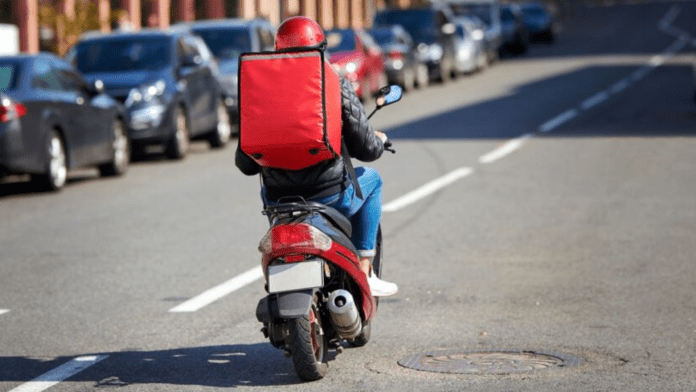
According to Deliveroo’s Q3 2023 Restaurant Confidence Index, Hong Kong restaurants are increasingly depending on food delivery platforms to adapt to tough economic conditions.
The survey, carried out between October 2nd and 13th, indicates that 71% of the restaurants surveyed reported contentment with their overall business performance in Q3. This satisfaction comes despite a general decline in satisfaction levels attributed to a slower-than-anticipated economic recovery.
The study underscores the essential role food delivery platforms play in maintaining restaurant revenue.
Around 50% of survey participants noted that food delivery platforms account for 10% to 30% of their revenue, and nearly 20% stated that takeaway orders constitute over one-third of their earnings. Additionally, two-thirds of those surveyed anticipate food delivery to be as significant as dine-in for Q4, and 17% anticipate its importance to increase in the future.
The survey also identified a favorable shift in the labor shortage scenario, as 50% of restaurants reported no labor shortages in Q3, indicating an improvement from the previous quarter. Moreover, even with the government’s Enhanced Supplementary Labor Scheme in place, over 70% of restaurants continue to prioritize local hiring.
While government initiatives, like extended operating hours, are aimed at bolstering the night economy, more than 90% of the restaurants in the survey have chosen a cautious “wait and see” approach and do not plan to implement these changes. Additionally, there has been a decline in optimism regarding the economic outlook for Q4, with only 28% of respondents expressing optimism, compared to 49% in the previous quarter.
The report highlights that 83% of the restaurants included in the survey view food delivery as equally vital as before, recognizing its significance in boosting profits.
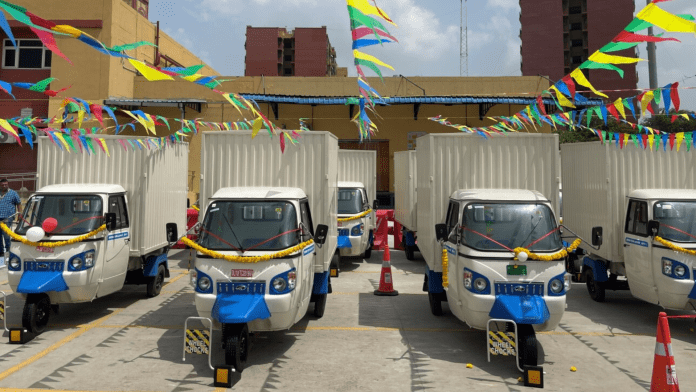
Ecommerce giant Amazon has made a significant stride in India by launching its last mile fleet program with an exclusive fleet of 100% electric vehicles (EVs), marking a global first for the company. This initiative aims to aid over 300 Delivery Service Partners (DSPs) in conducting customer deliveries without producing any tailpipe emissions.
After experiencing success in North America and Europe, Amazon’s worldwide last-mile fleet initiative is expanding its reach to India. The program will introduce custom-designed electric EVs tailored to offer Delivery Service Partners (DSPs) convenient access to dependable, high-quality zero-emission vehicles for their last-mile delivery operations.
The introduction of the India fleet precedes the Diwali festival, and additional electric three and four-wheel vehicles will be gradually incorporated in the future.
In India, the program offers Delivery Service Partners (DSPs) access to tailored EVs designed for last-mile deliveries. It encompasses maintenance, charging, and parking facilities. These vehicles come equipped with advanced safety features, enhancing the safety of Amazon’s delivery partners and the neighborhoods they serve. Additionally, the data generated by these vehicles enables Amazon to optimize deliveries, ensuring both safety and punctuality.
“We are committed to be net-zero carbon by 2040, and decarbonising our delivery network is an important part of getting us to that goal,” said Abhinav Singh, VP of Operations, Amazon India.
Tom Chempananical, director of Global Fleet and Products, at Amazon, said, “These vehicles will raise the bar for last-mile delivery services, helping us deliver packages to our customers safely, reliably and efficiently.”
The ecommerce giant has strategic plans to gradually incorporate a substantial portion of last-mile delivery vans into its program over the next two years, with the ultimate goal of including all such vans. As part of the initial phase, the company has introduced specially equipped Mahindra Zor Grand three-wheeler EVs for Amazon’s last-mile deliveries.
The Mahindra Zor Grand is an eco-friendly electric three-wheeler meticulously crafted for streamlined last-mile logistics. Featuring a spacious 170 cubic feet delivery box and a robust 400kg payload capacity, it proves to be an ideal choice for managing daily shipments, particularly in regions with subpar air quality.
Amazon has introduced a fleet of more than 6,000 electric vehicles for package delivery across 400+ cities in India, with a target to expand this fleet to 10,000 by the end of 2025.
This progress is in accordance with the government’s initiatives aimed at encouraging electric vehicle (EV) adoption in India, contributing to the reduction of carbon emissions.
In October, India achieved a notable milestone with over 70,000 electric two-wheeler registrations, signifying four months of continuous growth. According to Vahan data as of October 31, these registrations experienced a month-on-month increase of 9.8%, totaling 70,248 units.
International corporations are placing a strong emphasis on ESG (Environmental, Social, and Governance) considerations, leading to an increased commitment to promoting the adoption of electric vehicles (EVs).
Flipkart, Zomato, and Swiggy have forged partnerships with multiple EV manufacturers to expedite the integration of electric vehicles (EVs) into their logistics fleets.
For instance, the rival of Amazon, Flipkart, has announced its plan to deploy 25,000 EVs by 2030 in a move to electrify its fleet.
Likewise, Swiggy has collaborated with the Taiwanese battery-swapping solutions provider, Gogoro, to advance the use of electric smart scooters for last-mile deliveries throughout India.
Lately, India has witnessed the emergence of numerous cleantech startups that are introducing innovative solutions to support the nation’s clean energy objectives. Among these startups are names like 75F, Ace Green Recycling, CleanMax Enviro Energy Solutions, GPS Renewables, ION Energy, and others.
Amazon is proactively investigating low-carbon fuels, adopting energy-efficient advancements, and channeling investments into renewable energy initiatives as part of its strategy to curtail emissions stemming from electricity production. In a recent development, the e-commerce behemoth unveiled a 198-megawatt wind farm located in Osmanabad, Maharashtra, India. This announcement signifies Amazon’s 50th renewable energy endeavor in the country, elevating its total capacity to over 1.1 gigawatts.
The company’s objective is to completely sustain its worldwide operations using 100% renewable energy by 2025.
Kolkata-based beauty brand WishCare has secured INR 20 crore in its first institutional round, led by Unilever Ventures.
According to a press release from WishCare, the funds will be directed towards enhancing research and development efforts, particularly in creating highly effective products. The aim is to venture into both the domestic and global markets.
Established in 2019 by Stuti Kothari, Ankit Kothari, and Ayush Kothari, WishCare specializes in a wide array of haircare and skincare products, including bond repair hair treatments, hair growth serums, face serums, sunscreens, and active-infused body lotions.
WishCare is dedicated to providing consumers with sustainable, distinctive, and hassle-free solutions for their needs. The company places a strong emphasis on clean and efficient formulations, eco-conscious packaging, and meaningful social initiatives.
WishCare asserts that its current Annual Recurring Revenue (ARR) is at INR 85 crore, having quadrupled over the past 12 months, all the while maintaining a double-digit EBITDA.
The company’s products are accessible across over 15 marketplaces, including Nykaa, Amazon, FlipKart, Purplle, Myntra, and their direct-to-consumer (D2C) website. Additionally, the company claims to have a customer base exceeding 1 million.
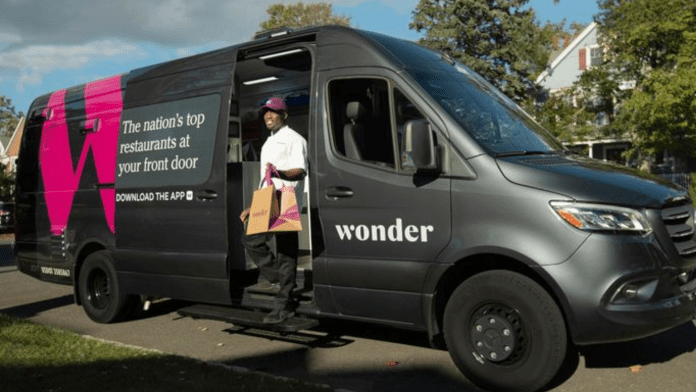
The food-delivery startup Wonder Group has received a financial boost from Nestle, as it aims to offer cutting-edge kitchen equipment and pre-prepared ingredients to a range of businesses, including hotels, hospitals, and sports arenas.
Sources with knowledge of the matter, who preferred to remain anonymous due to the undisclosed financial terms, have revealed that the agreement encompasses a $100 million investment from Nestle, coupled with a strategic partnership.
Nestle and Wonder have officially acknowledged the agreement while opting not to disclose the specifics of the transaction.
This funding brings Wonder one step closer to realizing its goal of simplifying the process of providing high-quality home-cooked meals for busy families, making it more convenient and affordable. Founded in 2018 by serial entrepreneur and former Walmart e-commerce chief Marc Lore, the startup had a valuation of approximately $3.5 billion following a $350 million funding round in June.
Recently, Wonder secured an agreement to purchase the meal-kit company Blue Apron for $103 million. Additionally, the company has created kitchen equipment designed to streamline and expedite the preparation of restaurant-quality dishes.
Before founding Wonder, Lore established and successfully sold the e-commerce startup Jet.com to Walmart for $3.3 billion in 2016. Despite Walmart ultimately discontinuing Jet, Lore played a key role in spearheading the retail giant’s extensive foray into the online marketplace and its relentless pursuit to narrow the gap with Amazon, ultimately departing from Walmart nearly three years ago.
Lore, who co-founded Quidsi, the parent company of Diapers.com, sold the business to Amazon.
During an interview with CNBC, Lore expressed that collaborating with Nestle will enable Wonder to accelerate its expansion at a faster pace.
Nestle, a major player in the food and beverage industry, produces ingredients, snacks, and frozen meals available in retail stores. Additionally, they have a substantial presence in the food-service sector, serving clients like college campuses and cruise lines. According to Lore, there is potential for some of these businesses to express interest in Wonder’s kitchen equipment.
The collaboration is set to initiate with Nestle producing tailored pizza and pasta for use with Wonder’s kitchen equipment, in addition to offering the equipment for sale to clients.
Melissa Henshaw, who serves as the President of Nestle’s out-of-home division, explained that numerous clients of Nestle have encountered challenges in keeping up with evolving customer preferences for convenient meals and more robust flavors. However, many of these businesses have faced staffing shortages, which has compelled them to implement measures that reduce sales opportunities and leave customers dissatisfied. This includes reductions in the variety of items on room service menus in hotels, restricted hours at cafes, and the delivery of lackluster, limp, or cold food.
“With our partnership with Wonder, there’s this opportunity to help operators across multiple out-of-home segments be able to improve their food quality, have consistency, and actually open up some additional revenue streams that have been pretty challenged post-pandemic,” she said.
Initially, Wonder adopted a distinct business model involving a fleet of trucks equipped with mobile kitchens that would park and prepare meals right outside customers’ homes in the suburban regions of New Jersey and New York. However, in a strategic shift to achieve profitability more rapidly, the company abandoned this approach in January and had to make the difficult decision to lay off hundreds of employees.
Rather than continuing with its previous approach, the startup shifted its focus towards establishing an expanding series of physical kitchens. These kitchens enable the preparation of diverse menu items spanning various cuisines typically associated with restaurants boasting significant popularity or associated with celebrity chefs like José Andrés, Bobby Flay, and Michael Symon. Wonder has acquired rights from an increasing array of these chefs and restaurants, enabling customers to mix and match their orders. This innovation allows diners the flexibility to select entrees from different restaurants for various family members within a single order.
As of now, the company employs approximately 1,100 individuals.
By the end of the year, Wonder aims to establish 10 locations within the tri-state area encompassing New York, New Jersey, and Connecticut. Each of these locations will offer around a dozen seats for on-site dining, although the majority of orders are expected to be for delivery or pickup for at-home dining, according to Lore. In the following year, the company plans to expand further by opening at least 20 additional locations.
In its latest initiative, Wonder is actively marketing its white-labeled technology along with specially crafted and prepared meal ingredients to other businesses. The company has introduced its business-to-business offering, named WonderWorks, across 50 locations, including convention centers, theaters, and airports.
In the long run, Lore envisions Wonder as a comprehensive “super app for mealtime,” offering a range of tiered options tailored to customers’ budgets, dietary preferences, and schedules. These choices would encompass meal kits from Blue Apron and freshly prepared hot meals from its own kitchens.
Wonder competes with a variety of contenders in the food sector, including delivery companies like Uber Eats and DoorDash, quick-service restaurants such as SweetGreen and Chipotle, and even grocery chains like Kroger and Amazon-owned Whole Foods, which have expanded their offerings of prepared food.
Wonder aims to set itself apart through its innovative food preparation methods. This approach allows the company to create an extensive range of dishes and enhance the flavor of menu items, even within the constraints of a modest 2,800-square-foot kitchen with minimal equipment and labor.
“There’s no gas,” Lore said. “There’s no stove. There’s no fire. There’s no hoods. There’s no grease traps. This can go into a shoe store, a yoga studio or LensCrafters. It can go in anywhere. So it allows you to be very, very adaptable with the kitchen.”
Devyani International Limited (Representative Image)
On Tuesday, Devyani International Ltd, a quick service restaurant (QSR) operator, announced a 37 percent decrease in its combined net profit for the July-September quarter, amounting to INR 35.82 crore, primarily attributed to the adverse effects of elevated inflation on consumer sentiment.
As the foremost franchisee of Yum! Brands in India for its Pizza Hut and KFC brands, the company had posted a net profit of INR 56.83 crore during the July-September quarter of the previous year.
According to a filing with the stock exchange, Devyani International Ltd (DIL) saw a 9.63 percent increase in its revenue from operations for the quarter, reaching INR 819.47 crore, compared to INR 747.42 crore in the corresponding period of the previous year.
“High inflation across industries and categories from a macro-economic perspective has led to a short-term impact on consumer sentiment and spending in the last few quarters. Despite this, our performance remains resilient, and we continue to invest in the business for long-term growth,” said DIL Non-Executive Chairman Ravi Jaipuria.
During the September quarter, DIL’s total expenses amounted to INR 793.04 crore, reflecting a 16.30 percent increase.
In the September quarter, DIL reported that KFC generated INR 509 crore in brand revenue, Pizza Hut contributed INR 184 crore, and Costa Coffee added INR 34.6 crore to their revenue. Additionally, it’s worth noting that DIL is the franchise holder for The Coca-Cola Company’s coffee chain brand, Costa Coffee.
DIL’s total income for the September quarter amounted to INR 826.04 crore, showing a year-on-year increase of 9.85 percent.
“The Company expanded its presence across brands and geographies, opening 68 net new stores in Q2 FY24,” it said.
As of September 30, 2023, DIL oversees a combined total of 1,358 system stores across various geographies, comprising 594 KFC stores, 539 Pizza Hut outlets, and 146 Costa Coffee establishments.
It is “on track to open 250-275 new stores in FY24,” said DIL.
“We are hopeful that a rebound in consumer spending will take place in the next few quarters, positioning us for success in the dynamic and evolving QSR landscape,” said Jaipuria.
Shares of Devyani International Ltd on Tuesday settled at Rs 193.05 on BSE, up 1.87 per cent from the previous close.
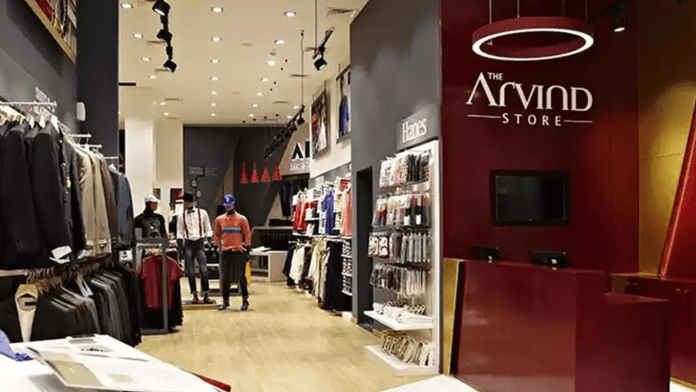
On Tuesday, Arvind Fashions Ltd, a prominent participant in the casual and denim market, disclosed a substantial 31.87% rise in its combined net profit, reaching INR 37.03 crore for the quarter ending in September.
In a regulatory filing, Arvind Fashions Ltd (AFL) stated that the company had reported a net profit of INR 28.08 crore in the corresponding period of the previous year.
The company reported that its revenue from operations increased by 7.2%, reaching INR 1,266.94 crore for the quarter, compared to INR 1,181.81 crore in the same period the previous year.
The company noted in its earnings statement that revenues increased during the quarter being evaluated, even in the face of reduced consumer demand. Retail and the MBO (Multi-Brand Outlet) channel primarily drove this growth.
AFL reported “gross margin expansion of 510 bps year-on-year (y-o-y) to 49.5 per cent, led by retail growth of 9 per cent and higher retail channel mix by 400 bps y-o-Y.”
Arvind Fashions Ltd (AFL) reported that its total expenses for the quarter amounted to INR 1,223.29 crore, reflecting a 5.75% increase compared to the corresponding period of the previous year.
During the quarter, its total income increased by 5.79% to reach INR 1,271.48 crore.
“We have delivered the highest-ever quarterly financial performance across revenues, EBITDA & PAT, while consumer demand continued to remain soft during the quarter,” AFL MD & CEO Shailesh Chaturvedi said.
He further added that the company’s improved execution in the retail channel, as well as the introduction of premium offerings in their flagship brands, along with a resolute focus strategy, are consistently delivering positive outcomes.
AFL manages retail stores for prominent international brands including US Polo Assn, Arrow, Tommy Hilfiger, Calvin Klein, and Flying Machine.
On Tuesday, Arvind Fashions Ltd’s shares closed at INR 366.70 on the BSE, marking an increase of 8.59 percent.
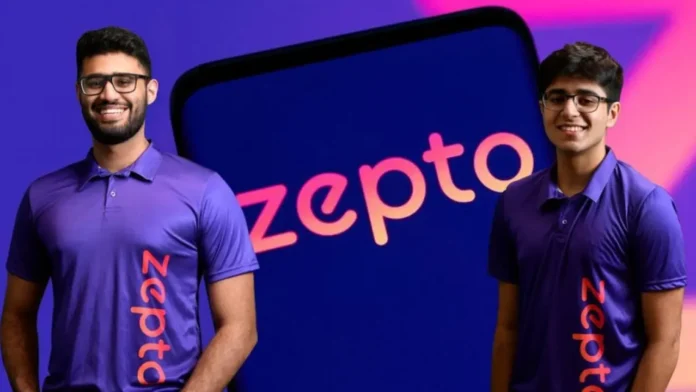
Kaivalya Vohra & Aadit Palicha - Co-Founders of Zepto
Zepto, a fast-growing quick-commerce unicorn headquartered in Mumbai, secured an additional $31.25 million in funding through a Series E round, with investments coming from Goodwater Capital and Nexus Venture Partners.
Furthermore, angel investors, including Oliver and Lish Jung, as well as Mangum II LLC, were noted to have taken part in the funding round, as indicated in the company’s disclosures to Singapore’s Accounting and Corporate Regulatory Authority (ACRA).
Back in August, the quick-commerce unicorn Zepto secured $200 million in its Series E funding round, reaching a valuation of $1.4 billion. This milestone made it the sole unicorn of 2023. While the startup remained tight-lipped about how it intended to utilize the newly acquired funds, it did reveal its ambition to pursue an initial public offering by 2025.
Established in 2021 by Aadit Palicha and Kaivalya Vohora, Zepto capitalized on the surge in demand for swift e-commerce delivery brought about by the Covid-19 pandemic. The company garnered significant recognition when it successfully raised $60 million in funding in November 2021, with notable investors like Glade Brook Capital, Nexus, and Y Combinator participating in the investment.
Zepto competes head-to-head with rivals such as Swiggy’s Instamart, Blinkit (owned by Zomato), and Dunzo (backed by Reliance).
Industry experts suggest that Zepto may need to secure funding approximately every 12-15 months to expedite its revenue growth and stay competitive in the market alongside players like Zomato’s Blinkit and Swiggy’s Instamart, both of which enjoy a similar revenue mix advantage.
The recently turned unicorn experienced a notable 3.35X surge in its net loss for the fiscal year ending on March 31, 2023. As per the company’s claims, the quick commerce startup reported a net loss of INR 1,272.4 Cr in the financial year 2022-23 (FY23), marking a substantial 226% increase from INR 390.3 Cr in the preceding financial year.
Its revenue from operations skyrocketed, expanding by 14.3 times to reach INR 2,024.3 crore in FY23 from INR 140.7 crore in FY22. The total income, encompassing other sources of revenue, surged to INR 2,077.6 crore from INR 142.3 crore in the previous fiscal year.
Despite the growth in revenue, Zepto continues to grapple with escalating losses, suggesting that its profit margins may not improve unless a significant portion of the dark stores turns profitable or it ventures into additional business verticals.
We use cookies to ensure that we give you the best experience on our website. If you continue to use this site we will assume that you are happy with it.