Monday, February 2, 2026
Home Blog Page 800

Dabur India sees remarkable rural rebound, expects parity with urban markets in next 3-4 quarters

0
Dabur
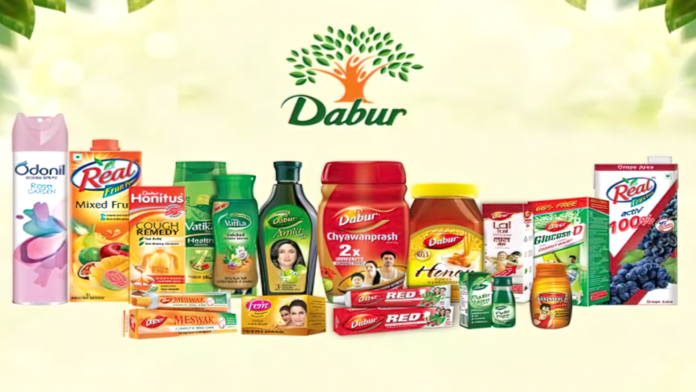
Dabur (Representative Image)

Dabur India, a leading domestic FMCG company, is witnessing a significant rebound in rural markets. CEO Mohit Malhotra anticipates that growth in these markets will soon match that of urban markets within the next 3-4 quarters. The decline in inflation, coupled with the easing of commodity prices, is contributing to a gradual volume recovery in rural areas. This trend is effectively reducing the gap in growth rates between rural and urban markets.

Despite disruptions in rainfall in certain regions of the country, the recovery in the rural market is expected to persist. This resilience can be attributed to factors such as an increase in Minimum Support Prices (MSP), favorable winter crop sowing, and the ongoing election season.

Moreover, the unemployment rate in rural areas of India has declined, and the consumer confidence index has surged to an all-time high, nearly reaching the pre-COVID levels, according to his statement.

“There are definite very good recovery signs, which actually I am seeing. The festive season which is coming in, should augur very well for us going forward in the future. So I am very hopeful,” Malhotra said.

The corporation, possessing influential brands like Dabur Chyawanprash, Dabur Honey, Dabur Honitus, Dabur PudinHara, Dabur Lal Tail, Dabur Amla, Dabur Red Paste, and Real, is expanding its presence in rural areas through the introduction of affordable small-sized packaging.

Asked when he expects rural growth to come at par with urban markets, Malhotra said: “It’s a matter of time. I think it will take another three-four quarters… before rural comes at par with urban”.

However, he added that the urban market is also driven by new-age channels such as modern trade and e-commerce, which are contributing around 20-25 per cent of the FMCG business.

“So they are growing much ahead. For the rural, which is mainly GT (general trade as Kirana), to grow at that percentage is very difficult because the rural market has a large base and for a large base to grow at that percentage is difficult. So urban, I think for some time it is going to drive the growth,” he said.

Rural has a major population and almost 70 per cent of the total consumer base is from those regions, Malhotra added.

Pre-COVID, rural was growing ahead of urban, driving the growth in the FMCG sector, while urban was lagging behind, he added.

“Now, we are seeing gradual slow volume recovery happening in the rural market… if I look at the last quarter, we see rural growth of around 6.7 per cent urban growth overall 11.2 per cent.

“So, while the gap between urban and rural is narrowing, the gap is still there. Rural is still lagging urban but I think in due course of time as we lap over the lower bases rural recovery will continue to happen,” he said.

Rural markets generally contribute around 35 per cent of the FMCG industry and had shown positive growth in consumption during the March quarter this year, after a gap of six straight quarters, according to a report from data analytics firm Nielsen IQ.

Dabur as per its strategy is looking at both urban and rural markets, which are expanding with the launch of more premium products, as average disposable income in India is increasing.

In the urban market, where expansion is driven by e-commerce, modern trade channels, and expansion of mini metro and class one town, it is focusing on premiumisation with large pack sizes, while in the rural, it is targeting the aspirational buyers with low units price packs, Malhotra added.

“We get the best of both worlds,” he said adding “While in the rural areas, we go with the price points which are more accessible and the urban level we are premiumising.”

Now, 85 per cent of the country’s population is a consuming class, which includes the top and bottom of the pyramids. The aspirations between the urban and rural markets are becoming common with the growth of social media and smartphone availability.

Moreover, it is also trying to introduce some new brands in the premium category and also to relate with the millennials.
Advertisement

Bakingo bolsters expansion plans with $16M investment from Faering Capital

0
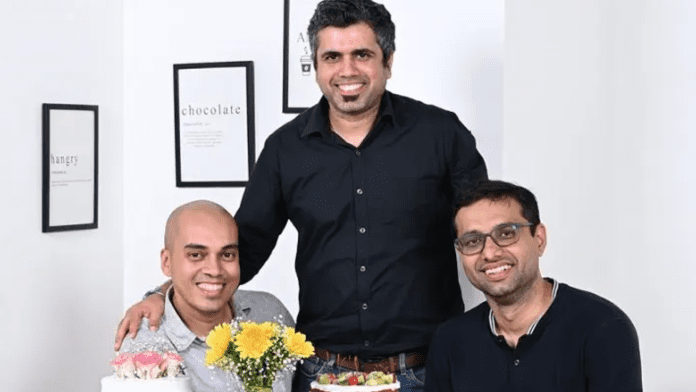
Bakingo Founders Himanshu Chawla, Shrey Sehgal, and Suman Patra

Bakingo, the online cake delivery startup, has raised $16 million in its first round of growth capital from private equity firm Faering Capital.

The funds will be utilized to bolster its distribution reach, with plans to increase from 75 dark kitchens to 150 and venture into 10 additional cities, as stated in a press release by Bakingo. The company also intends to establish exclusive brand stores to provide customers with firsthand product experiences and invest in technology to improve its production, supply chain, and forecasting capabilities.

Established by Himanshu Chawla, Shrey Sehgal, and Suman Patra, Bakingo provides an array of cakes and desserts, featuring its distinctive Cheesecake, Gourmet Cakes, Jar Cakes, and a selection of over 100 SKUs.

Additionally, the brand personalizes over 200 cake designs and asserts delivery within 2 hours across 13 cities.

The Gurugram-based bakery startup has recently expanded its operations to Jaipur, Chandigarh, Lucknow, and several smaller cities such as Meerut, Panipat, Karnal, and Rohtak.

Faering Capital, an Indian private equity firm, has amassed more than $720 million in capital through three funds and has collaborated with 30 companies. The recent investment in Bakingo marks Faering Capital’s fourth venture from its $346 million Fund 3. Noteworthy additions to its portfolio encompass Go Digit General Insurance, Niva Bupa Health Insurance, Vastu Housing Finance, Nykaa, Plum, and Finova Capital.

Advertisement

Korea Post relaunches kimchi deliveries to the USA after COVID-19 pause

0
Kimchi
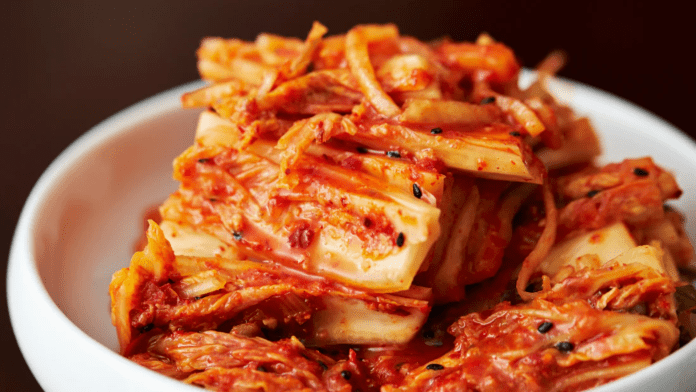
Kimchi (Representative Image)

Korea Post, the state-operated postal service agency of South Korea, announced on Monday the reinstatement of its Express Mail Service (EMS) for shipping kimchi across the United States.

The Kimchi Express Mail Service (EMS) was halted in November 2020 amid the COVID-19 pandemic. However, as of November 6, it recommenced operations in Japan. The United States now becomes the second country to resume kimchi EMS services.

For secure transportation and to minimize the potential for package rupture, Korea Post recommends that senders enclose kimchi in plastic, occupying about 70% of specially designed cans, which should be tightly sealed. This packaging directive is intended to address the difficulties associated with the air transport of fermented food.

“The resumption of services to Japan and now to the entire US means that our citizens abroad can reconnect with the taste of home,” President of Korea Post Cho Hae-keun said.

Advertisement

Liquor industry hit by unexpected setback: Pre-festive demand below projections

0

United Spirits, the largest liquor company in India, has reported lower-than-expected demand momentum in the current quarter. However, the company anticipates a recovery driven by upcoming festivities and the cricket World Cup.

“We remain cautiously optimistic that demand will pick up, though we don’t see the signs right now,” Hina Nagarajan, managing director at Diageo-controlled USL, told investors on an earnings call. “But we still have a big festival season to go through – Diwali and then Christmas, etc. So, we are cautiously optimistic and we are definitely investing and activating for growth.”

The company will persist in directing its attention towards factors it can influence.

It aims to “have the right investment going on for our brands and we will see what happens in the quarter,” she added.

The Indian spirits market experienced a 10% growth in the first half of the calendar year, standing out as the sole discretionary category to maintain robust momentum, especially when compared to cutbacks in other lifestyle segments like apparel and electronics by consumers. Traditionally, the December quarter marks a peak period for spirits, driven by factors such as weddings, festivals, and the winter season.

The producer of Johnnie Walker and Smirnoff reported that demand was relatively subdued in September due to a delayed festive season, and October did not show significant improvement. The company noted a slowdown in discretionary spending during this period, with the festival-related pickup not matching the buoyancy observed in previous years.

“Durga Puja on the eastern side of the country becomes the lead indicator, because that’s where the festivities begin even before the Diwali celebrations happen in the north,” USL chief financial officer Pradeep Jain said on the earnings call. “Having seen October now, we just haven’t experienced the kind of national pickup that we get typically in every year.”

In the September quarter, United Spirits Limited (USL) recorded a 12.2% increase in sales compared to the previous year, but the growth in the popular or mass-priced segment was limited to just 1%. The company attributed this to increased pressure on lower-priced products due to inflation, while the premium whisky and scotch portfolio continued to show strength. Liquor companies, facing a record surge in prices of raw materials like extra neutral alcohol (ENA), glass, and packaging materials over the past two years, are now experiencing a moderation in these cost increases.

Radico Khaitan, known for brands like Rampur and Magic Moments, mentioned that prices of specific packaging materials have recently shown a decline. However, the company is carefully observing the trends in Extra Neutral Alcohol (ENA) and glass bottles, where volatility continues to be a concern.

Advertisement

India’s confectionery market sweetens up as dark chocolate takes the lead in rapid growth

0
Dark Chocolate

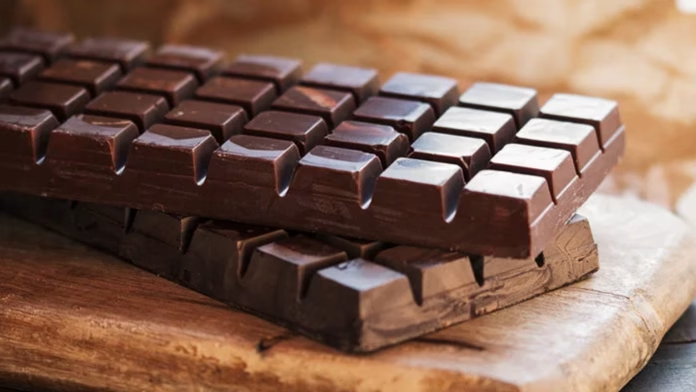
The chocolate bar chart depicts a notable growth trend, tracing its roots back to 4,000 years ago when early chocoholics in ancient Mesoamerica (present-day Mexico) integrated the cacao plant into their rituals and medicinal practices. This ancient civilization held a profound belief in the seeds, recognizing them as a bestowed gift from the god of wisdom.

Many centuries later, the Mayans, succeeded by the Aztecs in the 15th century, held the belief that chocolate was a divine gift. The fusion of divinity, healing properties, and exquisite taste contributed to the gradual dissemination of chocolate worldwide. As of 2023, the global chocolate market size stands at approximately $127.7 billion. Projections indicate a compound annual growth rate (CAGR) of 4.4% from 2024 to 2032, with an anticipated valuation of $165.4 billion by 2032. In 2021, Mondelez emerged as the leading chocolate confectionery firm in India, commanding a market share close to 60%, followed by Nestlé with a share of about 15%.

In 2022, the overall market size of chocolates in India amounted to INR 15,512 crore.

Euromonitor projects that the estimated growth of the market will reach INR 23,700 crore by 2027.

“Chocolate is a superfood when it is unprocessed,” says Professor John Dumay, Macquarie Business School, Chocolate Scorecard researcher. He adds, “Commercially, the best is dark chocolate of 70% or greater cocoa.

As chocolate undergoes more processing and is combined with other ingredients, its superfood qualities diminish. While milk chocolate remains prevalent in India’s consumption, dark chocolate currently holds around 10% of the market share. However, it is anticipated to be the fastest-growing segment, driven by a growing emphasis on awareness and wellness.

In response to consumer preferences, several local brands are now manufacturing premium dark chocolate, particularly in a post-pandemic world where health is a prevailing concern. Dr. Bharat Rakshak DDS, MDS, based in California, suggests that high-quality dark chocolate can offer antioxidants, enhance heart health, and potentially elevate mood, thanks to compounds such as flavonoids and theobromine.

“It has anti-aging properties, and has also been shown to have a number of other health benefits, including improved heart health, reduced inflammation, and improved cognitive function,” he says.

According to industry analysis and consulting firm Mordor Intelligence, there is a significant surge in demand for dark chocolate in the Indian chocolate market.

According to Jayen Mehta, Managing Director of Amul, the market for this product in India is expanding, driven by a growing awareness of its potential health benefits.

He says, “Amul has pioneered the dark chocolate revolution in India. We have a range starting with 55% dark and moving up to 75%, 90% and 99% dark. We have a wide range in flavours and due to this, the category is growing in India.”

Currently, chocolate accounts for 3% of the annual sales of the Gujarat Cooperative Milk Marketing Federation (GCMMF). Although its presence in the broader chocolate market stands at 10%, Jayen Mehta notes that Amul takes the lead in the dark chocolate segment.

He mentions that Amul’s dark chocolate range is favored by various demographics, including young adults focusing on a balanced diet, fitness enthusiasts and athletes seeking energy and antioxidants, and individuals with specific dietary restrictions like those following low-sugar or keto diets.

“It is one of the highly-rated superfoods and we have been marketing high cocoa content chocolates as a healthier and more premium option in the market, catering to consumers seeking a more indulgent yet mindful treat,” he adds.

From a branding standpoint, labeling chocolate as a ‘superfood’ faces constraints in India.

“While from a marketing perspective, it is a superfood, we need to also be aware that there is no such category under our food safety regulator FSSAI,” Mehta shares.

According to FSSAI, the FSS Act 2006 does not provide a specific definition for ‘superfood,’ preventing any product from being officially classified as such. Regulation 2.7.4 under the Food Safety and Standards (Food Products Standards and Food Additives) Regulations, 2011, outlines standards for chocolate. FSSAI lacks information indicating a notable trend of chocolate brands in India adopting healthier alternatives.

There is no category specified for selling healthy chocolates under FSSR,” a spokesperson said.

Internationally, the term ‘superfood’ lacks an official definition from regulatory authorities in significant consumer markets, including the USFDA.

In 2007, the European Union banned the marketing of products as ‘superfoods’ unless accompanied by a specific authorized health claim backed by credible scientific research.

Nevertheless, dark chocolate continues to don the cape of a superfood.

“With high cocoa content it is often considered a superfood due to its potential health benefits when consumed in moderation,” says Dr Rakshak.

He says that to get the superfood health benefits, the chocolate needs to have at least 70% cocoa content. “This usually means more antioxidants and less sugar,” he says.

Vedika Premani, a clinical dietitian at Sir HN Reliance Foundation Hospital, explains that an ingredient can be deemed a superfood if it meets certain criteria, including being rich in compounds like bioactives, vitamins, and minerals. Chocolate satisfies all these criteria.

“It is rich in antioxidants like magnesium, zinc, manganese and selenium and is known to be beneficial for mental and physical well-being. It is rich in flavanols which helps in increasing blood flow to muscles and brain,” she says.

“Flavanols are plant compounds that have been shown to have a number of health benefits, including anti-aging properties,” shares Dr Rakshak. According to a 2007 report by medical journal The Lancet, flavanols improved coronary vascular function in 11 hearttransplant recipients compared with patients taking a cocoa-free control chocolate.

Dr Ruchi Rai, dietitian at SRV Hospitals shares that “flavanols stimulate nitric oxide production, enhancing blood flow and relaxing arteries, reducing blood pressure.” Dark chocolate’s nutrient content, including manganese, magnesium, iron, selenium, copper, zinc and potassium, makes it an ideal aftermeal treat, she observes.

Advertisement

Cocoa prices skyrocket to 45-year high amid expected crop shortages

0
Cocoa
Cocoa (Representative Image)

Cocoa prices topped $4,000 per tonne in New York on Friday, marking the highest point since 1978. This surge was driven by the bullish factor of anticipated poor crop harvests across West Africa, contributing to the upward trajectory of prices throughout the week.

Zero Hedge reported a growing concern that El Nino-induced weather disturbances pose an escalating risk of pushing the global cocoa market into a deficit for the third consecutive year.

As per Bloomberg, Ivory Coast and Ghana, among the globe’s major cocoa producers, are experiencing reduced crop yields in their harvests. This circumstance has resulted in constrained supplies, consequently bolstering higher prices.

“The market does not seem convinced that production will recover enough to avoid a supply deficit for 2023/24,” ADM Investor Services Inc. analysts said in a note, Zero Hedge reported.

Cocoa futures rose 1 per cent in New York, topping $4,000 a tonne for the first time in 45 years.

Earlier this week, Oreo-maker Mondelez International said it would have to hike prices on some of its products due to the soaring cocoa and sugar prices.

Meanwhile, sugar prices hit decade highs on global shortage fears in April. And Arabica coffee prices are set to move higher after inventories hit 24-year lows, Zero Hedge reported.

Advertisement

Patanjali Foods faces revenue dip in edible oil sales amidst softening prices, CEO optimistic for future growth

0
Patanjali Ayurved
Patanjali (Representative Image)

Patanjali Foods Ltd. witnessed a sequential decrease in its revenue from edible oil sales as domestic prices softened, according to Chief Executive Officer Sanjeev Asthana. This was in line with a decline in global prices.

Due to a significant portion of edible oil being imported by India, alterations in global prices have some influence on domestic prices, according to Asthana. Consequently, Patanjali Foods experienced a decline in revenue during the July-September quarter, despite a marginal increase in sales volume.

He mentioned that palm oil futures on the Bursa Malaysia Derivatives Exchange dropped by 4.64% in the second quarter.

During the quarter ending in September, Patanjali Foods’ revenue from edible oil decreased to INR 5,421.5 crore, down from INR 5,890.73 crore in the preceding quarter.

The CEO mentioned that concerning the prices of edible oils, the worst has passed, and there is a likelihood of an increase in the next two quarters due to international factors.

Regarding transferring the price increase to consumers, he stated, “Usually, if there is a partial uptick, it can be passed on to consumers… It’s on a real-time basis.”

Growth in the quarter was propelled by new introductions in the food and fast-moving consumer goods sector, according to Asthana. He mentioned that there is a likelihood of ongoing new launches in this segment.

The revenue in the segment for Patanjali Foods increased to INR 2,487.6 crore, constituting 31.8% of its total revenue.

The FMCG company aims to achieve and sustain an Ebitda margin ranging from 16-18% in the food and fast-moving consumer goods segment and 2-4% in the edible oil segment, as stated by Asthana.

During Q2, the company expanded its palm oil plantation to cover 4,500 hectares across India, bringing the total plantation area to 68,498 hectares. Asthana noted that the effects of the palm oil plantation would become apparent in four to five years.

Advertisement

Celebrity endorsements creating a frenzy in the jewellery market, brands scramble to secure iconic faces

0
jewellery
(Representative Image)

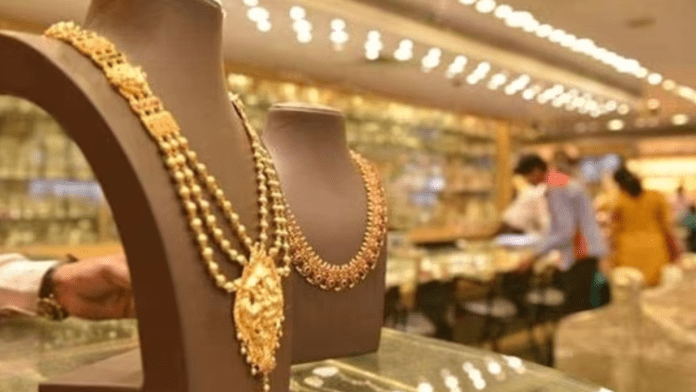
Jewellery brands are rushing to secure fresh celebrity endorsements, creating a surge in celebrity fees and the implementation of rigorous terms and conditions, both on a national and regional scale. However, there is a notable preference for endorsements from glamorous icons.

A high-ranking executive from a renowned jewellery brand, who preferred to remain anonymous, mentioned that the daily asking price for top-tier celebrities is approximately INR 8 crore.

“It’s becoming unviable for the business. Even at this hefty price, they are reluctant to give more than three days in a year to the brand they are endorsing, won’t change costumes more than two times on the day of shooting, and won’t work more than eight hours on that day including traffic time.”

He said the likes of Allu Arjun, who once billed INR 35 lakh a few years back, now demand around INR 6 crore per day, thanks to the staggering success of the movie Pushpa.

Madhuri Dixit commands INR 1 crore for an 8-hour commitment, while emerging actresses like Kiara Advani demand INR 1.5-2 crore per day, encompassing activities such as photoshoots, store openings, and participation in brand-related events. Anish Varghese, the head of marketing at Joyalukkas, expressed, “We’ve had Kajol as our brand ambassador for the past 8 years, and we’re actively searching for a new face. However, finding one is proving challenging, as every other jeweller has already secured someone from the new generation of actors.”

This year, Malabar Gold & Diamonds has enlisted the endorsement of Alia Bhatt, Junior NTR, Anil Kapoor, Kareena Kapoor Khan, and Karthik Sivakumar, commonly known as Karthi, renowned for his work in Tamil cinema. While Alia Bhatt is a new addition to Malabar’s roster, Junior NTR’s contract has been renewed, particularly notable for his popularity gained from the song Natu Natu in the film RRR.

Mia By Tanishq recently named Bollywood actor Rakul Preet Singh as its newest brand ambassador, while Zoya Jewels features Sonam Kapoor Ahuja as its face. Ajoy Chawla, CEO of Tanishq, revealed, “We have enlisted south Indian actress Nayanthara as our brand ambassador to bolster the brand’s presence in the southern region, where we intend to expand.” However, Chawla declined to disclose the specific terms and conditions of the agreement with the actress. It is rumored that Nayanthara commands INR 5 crore for brand partnerships.

Film stars from the South are experiencing a deluge of brand endorsements. Following the widespread use of the term “pan-India” in the aftermath of the successes of their films and OTT shows, actors ranging from Allu Arjun to Samantha Ruth Prabhu (known for The Family Man and Oo Antava) are attracting aggressive attention from advertisers. Insiders in the industry indicate that these South Indian stars are now demanding eight times their previous fees (pre-2021) for brand collaborations.

“We too are looking for one for our new line of silver jewellery. But everyone is booked. Thanks to social media like Instagram, Facebook or X, consumers can constantly see the celebs and therefore for jewellers, it acts as a major brand recall. So, the jewellers are chasing celebrities to endorse,” explained Saurabh Gadgil,MD of PNG Jewellers, adding that they are confident of getting a new face soon.

Suvankar Sen, Managing Director of Senco Gold and Diamonds, stated that his company has enlisted the services of Kiara Advani, emphasizing her high level of professionalism.

Advertisement

Indira Foods launches bold expansion with veteran advisor Ullas Kamath and brand ambassador Sathish Ninasam

0
Indira Foods

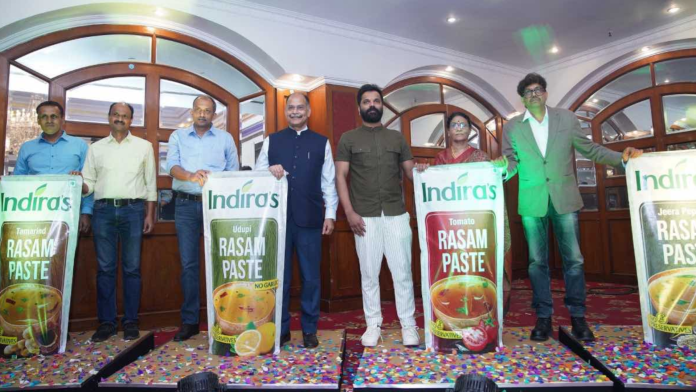
Indira Foods, a renowned home-grown company celebrated for its Ready to Cook/Ready to Eat millets (ragi) and various natural spice-infused pastes and food formulations with zero additives, is embarking on ambitious expansion initiatives in the Indian retail sector. The company is poised to introduce disruptive products, among them its novel rasam paste, and is excited to welcome industry veteran Ullas Kamath as an advisor to steer its trajectory. In conjunction with these developments, a state-of-the-art 1.2 lakh sq. ft. manufacturing facility in Karnataka’s Mandya District, backed by a INR 25 crore investment, is currently underway. It’s worth noting that film star Sathish Ninasam has been enlisted as the face of the brand.

Emerging from a humble garage, Indira Foods stands as a testament to women entrepreneurship, swiftly transforming into one of the most rapidly growing FMCG companies. Noteworthy for pioneering achievements, such as being the first to introduce Ragi products and holding the title of the largest exporter of 100 percent natural tamarind concentrate in India, the brand consistently pushes boundaries. Operating without debt and firmly established in both domestic and international markets, the company is ready to take substantial leaps forward in the Indian ready-to-cook product line.

Chairman of Indira Foods, Indira, stated, “New technologies and production features, coupled with healthy and nostalgic edibles, ensure qualitative offerings that align with the needs of the modern generation. We are the modern-day answer to modern-day needs with the old touch of quality and wellness.”

Vijay C, Director of Indira Foods, underscores the brand’s robust foundation and extends gratitude for the trust bestowed upon it by notable figures such as Ullas Kamath. He underscores the company’s objective to swiftly broaden its product range and workforce, with a target to onboard 100 new team members in the coming year.

Ullas Kamath, Chairman of FICCI Karnataka State Council and Advisor on the board for Indira Foods, expresses his delight in being part of the Indira growth story, emphasizing the brand’s commitment to providing wholesome, healthy, and homegrown food.

Operating across four product categories, Indira Foods currently features three brands: Indira’s, Splitz, and Pingani. The company, selling products in the private label segment and exporting to countries such as the US, UK, Netherlands, Germany, New Zealand, and the Middle East, is poised for substantial growth in the dynamic FMCG market.

Advertisement

How Cheesiano Pizza is disrupting QSR with freshness and innovation

0
Cheesiano Pizza

In the bustling world of Quick Service Restaurants (QSRs), where each establishment vies for a distinctive flavor and identity, Cheesiano Group has carved a niche for itself with a delectable combination of innovation, authenticity, and a relentless pursuit of quality.

Cheesiano Pizza emerged from a simple yet profound idea – the power of freshness. In a market dominated by cold supply chain models, Cheesiano set out to differentiate itself by providing pizzas with fresh dough and crisp vegetables. According to Niraj Bora, Co-Founder, “Fresh dough and veggies make a lot of difference in the taste.” This commitment to freshness laid the foundation for a culinary journey that would soon extend beyond pizzas.

From Pizza to Burgers and Subs: A Diversified Triumph

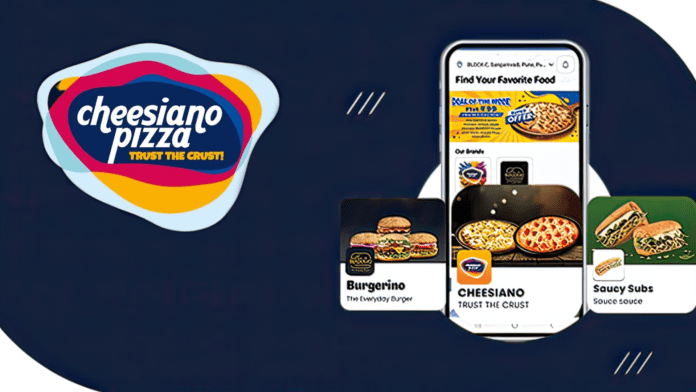
The success story of Cheesiano Pizza is marked not just by its growth but also by diversification. In the past year alone, the brand has grown fourfold, adding two more brands under its umbrella – Burgerino and Saucy Subs. Monthly orders have surpassed 25,000, and the brand is eyeing a substantial expansion to 50 stores in the next two years, with revenues crossing an impressive INR 1 Crore monthly.

Read More: Cheesiano Pizza surpasses INR 1 Crore in monthly sales, unveils new brand and expansion plans for future growth

The thought process behind diversification was strategic. As the brand entered a growth trajectory, it sought to add more categories to its menu. The decision to venture into burgers and subs was influenced by market trends and consumer preferences. “Burgers are the largest segment after pizza in QSR, and they are still growing. Consumers have a higher frequency of eating burgers than pizza,” explained the Co-Founder. In the case of subs, the brand saw an untapped market and envisioned making it a mass-market product with Indianized flavors.

With a portfolio ranging from pizzas to burgers and subs, Cheesiano Group caters to a diverse customer base. Pizzas and burgers are considered mass-market products, while subs, a less penetrated category in India, cater to a more discerning audience. The brand plans to cross-sell its subs to existing customers of pizzas and burgers, ensuring a gradual but steady acceptance of the new offerings.

Focusing on Freshness, Quality, and Consistency:

In a competitive market, Cheesiano Group distinguishes itself through a focus on freshness, quality, and consistency. The emphasis on using fresh ingredients and making dough daily sets it apart from competitors. “We dispose of the remaining dough at the end of the day and make fresh every day,” says the Co-Founder. This commitment to maintaining the quality of the crust and overall product is a key differentiator.

Looking ahead, the Co-Founder sees numerous opportunities in the QSR space, including a growing market, urbanization, changing consumer habits, and more. While challenges exist, such as getting people to try the product for the first time, the brand is actively working on overcoming these hurdles. The focus is on delivering a top-notch customer experience from the first order to create repeat customers.

FOCO Model: A Recipe for Growth

The FOCO (franchise-owned company-operated) model has been instrumental in Cheesiano Group’s expansion. This model allows individuals who dream of owning a restaurant to sign up for a franchise with the company. The company then operates the store, utilizing its expertise in marketing, quality maintenance, and overall store management. The revenue is shared with the franchise in perpetuity, ensuring a win-win situation for both parties.

Vision for the Future: National Presence with Quality Intact

Cheesiano Group is not resting on its laurels. Recent innovations include the launch of its own app, consolidating all brands and categories under one platform. Future plans involve building an in-house fleet of riders to achieve 45-minute deliveries, further enhancing the customer experience.

Looking ahead, Cheesiano Group envisions a national presence, expanding city by city and state by state. However, the commitment to maintaining quality remains unwavering. The long-term goal is not just expansion but a strategic and measured growth that ensures each new venture upholds the brand’s core values.

For aspiring entrepreneurs, especially those venturing into the food and beverage industry, the Co-Founder of Cheesiano Group offers valuable advice. Find a niche, something you would personally enjoy and order frequently. Start small, perfect the offering, and then consider expansion. It’s a recipe that has clearly worked for Cheesiano Group, a brand that continues to redefine the QSR landscape with its commitment to quality and innovation.

Advertisement