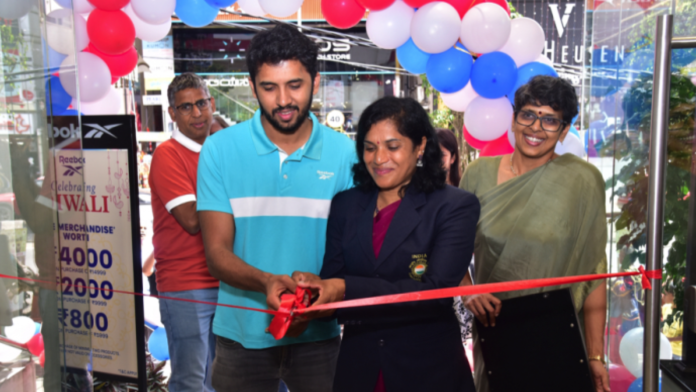
Reebok, a prominent brand in athletic footwear and apparel, has unveiled its latest flagship store in Kammanahalli, Bengaluru. The inauguration ceremony was conducted by O.P. Jaisha, a distinguished field athlete and Olympian, as stated in the company’s press release on Wednesday.
“We are delighted to bring Reebok’s innovative and high-performance products to the heart of Bengaluru through our new store in Kammanahalli,” shared Manoj Juneja, CEO of Reebok, expressing his excitement about the store’s opening.
Speaking on the inauguration, Olympian O.P. Jaisha said, “I practised early days of athletics in Reebok shoes, I am privileged to be a part of this occasion. The collection of shoes and apparel is very extensive and designed very thoughtfully for all fitness activities.”
The inauguration of Reebok’s Kammanahalli store is a component of ABFRL’s continual initiatives to broaden the brand’s retail presence and provide top-notch products to consumers throughout India.
Based in Boston, MA, USA, Reebok International Ltd. is a prominent global designer, marketer, and distributor of sports, fitness, and lifestyle footwear, apparel, and equipment.
Reebok is affiliated with the Authentic Brands Group (ABG), and in India, it operates in partnership with Aditya Birla Fashion and Retail Ltd. (ABFRL).
As of March 31, 2023, ABFRL reported a revenue of INR 12,418 crore and maintained a retail footprint covering 10.8 million square feet.
The organization operates a network of 3,977 stores, spanning around 33,535 multi-brand outlets, and has 6,723 points of sale in department stores throughout India, as of March 31, 2023.
ZappFresh, the meat delivery platform, has secured INR 30 crore (about $4.3 million) in a funding round co-led by Ah! Ventures, HT Media, Unity SFB, and Heifer Impact. With this latest funding, the Gurugram-based company has now raised a total of almost $14 million.
As stated in a press release, the proceeds will be directed towards acquisitions, expansions, and infrastructure upgrades in both the northern and southern markets, according to ZappFresh.
Established in 2015 by Deepanshu Manchanda, ZappFresh specializes in the sale of fresh meat, seafood, and ready-to-cook items through its app and website. The company sources its meat and fish from local farms, processes them at dedicated plants, and tailors the pieces to customer preferences before delivering them.
Presently, it operates in the Delhi-NCR and Bengaluru regions.
ZappFresh plans to introduce new product lines, aligning with the changing needs and preferences of customers to provide increased choices and convenience. The expanded offerings will encompass a diverse range, including poultry, goat meat, seafood, and ready-to-eat items, as outlined by ZappFresh.
According to Deepanshu Manchanda, the founder and chief executive of ZappFresh, the company completes approximately 4,500 orders each day, with an average basket size amounting to INR 600.
ZappFresh achieved profitability for the fiscal year ending in March 2023 (FY23), with its revenue increasing from INR 56 crore in the preceding fiscal year to INR 70 crore in FY23. The company reported a profit of INR 3.5 crore in FY23.
In July, ZappFresh successfully acquired Dr. Meat for approximately $3 million, marking a strategic investment poised to foster the company’s expansion.
As per information from TheKredible, a data tracking and startup intelligence platform, the co-founders of ZappFresh possess approximately 40% of the stake, with SIDBI emerging as the primary external stakeholder holding a 21% stake.
ZappFresh contends with rivals such as Licious and FreshToHome, both of which have secured substantial funding and operate on a larger scale. Despite their extensive operations, these competitors have experienced significant financial losses. In FY23, Licious reported a modest 9.6% growth, achieving INR 747.7 crore in revenue but incurring a substantial INR 500 crore loss. Similarly, FreshToHome disclosed INR 102 crore in revenue (GMV of INR 1,100 crore) for FY22, accompanied by a significant INR 477 crore loss. As of now, FreshToHome has yet to release its financial numbers for FY23.
Honasa Consumer Ltd, the holding company of D2C unicorn Mamaearth, experienced a 20% surge in its shares during Thursday’s intraday trading. The stock reached a record high of INR 422.5 on the BSE after the company disclosed its Q2 FY24 earnings.
On Wednesday, Mamaearth reported a profit after tax (PAT) of INR 29.4 Cr in Q2, demonstrating a substantial 94% year-on-year (YoY) increase. Simultaneously, its operating revenue saw a growth of 21%, reaching INR 496.1 Cr.
In fact, there seems to be an overall improvement in the company’s financial performance. In the previous fiscal year (FY23), Mamaearth had incurred a loss of INR 151 Cr. Although the startup’s performance for the entire fiscal year is yet to be observed, it has reported a profit after tax (PAT) of INR 54.1 Cr in the first half of FY24.
The startup reported that 40% of its revenue growth originated from online operations, with revenue from offline channels experiencing a 33% increase in H1 FY24. Additionally, it asserted that quick commerce has become a robust channel, witnessing a remarkable over 100% year-on-year (YoY) growth.
This was the first time the company submitted its quarterly financial statements since it went public earlier this month.
The D2C unicorn had a subdued start on the Indian stock exchanges. Although it began trading at an almost 2% premium on the NSE, the shares opened flat at INR 324 on the BSE. The presence of a loss-making book significantly contributed to the negative impact on its public listing.
In the current funding environment, investors are placing a strong emphasis on the profitability of emerging technology companies, whether they are publicly traded or not. Shares of startups such as Zomato, Paytm, and PB Fintech have experienced a notable upswing this year, rebounding from the challenges faced in 2022, driven by positive developments in their financial performance.
Mamaearth’s shares were on an upward trajectory at the start of the week but experienced a decline in yesterday’s trading. As of now, the stock is trading more than 30% above its initial listing price.
The proposed new ecommerce policy may not require online business firms to mandatorily register on Open Network Digital Commerce (ONDC).
According to a report from Mint, the Department for Promotion of Industry and Internal Trade (DPIIT) might not enforce a requirement for online portals to reveal their ‘buyer and seller’ database to the ministry’s service facilitator, ONDC.
Nevertheless, the forthcoming policy is expected to suggest voluntary registration, indicating a departure from prior considerations. This change in position comes after conclusive consultations with stakeholders in early August. Initially, the government had been contemplating transforming ONDC into a comprehensive one-stop service-providing network.
The upcoming ecommerce policy may tackle concerns pertaining to unfair trade practices, encompassing issues like predatory pricing and flash sales.
In the proposed legislation, the government has already relaxed the obligatory criteria for establishing an independent regulator specifically designed to supervise online retail platforms.
Praveen Khandelwal, Secretary General of the Confederation of All India Traders (CAIT), proposed that, in addition to ONDC registration, all online players should be required to register with DPIIT. Furthermore, he recommended the establishment of a distinct regulatory body to effectively combat online fraud.
Lately, stakeholders in the industry advocated for the government to allow foreign direct investment (FDI) in inventory-based ecommerce platforms engaged in the export of goods.
From the existing policy standpoint, foreign direct investment (FDI) is only allowed in ecommerce platforms utilizing a marketplace model, while it is prohibited for inventory-based ecommerce entities.
The formulation of the e-commerce policy has been an ongoing initiative since 2018. The government’s approach involves amalgamating diverse rules and regulations governing ecommerce platforms into a comprehensive and unified regulatory framework. This holistic strategy seeks to incorporate essential elements, including the Consumer Protection Act, the Foreign Direct Investment policy issued by the DPIIT, the Competition Act, and the forthcoming Digital India Act, into a cohesive set of regulations for the ecommerce sector.
On Wednesday, the Indian alcoholic beverage industry emphasized the importance of implementing a Geographical Indication (GI) tagging approach for food and beverage products at the state level. This strategy is seen as instrumental in enhancing price realization in international markets.
Nita Kapoor, Chief Executive Officer of the International Spirits and Wines Association of India, projected a Compound Annual Growth Rate (CAGR) of approximately six percent for the alcobev industry. She anticipates that this growth will propel the industry from its current size of USD 51.7 billion to USD 63 billion over the next five years.
She spoke with PTI during a session focused on ‘Agriculture and Allied Including Blue Economy’ held at the Bengal Global Business Summit (BGBS).
Additionally, she advocated for partnerships with major fruit-producing nations in Europe and former USSR countries to enhance the production of low-alcohol content fruit-based products in the alcobev sector.
“The GI tagging is important as it provides a distinct advantage. For example, Scotch, Champagne and Cognac are a few successful GI tag categories. The key strategic issue is to consider some number of GI-tagged products in the export basket for the state of West Bengal,” Kapoor said.
She highlighted that Europe boasts over 5000 Geographical Indication (GI)-tagged products, whereas India currently has fewer than 500 functional GI tags.
“GI tag requires a complete ecosystem that a state needs to develop. A private entity or a corporate can work within this ecosystem. It has to come from the state. We are talking to state governments for GI-tagging of products, including beverages, fruits and grains used as the raw material for the industry.
“More GI tagging of products will help get better prices in export markets,” Kapoor said.
She mentioned that the overall export of the alcobev industry currently stands at INR 1500-1600 crore.
The alcobev sector constitutes two percent of India’s nominal GDP and provides employment for 7-8 million individuals, encompassing six lakh farmers engaged in the cultivation of grains and sugarcane essential as raw materials for the industry.
Globally, India stands as the second-largest player in the spirits industry, while it holds the fifth position in the broader alcobev sector.
The leading states for the production of extra neutral alcohol (ENA), the foundational component for spirit manufacturing, are UP, Maharashtra, and Karnataka.
“West Bengal, Telangana and Rajasthan contribute roughly 3-4 per cent of supplies of grain-based ENA. There is an opportunity to seriously consider ENA distilleries in Bengal,” she added.
In the face of increasing health concerns in India linked to unhealthy lifestyles, You Care Lifestyle is excited to unveil its first in-house creation, “You Balance.” This health powder is carefully formulated by blending scientific principles, ancient wisdom, and the extensive expertise of Team Luke. It specifically addresses chronic inflammation, a key contributor to various health issues like diabetes, cancer, thyroid disorders, and gastrointestinal problems.
The significance of maintaining balance in the fight against health-related diseases, especially in the context of the 2019 pandemic, has become more apparent. Chronic inflammation, often referred to as the silent epidemic, presents a substantial risk to overall well-being, playing a role in conditions such as cardiovascular diseases, diabetes, cancer, and neurodegenerative disorders.
“You Balance” steps forward as a proactive solution, harnessing the power of 11 scientifically proven ingredients, including Turmeric Powder, Black Pepper, Cumin Seeds, Fennel Seeds, Coriander Seeds, Ginger Powder, Ceylon Cinnamon, Cardamom, Methi Seeds, Amla Powder, and Clove. This herbal spice blend actively supports the immune system, modulates inflammatory responses, and reduces the production of pro-inflammatory molecules.
The distinctive philosophy of “You Balance” centers on cellular nutrition, angiogenesis, DNA repair, stem cell regeneration, microbiome gut health, immunity, and inflammation. Through a manufacturing process that prioritizes slow roasting and precise spice grinding, the aim is to optimize nutrient absorption, guaranteeing a 100 percent bioavailability. Additionally, the product’s environmentally conscious packaging reflects You Care Lifestyle’s dedication to a healthier planet.
Free from preservatives, additives, binders, or fillers, “You Balance” stands as a pure, chemical-free, plant-based, and non-GMO blend suitable for all age groups. This versatile health powder is designed not only to enhance individual health but also to contribute to the overall well-being of communities.
Narendra Firodia, Social Entrepreneur and Co-founder of You Care Lifestyle, expressed, “This launch reflects our dedication to providing our community with superior, science-backed solutions.”
Magicpin reported on Thursday that food delivery orders soared by over twofold to one million during the cricket World Cup matches on the government-backed Open Network for Digital Commerce (ONDC) network, surpassing the monthly average.
Magicpin reported handling 35,000 food orders during the India versus Pakistan match on October 14, with orders reaching a peak of 50,000 on a single day during the India versus Australia match.
“Magicpin has crossed 10 lakh food delivery orders for the entire duration of the World Cup between October 5 and November 19. The number of orders soared beyond expectations as ONDC’s demand grew on magicpin’s own buyer app and through other large buyer apps like Paytm, Phonepe’s Pincode and Ola,” the company said in a statement.
Previously, the company had announced its plans to offer discounts totaling INR 50-100 crore at the beginning of the World Cup for cricket fans, extending across food delivery and various other categories such as dining out, fashion, and groceries, turning this event into a festive experience for the fans.
“I’m incredibly proud to have witnessed the record-breaking number of 10 lakh orders on magicpin under the ONDC umbrella this past month and half. This milestone reflects our collaboration with the ONDC team and the combined relentless efforts to provide the best local discovery and rewards platform for the cricket lovers and Indians celebrating Diwali, other festivals,” magicpin CEO and co-founder Anshoo Sharma said.
In June, magicpin surpassed 30,000 orders per day. Preceding the World Cup, magicpin asserts to have maintained an average monthly order volume of approximately 400,000.
“This milestone is a result of the scale of the magicpin’s food delivery business, which is also witnessing 2 times growth month-on-month,” Sharma said.
In an industry-first move, Amazon India has forged a significant partnership with the Inland Waterways Authority of India (IWAI), operating under the Ministry of Ports, Shipping, and Waterways. The collaboration entails the signing of a memorandum of understanding (MoU) to pioneer the transportation of customer packages through inland waterways.
According to the memorandum of understanding (MoU), Amazon India and IWAI are set to collaborate on facilitating the movement of containerized cargo and establishing a network for utilizing inland waterways in cargo transportation. This initiative, outlined in a blog post on Wednesday, signifies Amazon’s foray into exploring inland waterways as an integral component of its supply chain.
In collaboration with IWAI and its carriers, Amazon is gearing up to launch a pilot run along the Patna to Kolkata waterway, specifically on National Waterway 1. Government statistics reveal that the country boasts 111 designated national inland waterways, covering approximately 20,275.5 km and facilitating the transportation of nearly 55 million tonnes of cargo each year.
Commenting on the development, minister of ports, shipping and waterways Sarbananda Sonowal said, “This MoU with Amazon India marks a significant step towards harnessing the potential of India’s inland water transport. Our focus is on increasing cargo movement through river systems, which is a more sustainable and economical mode of transport. I congratulate Amazon India on their endeavour to collaborate with IWAI to create a waterways transportation solution.”
Coincidentally, this development occurs almost a year subsequent to the introduction of Amazon Air, the air cargo network by the US-based ecommerce giant, in India. Amazon India maximizes the entire cargo capacity of a Boeing 737-800 aircraft to enhance the speed of deliveries to its customer base.
Speaking on the waterways initiative, Abhinav Singh, the VP of operations at Amazon India, said, “This MoU between Amazon India and the IWAI is poised to develop a transformative offering that will open up new possibilities for all ecommerce companies to leverage the country’s extensive inland waterways.”
Singh emphasized Amazon’s steadfast dedication to its worldwide mission of revolutionizing the future of logistics. The company is determined to leverage the untapped potential of India’s rivers, canals, and other water bodies to elevate the efficiency of logistics and transportation within the Indian ecommerce industry.
By integrating inland waterways into its operations, the prominent ecommerce player has established an extensive logistics network across India, encompassing land, air, and water transport. Additionally, Amazon is actively pursuing the expansion of its export capabilities from India. Media reports suggest that the ecommerce giant aims to achieve exports totaling $20 billion from India by the year 2025.
Zomato’s shares opened flat on Thursday, as reports emerged about tax notices being served to food delivery aggregators Zomato and Swiggy over non-payment.
As of the previous day’s (November 22) closing, Zomato shares concluded the session at INR 115.25. As of 9:20 am on November 23, the stock was trading at INR 114.
In January 2022, the government included ‘restaurant services’ and cloud kitchens within the scope of Section 9(5) of the CGST Act, 2017. This resulted in platforms such as Swiggy and Zomato being required to pay a 5% GST on the ‘restaurant services’ they provide.
Zomato and Swiggy have reportedly been issued notices for a combined goods and services tax (GST) amounting to approximately INR 1,000 Cr. Tax authorities now consider delivery charges collected by these platforms as part of their revenue.
Both food delivery platforms have been instructed to remit INR 500 Cr each, representing the 18% tax imposed on the entirety of the delivery fees they have accumulated since the initiation of their food delivery services.
The delivery fees imposed by both Swiggy and Zomato have consistently sparked debate and controversy, eliciting diverse opinions.
In 2016, Swiggy initiated the practice of charging food delivery fees, and following suit, Zomato also introduced delivery charges.
Having established a standard for delivery fees, Zomato initiated a loyalty program now known as Zomato Gold. This program enables customers to waive delivery fees by subscribing to a monthly plan, which also comes with additional perks.
Similarly, Swiggy introduced Swiggy One, adopting the concept of eliminating delivery fees through a subscription model, accompanied by additional benefits.
Zomato and Swiggy collectively fulfill 1.8 million to 2 million orders daily nationwide. The introduction of a new Goods and Services Tax (GST) has the potential to disrupt their cash flow.
Nevertheless, both platforms have initiated the imposition of a platform fee on orders, with fees ranging from INR 2 to INR 5 per order. Importantly, this fee is applicable universally to all customers, regardless of whether they are enrolled in any particular loyalty program.
Meanwhile, Zomato announced its second consecutive profitable quarter, witnessing a notable surge in profit after tax to INR 36 Cr during the September quarter of the financial year 2023-24 (FY24). This marked an 18-fold increase from the PAT of INR 2 Cr in the previous quarter.
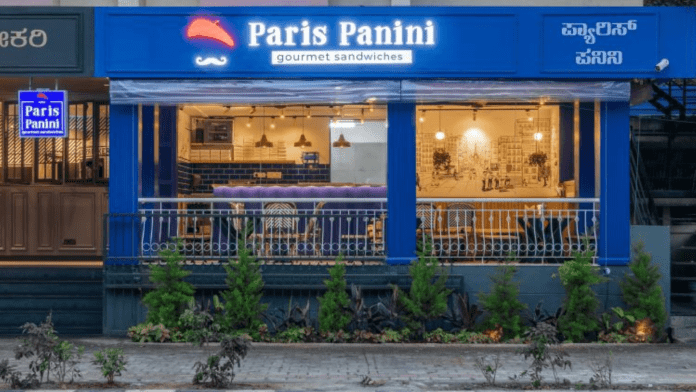
In the bustling streets of Bangalore, where culinary delights seem to be around every corner, one brand has emerged to redefine the gastronomic landscape—Paris Panini. Imagine the sheer joy of biting into a perfectly crafted panini, where the crunch of golden-brown bread gives way to a medley of flavors that dance on your taste buds. Each bite is a symphony of succulent meats, artisanal cheeses, and vibrant, handpicked vegetables harmonizing in a gourmet masterpiece. It’s not just a sandwich; it’s a rollercoaster ride, an indulgence that transcends the ordinary.
For food enthusiasts who need no introduction to the perfection of a panini, Paris Panini is the epitome of this culinary love affair. What started as a food truck venture in 2015 by Nicolas Grossemy, a French cuisine enthusiast, quickly transformed into a brand that bridges the gap between India and Paris, ensuring that foodies need not leave the country for the love of authentic French flavors.
Nicolas Grossemy
As the sizzle of the grill echoed the passion and precision behind each panini creation, Paris Panini’s initial foray into the Indian culinary landscape was not without its challenges. In an interview with SnackFax, Nicolas Grossemry, the Co-Founder, revealed the hurdles faced in establishing a brand that introduced the concept of authentic French paninis to a relatively unacquainted audience.
“The name of the food truck, Le Casse Croute, was quite a bet. We really wanted to make people understand it’s authentic not only with the product but also with the branding between the name, the brand colors, the uniforms,” explained Nicolas. Overcoming the unfamiliarity with the brand’s name became part of the initial journey, as Nicolas personally engaged with people to elucidate the authenticity behind Paris Panini.
However, the challenges did not end there. Operating a food truck in Bangalore posed regulatory obstacles, with Nicolas navigating the fine line of legality. “Food trucks aren’t entirely legal in Bangalore. Dealing with local authorities was a bit of a pain,” he confessed. Undeterred, Paris Panini adapted and, after a few months, introduced a delivery and take-away counter, steering the brand toward a more accessible dining experience.
Nicolas didn’t just bring the idea of a panini to Bangalore; he brought the essence of French culinary culture. Adapting the menu to local tastes while maintaining an authentic French touch became paramount. “In France, you can manage a 30-seater cafe with 4 people, but here you’d need 8 to 10 people. Some might not come for work for some ‘personal reason,’ and the culture of doing everything is not here. In France, we learn to do everything in the restaurant. That’s not the case here, but I learned this and adapted that way,” Nicolas shared, reflecting on the cultural nuances of the Indian culinary landscape.
Sourcing Challenges: A Gastronomic Puzzle
One of the most daunting challenges for any food brand lies in ingredient sourcing. Nicolas shed light on this aspect, stating, “The range of products is very limited here. When in France, you’ll have the choice to work with 10 different kinds of tomatoes here you’ll get one or two. The same comes with flour and cheese, for example.” Despite these limitations, sourcing the right ingredients was crucial to ensuring the quality and freshness of Paris Panini’s offerings—a compromise Nicolas was unwilling to make.
Navigating the Urban Jungle: Traffic Woes and Unexpected Partnerships
Being based in Bangalore, notorious for its traffic, posed logistical challenges. However, an unexpected turn of events brought Nikhil Gupta into the picture, marking a significant turning point for Paris Panini. Nicolas revealed, “Previous attempts to secure funds had fallen through, creating a precarious financial situation. Our partnership is characterized by complementary strengths, as we complete each other, helping us bring unique skills and expertise to the project.” Nikhil and AB’s investment in Paris Panini allowed the brand to grow, with a commitment to reinvesting profits and ensuring a steady and sustainable expansion.
Nicolas emphasized the importance of staying true to one’s passion and vision. “When I started Le Casse Croute, I truly believed in the product; that’s what kept me going. For anyone who wants to be an entrepreneur, start something you’re passionate about, start something you have knowledge about and fix targets,” he advised. The success of Paris Panini didn’t happen overnight, but the unwavering belief in the product paved the way for investor confidence and, ultimately, the brand’s flourishing journey.
Future Plans: Strengthening Foundations for Growth
In its initial years, Paris Panini focused on the Quick Service Restaurant (QSR) segment before transitioning to Fast Casual. This shift, evident in larger establishments like the 55-seater Church Street location, was driven by a commitment to enhancing the customer experience. The brand recognized the limitations of counter ordering and menu frames, prompting a move towards table service. Recent collaborations, such as the partnership with Mannheim for exceptional coffee offerings, further underline Paris Panini’s dedication to elevating the overall dining experience.
As Paris Panini continues to make waves in Bangalore’s culinary scene, the brand remains focused on strengthening internal processes and fundamentals. While future expansion plans are yet to be decided, the brand contemplates potential outlets in specific regions or cities within the next 12 months. The emphasis on fortifying the brand’s core values and operational efficiency takes precedence before venturing into new challenges or cities.
In the heart of Bangalore, Paris Panini stands as a testament to the fusion of culinary artistry and entrepreneurial spirit. From the challenges of introducing French street food to navigating the intricacies of the Indian culinary landscape, Paris Panini has not only weathered the storm but emerged as a beacon of gourmet delight, inviting food enthusiasts on a delectable journey through the streets of Bangalore and beyond.
We use cookies to ensure that we give you the best experience on our website. If you continue to use this site we will assume that you are happy with it.