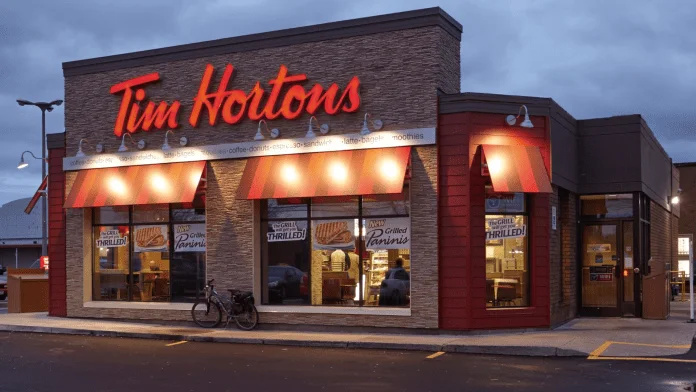
Canadian coffee brand Tim Hortons is poised to make its debut in Singapore with the grand opening of its first cafe at VivoCity on November 17th.
The café will showcase a range of iconic menu offerings, featuring signature coffee beverages crafted from 100% Premium Arabica Beans. Additionally, patrons can indulge in a diverse selection of freshly prepared sourdough melts and baked goods, including the internationally adored bite-sized doughnuts referred to as Timbits.
Earlier this year, the Japanese conglomerate Marubeni Corporation disclosed its entry into an exclusive agreement with Tim Hortons Asia Pacific Pte. Ltd. through its wholly-owned Singapore-based subsidiary, Marubeni Growth Capital Asia Pte. Ltd. This collaboration aims to introduce the Tim Hortons brand to the Singaporean market.
“We are delighted to introduce the Tim Hortons brand in Singapore. We firmly believe that fundamental consumer trends fuel the coffee, food and beverage sector, and we are committed to establishing a lasting and sustainable presence in the region, hand in hand with our valued partners,” said Bharat Sarma, President and Senior Managing Director, Marubeni Growth Capital Asia.
Following the VivoCity launch, Tim Hortons has already set its sights on opening outlets in Nex, One Raffles Place, and Suntec City.
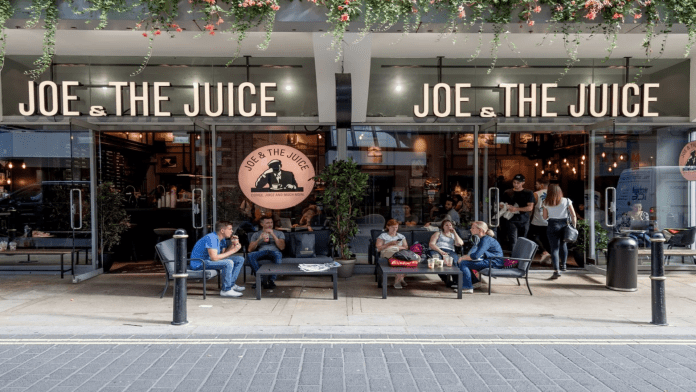
General Atlantic, a private equity firm headquartered in the United States, has finalized a deal to expand its ownership in Joe & the Juice, a Denmark-based company known for its juice bar and coffee concept.
While the specific financial terms of the agreement were not disclosed by the companies, a Financial Times report suggests that the deal’s estimated value could be around $600 million.
General Atlantic acquired the extra stake in the company from Valedo Partners, which has agreed to completely divest its investment in Joe & the Juice.
In 2013, Valedo Partners secured a 90% controlling interest in Joe & The Juice. The founder of the chain, Kaspar Basse, retained the remaining 10% stake, as reported by the World Coffee Portal.
In 2016, General Atlantic initially obtained a minority interest in the juice bar and coffee concept through a strategic minority growth investment.
Upon completing the latest transaction, General Atlantic will become the majority stakeholder of Joe & the Juice.
General Atlantic managing director and consume global head Andrew Crawford said, “As a long-term partner to Joe & the Juice, General Atlantic is proud to become a majority investor in the brand and continue our collaboration with the management team.
“Joe & the Juice’s business momentum is inflecting and we are excited to build on the Company’s digital traction and accelerate company-owned and franchised unit growth.”
The agreement will enable Joe & the Juice to accelerate its plans for international expansion.
Joe & the Juice intends to allocate a portion of General Atlantic’s investment to both debt reduction and the expansion of its store presence in emerging overseas markets, including the UK, Europe, the Middle East, Asia, and Latin America.
At present, Joe & the Juice runs a network of over 360 stores spanning across 18 countries.
Joe & the Juice CEO Thomas Noroxe said, “We are delighted to have General Atlantic’s expanded commitment to Joe & the Juice. Over the past seven years, General Atlantic has demonstrated a true dedication to collaboration as we have worked together to achieve our growth aspirations.
“As we make strides into our next chapter, we look forward to bringing Joe & the Juice to more customers globally through our focus on geographic expansion, franchising and a seamless omni-channel experience.”
The transaction is anticipated to be finalized in the fourth quarter of 2023, pending the fulfillment of standard closing conditions and regulatory approvals.
On Tuesday, Asda, the third-largest supermarket group in Britain, reported a 2.8% year-on-year increase in its underlying sales for the third quarter. This marks a significant deceleration compared to the 9.6% growth recorded in the preceding quarter and represents an underperformance relative to its larger competitors.
The supermarket, which is owned by Zuber and Mohsin Issa along with the private equity group TDR Capital, disclosed a revenue of £5.4 billion ($6.7 billion) for the three months ending in September.
Asda reported a 3.2% increase in like-for-like food sales, but experienced a decline of 3.4% in clothing and general merchandise sales. Similar to other retailers, Asda attributed this dip to the adverse effects of unseasonable weather during this period.
Last week, Sainsbury’s, the second-largest player, reported a 6.6% rise in underlying sales for the second quarter ending on September 16. Moreover, market leader Tesco disclosed an 8.4% increase in like-for-like sales for the second quarter in the UK during October.
Throughout this year, monthly industry data has consistently indicated that Asda is not performing as well as its competitors.
Asda also announced the repayment of a £200 million loan facility, which was initially utilized for the acquisition of the Co-op’s convenience stores and forecourts business last year.
“Asda has a sustainable capital structure, strong cash generation and clear strategy to deleverage over time, as the early repayment of the loan facility used to acquire the Co-op business demonstrates,” finance chief Michael Gleeson said.
Last month, Asda concluded the acquisition of the majority of the UK & Ireland business from petrol forecourt operator and retailer EG Group, amounting to an enterprise value of £2.07 billion.
As part of its strategy to enhance its presence in convenience stores, Asda aims to deploy Asda Express stores across EG’s 356 locations in the UK.
The Issa brothers and TDR are also the owners of EG.
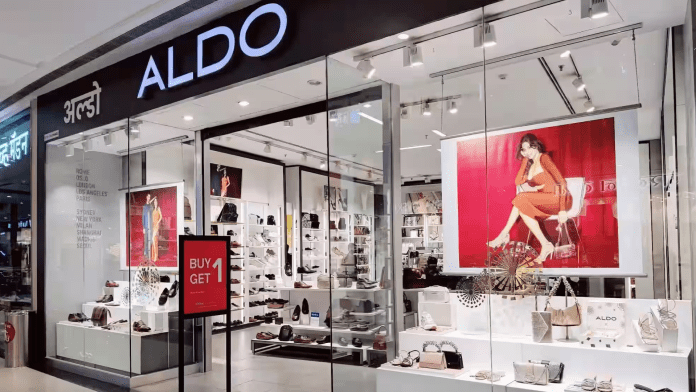
On Wednesday, Apparel Group India, the franchise operator for the Canadian footwear brand, revealed in a LinkedIn post that Aldo has inaugurated a new store in Hyderabad.
“We’re thrilled to announce Aldo’s new store at L&T Next Premia Mall, Irrum Manzil. This is the brand’s 4th store in Hyderabad and the 66th store in India!,” Apparel Group India said in a LinkedIn post.
Founded in 1972 as Aldo Shoes, Aldo began as a footwear retailer. The company opened its first store in 1987, located in Montreal, Canada.
The company, headquartered in Montreal, offers a range of footwear for both men and women. Additionally, it distributes its shoes in India through the e-commerce site Aldo.in.
As per information available on its website, the company currently operates close to 3,000 stores across 100 countries worldwide.
Last month, the brand celebrated the opening of two new stores at the Mall of Asia in Bengaluru, bringing the total count to 11 stores in the city.
In a groundbreaking move, Auric, a wellness-focused company, has introduced a revolutionary snacking option – Baked Noodles. Deepak Agarwal, the Founder & CEO of Auric, recently shared the exciting news on his LinkedIn, highlighting the company’s commitment to offering healthier alternatives in the popular and expansive noodle market.
Noodles, a beloved snack in many households, holds a special place in the hearts of many, often associated with cherished memories. However, a startling revelation about the conventional noodle-making process has prompted Auric to rethink the traditional method.
Agarwal, in his post, pointed out that most noodles, including the iconic Maggi, undergo deep frying in oil before being packed. This process adds significant amounts of oil and cholesterol to the product, factors often overlooked by consumers.
Aiming to address this concern and offer a healthier alternative, the team at Auric decided to innovate by introducing a noodle with Zero Oil, Zero Cholesterol, Zero Maida (refined flour), and Zero MSG. The key to this transformation lies in the replacement of frying with baking and swapping out Maida with nutrient-rich millets.
Auric Baked Noodles is not just a snack; it’s a nutritious choice made from foxtail millet flour, bringing Ayurvedic principles to snacking occasions. The product aligns with the Ayurvedic lifestyle (Sattvik) by focusing on herbs, purity, and health.
With 40% millet content and 50% more protein than traditional noodles, Auric Baked Noodles offer a range of health benefits. They have a low glycemic index, making them suitable for diabetes management, and contribute to heart health through anti-inflammatory properties. The absence of maida supports healthy cholesterol levels, making it a conscious choice for consumers.
The three exciting flavors – Italian Cheese & Herbs, Mexican Peri Peri, and Chinese Schezwan – promise a symphony of taste, challenging the conventional expectations associated with instant noodles.
As health-conscious consumers seek alternatives to traditional snacks, Auric Baked Noodles emerges as a nutritious and flavorful option, challenging the norms of the noodle market. With its commitment to purity, Ayurveda, and innovative snacking, Auric is set to redefine the way people indulge in their favorite instant noodles.
Starbucks is intensifying its focus on rapid expansion and affordability in the Indian market, according to Sunil D’Souza, the managing director of Tata Consumer Products. Operating the world’s largest coffee retail brand in the country, Tata Consumer Products is witnessing increased competition in the coffee cafe chain market, with at least half-a-dozen new players entering the scene.
“In India, we do see heightened competition, but I would say we should not miss the woods for the trees. We are focused on how quickly we can expand the footprint of Starbucks in an affordable manner,” stated D’Souza.
The Indian division of the Seattle-headquartered coffee retailer, contending with Costa Coffee, Cafe Coffee Day, Barista, and emerging competitors like Pret a Manger, Tim Hortons, Third Wave, and Blue Tokai, manages a network of 370 stores across 49 cities in India.
In the current fiscal year, Starbucks plans to increase its store count by 80-100 outlets, marking a considerably accelerated pace of expansion compared to previous periods.
“Every year, we see this (cafe) space expanding. Coffee is growing and tea is flat lining. So there is space for substantially more outlets than what exists today in the medium to longer term,” said D’Souza.
During the fiscal year 2022-23, the collaboration between the Tata Group and Starbucks achieved its most rapid expansion to date, with the opening of 71 new stores.
In June, Starbucks responded to heightened competition and aimed to capture a larger market share in tier-2 and 3 markets by introducing smaller-sized, more affordable beverages.
Café chains in India are experiencing a faster growth rate compared to quick-service restaurants (QSR), driven by the increasing demand from younger, aspirational consumers. According to a Statista Research report, the coffee cafe franchise market in the country is valued at ‘4,500 crore, with an annual growth rate of 8-9%.
In the post-earnings management commentary, Tata Starbucks identified India as one of its key growth markets, having surpassed 1,000 crore in sales during the fiscal year 2022-23.
“It’s about how fundamentally, out-of-home coffee consumption is going to continue to power up. This is happening as the GDP grows, as disposable incomes grow and consumers start to become more aspirational,” D’Souza said.
The coffee market is outpacing the growth of tea nationwide, a trend observed not only in major metropolitan areas but also in smaller markets. Brands are strategically targeting both smaller cities and large metros. Investors are showing confidence in this trend, as evidenced by significant funding rounds for new cafe chains. In January, Blue Tokai Coffee Roasters secured $30 million in funding led by A91 Partners, while Third Wave Coffee Roasters raised $20 million from WestBridge Capital last year.
Starbucks is also setting up stores on highways, in response to the “mindset of people when they are driving”, said D’Souza. “There is a lot of traffic that comes to highway stores. So from a P&L (profit and loss) perspective, it makes a lot of sense…”
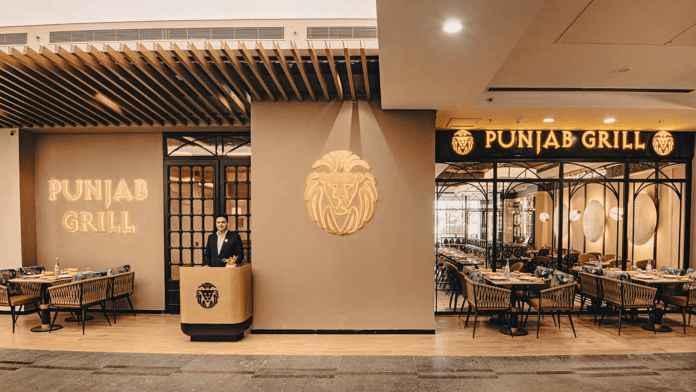
Punjab Grill, renowned for its exceptional North Indian culinary offerings, is swiftly expanding, unveiling its newest location in Defence Colony, Delhi.
The expansion underscores the robust demand for genuine Punjabi flavors in the city center. Adding to the excitement, additional outlets are scheduled to open later this year, firmly establishing Punjab Grill’s culinary footprint in Delhi.
“We are excited to bring the quintessential flavors of Punjab to Defence Colony. Our commitment to quality ingredients and time-honored cooking techniques ensures that every dish we serve is an authentic culinary experience. We look forward to welcoming both our loyal patrons and new guests to our latest outlet,” shared Rohit Aggarwal, Co-Founder and Managing Director of Lite Bite Foods.
The newly launched Punjab Grill establishment in Defence Colony sets a new standard for dining, appealing to patrons of various age groups. Combining contemporary aesthetics with the comforting embrace of traditional Punjabi culture, this restaurant delivers an extraordinary culinary experience.
Punjab Grill seamlessly combines tradition and innovation in its diverse menu, featuring succulent kebabs like Dahi Ke Kebab and Chicken Malai Tikka, flavorful curries such as Butter Chicken and Dal Punjab Grill, a variety of bread options including Laccha Paratha and Garlic Naan, and delightful desserts like Gulab Jamun.
Punjab Grill has consistently delivered an exceptional dining experience and is dedicated to upholding its reputation at the new Defence Colony location.
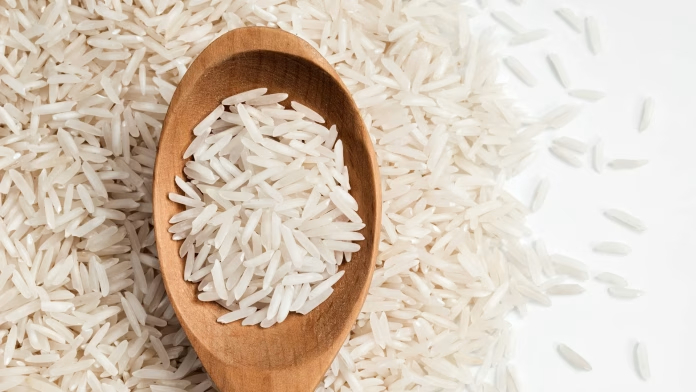
India inked deals to export approximately 500,000 metric tons of freshly harvested basmati rice, capitalizing on strong demand from leading purchasers in Europe and the Middle East, according to traders’ reports on Wednesday.
Every year, India ships over 4 million tons of basmati, a premium long-grain variety renowned for its fragrance, to countries such as Iran, Iraq, Yemen, Saudi Arabia, the United Arab Emirates, and the United States, among others.
Rice holds a significant market share in Europe as well.
In June, India implemented a ban on the export of non-basmati white rice to stabilize domestic prices. Subsequently, in August, the country established a floor price, also known as the minimum export price (MEP), setting it at $1,200 per ton for overseas sales of basmati.
Nevertheless, due to the impediment posed by the floor price on the export of the premium variety and the burden it placed on farmers dealing with substantial stocks of newly harvested rice, the government opted to reduce the floor price for basmati exports to $950 per ton last month.
Following the decision in August, trade ground to a halt, but according to traders, the reduction in the floor price has revitalized the basmati rice trade.
“There’s been a great deal of interest in India’s new basmati rice crop and so far we have signed export contracts for around 500,000 tonnes,” said Prem Garg, president of the Indian Rice Exporters Federation.
“Normally we start getting orders for the new crop in September and October but the MEP of $1,200 a metric ton made it difficult for us to sign any deals,” he said.
According to two exporters, including Garg, Indian traders have finalized basmati export agreements ranging from $1,000 to $1,500 per metric ton.
Vijay Setia, a prominent exporter from Haryana, a major basmati rice-producing state in the north, noted that Turkey, Iraq, and Saudi Arabia have emerged as the primary purchasers of the rice this year.
“Despite the MEP of $950 a metric ton, it looks like we’ll be able to export our usual annual volume of around 4 million metric tons,” Garg said.
Hospitality unicorn Oyo’s plan to allocate INR 1,600 crore, approximately $195 million, for debt prepayment using existing cash and free cash flow is anticipated to bolster its Ebitda leverage and interest coverage metrics, as per Fitch Ratings.
On November 13, Oyo, operating under the name Oravel Stays Ltd., presented a buyback proposal of $195 million for its high-cost term loan of around $645 million, roughly equivalent to INR 5,350 crore. This plan involves seeking lenders’ approval to eliminate the covenant that requires maintaining $100 million in cash in a collateral account. Simultaneously, Oyo aims to amend the minimum liquidity covenant by introducing a revolving credit facility of $25 million.
The company plans to utilize the released funds, along with a portion of its current cash reserves and generated free cash, for a $195 million principal buyback. This move aims to decrease the outstanding term loan to $450 million, equivalent to approximately INR 3,730 crore.
Should the envisaged transaction be completed, Fitch anticipates a 30% reduction in Oyo’s debt and foresees annual interest cost savings of approximately $26 million.
“We believe that the potential transaction, along with sustained Ebitda growth, could improve Oyo’s Ebitda leverage to below five times, the threshold below which we may take positive rating action,” it said in a note on Tuesday.
Following the transaction, Oyo’s cash and equivalents could decline to around $80-90 million before rebounding to $100-120 million by the end of FY24.
“We expect the company to generate positive free cash flow of $20–40 million in the second half of FY24. We believe that such a cash balance provides adequate buffers to meet business needs at Oyo’s current scale and profitability levels,” Fitch said.
In May, the rating agency adjusted the outlook for Oravel from ‘stable’ to ‘positive.’
“The positive outlook continues to reflect that Oyo remains on track to generate positive Ebitda on a sustained basis and deliver significant growth in FY24, benefiting from the demand recovery in the travel and tourism industry and a reduction in its operating costs,” it said.
Fitch anticipates Oyo to achieve an EBITDA of approximately $100 million, equivalent to INR 830 crore, in FY24, whereas the company projects its EBITDA to surpass $110 million.
In August, it was reported that Oyo, set for an IPO, is targeting approximately INR 800 crore in adjusted EBITDA for FY24, based on a presentation by Chief Executive Officer Ritesh Agarwal.
Patanjali Foods Ltd, a prominent entity in the Indian retail industry, has experienced a noteworthy more-than-doubling of its net profit, reaching INR 254.53 crore in the second quarter of the current fiscal year. The company has strategically collaborated with former Indian cricket team captain M S Dhoni, designating him as the brand ambassador for its Mahakosh and Sunrich brands.
During the corresponding period last year, the net profit was at INR 112.28 crore. Although there was a decrease in total income to INR 7,845.79 crore in July-September, compared to INR 8,524.67 crore the previous year, Patanjali Foods effectively controlled its total expenses, reducing them from INR 8,371.03 crore to INR 7,510.71 crore.
In a statement, Patanjali Foods emphasized that M S Dhoni’s partnership resonates with the health-centric focus of the company’s edible oil products. The Food and FMCG segment played a substantial role, recording revenue of INR 2,487.62 crore in the second quarter, showcasing growth compared to previous fiscal periods.
Patanjali Foods’ CEO, Sanjeev Asthana, conveyed contentment with the favorable results in the initial half of the fiscal year. He underscored the company’s strategic realignment in business operations and the noteworthy expansion in profitability indicators. Despite facing a challenging macro and operating environment, the company accomplished export sales of INR 41.65 crore in the July-September quarter, dispatching products to 23 countries.
We use cookies to ensure that we give you the best experience on our website. If you continue to use this site we will assume that you are happy with it.