Red Rooster is intensifying its Christmas celebration by unveiling a new burger and bringing back its beloved classic Christmas promotion.
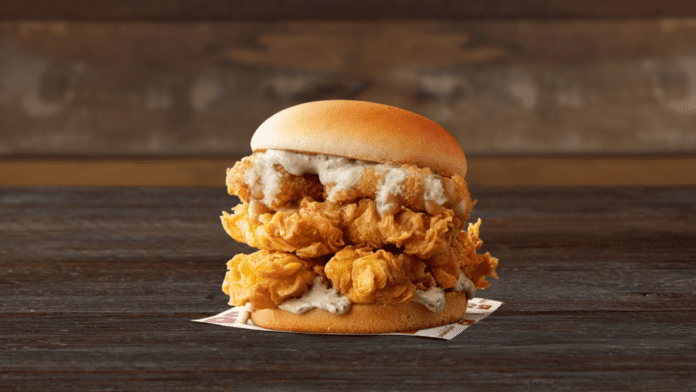
Infusing a classic roast essence into a fried chicken burger, Red Rooster is experimenting with the Chickmas Burger. This delectable creation features Red’s crispy fried chicken tenders, a novel stuffing-flavored mayo, and tempting Mash & Gravy balls nestled within a soft potato bun.
Exclusive to New South Wales (NSW), the new burger will have a limited-time availability at Red Rooster’s Bomaderry, Carlton, Ermington, Gregory Hills, Guildford, Mount Ousley, St Clair, and Wentworthville locations.
Simultaneously, the 25 Days of Christmas promotion by Red Rooster has returned. Over a span of four weeks, from November 30 to December 24, Red Royalty members can anticipate exclusive and thrilling offers landing in their accounts every week.
At the forefront of the Christmas promotion is a raffle, wherein a fortunate Red Royalty member stands a chance to win $10,000 in cash, while 10 other runners-up will receive Reds Merch packs, featuring prizes from the Sydney Roosters and St Kilda football clubs.
During the promotional period, members will also enjoy exclusive menu offerings.
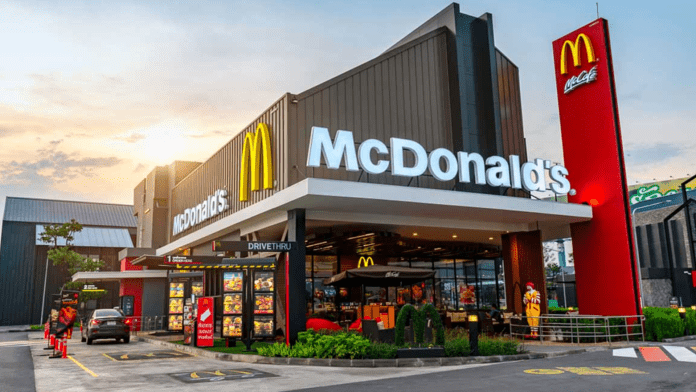
McDonald’s bold move to assume more authority over its operations in China and pursue robust expansion amid a backdrop of diminished consumer activity and geopolitical challenges appears to carry risks. However, analysts emphasize that the potential rewards could be substantial.
Last month, McDonald’s successfully concluded a deal to reclaim the 28% stake in its China business that the Carlyle Group had acquired in 2017. This strategic move elevated McDonald’s ownership to 48% in a business valued at $6 billion, spanning operations in Hong Kong and Macau.
This decision starkly contrasts with the current trend among multinational corporations, which often involves scaling back investments in China or exiting the market entirely due to the challenges posed by geopolitics and the economy.
McDonald’s enjoys a notable advantage due to its majority partner in the China business, CITIC, which offers high-level political support, as noted by Jason Yu, the Greater China Managing Director of the market research firm Kantar Worldpanel.
“Having a very powerful Chinese state-owned conglomerate as a partner means they are not going to be at the forefront of the geopolitical situation; that is quite important,” Yu said.
McDonald’s China, Carlyle Group, and CITIC all refrained from providing comments.
Several other U.S. consumer-oriented companies, such as Starbucks, Apple, Tapestry (owner of Coach), and the sportswear giant Nike, have demonstrated a comparable commitment to the Chinese market.
Analysts suggest that Starbucks and Nike, confronting heightened competition from more affordable domestic rivals, underscore the importance of maintaining agility to safeguard and expand their market share.
The coffee behemoth adheres to its expansion strategy and introduced a smaller cup size, while in contrast, Nike has introduced localized, premium sneakers like the “Year of the Rabbit” Dunk Lows.
Utilizing funds from the Carlyle investment, McDonald’s has doubled its restaurant count since 2017 to reach 5,500, making the country its second-largest market. The company’s objective is to exceed 10,000 stores in China by the year 2028.
McDonald’s competitors are also extending their presence in China.
Yum China, the operator of KFC and Pizza Hut, among other brands, boasts a network of over 14,000 stores nationwide. Among domestic contenders, the chicken burger specialist Wallace announced in 2021 that it had achieved a presence in 20,000 stores, while the newer entrant Tastien, focusing on “Chinese-style” burgers, has established a presence in over 3,500 stores.
Certainly, Greg Halter, Director of Research at the investment advisory firm Carnegie Investment Counsel, pointed out that if relations between China and the West deteriorate, any sense of optimism could dissipate.
“If tensions deteriorate, we may see not only McDonald’s, but other companies divest their Chinese operations, similar to what has occurred in Russia over the past two years,” Halter said.
Yu emphasized the necessity for additional digitization and localization, highlighting that the key to capturing the palate in China’s $140.2 billion limited-service restaurant sector lies in effective localization.
While the McDonald’s China menu remains recognizable to U.S. consumers, there are subtle adaptations to cater to local preferences, such as offering a taro pie instead of the traditional apple pie.
Euromonitor projects that the market value of limited-service restaurants in China is poised to experience an average annual growth of approximately 4% through 2025. Among the limited-service burger-focused establishments in the country, McDonald’s stands out as the dominant player, commanding a substantial 70% share of the market.
Despite the challenges posed by China’s decelerating economic growth and subdued consumer spending this year, global businesses reliant on its consumer market have experienced financial setbacks. However, Ben Cavender, the Managing Director and Head of Strategy at China Market Research Group in Shanghai, asserts that McDonald’s is positioned favorably to surpass these challenges and outperform in this environment.
He noted that businesses like McDonald’s stand to benefit from a value-driven middle class and lower commercial rents throughout the country.
“If ever there was a time to double down on China, this is it,” he said.
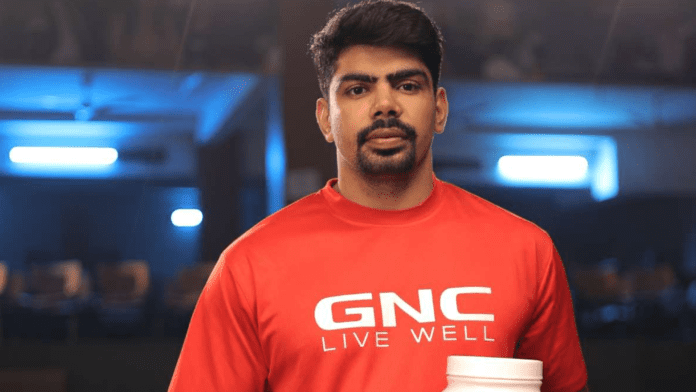
In a distinctive venture within India’s retail landscape, GNC, synonymous with the ethos of “Live well,” announces its collaboration with Pawan Sehrawat, a prominent figure in the Pro-Kabaddi League. By aligning Pawan’s energy and intensity with GNC’s values, the brand aims to spotlight the unconventional sport of Kabaddi and celebrate it with the renowned sportsperson.
“GNC is pleased to work with Pawan, a stellar kabaddi player, whose journey and unwavering determination align perfectly with GNC’s mission to support athletes and sports that often go unhighlighted,” stated GNC.
The partnership endeavors to redefine backing for emerging athletes and their sports, providing them with cutting-edge nutrition, supplements, and wellness resources to elevate their performance. The collaboration seeks to foster a culture of inclusivity, determination, and excellence in the realm of sports.
“We chose Pawan as our collaborative partner because his commitment to personal growth, combined with our expertise in nutrition and wellness, forms a synergy that will not only elevate Pawan’s performance but also inspire countless others in the sports community,” added the spokesperson of GNC.
The partnership between Pawan Sehrawat and GNC stems from a mutual acknowledgment of untapped potential and determination in underdog athletes. GNC recognizes the spirit and resilience demonstrated by individuals like Sehrawat, making this collaboration a seamless and formidable alliance. GNC provides substantial support and encouragement for non-mainstream sports, such as that of Pawan Sehrawat.
Pawan Sehrawat, presently leading the Indian Kabaddi team and maintaining a consistent position as the top scorer since 2018, emerges as one of the most influential athletes. He has garnered prestigious accolades, including gold medals at the 2019 South Asian Games, the 2022 Asian Games, and the 2023 Asian Kabaddi Championship.
“As an athlete in an ever-evolving sport, nutrition is a crucial aspect of my progress. Having a globally renowned brand like GNC as my nutrition partner is something I am pleased about. A new season of the Pro Kabaddi League is around the corner, and I am going to need the best in all aspects for a successful season with my team,” said Sehrawat.
GNC expresses excitement about the collaboration with Sehrawat, believing him to be the ideal sportsman synonymous with GNC’s vision. The brand anticipates celebrating the roots and spirit of Indian Kabaddi with equal enthusiasm and support.
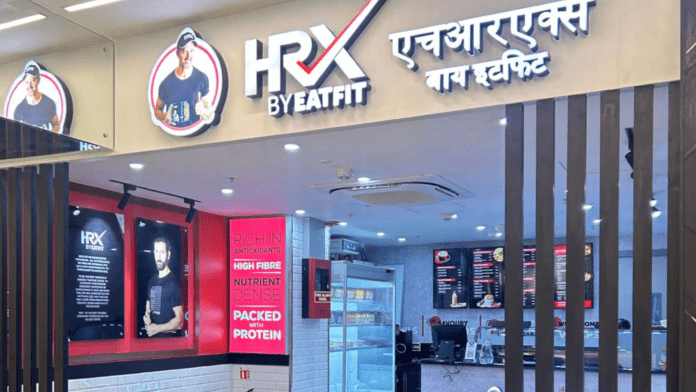
EatFit, a health-focused food platform affiliated with Curefoods, and HRX, the groundbreaking fitness brand co-founded by Hrithik Roshan and Exceed Entertainment, have collaboratively unveiled a groundbreaking addition to their offerings: the HRX Cafe.
The cafe is strategically located at Palladium in Lower Parel, Mumbai.
After introducing the HRX Cafe in Mumbai, the HRX brand intends to expand the presence of these cafes to a wider audience.
“I am thrilled to collaboratively introduce HRX by EatFit Cafe in Phoenix Palladium, Mumbai. At HRX Cafe, we aim to nourish both body and soul, bringing together the energy of fitness with the delight of great food. It’s a step towards redefining wellness, and we can’t wait to share this exciting journey with everyone in Mumbai,” said Ankit Nagori, Founder of Curefoods.
The opening of the Mumbai outlet signals the start of an initiative to establish HRX Cafes in multiple locations by the end of the year.
This expansion mirrors the brand’s dedication to cultivating a community of health-conscious individuals seeking nutritious dining experiences at every turn.
“I am thrilled to introduce the HRX Café, an extension of the HRX brand’s philosophy. It’s more than just food; it’s a movement to empower people with choices that align with their fitness aspirations and goals. The HRX Cafe is a testimony to our commitment to supporting everyday athletes in becoming the best version of themselves,” said Afsar Zaidi, CEO at HRX.
The café menu features high-protein breakfast choices, customized salads, nourishing super bowls, and convenient, healthy snacks—catering to both health enthusiasts and regular fitness followers. Emphasizing protein-rich selections, the café strives to inspire and support individuals in maintaining a well-balanced and energetic lifestyle.
The HRX Cafe distinguishes itself through a commitment to incorporating a variety of millets like Quinoa, Millet, and Black Rice into its recipes. This encourages customers to make mindful dietary choices that align with their fitness goals.
Zingavita, a prominent player in India’s retail health sector, has appointed Dheeraj Nagpal as Co-Founder, signaling a strategic move to enhance its product innovation, brand strategy, and marketing initiatives. With an impressive background spanning over 12 years in growth, B2B partnerships, and business strategy, Dheeraj’s appointment marks a noteworthy milestone for the company.
Dheeraj, recognized for his instrumental contributions to the expansion of Zomato Gold in India and his leadership in Partnerships and Alliances at Zomato, brings a wealth of expertise in lending, payments, and Food Tech to Zingavita. His successful track record in executing strategic mandates for Zomato and his prior role as the Lead Finance Officer at American Express highlight his ability to guide Zingavita toward its upcoming phase of growth and innovation.
Sachin Goel, Co-Founder of Zingavita, expressed excitement about the partnership, stating, “Zingavita is thrilled to welcome and partner with Dheeraj in this growth journey. His expertise will enable us to accelerate our innovation cycle and meet our growth milestones to continue delivering on our promise of high-quality, targeted nutrition for the entire family.”
Dheeraj Nagpal shared his enthusiasm, stating, “I am excited with Zingavita embarking on the journey to redefine health and wellness in India. Zingavita’s commitment to quality, innovation, and affordability resonates deeply with my vision for the future of the health supplements industry.”
Zingavita, a frontrunner in the health retail industry, specializes in providing a varied selection of premium, scientifically crafted natural supplements. With a strategic emphasis on the INR 20,000 crore nutraceuticals and herbal supplements market in India, the brand has positioned itself with a portfolio of over 20 SKUs in Kids and Adult nutrition, accessible on leading marketplaces.
The company has revolutionized the Kids’ nutrition segment by presenting traditional chyawanprash in a gummy format, specially crafted to boost children’s immunity. Zingavita’s adult nutrition products are in harmony with its vision of “science-backed nutrition, tailor-made for you,” incorporating distinctive formulations like a combined multivitamin and Omega 3 blend in a single soft-gel, as well as personalized multivitamins tailored for different age and gender categories. Zingavita aspires to strengthen its standing in the health and wellness sector, persistently providing innovative solutions for a healthier and more vibrant life.
Balrampur Chini Mills Ltd (BCML) anticipates maintaining strong growth momentum, driven by heightened crushing activities and improved yield during the ongoing sugar season from October 2023 to September 2024, according to a senior executive. Besides the organic growth it is experiencing, the company is actively investigating potential “acquisition opportunities” in the inorganic sector.
“I don’t want to stall our growth trajectory. We need to evaluate various opportunities to ensure sustained healthy growth given the favourable government policies. We expect our performance is going to be only better in the years to come,” stated Avantika Saraogi, the Promoter and Business Lead (New Initiatives), without disclosing specific targets.
BCML reported a revenue of INR 4,728 crore for the fiscal year 2022-23. The revenue for the first half of the fiscal year 2023-24 (April-September 2023) surged by 33 percent year-on-year, reaching INR 2,929 crore.
Saraogi, a key contributor to BCML’s success, conveyed optimism about the company’s upcoming performance.
The city-based sugar major, which operates ten sugar factories in Uttar Pradesh with an aggregate sugarcane crushing capacity exceeding 80,000 TCD, remains open to acquisitions for inorganic growth while maintaining organic growth in its existing mills.
She mentioned that initial observations from the ongoing crushing season indicate a yield surpassing 10 percent, attributed to favorable weather conditions, technological interventions introduced by BCML for farmers, and enhanced pest management. In the preceding sugar season, the company successfully processed 10.3 crore quintals of sugarcane.
Her optimism stems from the preponement of the E20 (20 per cent ethanol blend in petrol) target to 2025-26, a move that will ensure a balanced sugar market and foster stable returns for the sugar industry.
Nevertheless, Vinod Kumar Yadav, the CGM & Head of Operations at Haidergarh Sugar Mill, warned that the industry may face challenges due to external factors, such as a sudden rise in the state-advised price (SAP) for sugarcane set by the Uttar Pradesh government.
Yadav urged the state government to consider the industry’s viability before contemplating any increase in the cane support price.
According to Trendlyne Forecaster, Balrampur Chini Mills Ltd is anticipated to generate revenue within the range of INR 5,516 crore to INR 5,824 crore in FY24 and between INR 6,100 crore to INR 6,639 crore in FY25.
Although sugar continues to be the primary focus of BCML, there is a 50% increase in ethanol production, reaching 33 crore litres this year. Sugar constitutes 66% of the company’s revenue, while ethanol makes up nearly 33% of the remaining share.
Pepe Jeans London, a renowned denim brand, is setting its sights on achieving sales of approximately INR 2,000 crore in the Indian market. According to Manish Kapoor, the Managing Director and CEO of Pepe Jeans London in India, the company plans to enhance its retail footprint by adding over 100 new stores within the next three years. As part of the Spanish global fashion group AWWG, Pepe Jeans London is optimistic about the Indian market and aims for a robust compound annual growth rate (CAGR) of 18-20% over the next three to five years, as shared by Kapoor in an interview with PTI.
As part of the strategy, Pepe Jeans is directing its efforts toward expanding its network of brand stores and fast-growing e-commerce channels. Anticipating a significant shift, the company expects that 55% of its business will be generated directly through sales to consumers via its proprietary sales channels.
Over Pepe Jeans’ expansion plans, Kapoor said, “We will add 100 odd stores in the next three years and in terms of a turnover, we are looking at a CAGR growth of 18 to 20 per cent. So we should be almost around INR 2,000 crore of consumer sales in three years.”
When asked about sales numbers, Kapoor said, “If I look at business in India, last year on a consumer sales revenue we did close to INR 1,200 crore and book revenue of INR 562 crore. We grew almost 55 per cent as compared to the previous year.”
But more importantly, Pepe Jeans grew almost 42 per cent, as compared to the pre-COVID numbers, he added.
According to Kapoor, over the last two to three years, Pepe Jeans has transformed into a consumer-centric company, placing a strong emphasis on trends and the digital facets of the business.
“We have a very clear focus in terms of direct-to-consumer sales. So whether it is through online or through stores, retail and e-commerce are going to be our biggest focus,” he said.
Kapoor mentioned that Pepe Jeans London is experiencing a significant portion of its growth from smaller Tier II and III markets. This growth is attributed to factors such as increasing disposable income, greater exposure to trend-related information for existing brands, and the boost from the expanding internet penetration.
“Today the aspirations of these consumers (tier II & III) are similar to a consumer of a metro city.
“These guys have similar sort of disposable incomes and are willing to buy. e-commerce as a platform has provided us an opportunity where we can reach out to consumers or even cities which are like one lakh sort of population. So, accessibility has also become easier,” he added.
Presently, approximately 58 percent of Pepe Jeans’ business is derived from the top eight cities, with the remaining 42 percent originating from markets categorized as tier II and below.
Within the premium denim sector, Pepe Jeans London holds the second position as a leading brand. The forefront of the premium denim space is dominated by the American jeans manufacturing brand Levi’s.
Pepe Jeans London possesses ownership of brands like Hackett and Faconnable. Additionally, it serves as the licensed distributor for Tommy Hilfiger and Calvin Klein in Spain and Portugal.
The brand Pepe Jeans London has been present in India since 1988.
In a world driven by consumerism, the pursuit of sustainable practices has become a beacon of hope for a planet in peril. As environmental concerns escalate, the need for eco-conscious engagement has never been more critical. How can we convert consumers into champions of sustainability? The answer lies in the art of education.
Firstly, it is important to understand the Consumer mindset, in order to embark on the journey of eco-conscious engagement, it’s essential to decipher the intricate layers of the consumer mindset. Consumers, now more than ever, seek meaning beyond the tangible product – they crave a connection with a purpose. This shift in perspective provides a canvas for the brushstrokes of education to paint a picture of environmental responsibility. The power of storytelling transcends the confines of mere information delivery. Crafting narratives that resonate with the consumer’s values and emotions creates a compelling tapestry of understanding. By weaving stories of environmental impact, individual choices, and collective responsibility, we foster a sense of shared commitment.
The term “sustainability” often hovers in the realm of abstraction. Transforming it into a tangible concept involves breaking down complex jargon and concepts into digestible portions. A successful eco-conscious engagement strategy involves demystifying sustainability, making it accessible to the masses through relatable examples and real-world applications.
Education is Empowerment
Empowerment emerges as a cornerstone of sustainable consumer conversion. Education should not merely be an imparting of knowledge but a tool for empowerment, enabling individuals to make informed choices. By providing the necessary tools and knowledge, consumers can become architects of their own sustainable lifestyles.One of the very strong tools when it comes to educating is harnessing the power of influencers who align with eco-conscious values and amplifies the reach of educational campaigns. The ripple effect of a well-crafted message can extend far beyond initial expectations. The symbiotic relationship between brands and consumers can be a catalyst for change. Brands, by embracing transparent sustainability practices, build trust with consumers. Collaborative initiatives that involve consumers in the decision-making process create a sense of shared responsibility, fostering a community committed to positive environmental impact.
Navigating Challenges: Overcoming Greenwashing
In the pursuit of eco-conscious engagement, the specter of greenwashing looms large. To maintain authenticity, transparency is paramount. Educating consumers about how to discern genuine sustainability efforts from mere marketing ploys empowers them to make discerning choices.A successful eco-conscious engagement strategy transcends the individual level, creating a ripple effect that extends to communities and beyond. Through education, consumers evolve from passive participants to passionate advocates, influencing others through their informed choices and inspiring a domino effect of sustainable practices.
The journey toward sustainable consumer choices is paved with the bricks of education, empathy, and empowerment. By understanding the consumer mindset, crafting compelling narratives, and leveraging the power of social platforms, we can foster a collective awakening. Through collaborative initiatives and a commitment to transparency, we can transform consumers into champions of sustainability, creating a legacy of environmental stewardship for generations to come.
The tech era today is on a whole another level, where technology and consumer behavior intersect, businesses find themselves navigating a digital tapestry that weaves together insights, preferences, and trends. As technology becomes an integral part of daily life, understanding how it shapes consumer behavior is not just a necessity; it’s a strategic imperative. Let’s embark on a journey through the digital landscape, exploring the intricate relationship between tech and consumer behavior to unveil insights that pave the way for informed strategies.
The Tech-Powered Consumer: Shaping Behaviors, Redefining Expectations
In a world where smartphones are extensions of ourselves and smart devices orchestrate our homes, consumers have become tech-empowered beings. Understanding the ways in which technology shapes their behaviors is like deciphering a code that unlocks the secrets of modern preferences and expectations. From instant gratification to seamless experiences, the tech-powered consumer is reshaping the landscape of expectations.
E-commerce has evolved from a convenience to a way of life, and understanding the nuances of online shopping behaviors is a quest for businesses navigating the digital landscape. From the psychology of clicks to the intricate dance of conversion rates, businesses that decode the digital shopping journey gain insights into optimizing user experiences, influencing purchase decisions, and fostering brand loyalty in the virtual marketplace.
Secondly, Social media has become the town square of the digital age, where consumer opinions echo and reverberate. Businesses that tap into the pulse of social platforms gain valuable insights into public sentiment, emerging trends, and brand perceptions. The interconnected web of likes, shares, and comments provides a real-time narrative of consumer preferences, enabling businesses to adapt and engage in meaningful conversations.
Data Analytics: Unraveling Patterns for Strategic Precision
As consumers traverse the digital landscape, they leave behind a trail of data that holds the key to understanding their behaviors. Data analytics becomes the compass guiding businesses through this intricate terrain. From analyzing website traffic patterns to deciphering purchase histories, businesses armed with data-driven insights gain the strategic precision needed to tailor offerings, refine marketing strategies, and anticipate future trends. With the world at their fingertips, consumers wield smartphones as personal command centers. Understanding mobile preferences goes beyond responsive web design – it’s about decoding micro-moments that shape decision-making on the go. Businesses that optimize for mobile not only capture attention but also tap into the fleeting opportunities where consumer behaviors crystallize into actions.
Apart from that, voice-activated assistants have become companions in our daily lives, transforming the way we search for information. The rise of voice search introduces a new dimension to consumer behavior – one characterized by conversational interactions and nuanced intent. Businesses attuned to the nuances of voice search gain a competitive edge in delivering content and experiences aligned with the natural flow of consumer conversations.
The Experience Economy: From Transactions to Engagements
In the digital landscape, the currency of success is no longer just transactions; it’s engagements. Consumers seek experiences that resonate, and businesses that craft immersive digital experiences win the hearts and minds of their audience. From virtual reality to augmented reality, the technologies shaping the experience economy redefine how consumers engage with brands, products, and services in the digital realm.
Further, as technology permeates every aspect of consumer life, the issues of privacy and trust become paramount. Understanding the delicate balance between personalized experiences and respecting user privacy is a challenge for businesses navigating the digital landscape. Establishing and maintaining trust becomes a cornerstone in building enduring digital relationships with consumers who seek both innovation and security. The digital landscape is a dynamic canvas, continually painted with the brushstrokes of emerging technologies. Businesses that cast their gaze to the future horizon gain foresight into the tech trends that will shape tomorrow’s consumer behaviors. From artificial intelligence and machine learning to the Internet of Things, understanding these trends positions businesses to proactively adapt and stay ahead in the ever-evolving digital ecosystem.
The Bottom Line
Navigating the digital landscape for insights into consumer behavior is akin to embarking on a captivating expedition through uncharted territories. Businesses that decode the nuances of tech-infused behaviors gain the strategic advantage needed to not only meet current expectations but also anticipate and shape the future of consumer preferences. The digital tapestry, woven with threads of technology and consumer behavior, reveals insights that are not just observations but the keys to unlocking the doors of strategic success in the digital era.
In the intricate dance between businesses and consumers, the concept of an omni-channel approach has emerged as a guiding principle, marrying efficiency and experience seamlessly. As technology continues to redefine how we engage with brands, the mastery of omni-channel strategies has become a catalyst for transforming customer journeys. Let’s explore the powerful synergy of efficiency and experience as businesses navigate the multi-faceted landscape of omni-channel engagement.
The Omni-Channel Tapestry: Weaving Interconnected Experiences
Omni-channel strategies go beyond mere multi-channel presence. They weave a tapestry where each touchpoint, whether online or offline, contributes to a seamless and interconnected customer journey. From brick-and-mortar stores to e-commerce platforms, mobile apps, and social media, businesses that master the omni-channel tapestry create a cohesive experience that transcends individual channels.
Efficiency Unleashed: Streamlining Interactions
Efficiency lies at the core of omni-channel mastery. The ability to streamline interactions across channels ensures that customers can transition seamlessly between touchpoints without friction. From browsing products online to making a purchase in-store or seeking support through a mobile app, an efficient omni-channel strategy minimizes hurdles, saving time and enhancing the overall customer experience.
Personalization Precision: Tailoring Journeys for Individuals
One-size-fits-all approaches are relics of the past. Omni-channel mastery enables businesses to harness the power of data to deliver personalized experiences. From targeted marketing messages based on online behavior to in-store recommendations shaped by past purchases, personalization becomes a cornerstone, making customers feel seen and valued at every interaction.
Real-Time Responsiveness: Meeting Customers Where They Are
The omni-channel landscape is dynamic, requiring businesses to be agile and responsive in real time. Whether it’s addressing customer inquiries on social media, updating inventory levels across channels, or adapting marketing strategies based on emerging trends, real-time responsiveness ensures that businesses meet customers where they are, enhancing the relevance and timeliness of their interactions.
Unified Communication: Breaking Down Silos
The efficiency of an omni-channel approach is contingent on breaking down communication silos within organizations. Departments that traditionally operated independently, such as marketing, sales, and customer service, must collaborate seamlessly. Unified communication ensures that customer data is shared across channels, creating a holistic view that empowers businesses to deliver consistent and cohesive experiences.
From Online to Offline and Beyond: The Fluid Customer Journey
Customers don’t distinguish between online and offline experiences – their journey is fluid. Businesses mastering omni-channel strategies understand this fluidity and ensure a consistent brand presence across all touchpoints. Whether a customer starts their journey on a mobile app and completes it in-store or vice versa, the omni-channel approach provides a harmonious experience that transcends the boundaries of physical and digital realms.
Cross-Channel Analytics: Insights for Continuous Improvement
The mastery of omni-channel strategies isn’t a one-time achievement; it’s an ongoing process of refinement. Cross-channel analytics play a pivotal role in this journey. Businesses leverage data insights to understand customer behavior across channels, identify pain points, and optimize their strategies for continuous improvement. The ability to adapt based on analytics ensures that the omni-channel experience evolves with changing customer expectations.
Future-Proofing Through Innovation: Embracing Emerging Channels
The omni-channel landscape is dynamic, with emerging channels continually reshaping the customer journey. Future-proofing through innovation involves staying ahead of the curve, exploring and adopting new channels, and integrating them seamlessly into existing strategies. Whether it’s incorporating voice assistants, augmented reality, or other emerging technologies, businesses at the forefront of omni-channel mastery embrace innovation as a means of enhancing customer experiences.
The mastery of omni-channel strategies signifies the harmonious blend of efficiency and experience in the customer journey. Businesses that weave interconnected experiences, streamline interactions, personalize journeys, respond in real time, break down silos, embrace fluidity, leverage analytics, and innovate continuously are the architects of transformative customer experiences. The synergy of efficiency and experience in the omni-channel realm isn’t just a strategy; it’s a commitment to meeting customers where they are and guiding them seamlessly through a journey that transcends individual channels.
We use cookies to ensure that we give you the best experience on our website. If you continue to use this site we will assume that you are happy with it.