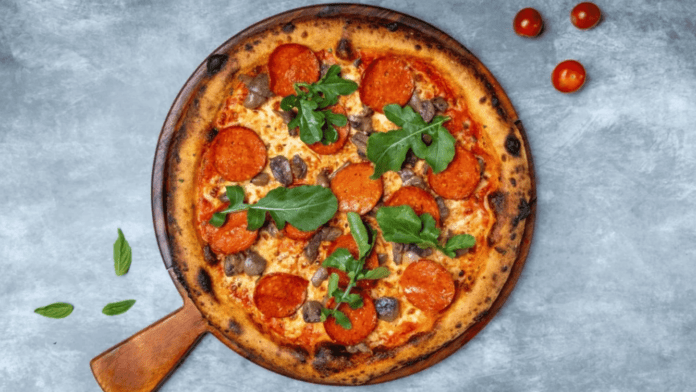
Roxie, the renowned eatery and bar situated in Bangalore, is delighted to introduce the most extensive gourmet pizza menu in the country. This remarkable collection comprises 52 distinct Italian-inspired pizzas, elevating the pizza experience to unprecedented levels. Roxie maintains authenticity by directly sourcing premium ingredients from Italy, such as Caputo Mill flour from Naples, tomatoes from Naples, artichokes from Rome, semolina from Sicily, and olives from Puglia.
From the timeless Margherita pizza, featuring Italian mozzarella, tomato sauce, and basil leaves, to the elegant Maliziosa, adorned with tossed prawns, salsa semplice, mozzarella, garlic butter on crust, olives with pits, and the innovative Black Gold Pizza with its distinctive black dough, confit cherry tomatoes, stracciatella cheese, edamame beans, and balsamic cream, Roxie’s pizza menu guarantees a gastronomic voyage through the varied flavors of Italy.
The artisanal establishment will offer an enticing assortment of 52 pizza variations, each adorned with high-quality ingredients like mushrooms, artichokes, lamb pepperoni sausages, honey wood-smoked baby bacon, Parma prosciutto, shrimps, arugula, jalapenos, pistachio cream, Cossantena pork mortadella slices, calamari, anchovies, eggplant, zucchini, tuna, and additional flavorful options.
Starting December 5th, pizza enthusiasts and connoisseurs can treat themselves to Roxie’s Napolitana pizzas, available in a 12-inch size, with prices starting from INR 650. The expansive pizza menu is designed to cater to diverse palates, ensuring a delightful experience for all.
In November, orders placed with fast-moving consumer goods companies by kiranas or local neighborhood stores, which account for over 85% of their sales, experienced a 7.5% decline compared to the same period last year.
The surplus inventory from pre-Diwali orders has led to this situation, as retailers find themselves with unsold stock that did not generate sufficient demand, particularly in rural areas.
According to Bizom, which analyzes data from orders at almost 7.5 million kirana stores, there was a 3.5% decline in orders compared to the preceding month, October.
“Demand has been challenging over the past few months and last month’s decline may have been triggered by uncertainty in consumer sentiment, especially in states where elections were due. Recovery will be seen only when there are visible greenshoots in rural markets,” said Sushil Kumar Bajpai, president, RSPL Group, which makes Ghari detergent and Venus soap.
FMCG companies had suggested that the ongoing decrease in rural markets had ceased in the September quarter. However, insufficient rainfall, coupled with a surge in food prices, impacted the latter part of the quarter. According to Bizom, sales in villages experienced a year-on-year decline of 9.6% in November, surpassing the 3.5% decline in cities. Bizom anticipates that the recovery in rural consumption might take a bit longer.
“As we move deeper into the winter, we expect to see winter products such as skin creams, room and water heaters, hot beverages, etc across categories to build up greater stock at stores as consumers start lapping them up with falling temperatures,” said Akshay D’Souza, chief of growth and insights at Mobisy Technologies, which owns Bizom.
The month-long festive season from Navratri till Diwali, covering Durga Puja, Dussehra, Karva Chauth, and Dhanteras, is the largest consumption period in India. It accounts for a third of annual business for most consumer electronics companies.
According to industry estimates, sales of home appliances like refrigerators, washing machines, and air-conditioners showed a sequential growth of 15-16% in both value and volume in November. This increase is attributed to Diwali purchases and elevated sales in the mid-to-premium segment, particularly in urban and semi-urban markets.
Nevertheless, there was no sequential growth in sales for mass and entry segment products.
In terms of year-on-year comparison, the categories experienced an 80-85% growth, but this figure is not directly comparable due to Diwali occurring a month earlier in October last year. However, in comparison to 2020, when Diwali fell in mid-November, the overall market remained stagnant this year, with sales of entry-level mass segment products declining by approximately 8-10%, as reported by industry executives.
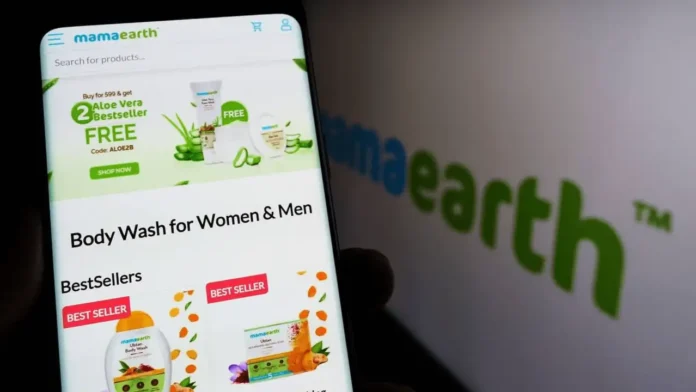
Fireside Ventures, an early backer of the D2C unicorn Mamaearth, sold 60.89 lakh shares in the company, representing a 1.89% stake, in a bulk deal on Tuesday.
On Monday, there were reports indicating that the venture capital fund intended to offload 61 lakh shares in the company, valued at INR 230 crore, with a per-share price ranging from INR 368.7 to INR 384.1. Contrary to expectations, the shares were ultimately sold at INR 378 each, resulting in a transaction totaling nearly INR 230.2 crore.
After the NSE transaction, Honasa Consumer’s shares concluded the day’s trading session with a 4.4% decline, closing at INR 367.15. Similarly, on the BSE, the shares finished 5.1% lower, settling at INR 363.85.
It’s worth mentioning that the VC fund sold 79.7 lakh shares of Mamaearth during its IPO. With the stake divestment yesterday, Fireside has now realized a profit exceeding 4,600% from its investment in the company.
Mamaearth got listed on the bourses earlier last month. As per SEBI’s regulations, alternate investment funds (AIFs) of Category I or Category II with more than 20% of the pre-offer share capital are under a six-month lock-in period.
According to a Moneycontrol report, Category I AIFs with a stake of less than 20% of the pre-offer share capital are excluded from this lock-in requirement. This exemption exposes Mamaearth to a significant private equity overhang, given that some key holders are not subject to a lock-in period.
According to BSE data, Fireside’s Mamaearth shareholding amounted to 2.43 crore shares post-listing. Following yesterday’s share divestment, its holding is expected to be 1.83 crore shares, representing a 5.68% stake in Mamaearth. Meanwhile, Stellaris Venture, another Category I AIF, holds a 5.78% stake in the company.
The direct-to-consumer (D2C) unicorn had a subdued entry on the Indian stock exchanges in the previous month. Although it debuted with nearly a 2% premium on the NSE, the shares experienced a flat opening on the BSE, trading at INR 324 each.
After announcing its September quarter earnings on November 22, the Mamaearth stock reached an all-time high of INR 475.1 Cr on the BSE. Nevertheless, the share price plummeted subsequently due to profit booking.
Commenting on the stock’s performance, independent research analyst Ambareesh Baliga remarked that Mamaearth’s valuation was steep, and this was evident in the subdued response and listing.
“Sentimentally positive but I believe the spike was unjustifiable… An INR 15 Cr jump in net profit pushes up the market cap of the company by INR 5,000 Cr and that’s not sustainable,” Baliga said.
Regardless of this, the stock concluded yesterday’s trading session with a 12.3% increase from its listing price on the BSE.
Digivriddhi Technologies (DGV), a dairy fintech firm, recently completed its Series A fundraising round, raising INR 50 crores ($6 million). The round was spearheaded by Omidyar Network India, with returning investors InfoEdge Ventures and Omnivore also increasing their investment in the company.
The aim is to utilize the funds to drive technical innovation and expand its outreach.
Ragavan Venkatesan, founder and CEO, DGV, said, “The dairy sector provides a key avenue to multiply the disposable income of Indian farmers. With DGV PAY, we simplified the payment value chain for dairy farmers and micro-enterprises, helping with their basic banking needs. Integrating ERP systems across the dairy value chain, we’ve built a unique underwriting mechanism that facilitates digital working capital and bovine loans through DGV MONEY. The livestock management industry presents a $70-80 billion opportunity with significant gaps in bovine discovery, pricing and productivity. DGV CONNECT addresses these gaps with embedded financing options and is progressively becoming a one-stop-platform meeting all the needs of the Indian dairy farmer.”
Digivriddhi Technologies, the pioneer in the nation’s fully integrated dairy fintech and marketplace platform, endeavors to enhance the livelihoods of dairy farmers by fostering growth in the entire dairy industry.
Treasa Mathew, firector, Omidyar Network India, said “India’s 80 million dairy farmers represent a large segment of the #NextHalfBillion that is underserved by financial institutions due to the lack of reliable data to estimate their incomes. DGV’s integrated fintech and marketplace model, which is embedded within the dairy supply chain, promises to unlock access to convenient, affordable financial products and improve livelihoods for India’s dairy farmers. We are very excited to back a team that is deeply committed to improving financial well-being and sustainability for India’s dairy farmers and micro-enterprises.”
The Sleep Company, a direct-to-consumer mattress brand, has secured INR 184 crore ($22.1 million) in its Series C funding round, with participation from current investors Premji Invest and Fireside Ventures.
The funding will be utilized by the startup to enhance brand presence, expand its omnichannel reach, and drive product innovation.
It’s worth mentioning that The Sleep Company secured INR 177 crore ($21 million) in its previous Series B funding round last year, with Premji Invest taking the lead. The round also witnessed contributions from Alteria Capital and ongoing support from Fireside Venture.
“Our valuation has more than doubled since the last round, and since our launch in October 2019, we’ve achieved remarkable 3X year-on-year growth,” stated Priyanka Salot, co-founder of The Sleep Company.
Based in Mumbai, the brand competes in the fiercely competitive sleep solutions and mattress market in India, alongside rivals such as Wakefit, Sleepyhead, Sunday, and SleepyCat. In August 2022, the company expanded into offline retail by inaugurating exclusive stores in Bengaluru and Hyderabad.
The distinctive selling point of The Sleep Company revolves around its patented SmartGRID mattress technology. Since its introduction, the company has expanded its product offerings into categories such as work and gaming chairs. This diversification has led to the non-mattress segment contributing to 35% of the company’s total revenue.
At present, the startup operates 60 stores spread across 22 cities in India. Its goal is to expand this number to 100 stores by March 2024.
“We are technically opening one store every four days in the country. We want to keep the same momentum, and the same pace going forward. Over the next one year and four months, we will expect 200 outlets spanning 35-40 cities in India. Hence, a substantial chunk of fresh capital will be used there,” cofounder Harshil Salot said.
Presently, the key offline markets for the startup include Bengaluru, Hyderabad, Chennai, Mumbai, and Delhi-NCR.
Half of the startup’s revenue is attributed to offline channels. Direct-to-consumer (D2C) sales contribute 30% of the revenue, while the remaining 20% is generated through various marketplaces.
Last year, the direct-to-consumer (D2C) brand expanded into the markets of Japan and the UK. According to the founders, international markets currently contribute 7-10% of the total revenue. Their strategy involves increasing this percentage to 20% before embarking on aggressive expansion into new markets.
The Sleep Company has reached an Annual Recurring Revenue (ARR) of over INR 350 crore and aims to conclude the ongoing financial year with an ARR of INR 500 crore. Additionally, it is striving to achieve Earnings Before Interest, Depreciation, Taxes, and Amortization (EBIDTA) profitability by the next year.
The art of lead generation in the food industry has evolved into a delicate blend of authenticity and digital finesse. In this post we will delve into the intricacies of crafting lead generation strategies that not only capture the essence of local cuisine but also resonate with taste buds across the globe.Every region boasts a unique culinary narrative, and your food business should wear it proudly. Use culinary storytelling to weave tales around the origins of your dishes, the cultural influences, and the artisanal techniques employed. By sharing the story behind the flavors, you not only entice local customers but also captivate a global audience hungry for authentic culinary experiences.
Firstly, invest in visually stunning food photography and videography that showcases the artistry and vibrancy of your dishes. Social media platforms, especially visual-centric ones like Instagram and Pinterest, become your canvas for exhibiting the local flavors that have the potential to enthrall a global audience. For local businesses, mastering the art of local search engine optimization (SEO) is indispensable. Ensure your online presence is optimized for local searches by incorporating location-specific keywords, creating Google My Business profiles, and garnering positive reviews. Local SEO not only attracts nearby customers but also serves as a beacon for global food enthusiasts seeking authentic local flavors.
Secondly, collaborate with local and global food influencers who align with your brand. Their reach extends far beyond geographical boundaries, introducing your local flavors to diverse audiences. The key is to forge authentic partnerships that resonate with the influencer’s followers and translate into genuine interest in your culinary offerings. Transform your website into a global culinary hub by incorporating a recipe exchange section. Encourage users from different corners of the world to share their interpretations of your dishes or submit their own local recipes. This interactive platform not only fosters community engagement but also expands the reach of your brand, turning it into a global destination for culinary exploration.
Further you can also host virtual tastings, live cooking demonstrations, or online food festivals that transcend physical borders. These events not only generate leads by attracting participants globally but also create memorable interactions that resonate long after the virtual event concludes. For food businesses with the capacity for shipping, integrate e-commerce into your strategy. Create an online store that allows customers to savor your local flavors, no matter where they are in the world. Implement seamless shipping processes and showcase a curated selection of your signature dishes or locally sourced products that can be delivered globally.
Embrace the subscription box trend by curating monthly boxes filled with local culinary delights. Offer subscribers a journey into the heart of your local flavors, supplemented by information about the cultural significance of each item. The anticipation of a monthly culinary adventure not only retains local customers but also entices global subscribers eager to explore diverse tastes.
Social media is the epicenter of global connectivity, and your food business should leverage it as a platform for building a global food community. Engage with your audience through interactive content, polls, and challenges. Encourage users to share their own culinary experiences, creating a virtual space where local flavors become a shared passion transcending geographical boundaries.
The fusion of local flavor with a global reach in lead generation strategies for food businesses is an art that requires finesse and adaptability. By embracing the authenticity of local culinary traditions, leveraging the power of digital platforms, and engaging global audiences through creative initiatives, your food business can not only attract local patrons but also become a beacon for global gastronomic enthusiasts seeking an authentic taste of diverse cultures.
The secret sauce lies in crafting a sales process that aligns seamlessly with the unique attributes of your product. This post delves into the nuanced art of selling with strategy, exploring how businesses can map an ideal sales process that not only showcases their product in the best light but also resonates with the diverse needs and preferences of their target audience.
First step is to Understand the Product DNA, before embarking on the journey of crafting a sales process, it’s imperative to understand the very essence of your product. What are its unique features? How does it solve a problem or fulfill a need? By dissecting the DNA of your product, you lay the foundation for a sales strategy that highlights its strengths and addresses potential concerns.No successful sales process can ignore the importance of knowing your audience. Create detailed customer personas to understand the demographics, preferences, and pain points of your target market. This insight becomes the compass guiding your sales team, helping them tailor their approach to resonate with the specific needs of potential customers.
Secondly, armed with a deep understanding of your product and customer personas, it’s time to craft a pitch that speaks directly to your audience. Avoid generic sales scripts and embrace personalization. Tailor your messaging to highlight how your product addresses the unique challenges or desires of each customer segment.
An ideal sales process involves educating potential customers about the product, its benefits, and how it stands out in the market. Whether through informative content, webinars, or product demonstrations, this educational approach positions your sales team as knowledgeable partners rather than mere sellers. Embrace transparency throughout the sales process. Be open about your product’s capabilities and limitations. Address customer concerns honestly, and showcase real-world use cases. Building trust establishes a foundation for long-term relationships and customer loyalty.
Pricing is a delicate dance between perceived value and cost. Align your pricing strategy with the unique value proposition of your product. Clearly communicate the value customers receive for their investment. Whether it’s competitive pricing, premium features, or bundled offerings, ensure that your pricing strategy enhances the overall perceived value of your product. From lead generation to conversion, each stage should be strategically aligned with moving potential customers closer to the final sale. Understanding the customer journey allows you to optimize each touchpoint for maximum impact. Implement sales enablement tools that streamline communication, provide analytics, and enhance collaboration within your sales team. Whether it’s CRM systems, email automation, or virtual presentations, leveraging technology optimizes the efficiency and effectiveness of your sales process.
Apart from that, Adapting to Customer Feedback is the ideal sales process is not a static entity but an evolving strategy that adapts to customer feedback. Actively seek input from your customers, gather insights from sales interactions, and use this feedback to refine your approach. A flexible sales process demonstrates a commitment to continuous improvement and customer-centricity.
Further, the sales process doesn’t conclude with a transaction; it extends into post-sale engagement. Nurture customer relationships through follow-ups, personalized support, and ongoing communication. Transforming customers into brand advocates involves creating an experience that goes beyond the sale, fostering loyalty and encouraging repeat business.
The art of selling with strategy requires a bespoke approach that aligns with the unique attributes of your product. By understanding the product DNA, profiling customer personas, tailoring the pitch, and embracing transparency, businesses can create a sales process that not only sells products but also builds enduring relationships. In the ever-evolving landscape of sales, the strategic blueprint becomes a dynamic guide, adapting to customer needs and positioning your product as the ideal solution in a competitive market.
The traditional methods of disseminating product knowledge are giving way to a dynamic and immersive experience facilitated by interactive learning platforms. Beyond static lectures and mundane presentations, these platforms have emerged as the catalyst for a renaissance in how individuals engage with and master the complexities of product knowledge.
Interactive learning signifies a departure from the conventional monotony of information delivery. It is an educational revolution that places the learner at the center of the experience, transforming passive receivers into active participants. Through engagement, collaboration, and hands-on activities, these platforms breathe life into product knowledge, making the learning process an adventure rather than an obligation.
Gone are the days when learning was confined to text-heavy manuals and uninspiring slides. Interactive platforms orchestrate a symphony of media, incorporating diverse elements to capture attention and sustain interest. From vibrant videos and interactive animations to gamified quizzes, the multimedia approach ensures that learners are captivated and can absorb information through various sensory channels.
Further, at the forefront of the interactive learning revolution stands gamification. By infusing game-like elements such as challenges, rewards, and competition, these platforms make learning a thrilling experience. Learners embark on quests, earn badges, and compete, all the while deepening their understanding of product knowledge. Gamification not only makes learning enjoyable but also sparks a sense of achievement and motivation.For industries where practical knowledge is paramount, interactive learning platforms often incorporate simulations. These digital replicas of real-world scenarios allow learners to apply theoretical knowledge in a controlled environment. Simulations bridge the gap between theory and practice, offering a safe space for experimentation and exploration of the intricacies of product functionality.
Apart from that, VR transcends traditional boundaries, immersing learners in virtual environments where they can interact with products as if they were physically present. This immersive experience not only enhances understanding but also creates a sense of presence, making complex product knowledge more tangible.Interactive platforms foster collaborative learning environments. Discussion forums, group projects, and virtual classrooms create a sense of community among learners. Beyond mere information consumption, individuals can engage in meaningful discussions, share insights, and collectively navigate the nuances of product knowledge. The collaborative aspect transforms learning into a shared journey.
Recognizing the diversity of learners, interactive platforms employ adaptive learning paths. These paths analyze individual progress, strengths, and weaknesses, tailoring the learning experience to specific needs. Whether through personalized quizzes or targeted content recommendations, adaptive learning ensures that each individual can navigate the material at their own pace, maximizing comprehension and retention.
A hallmark of interactive learning is real-time feedback. Immediate insights into performance, garnered through quizzes and assessments, act as a guiding compass for learners. This feedback loop allows individuals to gauge their understanding of product knowledge, address misconceptions promptly, and refine their learning journey in real-time.
Interactive learning is not confined to singular events but becomes a cornerstone for nurturing a continuous learning culture. Beyond initial training sessions, these platforms offer ongoing challenges, updates, and opportunities for mastery. The emphasis shifts from completing a course to embracing learning as an ongoing journey, instilling a sense of lifelong curiosity.
The rise of interactive learning platforms marks a paradigm shift in how individuals engage with and master product knowledge. Through gamification, simulations, virtual reality, and collaborative elements, these platforms transcend traditional learning methods. The result is not merely informed individuals but empowered learners equipped with a deep and experiential understanding of the products they encounter. As interactive learning continues to flourish, it stands as a testament to the transformative potential of technology in reshaping the educational landscape.
The concept of identifying and understanding your ideal customer has transcended intuition, evolving into a strategic dance with analytics. In the realm of data-driven discovery, businesses embark on a transformative journey, unraveling the layers of information to sculpt a vivid portrait of their most valuable clientele. Data-driven discovery is akin to conducting a symphony, where each data point contributes a unique note to the composition. From demographic details to online behavior and purchase patterns, businesses tap into a myriad of sources to paint a comprehensive picture of their audience. This symphony of data points forms the foundation for identifying the ideal customer.
At the heart of data-driven discovery lies the indispensable tool – analytics. Analytics serve as the conductor’s baton, orchestrating the disparate data points into a harmonious melody. From simple spreadsheets to advanced machine learning algorithms, businesses leverage analytics to distill insights, identify patterns, and unearth the characteristics that define their ideal customer.
Gone are the days of one-size-fits-all marketing. Data-driven discovery allows businesses to segment their audience with surgical precision. By categorizing customers based on shared traits, preferences, and behaviors, businesses can tailor their strategies, ensuring that each segment receives messaging that resonates with their specific needs. One of the jewels in the crown of data-driven discovery is behavioral insights. Analyzing how customers interact with a brand, navigate websites, and respond to marketing campaigns unveils the unspoken language of preferences. Businesses can then align their strategies to cater to these nuances, creating a more personalized and compelling customer experience.
The magic wand of data-driven discovery is predictive modeling. By analyzing historical data, businesses can develop models that forecast future behaviors and trends. This allows them to anticipate customer needs, tailor offerings, and stay one step ahead in the ever-evolving dance of consumer preferences. Social listening tools enable businesses to eavesdrop on the digital chatter, gaining insights into customer sentiments, preferences, and even pain points. This real-time feedback loop informs strategies and ensures businesses stay agile in responding to evolving customer expectations.
Crafting Personas: Humanizing Data
Personas are the bridge that humanizes data. By creating detailed personas based on data-driven insights, businesses transform abstract statistics into relatable characters. These personas serve as touchstones, guiding marketing strategies and ensuring that every campaign speaks directly to the heart of the ideal customer.
Further, data-driven discovery is not a destination but a continuous journey of refinement. Businesses must embrace an iterative approach, consistently analyzing new data, reassessing customer profiles, and adjusting strategies accordingly. The landscape of consumer behavior is dynamic, and the ideal customer is an ever-evolving entity. Respecting customer privacy, ensuring data security, and adhering to ethical data practices are non-negotiable aspects of data-driven discovery. Building trust with customers is as crucial as unveiling insights from their data.
The art and science of data-driven discovery are transformative forces that propel businesses toward a deeper understanding of their ideal customer. From the symphony of data points to the crucial role of analytics and the humanization of data through personas, this journey is a dynamic and intricate exploration. As businesses continue to embrace the power of data, the ideal customer becomes not just a target audience but a dynamic entity with evolving preferences, needs, and aspirations.
Niche marketing, particularly in the realm of personalized palates, is the key to forging authentic connections that resonate beyond mere transactions. Let’s delve into the delectable world where niche marketing meets individual tastes, creating a symphony of flavors tailored to the unique palates of discerning consumers. Personalized palates are a mosaic of individual tastes, influenced by cultural backgrounds, dietary preferences, and unique flavor affinities. Niche marketing embraces the diversity within this mosaic, recognizing that there’s no one-size-fits-all approach when it comes to culinary preferences.
Firstly, it’s important to understand that niche marketing is more than just identifying a target audience; it’s about understanding the intricacies that make each segment unique. In the realm of personalized palates, this means recognizing the nuances of flavor profiles, culinary traditions, and the specific needs that drive individual food choices. Niche marketing allows brands to tailor their offerings, whether through personalized menus, unique flavor combinations, or catering to specific dietary requirements, creating a culinary journey that resonates on a personal level.
Cultural Nuances: A Gateway to Authentic Connections
Niche marketing involves not only recognizing these nuances but celebrating them. Brands that authentically embrace and incorporate cultural diversity into their culinary offerings connect with audiences on a deeper, more meaningful level.
As dietary preferences evolve, niche marketing becomes a compass for navigating the landscape of specialty diets. Whether catering to plant-based eaters, gluten-free aficionados, or those with specific nutritional requirements, tailoring marketing efforts to address these niches establishes a brand as attentive and responsive to individual needs.
Apart from that, niche marketing for personalized palates extends beyond taste buds; it’s about crafting holistic culinary experiences. Experiential marketing immerses consumers in a journey, whether through virtual tastings, interactive events, or behind-the-scenes glimpses, creating a connection that goes beyond the plate. Sharing the stories behind ingredients, culinary traditions, and the journey of a dish creates an emotional connection. Brands that weave compelling narratives around their offerings resonate with audiences on a personal and relatable level. Social media, food blogs, and specialized forums become the terrain where brands can engage with specific audiences, share tailored content, and build communities around unique flavor experiences.
Further, niche marketing fosters the creation of culinary tribes – communities bound by shared tastes and preferences. Brands that actively facilitate and participate in these communities not only build brand loyalty but become integral parts of the cultural tapestry shaping personalized palates.
The synergy between personalized palates and niche marketing is a culinary dance that goes beyond selling food; it’s about creating connections that resonate on a deeply personal level. From understanding cultural nuances to navigating the landscape of specialty diets, the art of niche marketing in the world of personalized palates is an ongoing exploration that transforms dining into a bespoke experience. As brands continue to embrace the diverse tastes of their audiences, the culinary landscape becomes a canvas for authentic connections and flavorful stories that celebrate the richness of individual palates.
We use cookies to ensure that we give you the best experience on our website. If you continue to use this site we will assume that you are happy with it.