During the festive season, Myntra, an online fashion retailer under the Walmart umbrella, achieved an all-time high with 60 million monthly active users. Fueled by an expanding customer base, specialized offerings for Generation Z, and a strong collection of international fashion and beauty brands, the platform strengthened its presence in both premium and mass premium segments, outpacing market growth.
Empowered by a technology-driven interface and an extensive selection of 2,300,000 styles, the platform welcomed 75 million new app users in 2023, while its dedicated customer base experienced a remarkable 100 percent year-over-year growth over the past 18 months. The Gen Z fashion category observed an impressive 2.25 times year-over-year increase in demand on the platform, with a substantial 175 percent year-over-year growth in customer numbers within the Gen Z segment.
“We’ve added the highest number of new users and new customers this year, whilst doubling our loyal customer base,” said Sunder Balasubramanian, CMO, Myntra.
Over the past three years, the company’s beauty portfolio has expanded by more than four times, featuring a collection of over 1,500 brands and 90,000 SKUs (stock-keeping units). In the latest quarter, Myntra achieved a substantial 70 percent year-over-year growth in the Direct-to-Consumer (D2C) category.
The platform relies significantly on technology to enhance and customize the shopping experience for users in the realms of fashion and beauty. Myntra Minis, a short-form video content feature modeled after the reels format, has garnered 1 million daily views, underscoring its growing popularity. Additionally, Myntra utilizes AI and other cutting-edge technologies to address challenges related to product discovery on the platform.
E-retail in India is poised for remarkable growth, as indicated by a recent report from Bain & Company in collaboration with Flipkart. The forecast suggests that by 2028, the e-retail market is anticipated to surge beyond the USD 160 billion (over INR 13 lakh crore) mark. In the intermediate term, specifically in 2023, the e-retail sector is projected to range between USD 57 billion and USD 60 billion (INR 4.75 lakh crore to 5 lakh crore). This growth is underpinned by a substantial annual shopper base of around 240 million, showcasing an annual addition of USD 8-12 billion since the year 2020.
“Long-term fundamentals of India’s e-retail industry, including affordable data, improved logistics and fintech infrastructure and strong digital consumer ecosystems remain intact,” Bain’s Innovation & Design Capability Area, Partner and Global Leader, Arpan Sheth said in a statement.
“The market is expected to rebound to 23-25 per cent growth levels, surging beyond USD 160 billion by 2028,” the statement said.
The e-retail market is set for expansion in the upcoming years. Presently, online spending constitutes only 5-6 percent of the total retail spending in India, in stark contrast to the United States, where it accounts for 23-24 percent, and China, where it stands at 35 percent. This stark difference indicates significant potential for growth in the Indian e-retail sector.
As outlined in the report, the predominant share of India’s retail expenditure, ranging from 94 to 95 percent, remains offline. Within this context, general trade constitutes a substantial 87 percent of the overall retail spending.
“As GDP per capita continues to increase, especially beyond USD 4,000, it is expected to drive a sharp rise in online spending, as spend per shopper on discretionary products increases,” the report said.
Currently, the per capita income in the country stands at approximately USD 2,600.
The report estimates that over 60 per cent internet users are not shopping online. “The seller ecosystem in India is also expanding rapidly, with twice as many sellers added in 2022 compared to the previous year. Around two-thirds of these new sellers came from Tier 2 and smaller cities,” the report said.
The report indicated that over 50% of the entire seller base originates from seven cities, namely Delhi-NCR, Surat, Jaipur, Mumbai, Bengaluru, Hyderabad, and Kolkata.
In India, the e-retail sector is experiencing the rise of novel business models aimed at addressing consumer needs. These encompass quick-commerce (Q-commerce) platforms, hyper-value commerce, inspiration-led commerce (live commerce), and fast fashion.
“Over the past year, Q-commerce orders have doubled, accounting for 40-50 per cent of India’s e-grocery spend,” Bain & Company, Partner and leading member of the Consumer Products & Retail practice, Shyam Unnikrishnan said.
The hyper-value sector’s share of overall e-retail grew five times between 2020 and 2022 in India, the report said.
Nestle SA CEO Mark Schneider downplayed the impact of GLP-1 weight-loss drugs on the world’s largest food company, emphasizing the company’s focus on expanding its range of products with reduced calorie content.
In a Bloomberg TV interview, Nestle CEO Mark Schneider revealed that currently, 50% of the company’s revenue comes from coffee, pet care, and vitamins, compared to 30% seven years ago. These sectors are anticipated to demonstrate greater resilience, especially as individuals using weight-loss drugs curtail snacking and decrease meal sizes.
“It’s not so much a threat,” he said. “It’s a full-blown vindication of the strategy that we’ve been pursuing very patiently over the years.”
The producer of Lean Cuisine meals has been divesting from less lucrative ventures while acquiring those with higher growth potential. Schneider mentioned engaging in deals totaling “50 billion” and opting out of an additional 50 billion, without specifying the currency. He anticipates the company’s vitamins, minerals, and supplements business to experience growth in the mid- to high-single digits.
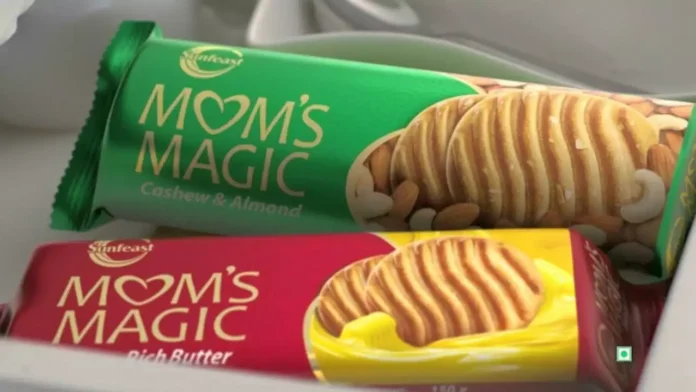
On Wednesday, the Supreme Court instructed ITC Ltd and Britannia Industries to engage in a collaborative discussion and mutually address the dispute regarding their packaging, which has been deemed deceptively similar.
ITC contested the Madras High Court’s November ruling, which prohibited the use of Sunfeast MOM’s Magic Butter Cookies packaging, citing infringement of Britannia’s Good Day Butter Cookies packaging. The court order restricted ITC based on the asserted similarity between the blue packaging of Sunfeast MOM’s Magic and its competitor Britannia Good Day Butter Cookies. The High Court asserted that the use of the color blue implied “dishonest adoption” by ITC, intending to pass off its products and unjustly benefit itself.
Noting that both companies produce premium products catering to a broad consumer base, a panel headed by Justice Sanjiv Khanna expressed that a resolution through direct dialogue between the companies would be preferable. The bench has also scheduled the matter for additional proceedings in January.
Representatives Mukul Rohatgi and AM Singhvi, senior counsel for ITC, informed the Supreme Court that it is acknowledged that the colors blue and yellow are generic in the context of butter biscuits/cookies, with yellow typically symbolizing the presence of butter.
In a previous legal dispute involving zero sugar digestive biscuits between the two parties, Britannia had unequivocally asserted that the blue color is common and generic to the trade. Consequently, Britannia maintained that no entity can claim exclusivity in using these generic colors, and there should be no imputation of malafide intent when employing such colors for biscuits adhering to industry practices, as per ITC’s statement.
“Therefore, the question of Britannia claiming any distinctiveness and proprietary right to the exclusion of other members of trade does not arise and the impugned judgment is fundamentally wrong on this ground alone. Britannia cannot be allowed to approbate and reprobate, as per its convenience, in the manner it has done,” the ITC appeal filed through counsel Mohit Ram stated.
The High Court issued the order following Britannia’s allegation that ITC was marketing analogous products under the Sunfeast brand, utilizing the ‘Mom’s Magic’ trademark with the intention of capitalizing on Britannia’s goodwill.
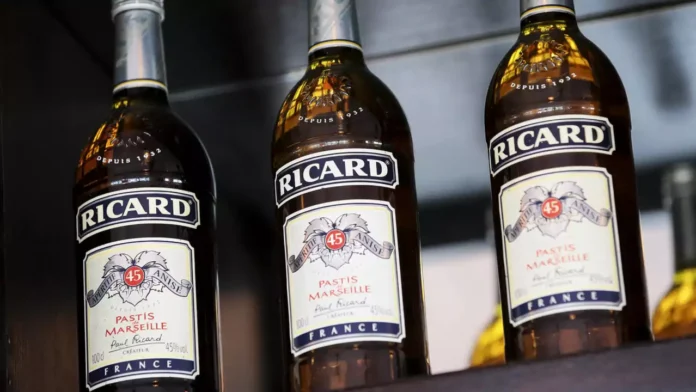
Pernod Ricard, the renowned French spirits producer, anticipates a triple increase in its sales within the Indian market over the next decade. This growth is projected to be driven by favorable macroeconomic trends, a positive demographic dividend, and the increasing preference for premiumization in Indian-made foreign liquor (IMFL) and imported brands.a Jean Touboul, Managing Director of Pernod Ricard India, envisions that the Indian market, presently positioned as the second-largest globally, holds the potential to ascend to a leadership position in the next 10-15 years, potentially surpassing the US market for the company.
“We are growing faster with the tailwinds in macroeconomics, in demographic and well India being the most populous country on earth, I am personally convinced that yes, we will be the market number one in Pernod Ricard at some point,” said Touboul.
However, he also added, “I just cannot tell you if it will be in 10 years, 15 years, that is not easy to predict but my conviction is that yes, one day India will be the market number one for Pernod Ricard.”
According to him, Pernod Ricard is experiencing double-digit growth for both Indian-made foreign liquor (IMFL) and robust double-digit growth for imported products in this market.
“As far as the net sales are concerned, it is obviously a key market in the current state of play and even more important for the growth and future results of the group because there is no doubt that India is a market that is extremely favourable,” he said.
Touboul also highlighted the intricacies of Indian regulations related to the alcohol trade, describing them as “complex.” He emphasized the necessity for simplifying these regulations to facilitate smoother business operations in the country.
“We are on the trajectory where we want to be able to triple our net sales in the next decade. That is our ambition. And to do that, we will go to more innovation,” he said.
Pernod Ricard boasts a global portfolio featuring more than 200 premium brands, including notable names like 100 Pipers, Chivas Regal, The Glenlivet, Absolut, Havana Club, and Jacob’s Creek. In addition to these, the company owns Indian-made foreign liquor (IMFL) brands such as Blenders Pride, Imperial Blue, and Royal Stag.
At present, Pernod Ricard’s Indian-made foreign liquor (IMFL) brand accounts for nearly 95 percent of its volumes and over 80 percent of its net sales.
“Today, the vast majority of our business in the Indian alcohol market is in the IMFL. That is also where we are particularly strong with our three main brands- Imperial Blue, Royal Stag and Blenders Pride.
“And we are enjoying historically double-digit growth with these brands as they are delivering quite well for us and for the Pernod Ricard group,” Touboul said.
As per Touboul, there is a growing demand among Indians for higher-quality beverages, and Pernod Ricard is committed to providing them with an expanded range of premium-quality products.
“There is premiumisation because the revenue per capita is increasing and it is a natural evolution for consumers when they have more revenue to push their consumption towards a better product with higher price point increases as well,” he said.
“We are here to go with this trend and as much as possible accelerate by proposing an ever more product of great quality and that helps consumers to trade up,” he said.
As part of the premiumisation drive Pernod Ricard will continue to innovate on the core brands – Imperial Blue, Blender’s Pride and Royal Stag.
“We will regularly come with line extensions for these products to again propose within this Seagram quality type of product, some diversified experience with diversified taste, diversified finish, whatever twist we put on the product to be able to provide the various experiences to our consumers,” he added.
It would have a process of continuous innovation and investment behind brands and look at other initiatives for expanding its portfolio, as it is launching a new Indian single malt Longitude 77.
“There is space to develop more and more premium products, which are also made in India. Our Indian single malt is a great example of that. We are at a price point which is parity with an international single malt of 12 years old, like Glenlivet 12 in our case because we know we are producing a very qualitative product in India,” he said.
Pernod Ricard is the owner of Chivas Brothers, a prominent Scotch whisky maker renowned for its popular single malt and blended Scotch whisky brands such as Chivas Regal, Ballantine’s, Royal Salute, and The Glenlivet. The company anticipates that a potential Free Trade Agreement (FTA) between the UK and India could be mutually beneficial for both nations.
It will help “develop the possibility in particular to import more qualitative product to India at a more reasonable price” and would be more accessible for a bigger part of the Indian population.
Moreover, if duty is waived on bulk imports of Scotch, it will help IMFL also.
“The IMFL that we do, we use Indian grain spirits and we mix that with Scotch malt that we import from Scotland obviously. So that is something that where we could have a benefit if there are lower custom duties on that part of the business,” he said.
Following its successful launch in Telangana, American Brew Crafts has expanded its presence into the Kerala market by introducing the Flying Monkey Ultra Strong beer.
The anticipated monthly beer sales in Kerala stand at 10 lakh cases, and the company aims to secure a 5-7 percent market share by 2024. According to Sri Nagendra Tayi, Director and CEO of American Brew Crafts, the newly introduced variant is crafted exclusively for Kerala, providing consumers with a unique flavor and character.
The younger generation in India is increasingly favoring beer over hard liquors, a trend attributed to the growing popularity of social drinking culture. Predictions indicate a Compound Annual Growth Rate (CAGR) of 12 percent in beer sales in India over the next five years. According to the statement, Telangana and Andhra Pradesh currently lead in beer consumption, with Maharashtra, Uttar Pradesh, and other states following suit.
Recognizing the potential in the market, Satya Siva Athi, another director, stated that the company has outlined expansion strategies for both domestic and international markets. This includes plans for Odisha, Karnataka, the North East, emerging markets in Africa, the United States, West Asia, and Europe. Additionally, the company is set to introduce a variety of new products, such as wheat beer, low-calorie beers, spice mixes, and seasonal fruit brews, into the market.
Founded in 2017, American Brew Crafts acquired breweries from Lilasons Brewery in Telangana and Arthos Brewery in Andhra Pradesh, enhancing infrastructure with the installation of German machinery and a packing zone. The company’s flagship brand is BlockBuster beer, and the latest addition to its portfolio is Flying Monkey.
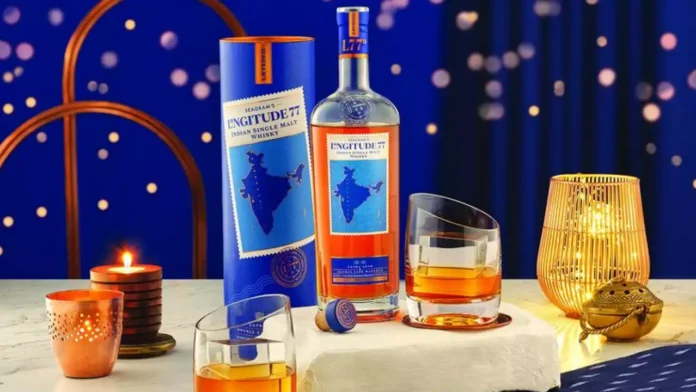
In an effort to bolster its expansion in the Indian market, Pernod Ricard‘s India arm has introduced its first Indian single malt, Longitude77, targeting the premium segment.
Longitude77, a made-in-India whisky, has been meticulously crafted for enthusiasts of authentic contemporary Indian luxury. With the goal of redefining India’s global prominence, the company highlights that the product is currently available in Mumbai, Goa, Delhi Duty Free at IGI Airport, priced at INR 4,000.
The whisky is being produced locally by the company in small batches at a distillery located in Dindori, Nashik (Maharashtra), utilizing locally-sourced ingredients.
“The Indian single malt whiskey market is still nascent, but is very promising. We want to play in this segment at a premium-level, by bringing a qualitative product made in India for Indians,” said Jean Touboul, CEO of Pernod Ricard India.
Longitude77 draws inspiration from the meridian that traverses the entirety of India at 77° east, signifying India’s geographical location on the global map. Pernod Ricard envisions exporting this Indian whisky to international markets in the near future, with Dubai being a potential starting point.
Longitude77 draws inspiration from the meridian that traverses the entirety of India at 77° east, signifying India’s geographical position on the global map. Pernod Ricard has future plans to export this Indian whisky to international markets, with the possibility of initiating the venture in Dubai.
Over the recent period, numerous spirit companies have ventured significantly into the Indian single malt category. Key players, including Diageo India, Radico Khaitan, John Distilleries, and DeVANS, are experiencing notable growth in this category.
Addressing the competition in the market, Touboul said, “Multiple players actively investing to expand this category, makes for more of an opportunity than a challenge. The combined effort of the industry is beneficial to broaden the category, as it is still a small segment.”
In the case of Pernod Ricard India, the “vast majority” of sales volume is attributed to whisky, making it the company’s stronghold and the most pertinent category. The majority of sales predominantly occur within the local market. According to Touboul, over 90 percent of the volume and more than 80 percent of sales in terms of value are comprised of local products.
The company is also striving to stimulate growth in other spirit categories, including Vodka and Gin. Presently, it features offerings such as Absolut in the vodka category and various gins sourced from Japan and Germany.
Touboul said, “We are sizing all the possibilities at the same time because they are all relevant in the country where the expansion of the consumption pool, the expansion of the economy is giving us so many opportunities.”
Pernod Ricard India is actively delving into opportunities within the wine category, driven by positive growth and increasing interest, particularly among female consumers and a growing fascination with wine among Indian consumers. Additionally, the company is closely monitoring the global success of tequila, particularly in the US and Mexico, and is exploring its potential within Asian markets.
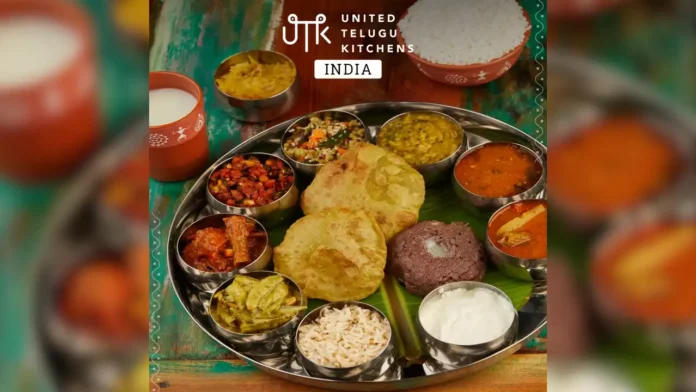
United Telugu Kitchens (UTK), celebrated for its commitment to preserving and showcasing the rich tapestry of Telugu cuisine, has announced the launch of its first restaurant in Bengaluru. This marks a significant milestone for the brand as it expands its footprint beyond Telangana and Andhra Pradesh, bringing authentic and traditional flavors to food enthusiasts in Bengaluru.
Situated in the vibrant high-rise of the recently inaugurated Forum Mall in South Bengaluru, the latest establishment presents a thoughtfully curated menu that revives time-honored recipes from the kitchens of Telugu households across generations. The traditional menu, boasting rich flavors and indigenous ingredients, serves as a true reflection of the authenticity and cultural heritage of the region.
Teja Chekuri, the visionary founder of UTK, while talking about the reason behind the brand’s creation, shared “It was born from the urge to preserve and celebrate the traditional flavors that have been passed down through generations. These are dishes that we’ve grown up on, loved, and cherished. Nostalgia wrapped in each of the delicious dishes. The ingredients and super grains that are being celebrated all over the world already exist in our kitchens for centuries. I wanted to make sure that these recipes are not lost in time. With the opening of our new outlet, we share the warmth of our kitchens and the richness of our culinary heritage with the people of Bangalore. UTK offers a delectable cuisine that is local, authentic, and prepared with love.”
Are you a vegetarian seeking protein-rich food alternatives? You’re lucky to land in the right place. The journey to discover nutrient rich options can be challenging for the most part, especially when you’re trying to meet your daily need for proteins. They are the foundation of a nutritious diet, and are essential for many body processes.
You might or might not have heard about this one, but the answer to all your questions is Vegetable Sprouts. Rich in proteins? Yes. Affordable? Yes. Accessible? Yes. And the best part is, that the preparation process is neither time consuming nor tedious. All you need is one raw ingredient and some water.
The Importance of a Protein- rich Diet
A balanced diet is one that all rounded with all essential nutrients. But as we grow older, proteins begin to take the centre stage of all our health decisions. They are important macronutrients that play a role in tissue development and repair, immune support, and overall maintenance of our well-being. Here are a few more benefits of adding protein to your diet:
For anyone trying to lose weight or build muscle, protein comes in as the first step in accelerating your process.
You need around half of your daily protein intake to make enzymes, which help with digestion, as well as new cells and other molecules.
Protein is crucial for hormonal balance and regulation, particularly during the cell growth and change that occurs during puberty.
It slows the ageing process by strengthening the muscles.
Consuming higher amounts of protein helps people retain their bone density as they age and significantly reduces their risk of osteoporosis and fractures.
Higher protein intake has also been linked to lowering of the blood pressure.
Why Vegetable Sprouts?
Yes, they are different from lentil or “Moong” sprouts.
The most commonly found sprouts are those of lentils i.e. Moong, red lentils, chickpeas or green lentils. However, sprouts of beans and lentils are difficult to digest and are only suitable for athletes, children or those who are involved in long hours of manual labour. Vegetable seeds sprout a white tail three to five days after they are soaked and allowed to germinate. They are the most concentrated type of nourishment found organically.
Here are 6 reasons why vegetable sprouts are the best solution:
Nutrition Factor: Hippocrates Health Institute says that“These are one of the most nutritious whole foods on the planet, and are also 10 to 30 times more nutritious than the full grown vegetable”.
Cost Effective: All you need is some vegetable seeds, which once sprouted multiply 3-15 times their weight.
Organic: No chemicals, herbicide or pesticides. You can trust that they’re pure because you’re both the manufacturer and consumer.
Easy: Just add water. (The full process is explained below)
Freshness: You can pick and eat the same day without losing any nutrients.
Environmental Friendly: There is absolutely no involvement of carbon heavy processes, or resources to prepare them; neither are any aeroplanes or fuel consumed to deliver these to you.
The most easily accessible and nutrient rich vegetable seeds found in India are those of Alfalfa, Radish, Clover and Fenugreek.
How To Prepare Vegetable Sprouts?
What You Need:
A glass container
A cotton cloth
2 tablespoons of Seeds of Alfafa, Radish, Clover or Fenugreek (sprout them separately)
Water
You can easily find these seeds on e-commerce sites like Amazon, or simply visit a plant nursery to get a handful of these seeds.
Step 1: Rinse the seeds and place them in the glass container. Fill the container with water to soak up the seeds completely and an inch above that. Let your seeds soak overnight.
Step 2: The next morning, drain out the water from the container. Put your seeds in the centre of the cotton cloth and tightly tie the cloth so that the seeds are secured in a bundle.
Step 3: Place this bundle in a bowl and cover with a plate. Make sure your cloth is not in direct sunlight.
Step 4: Rinse the seeds with fresh filtered water twice a day, for the next 3-5 days.
Step 5: The sprouting time will vary from seed to seed. Once your sprouts are grown out and long enough to eat, allow them to dry completely before storing.
You can store them in a container for 5-7 days in the refrigerator.
How to Incorporate These In your Diet ?
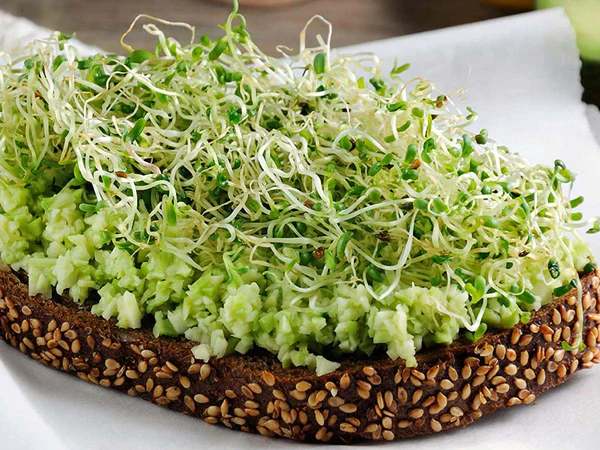
Sprouts can be used with salads (cucumber, tomato, carrot, bell peppers, beetroot, zucchini, broccoli, peas, green beans), fruits or can be consumed separately along with any meal. To take it as part of a healthy meal, prepare a plate, with 30% sprouts, 30% vegetables, 30% leafy greens and 10% toppings or dressings such as nuts, seeds or any dip of your choice.
One of our favorites is sprouts snadwich, along with some leafy greens and home made mayonnaise. You can customise your own, to your taste and preferences.
Incorporating vegetable sprouts in one’s diet may be both healthful and enjoyable, thanks to their simplicity of sprouting at home and their wide range of culinary uses. Now that all the information is available to you, you should be able to enjoy its nutritional benefits and embrace the possibilities of plant- based protein substitutes.
Hrithik Roshan is the epitome of fitness and dedication in Bollywood. Widely recognized as the Greek God of the industry, he stands tall at 6 feet, serving as a beacon of inspiration for many. From captivating audiences in iconic roles such as in Dhoom 2, Bang Bang, to his recent ventures like Vikram Vedha and War, Hrithik has not only showcased consistent acting prowess but has also remained an unwavering force in the realm of fitness.
While it’s no secret that Hrithik invests considerable time and effort into his workout routine, his true magic lies in the carefully crafted synergy between his fitness regimen and dietary discipline, which is a testament to the power of mindful eating and a balanced diet.
Here’s a glimpse of his daily diet plan:
Meal 1: Breakfast
His first meal of the day includes 6 egg whites, 1 egg yolk along with some broccoli and beans or avocado (You may add a pinch of salt and black pepper to suit your taste buds).
Meal 2: Lunch
70g of protein (chicken or fish) along with a side of salad and veggies. For that, you can use 310g of boneless skinless chicken breast, cook it with a tablespoon of oil, and marinate using salt, pepper, lemon and ginger garlic paste as a taste enhancer.
In a recent video interview, Hrithik Roshan also mentioned that he prefers to have a meal every 3 hours of the day, wherein he likes to focus on the proteins. The next 3 meals of his day follow the same constituency as Lunch, which is 70g of protein with a side of vegetables.
The actor has seamlessly integrated nutrition into his lifestyle, making it a pivotal component of his overall fitness philosophy. But what sets him apart is not just the meticulously crafted diet but also the set of guiding principles, his personal playbook, that makes adhering to this regimen part of the flow. Hrithik’s rules are not rigid restrictions; instead, they form a dynamic framework that empowers him to navigate the challenges of maintaining a top-tier physique while embracing a sustainable and balanced life.
Become best friends with the Greens
He encourages forming a friendship with greens, emphasising the importance of enjoying food and having favourites. Unlike categorising vegetables as enemies, Hrithik’s approach advocates for a harmonious relationship with every element on his plate.
2. The Art of Striking the Perfect Balance
Even with a fondness for indulging in Indian snacks like Samosas, Kachoris, as well as chocolates, Hrithik understands the importance of balance and moderation. Discipline, he believes, isn’t a constant battle but rather a gradual integration into one’s lifestyle. It’s about making conscious choices that eventually become second nature, eliminating the need for constant effort, and making the process easier in the long run.
3. Affirmations and Motivations
Grounded in his spiritual beliefs and unshakeable confidence in his abilities, he stays positive and motivated. For him, the journey towards fitness is not just physical but also a mental and spiritual one, fueled by a genuine belief in oneself.
4. Don’t cheat on your proteins
Hrithik leaves no room for cheat days, specially when following a strict and a time sensitive goal plan. In a world where occasional indulgences may tempt even the most disciplined individuals, he remains resolute in blocking out distractions and adhering to his protein-rich diet.
Hrithik Roshan’s playbook is not just a fitness guide, but a compass to help us navigate our way through both body and daily life.In his principles of balance, positivity, and commitment, he not only inspires physical transformation but also advocates for a holistic and disciplined approach to life’s journey.
We use cookies to ensure that we give you the best experience on our website. If you continue to use this site we will assume that you are happy with it.