Monday, January 19, 2026
Home Blog Page 753

Indian specialty coffee brand Blue Tokai eyes 130 outlets and new overseas markets

0
Blue Tokai

Blue Tokai, an Indian specialty coffee brand, aims to increase its footprint to 130 outlets by the end of the financial year. The company is dedicated to expanding its presence in the domestic market where it currently operates.

“We are not looking to expand to new markets and our focus is going deeper into the markets where we are already present. We should be able to open up five stores within a market in a small amount of time for it to make operational sense. At this point, we see more opportunity in the larger cities rather than focussing on the smaller cities,” said Matt Chitharanjan, Co-Founder and CEO of Blue Tokai Coffee Roasters.

Gurgaon-headquartered Blue Tokai, which commenced its operations in 2013, is currently present in over 80 outlets in major metro cities in India. Recently, the company received funding from actor Deepika Padukone through Ka Enterprises, marking a significant contribution to its Series B funding round.

Read More: Bollywood star Deepika Padukone invests in specialty coffee brand Blue Tokai

In an effort to bring specialty coffee to consumers on the move, the company has launched a range of brewing products, including easy pours and cold brew cans. Additionally, there are plans to introduce a variety of new ready-to-brew products.

“The company plans to open nearly 60 more outlets over the next five years after crossing 130 outlets and the focus will be more on the fast moving consumer goods (FMCG) products. The brand will have reached scale and mass where we see an opportunity to move more into offline retail with our products,” he said.

With operations already established in Japan, Blue Tokai is now considering the prospect of extending its international footprint into the Middle East market.

“Japan is one of the largest coffee-drinking markets in the world. Indian coffee is unknown in the place. However, the response in Japan is far beyond our expectations. We had just a pop-up store in a mall in Tokyo serving only coffee. The customer feedback we got was that people did not expect the flavour complexity of Indian coffee. We will expand in Japan. The next market we would look at will be the Middle East but not in the immediate future,” added Matt Chitharanjan.

Advertisement

Playboy Hospitality India to launch Bunny Bar in Bangalore, planning nation-wide expansion by 2024

0
the Bunny Bar

Jay Jay & Kwality Restaurant Pvt Ltd, an Indian hospitality company and the Master Venue Licensee of Playboy, operating under the name Playboy Hospitality India, is set to unveil its latest establishment, the Bunny Bar.

Scheduled for a December launch, this flagship concept aims to bring a lively and sophisticated experience to Koramangala, Bangalore.

Furthermore, there are ongoing plans to extend this concept to various prominent cities throughout India in the year 2024.

“We are thrilled about the launch of the new Bunny Bar, today’s evolving consumer base is seeking a diverse range of lifestyle products and experiences. This new concept leverages the power of the iconic Rabbit Head logo and brings it to life in a bold, playful, and sophisticated way,” said Allison Kopcha, Chief Business Development Officer & Licensing at Playboy.

The bar features multiple levels and flexible spaces, offering services for all-day dining, leisurely afternoon teas, and an extensive cocktail menu. This includes both classic options and innovative molecular mixes, all within a comfortable lounge setting.

The establishment ensures top-notch service complemented by a globally inspired food menu.

“The BUNNY BAR concept will expedite our expansion in India. It’s the perfect concept for today’s brand conscious consumers who are seeking elevated, stylish, and connected experiences ranging from intimate moments with friends to more organized events that align with their interests,” said Rohit Malhotra, CEO, Bunny Bar.

Playboy Hospitality India is set to oversee and operate the sophisticated Bunny Bar concept, with plans to broaden this fusion of contemporary café elements and exclusive lounge ambiance into more metropolitan markets by the year 2024.

Advertisement

India allows export of specified quantity of wheat, broken rice to five countries

0
Rice
Rice (Representative Image)

The government has permitted exports of specified quantities of wheat, wheat flour and broken rice to five countries, including Bhutan, Mali and Indonesia, a notification said on Thursday. The quantity notified for Bhutan includes 14,184 tonnes of wheat grain, 5,326 tonnes of atta, 15.226 tonnes of maida/semoline, and 48,804 tonnes of broken rice.

Shipments of broken rice are authorized for Mali (100,000 tonnes), Senegal (500,000 tonnes over six months), Gambia (50,000 tonnes over six months), and Indonesia (200,000 tonnes).

The Directorate General of Foreign Trade (DGFT) has stated in a notification that the export is sanctioned through the National Cooperative Exports Limited (NCEL).

NCEL is a company set up with cooperative societies as its promoters.

Though exports of wheat and broken rice were banned to boost domestic supply, outbound shipments are allowed on the basis of permission granted by the government to certain countries to meet their food security needs and on request.

“Export of (wheat grain, atta, maida/semolina, and broken rice) food commodities are permitted through National Cooperative Exports Ltd (NCEL),” it said.

Advertisement

Tanishq marks major business expansion with inauguration of stores in Texas

0
Tanishq
Tanishq (Representative Image)

Tanishq, the renowned Indian jewellery brand, has inaugurated its store in both Houston and Frisco, marking a significant move in its global business expansion initiative. This strategic expansion aims to meet the increasing demands of the Indian diaspora in the United States. With Texas boasting the second-largest Indian diaspora in the country, the state is now host to two Tanishq stores, located in Houston and Frisco, near Dallas.

At the inaugural event, DC Manjunath, the Consul General of India in Houston, was the Chief Guest.

Joining him were CK Venkataraman, Managing Director of Titan Company Limited, Kuruvilla Markose, CEO of Titan International Business, and Michael McCabe, Resident Director of North America at Tata Sons.

Owned by the Mumbai-based multinational conglomerate, The Tata Group, the brand is part of this renowned business entity.

“Delighted to see that Tanishq, Tata company’s jewellery arm opened its 2 new stores in Texas; Houston & Frisco, thus enhancing India-US connection”, said Consul General Manjunath.

“Tanishq spells beauty with elegance, style with tradition, on the solid principles of authenticity, innovation, and trust,” Markose said at the event.

“In the USA, like other 410 locations around, we aim to delight our customers,” he said.

“With a firm commitment to quality, ethical sourcing, and a tailored retail experience, Tanishq is here to provide customers with jewellery that epitomizes perfection,” said Amrit Pal Singh, Business Head for Jewelry – North America, Tanishq International Business.

The launch is a part of Tanishq’s International business expansion strategy. Tanishq is also at the cusp of opening another store in Chicago, and thereafter in the Bay Area by early-mid next year.

The company’s expansion plans include opening 20 to 30 more locations in North America and the Middle East collectively over the next two to three years.

Tanishq currently has a presence of more than 410 stores in India. The company launched its first store, outside India, in Dubai in November 2020, and since then, has added eleven stores outside India, seven in the UAE, two in Qatar, one in Singapore and one in New Jersey, USA.

According to the US Census Bureau, jewellery store sales were estimated at USD 33.2 billion in 2020, which was a 25 per cent increase over the previous decade. Tanishq has been in the US market through e-commerce for over 2 years and has physically been in the US with its first store in New Jersey which was opened earlier in January this year.

Advertisement

Coca Cola to invest INR 1,387 Crore in new manufacturing hub in Maharashtra

0
coca cola
Coca-Cola

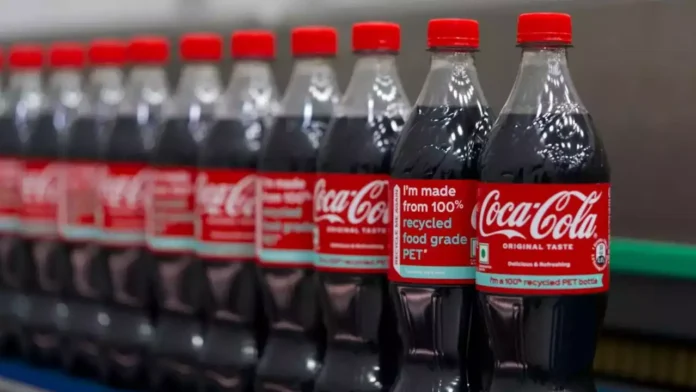
On Thursday, Coca Cola, a prominent global soft drink company, revealed its plans to invest INR 1,387 crore in establishing a new manufacturing facility in the Ratnagiri district of Maharashtra. Situated across 88 acres in the Lote Parshuram Industrial area within the Maharashtra Industrial Development Corporation zone, the facility will make use of water sourced from the Vashishthi river, as stated by Hindustan Coca-Cola Beverages.

The anticipated operational date for the greenfield facility in the Khed taluka is 2025, marking a significant advancement in the company’s manufacturing capabilities.

The facility is set to generate employment for 350 individuals through both direct and indirect means. Additionally, the state is expected to witness positive impacts on a larger scale, benefiting a total of 81,000 people through various community initiatives, as mentioned in the statement.

These initiatives encompass educational infrastructure, water ATMs, sustainable agriculture, and community engagement centers, as indicated in the statement. A direct outcome of these efforts is the positive impact on 10,000 individuals in the Lote Parshuram area.

A groundbreaking ceremony for the plant was held at the site on Friday, and was attended by state Chief Minister Eknath Shinde and HCCB chief executive Juan Pablo Rodriguez.

Rodriguez said the land in Maharashtra is “fertile” and its investment should be seen as one symbolising planting the seeds of growth and community partnership.

Shinde welcomed the company’s decision, and added that the state government is aiming to make Maharashtra as a beacon of sustainable and equitable growth.

The company has 16 factories manufacturing 60 products across the country at present, and has its operations spread in 22 states.

Advertisement

Jewellery brand GIVA hits new highs as operating revenue crosses INR 100 Crores in FY23

0
GIVA
GIVA

Aditya Birla Group-backed GIVA marked a significant achievement by crossing the INR 100 Crores threshold in operating revenue for the fiscal year ending on March 31, 2023. The startup witnessed a remarkable 97% surge, with its operating revenue soaring from INR 84 Crores in the previous fiscal year to INR 165 Crores in FY23.

Established in 2019 by Ishendra Agarwal, Nikita Prasad, and Sachin Shett, GIVA specializes in genuine 925 fine silver jewellery, as well as 14-carat and 18-carat gold jewellery, and lab-grown diamond jewellery. This omnichannel brand extends its presence through retail stores across the country.

Taking into account additional sources of income, the startup’s overall revenue reached INR 167 Crores in FY23, reflecting a notable 98% surge compared to the INR 84.5 Crores recorded in the preceding year.

Nevertheless, the startup experienced a 138% increase in net loss, reaching INR 45.2 Crores in the year under review, up from INR 19 Crores in FY22.

The startup’s total expenditure surged by over twofold, reaching INR 212.3 Crores in FY23, a substantial increase from the INR 104 Crores incurred in the previous year.

GIVA allocated INR 77 Crores toward selling and marketing expenses, marking a 64% rise from the INR 47 Crores expended in the preceding year. This expenditure encompassed advertising, brand promotion, and brand photoshoot expenses—comprising all essential elements for enhancing brand awareness.

The startup witnessed a 114% surge in procurement costs, escalating from INR 34.7 Crores in FY22 to INR 74.3 Crores in FY23. This notable increase in procurement costs serves as an indicator of heightened demand for the brand’s jewellery.

Employee benefit expenses at GIVA experienced a substantial 306% surge, reaching INR 21 Crores in FY23 compared to INR 5.2 Crores in the previous fiscal year. This notable increase can be attributed to the startup’s expansion efforts, including the opening of more retail stores, resulting in a rise in its overall employee count.

The EBITDA margin declined to -25.3% in FY23, down from -22.2% in FY22.

GIVA has secured more than $45 million through various funding rounds to date, with prominent investors such as Premji Invest and A91 Partners being notable contributors to its funding portfolio.

Earlier this year, GIVA secured $35 million in its Series B funding round, with Premji Invest taking the lead as the primary investor.

In the new-age fast fashion jewellery space, GIVA competes directly with Ratan Tata-backed BlueStone, Tata-owned CaratLane, and Lightbox-funded Melorra.

Earlier this year, Titan acquired CaratLane, a competitor of GIVA, at a valuation of over $2 billion. Concurrently, BlueStone disclosed an operating revenue of INR 770 Crores in FY23, accompanied by a loss of INR 59 Crores.

Advertisement

Punjab Grill makes the Gault & Millau list for third year in a row!

0
Punjab Grill

For the third year in a row, Punjab Grill at The Ritz-Carlton, Abu Dhabi, proudly announces its feature on the esteemed 2024 Gault & Millau List. This recognition underscores the culinary excellence, unwavering commitment to quality, and continuous innovation demonstrated by the Punjab Grill team.

Gault & Millau, renowned for its discerning evaluation of culinary experiences, has yet again acknowledged Punjab Grill’s dedication to crafting gastronomic journeys. The listing reaffirms Punjab Grill’s position among the top culinary destinations, highlighting its consistent delivery of extraordinary dining experiences.

This accomplishment for the third consecutive year is a testament to the passion and commitment of our team at Punjab Grill,” said Rohit Aggarwal, Director Lite Bite Foods “We are immensely proud of this recognition, which validates our unwavering dedication to culinary innovation, impeccable service, and a commitment to excellence in every aspect of the dining experience.”

Punjab Grill has continuously elevated the standards of culinary artistry, focusing on the utilization of premium-quality ingredients, unparalleled techniques, and an artistic presentation that captivates the senses. The unwavering quest for culinary excellence has firmly established Punjab Grill as a shining example of gastronomic brilliance in Abu Dhabi.

Advertisement

Consumers as Connoisseurs: Cultivating Informed Choices Through Product Education

0
product knowledge

In the vast marketplace of today, consumers are evolving from mere buyers to informed connoisseurs, seeking not just products but experiences that resonate with their values and preferences. At the heart of this transformation is the art of product education—a dynamic approach that empowers individuals to make choices aligned with their needs and desires.

Gone are the days of passive consumerism; the contemporary buyer is hungry for knowledge. Product education steps into this paradigm by providing consumers with the tools to understand the intricacies of what they purchase. This goes beyond simple features and specifications; it delves into the story behind the product, its ethical implications, and how it fits into the consumer’s lifestyle.

One key aspect of cultivating informed choices is the rise of immersive brand experiences. Companies are increasingly investing in interactive displays, virtual showrooms, and augmented reality applications to allow consumers to engage with products in a tangible way. This not only enhances understanding but also adds a layer of experiential learning, turning the act of shopping into a journey of discovery.

Moreover, educational content has become a powerful tool in the consumer’s arsenal. From online tutorials and how-to guides to in-depth articles, businesses are recognizing the value of providing consumers with valuable insights. This not only positions the brand as an authority but also empowers consumers to navigate the complex landscape of products with confidence.

The transparency movement is another driving force behind the shift toward informed choices. Brands are opening their doors, both literally and figuratively, offering behind-the-scenes glimpses into their production processes. This transparency not only builds trust but also allows consumers to align their values with the ethos of the brand.

Collaborations with influencers and experts play a crucial role in product education. By leveraging the reach and credibility of individuals who are authorities in their respective fields, brands can communicate the unique selling points of their products in an authentic and relatable manner. This humanized approach fosters a sense of connection, making the educational journey more engaging.

Furthermore, the sustainability wave has propelled consumers to be more conscious of their choices. Product education now includes information on sourcing, environmental impact, and the overall sustainability footprint. Brands that prioritize eco-friendly practices are not just selling products; they are inviting consumers to be part of a larger, meaningful movement.

The era of consumers as connoisseurs underscores the importance of cultivating informed choices through product education. As businesses embrace immersive experiences, educational content, transparency, influencer collaborations, and sustainability, they empower consumers to transcend the transactional and engage in a more meaningful relationship with the products they choose. It’s not just about what consumers buy; it’s about the knowledge and experience that come with each purchase, transforming shopping into a journey of enlightenment.

Advertisement

Interactive Retention: Sustaining User Engagement Beyond the Initial Transaction

0
User Engagement

Sustaining user engagement well beyond the initial transaction poses the central obstacle for businesses navigating the dynamic landscape of digital interactions, emphasizing the importance of prioritizing user retention over mere acquisition. Enter “Interactive Retention,” a dynamic approach to user engagement that goes beyond traditional methods.

At the heart of this concept lies the understanding that user retention is not a passive endeavor; it’s an ongoing, interactive process. Rather than relying solely on post-transactional emails or periodic promotions, businesses are now adopting innovative ways to sustain user interest.

One notable approach is the gamification of user experiences. By infusing elements of play and competition into the product or service interface, companies are transforming routine interactions into engaging challenges. This not only captivates users but also fosters a sense of accomplishment, making them more likely to stick around.

Moreover, personalized interactions play a pivotal role in Interactive Retention. Leveraging data analytics, businesses can tailor their communication to meet individual user preferences. This personal touch not only enhances user satisfaction but also creates a more intimate connection between the user and the brand.

The integration of AI-driven chatbots is another game-changer. These intelligent virtual assistants don’t just respond to user queries; they actively learn from each interaction, adapting to user behavior over time. This continuous learning process enables chatbots to provide more relevant and personalized recommendations, enhancing the overall user experience.

Beyond the digital realm, community building emerges as a potent tool for Interactive Retention. Establishing forums, social groups, or exclusive communities around a product or service cultivates a sense of belonging among users. This not only encourages them to stay loyal but also creates a space for users to share their experiences, fostering a positive brand narrative.

Furthermore, Interactive Retention recognizes the importance of ongoing value addition. Regular updates, feature enhancements, and exclusive content offerings keep users excited about what’s next. By continuously evolving and providing fresh experiences, businesses can maintain user interest long beyond the initial point of contact.

The era of Interactive Retention heralds a shift from static, transactional relationships to dynamic, ongoing engagements. By embracing gamification, personalization, AI-driven interactions, community building, and continuous value addition, businesses can create a sustainable ecosystem where users actively choose to stay connected. It’s not just about acquiring users; it’s about building a lasting rapport that stands the test of time.

Advertisement

Converting with Conscious Content: Crafting Messages that Align with Sustainability

0

Crafting messages that not only capture attention but also align with sustainability values has become a strategic imperative for brands seeking to resonate with socially conscious consumers. In this exploration, we’ll delve into the art of converting with conscious content, navigating the delicate balance between marketing goals and the broader commitment to sustainability.

As awareness around environmental and social issues continues to burgeon, consumers are increasingly scrutinizing the values embedded in the content they encounter. The conscious consumer seeks more than just a product; they crave a narrative that aligns with their commitment to sustainability. Brands that recognize and respond to this shift are poised not only to capture market share but also to make a meaningful impact on the planet.

The bedrock of conscious content lies in authenticity. In an era where consumers can discern genuine commitment from mere greenwashing, brands must authentically embrace sustainability. Craft messages that go beyond buzzwords, showcasing tangible efforts and initiatives that contribute to environmental and social well-being. Authenticity resonates, forging a deeper connection between the brand and the conscious consumer.

Educating Through Engagement:

Conscious content isn’t just about showcasing a commitment to sustainability; it’s also an opportunity to educate and empower consumers. Craft messages that go beyond product features, providing insights into sustainable practices, the environmental impact of choices, and the positive outcomes of supporting eco-friendly initiatives. By fostering understanding, brands empower consumers to make informed choices aligned with their values.

Apart from that, using narratives that highlight the journey, struggles, and successes in embracing sustainability create an emotional connection. Share stories of individuals or communities positively impacted by sustainable initiatives, turning abstract values into tangible, relatable experiences.

Transparency Builds Trust:

Transparency is the cornerstone of trust in the realm of conscious content. Consumers seek openness about a brand’s sustainability practices, supply chain ethics, and environmental impact. Incorporate transparency into messaging, offering a behind-the-scenes look at the processes and decisions that align with sustainable values. Transparency builds trust and reinforces the brand’s commitment to walking the sustainability talk.

While aspirational messaging has its place, conscious content should also be accessible. Avoid creating an exclusive narrative that alienates certain consumer segments. Craft messages that inspire without intimidating, showcasing how sustainability can be woven into everyday choices. By making conscious living achievable, brands broaden their appeal to a diverse audience.

Collaborations for Collective Impact:

Showcase collective efforts that contribute to larger sustainability goals, emphasizing the power of unity in creating positive change. While financial gains are crucial, measuring impact goes beyond profits. Assess the tangible outcomes of sustainability initiatives, whether it’s a reduction in carbon footprint, community empowerment, or conservation efforts. Highlight these achievements to showcase a holistic commitment to purpose.

The Bottom Line:

Converting with conscious content is not just a marketing strategy; it’s a commitment to shaping a more sustainable and responsible future. Brands that embrace this approach recognize that their influence extends beyond the transactional moment to shape values, behaviors, and, ultimately, the world we inhabit. In a landscape where conscious consumers wield significant influence, the crafting of messages that align with sustainability becomes a transformative journey, fostering a connection that transcends commerce to create a positive impact on the planet and its inhabitants.

Advertisement