Alipay Singapore Holding intends to divest its entire 3.44% share in the prominent food delivery company Zomato on Wednesday. The Chinese company has established the minimum price at INR 111.28 per share for this transaction. Zomato’s latest closing share price was INR 113.8. At the specified base price, Alipay anticipates raising INR 3,290 crore. The share sale is being managed by BofA Securities and Morgan Stanley, the designated investment banks.
Antfin Singapore Holding, an affiliated entity of Alipay, held another 6.39% stake in Zomato at the end of the September 2023 quarter.
Last month, following the expiration of its lock-in period, SoftBank sold 1.1% equity in Zomato at INR 111.2 apiece, raising INR 1,040 crore.
In August, Internet Fund III, a venture capital fund overseen by Tiger Global, and Apoletto Asia, a fund supported by Israeli billionaire Yuri Milner, divested shares amounting to INR 1,412 crore in the prominent food delivery company.
On Friday, the Japanese technology investor SoftBank executed a block deal, selling 9.35 crore shares of the foodtech giant Zomato for INR 1,127 crore.
According to NSE data, SVF Growth (Singapore) divested a 1.06% stake in the company at a price of INR 120.5 per share.
Invesco, ICICI Prudential Insurance, Goldman Sachs (Singapore), Kadensa Capital, Morgan Stanley Asia Singapore, and other entities acquired the shares that flooded the market.
At the end of September 2023, SVF Growth (Singapore) held a 2.17% stake in Zomato, owning 18.71 crore shares. However, in October, the investor sold a 1.09% stake in the company for a sum of INR 1,040.5 crore.
The recent sale of shares strongly suggests that the investor has likely fully divested from Zomato.
Engaging in a selling streak, the Japanese investor aims to capitalize on the upward trend in Indian equity markets and new-age tech stocks. Before this, SVF Growth had sold a 1.15% stake in Zomato for INR 947 crore in August 2023.
This aligns with the broader market trend, as international investors have been divesting their holdings in domestic new-age tech firms. In a recent development, Chinese tech giant Alipay exited Zomato by liquidating its entire 3.44% stake through various block deals, fetching INR 3,336.7 crore earlier this month.
In August, venture capital firm Tiger Global sold 12.24 crore shares of Zomato for INR 1,123 crore.
The ongoing streak of stake sales coincides with Zomato’s announcement of its second consecutive profitable quarter in the financial year 2023-24 (FY24). The foodtech giant witnessed a remarkable surge in its profit after tax, reaching INR 36 crore in the September quarter of FY24, marking an 18-fold increase from the INR 2 crore PAT recorded in the preceding quarter.
Meanwhile, Zomato has been facing its share of challenges. Both Zomato and its competitor Swiggy have purportedly received notices for a combined Goods and Services Tax (GST) bill of INR 1,000 crore. This amount stems from the 18% tax imposed on the total collection from delivery fees since the commencement of their operations.
This month might just be what you’ve been waiting for, as this trio of colossal events makes its way to your city. India, being the heartbeat of cultural diversity welcomes all taste buds and celebrates passions like no other, and these events are here as a testament to the vibrant spirit of the people. If you’re enthusiastic about gastronomy, pets and pop culture, get ready to revel in an unforgettable experience of food, music, people and exploration.
Zomaland
Zomaland, one of India’s biggest food events is ready for its 4th edition in 2023-24. It’s a culinary carnival beyond imagination; a vibrant experience, where flavours, games, music and live entertainment come together and foster an environment for food enthusiasts, local businesses and artists to have an unforgettable experience. Beyond the gustatory delights, Zomaland is a thriving platform for local businesses to gain exposure and recognition, contributing to the growth of the flourishing food industry. This culinary extravaganza is your passport to diverse culinary realms while celebrating the roots of our country.
When & Where:
New Delhi | Dec 16-17 | JLN Stadium, Gate No.2
Chandigarh | Dec 23-24 | Chimney Heights Resort
Hyderabad | Jan 20-21 | GMR Arena
Mumbai | Feb 10-11 | Jio World Garden
Kolkata | Feb 24-25 | Aquatica Resort
Bengaluru | March 16-17 | Embassy International Riding School
India’s largest pet festival, Pet Fed, unfolds as a carnival for pets and their fond owners across wide spreads of lush greenery. From fashion shows to security dog spectacles, the event creates a haven for pets and pet lovers alike. With workshops, stalls, and an abundance of fun and knowledge, Pet Fed strengthens the bond between pets and their owners, offering a unique chance for all animal lovers to be surrounded by thousands of four-legged friends. As pets indulge in various activities, their owners are treated to an array of food, drinks, and music, enhancing the joyous atmosphere.
Comic Conventions, commonly known as Comic Cons, have evolved to become a pilgrimage for pop culture enthusiasts. Movie-buffs, readers, artists, writers, collectors, and more gather under one roof to celebrate a cultural phenomenon that has taken the world by storm. With artists, publishing houses, and pop-culture entities showcasing their creations, Comic Con becomes a vibrant marketplace for one-of-a-kind artworks, comics, and collectibles. It’s not just an event; it’s a congregation of passion and fandom.
These monumental events, extending from the realms of food to pets, and comics, promise an unparalleled experience for those who seek to immerse themselves in a day out, surrounded by passionate zeal, diverse cuisines, bonding with our four-legged friends or delving into the world of pop-culture.
Curefoods, a prominent F&B brand collective in India specializing in healthy food, has entered into a comprehensive digital-focused alliance with Rajasthan Royals, a franchise under Royals Sports Group.
This collaboration establishes Curefoods as the Royals’ official partner, marking the commencement of a strategic initiative focused on enhancing fan and consumer engagement throughout the 2024 season.
“We are excited to announce this unique partnership with Curefoods which will unlock the power of digital platforms and help us connect with our fans and their consumers at a deeper level. This digital-first partnership will create customer delight at scale through unique experiences for our fans by leveraging our shared values of innovation and technology,” said Jake Lush McCrum, Chief Executive Officer, Rajasthan Royals.
Curefoods, known for its commitment to promoting healthy lifestyles, aligns seamlessly with the Rajasthan Royals’ comprehensive approach to well-being.
The partnership aims to inspire fans to adopt healthier lifestyle habits and make informed choices, encompassing both dietary preferences and physical activities.
“We are thrilled to be associating with Rajasthan Royals for the 2024 season. With this association, we want to promote the importance on healthy eating using the brilliant platform which Rajasthan Royals provides. This partnership will help us reach out to millions of potential consumers who are looking to start their health journey,” said Ankit Nagori, Founder, Curefoods.
Throughout the 2024 season, Rajasthan Royals and Curefoods will collaborate on diverse initiatives, including exclusive digital content, interactive fan engagements, and health-focused campaigns.
By leveraging technology and digital platforms, both entities strive to innovatively connect with fans, enhancing overall fan engagement and interaction.
Curefoods and Rajasthan Royals Kick-off a Dynamic Partnership to Inspire Healthier Lifestyle Choices
The collaboration between Flower Aura and these platforms aims to enhance accessibility for customers, ensuring a broader reach for their diverse cake selection and improving overall convenience.
In this partnership, Flower Aura seeks to streamline the ordering process for an array of treats, including Red Velvet Jar Cake, Vanilla Blueberry Cake, and Black Forest Mini Cake, among other delightful options.
“Through this alliance, we’ve exponentially expanded our reach, connecting with a broader customer base to cater to every celebration. Our latest collaboration with Zomato and Swiggy perfectly aligns with our dedication to making our sweet indulgences more accessible. Now, anyone can conveniently order their favourite desserts from the comfort of home, at any time they desire. This strategic partnership promises not just to broaden our clientele but also to revolutionize our business operations, marking a remarkable milestone in our journey,” said Shrey Sehgal, Founder & CEO, Flower Aura.
Flower Aura has recently opened a central kitchen spanning 26,000 square feet in Delhi-NCR, a significant move to address the increasing demand from users on Swiggy and Zomato.
Flower Aura specializes in crafting luxurious cakes and desserts. Their collaboration with two leading food delivery platforms is set to elevate convenience, ensuring the prompt doorstep delivery of their exquisite range within a swift 30-minute timeframe.
This collaboration seamlessly fits into their recent initiatives to enhance the accessibility of their diverse product range.
Zomato and Swiggy, prominent online food delivery platforms, are actively pursuing creative approaches to allure cost-conscious consumers at the lower end of the economic spectrum. This initiative comes as they face challenges in expanding their customer base at a slower pace.
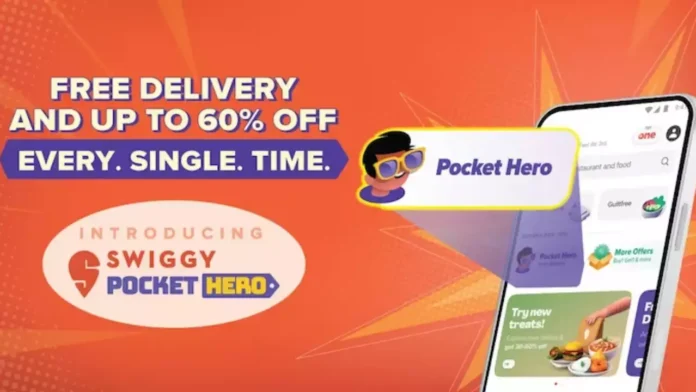
Bengaluru-based Swiggy has introduced a pilot program called ‘Pockethero’ across around 15 cities since late November. This initiative is primarily geared towards students and fresh graduates in search of more budget-friendly food delivery options. Swiggy has partnered with specific restaurants to offer enhanced discounts and complimentary delivery services as part of an effort to attract and onboard new customers.
“Pockethero aims to make food delivery accessible to a set of users who today may find online food delivery less value for money. True to its name, Pockethero delivers the best of discounts from our partner restaurants and gives free delivery on top of it to give our customers a taste of convenience without having to think much about their pockets,” said Sidharth Bhakoo, vice president, national business head at Swiggy.
Simultaneously, Zomato has launched its ‘Everyday’ program, aiming to offer cost-effective home-cooked meal alternatives.
“We believe we’re at a stage where we need to push 20 different arrows and see which one helps us do better…On the value side, we have partnered with a certain set of restaurants to do ‘Everyday’ meals. That is something we are continuing to hold and scale because we believe affordability with high quality food is the way to grow the overall restaurant industry,” said Rakesh Rajan, food delivery CEO at Zomato.
Analysts suggest that, despite the emphasis on profitability and increased usage from their medium-to-high frequency customer base through loyalty programs, food delivery platforms have deprioritized new customer acquisition.
In a recent research note, Bank of America (BoFA) Securities reported, citing data from Sensor Tower, that food delivery platforms experienced only marginal growth or even a decline in daily active users (DAUs) over the past six months.
During November, Zomato observed a 0.6% sequential increase in daily active users (DAUs), whereas Swiggy experienced a 1.9% decrease in DAUs. The report also highlighted a decline in app downloads for food delivery apps, with Zomato registering the highest sequential drop of 21% in November.
“Both platforms have been focussed on profitable growth for the last three to four quarters…and that kind of growth comes from high transacting users. So, instead of spending too much on getting in new customers, the push was towards milking more orders out of existing customers. While this increased order frequency accrues in the form of margins over a longer period of time, the platform, as a whole, becomes less attractive to a new customer,” a Mumbai-based internet sector stock analyst said.
Zomato and Swiggy have been witnessing growth stemming from a growing cohort of transacting users who make orders on a monthly basis at the very least.
In the recently disclosed semi-annual financial results, Prosus, the Dutch consumer internet investor backing Swiggy, reported a 17% year-on-year surge in food delivery gross merchandise value (GMV) to $1.43 billion for the period between April and September 2023. This growth was propelled by an expanding base of transacting users, resulting in double-digit order growth, coupled with an uptick in average order values (AOV).
Zomato, in its earnings report for the September quarter, indicated that it anticipates future growth to be driven by monthly transacting customers. Presently, among the company’s overall customer base, which includes those who order food at least once a year, only 30% of customers place food orders at least once a month.
Significantly, Zomato is witnessing nearly 40% of its gross order values for food delivery originating from high-frequency customers enrolled in its Gold loyalty program.
“However, for the longer term, you need to make sure there’s a large enough base that keeps bringing in incremental growth over time…therefore, it also makes sense to keep acquiring new customers,” the analyst, cited above, pointed out.
Lee has enlisted Sara Ali Khan as its brand ambassador in India, as announced on Friday. Concurrently, the brand has introduced a new campaign, “Lee: Home of the Real Denim,” aiming to solidify Lee’s position as the favored denim brand among young audiences.
Sara is set to appear in advertising films showcasing the brand.
“We are delighted to have Sara Ali Khan as the brand ambassador of Lee in India. Sara embodies the spirit of Lee with her authenticity and flair. Lee’s legacy extends to over a century combining the heritage of denim with the contemporary ethos of embracing one’s true self,” said Nitin Chhabra, chief executive officer of Ace Turtle, the exclusive licensee of Lee in India and other South Asian markets.
“We are confident that the campaign will help to build on Lee’s brand equity and help us drive more customers to our retail stores and online channels. We aim to significantly grow Lee’s business in India by the end of the current fiscal year,” Chhabra added.
Speaking about her association with the brand Sara Ali Khan said, “The brand’s rich heritage, coupled with its contemporary edge, resonates with my personal sense of fashion. I am delighted to be part of Lee’s narrative, embracing its legacy and, more importantly, fuelling a new denim fervour among the vibrant and diverse young consumers of India.”
Lee, a brand under Kontoor Brands, stands as an American denim and casual apparel label established by H.D. Lee 130 years ago. In India, Lee products are accessible through exclusive brand outlets and prominent departmental store chains like Lifestyle, Shoppers Stop, Pantaloons, and Centro, among others. Additionally, the denim brand can be conveniently purchased online through its dedicated webstore and major online marketplaces such as Amazon, Flipkart, Myntra, Ajio, Tatacliq, and Nykaa.
Ace Turtle, headquartered in Bengaluru and Singapore, is a technology-driven retail company holding exclusive licenses for globally recognized brands such as Lee, Wrangler, Toys“R”Us, Babies“R”Us, and Dockers in India and other South Asian markets. Fueled by its proprietary technology, the company leverages data science throughout the entire process, from design to fulfillment, to align with and surpass consumer expectations.
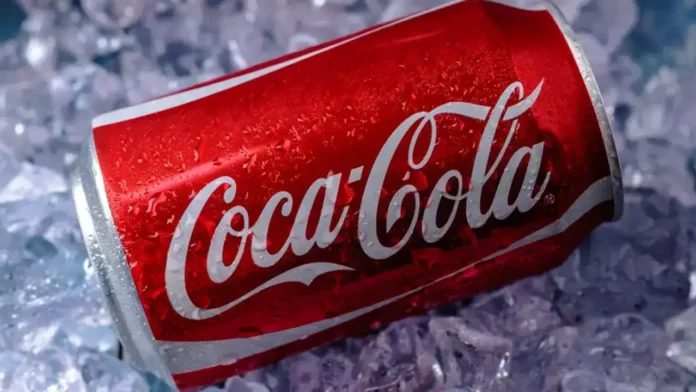
The Coca-Cola Company is poised to make a significant investment of INR 3,000 crore to establish a plant for beverage bases and concentrates in Sanand, Gujarat. This foreign direct investment (FDI) will be directed through International Refreshments (India) Private Limited (IRIPL), a subsidiary of The Coca-Cola Company, which is an American multinational.
The state government has allocated a plot of land measuring 1.6 lakh square meters (SM-52) in Sanand Industrial Estate-II for the plant. Government sources have verified that the approval process has been accelerated, underscoring the company’s dedication to its investment in Gujarat.
“Coca Cola has already made two large investments through its bottling partners in Gujarat. The government has fast tracked the process of approvals and has already made land allotment to the company,” TOI quoted senior officials in the state administration as saying.
The upcoming Sanand plant is anticipated to feature full automation, integrating robotic technology, Internet of Things (IoT), and machine-learning devices for continuous real-time monitoring and control of manufacturing processes. Furthermore, automated storage and retrieval systems will contribute to increased efficiency.
As per the TOI report, the company intends to hire approximately 1,000 individuals, encompassing both skilled and unskilled workers, during the construction phase. Once operational, the plant is expected to generate employment for about 400 individuals in operational and engineering positions, with an emphasis on promoting gender diversity.
The inception of this new plant is set to create a favorable ripple effect on related industries, such as packaging suppliers, flavor producers, engineering services, capital goods, and the automation sector.
Seattle’s Starbucks Corporation is feeling the rapid repercussions of escalating global political tensions, with a staggering loss of around $11 billion in value. This accounts for a significant 9.4% reduction in the company’s overall worth.
Within a span of 19 calendar days since its November 16 Red Cup Day promotion, Starbucks has experienced a significant 8.96% drop in shares, amounting to an almost $11 billion loss. This downturn is attributed to analysts’ reports highlighting slowing sales and a subdued response to the holiday season’s offerings.
The protests within the Seattle, Washington-based chain have profound origins, delving into delicate geopolitical matters. This situation unfolded when Starbucks Workers United, the union representing numerous baristas, sparked controversy with a tweet expressing solidarity with Palestinians, placing the company in a challenging position.
“Amid an ongoing boycott due to the Israeli occupation’s aggression against the Gaza strip, the undercurrent of discontent signals a challenging brew for the company’s future,” an industry analyst said.
Starbucks shares have undergone a continuous decline over 12 consecutive stock market sessions, marking the lengthiest downward streak since the company’s initial public offering in 1992. Presently, the stock is hovering around $95.80 per share, a notable decrease from its annual peak of $115.
While the company has refuted any wrongdoing in these situations, it grapples with the task of preserving its brand reputation amidst contentious global issues.
During a recent discussion with analysts, Starbucks CEO Laxman Narasimhan expressed optimism regarding the company’s diverse channels and its capability to connect with customers, despite challenges posed by macroeconomic factors and evolving consumer behaviors.
The current Starbucks boycott is part of a broader movement targeting various global brands due to their support for Israel. In Egypt, Starbucks reportedly had to let go of workers in late November, as the financial repercussions of the boycott took a toll, necessitating expense reductions.
On Thursday, senior executives announced that Giordano, the retail brand, aims to achieve a twofold increase in its apparel business revenues in India by 2024.
The Hong Kong-based company, which re-entered the Indian market almost a decade later, is positioned to end 2023 with a revenue of INR 20 crore from its apparel business.
In 2024, Ujjval Saraf, the director of Brandzstorm India Marketing, Giordano’s partner in India, stated that the revenue from Giordano’s apparel sales is projected to increase to INR 40 crore, with the number of points of sale doubling to 100.
Ishwar Chugani, a member of Giordano International’s management committee, mentioned that the company currently operates 108 points of sale in Myanmar and views India as a promising market.
Saraf stated that the objective is to achieve a revenue of INR 100 crore from apparel sales by 2026, accompanied by an expanded distribution strategy encompassing exclusive stores, shop-in-shop setups, and online marketplace presence.
Currently, around 20% of its sales originate from online marketplaces such as Myntra and Ajio. Additionally, the company is exploring the possibility of launching a dedicated website to facilitate direct sales to consumers, according to Saraf.
Brandzstorm sources all products sold under the brand locally, and Chugani mentioned that the company is also aiming to enhance its reliance on India for global sourcing.
Historically, the company has relied on Vietnam and China for product sourcing, but recently, Bangladesh and India have been included as additional sourcing destinations, he noted.
Chugani mentioned that within the next two years, a quarter of the group’s total units will be sourced from India. He also added that for the Gulf Cooperation Council countries, the current 25 percent will rise to 40 percent.
When questioned about the re-entry into India, Chugani, noting the company’s previous presence from 2008 to 2012, stated that they have learned valuable and “expensive” lessons from that experience, which they are now actively avoiding.
During its initial venture, the company opted for independent stores in prime locations without a local partner. Additionally, it had a local unit head who was not based in India, as noted by Chugani.
Although the partnership with Brandzstorm was established in 2019, it only came into effect in 2021, Saraf mentioned. Currently, the collaboration has resulted in 50 points of sale spanning 13 states and 23 cities.
We use cookies to ensure that we give you the best experience on our website. If you continue to use this site we will assume that you are happy with it.