As we approach the end of 2023, Swiggy Instamart has unveiled its yearly ‘Quick Commerce Trends’ report, revealing intriguing insights into consumer habits.
A Jaipur resident made 67 orders in a single day, while a Delhi resident astonishingly spent INR 12,87,920 on groceries in a year. According to Swiggy Instamart, the individual from Delhi managed to save INR 1,70,102 on his annual grocery expenses.
Another order from Delhi featured a total of 99 items, with the majority being chips, chocolates, and cookies.
The highest single order, valued at INR 31,748, was placed by a user from Chennai. This purchase included coffee, juice, cookies, nachos, and chips.
Curious about the most frequently ordered items? Swiggy disclosed that onions, tomatoes, and coriander leaves maintained their status as the most commonly ordered trio across all orders.
Bengaluru boasts the country’s most ardent mango lovers, surpassing the combined mango orders of Mumbai and Hyderabad.
In September, the highest volume of condom orders was registered. If you’re curious about the most commonly ordered items accompanying condoms, surprisingly, onions took the lead, followed by bananas and chips.
In the realm of snacks, Makhana emerged as the clear winner with an impressive 1.3 million orders. As for the most searched items on the app, milk took the lead, followed by curd and onions.
In terms of specific days, the demand for chips reached a remarkable peak on November 19, with a delivery of 1,39,874 packets. On October 15, a substantial 1,90,418 units of milk were ordered.
On August 12, 5,893 condom packets were delivered, and on September 6, a significant 21,591 units of butter were delivered. October 2 recorded the sale of 82 tonnes of tomatoes, while on May 21, 36 tonnes of mangoes were ordered. On July 30, a substantial 61 tonnes of onions were ordered.
According to Swiggy, its delivery personnel covered a distance of 29,95,13,538 kilometers this year. The fastest delivery was accomplished in Delhi, where a packet of instant noodles was delivered in just 65 seconds!
Swiggy, the renowned on-demand convenience platform, has joined forces with Simpl, a prominent checkout network. This collaboration aims to introduce a seamless one-tap checkout experience for millions of customers across various services, including food delivery, Swiggy Instamart, and soon, on Dineout and Swiggy Genie.
The significance of this partnership is heightened as the demand for Swiggy’s on-demand services surges, especially during the festive holiday season characterized by Christmas and New Year’s Eve celebrations. The presence of five weekends in December is anticipated to amplify the demand for services from food and hyperlocal delivery companies substantially.
Through this collaboration, customers nationwide will gain the ability to effortlessly place orders from Swiggy’s extensive network of over 2.9 lakh restaurant partners. Additionally, they can conveniently access a myriad of products offered by Swiggy Instamart, all while taking advantage of Simpl’s one-tap functionality to access other services from Swiggy.
An increasing number of customers today are seeking convenience while transacting online with food and hyperlocal delivery sectors among their top choices. As these services are also availed multiple times in a day, it necessitates the need for a quick and convenient checkout to enhance customer experience. Simpl, as a customer-focused organisation, has been the preferred choice of millions of customers and this partnership with Swiggy is intended to bring greater convenience and trust to our combined customer base in the upcoming holiday season. It will also help strengthen our presence in this space where convenience is becoming a real differentiator,” said Nitya Sharma, founder and chief executive officer of Simpl.
At present, numerous prominent enterprises and rising Direct-to-Customer (D2C) merchants in the food and hyperlocal delivery sector are providing Simpl’s one-tap checkout to millions of customers nationwide. In the past two years alone, Simpl has observed a remarkable 75% surge in transactions related to food and beverages, as well as hyperlocal categories, coupled with a notable 48% rise in the number of users engaging in transactions.
“Our mission is to offer unparalleled convenience and an elevated experience to our customers across the platform – from search to checkout and delivery. With Simpl’s 1-Tap Checkout integrated into our platform, especially ahead of the holiday season, millions of customers across the country will be able to access their food, and home needs, and dine out seamlessly,” said Anurag Panganamamula, vice president- revenue and growth, Swiggy.
Tata Consumer Products, a leading player in the Fast-Moving Consumer Goods (FMCG) sector, is set to broaden its portfolio with a focus on introducing cutting-edge products. These innovative offerings are poised to become key drivers of business growth. Notably, the second quarter of the fiscal year 2024 saw an impressive innovation-to-sales ratio of 5 percent.
The company has introduced a range of innovative products such as Apple Cider Vinegar, Sampann Vermicelli, Simply Better Cold Pressed Oils, Soulfull Ragi Bites Choco Sticks, Sampann Gulab Jamun Mix, Sampann Walnuts and Seeds, Sampann Saffron, Tata Gluco Plus Sports Drink, Filter Coffee Decoction, Say Never! Energy Drink, Tata Tea Gold Vita Care Tetley Digest, and Immuno Chai.
“We need our ranges to be more relevant to our consumers. We will expand and want to be careful and learn what is sticking, take smaller circles, and grow them deep. We have a very limited portfolio on Tata GoFit right now, including apple cider vinegar and limited protein ranges, and we are seeing that they are having some traction with consumers. We will launch a franchise in medium term runway,” said Deepika Khattar Bhan (President – Packaged Foods at Tata Consumer Products).
In the second quarter, Tata Consumer Products witnessed a 16 percent increase in revenue and a 6 percent growth in volume for its Indian foods business.
“There are low levels of branded penetration that are opening up a lot of opportunities. We continue to remain focused on categories that are new for branded penetration and you are seeing our aggressive foray with some fun. We are looking at, new branded penetration categories like vital staples. The products are within the Sampann portfolio, which is also responding very well for us. It is a really important space for us. We want to balance our tomorrow, which refers to the two brands we started with, Gofit and Simply Better, where we’re also experimenting. It helps us stay ahead of the curve in learning spaces that are new and evolving for consumers,” she said.
As of the second quarter, Tata Consumer Products has a presence in 1.5 million outlets, contributing to a total outreach of 3.8 million outlets within its distribution network.
“We are looking at how we can go a level deeper and build distribution in smaller towns. Our total reach has doubled since September 2020. We are looking to reach deeper in the country, both through pure distribution as well as by ensuring that there is better depth building through spilt routes in the large towns,” added Deepika Khattar Bhan.
Madras Mandi, a prominent name in the fresh produce industry and a cherished online farmers’ market in Chennai, proudly announces the opening of its fifth store in Neelankarai, Chennai. This strategic move not only signifies growth but also underscores Madras Mandi’s steadfast commitment to providing the community with the highest quality fresh produce. With a selection of 250+ fresh varieties, the new store introduces enticing products from curated brands like Farmley, Umami Brews, Pataakha Foods, and Andhra Deli, enhancing the shopping experience with unique offerings.
Nestled in the well-known East Coast Road, a distinctive locale in Chennai, the recent establishment functions as a central hub strategically designed to enable prompt delivery services to nearby regions such as Adyar, Besant Nagar, Thiruvanmiyur, and beyond. This expansion is geared towards improving accessibility for customers in these areas and fostering connections beyond. The grand opening celebrations, complete with exclusive promotions, live sampling sessions, and a ceremonial ribbon-cutting, underscore Madras Mandi’s appreciation for its customers and dedication to strengthening community ties.
“Madras Mandi’s fifth store opening is not just a celebration of growth; it’s a testament to our unwavering commitment to providing the community with the freshest, highest quality produce. As we expand our footprint, we invite our customers to join us in this culinary journey, celebrating not just a store but the collective vibrancy of a community that values and savours the richness of life in every bite,” said Prashanth Vasan, CEO, Madras Mandi.
In line with Madras Mandi’s enduring vision, the inauguration of the store emphasizes the brand’s dedication to quality, freshness, and active community involvement. In expressing gratitude to its users and the community, Madras Mandi underscores the significance of community support. The launch event extends an exclusive invitation to loyal customers, reaffirming the brand’s commitment to community engagement. The opening of the new store symbolizes Madras Mandi’s unwavering dedication to quality, accessibility, and fostering community connections, marking a continued journey of delivering the finest in fresh produce.
Jaypore, the renowned artisanal lifestyle brand operating under Aditya Birla Fashion and Retail Limited (ABFRL), has introduced its newest retail establishment in Dwarka, Delhi, establishing the 24th store within Jaypore’s extensive network. Beyond being merely a retail venue, this store situated in the heart of Dwarka serves as a tribute to the intricate tapestry of Indian craftsmanship, presenting a distinctive viewpoint on the country’s vibrant creative heritage.
Spanning 1350 square feet, the store invites visitors to immerse themselves in the diverse realm of genuine Indian crafts. It offers a thoughtfully curated environment showcasing handcrafted attire for both men and women, along with exquisite home décor, jewelry, and accessories.
The interior decor of the store mirrors the vibrant handmade culture of India, embellished with meticulous detailing and warm color palettes. Displays within the store feature ancient artisan techniques like the Khadi warping wheel, encapsulating the brand’s commitment to showcasing the inherent creativity ingrained in each piece.
Sooraj Bhat, CEO – Ethnic Business, Aditya Birla Fashion and Retail Limited stated, “The inauguration of Jaypore’s artistic venture in Vegas Mall, Dwarka, is a source of pride for us. This establishment is not merely a store; it is a vibrant canvas that displays the grace of Indian craftsmanship. At Jaypore, we extend an invitation to everyone to delve into and immerse themselves in the narratives woven into each creation.”
The Dwarka store not only expands Jaypore’s retail presence but also stands as evidence of the company’s dedication to crafting a comprehensive and visually delightful shopping experience that honors the diverse and intricate artistry of India.
Brand Studio Lifestyle (BSL), a prominent fashion company based in Bangalore boasting a diverse portfolio featuring popular brands like Highlander, Tokyo Talkies, Vishudh, Ketch, and Locomotive, has expanded strategically into the Middle East e-commerce market. This significant move aligns with BSL’s global expansion plan, making the company’s brands accessible to consumers across UAE, Saudi Arabia, Bahrain, Kuwait, Qatar, and Oman.
Established in 2015, Brand Studio Lifestyle has experienced steady expansion over the last eight years, attaining an impressive compounded annual growth rate (CAGR) of 38 percent. Known in India for its contemporary and Gen Z-centric fashion trends, the company is now extending its reach into the Middle East through partnerships with prominent e-commerce platforms such as Styli, Noon, Namshi, and Centerpoint, all based in the UAE.
The Middle East’s burgeoning interest in the Direct-to-Consumer (D2C) e-commerce segment, notably among the tech-savvy, trend-focused, and social media-influenced younger generation, presents a lucrative opportunity for BSL.
Shyam Prasad, CEO, Brand Studio Lifestyle said, “We are excited to announce our foray into the e-commerce market in the Middle East countries. At Brand Studio Lifestyle, we strive to offer trending fashion options to customers worldwide. Our home-grown fashion brands are now available to fashion enthusiasts in the Middle East. Our expansion into the flourishing GCC e-commerce market is in line with our objective of providing a diverse range of fashion choices to our global clientele. Our vision to deliver on-trend fashion through a robust fashion supply chain ecosystem is still the driving force behind our global expansion.”
Nirmal Jain, CEO, Styli (Landmark Group) said, “We are excited to partner with Brand Studio Lifestyle to bring its fashion forward and Gen Z centric portfolio of brands to consumers in the Middle East. We look forward to growing this partnership over the long term and continue to offer consumers the best in global fast fashion.”
BSL’s strategic entry into the UAE market signifies the first step in its global aspirations. With a focus on Gen Z-led fashion consumers, the partnership with popular e-commerce platforms positions BSL for a significant presence in the Middle East market. The company envisions enhancing its offerings by adding more relevant categories and products in the future, with plans to further expand its presence in South and Southeast Asia and European markets.
Zudio, the value retail fast fashion chain of the Tata Group, recently marked its entry into Palanpur, Gujarat, with the opening of its first store. The store is conveniently located at S9 Imperial, within the confines of a mixed-use project in Palanpur, as shared in a social media update.
“Happy to announce opening another Zudio store @S9 Imperial at Palanpur, Gujarat,” said Rashmi Patel, Director, DRC Multi Project Private Limited on LinkedIn.
The newly-opened store in Palanpur marks Zudio’s first establishment in the city, contributing to its total of 72 stores across Gujarat. Ahmedabad takes the lead with 25 Zudio outlets, holding the distinction of hosting the largest number of stores in the state.
In addition to Palanpur and Ahmedabad, Zudio has established its presence in various other cities across Gujarat, including Gandhinagar, Rajkot, Anand, Bharuch, Bhavnagar, Gandhidham, Godhra, Jamnagar, Mehsana, Nadiad, Sanand, Surat, Vadodara, and Vapi.
Zudio, a fashion brand owned by Tata Trent, a subsidiary of the Tata Group, opened its first store in India in September 2016 at Commercial Street, Bengaluru. As of now, its website reports a total of 453 Zudio stores across the country.
Earlier this year, Zudio announced its plan to open 130 stores in the year 2023.
Barring country-made liquor, the prices of beer, whisky, vodka, rum, and wine are expected to remain largely unchanged.
The excise policy, scheduled to be effective from April 1 next year, received approval from the state cabinet on Tuesday.
Although no significant alterations have been proposed, the prices of country-made liquor (both tetra pack and bottled) are anticipated to increase by INR 5 due to a rise in duty. The excise duty imposed on beer and Indian-made foreign liquor remains unchanged. Additionally, the license fees for all retailers will experience a further 10% increase.
Implementing strategies to generate additional revenue, the department will permit the operation of premium liquor outlets at metro stations, railway stations, and airports, provided that approval and a no-objection certificate are obtained from the competent authority.
Likewise, bar operators can set up an extra counter by paying an additional 25% of the license fees. The duration of the occasional bar license has been reduced from 24 hours to 12 hours, with liquor service permitted until midnight of the same day.
Excise commissioner Senthil C Pandian said, “Instead of molasses, grain-based country made liquor can be produced by the distilleries. So far, usage of grains was allowed only for the premium UP liquor, the premium country liquor that is sold in glass bottles.”
Pandian stated that the objective of the policy is to enhance farmers’ income while also guaranteeing improved quality of liquor for the ultimate consumers.
Under an altered situation, liquor vendors would be permitted to allow customers to consume beer on the premises, provided a distinct permit room is available. Nonetheless, the provision of canteen services, including food and snacks, would not be permitted.
Retailers have expressed varied opinions in response to the policy.
“While beer shop owners would gain as on-premises consumption of brew would be possible. But the quota of country made liquor shop owners has been increased substantially and they would have to struggle. The margin of retailers has also been left unchanged,” said spokesperson of the UP liquor sellers welfare association, Devesh Jaiswal.
The revenue goal for the financial year 2024-25 has been raised to INR 50,000 crore.
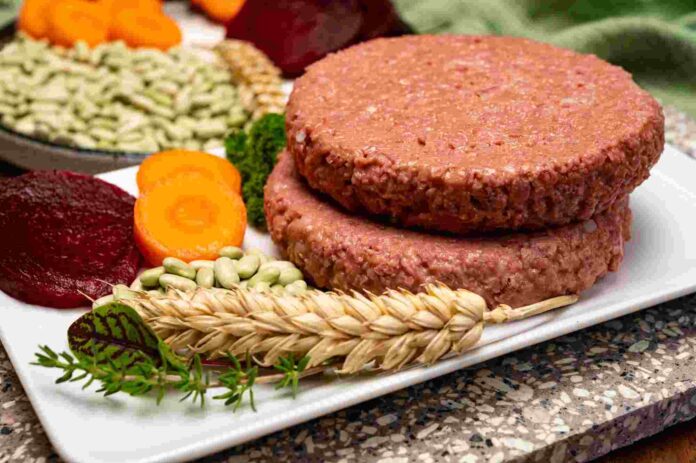
Plant Based Meat is the new kid on the block who’s slowly taking the spotlight. While meat lovers may find it hard to give up their fandom for chicken or bacon, here’s the thing: the vegan substitute is catching up at a meteoric speed, in taste, price point as well as variety. Over the last two years, we have seen more brands come up with innovative solutions to introduce vegan alternatives into the meat scene, while gradually making their way into our kitchens and palates. Yet, many of us are either still holding on to the traditional idea of animal products or haven’t fully explored this rising star in the grocery store aisles.
If you’re new to the whole concept of plant based meat, and can’t fully make sense of it, don’t worry- I’ve got you covered with a complete overview of why we need it, how it’s making a positive impact on the world, health benefits and how is it going to seamlessly replace the lesser eco-friendly options without letting you compromise on your taste buds
What Is Plant Based Meat?
When we think of “meat”, the only association our mind is used to making is an animal derived food product. Fortunately, with advancements in food technology, the food industry has been able to come up with an answer to all our environmental concerns with respect to animal meat. It’s like meat, but without harming animals- pretty cool, right?
The first plant based protein foods to take over the market, and win our hearts, were Soya and Tofu. But over time, we have been able to go beyond our soyabean derived foods. Thanks to the creative expertise of food scientists, we now have more plant based options that resemble real meat in taste, texture and appearance. While soy and tofu are still commonly used ingredients to prepare plant-based meats, there are other ingredients like seitan, potato starch, pea protein, lentils, beans, coconut oil, seeds, nuts and vegetables.
So can you have plant-based meat on festivals, religious ceremonies, vegetarian fasts and events? The answer, is a 100% Yes.
The Challenge That Comes With Animal Meat
You might question the urgency and the sudden hype about Plant Based Meat. Let me break it down for you.
For many years, we have been consuming meat. Going back in time a few years, the human population was in check, and our greed and appetite were limited by availability. But with the population skyrocketing and every person having access to every resource from across the world, we have become oblivious to the survival of our planet. We are expected to reach a global population of over 10 billion within the next 2 years, and we can only see it accelerating from there.
Each generation that reaps the Earth’s benefits needs to make sure we’re not totally stripping it of everything it’s got. Even if you’re only consuming meat once or twice everyday, with the number of people holding on to that belief and commitment, guaranteeing survival for everyone after a few years is getting harder, and animal meat is one of the top reasons causing it.
More than 66 billion chickens, 300 million cows, and 1.5 billion pigs are slaughtered for global consumption every year. That’s a staggering number, highlighting the immense scale of animal agriculture.
Producing industrial meat comes at a cost. Farmers need to feed this massive number of animals, and for that, they are clearing forests by cutting downs trees or setting forest fires to clear the land to grow animal feed.
The production of meat demands significant energy, from raising animals to their transportation and eventual slaughter. To put it in perspective, the energy required to produce 2.2 pounds of beef could power a 100-watt lightbulb for twenty days.
Much of the livestock is fed with the same foods as consumed by humans, like corn and soy. If the produce is redirected towards humans, it could end world hunger.
1/3rd of the global land that is suitable for agriculture, is used by livestock. According to research, if everyone went vegan, the land used for livestock could be reduced to 1/4th.
According to the United Nations, the meat sector contributes to as much as 18 percent of all global greenhouse gas emissions, which is one of the major reasons causing global warming.
Meat products have a significantly higher water footprint compared to vegetables, beans, and other plant-based items. The production of meat requires more water resources, contributing to the overall environmental impact associated with meat consumption.
Putting all these issues into perspective, it gets a little easier to estimate where we’re headed as a global race. Now that we have all these alternatives to help save our party, here’s a few more reasons to add in favour of plant based meat.
Health Benefits
Other than the solutions that plant based meat offers to the challenges the world is facing due to overproduction of animal meat, there are a few health benefits that can be taken into consideration while making a choice.
Since plant based meat is lighter in terms of calories, it is the way to go for weight loss
Choosing the right options (ones that contain soybean, legumes and lentils) ensure that our daily need for protein is matched.
It is carcinogen safe. The World Health Organization (WHO) has expressed concerns about carcinogens present in red and processed meats, indicating a potential increased risk of cancer associated with their consumption.
Plant Based Meat may also help prevent various health issues, such as hypertension and cardiovascular disease.
Some manufacturers have also started adding Vitamin B12 to their mix, which is an essential nutrient for human health.
Now that you have answers to every question that might tamper with your decision in picking up plant based meat at the grocery store, I’m going to ask you to give it a try!
Make this decision for yourself, and your families, for our planet and for the generations to come who are going to inhabit it.
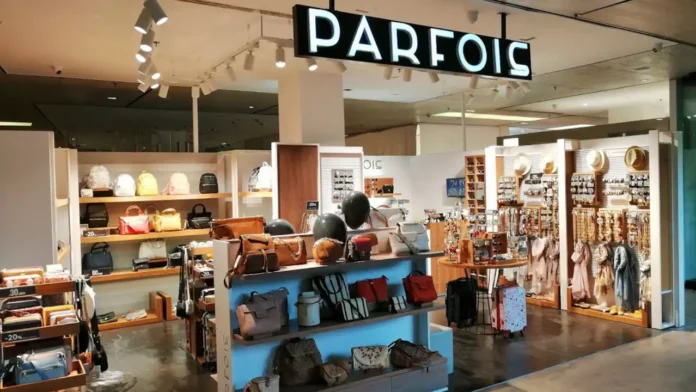
Parfois, the Portuguese fashion accessories brand, has officially entered the Indian market through a strategic partnership with Myntra, as revealed in a press release on Tuesday.
To kick off, the brand will present a selection of more than 250 handbags, totes, and slings, with an average selling price set at INR 2,000.
“We are thrilled to introduce Parfois to our customers, and thus further enhancing the appeal of our international brands’ portfolio, especially as we ramp up our global accessories segment,” said Jayanti Ganguly, vice president – business at Myntra.
Additionally, the brand will utilize Myntra’s on-app channels in conjunction with Myntra’s social media and social commerce features. As part of the brand’s launch promotions, customers will enjoy perks such as a flat 20% price reduction.
Established in 1994 by Manuela Medeiros, Parfois specializes in a wide range of products, including bags, shoes, apparel, and accessories such as jewellery, sunglasses, scarves, hats, and gloves.
“From Parfois, we are very excited to launch our brand in one of the most important markets, India. The opportunity to build Parfois globally is one of the most important steps for our growth in international markets,” said Susana Sánchez, chief executive officer of Parfois.
“We hope that with Myntra as our partner, that opportunity will likely turn into an amazing experience for having new customers and opening new regions around the world,” Sánchez added.
Experiencing growth since 2010, the brand achieved a significant milestone in 2019 by expanding its reach to 1,000 stores. Currently, it has a presence in over 70 countries worldwide.
Bengaluru-based Myntra boasts a collection of over 2.3 million styles from more than 6,000 domestic and international brands. The diverse offerings span across categories such as fashion, beauty, lifestyle, encompassing home, luggage, travel accessories, as well as watches and wearables.
We use cookies to ensure that we give you the best experience on our website. If you continue to use this site we will assume that you are happy with it.