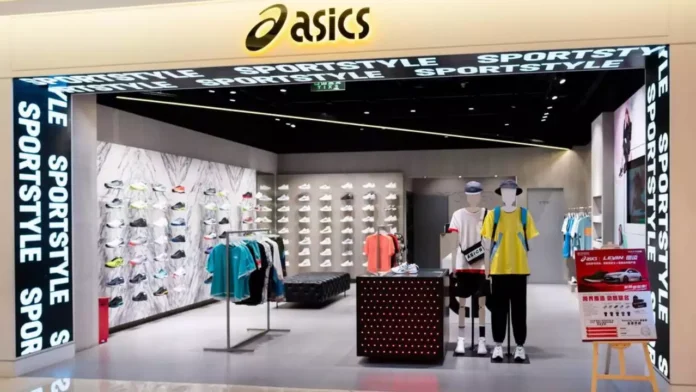
Asics, the Japanese sports performance brand, revealed its intentions to expand in India by introducing 50 new stores by 2025, as stated in a press release on Wednesday. Furthermore, the brand is set to open its first mono-brand store in 2026, offering Indian consumers access to an expanded global product portfolio.
Wrapping up the year 2023, the brand marks the occasion with the inauguration of its 100th store in India. Boasting an extensive network of more than 950 sales touchpoints across the country, Asics achieved a commendable year-on-year growth of approximately 25%. The brand has outlined plans to sustain this growth momentum into the upcoming year.
“India is a crucial market for us and with the changing consumer landscape we see a huge potential with new and emerging demand for sports across different regions in India,” said Yasuhito Hirota, chief executive officer of Asics Corporation.
“Keeping abreast of the growing demand, we are delighted to open our 100th outlet in the city of Ahmedabad and continue on our path to more strategic developments to support our vision for the coming times,” Hirota added.
The expansion in India aligns with Asics India’s strategic vision for the upcoming years. It coincides with the footwear major’s initiative to rejuvenate its business and explore new opportunities by venturing into untapped territories and expanding its sales network.
While the brand generates a substantial portion of its sales through digital channels, retail stores are contributing approximately 60% to the overall business.
“We are excited to witness a steady growth trajectory in India for Asics, as we conclude 2023 with our 100th store opening in India, thereby expanding our portfolio further with innovative product lines which will continue to cater to the existing brand loyalists and tap into a more discerning customer base,” said Rajat Khurana, managing director, Asics India and South Asia.
“We aim to penetrate into deep Bharat with more stores in tier 2 and 3 markets over the next few years, add more running clubs and partnerships with marathon events in our existing markets and lead the running and fitness industry in India – all of which will take us closer to fulfilling our commitment to build a stronger sporting culture in India,” added Khurana.
Established in 1949 by Kihachiro Onitsuka, Asics has evolved into a designer and manufacturer specializing in running shoes, athletic footwear, and sports-inspired apparel and accessories. The company made its foray into the Indian market in 2010 through a five-year partnership with Reliance Retail, later transitioning to independent operations in 2015.
“Unless you don’t do stock replenishment at quick commerce in real time, you are missing out on opportunities. We are working on forecasting demand based on sales trends, even if quick commerce platforms are doing their own forecasting to ensure we can turn around stocks within hours at the dark stores,” said Mayank Shah, senior category head at biscuit and confectionery maker Parle Products.
Quick-commerce platforms, which ensure delivery to consumers within 10-20 minutes, account for 30-50% of the total e-commerce sales for FMCG companies. These companies are attracted to the commitment of swift delivery. For them, e-commerce has evolved into a significant sales channel, experiencing a twofold increase in size over the last two years and currently standing at 5-10%.
“Our quick commerce partners are prioritised for stock allocation to ensure better fill rates. Smaller load sizes have been actioned to cater to higher frequency of shipments,” said Sandeep Sule, divisional chief executive, trade marketing and distribution at ITC, which makes Sunfeast biscuits, Master Chef frozen snacks and Fiama soaps.
“We are evaluating real-time data exchange through electronic data interchange, for which, integration has been done with all the major quick commerce accounts for faster and digitised data exchange,” Sule said.
He mentioned that during peak-demand periods like the IPL cricket league, Cricket World Cup, and Diwali, ITC collaborates with online platforms to synchronize their purchases with the surge in demand.
A representative from Nestle India mentioned that quick commerce accounts for almost half of the company’s total e-commerce operations. The manufacturer of Maggi noodles and KitKat chocolates is collaborating with quick commerce partners to monitor inventory at distribution points. This enables the company to proactively manage stock and ensure product availability for consumers. Additionally, the spokesperson highlighted that Nestle is directly supplying products to distribution points in newly established towns.
Executives noted that quick commerce initially gained traction during the pandemic, as state lockdowns compelled consumers to shift their focus to online platforms for daily essentials. This trend has persisted, with consumers increasingly attracted to the convenience of rapid delivery, extending beyond impulse buys to include bulk purchases.
Ritesh Arora, CEO, India business and Far East at LT Foods, said, “With our quick-commerce contribution having increased rapidly, we are using technology to predict demand and avoid inventory stocking delays.”
The prohibition imposed by India on onion exports has led to a surge in vegetable prices for Asian purchasers, prompting them to seek more affordable alternatives. The restrictions are expected to persist until the general elections next year, making it unlikely for New Delhi to lift the ban in the near term.
On December 8, the largest global exporter of onions implemented a ban on shipments as domestic prices surged by over two-fold in a span of three months, driven by a decline in production.
Presently, retail consumers from Kathmandu to Colombo are grappling with elevated prices. This is because conventional Asian buyers, including Bangladesh, Malaysia, Nepal, and even the United Arab Emirates, depend on imports from India to fill domestic supply gaps.
“Onions are needed for almost everything we cook,” said Mousumi Akhtar, who works in the private sector in Dhaka, the capital of Bangladesh. “This sudden price hike is tough to swallow. I’ve had to cut back on how much I buy.”
Asian consumers have developed a significant reliance on Indian onion supplies to enhance the flavors of their favorite dishes, ranging from Malaysia’s belacan shrimp paste and Bangladeshi biryani to Nepal’s chicken chillies and Sri Lankan fish curry.
According to traders’ estimates, India contributes to over half of all onion imports by Asian nations. The shorter shipment times compared to rival exporters like China or Egypt play a crucial role in maintaining the freshness and flavor of this perishable commodity.
In the fiscal year ending on March 31, India achieved a record onion export of 2.5 million metric tons, with its largest buyer of the vegetable being neighboring Bangladesh, which received 671,125 tons.
To address the scarcity, Bangladesh is attempting to secure additional supplies from China, Egypt, and Turkey, as stated by Tapan Kanti Ghosh, an official from the commerce ministry.
With general elections looming next month in Bangladesh, the government has initiated the sale of onions at subsidized prices to support the less affluent, aiming to mitigate a price surge of over 50% following India’s export ban.
The situation is even more dire in landlocked Nepal, where the majority of onions are imported.
“Since the ban by India, we have monitored the supply situation at different places. There are no onions on sale,” said Tirtharaj Chiluwal, an official of the Himalayan nation’s commerce ministry.
Nepal is contemplating imports from China and is considering requesting India to make an exception and permit onion exports, according to Gajendra Kumar Thakur, a spokesperson for the ministry.
Countries relying on imports now face pricier supplies from China, Iran, Pakistan, and Turkey, all of which have increased prices due to India being absent from the market, as stated by Ajit Shah, an Indian exporter.
If India’s ban persists for an extended period, all supplies would be depleted, noted an exporter located in Mumbai, the financial capital.
Just a week following the ban, onions in India experienced a 20% price reduction as the new season’s crop supplies entered the market, according to traders.
At present, with domestic supplies surpassing the demand within the country, Shah, the exporter, suggested that India should permit exports to uphold its position in the global market.
However, the restrictions are not expected to be lifted before the general elections next year, as Prime Minister Narendra Modi’s government prioritizes controlling food prices, according to the exporter based in Mumbai.
Exports of rice, sugar, and wheat from New Delhi have also been curtailed.
Following India’s export ban, onion prices in Sri Lanka have nearly doubled, adding pressure to a country that is slowly recovering from its most severe financial crisis in nearly seven decades.
Malaysia, along with other importers, is actively seeking to procure supplies from China and Pakistan, according to Seri Mohamad Sabu, the Minister of Agriculture.
RBZ Jewellers witnessed robust demand for its initial public offering (IPO) on the final day of bidding, December 21. The subscription rate stood at an impressive 8.4 times, as investors submitted bids for 6.6 crore shares against the company’s offering size of 79 lakh shares.
Retail investors oversubscribed their allocated quota by a factor of 15.2, while high net-worth individuals opted for a 4.3 times oversubscription. In contrast, qualified institutional buyers secured only a modest 5 percent of the shares reserved for them.
The public offer of INR 100 crore, closing today, consists solely of fresh share issuances, without any offer-for-sale component. The price range for the issue was set at INR 95-100 per share, and the lot size is a minimum of 150 equity shares, with multiples thereafter in increments of 150.
In the public issue, qualified institutional buyers are allocated a reservation of 14 percent, while retail investors enjoy a 35 percent reservation. The remaining 30 percent is set aside for high net worth individuals (non-institutional investors).
The fresh proceeds, totaling INR 80.75 crore, are earmarked primarily for addressing working capital requirements. Additionally, up to 25 percent of the gross proceeds will be set aside for general corporate purposes.
RBZ achieved a remarkable 55 percent year-on-year surge in net profit, reaching INR 22.33 crore for the fiscal year ending in March FY23. The revenue from operations in FY23 amounted to INR 288 crore, marking a robust 14.2 percent growth compared to the preceding year. Concurrently, the EBITDA (earnings before interest, tax, depreciation, and amortization) exhibited a significant uptick, soaring by 41 percent to INR 37.8 crore. The margin expansion during this period was noteworthy, registering an increase of 249 basis points to reach 13.11 percent.
Established in April 2008, RBZ Jewellers Limited specializes in crafting antique designs and is renowned as a prominent manufacturer of gold jewellery.
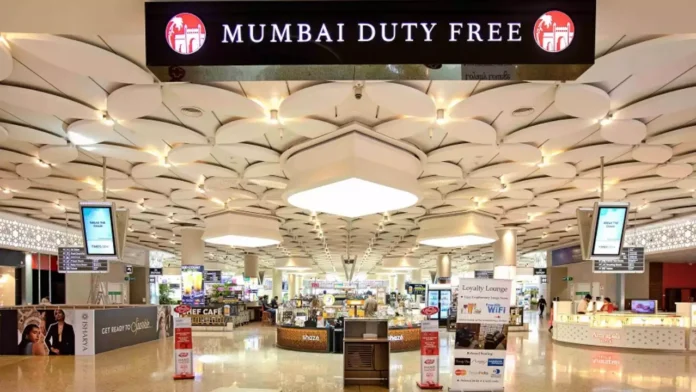
Mumbai Duty-Free has announced the debut of its White Glove Services, designed exclusively for High Net Worth Individuals (HNIs). This specialized offering ensures dedicated assistance for HNI customers, allowing them to explore a premium selection of products encompassing high-end fashion, watches, confectionery, luggage, perfume, cigars, and alcohol.
The focus of the services will be on a dedicated counter aimed at improving convenience, eliminating the necessity of enduring lengthy queues, and facilitating easy payments to ensure a smooth shopping experience.
Avishek Das, CEO of Mumbai Duty-Free, stated that the company has developed ‘unparalleled’ and ‘seamless’ White Glove Services.
“We invite all the international travelers to experience a realm where every purchase is an exquisite moment with a dedicated shopping assistant, express checkout and exclusive limited edition products,” he added.
This premium experience was introduced through a strategic partnership with the Beam Suntory brand, augmenting an already extensive collection of bespoke alcohol and liquor.
Alasdair Dickinson, Sales Director for Emerging Markets at Beam Suntory, expressed that the brand’s proficiency in crafting luxury and premium spirits aligns seamlessly with Mumbai Duty Free’s dedication to delivering an ‘immersive’ and ‘innovative’ customer journey.
In times of calamity, Alakh is consistently called upon—whether it’s the 2021 Chamoli floods or the collapse of the Silkyara Bend–Barkot tunnel. On November 12, as a section of the tunnel crumbled, ensnaring 41 laborers, the domestically engineered drone navigated through inaccessible debris. Its sensors visually perceived and recorded crucial first-hand information essential for orchestrating the 17-day rescue operation.
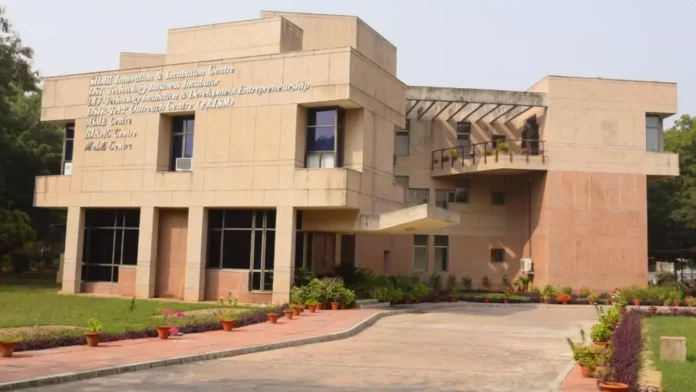
Alakh is a creation of EndureAir, a startup incubated by IIT-Kanpur, focused on designing and manufacturing unmanned aerial vehicles. Currently, the team is in the process of developing a drone with the capacity to transport up to 20 kilograms of ‘cargo’ for delivery to high-altitude army posts. EndureAir is among the 300-plus startups that have been nurtured and incubated at IIT-Kanpur’s Startup Incubation and Innovation Centre (SIIC), fundamentally altering the way we experience our lives.
The institute’s incubation cell is driving startups to address national challenges through science-based, sustainable solutions, ranging from monitoring fraudulent cryptocurrency transactions to developing biodegradable ‘plastics’ using bamboo and chicken feathers. Additionally, they are pioneering initiatives such as designing solar panels inspired by sunflowers. Among these innovative endeavors, one startup is repurposing discarded temple flowers to create vegan leather, while another is employing nanotechnology to revitalize deteriorating soil.
At IIT-Kanpur, many entrepreneurs arrive with promising ideas, yet what they often lack is the strategic plan to transform those ideas into viable businesses. Since its establishment in 2000, SIIC at IIT-Kanpur has been at the forefront of the innovation race. Serving as a catalyst for change, the incubation center facilitates connections between entrepreneurs and scientists with funders, while also offering crucial infrastructural support.
Aside from being among the pioneering incubators in Uttar Pradesh, IIT-Kanpur boasts two notable advantages. Firstly, it receives substantial funding from corporations as a component of their Corporate Social Responsibility initiatives.
“This year alone, we will be giving out INR 15 crore from our CSR funding,” said professor Amitabha Bandyopadhyay, who is on the board of directors at SIIC.
The second benefit is that IIT Kanpur possesses its own investment corpus of INR 50 crore.
“This is important because we primarily promote hardware startups, which are yet to become popular among venture capitalists or angel investors,” Bandyopadhyay added.
The institute’s potential became evident to the rest of the country when a national crisis unfolded.
“The real boost really happened during Covid. Our incubator delivered so many products one after the other that we became very prominent,” the professor said, referring to the ventilator project, which was developed and introduced in the market within 90 days. “Suddenly, the number of incubatees applying to our cell went through the roof,” Bandyopadhyay said.
He mentioned that a significant challenge as an incubator is the uncertainty about what exactly to anticipate and prepare for.
“If it is your own research lab, you know the research programme for the next 15-20 years. So you set up the equipment accordingly.”
The infrastructure of an incubator should accommodate its incubatees, even though they change every few years. This constant transience is what keeps the SIIC vigilant and adaptable.
Eight years ago, on a chilly Makar Sankranti morning, the startup Phool began its journey. Founder and CEO Ankit Agarwal took a friend visiting from the Czech Republic to the ghats of the Ganga, where the friend’s questions about the excessive waste dumped into the holy waters prompted Agarwal’s thoughtful reflection.
He conceived a straightforward idea: gather discarded flowers from temples and transform them into incense sticks. Yet, persuading the priests proved challenging. Hindu rituals dictate that flowers offered to devotees must be submerged in holy waters.
Agarwal’s team invested considerable time in persuading the temple priests, ultimately achieving success by installing bins to store these flowers for later collection by the Phool team.
Phool provided steady and dignified employment to women from families involved in manual scavenging.
Presently, hundreds of women in villages across Uttar Pradesh are handcrafting agarbattis (incense sticks) from recycled flowers, and among Phool’s investors is Alia Bhatt.
However, this marked merely the initial phase in Phool’s exploration of innovative solutions for organic waste. Nachiket Kuntla, an MTech graduate from IIT Kanpur and the lead research scientist of the startup, remembers the team stumbling upon a whitish mold in the stack of discarded flowers.
The team discovered that fungal growth was transforming used flowers into a substance resembling thermocol. This realization led to the creation of Florafoam—an organic packaging material crafted from discarded flowers and agricultural waste. Kuntla is currently conducting trials with several companies to explore the possibility of replacing conventional packaging with ‘Florafoam.’
Through their research, they have pioneered the creation of vegan leather using biomass. The company is currently in discussions with an international brand to investigate the potential for developing products utilizing this innovative leather.
Agarwal emphasizes that achieving this wouldn’t have been feasible without the assistance of SIIC.
“We started with a room in the SIIC lab that didn’t even have shelves to keep chemicals. But within a couple of days, Professor Bandyopadhyay ensured that the room was converted into a workable lab,” Agarwal recalls.
In this very space, a new startup, NovoEarth, is taking shape, led by Sarthak Gupta, as he seeks a solution to eliminate single-use plastics. His approach involves addressing a significant waste issue—chicken feathers.
“Chicken feathers are a menace for municipalities with poultry farms paying them to get rid of this waste,” said Gupta.
However, a keratin protein discovered in chicken feathers can be transformed into compostable polymers, offering the potential to create products that serve as alternatives to single-use plastics.
Santosh Kumar, the founder of Pacing Grass, shares a common goal but employs a distinct approach. Kumar has transformed bamboo fiber into a composite material resembling plastic, suitable for crafting microwave-friendly utensils, industrial machine parts, crates, and various other applications.
Both NovoEarth’s and Pacing Grass’ products come in the form of pellets. These pellets can be adopted by the conventional plastic industry to substitute their raw materials, eliminating the necessity for a comprehensive overhaul of the entire production line dedicated to single-use plastics.
Situated approximately 4 km from Kanpur’s industrial area in Panki, there is a neighborhood just off Kanpur Road characterized by lanes flanked by unadorned brick houses. In this setting, the Katiyar family’s residence stands out, marked by a distinctive feature. Unlike the typical rooftops adorned with hanging lines of drying clothes, the Katiyars’ roof proudly displays a set of solar panels.
These solar panels are far from ordinary. Featuring ‘Solar Trackers,’ the panels are designed to autonomously adjust their alignment to face the sun. This innovative technology enhances the power generation potential of standard solar panels by 40 percent. Developed by the IIT-incubated startup SunSync Technologies Pvt Ltd, the Solar Trackers take inspiration from the behavior of sunflowers. An algorithm, utilizing the GPS location of the panels, computes the sun’s position in the sky.
According to Priya Katiyar, a family member, their electricity expenses have significantly decreased.
“But we are planning to increase the panels because it [the bill] has not yet gone to zero,” she said.
Swaraj Patil, the chief technology officer of SunSync Technologies, and Rahul Gupta, a third-generation entrepreneur, conceived the Solar Trackers. Currently, the team is not only gearing up to introduce this technology to international markets but also working on establishing a robust market for Solar Trackers within India.
Akshay Srivastava, an engineer from a family of farmers, refused to be deterred when security guards at the gate of IIT-Kanpur turned him away after traveling 450 km from his village in Gorakhpur to meet professors. Undeterred, he persisted in his pursuit.
During his engineering studies at Madan Mohan Malaviya University of Technology in Gorakhpur, Srivastava identified a cost-effective solution to enhance soil yield. This alternative, more affordable than organic fertilizers and a substitute for the chemical counterparts relied upon by farmers, became apparent to him. Srivastava observed a tenfold increase in the necessary amount of chemical fertilizers for the same parcel of land over the past decade.
“We discovered that the microbes in the soil that break down these chemical fertilisers were decreasing,” he said.
Although the solution lay in organic fertilizers, the ones available in the market failed to deliver satisfactory results. Furthermore, the use of organic fertilizers escalated the investment, he noted, explaining why farmers initially resorted to chemical fertilizers.
“We keep increasing our investment, but the yield keeps reducing,” he said. Srivastava aims to break this vicious cycle through LCB Fertilisers.
Initially, LCB began isolating microbes from regions untouched by chemical fertilizers. “For three years, we worked with microbial combinations that were customised based on the nutrients a crop needs,” Srivastava explained. The team obtained an internship opportunity at IIT-BHU, where they carried out a portion of their research.
Srivastava formally registered his company on February 12, 2020. “But then Covid happened.” As the country went into lockdown, all the team’s microbial cultures in the lab died. “About seven years of our work was wiped out. We were completely broke.”
Left with only about INR 7,000 in his pocket, he once more gathered microbial samples from fields and formulated fertilizers.
Their first significant order, amounting to 40 kg of fertilizer, was received from Kannauj. Operating on a tight budget, Srivastava personally transported the bag of fertilizer on a bus bound for Lucknow. He enlisted the help of a friend in Lucknow to unload it and arrange for its transfer onto another bus destined for Kannauj.
“When you don’t have money, friends come to your help,” said Mukesh Singh Chauhan, LCB’s Chief Marketing Officer.
Following each successful order, Srivastava consistently tagged Amitabha Bandyopadhyay of IIT Kanpur on X (formerly Twitter) until one day when the professor eventually reached out to them.
Currently, his startup is advancing its products further by incorporating nanotechnology.
The C3iHub at IIT-Kanpur, featuring expansive screens, mirrors a setting reminiscent of spy movies. Along the walls, black screens showcase numbers, pie charts, codes, and layouts of chemical plants. In contrast to the engineering and chemical labs within the institute, this hall maintains impeccable cleanliness—perhaps owing to the fact that typical scientific equipment like conical flasks, wires, or chemicals holds no relevance here.
The C3i lab is committed to conducting research in the realm of cybersecurity. Its focus ranges from unraveling the trails of cryptocurrency transactions to safeguarding the operations of industrial plants that could pose a significant threat if subjected to hacking, emphasizing the fortification of the virtual world.
In this cutting-edge environment, Deepesh Chaudhari, the founder and CEO of Block Stash, is crafting an analytical tool designed to scrutinize and monitor illicit activities associated with cryptocurrencies.
“Currently, all investigations stop if fraud happens with cryptocurrencies. This is because most investigative agencies are not trained to deal with cryptocurrencies. Many do not even understand the concept.” explains Chaudhuri.
Block Stash is partnering with the police departments of West Bengal and Odisha to address and solve such crimes.
“At present, we can trace illegal transactions. Although we cannot always trace back to the user, we are at least able to identify and tag suspicious addresses associated with illicit accounts,” he said.
In contrast to conventional financial fraud, which often targets the elderly population less acquainted with technology, victims of cryptocurrency crimes tend to be younger and highly educated. “This makes them hesitate to report the crime,” Chaudhari said.
He aspires for Block Stash to foster awareness regarding cryptocurrency crimes among users and law enforcement agencies in India.
Adarsh Kant’s Cyber3ra is also dedicated to securing cyberspace, but it has taken a distinct approach. Cyber3ra provides a platform for a collective of independent ethical hackers. Any company seeking to oversee its digital assets can register on this platform.
The ethical hacker team systematically endeavors to penetrate the specified systems, and those who identify and report vulnerabilities receive a ‘bounty.’
Currently, more than 300 startups have completed their incubation at SIIC, where 163 companies are currently being nurtured. SIIC’s strong funding support facilitates the advancement of hardware startups, a sector that has not yet garnered substantial interest from venture capitalists or angel investors.
Ashish Gaikwad from Reflex Drive, specializing in drone components, emphasizes that while India is a hub for software development, there is minimal investment in hardware research due to its capital-intensive nature.
“But because we have our own investment corpus, we can plug in that critical lacuna. I think that more ambitious startups are now coming to IIT Kanpur. Many of them are at the national forefront,” said Bandyopadhyay.
Even during the nighttime hours, numerous laboratories at IIT Kanpur are well-illuminated, as dedicated teams persistently labor on the pursuit of the next groundbreaking concept. In a particular workspace, where a particle accelerator commands attention, Chirag Agarwal showcases a compact handheld device—a portable X-ray machine. Through his startup, Lenek Technology, he aims to revolutionize TB screening in India.
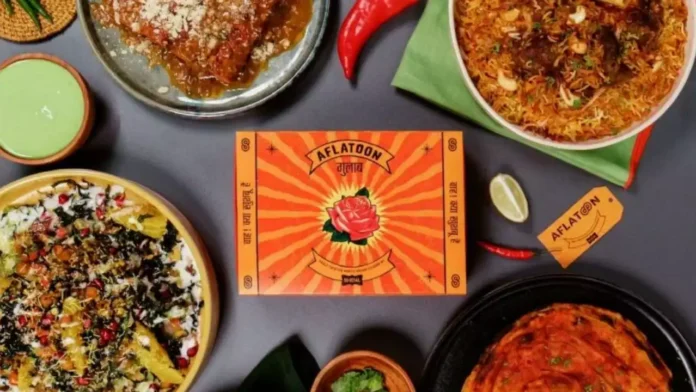
Impresario Entertainment & Hospitality Pvt. Ltd. proudly unveils its newest cloud kitchen venture, Aflatoon, just in time for the festive season. True to its whimsical name, Aflatoon guarantees a luxurious culinary journey within the confines of your home, presenting delectable North Indian cuisine with a creative twist.
Inspired by the love and essence of North India, the Aflatoon experience is a carefully curated blend where familiarity intertwines with surprise, and traditional classics are reimagined into creations that both astonish and delight the senses. Unlike ordinary dishes, the Aflatoon experience is truly extraordinary—an explosion of flavors and a quirky adventure that propels you on a thrilling journey through the marvels of culinary delights.
Aflatoon’s culinary offerings elevate the palate to a realm of luxury, all while encapsulating the joy of shared meals within the cozy confines of home. Distinctive delights such as the Kale and Palak Patta Chaat feature a medley of Kale and Palak Fritters, Quinoa, Orange, Pomegranate, and Dal Moth, accompanied by Mint Chutney, Saunth, and Yoghurt. The menu also boasts variations of Paneer Makhanwala and Butter Chicken—available in three enticing avatars: Creamy AF, Spicy, and Truffled. Aflatoon by SOCIAL guarantees a delightful experience, catering to even the most discerning taste buds.
The menu further features distinctive offerings such as Balsamic Beetroot & Papdi Chaat, Angoori Golgappe, Lemongrass Pesto Prawns, 6-chilli Kadai Paneer, and Aflatoon Wok Chicken—consisting of chicken tossed with rainbow peppers, served with Chilli-Mint Chutney, Laccha Onion, and Green Chilli. These are complemented by a selection of truly innovative North Indian delicacies, providing a twist to traditional flavors.
Divya Aggarwal, chief growth officer, Impresario Entertainment & Hospitality Pvt. Ltd., shares, “Creating Aflatoon was a journey of passion and innovation. We wanted to seize the soul of North Indian flavours while surprising diners with unpredictable twists. We’re thrilled to bring this experience with foodies across the nation and we are sure that people will love this.”
The goal is to seamlessly integrate Aflatoon into the essence of every group gathering, where enjoyment and food converge, reshaping the way foodie Indians perceive and savor North Indian cuisine.
“Through Aflatoon, we aim to capture the true essence of North Indian flavours sprinkled with a twist of surprise. Backed by over two decades of collective experience, Aflatoon is our effort towards creating a memorable meal, where every morsel is an ode to North Indian flavours coupled with luxurious experience, all within the comfort of our patrons’ homes,” said Shamsul Wahid, group executive chef at Impresario Entertainment & Hospitality Pvt. Ltd. and the culinary mastermind behind Aflatoon.
Aflatoon is currently accessible for home delivery exclusively via Zomato, catering exclusively to the Delhi-NCR region and progressively expanding its availability to other regions throughout India.
During the 13th day of the Parliament’s Winter Session, e-commerce took center stage as the government addressed a myriad of questions concerning regulation, competition, ONDC, and e-commerce exports.
Responding to a question, the Minister of State (MoS) for Commerce and Industry, Som Parkash, mentioned on Wednesday that the ONDC network is now live in 500 towns and cities across the country.
“The geographic coverage of ONDC is determined both by the capability of its Network participants and the independent business decisions of merchants onboarded by the Network participants,” he added.
Parkash’s comments were part of a written response to a question by Lok Sabha member Ravikumar D on whether ecommerce regulations extended to the state-backed ONDC.
“All existing laws and regulations of India, related to ecommerce apply to ONDC and the Network Participants on [the] ONDC network,” Parkash said.
The government additionally stated that ONDC was implementing ‘comprehensive’ measures to guarantee trust, fairness, and transparency on the network. This includes ensuring fairness in search and discovery, payment mechanisms, KYC requirements, reviews and ratings, and enforcement, among other aspects.
During the session, Parkash highlighted that the government, thus far, has not conducted any studies to address the competition-related issues identified in the 172nd report of the Rajya Sabha on the promotion and regulation of e-commerce in India.
The minister further mentioned that the government had submitted an ‘Action Taken’ report in response to the recommendations put forth by the Parliamentary Standing Committee on Commerce regarding the issue.
Coincidentally, at that time, the government had opted not to adopt any recommendations concerning the aspect of competition.
The standing committee proposed alterations to the existing regulatory framework covering e-commerce, the Competition Act of 2002, issues related to the abuse of dominant positions by major players, and guidelines for mergers and acquisitions. Additionally, the committee suggested that the Ministry of Corporate Affairs make ‘concerted efforts’ to expedite the finalization and enactment of the Competition Amendment Bill as soon as possible.
In the action-taken report, the government highlighted that the amendment bill would incorporate the majority of the recommendations made by the standing committee concerning competition and would also fill gaps in the existing regulatory framework.
Regarding whether the government has entered into partnerships with any startup or private entities for ecommerce exports, Minister of State for Commerce and Industry Anupriya Patel mentioned that initiatives are underway to foster ecommerce exports through collaborations with diverse stakeholders.
“… outreach events are being held in the districts under Districts as Export Hubs initiative with [a] focus on promoting ecommerce exports of the identified goods from the districts in collaboration with various stakeholders,” said Patel in a written response.
Patel stated that the Directorate General of Foreign Trade (DGFT) is working in conjunction with different ecommerce platforms to boost the export of goods through ecommerce from the country.
“The core objective of this collaboration is to leverage ecommerce platforms operating in other countries to support local exporters, manufacturers, and MSMEs in India in reaching potential international buyers,” the MoS added.
Swiggy, a leading player in the food technology industry, has implemented a 2% ‘collection fee’ on restaurants for every order. This fee is aimed at streamlining the payment process for customers using the food delivery platform.
Although the company refrained from providing an official statement on the issue, insiders have revealed that the platform has indeed started imposing the new charge. According to reports, the fee will be subtracted from the payouts allocated to the participating restaurants.
This development follows the company’s recent communication to specific partner restaurants regarding the forthcoming change.
As per a correspondence seen by The Economic Times, Swiggy said, “Commencing from December 20, 2023, we will be introducing a standardised 2% collection fee on all orders. This fee is designed to facilitate smooth customer payments on the Swiggy platform. It is important to note that this amount will be subtracted from your payouts.”
Interestingly, Swiggy is adopting a strategy similar to its competitor Zomato, which has already enforced a ‘payment gateway fee’ of around 1.8% on all orders. However, the noteworthy aspect is that Swiggy’s recent implementation of this fee comes more than four to five years after Zomato, led by Deepinder Goyal, introduced its own gateway fee.
Meanwhile, the decision appears to have stirred significant dissatisfaction among certain members of the National Restaurants Association of India (NRAI). Sagar Daryani, the vice president of the industry body and founder of the QSR chain Wow! Momo, reportedly described Swiggy’s new charges as an ‘unwelcome distraction’.
In a statement to ET, he conveyed that the ‘collection fee’ serves as a method to indirectly raise commission costs. However, the NRAI opted not to provide comments on queries related to the matter.
The imposition of the new charge is likely part of Swiggy’s strategy to create alternative revenue streams and bolster its top line in preparation for a public listing next year. Earlier this year, the foodtech major also increased its platform fee to INR 3 per order, irrespective of cart value, as a measure to enhance unit economics and elevate revenues.
According to reports, Swiggy maintains an average order value of approximately INR 400. Therefore, a 2% collection fee would result in an extra INR 8 in revenue per order for Swiggy. This has the potential to contribute to improved unit economics for the company, aiming to present a robust balance sheet to investors when filing for its IPO papers.
According to Prosus, Swiggy’s investor, the half-yearly financial report reveals a 28% year-on-year growth in gross merchandise value (GMV) for the startup’s food delivery business, reaching $1.43 billion in the first six months of FY24.
The foodtech company also stood out as one of the Dutch investor’s top performers, boasting an impressive 7% internal rate of return (IRR) in the first half of fiscal year 2024.
Domino’s Pizza (DP) Eurasia has rejected a revised takeover proposal from Jubilant Foodworks Netherlands (JFN) on the grounds that the offer does not reflect the true value of the business.
DP Eurasia holds the master franchise for the Domino’s Pizza brand in Georgia, Turkey, and Azerbaijan.
JFN stands as a fully owned subsidiary of Jubilant FoodWorks (JFW), a foodservice company headquartered in India.
JFN holds a 54.67% stake in the issued and outstanding share capital of DP Eurasia.
In its stock exchange filing, JFW stated, “Pursuant to the mandatory bid provisions contained in Article 30 of DP Eurasia’s articles of association, JFN through the Offer proposes to acquire, the remaining (up to 45.33%) of issued and outstanding ordinary share capital of DP Eurasia not already held by JFN.”
JFN’s original proposal, dated November 28, 2023, was set at 85p per DP Eurasia share. The revised offer now stands at 95p per share.
JFN intends to purchase the remaining 45.33% stake for a sum of up to €73.4 million ($80.52 million).
DP Eurasia stated in its stock exchange filing, “The non-conflicted members of the board of the Company have determined that it is significantly below what they consider to be the fair value of the DP Eurasia business and its prospects, particularly considering its continued strong performance.
“As a result, the Board, having taken advice from its financial advisors, Liberum, has concluded that it is not recommending the Revised Offer and continues to urge minority shareholders to take no action.”
The board aims to pursue ongoing discussions with Jubilant to attain a equitable offer price for DP Eurasia that aligns with their recommendation.
DP Eurasia operates 678 stores in Turkey, ten in Azerbaijan, and six in Georgia.
Additionally, it manages a coffee brand called COFFY, boasting 67 stores, of which 78% operate under franchise agreements.
We use cookies to ensure that we give you the best experience on our website. If you continue to use this site we will assume that you are happy with it.