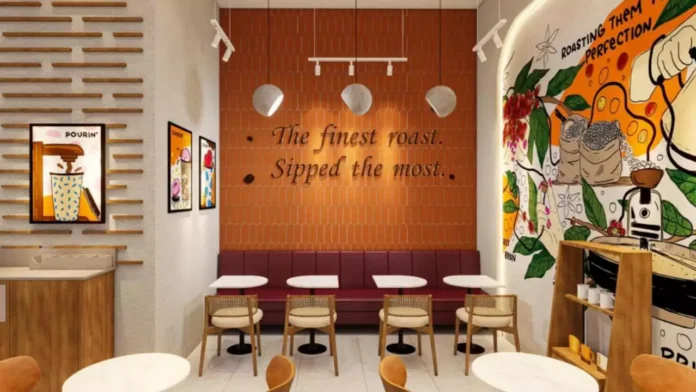
Dunkin’, the renowned international coffee and bakery chain celebrated for its 100% premium Arabica coffee and delightful array of bakery items such as donuts and ready-to-eat snacks, has announced the opening of its first outlet in Lucknow.
Dunkin’ has a presence in over 13,500 locations across 50+ countries, seamlessly blending aspiration with accessibility. The brand is acknowledged for its vibrant orange branding, distinctive taste, and a laid-back atmosphere in its stores.
Dunkin’s success derives from its globally inspired menu, appealing to the young at heart. Recent additions, such as the Dunkachino range and the Christmas Pudding Donut, have further enhanced its offerings.
Dunkin’s latest store endeavours to transcend the typical coffee destination.
Enhancing the customer journey, the brand enriches experiences by creating engaging store environments, while also prioritizing convenience through delivery and takeaway services.
As the brand expands its presence in India, the Lucknow outlet at Lulu Mall represents another notable milestone in Dunkin’s Indian venture. It adds to the success of presenting a delightful fusion of global and regional culinary delights.
The Indian Hotels Company announced the opening of a new Vivanta hotel in Tawang, Arunachal Pradesh on Tuesday. The company stated that the hotel, positioned at an elevation of 10,000 feet, provides ‘panoramic views’ of the Tawang Valley and the Himalayas.
Puneet Chhatwal, Managing Director and Chief Executive Officer of IHCL, expressed that the introduction of the hotel reaffirms IHCL’s steadfast commitment to North East India. This underlines its pioneering efforts in showcasing emerging destinations on the global tourism map, including Shillong, Gangtok, and now Tawang.
“It will also serve as a platform to unveil the state’s unexplored beauty and distinctive cultural heritage,” he said.
Situated within ten acres of picturesque landscapes, IHCL stated that Vivanta Arunachal Pradesh, Tawang, offers a selection of banquet spaces, including the largest ballroom in the state, along with open-air lawns. Other recreational amenities encompass a temperature-controlled indoor swimming pool, a fitness centre, a spa, a play zone for children, and an amphitheatre for cultural events.
Sandeep Makroo, general manager, Vivanta Tawang, said, “Vivanta Arunachal Pradesh, Tawang, with its blend of modern luxury and local charm, beckons travellers to experience a ‘harmonious fusion’ of comfort and natural splendor.”
Tawang is famed for its enchanting landscapes, tumbling waterfalls, and the excitement of adventure sports.
With the inclusion of this hotel, IHCL will boast twelve hotels in the North East of India, with an additional five currently under development.
Beverage giant Coca-Cola announced on Tuesday that it has extended its partnership with the International Cricket Council (ICC) for an eight-year period, covering ICC World events across all three formats, until the end of 2031.
This eight-year collaboration as a Global Partner of the ICC solidified the alliance as one of the longest-ever associations established by the ICC with a single brand. The duration spans a total of 13 years, from 2019 to 2031, according to the announcement.
“The partnership will see the Coca-Cola Company’s brands becoming exclusive non-alcoholic beverage partners. The agreement includes all men’s and women’s events at the pinnacle of the sport including the ICC Cricket World Cups, ICC T20 World Cups, and ICC Champions Trophies through to the end of 2031. During the course of the partnership, there will be both a major international men’s and women’s event every year as well as a World Test Championship Final every two years,” the company said in a statement.
ICC Chief Commercial Officer Anurag Dahiya said, “This long-term collaboration ushers in a new commercial era, filled with exciting prospects for the sport. With the Men’s T20 World Cup in the USA and West Indies, and the Women’s edition in Bangladesh just around the corner, we’re poised for unprecedented global growth and engagement. This partnership not only celebrates our sport’s expansion but also promises innovative opportunities to enhance our fans’ experience worldwide.”
During the recent ICC Men’s Cricket World Cup India 2023, Thums Up and Limca Sportz were the exclusive beverage and sports drink partners, initiating a variety of online and offline fan engagement activations. Adding to the mix, Sprite leveraged the tournament with its ‘Thand rakh’ campaign.
Bradford Ross, VP Global Sports and Entertainment Marketing & Partnerships at The Coca-Cola Company, stated, “In alignment with our rich history of global sports partnerships, the collaboration with ICC reinforces our commitment to refreshing sports fans and elevating their entertainment experiences. Sports holds immense power to unite people, and this partnership provides us with a unique opportunity to blend our brand affinity with the fervor for the world’s cricketing game. We endeavor to continue to delight consumers with our diverse portfolio and create unique experiences for fans.”
The beverage giant boasts an eight-decade-long affiliation with the Olympics. Moreover, it has been linked with FIFA and the T20 World Cup for more than four decades.
“The recent association of Thums Up with the Olympics and Paralympics in India is a testimony to the Company’s belief in sports and its enduring journey towards making a refreshing difference,” the statement added.
OYO has collaborated with Khelo India Para Games, Divyang Kala Mela, Wheeling Happiness Foundation, and other organizations to offer specialized and accessible accommodation for differently-abled players throughout India, as stated in the company’s press release.
The multinational hospitality chain, in its official statement, has announced its commitment to supporting talent by providing wheelchair-friendly infrastructure, including ramps, wider doorways, and trained staff capable of understanding the requirements of differently-abled guests in its partner hotels.
“At OYO, we believe in creating a world where everyone feels welcome. Through its extensive network of hotels, OYO aims to create a more inclusive environment for all guests, ensuring that individuals with disabilities have access to comfortable and convenient accommodations across India,” said Varun Jain, Chief Operating Officer, OYO.
As part of its initiative to promote inclusivity for the differently-abled, the company has pledged to provide accommodation for approximately 150 artisans and entrepreneurs with disabilities participating in the ongoing Divya Kala Mela across India.
OYO has pinpointed over 200 hotels for these participants in various cities across India, including Bangalore, Chennai, and Patna.
The Swinton House opens in Jaipur, drawing inspiration from the grandeur of Victorian-style estates. This restaurant and bar combines European grace with Rajasthan’s vibrant cultural heritage.
Set amidst Jaipur’s picturesque surroundings, The Swinton House provides a culinary and cocktail adventure.
Its contemporary interiors feature an open courtyard and a bar adorned with Roman arches and glass panels.
“The Swinton House sets itself apart with its commitment to curating bespoke experiences that elevate the senses. Guests can expect a regal twist on world-renowned delicacies, promising a gastronomic adventure like none other. The meticulously restored colonial property serves as a canvas for the seamless fusion of heritage and modernity, offering a captivating backdrop for every visitor,” said Sagar Nagpal & Mohit Gurnani, Co-founders of The Swinton House.
At The Swinton House, The Yard functions as the main restaurant, offering global modern cuisine that harmonizes with the flavours of Rajasthan.
Chef Prince Beniwal’s commitment to imbuing global dishes with regional Indian flavours has led to a creative menu that pays homage to its roots.
The menu comprises options like Moroccan Chicken Kebabs, Cottage Cheese Mousse Nest with Pickled Kataifi, London Fog Rum Tiramisu, and other delectable creations.
The bar at The Swinton House seamlessly merges innovation and heritage, providing guests with a diverse exploration of flavours and liquors.
Ankur, the resident mixologist from Himachal Pradesh, has crafted the menu. His expertise shines through in the signature cocktails, each a unique tale encapsulated in a glass.
Ankur delights in blending local ingredients with international spirits, infusing his drinks with a touch of Jaipur’s allure. Among the trendsetting mixes are Disco Jamun, Vetiver Coffee Highball, and other enticing options.
The first-ever UN roadmap for reducing climate-heating emissions from the world’s farming sector, unveiled at the COP28 UN climate summit this month, has stirred debate around how to fairly share the burden of shifting to greener practices.
Certain agricultural experts advocate for the complete phase-out of fertilisers and other agro-chemicals, whose production is heavily dependent on fossil fuels. Meanwhile, others argue that poorer countries will still require these inputs to enhance low crop yields.
Food systems, encompassing cultivation practices, inputs such as fertilisers, storage, transportation, and waste, contribute to almost one-third of global greenhouse gas emissions.
The latest proposal, put forth by the Food and Agriculture Organization (FAO) of the United Nations, aims to eradicate hunger and malnutrition while aligning with the most ambitious goal of the Paris Agreement, which seeks to cap global warming at 1.5 degrees Celsius.
It suggests actions to enhance farm productivity while reducing emissions of methane, carbon dioxide, and other greenhouse gases across ten domains. These include adopting clean energy, restoring soil and pastures, and minimizing chemical inputs, food loss, and waste.
Furthermore, it suggests that affluent nations should reduce their substantial consumption of animal-source foods. This adjustment aims to facilitate developing nations in increasing their consumption without causing harm to the climate and the environment.
The roadmap is the first of a series that the FAO will unveil at three annual climate summits, starting with this year’s global overview and detailing next how to make food systems work better for people and the planet at the regional and country levels.
Emile Frison, from the International Panel of Experts on Sustainable Food Systems, expressed approval for the first plan and its “emphasis on a just transition.” However, he noted in a statement that it falls short as it primarily concentrates on incremental enhancements to the current “flawed” industrial food system.
“These efficiency-first proposals are unlikely to be enough to get us off the high pollution, high fossil fuel, high hunger track we’re on,” said the conservation and biodiversity expert.
Patty Fong, the program director at the Global Alliance for the Future of Food, a coalition of nearly 30 philanthropic foundations, asserted that achieving genuine sustainability in food systems demands a dedication to phasing out fossil fuels across the entire value chain, from farm to fork.
However, the roadmap advocates for reduced fertilizer use through increased efficiency rather than a complete transition to sustainable farming practices such as agro-ecology, she pointed out.
Others argued that chemical fertilisers are indispensable for enhancing food security in developing nations with meager crop yields and a substantial proportion of smallholder farmers.
Aditi Mukherji, from the CGIAR global research partnership on food systems, emphasized that solutions should be tailored to specific contexts. She highlighted the necessity for sustainable intensification of agriculture in impoverished regions with low productivity.
“But certainly, this is not true of high-income countries,” she told Context.
In many low-income countries, achieving greater agricultural efficiency and bolstering climate resilience could lead to reduced emissions by mitigating crop losses and minimizing post-harvest waste, she observed.
These discussions are unfolding on the ground in nations such as India, where agriculture stands as the largest employer, sustaining the livelihoods of 250 million farmers and labourers.
Their tasks are becoming more challenging due to the difficulties posed by climate change, making a livelihood from farming arduous and leading to increased debt, migration, and even suicides. Concerns about declining yields have prompted a general increase in the use of chemical fertilisers.
However, an increasing number of smallholder farmers are experimenting with green approaches that endorse organic, natural, or sustainable methods. The extent and success of these initiatives will depend on how effectively they can safeguard incomes, as highlighted by agricultural experts in the given context.
For instance, despite having heard of many farmers switching to natural cultivation methods, Shashikant Shukla continues to grow wheat and pulses using chemical inputs on his half an acre of land in northern India’s Uttar Pradesh state.
His yields and income have been constrained by unpredictable monsoon rains, untimely downpours, and premature heatwaves, exacerbated by climate change. Additionally, rising costs for fertilisers and other overheads have further compounded the challenges he faces.
“I am constantly living in debt; I do not have the courage to experiment on my farm,” said Shukla, who makes up for his climate-related harvest losses by working as a driver-for-hire.
Even if he does try growing organic wheat, he would end up selling it at the same price as conventional wheat – and if it leads to a dip in yields, “it will break my back,” he added.
Transitioning to natural farming frequently results in a decline in yields during the initial years before harvests gradually improve—an outcome that is challenging for many impoverished Indian farmers to endure.
They depend on government purchases of their staple crops, such as rice and wheat, at assured prices and seldom have funds set aside to alter their practices without external assistance.
Devinder Sharma, an independent expert on agricultural policy, emphasized to Context that India must transition towards ecological farming practices. However, he added that green initiatives will only bring about superficial changes unless farmers are provided with a guaranteed income.
Smallholder farmers interviewed by Context for a recent series on achieving a fair green transition in Indian agriculture highlighted various challenges. These ranged from the absence of access to high-quality seeds and markets offering premium prices to the limited availability of natural manure and the burden of high labor costs.
Sharma suggested that smallholder farmers would gain from a government-supported guaranteed price for naturally grown produce, along with subsidies to mitigate any losses and the establishment of more robust marketing channels.
A broad transition to low-carbon, climate-resilient food production, as delineated in the recent UN roadmap, will be effective only if it places farmers at the core and offers the necessary finance, infrastructure, and technology to help them adapt to increasingly extreme weather conditions and embrace greener practices, according to experts.
Another FAO report, supplementing the 1.5°C blueprint, cautioned that insufficient climate finance is being directed towards agriculture.
Between 2000 and 2021, agri-food systems received about US$183 billion, or just 4 per cent of overall climate finance flows, the report said. It noted that the annual allocation for farming fell 12 per cent to US$19 billion in 2021, while hundreds of billions are required.
Moreover, in that same year, only 0.3 per cent of international climate finance from both public and private sources reached smallholder farmers. This group, requiring significant support in the transition to sustainable agriculture, was highlighted in a separate analysis by the Amsterdam-based think-tank Climate Focus.
According to Fong from the Global Alliance for the Future of Food, marginalized groups, including smallholder farmers, should have the opportunity to actively contribute to devising strategies for transforming global food systems.
“Grassroots producers — particularly smallholder farmers, women and Indigenous communities — must be included in all discussions,” she said in a statement on the FAO roadmap.
From trainers and joggers to dumbbells and yoga mats, the sales of almost half a dozen prominent sports brands have surged in the last two years, both during the pandemic and subsequently. They have experienced a twofold increase in business in India, propelled by a growing awareness of fitness and a soaring demand for athleisure wear.
Puma, Decathlon, Adidas, Skechers, and Asics have all experienced year-on-year growth ranging from 35% to 60% since FY21, as indicated by regulatory filings from the Registrar of Companies. In FY23, their combined revenues amounted to INR 11,617 crore, a significant increase from the INR 5,022 crore they collectively generated two years prior. The increased demand for fitness wear and sports equipment, not limited to cricket, underscores a heightened emphasis on health in response to the onset of Covid-19.
“The increased focus on health and fitness has resulted in individuals across ages looking for technical and performance footwear. Running is one of the fastest growing categories for us, along with a notable jump in search for walking shoes by adults aged over 45 years,” said Shreya Sachdev, head of marketing, Puma India. “Overall, the sports and athleisure category is growing faster than the average apparel and footwear market in the country.”
Organizations have leveraged the appeal of relaxed styles following the pandemic, a trend that has diminished, although people remain more health-conscious than ever.
“There is a clear trend of ‘casualisation’ and ‘sneakerisation’ and it is not just restricted during sports or leisure activities. We see people opting for casual attire even at offices, against the earlier assumption that post Covid, formal wear will be back in fashion,” said Abhishek Ganguly, former managing director at Puma India who recently started his own firm Agilitas Sports. “India is no longer just a cricketing nation as we see consumers increasingly getting involved in other activities such as running, football and gyms.”
Boasting a population of 1.4 billion, India stands as one of the swiftest expanding and most extensive global markets for footwear enterprises.
Many international brands have established a presence in India for over two decades, expanding through collaborations with cricket and other sports. In contrast, recent entrants have positioned themselves as brands offering comfortable lifestyle and regular athletic wear.
“India is a crucial market for us and, with the changing consumer landscape, we see a huge potential with new and emerging demand for sports across different regions in India,” Asics Corp. CEO Yasuhito Hirota said in a statement last week, adding it will open 50 new stores in the country by 2025.
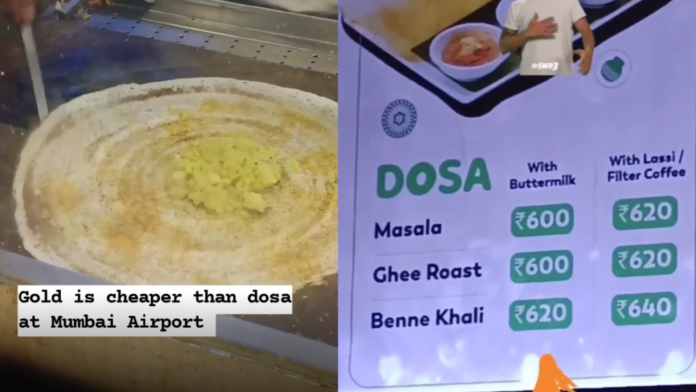
A video featuring the cost of a masala dosa at Mumbai airport has gone viral online. While food items are generally sold at a premium at airports, shelling out INR 600 for the humble masala dosa seems unpalatable even to frequent travellers – as evidenced by the comments section of the Instagram video.
The brief video depicts the camera zooming in on the digital menu display of the restaurant. Opting for a basic masala dosa with buttermilk comes at a cost of INR 600, while indulging in a benne khali dosa will require the customer to part with INR 620. The expenses escalate further if one decides to accompany the dosa with filter coffee or lassi.
The video also reveals the preparation of dosa with what many have termed a “dry” masala stuffing. It has garnered over 9 million views and hundreds of comments on Instagram.
Reactions to the cost of a single dosa were generally shocked. Some believed that the dosa’s appearance and taste did not justify its exorbitant price.
“Imagine paying 600rs for masala dosa which is still not better than 40-50rs one,” wrote one person.
“That’s more expensive than dosa at Singapore,” said another.
Some even drew comparisons to the cost of precious metals.
“Gold is cheaper than dosa at Mumbai airport,” read the on-screen text on the video, which some called a stretch.
However, many agreed that the cost of the Mumbai airport dosa was at par with the rate of silver.
“Actually in real silver’s rate is same as this dosa,” one commenter pointed out.
A regular in numerous households and South Indian eateries, dosa can be aptly characterised as a savoury crepe filled with potatoes, accompanied by sambar and chutneys. Nevertheless, this isn’t the initial instance when this South Indian delicacy has garnered attention on social media due to its elevated cost.
Some days ago, a Zomato worker had expressed astonishment upon shelling out INR 1000 for two dosas at a renowned restaurant in Gurugram.
ITC Ltd, a prominent player in the Fast-Moving Consumer Goods (FMCG) sector, anticipates achieving a double-digit market share in the smoothies and milkshake beverage segments during the fiscal year 2024.
The company provides a range of smoothies under the brand Sunfeast, incorporating milk and real fruits in flavors such as mango, strawberry, litchi, and peach-pineapple. Additionally, they offer a delectable dark fantasy chocolate shake.
“We were only selling these smoothies on airlines and airports and earned a good market share in the last two years. Therefore, we expanded that beyond the airports and airlines to modern trade. In modern trade, last year, we were just behind Amul at number 2. In the dairy beverage space this year, we are now going to expand it to general trade, and we anticipate that we should be able to reach nearly double-digit market share in general trade, in the geographies we will operate in,” said Sanjay Singal, Chief Operating Officer for the Dairy & Beverages cluster of ITC’s Foods.
Under the Aashirvaad Milk brand, the company employs digital technology to assess the quality of milk during the procurement process. The live tracking of milk ensures a consistent 4-degree temperature is maintained throughout the supply chain, from the village to the factory.
“We wanted to go the value way. ITC has invested in a state-of-the-art manufacturing facility in Punjab, where we have put up an aseptic PET line which allows you to offer a dairy beverage with six to nine-months shelf life without adding any preservatives and also presents us a unique opportunity that no one in the country today has, which is to add fruit pieces, badam pieces etc into the product,” he said.
The Kolkata-based FMCG manufacturer is strategically planning to diversify into sub-segments of fruit-based beverages, with a specific focus on expanding its presence in the domain of natural fruit drinks.
“We are seeing that consumers across food and beverages are going for more evolved needs. We are betting big on coconut water because coconut water is a completely natural product. It’s a natural electrolyte. It doesn’t have any added sugar and it’s a very light product which can be consumed any time of the day. We have launched it under the brand B Natural, a very tasty coconut water which gives you a very tasty authentic taste. Secondly, it’s very difficult to pick up a raw coconut and take it home, so our coconut water is available in convenient package format in 200 ml and 750 ml. We launched this only a year back and we are happy with the progress,” added Sanjay Singal.
We use cookies to ensure that we give you the best experience on our website. If you continue to use this site we will assume that you are happy with it.