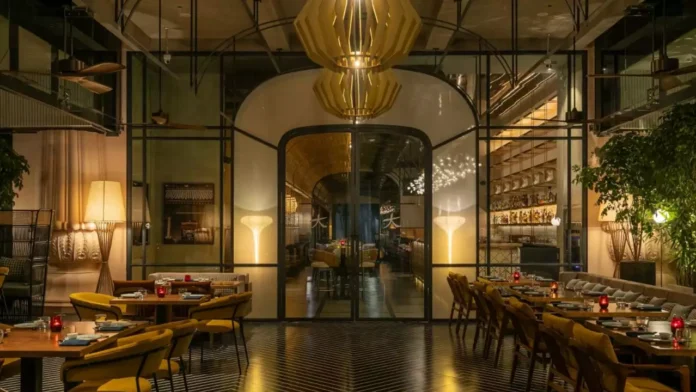
KOKO has made its mark in Bengaluru’s culinary landscape with its innovative Cantonese and Japanese cuisine, accompanied by exceptional beverages.
It is located in close proximity to Leela Palace Bengaluru and Prestige Leela Residences on Old Airport Road.
“KOKO in Cantonese means ‘grand’ or ‘grandoise’ and our vision is to bring a luxurious Asian dining experienceto Bengaluru by transcending the confines of traditional five-star dinner affair.Our pride lies in curating an unparalleled culinary journey, where exceptional food, artisanal cocktails, and an enchanting ambience converge seamlessly within the dynamic landscape of Bengaluru’s culinary scene,” said Ryan & Keenan Tham, the Founders of Pebble Street Hospitality.
KOKO offers a varied range of Cantonese and Japanese delicacies meticulously curated by Chef Eric Sifu.
From well-known delicacies such as the KOKO Signature Non-Veg Roll, Black Rice Edamame Roll, Hamachi Maki, Lobster & Caviar Dumpling, and Hamachi Yellow Tail Carpaccio to the indulgent Lobster Truffle Wonton, the delightful KOKO Black Cod, the tempting Crispy Pork Belly, and the unique Edamame Black Rice with Black Garlic.
Enhancing the gastronomic experience is KOKO’s enchanting bar collection, featuring distinctive drinks such as KOKO Negroni, Tom Yum Cup, Funky Buddha, Miso Caliente, and Muztagh Pass.
The ambiance and arrangement of KOKO provide a bespoke dining experience immersed in opulent comfort.
American intimate apparel brand Victoria’s Secret has launched its second store in Pune, as announced by the international retailer Apparel Group on Tuesday. Situated at Kopa Mall, this new outlet marks the sixth store for the brand in India.
Victoria’s Secret has collaborated with Apparel Group India for its operations in the country.
“We are excited to announce the opening of Victoria’s Secret’s most recent store at The KOPA, Pune,” stated the LinkedIn account of Apparel Group while posting images of the new store.
The brand launched its first store in Pune at Phoenix Mall of the Millennium in November 2023.
The global chain made its first appearance in India in 2021 through its e-commerce platform, offering fragrances, beauty, and personal care products.
In 2022, it established its physical presence in the country by opening its flagship store at Palladium Mall in Mumbai and, subsequently, another store at Ambience Mall in Vasant Kunj, New Delhi.
Founded in 1977 by brothers Roy and Gaye Raymond, the American lingerie, clothing, and beauty retailer Victoria’s Secret now has a global presence, boasting approximately 1,360 retail stores across 70 countries, according to its official website.
Based in Dubai, UAE, Apparel Group is a global retail giant in the fashion and lifestyle sector. With over 2,025 stores spanning more than 14 countries, the company represents and markets over 80 brands. Among them are well-known global names like Beverly Hills Polo Club, Bath & Body Works, Tim Hortons, Tommy Hilfiger, Nine West, Call it Spring, Charles & Keith, Inglot, La Senza, and R&B Fashion.
The German clothing brand Adidas has opened its latest store at the Urban Square Mall in Udaipur, as mentioned in a statement by the Bhumika Group, the entity overseeing the mall, on Tuesday.
The recently opened store covers an area of 1,278 sq. ft. and features a stadium-style design. It presents a carefully selected assortment of high-quality sports shoes, sportswear, activewear, and accessories.
“We are thrilled to bring this iconic brand to our mall, enhancing the overall shopping experience for our visitors. The carefully curated selection of premium sportswear and footwear aligns seamlessly with our commitment to offering the best in class to our customers,” said Uddhav Poddar, Managing Director, Bhumika Group.
Founded in 1949, Adidas took its first steps into the Indian market in 1989 by forming a licensing agreement with the footwear brand Bata. Following that, the brand made a return to India in 1996 through a joint venture with Magnum International Trading Company Ltd.
In 2021, Adidas opened its first flagship store in India situated at Connaught Place, Delhi. Remarkably, in November 2022, the sports brand achieved another milestone by revealing its largest flagship store in India to date, covering 6,800 sq. ft., located in Select CityWalk Mall, New Delhi.
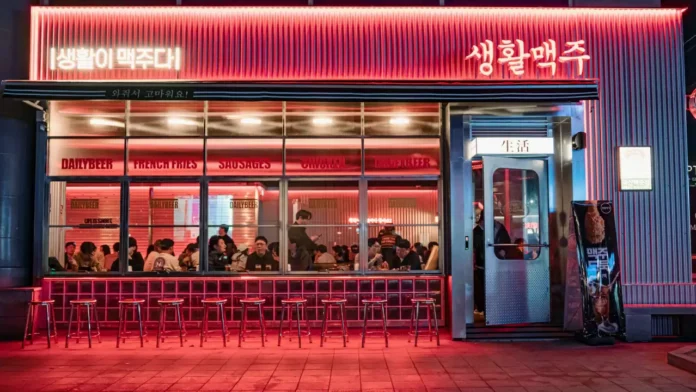
The Daily Beer Co. Ltd, a promising SME certified as a “Hi-Seoul Enterprise” by the Seoul Metropolitan Government, will serve as the primary beverage partner at the “2023 Seoul Con,” the world’s first global influencer expo organized by the Seoul Business Agency (SBA).
Set to span three days from December 30 to January 1 at the Dongdaemun Design Plaza, the “2023 Seoul Con” stands as the world’s leading influencer expo centred on content, beauty, and fashion, spotlighting Seoul’s allure on a global scale and generating economic value. The participating influencers boast a collective subscriber count of 3 billion, with an anticipated viewership of at least 500 million for the special New Year celebration in Seoul.
Daily Beer, representing the foremost beer platform in South Korea, is actively engaged as the primary beverage partner in the “2023 Seoul Con.” A notable feature of the event is the exclusive craft beer named “Oh! Seoul! IPA,” meticulously brewed specifically for this occasion.
The “Oh! Seoul! IPA” is a crafted beer produced using wild yeast collected last summer from the renowned pine trees of Mt. Namsan in Seoul, courtesy of the enzyme-specialized research firm Biocraft. This IPA is distinguished by a rejuvenating pine needle fragrance and delicate floral undertones, featuring an alcohol content of 5.5%. Despite its robust potency, the invigorating aroma and seamless finish are poised to enhance the ambiance of the 2023 Seoul Con.
The “Oh! Seoul IPA” is uniquely crafted and is available at the Daily Beer pop-up booth during the 2023 Seoul Con. Additionally, there is an opportunity for attendees to partake in a complimentary four-cut photo session with friends upon purchasing beer at the Daily Beer pop-up booth.
A representative from Daily Beer expressed joy in taking part in this event that showcases the allure of Seoul to the global audience. The spokesperson also conveyed that their brand is committed to spotlighting top-notch craft beer crafted with yeast harvested directly from Mt. Namsan, aiming to spearhead Korea’s beer culture.
Daily Beer Co. Ltd, the leading Craft Beer and Chicken Chain in South Korea, manages an extensive network of over 250 stores across the nation, comprising 45 directly operated establishments. The company collaborates with over 50 local breweries to provide a distinctive and high-caliber range of craft beers.
On December 20, Daily Beer was honored with the “Minister of Agriculture, Food and Rural Affairs Award” in recognition of its contributions to the advancement of the franchise industry and the domestic craft beer sector.
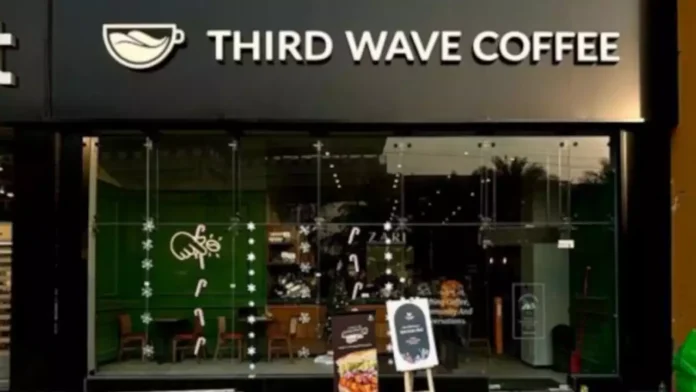
Third Wave Coffee, the coffee-first quick-service restaurant (QSR) brand, recently inaugurated its 113th outlet at Spectrum Metro Mall in Sector 75, Noida, according to a Tuesday announcement by a company official on social media.
This marks the 28th establishment in the Northern region for the brand, with numerous additional openings anticipated in the future, as stated in a LinkedIn post by Naman Negi, Business Development Lead at Third Wave Coffee.
“Super happy to share today we had our 113th outlet launch. With this launch, we are now a 28-outlet-strong brand in North India, with many more in the pipeline. Third Wave Coffee is now brewing at Spectrum Metro Mall sector 75 Noida,” said Negi.
Established in 2017 by Sushant Goel, Ayush Bathwal, and Anirudh Sharma, Third Wave Coffee is operated by Heisetasse Beverages Private Ltd., an Indian company with cafes spanning various cities in India, including Hyderabad, Coonoor, Bengaluru, Delhi, Mumbai, Chandigarh, and Pune.
As per information provided on the company’s website, its fundamental philosophy revolves around refining each stage in the life of the coffee bean, beginning from seed to cup. The journey commences with meticulous bean selection, followed by precise roasting and grinding, ensuring attention to detail throughout every step of the process.
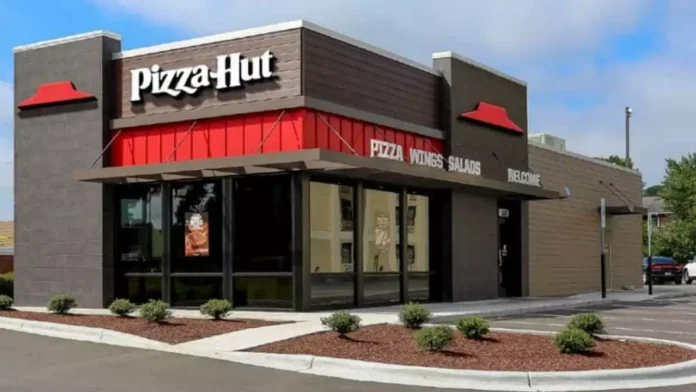
Several Pizza Hut franchises in California are gearing up to implement layoffs for delivery drivers, foreseeing an impending increase in the minimum wage for fast food workers next year.
Multiple operators of Pizza Hut submitted notifications in adherence to the Worker Adjustment and Retraining Notification Act, indicating they were discontinuing their delivery services.
“PacPizza, LLC, operating as Pizza Hut, has made a business decision to eliminate first-party delivery services and, as a result, the elimination of all delivery driver positions,” a federal WARN Act notice filed by the fast-food operator with the state’s Employment Development Department said, Business Insider reported.
Another operator, Southern California Pizza Co., has also announced layoffs affecting approximately 841 drivers statewide. This decision impacts Pizza Hut establishments in Los Angeles, Orange, San Bernardino, Riverside, and Ventura counties.
Many of the franchises will depend on third-party delivery apps like Uber Eats, GrubHub, and DoorDash.
The announcements of layoffs arrived several months ahead of the commencement of most fast food workers in California earning a minimum wage of $20 per hour, set to take effect in April. The proposed increase aims to counterbalance the rising cost of living for Californians.
A Pizza Hut delivery driver revealed that he was offered a severance of £400 if he remained on board until his layoff date on February 5.
“The money they are giving us as severance pay is a slap on the face,” he told Insider. “It comes to $3 a month for nine-plus years of service.”
Rising food costs in recent years have led farmers across the globe to increase the cultivation of cereals and oilseeds. However, consumers are expected to encounter limited supplies until 2024 due to adverse El Nino weather conditions, export restrictions, and elevated biofuel mandates.
Global wheat, corn, and soybean prices, following several years of strong gains, are anticipated to incur losses in 2023. This projection is influenced by the easing of bottlenecks in the Black Sea region and concerns about a potential global recession. Despite this, analysts and traders warn that prices remain vulnerable to supply shocks and food inflation in the New Year.
“The supply picture for grains certainly improved in 2023 with bigger crops in some of the key places which matter. But we are not really out of the woods yet,” said Ole Houe, director of advisory services at agriculture brokerage IKON Commodities in Sydney.
“We have El Nino weather forecast until at least April-May, Brazil is almost certainly going to produce less corn, and China is surprising the market by buying larger volumes of wheat and corn form the international market.”
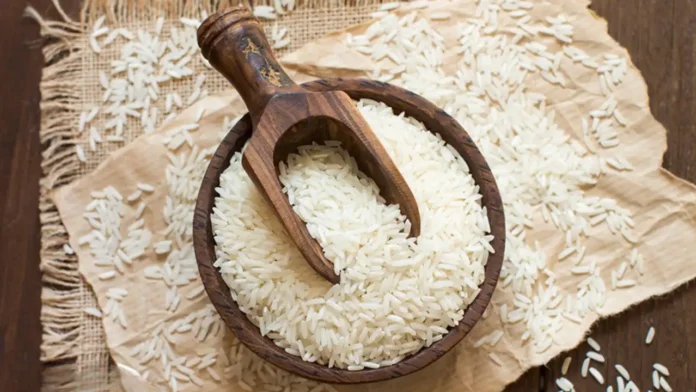
The El Nino weather phenomenon, responsible for inducing dry conditions in significant portions of Asia this year, is predicted to continue in the first half of 2024. This continuity poses a threat to the availability of rice, wheat, palm oil, and other agricultural products in some of the world’s top agricultural exporters and importers.
Traders and officials anticipate a decline in Asian rice production in the first half of 2024 due to dry planting conditions and diminishing reservoirs, which are expected to reduce yields.
Global rice supplies have already experienced a tightening this year, as the El Nino weather phenomenon has impacted production. This has led India, the largest exporter of rice worldwide, to impose restrictions on shipments.
While other grain markets were facing declines in value, rice prices surged to their highest point in 15 years in 2023. Quotations in certain Asian export hubs recorded gains of 40%-45%.
India’s next wheat crop is also being threatened by a lack of moisture, which could force the world’s second-largest wheat consumer to seek imports for the first time in six years as domestic inventories at state warehouses have dropped to their lowest in seven years.
By April, Australian farmers, the world’s second-largest wheat exporter, may find themselves planting their crop in arid soils. Months of intense heat have diminished yields for this year’s crop, concluding a three-year streak of record harvests.
This is expected to lead buyers, such as China and Indonesia, to look for greater quantities of wheat from alternative exporters in North America, Europe, and the Black Sea region.
“The (wheat) supply situation in the current 2023/24 crop year is likely to deteriorate compared to last season,” Commerzbank wrote in a note.
“This is because exports from important producer countries are likely to be significantly lower.”
On the bright side for grain supplies, there is an expectation of improved corn, wheat, and soybean production in South America in 2024, although uncertainties arise due to erratic weather conditions in Brazil.
As per Argentina’s Rosario Grains Exchange (BCR), 95% of early planted corn and 75% of soybeans are in “excellent to very good” conditions, attributed to rains since the end of October across the country’s Pampas region.
Brazil is poised for near-record farm output in 2024; however, estimates for the country’s soybean and corn production have been revised downward in recent weeks due to dry weather.
Global palm oil production is expected to decrease next year because of dry El Nino weather conditions. This development is likely to bolster cooking oil prices, which experienced a drop of more than 10% in 2023. The decline in output coincides with the anticipation of increased demand for palm oil-based biodiesel and cooking oil.
“We see more upside price risk than down,” said CoBank, a leading lender to the U.S. agriculture sector.
“Global grain and oilseed stock inventories are tight by historic measures, the northern hemisphere will likely have a strong El Nino weather pattern during the growing season for the first time since 2015, the dollar should continue its recent decline, and global demand should return to its long-term growth trend.”
Prices of edible oil, a category that witnessed the most significant inflation in the consumer basket following the Covid pandemic, have decreased by 13-30% in the past year. However, prices of everyday groceries and household items, such as rice, soaps, and detergents, remain slightly higher compared to 2022, as per the latest price tracker report by Bizom. The report is based on data analysis derived from orders at nearly 7.5 million kirana stores.
During the past two years, the majority of consumer goods companies increased prices by over a quarter to counter escalating costs in areas such as raw materials, supply chain, and energy. The inflation in costs originated with the pandemic but was further intensified by Russia’s invasion of Ukraine. However, this inflationary trend has now subsided.
“The industry has already rolled back about two-thirds of the price hike taken last year, which was in the vicinity of 20-25%. The main reason for rollback is to negate the pressure on volume growth even as input cost inflation still persists, although to a lower extent,” said Mayank Shah, vice-president at Parle Products.
As per the Boston Consulting Group, the prices of household care products, foods, and beverages have more than doubled in the last decade, with a steeper increase observed post-Covid. In the past year, while the prices of rice, milk, soaps, and detergents saw a rise between 1.5% and 6%, categories such as shampoo, hair colour, and flour (atta) experienced a decrease of 1-3%, according to Bizom.
“Among essential products, we see prices in control for most across food and non-food categories except rice. The essential non-food products also are seeing a low single-digit rise in prices as input costs have dropped for these products, leading to a greater focus of brands on gaining market share by controlling prices,” said Akshay D’Souza, chief of growth and insights at Mobisy Technologies, which owns Bizom.
Over the past year, there has been a distinct decline in rural volume, attributed to inflation and unpredictable monsoons. The year-on-year FMCG volume growth for the September quarter stood at 7.2%. According to Kantar, during the June-September 2023 quarter, rural FMCG sales expansion recorded a growth of approximately 6% year-on-year, while urban sales volume witnessed an 8% increase.
City demand is spearheading the overall growth, propelled by the resilience of urban incomes. Companies anticipate a revival in rural volume, driven by a favourable monsoon. Typically, this leads to increased sales with a quarter’s lag.
Companies have indicated that they are reducing price tags, but the impact on sales will only become apparent in the next quarter, once the existing trade pipeline of higher-priced products is completely replenished.
“Large organised players have been squeezed a bit from both ends—regional and unbranded players in rural, and D2C (direct-to-consumer) and new-age players at the premium end. We feel that the market will start showing good volume growth by the next two quarters, fuelled by rural recovery and pricing action by the large players, which has already taken place. The economy is stable and inflation is getting under control,” stated Saugata Gupta, Managing Director at Marico, in a recent statement earlier this month.
Unilever also mentioned that India is currently experiencing deflation, especially in categories exposed to chemical-based raw materials. This has resulted in a disparity between value and volume, putting pressure on pricing growth.
“In the short-term, we are seeing some pressure on that. That will sustain in quarter four, probably a bit of Q1. But I feel that we are going to grow out of that pretty quickly,” Unilever’s chief executive officer Hein Schumacher said at a Barclays Fireside conference.
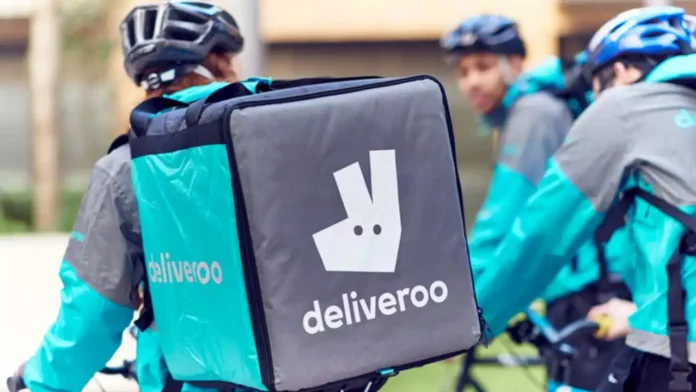
The verdict overturns the prior court judgment that favoured the UK-based food delivery company’s classification of the couriers as self-employed.
The labour court’s verdict pertains to the case of 28 bicycle couriers and will potentially grant them additional benefits, reported Reuters.
In 2018, the bicycle couriers collaborated with the Brussels Labour Audit Office and the Belgian National Employment Office to initiate legal action against Deliveroo.
While the current ruling applies specifically to these couriers, it is anticipated to impact the status of other Belgian couriers employed by Deliveroo.
The Brussels labour court ruling said, “The terms of the employment relationship established between Deliveroo and the couriers are incompatible with the qualification of an independent employment relationship and lead to the conclusion that this relationship must be considered as an employee relationship and therefore should be reclassified.”
Following the court’s decision, the company has conveyed its intention to appeal to the Belgian Court of Cassation.
Should the judgment stand, the impacted couriers are anticipated to secure access to employee benefits such as sick leave, a stable salary, and paid vacation.
It conveyed its disappointment through an email, stating, “Because it does not take into account how our model works.”
“We provide flexible work, and this is highly appreciated by the riders that work with our platform in Belgium.”
In September this year, Deliveroo, Uber Eats, and Just Eat entered into a charter with the Transport for London authority.
The charter is anticipated to improve safety for motorcycle couriers and other road users in London.
Bill Granger, the cherished chef renowned for the acclaimed Bills cafes, passed away on Christmas Day at the age of 54.
The chef passed away in a London hospital, surrounded by family, after a brief struggle with cancer.
The family conveyed the heartbreaking news through Bill Granger’s Instagram account. “It is with great sadness that the family of Bill Granger announce he has passed away on 25th December at the age of 54. A dedicated husband and father, Bill died peacefully in hospital with his wife Natalie Elliott and three daughters, Edie, Inès and Bunny, at his bedside in their adopted home of London.”
Chefs globally paid homage to the Australian icon. Renowned British celebrity chef and restaurateur Jamie Oliver extended his sincere condolences.
“This is devastating news, I’m so sad to hear this, what a guy he was …. a wonderful human, kind calm soul….I admired everything he represented in food I remember the first time I met him many moons ago he couldn’t have been nicer and his food so good …. Sending so much love to all his family.” Food writer and TV star Nigella Lawson also paid tribute, “I’m heartbroken to hear this. So cruel,” she commented.
The news hit deeply Down Under, affecting chefs who had worked with him or been inspired by him, sharing their shock and sadness. Australian chef Neil Perry paid tribute to the “passionate cook and writer” but also the “brilliant person, husband, and father” that he was.
“I still remember all those years ago visiting Bills and seeing an energetic cook scramble divine eggs in that little kitchen in Darlinghurst, the beginning of something very special.” Sean Moran from Sean’s in Bondi commented. “Way too soon. What a class act you were Bill. Thank you for everything you have done to put Australian food on a global stage. You will be greatly missed.”
Born in Melbourne in 1969, Bill Granger initially pursued studies in art and architecture at university. However, at the age of just 24, he chose to leave his academic path and opened his first cafe, Bills, in Darlinghurst. The cafe achieved immediate success, propelling Bill to fame as Australia’s ‘King of Breakfast.’ His name has since become synonymous with his iconic dishes, including fluffy ricotta hotcakes with honeycomb butter, sweetcorn fritters with avocado salsa, and, of course, silky scrambled eggs.
His casual cooking style spurred the growth of casual and communal eating, both in Australia and around the world.
Bill and his wife, Natalie Elliot, are the driving force behind 15 cafes and restaurants globally, featuring four Bills cafes in Sydney and other venues situated in London, Tokyo, Osaka, Fukuoka, and Seoul. His 14 cookbooks achieved best-seller status, and numerous young Australians honed their culinary skills with a cherished copy of Bills Food or Simply Bill by their side.
In January 2023, he was honoured with the Medal of the Order of Australia for his contributions to the tourism and hospitality sector.
Bill Granger is survived by his wife, Natalie Elliott, and their three daughters, Edie, Inès, and Bunny.
We use cookies to ensure that we give you the best experience on our website. If you continue to use this site we will assume that you are happy with it.