On January 22, 2024, Assam will mark a ‘dry day’ to commemorate the consecration ceremony of the Ram Mandir in Ayodhya.
The Assam government announced this as a gesture of reverence for the important religious occasion.
Tourism Minister Jayanta Malla Baruah announced the decision after a cabinet meeting led by Chief Minister Himanta Biswa Sarma.
The ‘dry day’ signifies that the sale of alcohol will be prohibited throughout the state on this day.
The consecration ceremony is a momentous occasion for devotees, and it is expected to draw the attention of numerous dignitaries, including Prime Minister Narendra Modi. The state of Chhattisgarh has also declared January 22 as a ‘dry day,’ reflecting the widespread reverence for the event.
Situated in Ayodhya, the temple itself is an architectural marvel, boasting dimensions of 360 feet in length, 235 feet in width, and 161 feet in height. The construction is undertaken by Larsen & Toubro, generously providing their services free of cost.
‘Dry Day’ Symbolism for Ram Mandir:
The Assam government’s decision to declare a ‘dry day’ is part of a broader set of measures taken by various states to commemorate the inauguration of the Ram Mandir, which stands as a symbol of cultural and spiritual significance.
The Union government is actively formulating a INR 576 crore aquaculture plan in four northern states. The objective is to establish a hub for shrimp farming dedicated to both export and domestic consumption. This initiative involves harnessing land unsuitable for conventional crop cultivation, as revealed by two officials familiar with the matter.
Over the past year, officials and scientists from the department of fisheries and the Central Institute of Brackishwater Aquaculture examined thousands of hectares of saline wasteland unsuitable for crops in 25 districts of Uttar Pradesh, Rajasthan, Haryana, and Punjab. One anonymous source revealed that they identified clusters in these regions where shrimp aquaculture could prove to be productive.
The researchers discovered that the productivity of cultivated crustaceans, or the output per hectare, in Haryana is comparable to the global average, ranging around 6-7 tonnes. This finding positions Haryana as a potential significant hub for shrimp farming, considering that the majority of shrimp farming currently takes place in the coastal states of the country.
India has received backing for its shrimp farming endeavors from international organizations such as the World Bank, Food and Agriculture Organization, and Asian Development Bank. The nation stands as one of the leading exporters of cultured shrimp. Recent industry reports indicate that the Indian seafood sector is poised for rapid expansion, facilitated by the approval of the Coastal Aquaculture Authority (Amendment) Bill 2023 by both houses of Parliament. As of 2022, India holds the position of the second-largest aquaculture shrimp producer, with a production of 900,000 tonnes, trailing behind Ecuador.
Eco-Friendly Shrimp Hubs in Northern India:
On a global scale, shrimp farming is recognized for its significant freshwater consumption, typically operated by large corporations and associated with ecological harm. The highly mechanized shrimp industry often overlooks the importance of local employment and tends to relocate when faced with stringent regulations. Environmental activists refer to this phenomenon as the “hamburger connection,” wherein Central American rainforests are cleared to facilitate shrimp cultivation, ultimately supplying shrimp for use in burgers.
“The difference with the shrimp hubs in these states will that they will be eco-friendly, using technologies such as biofloc and will come up only on unproductive wasteland,” said Sagar Mehra, joint secretary in the fisheries department.
The shrimp clusters have the objective of creating 50,000 jobs within the local community, encompassing direct employment as well as positions in ancillary activities like warehousing and cold storages. A state-of-the-art aqua park in Bhiwani, funded with INR 100 crore, is slated to function as a training center, as mentioned by a second official who preferred to remain anonymous.
Each kilogram of farmed shrimp results in the production of around 15,000 liters of effluent, often carrying toxic residues. This untreated mixture is commonly released into the groundwater, causing the contamination of drinking water in local communities.
The shrimp hubs in northern India will employ biofloc technology developed by the Central Institute of Brackishwater Aquaculture. This technology will handle excreta and other wastes on-site, converting them into feed for the crustaceans.
The Pradhan Mantri Mudra Yojana, with a funding distribution of 60:40 between the Centre and states, seeks to establish aquaculture assets capable of generating 5.5 million livelihoods nationwide by 2025. Through this micro-credit scheme, funds will be provided to support new shrimp farmers.
The selected districts for the project comprise Rohtak, Fatehabad, and Gurugram in Haryana, along with Mathura, Agra, and Hathras in Uttar Pradesh. Additionally, the chosen districts include Fazilka, Muktsar, and Mansa in Punjab, as well as Ganganagar and Churu in Rajasthan.
“The key to this project’s success will be to ensure there is handholding from start to finish and export avenues and remunerative prices are ensured through market linkages,” said CV Balakrishna, a former marine consultant with the FAO.
The first official mentioned that agreements are anticipated to be signed with the Marine Products Export Development Authority for exports.
Snapdeal-owned SaaS startup Unicommerce, which submitted its draft red herring prospectus (DRHP) on Saturday, reported a profit for the first six months of FY24 that nearly matched its entire profit for FY23.
In the first half of FY24, Unicommerce recorded a net profit of INR 6.3 Cr. Comparatively, during FY23, the startup’s net profit exhibited an 8% growth, reaching INR 6.4 Cr, up from INR 6 Cr in the preceding fiscal year.
Unicommerce’s operating revenue reached INR 51 Cr in H1 FY24. Reflecting substantial growth, the startup’s operating revenue in FY23 surged by 52% to INR 90 Cr from INR 59 Cr in FY22.
Acquired by Snapdeal in 2015, Unicommerce offers a suite of SaaS products that it asserts allows enterprises and small and medium businesses (SMBs) to efficiently handle their entire post-purchase ecommerce operations journey.
Inclusive of additional revenue streams, Unicommerce disclosed a total income of INR 54 Crores for the six-month period concluding in September 2023.
In the first six months of FY24, the startup reported a total expenditure of INR 45.5 Crores. In FY23, overall expenses surged by 55%, reaching INR 84.1 Crores from INR 54.4 Crores in FY22.
Unicommerce Employee Costs and Expenditure Trends:
As a SaaS startup, Unicommerce primarily allocates a significant portion of its expenditures to employee costs. In the first half of FY24, the startup’s employee costs amounted to INR 34.5 Crores. Throughout FY23, Unicommerce witnessed a 47% rise in employee benefit expenses, reaching INR 62 Crores compared to INR 42.3 Crores in FY22.
The startup incurred a server cost of INR 2.4 Crores in the first half of FY24. This amount had reached INR 5.4 Crores in FY23 and INR 3.28 Crores in FY22.
The year 2024 is shaping up to be an active period for investors in startup IPOs, with Unicommerce emerging as the fifth Indian startup, following Ola Electric, FirstCry, Awfis, and MobiKwik, to file a DRHP in the last three weeks.
The SoftBank-backed startup’s IPO will solely feature an offer for the sale of existing shares, without any issuance of fresh shares. According to the DRHP, investors associated with the startup are aiming to sell up to 2.98 Crore shares during the IPO.
SoftBank, holding a 29.23% stake in the startup, is set to divest the largest share quantity in the IPO, amounting to 1.6 Crore shares. AceVector Limited, the promoter and parent entity of Snapdeal, intends to sell up to 1.14 Crore shares of Unicommerce. Presently, AceVector holds a 38.18% stake in Unicommerce.
The Indian footwear industry could experience a substantial increase, reaching a market size of USD 90 billion by 2030—more than three times its current valuation of USD 26 billion. This growth is contingent upon the implementation of various measures, such as banning shoe imports, providing fiscal incentives, establishing additional design centers, and encouraging Taiwanese contract manufacturers to establish a presence in the country, according to a report by the Global Trade Research Initiative (GTRI) released on Sunday.
“This growth will be characterized by two main changes – a significant increase in the demand for non-leather footwear (like sports shoes, running shoes, casual wear, and sneakers) in India, rising from 25 per cent to 75 per cent of the market share by 2030; and a shift in leather shoe production from small-scale, cottage industries to large corporates,” it said.
Strategic Steps for Footwear Sector:
The report proposes eight actions for the sector, emphasizing that the technology used in shoe manufacturing is rudimentary compared to electronics or semiconductor production. It suggests that India should encourage local production by both domestic firms and multinational corporations (MNCs) while advocating for a halt in the importation of finished shoes.
“Today many brands sell make in China or Vietnam shoes in India. Few others do part manufacturing In India and import the premium shoes. India should support firms to make shoes locally by removing policy and logistics impediments,” it said.
The recommendation includes proposing the implementation of the Production-Linked Incentive (PLI) scheme for essential inputs required in the production of premium shoes. This is crucial because India currently lacks the production capability for key inputs such as outsole molds, glue, ethylene vinyl acetate (EVA) granules, and thermoplastic polyurethane (TPU) films.
At present, critical materials are imported by manufacturers, leading to a surge in production costs by 30-40 percent. Consequently, the majority of brands are compelled to import premium shoes from China and Vietnam.
“PLI-supported local production of critical inputs will help in making premium quality light and strong shoes locally. The government should also consider exempting leather shoes from QCO (quality co-tool order) application,” the report prepared by GTRI Co-Founder Ajay Srivastava said.
Additionally, the report recommended that the government levy a 35 percent customs duty on footwear imports priced below USD 3 per pair. It further proposed establishing a minimum import price of USD 5 per pair as a safeguard measure to protect the domestic industry.
Around 25 per cent of shoe imports in India are priced at less than USD 3 per pair.
It added that leather shoes face no quality issues and are not imported in large values and this is evident from the fact that they currently make up 81.7 per cent of India’s footwear exports with most exports going to the quality-conscious markets of the EU and the USA.
“QCO should primarily apply to non-leather shoes that constitute 77 per cent of India’s USD 900 million footwear imports. India is lagging in the non-leather shoe sector in terms of quality and relies on imported inputs,” the report noted.
Further it said that the footwear manufacturing industry is dominated by Taiwanese contract manufacturers that make shoe brands like Nike, Adidas, and Puma.
“India must attempt to attract more Taiwanese contract manufacturers to ensure operations by global brands,” it said, adding sites like Uttar Pradesh and Haryana can become a major hub of the sector after Tamil Nadu.
Taiwanese firms, such as Feng Tay, Hong Fu, Dean Shoes, Oasis Footwear, Sports Gear, and Zucca, are planning to set up operations in India and states like Haryana, Uttar Pradesh, Andhra Pradesh, Telangana, and Karnataka need to assign high importance to footwear manufacturing investments in their investment promotion outreach, it said.
Current Footwear Industry Landscape:
India is the second-largest global producer of footwear after China, accounting for 13 per cent of global footwear production and 2.2 per cent of global exports. India is the 9th largest global footwear exporter.
China, with exports of USD 62 billion tops the chart. It is followed by Vietnam (USD 22 billion), Italy (USD 15.2 billion), Germany (USD 10.3 billion), Indonesia (USD 7.4 billion), France (USD 5.7 billion), the Netherlands (USD 4.6 billion), Spain (USD 3.4 billion) and India (USD 3 billion).
There are two main types of footwear: leather (formal shoes) and non-leather (casual and sports). Non-leather footwear is a larger category globally, accounting for 70 per cent of world trade.
India has a smaller presence in this category, with non-leather shoes making up only 19.3 per cent of its footwear exports. In contrast, China has a majority 79.7 per cent share.
Historically, Indian footwear manufacturers excelled at manufacturing and exporting leather shoes in clusters like Agra, and Chennai.
Leather footwear accounts for 81.7 per cent of India’s footwear exports, showcasing its strength in producing high-quality leather shoes. India is seen as a sourcing destination for leather shoes by brands in the EU, the US, the UK, and Japan.
A majority of India’s shoe exports, 78 per cent, go to the EU, the US, the UK, and Japan. These shoes are valued highly, with the unit price per pair ranging from USD 15 to USD 23.
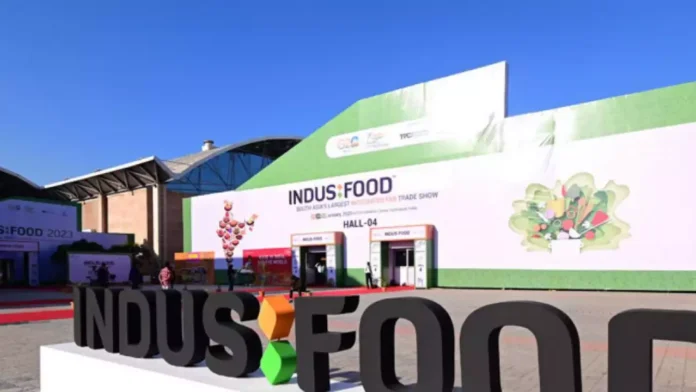
The seventh edition of Indusfood 2024, a three-day mega food show in Greater Noida, Uttar Pradesh, kicks off today with over 1,200 exhibitors and a participation of more than 7,500 global buyers. Commerce and Industry Minister Piyush Goyal is set to inaugurate the event, as announced by the Trade Promotion Council of India (TPCI).
Indusfood stands out as India’s exclusive trade fair for food and beverages with a focus on exports, presenting domestic products to an international audience of buyers.
This would act as a platform to Indian companies, global importers, retailers, and distribution chains to look for business opportunities and collaborations, it said.
Indusfood 2024: A Growing International Platform
Mohit Singla, Chairman, TPCI, said that the show “has scaled up tremendously, with around 1,200 plus exhibitors, over 7,500 global buyers. Over 120 exhibitors from around the world are also coming”.
Delegates from 90-plus countries are expected to visit this edition of the show.
The sectors which will present their products include sweets and confectionery, dairy, dry fruits, tea and coffee, spices, fresh fruits and vegetables, wine and alcoholic beverages, non-alcoholic beverages, organic and health food, oil and oil seeds.
About a dozen major consumer goods companies, such as Hindustan Unilever, Marico, Parle, Nestle, and Dabur, are restructuring their distribution strategies as part of a broader plan to boost sales, particularly for slow-moving products. This effort is specifically targeted at revitalizing rural markets, which have been under pressure for more than a year. These companies are either modifying their distributor margin structures by incorporating higher variables linked to sales or offering incentives to kirana stores and general trade.
While the majority of distributors typically receive fixed margins ranging from 3-6%, regardless of sales, additional margins are usually tied to reaching specific sales targets. Following a pilot phase involving a reduction of fixed margins by 60-100 basis points to 3.3% and an increase in variable margins by over 100-150 basis points for almost a year, HUL implemented this revised structure across 110 major cities in October. HUL stated that the objective is to enhance overall service efficiency and provide distributors with greater earning potential.
“We are looking at commercial models to enhance the quality of service to general trade stores while giving our distributors an opportunity to earn healthy returns – a win-win. This distributor-inclusive model is designed to better serve the needs of kirana and other neighbourhood stores – the MSMEs,” said a spokesperson for HUL.
Parle has announced an increase in incentives for the trade and raised profit margins within the snacks category.
“We have slightly increased margins for snacking products and are giving incentives and offers if they meet targets. The idea is to push sales, at a time when we can afford to maintain profit even after increasing margins as inflation tapers off,” said Krishnarao Buddha, senior category head, marketing at Parle Products.
In its investor update, Marico noted that constraints on liquidity and profitability persist in the general trade (GT) channel, posing challenges for the sector.
“Towards the end of the quarter, we initiated significant steps towards improving the return on investment of our general channel partners and structurally re-igniting growth in the channel. This included a primary stock correction for our channel partners,” Marico said.
Distributor Challenges in the Consumer Goods Market:
However, distributors argue that altering the margin structure is challenging in a market with sluggish demand. Some contend that a higher variable margin model is viable only for rapidly selling categories, while for products with low demand, it becomes a loss-making proposition. Additionally, distributors mention that companies are now compensating for logistics costs when targets are achieved instead of making adjustments to the previous model.
Delhi, India’s buzzing capital, is a culinary lover’s fantasy. The city has a rich history, a varied ethnic environment, and many delicious restaurants. As the chill of winter settles in, nothing is more comforting than sipping a mug of hot chocolate. In what follows, we’ll review the 10 best spots in Delhi to satiate your cravings for hot chocolate.
Paul – A French Delight:
Paul, a magnificent French bakery that has made its way into the hearts of Delhiites, is the first stop on our tour when it comes to hot chocolate. A masterpiece in a cup, Paul’s hot chocolate combines rich cocoa with a velvety texture that will leave you craving more. Paul’s is known for its beautiful pastries, and for a good reason.
Location: Ambience Mall, Vasant Kunj, New Delhi
Colocal – Hidden Gem:
There is a secret treasure that qualifies for a spot on our list, and that is Colocal. The inviting atmosphere and the tempting aroma of cocoa urge you to come in, and their hot chocolate does not let you down throughout your visit. The hot chocolate offered by Colocal is a symphony of flavours that will thrill your taste buds. It is prepared with premium ingredients of the highest quality.
Location: Khan Market, New Delhi
Ama Cafe – Quaint and Charming
Ama Cafe is the ideal location for individuals who are looking for a place that conveys a romantic and loving environment. The lovely cup of hot chocolate that is served at this modest restaurant in Majnu Ka Tilla is the ideal complement to the mouthwatering dishes that are offered there. The hot chocolate served at Ama Cafe is a delicious dish that combines sweetness and warmth, and it is sure to leave you feeling delighted.
Location: Majnu Ka Tila, New Delhi
Theos – Sinful Indulgence
Where sinfully delicious treats rule supreme, Theos is the place to go to satisfy your desire to find something sweet. Additionally, Theos’s hot chocolate is a rich and delicious experience, much like the rest of the restaurant’s offerings. It doesn’t matter whether you’re in the mood for traditional hot chocolate or flavoured hot chocolate; Theos offers a selection that will satisfy your palette and taste buds.
Location: Rajouri Garden, New Delhi
Nik Baker’s – Baking Bliss
Nik Bakers is a popular choice among those who are enthusiastic about desserts because of the exquisite baked delicacies that it offers. Hot chocolate is one of the most loved items at their bakery Their hot chocolate is a delicious mix of quality cocoa and frothy bliss, producing a beverage that is so comfortable that you won’t be able to resist drinking it.
Location: Green Park, New Delhi
Cafe Dori – Artisanal Excellence
At Cafe Dori, where each and every cup of hot chocolate is a piece of art, you will be plunged into a world of artisanal and artistic brilliance. Connoisseurs who are looking for a refined experience should try Cafe Dori’s hot chocolate because of the careful selection of cocoa beans and the rigorous processing that goes into it.
Location: The Dhan Mill, Chattarpur
Bread Talk – Global Flavors
Bread Talk, which has a worldwide effect, adds a unique twist to the classic drink of hot chocolate. Bread Talk is a wonderful choice for anyone who has an interest in experimenting with different variations of this traditional beverage because of the combination of flavours and the skilled craftsmanship that goes into making it.
Location: Select Citywalk Mall, Saket, New Delhi
The Chocolate Room – A Sweet Escape with Hot Chocolate
The Chocolate Room is a place where hot chocolate is more than simply a beverage; it is an experience. If you want to go on a sweet getaway, you should go there. This coffee shop is perfect for individuals who are craving sweets since it has a menu that is rather extensive and offers a variety of hot chocolate treats.
Location: Vishal Enclave, New Delhi
Sardar Ji Baksh – Desi Delight
Our journey through the world of hot chocolate comes to an end at Sardar Ji Baksh, a restaurant that offers this popular beverage a modern Indian touch. Their hot chocolate is a one-of-a-kind mix that is infused with Indian flavours and offers a pleasant warmth while paying respect to flavour profiles that are traditionally associated with India.
Location: Civil Lines, New Delhi
Harmoni By Greens – Organic Elegance
People who want a bit of organic flavour in their hot chocolate will find that Harmoni by the Greens is the place to call home. Their hot chocolate is a guilt-free indulgence that blends flavour with a touch of elegance, and they are committed to utilising organic ingredients of the highest quality throughout the production process.
Location: Sector 23, Gurugram
The hot chocolate culture in Delhi is very varied and pleasant, and it caters to every taste preference. A hot chocolate experience that is unlike any other can be found at these ten locations, regardless of whether you are a lover of traditional simplicity or desire the thrill of creative flavours. Therefore, travel on a tour through the winter paradise that is Delhi, and while you’re there, treat yourself to the greatest hot chocolate that the city has to offer.
Think of any restaurant that just opened a few months ago in a fancy shopping complex. Imagine a scenario in which you walked inside the place and found yourself blown away by it. What exactly struck you first? The answer may be simple: – everything.
Where unorganized eateries offer delicious taste and value for money, organized players are bringing a revolution to the tilt. They are making a statement with their fashionably varied menu options, outlandish decor which consumers invariably are impressed by and a large focus on technological adaption to attract more consumers who feel inclined to be far more present online and handle the digital influence with ease.
The Restaurant Space: A Lot is Happening
Restaurants in India are filling up with experiential and spontaneous diners who are awestruck by the difference in experience and quality, in comparison to the unorganized market. Local eateries have their charm and unique selling points, and no one can compete with the authenticity and value for money that is on offer in those spots.
But the young consumer of today has grown up in the digital era and knows what is happening around the world, around the best and the hottest destinations. This informed consumer wants to experience more than just local food and feels that major cities in India should also become the next New York or Paris. With the increased spending capacity of the older generation and the newer generation too, the hospitality industry has a lot of expectations to fulfil.
The choices that restaurants will have to make now must be in favour of the younger folks’ thought processes and demands. In a nutshell, consumers that like being given limitless options for pleasure and recreation. As new players, you may label the generation of today to be very impulsive, and pampered. You may think that the generation can ‘never be pleased’ – but think again. This is a generation that is happy to buy from you and help you grow your business because it can. With social media at their fingertips, the most crucial and comprehensive resource for knowing what is trending in the world, they know exactly what to expect from a place they put their money on and they want restaurants to live up to that ideal. Above all, they want to spend money.
The better-informed players in the market who are disrupting the dine-in landscape are doing so simply by allowing the market forces to be dictated by the tectonic shift in consumer patterns. While they have witnessed the market being driven by loyal consumers who would often dine out once in a while on a special occasion but always loved the sound of eating chole bhature at a local eatery, the new market is becoming a bigger playground of sorts for new connections to form.
The New Market: What Works Well
Some new preferences for the hospitality sector include – the demand for superior quality and better hygiene standards, the demand for more variety and of course, lively ambience and top-notch crowd. A local eatery may not be capable enough to provide all of this today. They have smaller teams with low hygiene practices in place and their supply isn’t that big daily unless you count a few selected places that are renowned for their unlimited variety and large fan following. Most of the unorganized sector still suffers from not having adequate information about the consumers, what they want and how to analyze the information. The local eateries are still not using much technology to understand how to use the data to make informed decisions about making more sales. But, there is a lot of potential to utilise third-party platforms such as Google Reviews or Zomato to learn more.
Tech Utilization: Enhancing Data Insights in the Food & Beverage Business
On the flip side, the organized players are using the insights gained from feedback on third-party platforms to improve the experience that is on offer to the consumer. In turn, this can result in a better reputation and robust earnings. The ease of service is also becoming very important to the consumer, as more and more people want to avail the takeaway or delivery option. Hence, those restaurants that can fulfil this demand are seeing better returns too.
The onset of a new era in hospitality does not mean that the old will vanish away. The market will enjoy growth, but the fact remains that there are also restauranteurs with big pockets who are putting their focus on the newer and younger segments, and it is going to be quite something to watch the interaction between these players and the consumers to generate business.
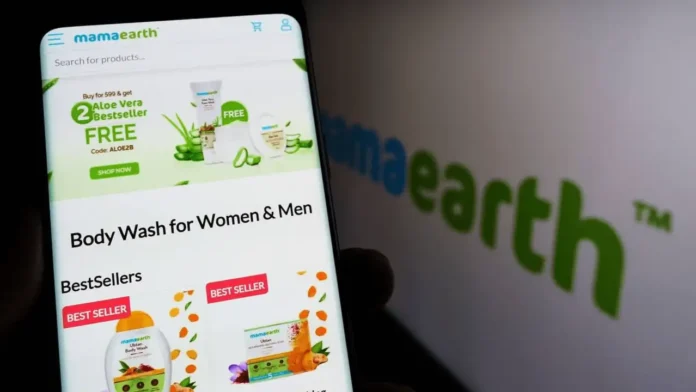
Honasa Consumer, the recently-listed parent entity of the D2C beauty and personal care startup Mamaearth, is likely to be included in the MSCI Smallcap index, according to Nuvama Alternative & Quantitative Research.
The brokerage has reportedly identified the stock as a strong candidate for inclusion in the index, alongside IREDA, Cello World, and Signature Global. According to a Moneycontrol report, Nuvama has highlighted Jaiprakash Associates, Protean e-gov, Swan Energy, J Kumar Infraprojects, and RattanIndia Power as potential additions to the MSCI Smallcap index. These stocks have all experienced significant rallies of 10-100% in the last three months, resulting in their free float-adjusted market capitalization meeting the criteria for inclusion.
Mamaearth had a subdued entry into the stock market in November, but the stock has surged by 37% since its debut.
The official announcement for the upcoming MSCI index rejig is scheduled for February 13, with the adjustments set to happen on February 29.
In the prior adjustments made in November, One97 Communications, the parent company of Paytm, was included among the nine stocks incorporated into the MSCI Global Standard Index.
Presently, Nuvama envisions the potential inclusion of Nykaa‘s parent company, FSN E-Commerce Ventures, as well as entities such as Canara Bank, Mankind Pharma, Bosch, and Vodafone Idea, in the MSCI Standard index, provided they experience a surge ranging from 8% to 20%.
Meanwhile, Nuvama has indicated that if some names miss out on inclusion in the MSCI Global Standard Index in February, there is a possibility that they could be added during the May 2024 review.
Nuvama’s analyst, Abhilash Pagaria, highlighted that India presently commands a 16.9% weight in the MSCI EM Index. He anticipates this figure to surpass 20% by early to mid-2024, attributing it to the current momentum in the domestic market and its outperformance compared to other emerging markets.
Financial Highlights for Nykaa and Mamaearth in 2023:
In 2023, Nykaa saw a growth of more than 12%, and its shares are presently valued at INR 173.4 on the BSE. Meanwhile, Mamaearth is currently trading at INR 444.4.
Restaurant technology company Chowly has acquired Targetable, an automated digital marketing solutions provider for the restaurant industry.
Chowly will integrate Targetable’s marketing technology into its robust suite of offerings, enhancing the appeal for restaurants and driving increased demand.
Additionally, it will utilize this acquisition to provide restaurants with a cost-effective alternative to the expensive services offered by traditional marketing companies.
Targetable’s technology will be seamlessly incorporated into Chowly’s restaurant point-of-sale (POS) system, currently deployed across a network of over 17,000 restaurants.
Furthermore, Chowly and Targetable teams will join forces to create distinctive product offerings tailored for the small and medium-sized business (SMB) restaurant sector. More information about the new product will be revealed in the upcoming months.
Chowly’s Strategic Moves: Second Acquisition in 12 Months
This marks Chowly’s second acquisition in the last 12 months, aligning with its objective of equipping small and medium-sized business (SMB) restaurants with the essential tools for success in the off-premises and digitally driven restaurant sector.
Chowly co-founder and CEO Sterling Douglass said, “We’re thrilled to welcome Targetable to the Chowly team. The combination of these two businesses is a true ‘better together’ story that will help tens of thousands of restaurants create more sales without the additional operational headache.”
Last February, Chowly finalized the acquisition of Koala, a company dedicated to developing guest experience platforms.
Koala’s platform facilitates the enhancement of digital ordering capabilities for both established and emerging restaurant brands across the internet, apps, and kiosks.
We use cookies to ensure that we give you the best experience on our website. If you continue to use this site we will assume that you are happy with it.