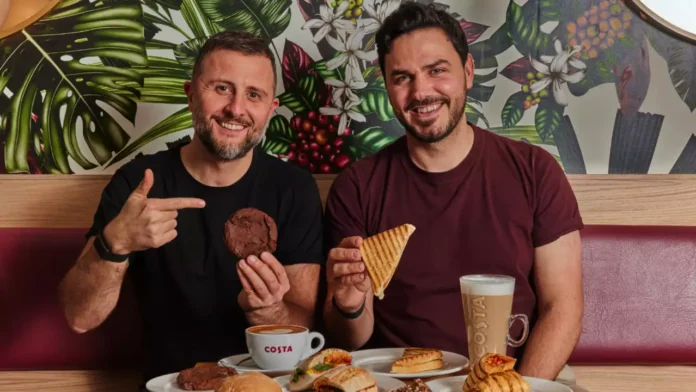
Costa Coffee has partnered with plant-based culinary experts BOSH! to launch a fresh assortment of plant-based savory and sweet offerings throughout its United Kingdom outlets.
The companies aim to enhance the accessibility and convenience of plant-based dining for on-the-go customers.
The latest range, available at over 2,600 Costa Coffee establishments across the UK, aims to transform the accessibility of plant-based food choices.
BOSH! officials Henry Firth and Ian Theasby stated, “Our mission is to get more plants onto more plates, and our collaboration with Costa Coffee has paved the way for easier access to delicious plant-based products across the United Kingdom.
“We’re incredibly proud to be working with the nation’s favourite coffee shop, making it more convenient than ever for customers to enjoy flavourful plant-based options without compromising on taste or accessibility.”
Varied Plant-Based Choices at Costa Coffee
Costa Coffee and BOSH!’s collaboration is committed to providing a varied range of meat-free, plant-based foods for customers to savor alongside their preferred Costa coffee, complemented by a plant-based milk alternative.
For breakfast, patrons have the choice of the Plant-Based Smashin’ Sausage Bap or the Plant-Based Saucy Chicken Fajita Wrap.
Dessert options encompass the fresh Caramelised Biscuit Rocky Road and the Double Chocolate Cookie.
The partnership introduces the concept of “delish-etarian,” a term designed to transcend conventional dietary labels.
Costa Coffee food innovation head Cathy Goodwin stated, “We’re proud to be making plant-based products more accessible at Costa Coffee with an exciting collaboration with BOSH!
“Ultimately, everyone wants to eat delicious food, and [by] teaming up with the remarkable talents at BOSH!, together we have created a range of delicious plant-based products tailored for delish-etarians everywhere. “
In December 2023, Costa Coffee unveiled its refurbished establishment at Cornhill in Dorchester, UK.
The upgraded establishment prioritizes convenience for customers on the go, offering touchscreen ordering and a designated collection point.
McDonald’s China has partnered with Cainiao, the logistics branch of the Alibaba Group, to improve supply chain efficiency, as reported by the South China Morning Post.
The collaboration will incorporate technologies like radio frequency identification (RFID) to streamline McDonald’s processes from manufacturing to the point of sale.
McDonald’s China will implement Cainiao’s RFID technology in its supply chain by incorporating built-in tags on food packaging. This will facilitate the tracking of products from factories to restaurants.
The initiative is anticipated to enhance inventory management and decrease the time needed for stocktaking.
RFID is a third-generation identification technology, succeeding bar codes and QR codes. It functions by transmitting data via radio frequency signals from a microchip within the tag.
The two companies tested the RFID system, and the findings indicated that participating restaurants could perform a daily stocktake in just 15 minutes, as opposed to an hour.
The precision of inventory data also saw a 30% improvement.
In order to streamline the supply chain for fast-food establishments, McDonald’s and Cainiao will explore digitalization and automation technologies more extensively.
McDonald’s China operates 5,500 establishments and employs 200,000 individuals to cater to over a billion customers each year.
This partnership comes at a time when the logistics company is planning to raise $1 billion through an IPO (initial public offering) in Hong Kong, after submitting its filing to the city’s stock exchange in September 2023.
In November 2023, McDonald’s reached an agreement to purchase the minority stake held by investment firm Carlyle in the partnership responsible for operating McDonald’s business in mainland China, Hong Kong, and Macau.
McDonald’s, through this deal, will increase its ownership stake from 20% to 48%. CITIC Capital, a Chinese alternative investor, will retain the remaining 52% stake.
The deal is set to conclude in the first quarter of 2024.
Following HSBC, Goldman Sachs and Jefferies have raised their price targets (PTs) for Zomato, a leading foodtech company, due to robust growth in its food delivery and quick commerce segments.
Goldman Sachs raised its price target on Zomato from INR 130 to INR 160, indicating a 14.6% upside from the stock’s recent closing price. The global brokerage highlighted Zomato as the fastest-growing company in its global food delivery and India internet coverage.
According to analysts at Goldman Sachs, the food delivery market has solidified around two main players, with Zomato commanding approximately 55% of the market share in the first half of 2023. Additionally, they highlighted that Blinkit has ascended to become one of the top three online grocery platforms in India based on gross order value (GOV).
The brokerage anticipates a 45% Compound Annual Growth Rate (CAGR) in Blinkit’s Gross Order Value (GOV) between the fiscal years 2024 and 2027, surpassing the industry rate of 34%.
“Given the potential TAM for online grocery is 8-10X larger than that for food delivery per our estimates, Zomato achieving positive unit economics in this segment recently could result in revenue growth remaining elevated for a multi-year period,” said the analysts at Goldman Sachs.
It’s worth mentioning that Zomato’s quick commerce subsidiary, Blinkit, achieved a positive contribution for the first time in the second quarter of fiscal year 2024. The company envisions this business attaining adjusted EBITDA breakeven by the first quarter of fiscal year 2025.
Addressing the competitive landscape, analysts at Goldman Sachs additionally noted that in the first half of 2023, Zomato’s trading losses were only a quarter of those incurred by its main competitor, Swiggy, led by Deepinder Goyal.
In terms of competition, Goldman Sachs analysts also mentioned that trading losses for Zomato’s primary rival, Swiggy, were four times higher than those of the Deepinder Goyal-led startup in the first half of 2023.
“…with Swiggy aiming to achieve group level profitability by CY24, we expect competitive intensity across both food delivery and quick commerce to remain benign for Zomato,” the analysts added.
Moreover, in a research note titled “The Rise of ‘Affluent India’,” Goldman Sachs identified two modern tech startups, MakeMyTrip and Zomato, as its top recommendations.
The research report indicated that approximately 4% of India’s working-age population boasts a per capita income of $10,000 (a little over INR 8 lakh), equating to approximately 60 million consumers. According to its analysis, this consumer group has demonstrated a Compound Annual Growth Rate (CAGR) of over 12% during the period from 2019 to 2023.
“If the current trajectory continues, we expect ‘Affluent India’ will grow to about 100 Mn consumers by 2027,” it said.
It identifies sectors like leisure, jewellery, out-of-home food, healthcare, and premium brands across all categories as the primary beneficiaries of the emerging ‘Affluent India.’ While various stocks are linked to these segments, Goldman Sachs suggests that Zomato could be among the major beneficiaries of this trend.
It also anticipates Zomato’s revenue to achieve a 30% Compound Annual Growth Rate (CAGR) during the fiscal years 2024 to 2027, marking the highest growth rate within its coverage of the India Internet sector.
Many brokerages are now redirecting their attention to the business expansion of Blinkit, anticipating that its growth will propel Zomato forward.
Jefferies increased its price target for Zomato from INR 165 to INR 190, indicating a 36.1% upside from the stock’s most recent closing price.
The brokerage stated that Blinkit presents a substantial opportunity in the dynamic quick commerce sector, with the potential for additional positive developments, as investors are just beginning to perceive it more favorably.
Being in the early stages of growth, Blinkit is projected to experience accelerated expansion at a 38% Compound Annual Growth Rate (CAGR) from FY24 to FY28. Jefferies also foresees significant margin improvements, with the contribution margin expected to reach 6% by FY28 and the EBITDA margin to achieve 4%.
Meanwhile, the brokerage observed that Zomato consistently achieves robust growth while enhancing profitability, validating its premium valuations.
Zomato’s shares experienced a surge of over 100% in 2023, leading to a doubling of its market capitalization, surpassing the $12 billion mark. This valuation is the highest among other listed new-age tech startups.
Despite maintaining a positive long-term outlook, HSBC Global Research anticipates Zomato to deliver subdued results in Q3 FY24, especially in its food delivery segment following a robust second quarter.
HSBC anticipates that Zomato’s financial performance for the December quarter is likely to fall below expectations, potentially exhibiting a slight decrease compared to the September quarter.
However, the brokerage expects Blinkit’s growth to have remained strong in Q3 FY24.
“We believe food value is well captured in the current stock price and further upside will largely be driven by the QC (quick commerce) business. We now also expect profitability improvement to be gradual in the near term and hence market focus will be on QC growth,” HSBC research analysts said. “After an extremely strong 2023, we expect relatively muted business and stock performance in 2024.”
All the above-mentioned brokerages have a ‘buy’ rating on Zomato.
Following a peak at a new 52-week high of INR 141.55 in intraday trading on Friday (January 12), Zomato’s shares closed today’s session approximately 1% higher at INR 139.6 on the BSE.
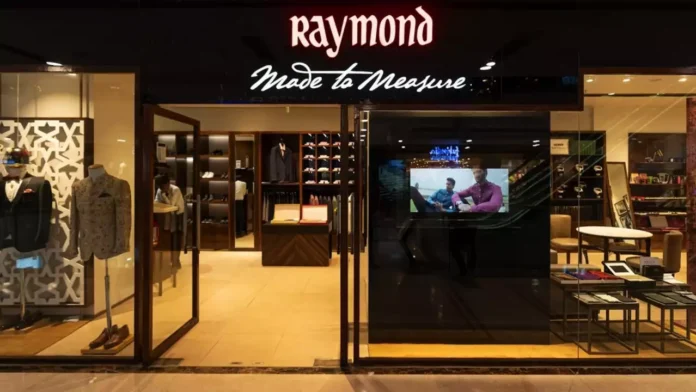
Raymond, the renowned Indian menswear fashion retailer, has unveiled its largest The Raymond Shop in the country. The expansive store, spanning 22,500 square feet of retail space, is now open on MG Road in Kochi, Ernakulam district, as announced in a press release on Thursday.
The Raymond Shop presents a premium retail experience, offering a diverse array of wardrobe options for men. Featured among its esteemed selection are brands from the Raymond’s stable, such as Raymond Apparel, Raymond Made to Measure, Raymond Ready-to-Wear, Ethnix By Raymond, Park Avenue, ColorPlus, and Parx.
The ground level showcases a variety of casual wear options, featuring shirts, t-shirts, denims, corduroys, jackets, sweatshirts, and athleisure wear. These selections are curated from renowned brands like Park Avenue, ColorPlus, Parx, and Raymond Ready to Wear.
The floor also accommodates The Linen Story, a dedicated area for linen clothing and a personalized service counter from Raymond. Clients can select fabric samples, provide precise measurements, and create factory-made garments with customization options. The segment is complemented by accessories, innerwear, and a range of woolens.
The first floor features formal wear and a custom tailoring zone, while the second floor houses the Ethnix By Raymond section, offering traditional, ceremonial, and Indo-Western attire. Spanning 5,000 square feet, this space ranks among the country’s most expansive Ethnix standalone store areas.
The top-most level comprises an exclusive Raymond Home section, featuring a variety of bed sheets, bed linens, towels, pillows, and bathwear. Additionally, there’s a new café named Café Palette that caters to the culinary needs of shoppers, offering food and beverages.
The store is under the ownership of the Aswani Lachmandas Group, which manages three additional ‘The Raymond Shops’ in Kerala situated at Marine Drive, Lulu Mall, and Thrippunithura.
Established in 1925, the Indian fabric and fashion retailer Raymond Group owns a range of apparel brands, including Raymond Apparel, Raymond Made to Measure, Ethnix by Raymond, Park Avenue, Park Avenue Woman, ColorPlus, Kamasutra, Parx, and the home store Raymond Home.
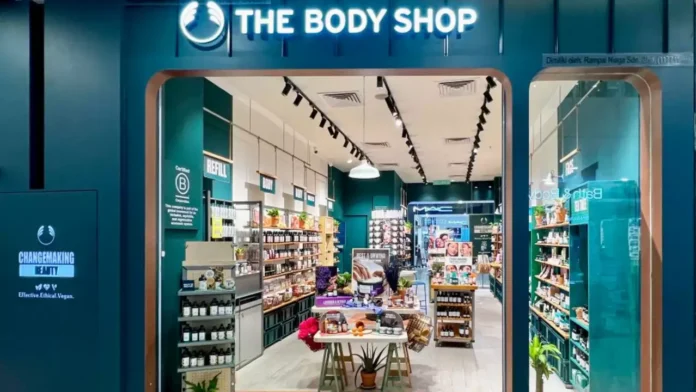
The Body Shop, a UK-based ethical beauty brand, has officially joined the Open Network for Digital Commerce (ONDC) network through the use of Shopalyst’s plugin. This strategic partnership signifies a significant step as ONDC and The Body Shop collaborate to introduce 100% Vegan product formulations and ethically sourced Skincare, Bodycare, Haircare, and Make-up to the expansive ‘Open Network.’
The Body Shop India, one of the largest beauty retailers since 2006, has established a formidable retail presence with 200 stores and an extensive reach encompassing 15,000+ pincodes through ecommerce channels and cutting-edge digital experiences. This groundbreaking development enables The Body Shop to showcase its catalog across a rapidly expanding network, providing consumers with the ease of exploration and seamless transactions. Additionally, this presents buyers with the opportunity to choose from a diverse selection of ethical products, accessible through any application on the network, all within a unified app or website.
Vishal Chaturvedi, VP- Retail and Operations, The Body Shop Asia South, said “We are thrilled to be one of the first international beauty and skincare brands in India to join the ONDC Network. As a brand that is always looking to innovate and disrupt the market, joining the ONDC Network is a great move for us. With ONDC Network, we can widen our reach, be easily accessible to consumers across the country, and provide them with a simply great experience at affordable prices.”
This strategic initiative aligns with The Body Shop’s vision of nationwide expansion and making ethical, sustainable, and vegan beauty products readily available to a broader audience. By embracing the ONDC Protocol, The Body Shop aims to establish numerous consumer touchpoints, ensuring an improved and simplified shopping experience for all customers.
T Koshy, MD and CEO, ONDC said, “As the ONDC Network charts its course towards creating a transparent e-commerce ecosystem that champions equal opportunities for all, we are elated to have The Body Shop join the Network. This not only signifies a significant stride for The Body Shop but also sets a pioneering precedent for the beauty industry at large.”
In the rapidly evolving tech landscape, initiatives like the ONDC Protocol play a crucial role in fostering innovation and growth. The Body Shop, with its pioneering spirit, is well-positioned to leverage the ONDC Network and take its innovative product portfolio to new customers across the country.
India’s palm oil imports reached their highest level in four months in December, led by an uptick in purchases of refined palmolein due to competitive prices, according to a leading trade body’s report on Friday.
Increased purchases by the world’s largest importer of vegetable oils may contribute to a decrease in palm oil stocks in top producers Indonesia and Malaysia, thereby supporting benchmark futures.
The Solvent Extractors’ Association of India (SEA) noted a 2.8% increase in December palm oil imports, totaling 894,186 metric tonnes, while refined palm oil imports surged by 47% to 251,667 tonnes.
The negative refining margin for crude palm oil in India, coupled with the lower prices offered by exporting countries for refined palm oil, made it an attractive option for buyers.
Dealers indicated that the landed cost of refined bleached deodorized (RBD) palmolein at Mumbai port was around $25 per ton less than that of crude palm oil.
Apart from palm oil, the imports of sunflower oil surged by over twofold in December, reaching 260,850 tons, marking the highest volume in three months.
This, coupled with heightened imports of palm oil, resulted in a 12.9% month-on-month increase in India’s overall vegetable oil imports, totaling 1.31 million metric tons.
In December, soyoil imports increased by 1.8% to reach 152,650 tons, albeit considerably lower than the average imports of 306,000 tons in the previous marketing year.
Negative refining margins and a higher premium over rival oils were cited as contributing factors.
“Even in January, we could witness higher imports of refined palm oil because of lower prices. Total palm oil imports could rise above 900,000 tons,” said a Mumbai-based trader.
India predominantly obtains palm oil from Indonesia, Malaysia, and Thailand, whereas soyoil and sunflower oil imports originate from Argentina, Brazil, Russia, and Ukraine.
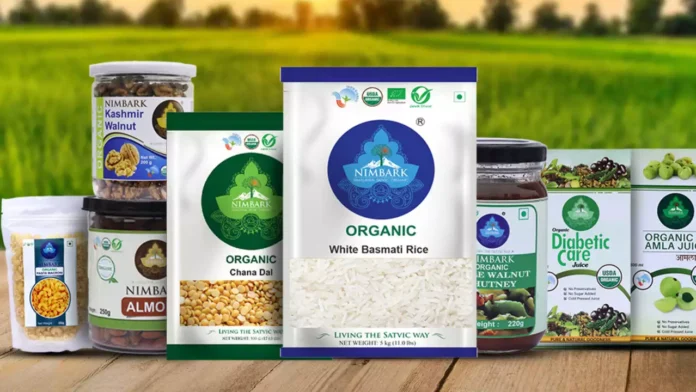
Sarveshwar Foods Limited has announced the opening of its NIMBARK Organic Stores in Punjab and the Delhi-NCR region. The company informed that these stores, operated by its subsidiary Himalayan Bio Organic Foods Limited, showcase their range of organic offerings from the Himalayas. Sarveshwar Foods now has a total of 15 retail stores.
The company also distributes its products through 1,200 retail counters across consumption centers and maintains a PAN-India online presence via its website and online marketplaces. The company conveyed that its commitment to offering organic products without artificial fertilisers and chemicals, coupled with its philosophy of promoting a ‘SATVIK’ conscious lifestyle, has played a pivotal role in its market success.
Its product-selling strategy comprises three main components: first, leveraging traditional channels; second, establishing proprietary retail outlets; and third, tapping into the growing preference of the younger generation for online product transactions.
Nonetheless, the stocks exhibited a 0.69% decrease, reaching INR 7.20 at 1:41 pm on the BSE.
D2C healthy snacks brand, Catalina Crunch, has appointed Doug Behrens as Chief Executive Officer (CEO). Behrens will lead Catalina Crunch into its next phase of growth, concentrating on expanding the brand’s retail presence at a time when the company’s demand is at an all-time high. This significant announcement builds on Catalina Crunch’s recent progress as the company continues to invest in hiring top talent for its executive team.
“I am thrilled to welcome Doug Behrens to the Catalina Crunch team. Hiring him is instrumental to get us to the next level as our needs as a company have changed. We are very excited about the future and look forward to building on the success that has defined the brand to date,” shared Krishna Kaliannan, Catalina Crunch’s Founder.
“I’ve been very impressed with the explosive growth of Catalina Crunch and excited to join the team for the next chapter. The better-for-you food and snacking space is incredibly dynamic and Catalina is well positioned to be a disruptive leader,” shared Doug Behrens.
Drawing upon a wealth of experience in the food and health sector, Doug Behrens boasts a proven track record of propelling growth and fostering innovation. With leadership roles at Johnson & Johnson, Danone, Amplify Snack Brands, and his most recent position as the President and Chief Customer Officer for KIND, Behrens brings a seasoned perspective to Catalina Crunch. His strategic vision harmonizes seamlessly with Catalina Crunch’s dedication to delivering wholesome, delicious, and innovative products to our esteemed customers.
Krishna Kaliannan continues to play an active role in the daily operations of the business as the Founder, while Joel Warady, the current President of Catalina Crunch, will pursue a new opportunity following a remarkable tenure marked by substantial company growth. This transition is viewed as a positive move, underscoring the company’s commitment to ongoing enhancement and enduring expansion.
Following the recent introduction of Catalina Crunch’s latest product, Dark Chocolate Cookie Bars, and its thrilling collaboration with NBA player Jalen Brunson, this significant announcement signifies the brand’s strategic positioning for further growth. Catalina Crunch is poised to extend its product range, venture into new markets, and solidify its status as a pioneer in the health food industry. The brand’s steadfast dedication to quality, transparency, and customer satisfaction remains resolute, with this appointment playing a crucial role in sustaining that success.
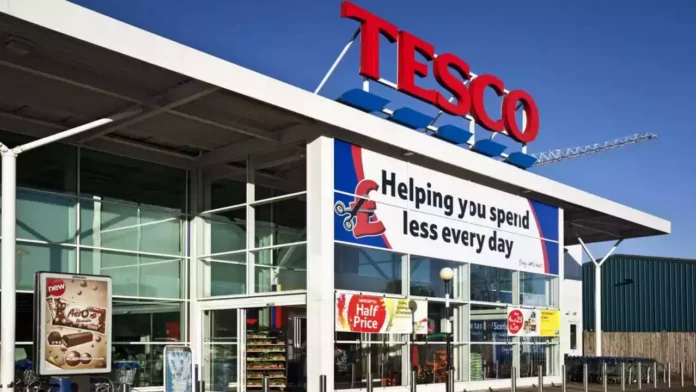
Tesco, the largest retailer in Britain, revised its profit forecast for the second time in four months. This adjustment comes as the company disclosed a stronger-than-anticipated increase in underlying UK sales during the key Christmas trading period, driven by heightened demand for fresh food.
Shares in the supermarket group, holding almost 28% of Britain’s grocery market, rose by 1% early on Thursday. This extends the gains over the past year to 23%, following the company’s announcement of “great momentum” heading into 2024.
CEO Ken Murphy expressed a “cautiously optimistic” outlook regarding the well-being of the UK consumer. He pointed out that mortgage rates were beginning to decline, fuel prices were decreasing, and there was robust growth in wage rates.
“So as long as we are in a full employment market I feel like we’re in a period of relative stability,” he said.
Tesco reported sales of more than 1 million fresh whole turkeys, turkey crowns, and joints, along with over 57 million mince pies and 6.6 million bottles of Prosecco.
“(Consumers) were really determined to enjoy Christmas and they came out in force, they were really pleased to see that the rate of inflation continues to fall in food,” said Murphy.
Tesco noted that it had additionally experienced increased demand for its premium product lines and the widespread popularity of its loyalty program.
As a result, it said that it now expects retail adjusted operating profit, its key profit figure, to reach 2.75 billion pounds ($3.5 billion) in the year ending February 2024, up from 2.49 billion pounds last year.
It had earlier projected a range of 2.6-2.7 billion pounds.
Consumer Spending Trends Impact Tesco and UK Retail
Trading updates from UK retailers and industry data indicate that, during Christmas, consumers prioritized spending on food rather than on more discretionary general merchandise. This trend reflects the challenging economic conditions in Britain.
Industry data, published on Tuesday, showed sluggish UK retail sales in December, adding to concerns that the economy has tipped into a mild recession after soaring inflation forced the Bank of England to hike interest rates to a 15-year high of 5.25%.
For Tesco, during the six weeks leading to January 6, its UK like-for-like sales surged by 6.8%, surpassing analyst expectations of about 5%. In the third quarter until November 25, the sales showed a growth of 7.9%, following an 8.4% increase in the second quarter.
Similar to its smaller counterpart Sainsbury’s, which disclosed robust food sales on Wednesday, Tesco is reaping the rewards of a strategy that involves aligning prices with the discount retailer Aldi on essential items.
Its Clubcard loyalty program, offering discounted prices to members, is contributing to its success due to its widespread popularity.
The funding for these programs is derived from a strategy aimed at reducing 1.1 billion pounds in costs from the business over the two-year period ending in February 2024.
Similar to Sainsbury’s, Tesco has seen advantages from consumers opting to save money by cooking and entertaining at home instead of dining out. Sales of its upscale “Finest” range have surged by 17%.
Murphy anticipated a “minimal impact” on Tesco from disruptions to shipping in the Red Sea, noting non-food products represent just 7% of total sales.
On Thursday, Marks and Spencer, a retailer specializing in clothing and food, announced a stronger-than-anticipated 8.1% increase in sales during the Christmas trading period.
Bakingo, the online bakery platform, has kicked off the year 2024 by unveiling its cutting-edge ‘super kitchen’ located in Gurugram. Covering an impressive 27,000 square feet across three meticulously planned floors, this facility seamlessly combines automation with skilled human expertise. As Bakingo advances in its quest to reshape the culinary scene, the inauguration of this state-of-the-art kitchen marks a noteworthy stride in its journey toward establishing itself as a national bakery brand.
This strategic expansion not only strengthens Bakingo’s ability to cater to a myriad of customer tastes across different occasions but also emphasizes its commitment to delivering unparalleled culinary excellence. The expanded facility positions Bakingo to enhance its services, providing a platform for introducing a diverse range of new varieties and products, thereby enhancing the overall customer experience.
Bakingo sets itself apart through a steadfast commitment to quality, achieved by meticulously selecting premium ingredients and adopting a consumer-centric approach. This dedication is clearly mirrored in its diverse product range and extensive variety. As part of its continuous quest for excellence, Bakingo is devoted to investing in new infrastructure, aiming not only to expand but also to strengthen its nationwide presence, guaranteeing an enhanced experience for all.
Himanshu Chawla, Founder & CEO of Bakingo, said, “This new super kitchen is a testament to the relentless dedication, meticulous planning, and an unwavering commitment to excellence. At Bakingo, our core values—quality, consistency, scalability, and a customer-first approach—have shaped the foundation of this culinary innovation. From the inception of an order to that delightful first bite, our super kitchen is poised to redefine the entire culinary experience. It symbolizes a significant stride in our nationwide expansion journey, embodying our vision for the future of Bakingo. We are eager to continue delighting our customers with delectable and unforgettable treats throughout the year, setting a new standard for excellence in the world of desserts.”
We use cookies to ensure that we give you the best experience on our website. If you continue to use this site we will assume that you are happy with it.