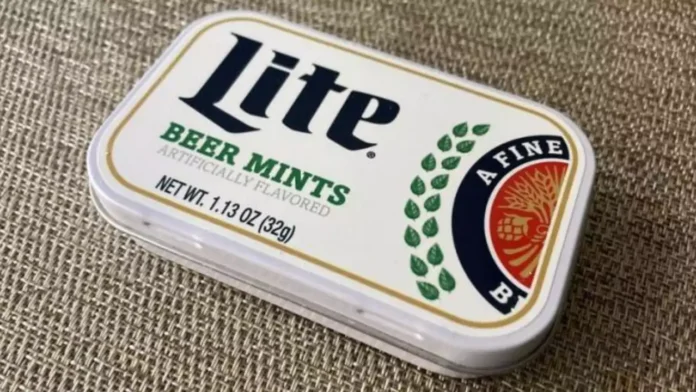
Miller Lite presents a unique option for beer enthusiasts, even those observing Dry January, with the introduction of Miller Lite Beer Mints. These mints aim to capture the flavor of Miller Lite without the actual beer.
Designed for consumers aged 21 and older, Beer Mints present a combination of mint freshness and a subtle hint of Miller Lite taste when chewed.
This offering allows beer enthusiasts to enjoy a brew-like experience without consuming any alcohol, providing a unique twist for those participating in Dry January.
Ann Legan, VP of Marketing, Miller Family at Molson Coors, said, “We created Beer Mints for the folks participating in Dry January who might miss the taste of Miller Lite while being out with friends this January”.
“If you love the taste of beer but want to take a break from the ABV for the month, we’re offering consumers the perfect way to enjoy Miller Lite without breaking any resolutions. Beer Mints may be a little unexpected, but we’re confident our fans will love their great taste along with the surprising note of spearmint.”
Starting January 12th, with a subsequent release on January 19th, Beer Mints will be available for online purchase for a limited period. Priced at $5 per tin, each containing 40 mints.
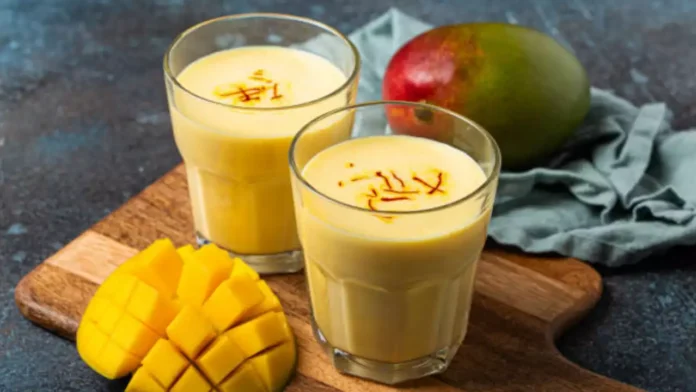
Mango Lassi, a popular dairy beverage from North India, widely enjoyed throughout the country during the summer, has been honored with the title of the best dairy beverage in the world by the popular food and travel guide TasteAtlas in the 2023-24 awards.
Mango Lassi presents a revitalizing fusion of yogurt (dahi) and ripe mango. Typically infused with cardamom, water, and sugar, this concoction can be elevated by incorporating soaked saffron strands, giving rise to the delightful Kesar Mango Lassi.
Social Media Frenzy: Celebrating Mango Lassi Supremacy
The online community couldn’t stop raving about the delicious Mango Lassi. Within the comment section of TasteAtlas’ award announcement post, a social media user hailed it as “Lassi supremacy,” while another added that Mango Lassi is “the best of the best.”
The flavor of this lassi may differ depending on the chosen mango variety, with a social media user noting that the “finest one is crafted from Alphonso.”
Reading about this delectable Indian beverage, a user mentioned, “missing India and Indian delicious food and beverages so much.”
The comments section serves as evidence that people from all around the world love Mango Lassi. A Mango Lassi fan wrote, “I’m not even Indian, but I have Indian friends, and I always ask for this.”
A teacher from Brazil recounted the delightful experience of crafting different lassi flavors.
“I was teaching about India to my students (we’re Brazilian), and there was this recipe. We decided to make it, and then we used the lassi for other combinations. Banana lassi, strawberry lassi… so good!”
Lassi, a traditional Indian smoothie originating from the pre-refrigeration era, involved farmers from Punjab blending milk with sugar and curd, storing the mixture in clay pots. This delightful beverage is ideal for combating summer heat, rejuvenating the palate, and hydrating the body.
Lassi is available in a diverse range of sweet and salty flavors. Mango lassi claims the top spot on the list of Top 16 Dairy Beverages in the World for 2023-24 by TasteAtlas, with the classic Punjabi lassi securing the fourth position. In addition to Mango lassi, other variations include Meetha (sweet lassi), Salted lassi, Bhang lassi, and Mint lassi. Sweet lassi also proudly ranks as the 5th best dairy beverage globally. Securing three titles in the top dairy beverages worldwide is a testament to the incredible and widespread love for Punjab’s lassi, not only within India but across the globe.
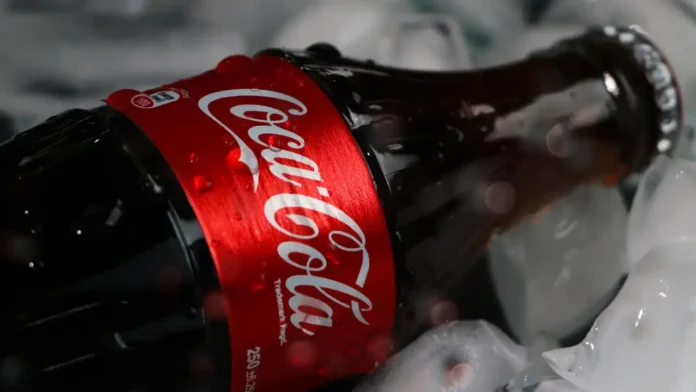
In an effort to promote sustainable solutions for addressing climate change, SLMG Beverages Pvt Ltd, the Coca-Cola bottler in India, intends to allocate over INR 100 crore towards sustainability, safety, and environmental initiatives this year.
Of the total investment, INR 75 crore will be dedicated to sustainability, while INR 25 crore will be allocated for quality, as stated by the company.
S N Ladhani, Chairman and Managing Director at SLMG Beverages Pvt Ltd, said, “Sustainability is core to our business strategy to respond to current and future challenges, while creating positive change for the planet.”
“Our water, packaging and climate goals are interlinked. By creating a circular economy for packaging, we will minimise our carbon footprint,” Ladhani said in a statement.
In line with Coca-Cola’s global initiative to create a “World Without Waste,” SLMG endeavors to attain net-zero carbon emissions by 2050. This ambitious objective underscores the company’s commitment to taking a pivotal role in addressing climate change and diminishing its environmental impact.
SLMG intends to install an extra 20 Reverse Vending Machines (RVMs) in Agra, supplementing the current count of 12.
The company expressed its commitment to powering 70 percent of its electricity consumption with solar energy.
The company is reducing its ecological footprint and emphasizing clean energy solutions through planned capacity expansions in Ayodhya (15 MW), Unnao (5 MW), and Chhata (2.5 MW), as stated in the announcement.
EV Fleet Growth: SLMG Beverages Aims for 10,000 Vehicles by 2027
SLMG aims to increase its electric vehicle (EV) fleet from 2,000 to 5,000 by 2025 and further to 10,000 vehicles by 2027.
The company is acquiring large electric vehicles (EVs) for distribution and warehousing to align with the worldwide shift towards sustainable transportation, as mentioned in the statement.
Avenue Supermarts, the operator of the DMart retail chain, announced a 17% rise in consolidated net profit to INR 690.41 in the third quarter (Q3) concluding on December 31, 2023. This marks an improvement compared to the net profit of INR 589.64 recorded in the corresponding period of the previous fiscal year, according to the company’s regulatory filing on Saturday.
The PAT margin for Q3 FY24 remained unchanged at 5.1%, mirroring the same percentage observed in Q3 FY23.
In Q3 FY24, DMart witnessed a 17.3% increase in total revenue, reaching INR 13,572 crore, compared to INR 11,569 crore in the corresponding period of the previous year.
As per the BSE filing, DMart reported Earnings Before Interest, Tax, Depreciation, and Amortization (EBITDA) of INR 1,120 crore in Q3 FY24, up from INR 965 crore in the same quarter of the previous year. The EBITDA margin remained constant at 8.3% in both Q3 FY24 and Q3 FY23.
The Basic Earnings per Share (EPS) for Q3 FY24 were reported at INR 10.62, compared to INR 9.10 in Q3 FY23, according to the filing.
Neville Noronha, CEO and managing director, Avenue Supermarts Limited, said, “Contribution from general merchandise and apparel has stabilized and trends are encouraging post Diwali.”
He further said, “This time the festive season sales were lower than expected in Non-FMCG. Within FMCG, agri-staples (ex-edible oil) are going through significantly high inflation.”
During the quarter, DMart expanded its operations by opening 5 new stores, thereby increasing the total store count to 341, as indicated in a statement.
D-Mart adheres to the Everyday Low Cost – Everyday Low Price (EDLC-EDLP) strategy. This approach focuses on acquiring goods at competitive prices through operational and distribution efficiency, ultimately providing customers with value for money by offering products at competitive prices.
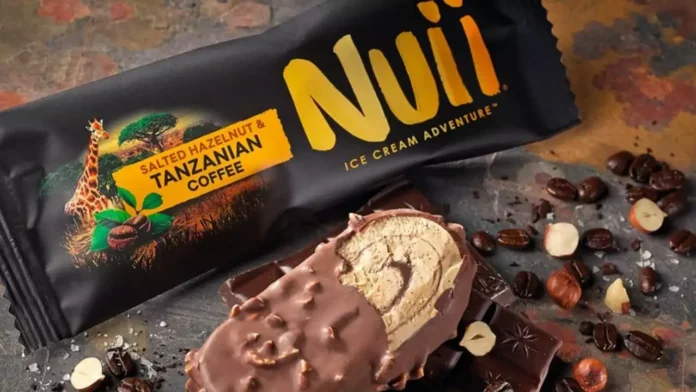
PAI Partners is said to be considering the possibility of divesting its stake in Froneri, the ice-cream venture it shares with Nestlé.
The private-equity firm is reportedly in the ‘preliminary stages’ of evaluating choices for selling its stake in Froneri, as stated by sources familiar with the matter, as reported by Bloomberg.
Those same sources, who chose to remain anonymous, have suggested that PAI Partners might contemplate divesting its share in the latter part of the year. Simultaneously, there is speculation about initiating an initial public offering for the stake. Additionally, these insiders have conveyed that Nestlé is expected to uphold its interest in Froneri.
The venture is evenly divided in a 50-50 split, and sources from the news agency estimate a $10 billion valuation for PAI Partners’ share.
When reached for comment, both PAI Partners and Nestlé opted not to provide any statements.
Froneri’s Global Portfolio Expansion with PAI Partners
Established in 2016, UK-based Froneri was formed through the amalgamation of Nestlé’s European ice-cream operations with R&R Ice Cream, another UK business owned by PAI Partners.
The Froneri transaction brought together the ice cream operations of Nestlé and R&R in regions spanning Europe, the Middle East, Argentina, Australia, Brazil, the Philippines, and South Africa. Although the United States and Israel were initially excluded in 2016, three years later, the latter was also incorporated into the Froneri portfolio.
In 2019, Nestlé proceeded to divest its ice-cream operations in the United States, selling them to Froneri.
The leading global food company maintained its presence in the ice-cream business across Canada, Latin America, and Asia.
Nestlé’s Ice Cream Sales in 2022
In the 2022 financial year, Nestlé records its ice-cream sales within the ice cream and milk products segment, contributing to a total segment sales figure of SFr11.3 billion ($13.2 billion). This segment constitutes 12% of the overall group sales.
According to the company’s annual report for that year, ice cream generated SFr930 million, marking an 8.2% increase from the previous year.
In October, when Nestlé released its third-quarter and year-to-date results, the company disclosed sales within the ice cream and milk products segment amounting to SFr8.1 billion. This represented a slight decrease from the SFr8.3 billion reported in the corresponding period.
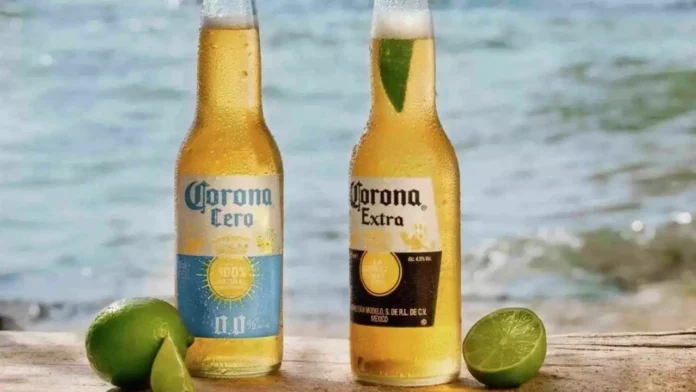
AB InBev has secured a deal for its non-alcoholic Corona Cero brand to be the global beer sponsor of the Olympic Games through 2028.
The agreement, made with the International Olympic Committee (IOC), the global governing body for the Olympic Games, will encompass the upcoming three editions of the event – Paris 2024, Los Angeles 2028 (LA28), and the 2026 Milano-Cortina Winter Olympic Games.
AB InBev is set to become a global Olympic partner within the TOP (The Olympic Partners) program, the highest tier of Olympic sponsorship. The undisclosed-sum agreement represents the IOC’s first TOP partnership with an alcohol brand.
While Corona Cero will take the lead in global sponsorship, in the United States, AB InBev’s Michelob Ultra light beer brand will also sponsor the events of the Los Angeles Olympics and Paralympics.
Michelob Ultra holds a prominent position in the United States due to Constellation Brands having the rights to import and sell Corona in the country.
AB InBev chief marketing officer Marcel Marcondes said, “As we continue to invest to grow the category, we are excited to bring our beer brands to the Olympics and be a worldwide partner for these amazing events.
“Corona is one of our fastest-growing global brands, reaching consumers across 180 countries, and through this partnership, we expect Corona Cero to accelerate no-alcohol beer growth.”
The majority of global beer conglomerates derive the majority of their sales from traditional brews, yet most of these major companies are actively seeking to increase the sales of their non-alcoholic alternatives. In 2022, AB InBev disclosed its anticipation that 20% of Budweiser’s sales would be alcohol-free by 2025.
As part of the collaboration between the IOC and the International Paralympic Committee (IPC), the AB InBev partnership will encompass marketing rights for IPC events through 2028.
Jiri Kejval, the IOC’s revenues and commercial partnerships commission chair, said, “AB InBev manages some of the world’s most recognised brands. The company will be a natural addition to the TOP program, which brings together some of the world’s leading companies with a shared vision of supporting sport to build a better world.”
The Olympic Games has never formed a global partnership with a beer brand, primarily because of internal regulations discouraging the promotion of brands perceived as unhealthy. As a result, the global focus of the partnership revolves around Corona Cero, a non-alcoholic option, while the U.S. aspect centers on Michelob Ultra, known for its low-calorie content.
At the launch of the partnership, AB InBev CEO Michel Doukeris emphasized that the deal centers on Corona, citing it as the brand with “the highest reach.”
He stated, “Corona is the most global brand that we have in the company, and this is a global partnership. Corona today is available in over 180 countries worldwide and therefore it only makes sense for us to go with the brand that has the highest reach globally.”
The announcement coincided with the revelation that Michelob Ultra would serve as the exclusive sponsor of the US Olympic Team through 2028.
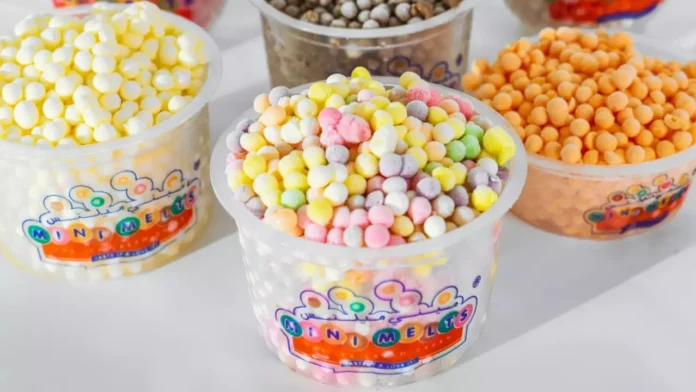
Mini Melts, a US-based ice cream company, has secured investment from Altamont Capital Partners, a private-equity firm headquartered in California.
Details regarding the financial aspects were not revealed.
The beaded ice-cream business, operating in Connecticut, employs a distinctive “proprietary cryogenic freezing process” for manufacturing and delivers its products through a network of more than 20 distribution centers. Altamont mentioned in a statement that Mini Melts anticipates launching “multiple new distribution centers in 2024 and plans to further enhance its fully integrated, white-glove distribution model.”
Based in Philadelphia and established in 2004, Mini Melts distributes 30 million pre-packaged ice-cream cups annually through a network of over 15,000 locations, as stated by Altamont.
“We believe the beaded ice-cream category has expandable growth potential,” Altamont principal Kabir Mundkur said in a statement.
“We are excited to invest in the brand and bring Mini Melts into more consumers’ hands while fostering new and exciting innovation in the future.”
Dan Kilcoyne, the founder and CEO of Mini Melts, will continue to lead the company and remains a significant investor in the business, along with other shareholders.
“Our partnership with Altamont will bolster our growth plans, allowing us to spread into new markets and grow with new customers,” said Kilcoyne.
“We have experienced exponential growth over the past several years and are focused on reaching across the entire country and innovating for our valued customers. We are excited to leverage Altamont’s experience scaling family-owned businesses and in multi-unit operations, food manufacturing, and distribution to support our next phase of growth.”
Mini Melts joins Altamont’s portfolio, alongside companies like Juice Plus and Tall Tree Foods.
“The fully integrated white glove distribution model is a real difference maker. It enables an entirely seamless experience for the company’s channel partners, and a better quality product for consumers,” said Altamont managing director Kevin Mason.
Radico Khaitan’s Rampur Asava Indian Single Malt Whisky has received the accolade for Best World Whisky in the 2023 edition of the prestigious John Barleycorn Awards.
In 2023, the IMFL-produced whisky emerged as the sole Indian whisky brand featured in the Top 100 Premium Wine and Spirits Brands of the World 2023.
Rampur Asava is set to make its debut among Indian Whisky enthusiasts soon. The John Barleycorn Awards emphasized the quality and distinctive features of Rampur Asava, shedding light on its noteworthy attributes.
Innovation at Radico Khaitan: Rampur Asava’s Unique Aging Process
“Rampur’s innovative approach to the ageing process distinguishes it from other world whiskies. The Himalayas provide polar opposite climate conditions throughout the year with the flavour of the famous Indian Summer giving Rampur an added dimension and depth. The malt interacts extensively with the cask, resulting in maturation almost four times faster than in Scotland,” a wire feed read.
Sanjeev Banga, President of International Business at Radico Khaitan Ltd said, “Our position as possibly the only Indian company in the industry with products such as Rampur Indian Single Malt Whisky, Jaisalmer Indian Craft Gin and Sangam World Malt Whisky in the super-luxury space, alongside international alcohol companies is testament to their quality.”
“The global availability of our products, coupled with the admiration and recommendations from top experts including this latest achievement in the John Barleycorn Awards, stands as proof of our unwavering commitment to product quality and consumer satisfaction,” Banga added.
Emphasizing the global significance of Indian whisky, Kunal Madan, Vice President of International Business at Radico Khaitan added, “India commands a staggering 48 percent share of the global whisky market. While the majority stays within our borders, the efforts of producers like us have successfully introduced our exceptional Indian whiskies to markets such as the US and UK. In a landscape dominated by only a handful of Indian whiskies, Rampur has earned its place as one of the most highly regarded brands. This recognition reinforces the impact of our journey, guided by quality and innovation, beyond national borders.”
Radico Khaitan’s three distilleries are located in Uttar Pradesh, set against the backdrop of the Himalayan foothills, where all of Rampur’s Whiskies undergo the processes of distillation, maturation, and bottling.
Marriott International, the world’s largest hotel chain by the number of rooms, anticipates yet another potentially record-breaking year for the company in India in 2024. This optimistic outlook is driven by strong demand in both leisure and business travel, coinciding with the company’s plans to introduce new brands in the country.
Ranju Alex, the Area Vice President for South Asia at Marriott International, said in an interview that the company is progressing as planned to enhance its portfolio in India to 250 hotels by 2025. This encompasses both currently operational and upcoming properties.
The US-based company, last year, projected that its revenues from Indian operations would surpass $1 billion in 2023.
“We have broken a lot of records and milestones in 2023 and we are expecting 2024 to be another record year. We are riding the India wave, and we are continuing with our very positive growth strategy. We are well within our commitment to be at 250 hotels by 2025, including operational hotels and those in the pipeline,” Alex said.
She refrained from revealing the financial performance of Marriott in India for the year 2023.
Moxy: Marriott International’s Disruptive Brand
“The economy is growing at a very fast pace here. We are seeing a lot of interest for our brands that are not there in India, and our owners want to debut those brands. For instance, the Moxy brand that will make its debut in South Asia this month, with the new Moxy hotel in Bengaluru. We are seeing a lot of interest for brands such as the Autograph Collection and EDITION. A lot of brands are on the threshold of entering India,” she added.
On Monday, Marriott is set to inaugurate the Moxy Bengaluru Airport Prestige Tech Cloud hotel, with the Moxy Mumbai Andheri West scheduled to open later this year. The upcoming additions to the Moxy pipeline comprise the Moxy Chennai OMR and the Moxy Bengaluru Sarjapur. Presently, Marriott oversees approximately 125 Moxy hotels spanning 25 countries, including 16 in the Asia Pacific region.
Asserting that Moxy is poised to disrupt the Indian hospitality market, Alex stated, “While every brand is unique, Moxy presents a very quirky and playful side of hospitality. For example, check-in at Moxy Hotels is at the bar, where guests are greeted with a complimentary cocktail. It’s also a very tech savvy brand targeted at modern travellers. It will have a lot of co-working areas and there are innovative room features such as smartphone control”.
According to Alex, the company is witnessing robust demand at its resorts and other leisure destinations throughout India.
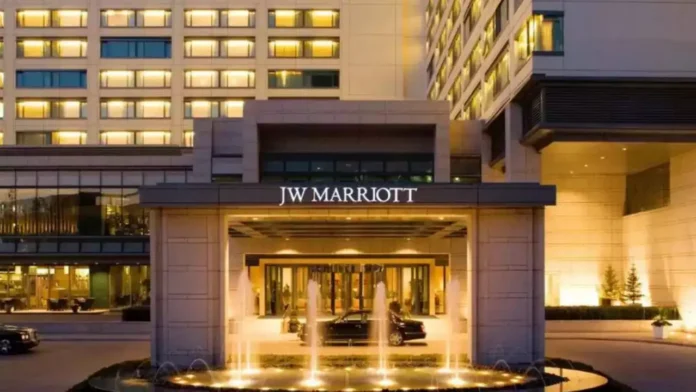
“We have 10 JW Marriott hotels, and there are ten in the pipeline. Our pipeline includes hotels in locations such as Ayodhya, Ranthambore, and Pahalgam. We have a hotel opening in Katra in a couple of months, and there is another hotel opening in Sonamarg. Our hotel in Shillong has done extremely well,” she said. “The good news is that we opened 12 hotels in India last year, and all hotels have opened with very healthy occupancies and average daily rates,” she added.
Marriott Anticipates the Return of Business Travel:
Meanwhile, Alex anticipates that the resurgence of international business travelers in India will drive growth this year.
“From 2020-2022, a lot of companies curtailed travel plans because of health or financial reasons. Since 2023 has been a record year for a lot of companies because of the surge in business, I am confident that there will be a lot of conferences and meetings and target-setting trips planned for 2024,” she said.
“We expect the medical sector and the manufacturing sector to contribute to the conferences business. The wedding segment is here to stay, as now there are expectations that more weddings should happen here,” she added.
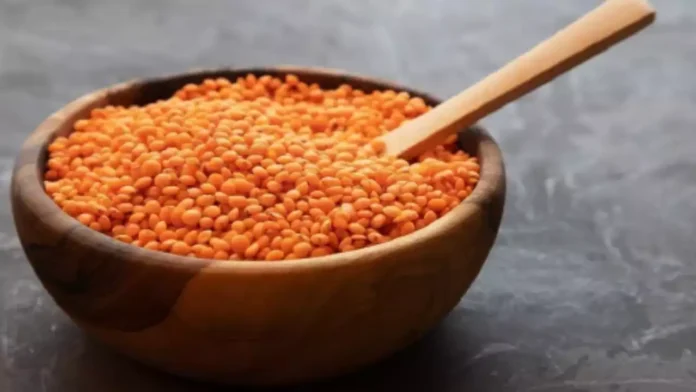
India’s masur (lentil) production is expected to reach an all-time high of 1.6 million tonnes in the 2023-24 rabi season, driven by an increase in cultivation area, according to Consumer Affairs Secretary Rohit Kumar Singh.
In the 2022-23 rabi season, masur production stood at 1.55 million tonnes, according to official data. Despite being the world’s largest producer and consumer of pulses, India imports certain pulses, including masur and tur, to address domestic shortages.
“This year, masur production is going to be at an all-time high. Our masur production will be the highest in the world. The acreage has increased. The dynamic is changing,” Singh said at an event organised by the Global Pulse Confederation (GPC) on Friday.
During the ongoing rabi season, the cultivation of masur has increased, with the total acreage reaching 1.94 million hectares as of January 12. This marks an increase from the 1.83 million hectares recorded in the same period last year, as reported by agriculture ministry data. Additionally, on the sidelines of the event, the Secretary stated that masur production is projected to reach 1.6 million tonnes for the current rabi season.
He also highlighted that the nation consistently produces an average of 26-27 million tonnes of pulses each year. While being self-sufficient in chana and moong, the country relies on imports to address shortages in other pulses such as tur and masur.
“While we pitch for self-reliance in pulses, we cannot ignore that for some time to come, we probably need to keep (pulses) imports running,” he said.
While the government is incentivising farmers to grow more pulses, one needs to keep in mind the limited area under cultivation, he added.
Sharing how difficult it is to balance the farmers’ and consumers’ interests, the Secretary said, “I think we are doing ok in the last couple of years. Despite weather disturbances, we have managed to keep the prices of pulses reasonably under control.”
We use cookies to ensure that we give you the best experience on our website. If you continue to use this site we will assume that you are happy with it.