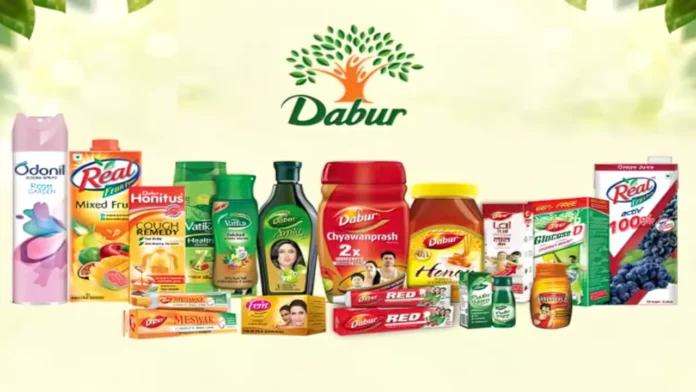
Dabur India Ltd, a prominent homegrown FMCG company, announced a 6.24% rise in its consolidated net profit, reaching INR 506.44 crore for the third quarter concluding in December 2023. In the corresponding period the previous year, the company recorded a net profit of INR 476.65 crore, as disclosed in a filing with the BSE.
The revenue from operations increased by 7 percent to INR 3,255.06 crore in the quarter under review, compared to INR 3,043.17 crore in the corresponding quarter of the previous fiscal year.
This was “driven by steady performance of both the Home & Personal care and Food & Beverages business,” said an earning statement from the company which owns brands such as Dabur Amla, Dabur Vatika, and juice brand Real.
Jubilant Foodworks Limited, the company behind popular fast-food brands Domino’s Pizza and Dunkin’ Donuts, reported a decrease of 18.2% in its consolidated net profit for the third quarter (Q2) ending December 2023. The net profit stood at INR 65.70 crore, down from INR 80.36 crore during the same period in the previous fiscal year, as stated in a BSE filing on Wednesday.
Nevertheless, its overall revenue increased to INR 1,382.27 crore in the third quarter of FY24, compared to the total income of INR 1,341.38 crore in the third quarter of FY23.
The total expenditures of the company for the December quarter also grew to INR 1,311.9 crore in Q3 FY24, in contrast to the total expenses of INR 1,229.8 crore in the corresponding period of the previous fiscal year, as stated in the regulatory filing.
Lotte Wellfood, a Korea-based FMCG company, has announced its plan to set up a new manufacturing unit in Haryana for the production of Lotte Pepero. The FMCG giant will invest over INR 200 crore in the establishment of this advanced manufacturing facility.
“This investment aims to strengthen the position of Lotte brands in India, a country with a confectionery market worth approximately 27,000 Cr,” said Lee Chang Yeop, CEO, Lotte Wellfood.
The proposed production line, set to be operational from mid-2025, will be positioned alongside their existing factory in Haryana, which currently produces Lotte Choco Pie.
“We plan to actively expand our investments in the Indian market, which holds substantial growth potential. Following Lotte Choco Pie success in India, introducing Lotte Pepero will enhance Lotte’s brand strength and expand sales in the Indian market,” commented Lee.
With this new line, the company aims to position Lotte Pepero as a premium brand in local markets, with subsequent plans to extend its reach into retail formats and e-commerce channels, as mentioned in the release.
The CEO additionally mentioned that Lotte India achieved sales of INR 654 crore in 2023 and is setting a target for over 20 percent growth in the year 2024.
Furthermore, Havmor Ice Cream, a subsidiary of Lotte Wellfood, will invest INR 436 crore in its new facility in Maharashtra. Production is set to begin in the second quarter of this year in Talegaon, Pune.
Founded in 1967, Lotte Wellfood, formerly known as Lotte Confectionery, is a division of Korea’s Lotte Group. Internationally, the brand operates through 9 subsidiaries in 8 countries, which include India, Kazakhstan, and Belgium.
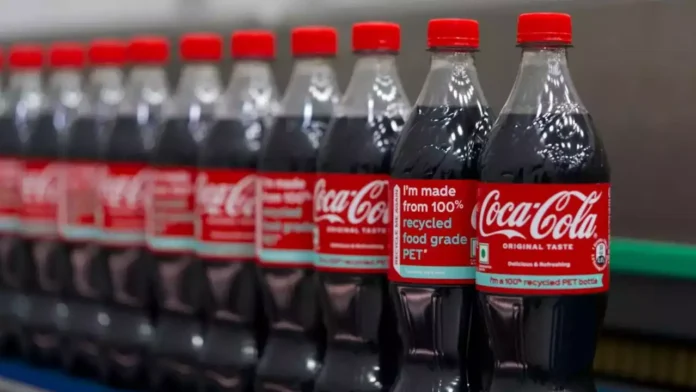
Hindustan Coca-Cola Beverage Pvt Ltd, a prominent FMCG company in India, announced on Wednesday that its bottling facility in the Bidadi Industrial Area in Ramanagara has been certified as carbon neutral.
This is the first bottling plant of Coca-Cola in India and the Southwest Asia region, to achieve this significant milestone according to the international standard PAS 2060, the company said in a statement.
The prestigious certification by DNV, the globally accredited registrar and classification society, will be issued to Hindustan Coca-Cola Beverage Pvt Ltd (HCCB) in May 2024.
This achievement aligns with HCCB’s ambition to reach Net Zero by 2050 and to reduce its greenhouse gas (GHG) emissions across its value chain by 25 per cent by 2030, the statement said.
On Wednesday, the Federation of Hotel & Restaurant Associations of India (FHRAI) outlined a series of pre-budget expectations with the goal of reshaping the hospitality sector in India.
The hotels’ industry association proposed granting universal infrastructure status to hotels with a project cost exceeding INR 10 crores, regardless of the city’s population. This initiative seeks to eradicate geographical biases and enhance growth and accessibility within the hotel industry.
“The inclusive approach aligns with the spirit of equitable development, promising a remarkable nationwide surge in the hospitality sector,” it said in its report.
The apex association for the hospitality sector emphasized that conferring infrastructure status would have a transformative impact, enabling the sector to access long-term loans at cost-effective interest rates, thereby expediting its overall growth. Additionally, the sector anticipates further stimulus packages and incentives from the government to better equip it in attaining the ambitious goal of hosting 100 million international tourists by 2047. This includes advocating for a favorable GST regime and implementing measures to simplify business operations within the hospitality industry.
“The hospitality industry is a vital contributor to India’s economic growth. We believe that the proposed pre-budget reforms are pivotal in catering to the untapped potential of our diverse nation, propelling the hospitality sector towards unprecedented growth. FHRAI urges the government to consider these reforms seriously, recognizing the crucial role of tourism and hospitality in shaping India’s economic landscape,” said Pradeep Shetty, President of the Federation of Hotel & Restaurant Associations of India.
As per the FHRAI pre-budget expectations report, the absence of a uniform system in the hospitality sector for approvals and compliance has been a concerning issue, hampering the growth of the tourism and hospitality sector in the country. From the inception of a hospitality project to the day-to-day running of the establishments, the sector is tangled in the complex web of bureaucratic processes.
“This needs to be simplified through measures such as a single window clearance system deemed approvals, self-regulation, merging of multiple approvals & licences and fixing a validity period of a minimum of 5 years for the license,” it said.
The federation emphasized the imperative to categorize tourism, travel, and hospitality under the concurrent list, aiming to establish a unified national framework shared between the Centre and States for all aspects of tourism and its related sectors.
The federation identified tourism as a crucial sector in the country, contributing approximately 10 percent to the GDP. Recognizing the substantial potential of the tourism and hospitality industry to serve as a primary catalyst for socio-economic development, it advocates for the declaration of tourism as a priority sector in the country. This designation would involve providing special incentives and benefits to empower the sector in realizing its full potential.
FHRAI has urged for a thorough examination and reduction of GST rates within the hospitality sector, with the aim of positioning India competitively on the global stage. In particular, the proposal advocates for the elimination of the 18 percent GST category applicable to hotels exceeding INR 7500, suggesting its merger with the more moderate 12 percent GST category.
Finance Minister Nirmala Sitharaman is all set to deliver the interim budget on February 1, ahead of the Lok Sabha polls scheduled in 2024.
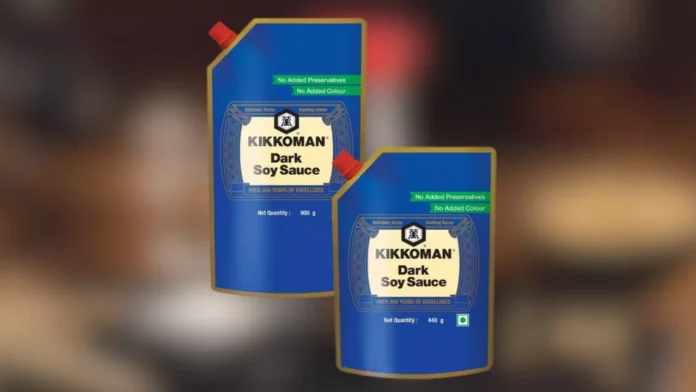
For the first time in its 350-year history, Kikkoman is launching a dark soy sauce crafted exclusively for the Indian market.
Demonstrating a dedication to Indian consumers, Japan’s Kikkoman has invested four years in creating a natural dark soy sauce. This variant, distinct from its globally renowned classic naturally brewed Kikkoman Soy Sauce, was crafted in response to the realization that many Indians expect Chinese and Pan-Asian dishes to have a visually appealing rich, dark color.
Kikkoman’s renowned classic soy sauce is celebrated for its natural brewing process involving only four essential ingredients: soybeans, wheat, salt, and water. This unique combination imparts the sauce with its distinctive clear reddish-brown hue. When creating a dark soy sauce specifically for the Indian market, Kikkoman aimed to deliver a similarly natural product, steering clear of the chemicals and artificial seasonings commonly employed by other dark soy sauce producers for color enhancement.
The outcome is the creation of Kikkoman Dark Soy Sauce, formulated by incorporating the traditional soy sauce as the foundation, along with Kikkoman’s proprietary technology designed to produce a rich, deep color.
“We set out to create a dark soy sauce that goes beyond superficial colour enhancements,” said Shohei Yokobari, Product Manager for Kikkoman Dark Soy Sauce. “It was a huge challenge to develop a natural product without added colouring or flavouring agents which is why it took four years of relentless effort and innovation. We are proud to present Kikkoman Dark Soy Sauce – a culmination of our rich brewing history and cutting-edge proprietary technology.”
Earlier, Indian chefs faced a challenge when aiming for a dark color in their dishes. While they could employ dark soy sauce for the color, it came at the expense of the delectable taste and umami characteristic of the classic Kikkoman Soy Sauce. Often, chefs resorted to combining the two, but this remained unsatisfactory as the dark soy sauces accessible to them often contained undesirable chemicals. Their aspiration was to present dishes to diners using natural and authentic ingredients. With Kikkoman Dark Soy Sauce, chefs have now found an ideal solution.
“The flavour profile is complex and deep and if I do a blind tasting, I can easily distinguish a dish made with Kikkoman Dark Soy Sauce and one made with other soy sauces,” said Chef Vikas Seth, culinary director at Embassy Leisure, Bengaluru.
Chef Huang Te Sing, executive corporate Chinese chef at The Oriental Blossom, Marine Plaza Mumbai, called the new sauce ‘fantastic’. “It has a distinguishable umami element and the right colour balance which goes very well in my Chinese dishes at Oriental Blossom.”
At the Berco’s chain in Delhi-NCR which has 46 outlets, Chef Vishal Kharel, culinary director, plans to start using Kikkoman Dark Soy Sauce across the board because of what he called its ‘awesome taste’. “It is more flavourful in taste and natural in colour which is a perfect combination,” said Kharel.
Crafted in India, this product utilizes Kikkoman Honjozo Soy Sauce from Japan as its primary ingredient, aligning with the ‘Make In India‘ initiative. For chefs who prioritize locally sourced ingredients, this aspect adds another layer of appeal to the new sauce.
The gems and jewellery industry is pressing for the rollback of the increased basic customs duty (BCD) on imported gold in the upcoming interim Budget, while also urging the government to introduce a more streamlined tax structure.
“The jewellery industry contributes nearly 7 per cent of India’s GDP and hence, deserves a pro-business environment,” stated Saiyam Mehra, Chairman of the All India Gem and Jewellery Domestic Council, the apex body for the gems and jewellery industry.
“This will also benefit the government. We urge the finance ministry to withdraw the increase in BCD on gold in the upcoming Union Budget and a rationalised tax structure may be developed to tackle the CAD issue,” Mehra said.
He further mentioned that at present, the Basic Customs Duty (BCD) stands at 12.5 percent ad valorem, bringing the total tax on imported gold to 18.45 percent.
He additionally appealed to the government to raise the transaction limit for PAN cards to INR 5 lakh, up from the existing INR 2 lakh, citing the surge in gold prices.
“With the rising gold rate, there is an urgent need to increase the PAN card transaction limit to INR 5 lakh from the present INR 2 lakh. A majority of consumers in rural India buy gold as an investment.
“Consumers also sell gold in case of an emergency. With the cash purchase limit of INR 10,000 per day under the Income Tax Act, consumers cannot sell gold jewellery to meet their needs. Hence, the daily purchase limit also needs to be increased to INR 1,00,000 per day,” he added.
Moreover, the GJC has proposed the reinstatement of the EMI facility for the gems and jewellery sector.
India Bullion and Jewellers’ Association (IBJA) Director and PNG Jewellers Chairman and Managing Director Saurabh Gadgil said, “The gems and jewellery industry awaits measures to fortify the IIBX exchange, enhanced liquidity for it, so that India becomes a price maker and not a price taker.”
“Reduction in import duties on gold will ensure that unscrupulous grey market players lose their edge and start getting more organised,” he added.
Major consumer goods firms such as Hindustan Unilever (HUL), ITC, Maruti Suzuki, and Parle Products have reported fluctuations in certain commodity prices. According to industry executives, these fluctuations are influencing the companies’ decisions on product pricing and affecting the recovery process of demand in specific categories.
In a investor presentation on Monday, ITC highlighted that although there is commodity price deflation on a year-on-year basis in the October-December quarter, there is a sequential increase in prices for specific commodities like wheat, maida, and sugar.
HUL, the largest consumer goods manufacturer in the country, stated that sectors such as health food drinks and coffee are experiencing rising inflation, affecting volume recovery. Additionally, in the tea category, consumers are downgrading due to the price disparity between premium and regular tea. The company has labeled this phenomenon as an ‘inflation-deflation cycle.’
Earlier this month, Ritesh Tiwari, the Chief Financial Officer of HUL, informed analysts that the foods and refreshment business maintained positive pricing, driven by inflation in commodities such as coffee and sugar.
Producers of automobiles and household appliances, including refrigerators, air conditioners, and washing machines, have reported a 3-4% sequential rise in commodity costs like steel, aluminum, and polypropylene over the past 2-3 months. While this situation justifies a potential price increase, appliance manufacturers are absorbing the additional costs, whereas car makers are passing on a portion to support the recovery of demand.
Maruti Suzuki implemented a slight 0.45% price increase, while Hyundai Motor raised prices by 0.5%. MG Motor India has not made any price adjustments thus far. Tata Motors has announced a conservative price hike of 0.7%, which will be effective from February 1. This marks one of the most restrained price hikes in the industry, as companies traditionally raise prices by 2-3% in January.
Mayank Shah, senior category head at Parle Products, noted that over the past 3-4 months, the prices of wheat have increased by 10-15%, and sugar has seen a rise of 20-25%. These hikes are attributed to shortages, offsetting the gains achieved from the significant 50% decline in edible oil prices.
“At an overall deflationary environment, certain commodities are acting volatile whose contribution is high in the total input cost. Due to this, we are not able to pass on the full benefit of dip in edible oil prices. Input cost deflation is not happening the way it was expected initially,” he said.
Shashank Srivastava, senior executive officer (marketing and sales) at Maruti Suzuki, stated that the price increase in January is among the most minimal the company has implemented in recent times.
“We did not want to raise prices and put pressure on the small car segment. While steel prices are still high, costs of some other commodities have softened balancing out that impact. We have also undertaken production efficiency measures to control costs and not burden our customers,” said Srivastava.
Material expenses make up 75-77% of the total vehicle costs across various car manufacturers.
Certainly, the majority of commodity prices have stabilized, leading to a decrease in the overall material costs for FMCG companies in recent months. In an effort to enhance volume recovery, FMCG companies have either lowered prices or increased product weight where feasible. Consequently, HUL witnessed a negative price growth of 2% in the December quarter, resulting in a flat underlying sales growth.
Saugata Gupta, Marico's
Managing Director and Chief Executive Officer
Marico Ltd. is set to achieve “meaningful profitability” in its portfolio of digital-first brands within the next three years, according to Saugata Gupta, the Managing Director and Chief Executive Officer.
The current portfolio includes acquired brands such as Beardo, True Elements, Just Herbs, and Plix, along with two organic brands—Pure Sense and Coco Soul—spanning both food and personal care categories.
In the third quarter of FY24, these brands achieved an annual run rate of INR 400 crore on exit basis. Marico’s objective is to generate 20% of its domestic business from the combined digital-first portfolio of food and premium personal care.
The company is actively pursuing increased profitability in these ventures through scale expansion. It anticipates that the overall Ebitda margin will not be significantly affected by the scale-up, given that the majority of products exhibit accretive gross margins.
“The biggest improvement in D2C business has been in terms of the burn rate… the entire diversified portfolio of both food and digital will become meaningfully profitable by 2027,” Gupta said.
The company aims to achieve a double-digit Ebitda margin for its digital-first brands within the next three years.
Beardo, the men’s grooming brand acquired by Marico in 2017, is already operationally profitable, according to Gupta. The premium personal care brand, Just Herbs, and the health food brand, True Elements, are expected to achieve Ebitda break-even next year. Additionally, Gupta anticipates that the plant-based nutrition brand, Plix, will generate INR 200 crore in revenue in FY25, with margins higher than the overall foods category.
For FY24, Marico is revising its expectations for the foods business, now anticipating a revenue of INR 750 crore compared to the previous guidance of INR 850 crore. The company aims for an organic top-line growth rate exceeding 20% for the overall foods segment in the coming year.
The packaged consumer goods manufacturer recorded a decrease in revenue growth and a volume growth of only 2% in the October-December quarter.
The company anticipates achieving positive top-line growth in Q4 as price cuts in its core brands, Parachute and Saffola, stabilize. This growth is poised to gain additional momentum, reaching double digits in FY25, supported by sustained price adjustments, revenue expansion, and modest inflation in copra. However, the gradual pace of volume growth is expected due to the slower-than-anticipated recovery in rural demand.
Gupta anticipates that volume growth will fall within the mid-single digits during the first quarter of FY25.
Marico has also guided for a gross margin expansion of 450-500 basis points at the FY23 level. This increase is expected to be supported by favorable input cost trends, a strategic emphasis on premiumization, and enhanced margins in the food and digital business. However, the growth in operating margins is projected to be constrained, reaching a maximum of 250 basis points, capped at 21%, owing to elevated advertising expenditures.
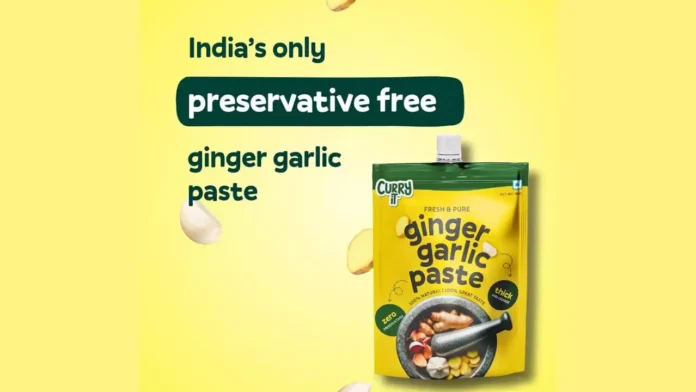
CURRYiT, a highly cherished food startup, is delighted to introduce India’s first Ginger Garlic Paste without any preservatives or additives. This innovative product disrupts the existing market landscape dominated by established brands relying heavily on additives and preservatives for everyday staples like Ginger Garlic paste.
Ginger and garlic are staples in most Indian cuisines, making ginger garlic paste a popular choice, especially in urban areas. Unfortunately, many packaged ginger garlic pastes contain preservatives and additives, resulting in a sour, industrial aroma that has discouraged mothers and home cooks from using these staples in their cooking.
At CURRYiT, the team undertook a comprehensive consumer survey to grasp the challenges and expectations associated with a staple product like this. Aligned with the brand’s commitment to producing clean and additive-free items, the solution was straightforward – introducing a preservative-free Ginger Garlic Paste for everyday culinary use. Through this product, CURRYiT challenges the widespread reliance on preservatives by major players, providing an alternative that prioritizes transparency and authenticity.
CURRYiT’s Ginger Garlic Paste is crafted using traditional homemade techniques, reminiscent of the age-old sil batta (mortar & pestle) method. This process aligns perfectly with the brand’s commitment to providing a fresh, pure, and flavorful experience that captures the essence of Indian culinary traditions.
Richa Sharma & Nischal Kandula, Co-Founders of CURRYiT said, “We believe in keeping it 100% Natural, ensuring 100% Great Taste. The preservative-free Ginger Garlic Paste by CURRYiT is a game-changer in the ready-to-cook category. Unlike other commercial pastes, we ensure a perfect balance of garlic and ginger without the foul smell and health impacts of preservatives or additives. It is truly a clean convenience.”
Testimonials from users commend the product’s natural taste and aroma, describing it as an essential element for curries and a valuable time-saving addition to the kitchen by eliminating the need to peel garlic and ginger. In contrast to competitors laden with preservatives, acidity regulators, stabilizers, xanthan gum, and thickening agents, CURRYiT distinguishes itself with a preservative-free formula—no preservatives, no acidity regulators, no stabilizers, no xanthan gum, no thickening agents.
Available at an affordable price of only INR 99, CURRYiT’s Preservative-Free Ginger Garlic Paste becomes a readily accessible option for enthusiasts and home chefs in search of high-quality culinary ingredients without any compromise.
We use cookies to ensure that we give you the best experience on our website. If you continue to use this site we will assume that you are happy with it.