Easy Trip Planners Ltd., trading as the online travel platform EaseMyTrip, has greenlit a plan to establish a luxurious 5-star hotel in Ayodhya, with an investment totaling INR 100 crore.
The investment will involve Jeewani Hospitality Pvt Ltd, a company currently under incorporation, through the issuance of fresh shares by Easy Trip Planners on a preferential basis, constituting 50% of the total share capital in the new entity, as stated in a filing to the exchange on Sunday.
The announcement comes after the inauguration of the Ram Temple in Ayodhya on January 22, which is expected to boost religious tourism as people flock to Ayodhya in the hope of visiting the temple.
Top business leaders and analysts anticipate high demand, extending beyond the initial two weeks and persisting even after the initial excitement surrounding the city diminishes.
For Easy Trip Planners, the move comes after its acquisition of a stake in a hotel company in December.
It secured a 13.39% stake in Eco Hotels and Resorts through a share swap deal.
“Our choice to invest in stakes aligns with our vision to contribute positively to the growth of eco-friendly and green hotels. This investment marks another milestone in our journey to diversify our portfolio and enhance the travel experiences we offer to our customers,” EaseMyTrip Co-Founder and CEO Nishant Pitti had said in a statement.
The company plans to utilize the funds to expand its manufacturing capacity and explore various product categories and segments, as outlined in a press release.
The brand aims to broaden its reach by establishing a nationwide distribution network within the next 12 months. In addition to strengthening its domestic distribution channels, Yu will consolidate its position in South Africa, where it has already established a presence across 2000 stores.
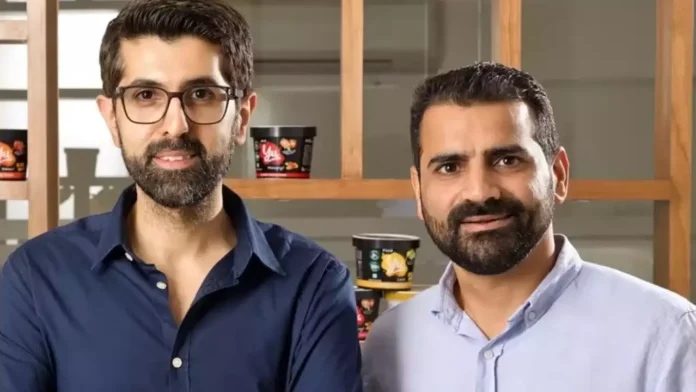
Founded by Bharat Bhalla and Varun Kapur, Yu is revolutionizing packaged foods by using 100 percent natural ingredients, aiming to replicate the freshness of homemade meals. The brand debuted with instant bowls in 2021 and has since expanded its offerings to include ready-to-cook noodles, pastas, and natural beverages. Last year, the brand introduced its inaugural 100 percent Natural Coconut Water and plans to further enhance its beverage selection this summer. With significant business momentum, Yu has achieved remarkable growth, with sales of 1.5 million units in Q3-FY24 (October-December 2023), marking over 200 percent growth quarter over quarter.
Sharing their excitement, Founders Bharat Bhalla and Varun Kapur jointly expressed, “Since the last fundraise, Yu has grown exponentially having deepened its penetration in the Indian market and opened up several export markets like South Africa where Yu now has a nationwide presence. It is extremely heartening to see a young Make in India brand successfully selling its products in global markets like South Africa, the Middle East, and Australia. The funds raised will allow us to augment our manufacturing capacity and grow our distribution in India and globally.”
In addition to Ashish Kacholia and the Asian Paints Promoter Group (Manisha Choksi, Varun Vakil), Yu boasts a roster of investors including Indian cricketer Hardik Pandya, Sameer Mehta (Founder of Boat), Srikrishna Dwaram (Partner at True North Private Equity), Nikhil Srivastava (PAG Private Equity), and the DPIIT’s Start Up India Seed Fund.
According to a report from the marketing intelligence platform IndustryARC, the packaged food market in India is projected to reach $3.4 billion by 2027. This growth is expected to occur at a compound annual growth rate (CAGR) of 4.6% during the forecast period of 2022-2027. The report also indicates that the ready meals segment is anticipated to experience the highest growth rate, with a CAGR of 5.3% over the same forecast period.
Amazon Seller Services, the marketplace division of Amazon India, has generated INR 830 crore from its US parent.
As a part of this capital injection, Amazon Seller Services has allotted 830 million equity shares to Amazon Corporate Holdings Ltd and Amazon.com.inc.
On January 19, the company injected INR 350 Cr into its fintech unit, Amazon Pay. According to ET, this raises Amazon’s total investment in its India entities to over INR 1,000 Cr for the year.
In November 2021, Amazon Seller Services Private Limited secured a corporate round funding of INR 1,460 Cr from its parent company.
The injection of funds into the marketplace continues despite the US group’s heightened focus on bolstering its cloud services division, Amazon Web Services, over its core ecommerce operations.
In June of last year, CEO Andy Jassy revealed plans for an extra $15 billion investment in India, aiming for a total investment exceeding $26 billion by 2030.
In December, reports suggested a reshuffle in top-level management in India, with Noor Patel, the former head of category management in India, relocating to the US.
According to sources, the restructuring might result in a fresh dual leadership arrangement, with both Patel and Amit Agarwal, senior vice president for India and emerging markets, taking the helm.
During the fiscal year ending on March 31, 2023, Amazon Seller Services saw a 3.4% rise in revenue to INR 22,198 Cr, accompanied by a one-third widening of its loss to INR 4,854 Cr.
In 2023, Amazon reduced its workforce in India by laying off between 500 and 1,000 employees, as part of global job cuts, and additionally ceased operations of smaller ventures such as food delivery services.
The investment aligns with reports of Amazon venturing into the logistics sector in India, unveiling a new arm named Amazon Shipping. The company’s entry into this realm involves initially managing non-Amazon orders. Amazon has begun forging partnerships with direct-to-consumer (D2C) brands, logistics aggregators, and other enterprises directly catering to consumer orders to launch this fresh initiative.
In 2023, Amazon injected an extra INR 400 Cr into its Indian logistics division, Amazon Transportation Services.
With Valentine’s Day approaching, Blinkit, the online retailer under Zomato‘s umbrella, has unveiled a fresh feature known as ‘Single Mode,’ aimed at solo shoppers. This novel inclusion enables users to browse through a thoughtfully curated assortment of products tailored to suit individual preferences and requirements for the occasion. Users have the flexibility to toggle the mode on or off to browse the curated selection of products.
With the ‘Single Mode’ feature, users can explore a range of product categories tailored for solo activities, including options for indulging in solo parties, binge-watching sessions, self-care routines, and even personalized gifts for oneself.
On the other hand, disabling the ‘Single Mode’ reveals an array of romantic offerings tailored for couples celebrating the week of love. Blinkit presents an extensive assortment, spanning from classic presents such as flowers and chocolates to carefully curated date suggestions and intimate items. This comprehensive selection aims to assist couples in celebrating the global holiday together.
A fascinating addition within the ‘Plans for One’ segment is the option titled ‘Pray for a good partner’, which offers pooja items for those seeking companionship in the future.
The incorporation of these extra features coincides with a surge in orders leading up to Valentine’s Day, with Blinkit noting increased sales compared to previous years. Albinder Dhindsa, the CEO of the company, expressed contentment with the platform’s capacity to streamline Valentine’s Day gifting, highlighting a notable increase in orders, as reported by News18.
Despite having a smaller revenue base than Zomato, Blinkit has experienced impressive growth in advertising revenue, marked by a significant rise in the number of advertisers on the platform during the October-December (Q3) quarter of the fiscal year 2023-24. The company’s advertising revenue soared by 220 percent year-on-year (YoY), more than doubling Blinkit’s gross order value (GOV), which increased by 103 percent in the same period. Additionally, the number of advertisers surged by 130 percent to 557 in Q3FY24, compared to 242 during the corresponding period the previous year.
As per Blinkit’s senior management, the platform is increasingly becoming the favored choice for advertising among both established and emerging brands in the country, indicating its rising significance in the online retail arena.
Following robust Q3 FY24 earnings, shares of foodtech major Zomato surged as much as 6.2% during intraday trading on Monday (February 12), touching a fresh 52-week high at INR 158.7 on the BSE.
Last week, the company announced its third consecutive profitable quarter. Its consolidated profit after tax (PAT) nearly quadrupled to INR 138 Cr, primarily driven by the robust growth of its quick commerce business, Blinkit.
Although the gross order value (GOV) of its food delivery business saw a modest 6.3% sequential growth to INR 8,486 Cr in Q3, Blinkit experienced a substantial 28% quarter-on-quarter (QoQ) increase in GOV to INR 3,542 Cr.
Fueled by the company’s Q3 earnings, its shares gained almost 6.3% in the two previous trading sessions.
Jefferies, Nuvama, HSBC, and Kotak, among several other brokerages, have raised their price targets (PTs) on Zomato in light of the Q3 results.
HSBC raised its price target (PT) on the stock to INR 163 from the previous INR 150, suggesting a 9% upside from the stock’s closing price on Friday.
“In the medium term, we expect a further increase in take-rates and dilution in Gold proposition to drive the current EBITDA margins of 3% to the 4-5% range; this is likely to be a sustainable long-term profitability range for the business,” the brokerage said.
Regarding Blinkit, HSBC anticipates that growth will persist, particularly in the top 10 cities in the medium term. This projection is based on the enhancement of quick commerce penetration and the observed market share transition from mom-and-pop stores to quick commerce.
“Currently, Blinkit is mostly attracting customers’ sales promotion budgets and we see addressable spend growing materially if the company is able to target these customers’ corporate level marketing spend,” it added.
Conversely, Jefferies elevated its price target (PT) on the stock to INR 205 from the previous INR 190, whereas Kotak Institutional Equities raised its fair value to INR 190 from the earlier INR 160.
“Zomato’s medium-term revenue guidance of 40% and food delivery revenue growth guidance of 20% implies Blinkit can grow at a rapid 60-70% YoY growth rate in the next 2-3 years,” said Kotak.
Out of the 27 brokerages analyzing the stock, 24 have assigned a ‘buy’ or higher rating to Zomato.
The company’s shares rallied today amidst reports of a Delhi court summoning it in a civil suit. The suit seeks a restraining order against the company for its alleged involvement in the “false and fraudulent” practice of delivering fresh food from iconic restaurants under its sub-category, ‘Dilli ke Legends’.
Following a remarkable 100% surge last year, Zomato shares have already recorded a 25% increase year to date in 2024. As of 2:40 PM IST on Monday, the shares were trading 3.6% higher at INR 154.9 on the BSE.
According to reports, a court in Delhi has summoned Zomato in a civil suit seeking a restraining order against the foodtech giant for continuing to allow users to order “hot and authentic food” from “iconic restaurants” across the national capital.
During the court session, a plea filed by a Gurugram resident alleged that Zomato was involved in the “false and fraudulent” practice of delivering fresh food from renowned restaurants under its sub-category, ‘Dilli ke Legends’.
In an order passed recently, Civil Judge Umesh Kumar said, “Issue summons of the suit and notice of application.”
As per the plea, Sourav Mall placed an order on October 24th last year from three different eateries located in Jama Masjid, Kailash Colony, and Jangpura. Subsequently, he tracked the delivery partner and discovered that the order was collected from an “unknown and unnamed” location rather than the original restaurants.
“Why was the food picked up from a nearby location when there is no branch of the restaurant partner there? Why is the food not delivered in the original packaging of the restaurant partner? What is the guarantee that the food has been prepared by the restaurant partner? What is the guarantee that the food is prepared fresh and hot?” the plea said.
The statement added that it was “inexplicable” how Zomato managed to deliver from Delhi’s iconic restaurants to locations in Gurugram and Noida within 30 minutes.
The plea said, “Such representation to users, customers or patrons of Zomato, is indeed intended to deceive the public at large.”
The plea was submitted as a “representative suit” under the Code of Civil Procedure (CPC), aiming to address the concerns of multiple affected individuals.
The case has been scheduled for further proceedings on March 20th.
Zomato recently announced a consolidated profit after tax (PAT) of INR 138 Cr for the December quarter (Q3) of the financial year 2023-24 (FY24), driven by significant growth in its quick commerce business.
Zomato stated that it remains on course to achieve its target of adjusted EBITDA break-even for Blinkit by the June quarter of the financial year 2025.
The majority of the total operating revenue continued to be generated by its food delivery segment. Although the segment’s revenue increased by 29% year-over-year to INR 2,205 Cr, the sequential growth fell short of the company’s expectations.
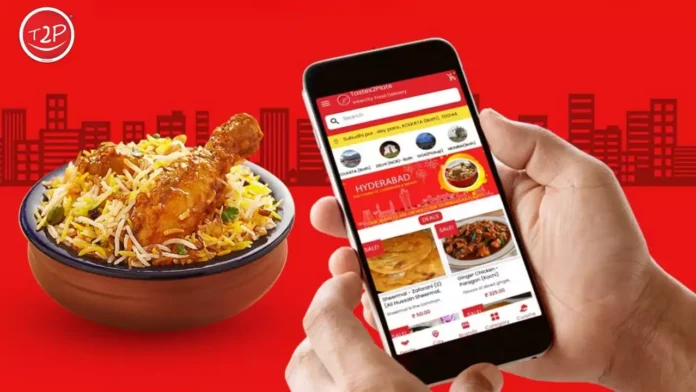
Kolkata-based intercity cooked food delivery startup, tastes2plate.com, is close to securing INR 30-40 crore in Series A venture funding. The company aims to fuel exponential growth in the online food delivery market, which holds the potential to reach $3-5 billion within the next few years, according to an official statement.
Led by IT professional Gyan Srivastava, the bootstrapped startup invested over three years to stabilize its business model through extensive innovation in packaging and logistics.
This allowed the company to become the lowest-cost player in the industry, he said.
“We are very close to raising INR 30-40 crore in Series A funding,” said Srivastava, CEO of tastes2plate (T2P) owned by Charabuni Services.
The company aims to utilize the funds primarily for capacity building in marketing, information technology, and logistics infrastructure, as stated by him.
“The funding will help us achieve 30-40 per cent month-on-month growth in the number of deliveries compared to our current volume.
“While the total online food delivery business is $19.6 billion with a CAGR of 20 per cent, the intercity delivery segment is still nascent but growing exponentially. Currently, we average over 35,000 deliveries per month,” Srivastava said.
Picked food is packed from one city and shipped to another, ensuring freshness upon delivery within 12 to 24 hours, as explained by the official.
Regarding competition, Srivastava claimed, “Currently, one other app operates in this domain, but another dominant online food delivery app is not consistently active in the market. We are the only company focused purely on intercity food delivery.”
He asserted that tastes2plate, currently operational in approximately 20 major cities, provides customers with the most economical overall food delivery cost.
“This was possible only through innovative packaging that meets Indian Institute of Packaging standards,” Srivastava stated.
On the T2P platform, customers typically pay an average of INR 120 per kilogram, plus packaging, for orders from participating restaurants. For customized deliveries, the rate is INR 210 per kilogram, inclusive of packaging costs.
Interestingly, there is also a growing demand for delivering home-cooked food to loved ones in other cities, he noted.
“Apart from the increasing trend of ordering delicacies from other cities, trial deliveries of home-cooked food for relatives and friends have seen good traction. This is why we are launching this service as a full-fledged offering,” Srivastava said.
Currently, it is offering its services in cities such as Kolkata, Patna, Lucknow, Delhi, Gurgaon, Noida, Jaipur, Amritsar, Mumbai, Hyderabad, Bangalore, Kochi and Goa.
The company’s plan is to expand its service to Ahmedabad, Chennai, Kanpur, Ludhiana, and Guwahati within the next 30 to 45 days.
Ginger Hotels, the value brand of Indian Hotel Company (IHCL), will lead the growth of new businesses as it embarks on an aggressive expansion plan, including establishing a presence in all the 800-odd district headquarters in the country, a top executive said.
Deepika Rao, Executive Vice President for New Businesses and Hotel Openings at IHCL, anticipates substantial growth for TajSATS, its airline catering business. This growth is projected to contribute significantly, causing the share of new businesses in IHCL’s top line to more than double to 25% over the next few years from the current 11% in the December quarter.
“These two will lead the growth momentum both in terms of revenue and profitability,” she stated.
Other new ventures of IHCL include the food delivery service Qmin, the membership-based business club Chambers, and Ama Stays & Trails, a collection of cottages, bungalows, and villas.
Taj SATS is projected to achieve a revenue of INR 1,000 crore in FY25, compared to INR 650 crore in the 12 months ending January. While airlines will remain the primary focus, Qmin has the potential to serve as a brand for TajSATS’ institutional catering, she noted.
Over the last four to five years, TajSATS has branched out into non-airline ventures, entering the quick service restaurant arena with Starbucks and Chayos as its patrons.
Rao mentioned that with Starbucks nearing 1,000 outlets nationwide, TajSATS will likewise expand its operations as the coffee giant continues to grow.
Regarding Ginger Hotels’ expansion strategy, she stated that the chain currently operates 63 hotels with an additional 27 in development. Under the company’s strategic vision, Ahvaan, Ginger aims to achieve a portfolio of 125 hotels by FY26. This expansion follows an asset-light model, where larger projects with over 300 rooms typically operate under management contracts, while smaller ones with up to 80 rooms are leased for up to 30 years. Approximately 30% of Ginger hotels are managed, while the remaining properties are either owned or leased.
“If there’s one brand in the IHCL portfolio that can travel across the length and breadth of the country with the right size, it’s Ginger,” Rao said.
Competing with InterContinental Hotel Group’s Holiday Inn Express and Accor Group’s Ibis, the hotel brand owned by IHCL subsidiary Roots Corp maintains an average daily room rate of INR 6,500.
The number of rooms in Ginger hotels varies from 80 to over 300, depending on the specific micro-market where they are located.
In early 2019, Roots Corp repositioned Ginger as a ‘lean luxe’ brand, transitioning it from an economy-oriented identity to a lifestyle-focused one.
The move has paid off.
Ginger Hotels’ revenue surged to INR 336 crore in the nine months of FY24 ending in December, up from INR 238 crore for the entire FY20. Similarly, earnings before interest, taxes, depreciation, and amortization (EBITDA) increased to INR 123 crore from INR 55 crore during the corresponding period.
Rao conveyed confidence in the hotel chain’s ability to sustain its 30% revenue growth rate. She noted that nearly two-thirds of the portfolio has already transitioned into lean luxe, with the remainder expected to be completed by the end of the next fiscal year.
“Whenever we have converted from the old avatar to the new re-imagined one, we have seen an uplift in the rate by at least 30%.”
The in-sourcing of food and beverage (F&B) has also contributed to revenue growth and improved the customer experience. The all-day dining restaurants in Ginger have been rebranded as Qmin.
“The new business has started stitching together,” Rao said. “Almost 50-55% of the Rs 100-crore of GMV (gross merchandise value) which Qmin is expected to have by end of the year, will now come from Ginger Hotels.”
She added that as Ginger expands, Qmin will also reap the benefits, with an anticipated growth of at least 20%.
Shares of Honasa Consumer, the owner and operator of Mamaearth, saw a nearly 10% jump to reach the day’s high of INR 475 on the NSE on Monday. This surge came after the company reported a 265% year-on-year (YoY) growth in its consolidated net profit to INR 26 crore for the quarter ended December, up from INR 7.1 crore in the year-ago period.
Around 9:50 am, the NSE saw trading of over 18.53 lakh shares, with the total value of shares traded standing at INR 85.07 crore.
In the third quarter, revenue from operations witnessed a 28% year-on-year (YoY) increase, reaching INR 488 crore, up from INR 382 crore recorded in the corresponding quarter of the previous year.
In the reporting quarter, consolidated EBITDA surged by 192% year-on-year (YoY) to INR 34.5 crore, with margins experiencing a YoY improvement of 397 basis points to 7.1%.
During the quarter, the company successfully established and expanded into new categories such as Mamaearth color cosmetics, which now boasts an annual recurring revenue (ARR) exceeding 150r+. Additionally, Mamaearth achieved remarkable growth in household penetration for facewash by 280 basis points and for shampoo by 110 basis points over the span of two years.
Younger brands continue their growth trajectory, with The Derma Co achieving EBITDA profitability. Additionally, approximately 122 new products were launched in CY23.
Several major consumer goods corporations such as Nestle, Dabur, Coca-Cola, Mondelez, and Procter & Gamble are planning significant investments in India to expand production capacity and promote higher-end products, despite a prevailing downturn in demand, especially for mainstream products.
Several of these companies are increasing their investments significantly, driven by optimism for a demand resurgence in the upcoming fiscal year.
“We are investing 7-8% of our turnover on capex, which is much higher than it ever was,” Nestle chairman Suresh Narayanan said.
“Despite stress points in demand, there’s a wealth effect phenomenon that is taking place. Stock markets have been booming and those at upper middle class and middle class, they feel good about what they are buying,” he said. “Food inflation is hurting but we are hopeful that once inflation abates, things will be better,” Narayanan added.
The manufacturer of Maggi noodles and Nescafe coffee has committed investments of INR 6,500 crore into the Indian market by 2025, covering a five-year window.
Two weeks ago, Dabur revealed its second-largest capital expenditure in India, totaling INR 135 crore, for establishing a greenfield plant in South India.
“We expect the demand situation to improve as we enter the new financial year; we are looking at both urban and rural markets to drive growth,” Dabur’s chief executive Mohit Malhotra said.
He mentioned that the new facility will cater to rural distribution, innovation, premiumization, and the increasing demand in the southern region, representing 18-20% of the company’s annual domestic sales.
While the demand for mainstream products has been lackluster, demand for premium categories, particularly in urban markets, has remained stable.
According to a report released last Tuesday by research firm NielsenIQ, the FMCG sector’s value growth, which experienced two years of growth, is expected to decrease by half to 4.5-6.5% this year, compared to 9.3% in 2023 and 8.4% in 2022. This decline is attributed to factors such as inconsistent rains, an extended rural slowdown, and food inflation, resulting in a slowdown in sales across consumer staples and daily essentials.
During the October-December 2023 quarter, the FMCG industry witnessed a 6% year-on-year increase in value and a 6.4% rise in volumes. However, sequentially, both value and volumes experienced a decline throughout the quarter, as reported by NielsenIQ.
The industry is banking on a revival in the new fiscal year, anticipating an increase in mainstream volume and value growth, supported by the injection of incomes into the economy. This optimism is bolstered by factors such as the upcoming general elections, a push in capital expenditure, and the stabilization of commodity prices.
Hindustan Coca-Cola Beverages (HCCB), the bottling partner of Coca-Cola, has revealed plans to invest INR 3,000 crore in Gujarat to produce juices and aerated drinks. The new capacity is expected to become operational by 2026.
Procter & Gamble and Mondelez’s investments of INR 2,000 crore and INR 4,000 crore, respectively, in new plants are progressing as planned and are slated to be operational in the coming years.
We use cookies to ensure that we give you the best experience on our website. If you continue to use this site we will assume that you are happy with it.