Wednesday, February 11, 2026
Home Blog Page 649

Blue Tokai reports 70% revenue surge in FY23; net loss soars 3.5 times amidst aggressive expansion

0
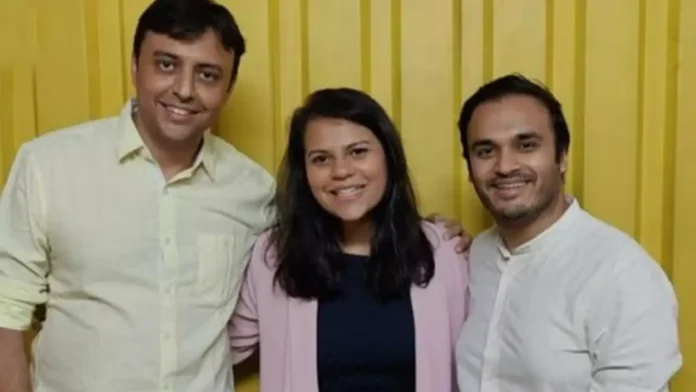
Blue Tokai Co-Founders: Shivam Shahi, Namrata Asthana, Matt Chitharanjan

Blue Tokai, the specialty coffee brand backed by A91 Partners and actor Deepika Padukone‘s Ka Enterprises, reported a noteworthy surge in operating revenue during FY23, jumping over 70% to INR 127 crore compared to the previous year.

In the fiscal year ending March 2023, the Gurugram-based company experienced a 3.5-fold increase in net losses, reaching INR 43 crore. This uptick in losses can be attributed to the company’s substantial expansion efforts in a competitive market, where it contends with venture-backed players like Third Wave Coffee and established giants such as Starbucks India and Cafe Coffee Day.

According to regulatory filings obtained from Tofler, Blue Tokai saw a significant rise in total expenses, surging from INR 90 crore in the preceding fiscal year to INR 166 crore in FY23. This increase was predominantly driven by elevated costs associated with raw materials, employee salaries, and rents.

Continue Exploring: Bollywood star Deepika Padukone invests in specialty coffee brand Blue Tokai

Over the past year, the company has expanded its operations by opening over 30 stores, bringing the current total to approximately 92 outlets. Cafes contribute to almost two-thirds of Blue Tokai’s revenue.

Blue Tokai functions across three domains: brick-and-mortar café establishments, online retail and marketplace platforms, and business-to-business (B2B) offerings.

The firm has a presence in both India and Japan, boasting four roasteries and a chain of physical stores across cities like Delhi-NCR, Mumbai, Bengaluru, Hyderabad, Kolkata, Chandigarh, Mohali, and Pune. Additionally, it hosts periodic pop-ups in Tokyo.

Continue Exploring: Indian specialty coffee brand Blue Tokai eyes 130 outlets and new overseas markets

In fiscal year 2023, the company experienced raw material costs amounting to INR 50 crore, nearly doubling the INR 26 crore reported in FY22. This increase aligned with the upward trend in input costs observed across the food and beverage sector, driven by persistent high inflation rates.

Blue Tokai’s employee benefit expenses nearly doubled in FY23, reaching INR 43 crore from INR 22 crore a year earlier. Concurrently, the company’s rent costs also increased at a similar rate, climbing to INR 17 crore in FY23 from INR 9 crore in FY22.

In January last year, Blue Tokai announced a $30 million fundraise led by A91 Partners. At the time, the company had said it planned to add 200 stores over a three-year time frame. The fundraise took Blue Tokai’s total amount raised in external capital to $46 million.

Third Wave Coffee, a competitor of the company, secured a $35 million funding round led by the private equity firm Creaegis in September. During that period, it was reported that the Bengaluru-based quick-service restaurant (QSR) chain was achieving an annualized revenue run rate of INR 300 crore. However, in December, the company implemented workforce reductions, affecting at least 10% of its employees across different verticals.

Continue Exploring: Third Wave Coffee raises $35 Million in Series C funding round led by Creaegis, plans to enhance cafe experience and expand technology innovation

In September, Abcoffee, a tech-enabled specialty coffee chain, successfully raised $2 million in a seed funding round with Tanglin Venture Partners as the lead investor. Competitors in this sector include Slay Coffee, supported by Fireside Ventures, Alteria Capital, and Rebel Foods (the parent company of Faasos), along with Sleepy Owl Coffee, Hatti Kaapi, and Rage Coffee.

Continue Exploring: abCoffee secures $2 Million in seed funding to fuel growth in India’s specialty coffee market

Traditional participants like Starbucks India and Cafe Coffee Day have experienced growth in a sector that analysts suggest is undergoing heightened consumption. During the first half of fiscal year 2023-24, Coffee Day Enterprises, the parent company of Cafe Coffee Day, disclosed an 18% year-on-year surge in its operating revenue, reaching INR 481 crore, along with a net profit of INR 31 crore during the same period.

In January, SnackFax reported that Starbucks CEO Laxman Narasimhan stated the company’s intention to open a new cafe every third day in India, with the goal of reaching 1,000 stores by 2028.

Continue Exploring: Starbucks CEO bullish on India’s coffee market, targets 1000 cafes by 2028

The Indian arm of the US-based company, operating as a joint venture with Tata Consumer, manages approximately 400 cafes across India. In the fiscal year 2022-23, Tata Starbucks achieved a revenue surpassing INR 1,000 crore, marking the first time it has crossed this milestone since its establishment in 2012.

India also witnessed the entry of other global players into the coffee quick-service restaurant (QSR) segment, including Canada’s Tim Hortons and the British brand Pret A Manger.

Continue Exploring: Reliance ventures into the coffee industry with the opening of Pret A Manger’s first shop in Mumbai

Advertisement

NDFCI unveils MEWA India 2024: India’s first B2B exhibition for nuts and dry fruits industry

0
Sameer Bhanushali, Chairperson MEWA India 2024

MEWA 2024, a first-of-its-kind exposition in India, is set to host a two-day trade meet on the 16th and 17th of February. Organized under the aegis of India’s recently established Nuts & Dryfruit Council of India, this event will feature the largest-ever representation from the Nuts & Dryfruit Trade of India. The two-day showcase aims to highlight the immense potential of India’s vibrant, highly diversified, and the world’s fastest-growing Nut & Dryfruits market.

The significant participation confirmation from delegates, including key figures in the international trade scene, underscores India’s increasing prominence in the global trade of Nuts & Dryfruits. This event provides a platform for interaction between Indian Buyers, Sellers, and Industry Leaders with the international trade community.

Yash Gawdi Treasurer, NDFCI Gunjan jain President, NDFCI Raju Bhatia Honorary President, NDFCI Rahul kamath Vice President, NDFCI Sameer Bhanushali Chairperson MEWA 2024

Historically, similar events have taken place in globally renowned locations with limited involvement from Indian participants. Aligned with the Prime Minister’s “Make in India” vision and the objective of bolstering and advancing India’s food processing infrastructure, these endeavors aim to shift the focus towards India. In the upcoming years, this initiative will bring the nuts & dryfruit industry to Indian shores, providing a platform to exhibit the burgeoning potential of the evolving Indian market.

MEWA 2024, spearheaded by NDFCI, endeavors to unite India’s Nut & Dryfruit Trade, a significant portion of which remains unorganized. The objective is to create a unified voice and harness the collective strength of its members, ultimately tapping into the full potential of India’s rapidly expanding market to benefit all stakeholders.

Gunjan Jain, the President of NDFCI, expressed excitement about the anticipated higher growth prospects in the coming years. She envisions India’s market expanding to nearly one lakh crores in the next five years, a substantial increase from the current level of about fifty-six thousand crores. India holds a prominent position as one of the largest importers and consumers of cashews, dates, peanuts, and almonds, closely followed by raisins, dried figs, and walnuts. The consumption of dry fruits witnessed a remarkable 20% increase in 2023, marking the most significant surge in the past five years. This noteworthy upswing is attributed to heightened health consciousness among consumers in the post-pandemic period.

Continue Exploring: Dry fruit consumption in India soars by 25% in 2023, fueled by health-conscious trend post-pandemic

Speaking during the press conference, Sameer Bhanushali, Chairperson of MEWA 2024, said, “As a passionate proponent of India First, India Foremost, MEWA India 2024 is not just a trade show; it is a celebration of innovation, collaboration, and the remarkable potential within the nuts and dry fruits industry. The event, slated for two impactful days, offers a golden opportunity to connect with industry leaders, buyers, sellers, and international delegates, showcasing the dynamic landscape of the Indian nuts industry.”

MEWA 2024 presents a unique opportunity for participants to gain valuable insights through engaging panel discussions, enlightening fireside chats, and informative product-led seminars. The trade show also serves as a networking platform, facilitating connections with service providers and exporters and fostering meaningful relationships within the industry. With participants from over 20 countries, MEWA 2024 is set to host 200+ exhibitors and 3000+ attendees, promising to advance the industry by promoting research, innovation, production, trade, and consumption. Positioned as a global platform, MEWA 2024 is on track to redefine standards and promote collaborative growth in the nuts and dried fruits sector.

Advertisement

Nestlé India collaborates with SOCIAL and BOSS Burger to debut MAGGI’s plant-based menu across major cities

0
Nestlé India collaboration

Nestlé India has collaborated with restaurant chains SOCIAL and BOSS Burger to launch a test phase for MAGGI Professional’s plant-based product range. This lineup includes a burger patty and alternatives to traditional meat-based mince, now featured in The New Irresistible Menu. The menu is available for a limited three-month period at 42 SOCIAL and 40 BOSS Burger outlets across Delhi (NCR), Mumbai, Bengaluru, Pune, Dehradun, and Chandigarh, starting January 27, 2024.

Designed for culinary professionals, the plant-based collection mimics the sensory qualities of chicken, delivering a recognizable bounce and juiciness. These alternatives are abundant in protein and fiber, and naturally devoid of cholesterol, appealing to the tastes of a youthful demographic with international cultural influences and conscientious consumption habits.

SOCIAL’s new menu showcases plant-based offerings such as the Sensational Seekh #NotGuilty; Chilli #NotChicken; and Garden Club Sandwich.

BOSS Burger’s new menu includes options like The ImBOSSible Cheeseburger and the Crumb De La Avo Burger.

Expressing joy in the collaborations, Suresh Narayanan, the chairman and managing director of Nestlé India, underscored the company’s dedication to offering a wide array of food choices for consumers.

“We are confident that the chefs would enjoy cooking with this range and create novel dishes for their consumers,” he said.

Riyaaz Amlani, the founder and managing director of Impresario Entertainment and Hospitality Pvt. Ltd., characterized the partnership as a noteworthy stride towards a dining approach that is more sustainable, conscious, and innovative.

Starting January 27th, 2024, patrons can enjoy The New Irresistible Menu at designated SOCIAL outlets and conveniently place orders for delivery through BOSS Burger using DotPe, Swiggy, and Zomato.

As per a Good Food Institute (GFI) report, the rapidly growing smart protein industry in India is expected to experience significant expansion, reaching an estimated value of USD 4.2 billion by 2030. The surge is driven by the involvement of more than 113 startups, actively contributing to the growth of plant-based, fermentation, and cultivated proteins within the sector.

Continue Exploring: The Good Food Institute India unveils first comprehensive report on India’s $4.2 Billion smart protein sector

India’s entry into the smart protein industry holds significance not only at a national level but also aligns with the global trends set in motion by the FMCG giant.

In December 2023, Nestlé introduced Maggi Soya Chunks on a global scale, presenting a plant-based meat alternative specifically designed for Central and West Africa. Crafted from soy, the product aims to address the issue of protein deficiency, providing an affordable option fortified with essential elements like iron and zinc.

Continue Exploring: Nestlé tackles protein gap with affordable, plant-based Maggi Soya Chunks

Céline Worth, R&D program manager for affordable nutrition at Nestlé, emphasized the company’s dedication to providing economical and nutritious products while addressing the protein gap with the use of plant-based ingredients.

Additionally, in December, Nestlé’s Garden Gourmet reintroduced Voie Gras, its foie gras alternative, for a limited time in Belgium, Spain, and The Netherlands.

The animal-friendly alternative was originally introduced in Spain and Switzerland in 2022.

Marjolijn Niggebrugge, European business head of plant-based meal solutions at Nestlé, said, “Voie Gras is a great-tasting seasonal option to delight consumers who continue to look for plant-based alternatives while paying attention to the environment and animal welfare.”

Continue Exploring: GFI India study unveils popular choices in plant-based foods: Chicken seekh kabab and soy milk lead the pack in consumer trials

Advertisement

The Cinnamon Kitchen’s INR 60 Lakh ‘Shark Tank’ deal marks a sweet success for the bakery

0
Aman Gupta, Co-Founder and CMO of boAt & Priyasha Saluja, Founder, The Cinnamon Kitchen

In the recent episode of ‘Shark Tank India 3,’ The Cinnamon Kitchen, a Delhi-based bakery, secured a substantial investment of INR 60 lakh from Aman Gupta, Co-Founder, and CMO of boAt, a well-known electronics brand. As part of the deal, Gupta acquired a five percent equity stake in the business, marking a significant milestone for The Cinnamon Kitchen, known for its plant-based, organic, and gluten-free treats.

Established in 2018 by Priyasha Saluja, The Cinnamon Kitchen aims to redefine guilt-free indulgence with its range of spreads, snacks, cookies, cakes, and breads. The bakery, with a focus on creating nourishing delights that are both wholesome and irresistible, has garnered attention from Bollywood celebrities like Sonam Kapoor, Arjun Kapoor, and Malaika Arora.

Stepping into the Shark Tank with an initial request of INR 60 lakh for a two percent equity stake, Priyasha presented her tempting offerings to the sharks. Among them, Aman Gupta showed particular interest in the flourless almond butter cookies, fudge, apple crumble cake, and vegan cheese chips.

She mentioned, “Our products are free from gluten and dairy.” Aman inquired if it’s akin to home kitchen setups, to which she responded, “We operate from a factory in Noida sector 63. Our products are accessible online and at select retail stores. They are also stocked on Amazon and Blinkit.”

Continue Exploring: The Baker’s Dozen raises INR 33 Crores in Pre-Series A funding led by Wipro Consumer Care Ventures, eyes aggressive expansion beyond metro cities

However, Anupam Mittal of Shaadi.com and Vineeta Singh of Sugar Cosmetics expressed concerns about the packaging and labeling of the products.

Undeterred, Priyasha underscored the emphasis on packaged goods, pointing out the rising customer repeat percentage and average order value. When asked about scaling, she detailed plans for expanding distribution, extending shelf life, and securing deals with airports.

Fueled by Priyasha’s personal struggle with PCOS and a dedication to healthy living, The Cinnamon Kitchen’s journey has been truly remarkable.

Having started with an initial investment of INR 50,000 in September 2019, the bakery has showcased an impressive sales trajectory, reaching INR 6 crore for the current fiscal year. Aman Gupta initially proposed INR 10 lakh for a two percent equity share along with INR 50 lakh in debt at 12 percent interest for two years. However, he later revised his offer to INR 60 lakh for a five percent equity stake, ultimately sealing the deal.

Continue Exploring: Kayani Bakery in Pune earns a spot on Taste Atlas’ list of world’s 150 Legendary Dessert Places

Reflecting on the ‘Shark Tank India’ experience, Priyasha conveyed gratitude for the invaluable insights and guidance provided by the sharks. She sees the show as a turning point for The Cinnamon Kitchen, anticipating a promising future for the brand.

Priyasha said, “Participating in Shark Tank India proved to be a significant turning point for my brand, ‘The Cinnamon Kitchen’. Beyond gaining exposure and securing investment, the valuable insights shared by the sharks on optimising business operations and propelling it to new heights were truly priceless.”

“Their kindness and empathy towards the challenges faced by early-stage entrepreneurs resonated deeply. I thoroughly enjoyed every aspect of the Shark Tank India experience and eagerly anticipate the promising future ahead for the brand,” she added.

Advertisement

Superdry CEO Julian Dunkerton weighs takeover options as struggling retailer seeks recovery

0
Superdry CEO Julian Dunkerton

Superdry, the embattled British fashion retailer, disclosed on Friday that its CEO and major shareholder, Julian Dunkerton, is contemplating various options, including making a cash offer for the shares he does not currently hold.

Earlier on Friday, Superdry shares experienced a notable surge, reaching heights not observed since October. This surge followed a report in The Times newspaper, indicating that U.S. private equity firm Sycamore Partners and Authentic Brands Group, the owner of Ted Baker, have expressed interest in having Superdry as a potential target.

The share price also received a boost on Wednesday, driven by the news that Norwegian alternative investment fund First Seagull acquired a 5.3% stake in the company.

Superdry, in its statement, made no mention of external takeover speculation, focusing solely on the possibility of a cash offer by Dunkerton, potentially with support from financing partners.

“These discussions are at a preliminary stage and no decisions have been made,” Superdry said in a statement.

Dunkerton possesses a 26% ownership stake in the company, which has seen its stock price decline significantly in the past few months due to the retailer facing challenges with subdued demand and a financial squeeze.

Continue Exploring: India’s apparel exports on the rise: CMAI forecasts 10-15% YoY growth in UAE market

The shares, part of the FTSE small cap index, surged by up to 127% to reach 48 pence on Friday. However, they remain significantly below their peak of over 2,000 pence in 2018.

Last week, Superdry conveyed its outlook, indicating a lack of anticipation for an improvement in market conditions in the near term following a challenging Christmas season. Alongside this announcement, the company disclosed that its Chief Financial Officer, Shaun Wills, is set to step down by the end of March.

The producer of jackets and apparel inspired by American vintage styles and Japanese-influenced graphics is collaborating with advisors to explore different options aimed at cost-saving measures.

According to Sky News, the company was exploring a radical restructuring that could involve significant numbers of store closures and job cuts.

“We are not surprised that these blend into options such as a possible offer from the founder/CEO, given he is the group’s largest shareholder and instrumental in the roadmap to recovery,” said Matthew McEachran, senior analyst at Singer Capital Markets.

“The sooner any cost restructuring can be the done the better. But this would need to be funded.”

Advertisement

Diageo India launches micro-enterprise initiative empowering smallholder women farmers and tackling crop wastage in Nashik

0
Diageo
Diageo

Diageo India (United Spirits), a major player in the alcoholic beverage industry, has launched a micro-enterprise program to empower women farmers with small holdings in Nashik. The program aims to support 100 such farmers initially, providing them with essential skills and resources to address challenges such as crop loss and food waste, ensuring a sustainable livelihood.

In collaboration with Savitribai Phule Ekatma Samaj Mandal (SPMESM) as the implementing partner and S4S Technologies as the technical partner, Diageo India has launched this initiative to offer training, financial assistance, and equipment to empower these women farmers. The primary goal is to enable them to sun dry surplus produce and establish last-mile connectivity to consumers through the food supply chain.

Diageo's micro-enterprise program
Diageo’s micro-enterprise program

This initiative aligns with Diageo’s Society 2030: Spirit of Progress plan, which supports local sourcing communities in building economic and environmental resilience. Moreover, it contributes to the United Nations’ Sustainable Development Goal 12.3, aiming to halve per capita global food waste and reduce losses along production and supply chains, including post-harvest losses. The program will concentrate on equipping women with the necessary skills to cut, air-dry, and solar-dry vegetables such as tomatoes, onions, and ginger. The resulting produce will be supplied to hotels, restaurants, and ingredient manufacturers, establishing a complete value chain that ensures a consistent food industry supply and stable income for these women micro-entrepreneurs.

Continue Exploring: Diageo unveils $5.8 Million investment plan for sustainable water management in tequila production

Jagbir Singh Sidhu, corporate relations director at Diageo India, said, “At Diageo India, our commitment to Pioneering Grain-to-Glass Sustainability is integral to our Society 2030: Spirit of Progress ESG plan. This collaboration with SPMESM and S4S technologies exemplifies our unwavering commitment to empowering our communities while working with industries and stakeholders in agricultural supply chain to create tangible and lasting solutions. This initiative marks the inception of India’s contribution to our global commitment of supporting small-holder farmers by enabling them with opportunities to secure their livelihood.”

Dr. Pratibha Phatak, founder trustee, SPMESM, remarked on the collaboration, expressing, “We are delighted to partner with Diageo India on this transformative initiative to empower women while devising sustainable solutions to address food and crop wastage issue in Maharashtra. The potential for positive impact is immense, and we look forward to making a meaningful difference together.”

Additionally, Diageo India has implemented several water replenishment projects, including the construction of check dams, desilting ponds, and enhancing sanitation and hygiene by installing toilets in schools. The company continues to create a positive impact on the environment, having influenced over 59,000 individuals across 23 villages in Maharashtra.

Continue Exploring: Carlsberg teams up with WaterAid to replenish water resources in Mysuru

Advertisement

Nike faces threat as discounted sneakers double in 2024, challenging traditionally robust pricing strategy amidst intense competition

0
Nike Sneakers
Nike Sneakers

In 2024, the number of discounted Nike sneakers doubled compared to two years prior, posing a threat to the sportswear giant’s traditionally robust pricing influence amidst intense competition from competing sneaker brands, as reported by analytics firm Vertical Knowledge.

Examining online pricing information from a selection of eight national chains, including Foot Locker, Dick’s Sporting Goods, and Macy’s, researchers discovered that, on average, these retailers reduced prices on 44% of their Nike sneakers in 2024. This marks a significant increase from the 19.4% observed during the corresponding period in 2022, according to data from Vertical Knowledge.

This shift in trend deviates from the historical pattern, where Nike retailers could consistently sell their Nike inventory at the full retail price, especially for lifestyle shoes like the Nike Air Jordan 1 Retro High. Nike’s complete retail pricing spans from around $50 for basic running shoes to $200 or beyond for exclusive-release Nike sneakers.

Reducing prices on Nike sneakers by certain retailers might pose a challenge for Nike, the global frontrunner in sportswear. “They’re a company that’s been masterful at charging premium prices to the mass market,” said Brian Yacktman, president of YCG Investments, which owns Nike shares.

On Wednesday, a selection of discounted Nike shoes took center stage at a Foot Locker in New York City. Among the offerings were the Lebron 20 basketball sneakers, which saw a price drop from $170 to $129.99. The sale also included various Nike Air Max styles. Meanwhile, at Macy’s flagship store in Herald Square, shoppers could find several discounted Nike Air sneakers, including the sought-after Air VaporMax and Air Huarache models.

Continue Exploring: Nike adapts to shifting market dynamics: Yearly sales outlook revised, shares drop 11%

The average price of Nike sneakers at major retailers like Macy’s decreased to $79.92 in early 2024, compared to $103.61 in the first quarter of 2022, as reported by the data. According to Nike’s most recent annual report, the company engages in wholesale distribution, supplying its products to “thousands of retail accounts.”

According to a Nike spokesperson, the company maintains “a highly diversified wholesale portfolio, with no single partner accounting for a disproportionately large share of total wholesale revenue.” Dick’s Sporting Goods did not provide a comment in response to the inquiry. Foot Locker and Macy’s, on the other hand, opted not to comment. The data indicates that the same eight major retail chains are retailing sneakers from both On Running and Hoka, owned by Deckers, which are emerging as formidable rivals to Nike due to their emphasis on cushioned running shoes. The average price for these sneakers is approximately $148 per pair.

In a recent interview, Yacktman, an investor in Nike, voiced apprehensions about the regularity of discounts. “The thing I’m laser focused on with Nike is when they’re going to quit the promotional pricing and get back down to brass tacks.” His company also holds stocks in Amazon and LVMH.

Two years ago, Nike withdrew from certain wholesale distributors to concentrate on direct-to-consumer sales. However, in June, the company revealed its decision to re-engage with retailers like DSW, owned by Designer Brands, indicating that such chains remain a crucial avenue for Nike to connect with consumers.

In a surprising move in late December, Nike revised down its annual sales forecast for 2024, catching investors off guard. Chief Financial Officer Matthew Friend attributed the adjustment to a “highly promotional marketplace,” especially in the online sector. To address uncertainties in consumer demand, the company also announced an accelerated plan to trim the supply of “key franchises.”

Continue Exploring: Upstart brands gain ground as Nike’s powerhouse labels face setback, analysts warn

Nike has long marketed its shoes as sought-after, premium products. In December, Friend also told investors that Nike anticipates an expansion in gross margins this year, in part because of “strategic” price increases.

However, according to footwear industry analyst Matt Powell, Nike has been saturating the market with bestsellers such as its retro lifestyle sneakers and various versions of its Jordan brand. This involves releasing an excessive number of styles to retailers, despite indications that consumers are becoming fatigued with Nike shoes.

Vertical Knowledge monitored the pricing of eight retailers, revealing that the sale of Nike sneakers at a discounted rate exceeded that of Hoka sneakers (4.5%), Adidas shoes (18.9%), ON Running shoes from Switzerland (23.1%), or Puma styles (37.4%).

Reducing prices could jeopardize Nike’s appeal to consumers. According to Powell, if shoppers observe more frequent discounts on Nike styles, there is a risk of Nike being perceived as just another ordinary shoe brand in their eyes.

Further evidence of diminishing consumer demand is evident in the declining prices of Nike styles, including the Nike Dunk Low Retro, on the sneaker resale market. In 2023, Nike introduced 116 new iterations of the shoe, a significant increase from the 31 released in 2019, as reported by Dylan Dittrich, the head of research at Altan Insights, specializing in the study of the collectible sneaker market.

At the end of 2021, some releases of the shoe sold for up to $340 on resale platforms like StockX—nearly triple Nike’s retail price of $115. However, most Dunk Low styles are now available for close to or less than the original list price.

Advertisement

Google overhauls Order with Google feature, transforms it into a redirecting tool for seamless restaurant orders

0
Online food delivery

Tech giant Google has revamped its Order with Google feature, transforming it into a redirecting tool rather than a direct ordering channel, as reported by Restaurant Business.

By the end of June 2024, users will find themselves redirected to third-party ordering platforms or the official website of the restaurant when attempting to place orders through Google Search or Maps.

Google spokesperson said in an email to Restaurant Business, “Over time, we’ve found that people generally prefer to complete their food orders on partner and merchant websites.

“So we’re now transitioning Order with Google to focus on linking directly to partners, allowing people to complete their transactions with the partner and merchant of their choice.”

Launched in 2018, the tech giant’s initiative provided distinctive benefits for both consumers and restaurants.

It simplified the process of ordering food for consumers while aiding restaurants in enhancing their online visibility.

It also facilitated a seamless search-to-order experience for users, allowing restaurants to retain all customer data from orders without incurring fees from Google.

Continue Exploring: Restaurant booking platform TheFork announces exit from Australian market

This service proved especially advantageous, considering Google’s role as a primary search destination for restaurant-goers.

Nevertheless, starting from June 30, 2024, selecting the Order button on a restaurant’s Google listing will display a variety of third-party services like DoorDash, Grubhub, Uber Eats, and Toast. Alternatively, it will redirect users to the restaurant’s own ordering system, allowing customers to complete their purchases.

In June 2023, pizza chain Domino’s announced its intention to utilize Google Maps technology for delivering pizzas to places with no addresses, as reported by The Insider.

The delivery service, named Pinpoint Delivery, will enable deliveries to locations like parks, beaches, and baseball fields. It enables customers to pinpoint their location by dropping a pin within the pizza chain’s app.

Continue Exploring: Domino’s Pizza unveils pinpoint delivery, redefining pizza convenience in the US

Advertisement

Starbucks sparks Valentine’s fervor with two irresistible limited-edition beverages

0
Starbucks Limited-Edition Beverages

Starbucks, the renowned American coffeehouse chain, is gearing up to launch two new drinks to celebrate Valentine’s Day 2024.

The exclusive beverages, Cupid Cream Shaken Tea Strawberry and Hibiscus, and Cupid Frappuccino Strawberry and Mint, are scheduled to be offered from February 9th to 15th.

The Cupid Cream Shaken Tea Strawberry and Hibiscus features a shaken tea lemonade infused with strawberry puree and dragon fruit, topped off with a layer of vanilla sweet cream.

The drink was created through a collaborative effort involving Starbucks International Airport store employees in Medellin, Colombia.

Continue Exploring McDonald’s unveils limited-edition Valentine’s Day menu featuring pink delights and classic comebacks

The second drink, Cupid Frappuccino Strawberry and Mint, blends white chocolate mocha with strawberries, milk, and a touch of mint, crowned with a generous dollop of whipped cream.

This innovative creation is the result of the collaborative effort of 15 employees at the Starbucks Bosques de Aragón store in Mexico City, Mexico.

Inspired by the base of white chocolate mocha, the drink underwent a meticulous development process spanning two and a half weeks.

Starbucks Bosques de Aragón store manager Estefanía said, “In our team, creativity flows like coffee. We’re the alchemists of inspiration, brewing fresh ideas with every espresso and serving innovation in each cup.

“Our connection is the magic that fuels this creative process, weaving an environment where ideas emerge naturally, nourishing our team.”

In November 2023, Starbucks introduced four new cold foam flavors in the US and Canada to celebrate the 2023 holiday season: Peppermint Chocolate Cream, Sugar Cookie Cream, Chestnut Praline Cream, and Caramel Brulée Cream – all infused with the brand’s signature vanilla sweet cream.

Continue Exploring: Archies and Mondelez India join forces to sweeten Valentine’s season with exclusive collaboration

Advertisement

Nestlé in advanced talks with private equity firm FNB for sale of infant nutrition division in France

0
Nestle
Nestle

Nestlé is in talks with the Paris-based private equity firm FNB regarding the potential sale of its infant nutrition division in France.

In an official statement, the French branch of the Swiss multinational confirmed its plans to transfer its range of infant products manufactured in France and distributed worldwide.

These include the NaturNes baby pots, flavored cereal powders such as Babicao and Babivanille, and P’tit yogurt pots. Notably, the sale will exclude the infant formula line.

The manufacturer of Chocopic cereal stated that the sale would enable it to allocate additional resources to its infant formulas, emphasizing them as a “strategic and historical pillar for the group.”

The deal is expected to close by the first half of 2024, subject to “a mandatory consultation period with staff representatives, regulatory approval, and the negotiation of sale agreements.”

Around 230 individuals are involved in the production and marketing of the affected baby food brands, with operations taking place at locations in Issy-les-Moulineaux and Arches.

Continue Exploring: Nestlé launches first-ever ethically sourced KitKat

The company asserted that the transaction would “have no impact on the concerned jobs.”

“It also would not change the company’s relationship with its customers, partners or local suppliers.”

Jobs at the baby food plants in Issy-les-Moulineaux and Arches will continue to operate fully as part of the Nestlé Group until FnB and Nestlé France have finalized an agreement.

The sale would represent FnB’s second acquisition of a Nestlé France business. In 2022, the investment group successfully obtained the mashed potato brand Mousline for an undisclosed amount.

In June last year, the private equity fund also entered the drinks market, securing a majority stake in coffee supplier Cafés Legal.

FnB refrained from providing comments on the news.

Continue Exploring: Nestlé boosts coffee production capabilities with $100 Million investment in Vietnam

Advertisement