Wednesday, February 11, 2026
Home Blog Page 648

Reliance Retail’s Fresh Signature expands presence in Mumbai with grand opening of new flagship store at Infiniti Mall

0
Reliance Retail's Fresh Signature

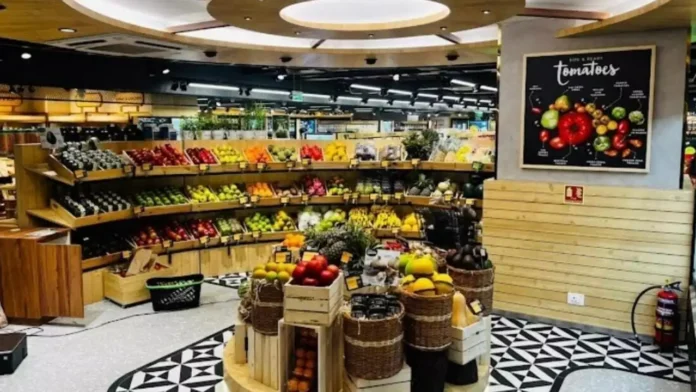
Fresh Signature, the experiential supermarket chain from Reliance Retail, inaugurated its newest flagship store in Mumbai. This marks the 141st outlet of the upscale chain for the nation’s largest retailer. The recently opened store covers an expansive 9,000 sq. ft. and is located at Infiniti Mall, Oshiwara, Andheri West, Mumbai, as announced in the company’s press release on Monday.

Fresh Signature outlets showcase a diverse range of 17 live food stations, encompassing offerings such as fresh dairy, ethnic sweets, a zero-waste organic zone, Turkish delights, patisserie, premium dry fruits and nuts, ethnic snacks, live khakra, fudge and chikki, an ice-cream sundae parlor, noodle bar, health café, artisanal honey bar, and various other culinary delights.

The store opening was graced by the presence of pastry chef Pooja Dhingra and Bollywood actress Shilpa Shetty, as mentioned in the press release.

At present, Reliance Retail manages 141 Fresh Signature stores nationwide, with each store covering a retail area of 3,000–5,000 sq. ft. The brand provides a diverse range of everyday grocery essentials, chocolates, confectionaries, processed food, juices, beverages, home and personal care products. Additionally, it offers international cuisine ingredients and local snacks.

Continue Exploring: Reliance Retail expands Smart Bazaar stores to small towns, targets growing demand

The release mentioned that the grocery retail chain intends to broaden its presence by expanding to additional locations in the upcoming months.

Reliance Retail Ltd, a subsidiary of Reliance Retail Ventures Ltd (RRVL), serves as the holding company for all retail entities within Reliance Industries Ltd. RRL, alongside other subsidiaries and affiliates of RRVL, manages an integrated omni-channel network comprising over 18,650 stores and digital commerce platforms.

In the third quarter of the fiscal year 2023-2024, which ended in December 2023, RRVL reported a net profit of INR 3,165 crore and a revenue of INR 74,373 crore.

Advertisement

Good Flippin’ Burgers kicks off Pune expansion with three simultaneous store openings

0
Good Flippin’ Burgers

Mumbai-based burger brand Good Flippin’ Burgers marked its entry into Pune with the inauguration of three new stores in the city, as announced by a company official on social media on Friday.

The burger chain inaugurated its initial city store at Pavilion Mall in Shivaji Nagar on 1 February. This establishment also stands as the brand’s premier food court store in India.

“Our first food court store! Our first Pune store! Thank you team Nexus for giving us this opportunity,” said Sid Marchant, Co-Founder of Good Flippin Foods Pvt. Ltd. in a LinkedIn post.

The next day, the second Pune store was revealed at Kopa Mall in Koregaon Park, representing the burger chain’s inaugural dine-in express in the city. Following this, the company proceeded to inaugurate its third store in Pune at Shroff Suyas in Baner.

Established in 2019 by Co-Founders Viren DSilva, Sijo Mathew, and Marchant, Good Flippin’ Burgers currently maintains a staff of over 350 employees.

Continue Exploring: Growth on the menu: Good Flippin’ Burgers raises $4 Million for ambitious expansion plans

Operating in three cities—Mumbai, Delhi, and Pune—Good Flippin’ Burgers has solidified its presence with 20 stores exclusively in Mumbai. Furthermore, the brand has expanded its footprint in the Delhi-NCR region, boasting 11 outlets, and in Pune, it has established 3 outlets.

As per its official website, the brand is presently focused on geographical expansion in Delhi, Pune, and Bengaluru. The expansion plan includes diverse formats such as cloud kitchens, dine-in establishments, hybrid models, presence in malls, and airport locations.

Advertisement

Pepsi India bottler Varun Beverages’ Q4 profits soar by 77% driven by robust demand and international expansion

0
Varun Beverages
Varun Beverages

On Monday, Varun Beverages, the bottler for Pepsi in India, reported a 77% surge in its quarterly profit. This increase was driven by double-digit volume expansion in both domestic and international markets, despite consumers facing higher costs of essential items.

The consolidated net profit for the fourth quarter ending on December 31 surged to 1.32 billion rupees ($15.9 million), marking a notable increase from the 747.5 million rupees recorded in the corresponding period of the previous year.

Urban consumers, with higher average incomes in comparison to their counterparts in rural areas, have played a pivotal role in driving substantial sales for packaged goods manufacturers. This trend persists despite the challenges posed by increased prices of essential commodities.

The Gurugram-based company, with operations spanning across six countries, holds a prominent position as one of PepsiCo’s largest franchisees outside the United States. It specializes in packaging and distributing beverages under the Pepsi, Mirinda, and Tropicana labels.

Continue Exploring: PepsiCo India rides high on in-home consumption trend, records highest product launches since 1995

As per its investor presentation, Varun Beverages reported a 21% increase in revenue from operations, reaching 27.31 billion rupees during the stated period. Additionally, the company noted positive volume growth.

The quarter witnessed a 1.8% increase in the cost of raw materials, encompassing flavored concentrate, packaging material, and sugar.

Varun Beverages experienced an expansion in its earnings before interest, taxes, depreciation, and amortization (EBITDA) margin, rising to 15.7% from the previous year’s 13.9%. This growth was supported by reduced packaging costs despite an increase in sugar prices.

Last year, the company ventured into the South African markets by acquiring The Beverage Company, a strategic move that analysts predict will be advantageous for the Indian bottler.

Continue Exploring: PepsiCo’s key bottler Varun Beverages acquires South Africa-based Bevco for INR 1,320 Crore

Furthermore, Varun Beverages sanctioned a final dividend of 1.25 rupees per share for the fiscal year concluding on Dec. 31.

The company’s shares, which experienced a surge of over 30% in the December quarter, showed little change in trading following the release of the results.

PepsiCo Inc is scheduled to announce its quarterly results on February 9th.

Advertisement

IKEA eyes major investment boost in India as it explores next phase of funding and expansion plans

0
IKEA
IKEA

IKEA, the Swedish furniture retailer, is exploring further investment opportunities in India as it approaches the next phase of funding. The company initially committed INR 10,500 crore when it entered the Indian market a decade ago, as stated by Susanne Pulverer, the CEO of IKEA India.

Having initiated its retail operations in India by opening its first store in Hyderabad in August 2018, the company is presently in the process of establishing projects in Delhi-NCR. These projects are anticipated to be operational by 2025, marking the completion of the company’s committed 10-year investment in the country.

“This first investment that we committed is booked with the projects in NCR. So with that, we have exhausted the INR 10,500 crore and we are looking at the next level of investment to further build IKEA presence in India, to expand volumes and increase sourcing. So that is in the plan making and we will announce more when we are ready. The plans are being formulated, and we will make announcements when ready,” Pulverer conveyed.

In 2013, the government granted approval for Ikea’s INR 10,500 crore FDI proposal, aimed at establishing 10 stores with associated infrastructure within a decade. Following this, the company expressed intentions to further expand by opening an additional 15 stores.

Currently, single-brand retail trading allows for 100 percent foreign direct investment through the automatic route.

Presently, Ikea has operational stores in Hyderabad, Mumbai, and Bengaluru, with an investment of approximately INR 7,000 crore as it ventures into the National Capital Region, planning to establish two stores in Gurugram and Noida.

Continue Exploring: Ikea expands reach with online doorstep deliveries to 62 new districts in India; plans e-commerce launch in Delhi-NCR within a year

When inquired about the scale of the next investment tranche, whether it would be similar or potentially higher, Pulverer mentioned that the decision on this matter would be made by its parent company, Ingka Group.

Nevertheless, she also emphasized that the upcoming round of investment would be characterized by being “big and bold,” considering the growth potential of India.

There is “a lot of belief in India as it is coming into its growth decade. As a market, it is very dynamic. Many young people are upgrading their lives and are investing in their homes. So it is a huge opportunity market for Ikea,” Pulverer added.

As a strategic move, Ikea is directing its attention to the markets in the South and West regions, employing an omnichannel approach.

Nevertheless, as it prepares to open stores in Delhi-NCR, Ikea is contemplating the possibility of extending its presence to other cities like Lucknow and Chandigarh in North India, recognizing the promising opportunities they present. However, she mentioned that it is premature to disclose any plans beyond the Delhi-NCR at this point.

“Beyond the NCR (National Capital Region), Pune and Chennai are of interest. Kolkata is also on our radar, but it will be a stepwise approach,” she added.

Furthermore, Ikea is actively engaged in enhancing its sourcing from Indian markets to support its global retail operations. This presents opportunities for diversification, particularly in sectors such as furniture.

“While India has the potential to further develop its production capacities, the current export of furniture from India remains relatively small. Exploring opportunities for regionalised and global sourcing from India is part of IKEA’s ongoing strategy,” she added.

For its operations within India, Ikea is currently sourcing approximately 33 percent of retailed products in accordance with regulations and has intentions to further increase this percentage.

“Our intention is to continue increasing this percentage, as it makes sense to produce more locally and explore India’s potential to supply other IKEA markets. Growing volumes in the country, with more stores and online markets, will facilitate the next level of local sourcing,” she added.

She emphasized the importance of sustainability and affordability for Indian consumers, highlighting the necessity to concentrate on specific product categories.

“Textiles, plastics, metals, stainless steel, mixed materials, handicrafts, bulky furniture like mattresses and sofas, and local production of wood-based furniture are areas where we see the potential for growth,” Pulverer added.

Foreign retailers with more than 51 per cent FDI in this sector have to source a minimum of 30 per cent of the value of purchased goods domestically, preferably from MSME, village and cottage industries, artisans and craftsmen, in all sectors.

Presently Ikea is getting one-fourth of its sales in India from online platforms from its own channels such as its app, and e-commerce portal. It also introduced Shop By Phone assistance service and increased doorstep delivery facility in 62 new markets in India.

According to RoC filings, Ikea India sales were up 61 per cent to INR 1,768 crore for the financial year which ended on March 31, 2023. However, its loss was at INR 1,134 crore, on account of expansion in new markets and investments in infrastructure.

Continue Exploring: Retail boom in tier-2 Indian cities: Global brands and local players invest heavily as economic growth spurs consumption hubs

Advertisement

B2B SaaS platform Rupyz secures $1.2 Million in seed funding led by Merak Ventures to enhance FMCG distribution and supply chain solutions

0
Dhaval Radia, Gourav Gupta, Akshay Gupta, and Palash Lunia, Co-Founders of Rupyz

Rupyz, a B2B SaaS startup, has secured $1.2 million (INR 9.9 crore) in its seed funding round, with Merak Ventures leading the investment, along with a group of angel investors.

The newly acquired funds will be employed by the startup to fortify its core technological offerings, ensuring the provision of robust and scalable solutions that address the evolving needs of small and medium-sized businesses, as stated in a released statement.

Established by Dhaval Radia, Gourav Gupta, Akshay Gupta, and Palash Lunia, Rupyz operates as an omnichannel distribution platform for FMCG and consumer brands. The startup provides an integrated SaaS solution catering to distribution-led B2B businesses, automating and expanding their offline and online distribution processes to enhance sales and fulfillment channels.

It empowers its customers to chart the complete supply chain, aiding them in optimizing and simplifying their supply chain operations.

Rupyz predominantly collaborates with businesses in the FMCG, personal care, and lifestyle sectors. The company asserts that it presently manages a network that encompasses 85 brands, surpassing 6,500 distributors, and servicing over 250,000 retailers.

Radia stated that Rupyz’s objective is to empower the first brands within the FMCG sector to entirely redefine operational efficiencies in the way distributors and retailers establish connections, communicate, and conduct their business.

Continue Exploring: SupplyNote secures $2.25 Million in funding to drive innovation in restaurant supply chain management

“Our commitment is to unlock the full potential of India’s B2B e-commerce and supply chain,” he added.

Presently, the startup has set its sights on bringing aboard more than 3000 businesses within the next 12 to 15 months.

Rupyz asserts collaboration with more than 85 brands, 6,500 distributors, and 250,000 retailers across the nation. The startup maintains that its solution provides clients with a 20% to 30% improvement in return on investment (ROI).

Recently, Wiz Freight, a supply chain management startup, secured INR 125 Crores for growth, expansion, and general corporate activities, as per filings.

As indicated by a market study, the anticipated compound annual growth rate (CAGR) for the supply chain management market size in India is 10.01%, with a projected reach of $405 million by the year 2028.

Continue Exploring: FMCG giants turn to data forecasting to address online stock gaps in quick commerce

Advertisement

Established brands maintain dominance in India’s FMCG sector with 65% market share, reveals Bain & Company Report

0
FMCG
(Representative Image)

A report from Bain & Company reveals that in India, established brands in the fast-moving consumer goods (FMCG) sector still dominate, capturing 65 percent of the market share.

Identifying the ongoing preference of Indians for incumbent brands, the report notes that the prevalence of general trade in the country enables national brands to maintain their dominance. The limited penetration of e-commerce in the nation also aids larger brands.

Continue Exploring: FMCG giants turn to data forecasting to address online stock gaps in quick commerce

The report, named “Resilience Amid Disruption: How Certain Incumbents in the Asia Pacific Region Outmaneuver Insurgents,” examined 23 categories of consumer goods, including beverages, food items, beauty and personal care, and home care, across 11 Asia-Pacific markets from 2018 to 2022.

It employed Euromonitor’s database to monitor the performance of what it defined as “large incumbent brands” – the leading 10 brands based on market share in each category and country as of 2018. The analysis covered performance until 2022, excluding brands that no longer existed by that year. The evaluation gauged the success of large incumbents in each category and country by determining whether their combined market share experienced a shift exceeding 1 percentage point from 2018 to 2022.

Continue Exploring: FMCG giants spice up instant noodle portfolios as Indian consumers crave K-noodles

Singapore and China stand out as highly favorable environments for new entrants, thanks to the robust presence of e-commerce and the well-established networks of third-party suppliers.

Unlike the mentioned geographies, the report noted that Malaysia, the Philippines, and India stand out as the most advantageous markets for incumbents. The report attributes this phenomenon to the prevalence of traditional trade, particularly in the Philippines and India, and the comparatively limited reach of e-commerce. Additionally, the report highlights that the intricate channel dynamics in these markets pose a formidable challenge for new entrants.

According to Ravi Swarup, a partner at Bain & Company, domestic incumbent brands in the country have thrived due to their deep understanding of the Indian consumer. He also mentioned that foreign brands, which have adapted to local preferences in the country, have experienced success as well.

“Understanding the consumer and creating a product price proposition that is actually giving disproportionate value to consumers, and winning in the general trade are really important,” Swarup said.

Over the past three quarters, FMCG companies in the country have consistently faced intense competition from regional brands. These companies have noted an influx of regional brands specifically targeting the mass market segment.

The incumbents hold a significant advantage with their robust distribution networks, allowing them to reach and stock products in kirana (mom-and-pop) stores, a strength not easily matched by new brands attempting to enter the category. The report also highlighted that, apart from India, local incumbent brands were demonstrating notable growth momentum in the Philippines and Indonesia.

“However, in India, the Philippines, and Indonesia, while foreign incumbents also lead in market share across most categories, it is the local incumbents that exhibit a stronger ability to gain share in the winning categories,” it said in its report.

Bain & Company noted that the Covid-19 pandemic worked to the advantage of incumbent brands, as consumers leaned towards well-established and familiar names during this period. Additionally, larger companies demonstrated their superior ability to navigate supply-chain disruptions.

The report highlighted that Tata Sampann in India has successfully maintained a compound annual growth rate of around 20 percent over the last five years. This achievement is attributed to the brand’s commitment to meeting consumer demands for top-notch, wholesome, and nutritious basic food items. Pioneering the branded pulses market in India, Tata Sampann has progressively broadened its presence to include categories like spices, poha, and dry fruits.

Continue Exploring: Tata Consumer Products eyes growth with a slew of innovative FMCG launches

Advertisement

Patanjali Ayurved faces govt scrutiny as PMO directs Ministry of Ayush to address deceptive advertising complaints

0
Patanjali Ayurved
Patanjali Ayurved

In a notable development, the Prime Minister’s Office (PMO) has instructed the Ministry of Ayush to take “necessary measures” in response to a complaint regarding Patanjali Ayurved, led by Baba Ramdev. The complaint alleges repeated violations of an Act related to deceptive advertising of Ayush products.

Following the directive from the PMO on January 24, the Ministry of Ayush has subsequently called upon the Uttarakhand Ayush department to “take appropriate action” regarding a matter that has remained pending since February 2022.

Both the Ayush Ministry and the Uttarakhand State Licensing Authority (SLA) had been lethargic in addressing the matter of Patanjali Ayurved’s deceptive advertisements for drugs related to diabetes, obesity, thyroid, and heart diseases, despite numerous RTIs filed on the issue.

Continue Exploring: SC warns Patanjali over ‘false’ advertising claims

In a letter to the Director of Ayurvedic and Unani Services in Dehradun, Uttarakhand, the Ayush Ministry emphasized that the continuous violations of the Drugs and Magic Remedies (Objectionable Advertisements) Act, 1954 by Divya Pharmacy fall under the jurisdiction of the State Licensing Authority, Uttarakhand.

“Therefore, it is requested to examine the matter and take the necessary action as deemed appropriate and inform your response to the applicant under intimation to this ministry,” the February 2 letter said.

The Uttarakhand State Licensing Authority (SLA) received instructions following a complaint by RTI activist Dr. K V Babu to the Prime Minister’s Office (PMO) on January 15, highlighting Patanjali Ayurved’s persistent violations of the Drugs and Magic Remedies (Objectionable Advertisements) Act, 1954.

“I am thankful to the PMO for the prompt intervention and hope this will end the illegal advertisements by Patanjali Ayurved,” Babu said.

Continue Exploring: Patanjali Ayurved vows adherence to advertising laws, promises Supreme Court no violations

Babu mentioned that his grievances, submitted in February 2022, are still awaiting resolution from the Drugs Controller General of India (DCGI), Union Ayush Ministry, and SLA of Uttarakhand.

“The Ayush Ministry and SLA have been dragging the issue based on an unrelated Rule 170 of the Cosmetic Act and a Madras High Court judgement of 2020. The SLA is not taking any action even after repeated communications and the numerous contravention of the Magic Remedies Act by Patanjali Ayurveda,” said Babu, adding that the Ayush ministry has written at least four times to the Uttarakhand SLA for action against Patanjali, but nothing was done.

Babu had brought up the matter with Union Ayush Minister Sarbannanda Sonowal on multiple occasions as well.

Last year, the matter was also raised by two parliamentarians, Dr. V Sivadasan and Karti P Chidambaram. The Ayush minister had assured them and even directed the Uttarakhand government to take action against Patanjali Ayurved for its misleading advertisements.

In a written answer on March 28 last year, Sonowal said that in 2022, the Ayush ministry had forwarded advertisements of Divya Madhugrit (15 violations), Divya Lipidom (7 violations), Divya Eyegrit Gold (10 violations), and Divya BPgrit (18 violations) to Ayurveda and Unani Services, Uttarakhand to examine the matter for withdrawal of advertisements.

Babu also communicated with the Ayush ministry, notifying them that Patanjali had disseminated deceptive advertisements in two widely circulated regional newspapers.

The DMR (OA) 1954 prohibits the advertisement of certain drugs to treat certain diseases and disorders. It states that “no person shall take any part in the publication of any advertisement referring to any drug in terms which suggest or are calculated to lead to the use of that drug for the diagnosis, cure, mitigation, treatment or prevention of any diseases, disorder or condition.”

Continue Exploring: Patanjali ready to face penalties if found guilty of ‘false advertisements’, says Baba Ramdev

Advertisement

IHCL accelerates portfolio expansion, aims for 300 hotels in the next 3-4 months

0
IHCL
IHCL

Indian Hotels Company (IHCL) is set to achieve a milestone in its portfolio expansion, with plans to reach 300 hotels in the next three to four months, as stated by IHCL MD and CEO Puneet Chhatwal.

“Under our Ahvaan 2025 strategy, we had previously set the target of reaching the 300 hotels mark by 2025-2026. We are signing about 2.5 contracts a month besides opening 2 hotels a month. That is accelerated. In aspiration 2022, we had said we will open 15 hotels a year,” he said.

In January, IHCL stated that its portfolio of 285 hotels includes an additional 85 hotels in the pipeline.

Tata Group backed IHCL has recorded a revenue from operations of INR 1964 crore for the quarter ended December 31, 2023, reflecting an 18% growth compared to the corresponding period in the previous fiscal.

The hospitality chain announced a profit after tax of INR 477 crore, registering an 18% increase compared to the quarter ending December 31, 2022.

Continue Exploring: India’s hospitality industry toasts to 2024 with high hopes and record-breaking revenue growth

“Our management fee income should close at around INR 450 crore by the end of this fiscal year. It wasn’t even INR 200 crore five to six years ago,” said Chhatwal.

“Between, 2009-2017, the chain clocked an average of 13.6% EBITDA margin, and our guidance now is 33%. That is a big increase. So, the reason is the change in the business model. We’re driving strong operating leverage through asset management in existing hotels and through management contracts, and innovation in new businesses,” he added.

He mentioned that Indian Hotels is a debt-free company with robust cash reserves, strategically positioned for both organic and inorganic expansion.

“The cash flow that we have created was INR 1000 crore last year. Given the trends that are seeing, that should be more this year,” he said.

“Undoubtedly, we will maintain our leadership. We have 85 hotels in the pipeline, so even if we stop signing any new contracts today, we will still end up opening two hotels a month for the next three years,” he added.

The company has inked deals for properties in Ayodhya under its Vivanta, Ginger, and SeleQtions brands. Additionally, Chhatwal mentioned that there are ongoing considerations for a Taj property in the same destination.

“Nobody covers spiritual destinations like we do and our focus will only grow stronger. Out of the 285 hotels in our portfolio, 66 are in spiritual destinations,” he added.

Continue Exploring: IHCL expands portfolio with third hotel signing in Ayodhya

He stated that India is experiencing economic growth, emphasizing a direct link between the expansion of GDP and various consumer sectors, including hospitality, airlines, and restaurants.

“Venues such as Bharat Mandapam, Yashobhoomi and the Jio World Centre will keep having events The government spends on infrastructure, and schemes such as UDAAN scheme and PRASHAD are also opening up new opportunities,” he said.

“There has also been a change in consumer behaviour since Covid. People are taking off on long weekends and we didn’t have this concept of a drivecation before. We never saw such a strong ability to be able to charge more in the domestic market before Covid. We used to rely on the foreign customers before,” he added.

Chhatwal, who serves as the President of the Hotel Association of India (HAI), anticipates that rates will remain elevated, and hotel occupancies are expected to stabilize at high levels from 2024 to 2035.

“There’ll always be some headwinds, some dips. But the sector is very well positioned to cope up with difficult situations. When you come from zero revenue during the lockdown to this far, it shows the ability of the sector to prove its resilience and resurgence at the same time,” he said.

Continue Exploring: Indian hospitality industry set for a record-breaking 2024: Surge in new hotel rooms expected

Advertisement

FMCG firms maintain steady growth with single-digit volume increase and improved margins in December quarter

0
Consumer goods
(Representative Image)

During the December quarter, Fast-moving consumer goods (FMCG) firms experienced single-digit volume growth and enhanced margins across various segments. This positive trend was facilitated by a slowdown in commodity inflation, despite the persistent challenges in the operating environment. Some companies observed a decrease in their overall revenue figures, attributing it to passing on the advantages of reduced commodity prices to consumers through price reductions. Consequently, this adjustment had an impact on their gross sales numbers.

HUL, ITC, Marico, Dabur, and Godrej Consumer Products have noted that urban markets sustained a modest growth trajectory, while consumer demand in rural India remained subdued. Despite this, they anticipate an improvement in the upcoming quarters.

Additionally, the delayed onset of winter affected the demand for related products like lotions, oils, and creams.

Hindustan Unilever (HUL) posted a subdued increase in consolidated net profit, amounting to INR 2,508 crore, while its sales experienced a marginal decline to INR 15,259 crore.

“Overall, FMCG demand trends have largely remained stable and similar to what we saw last quarter. While market volumes grew at high single digits year-on-year, this came on a base period where volumes declined in mid-single digit,” said HUL CEO & MD Rohit Jawa in his latest earnings call.

Similar to previous quarters, modern trade channels are thriving and consistently surpassing general trade. Likewise, premium products are exhibiting a notable lead in volume growth compared to mass products in the market.

Echoing the view, Marico said, “General trade continued to drag as it grappled with liquidity and profitability constraints, while alternate channels grew healthily.”

In the third quarter, Marico’s India business recorded a 2% year-on-year growth in volume, while its turnover experienced a 3% decline to INR 1,793 crore.

“During the quarter, demand trends were stable with no visible improvement from the preceding quarter. Rural demand remained soft, while urban demand steadied its moderate growth trajectory,” said the earnings statement from Marico which owns brands like Saffola, Parachute, and Livon, among others.

The report highlighted that within the sector, mass home and personal care categories closely followed the trajectory of rural demand, whereas packaged foods took the lead in the sector due to increased urban salience and growth driven by penetration.

Continue Exploring: Rising competition spurs FMCG firms to strengthen rural distribution networks

ITC, which owns brands such as Aashirvaad, Sunfeast, Fiama etc, said it had a resilient performance in FMCG segment amidst subdued demand conditions. Its revenue in the FMCG business was up 7.6 per cent.

“While certain commodity prices declined on a YoY basis, the cost table remains elevated compared to pre-pandemic levels; commodities such as wheat, maida, sugar etc. witnessed sequential uptick in prices,” it said.

Godrej Consumer Products Ltd (GCPL)’s India sales in the December quarter grew by 9 per cent to INR 2,160 crore, while the volume grew by 12 per cent.

“We continue to deliver steady performance in Q3FY24 despite challenging market conditions. Our quality of profit continues to improve consistently on the back of superior growth in higher margin countries and categories,” said GCPL CEO and Managing Director Sudhir Sitapati.

However, Dabur India said its rural demand grew 200 basis points ahead of urban in the December quarter. Its India business ended the third quarter with a volume growth of 6 per cent.

“Moderating inflation coupled with buoyant consumer sentiments and our focussed investment in distribution footprint expansion in rural India helped demand from the hinterland bounce back for Dabur,” said Dabur India CEO Mohit Malhotra.

The company, which owns brands such as Dabur Chyawanprash, Dabur Honey, Dabur PudinHara and Dabur Amla, reported a 6.2 per cent increase in consolidated net profit at INR 506.44 crore and its revenue from operation went up 7 per cent to INR 3,255.06 crore.

Jyothy Labs which owns brands such as Ujala, Pril, Margo and Exo reported a a 35 per cent increase in its consolidated net profit.

“The input prices have normalised and have helped in sustaining the margins with a higher level of A&P spend to grow market share across our portfolio,” the company said in an earnings statement.

As the general elections are approaching, the makers expect a gradual recovery of demand from rural markets aided by increased government spending, recovery in winter crop sowing and better crop realisation.

Continue Exploring: Indian FMCG sector eyes robust growth in 2024 amidst favorable market conditions

“With macro indicators signalling positivity, continued government spending and more favourable consumer pricing across FMCG categories, we remain optimistic of a gradual uptick in consumption trends over the course of the next 4-5 quarters,” said Marico, adding, “Our consolidated revenue growth is expected to move into the positive territory in the last quarter of the year as the base catches up.”

Rural India contributes around 35 to 38 per cent of the total FMCG sales.

Advertisement

Lite Bite Foods targets aggressive expansion, aims to double outlet count to 400 in the next 3-5 years

0
Rohit Aggarwal
Rohit Aggarwal, Director of Lite Bite Foods

Lite Bite Foods, the operator of Asia7 and Street Foods, aims to double its current count of 200 outlets in the next three to five years, with a strategic emphasis on four core brands. The primary focus will be on renowned Indian and Asian cuisine brands such as Punjab Grill, Street Foods, YouMee, and Asia 7, according to company executives.

Rohit Aggarwal, Director of Lite Bite Foods, said, “The kind of growth that is expected in food services – we are trying to maximise that opportunity.”

He mentioned that India’s young population has significantly contributed to the industry’s growth. The increasing trend of dining out or ordering in among the younger population, coupled with many of them entering the workforce soon, has played a crucial role.

“Younger people are eating out far more. Dinner rooms and timings are becoming individualised and kitchens are smaller with nuclear families,” he said.

At the group level, Lite Bite operates 200 outlets, including those situated at airports. The chain aims to concentrate on expanding in tier 1 and 2 markets.

Continue Exploring: Lite Bite Foods charts growth with 10 new launches, extends presence to tier 2 cities

Aggarwal mentioned that Lite Bite has experienced a threefold increase in revenue growth over the past two years when considering both dine-ins and deliveries.

“Our focus is to make sure we give returns to shareholder value,” he said.

As per a report from consulting firm Wazir Advisors, the organized food services sector in India is experiencing a faster growth rate compared to the unorganized sector. This growth is attributed to the entry of domestic players and increased interest from international businesses. The report predicts that India’s organized food service market will reach $78.8 billion by 2026, up from the current $57.2 billion. The report highlights factors driving this growth, including a higher frequency of dining out, increasing disposable incomes and urbanization, a trend of dining out without specific occasions, and a growing demand for a diverse range of food varieties and cuisines.

Millennials today exhibit more adventurous eating habits. This trend has been motivating both domestic and international food establishments to expand their menus and reach,” the report said.

The growth is further propelled by factors such as the busy schedules of working individuals, a rising presence of women in the workforce, and an increasing dependence on pre-prepared food.

“This shift is also driving innovations in food service distribution channels, with companies increasingly forming partnerships with online foods service providers to broaden their reach,” according to the report.

Continue Exploring: Punjab Grill continues expansion, unveils new restaurant in Delhi’s Defence Colony

Advertisement