GOPIZZA, Korea’s largest pizza brand, has announced the opening of its 50th store in India, marking the achievement of 200 stores globally. The new flagship store, located in the vibrant district of Koramangala, Bengaluru, is set to showcase a menu that embodies the essence of Korean flavors, aromas, and tastes.
“This launch marks an important milestone that commemorates three years in India and highlights the company’s long-term commitment to growth with 200 stores globally and more expansion in one of GOPIZZA’s fastest-growing markets, India,” said Jae-Won (Jay) Lim, CEO, GOPIZZA Global.
“Our menu has been carefully curated, to introduce the diverse and rich flavours of Korean cuisine,” he added.
Distinguished by its inventive design, the flagship establishment in Koramangala introduces a unique semi-dine-in concept, capturing the authentic atmosphere of eateries in Seoul. This distinctive ambiance is crafted to elevate the enjoyment of GOPIZZA’s celebrated Korean menu, showcasing the brand’s gourmet pizzas and pasta specials infused with a Korean twist. Highlights include the fiery Buldak Volcano Pizza, the delightful Seoul Snow Pizza, and the savory Gangnam Bulgogi Pizza. In addition to these offerings, the menu aims to provide patrons with an authentic Korean culinary experience, featuring starters reminiscent of the bustling food streets of South Korea, such as K-fried chicken, Corn dogs, an array of signature Ramyun Bowls, and delightful Korean-inspired desserts.
Speaking on the brand’s expansion plans, Mahesh Reddy, CEO, GOPIZZA India said, “GOPIZZA embraces a versatile business model adaptable to spaces as compact as 50 sq ft, suitable for even placements in convenient stores. Through this malleability, we plan to open over 100 outlets by the end of 2024 in different regions of India and surpass the milestone of 500 stores worldwide, standing true to our commitment to accessibility and diversity.
“GOPIZZA’s aggressive expansion strategy extends beyond traditional formats. Operating across diverse verticals and locations, the brand has its presence in the formats of brick-and-mortar stores, shipment container stores, soon to also be in the form of a dessert cafe, and a food truck around the city. Located in malls, popular shopping streets, and airports, GOPIZZA is also looking into highways,” added Reddy.
Haryana Deputy Chief Minister Dushyant Chautala announced on Sunday that, beginning March 1, country-made liquor would no longer be sold in plastic bottles.
This move makes Haryana the first state in the country to enforce a ban on the use of plastic.
Chautala, who oversees the Excise and Taxation portfolio, stated that the government attained a 16 per cent growth this fiscal, with GST collection witnessing a 30 per cent increase over the past four years. The total tax collection reached INR 32,456 crore.
Despite initially setting a target of INR 36,000 crore for GST collection, Chautala expressed confidence in meeting the target in time.
In the fiscal year 2019-2020, the state government received a sum of INR 6,361 crore in excise duty tax, as stated by him.
In 2023 until July, the excise tax collection amounted to INR 9,687 crore. As of January 28, 2024, the total has already reached INR 9,232 crore. Despite the initial target being INR. 10,500 crore for the excise year, there is optimism that the government will exceed expectations, with the anticipation of a final tax collection of INR 11,500 crore by the end of the excise year.
Barbeque Nation, a Bengaluru-based restaurant chain, has recently launched a new establishment at Nexus Ahmedabad, as mentioned in a social media post by a mall official.
“Super stoked to announce the association of two major forces. Today, Barbeque Nation opened its doors for customers at Nexus Ahmedabad One in a grand manner with a larger-than-life architecture & design. Looking forward to a successful and lip-smacking journey,” said Karna Pandey, Manager Operations, Nexus Malls in a LinkedIn post.
This marks Barbeque Nation’s fourth venture in Ahmedabad, Gujarat, with previous locations established in Prahlad Nagar, Saral Xperia Mall, and Fiesta TRP Mall in Bopal.
Established in 2006 under the all-you-can-eat concept, the casual dining chain manages more than 200 outlets across India, with an additional four in the United Arab Emirates (UAE), and one each in Malaysia and Oman, as outlined on its official website.
The dining establishment presents patrons with a grill embedded in their table, offering a minimum of five vegetarian and five non-vegetarian mostly pre-cooked appetizers. Alongside this, there is a main course buffet and a variety of dessert options.
It is the only company in the retail sector to achieve a position among the top 10 and is ranked 13th among the best large workplaces in Asia by the Great Places to Work Institute, as stated on the company’s website.
Papa Pawsome, a pet care brand, secured $400,000 in seed funding in a round led by the Indian Angel Network. Notable investors from IAN, including Ajay Rajgarhia, KRS Jamwal, Jayant Mehrotra, and Rohit Rajput, also joined in the funding.
The startup will utilize the funds to scale operations, expand its offerings, and enhance the overall customer experience. Additionally, the infusion of capital will expedite the development of cutting-edge products, ensuring that Papa Pawsome remains at the forefront of the evolving pet care landscape.
Established by Nishita Agarwal, Papa Pawsome provides an extensive array of products tailored to meet the distinctive needs of contemporary pet-centric households. The startup asserts a portfolio of over 25 SKUs, encompassing hygiene essentials such as shampoos, serums, massage oils, training sprays, and grooming services.
Speaking on the funding, Nishita Agarwal, Co-Founder of the company said, “This funding will help Papa Pawsome realise its vision to become the platform for pet parents seeking quality and convenient pet care solutions.”
With the acceleration of urbanization and the expanding DINK (Double Income, No Kids) population, coupled with an increased desire for companionship post-pandemic, the adoption of dogs has emerged as a prevalent trend, as stated by the company.
“The pet industry is evolving rapidly post the pandemic and is going to be the next baby care industry (the industry isn’t creating babies.. Papa Pawsome is a D2C brand that offers natural petcare products which meet the evolving needs of pet parents and they are building a strong community of Fur Mom and Fur Dad,” said Ajay Rajgarhia, Lead Investor.
Before this funding round, the brand had raised $250,000 in its seed round, with New York-based 93 East Capital taking the lead. OpenbookVC and prominent investors such as Peebuddy founder Deep Bajaj, KRS Jamwal, Mandar Joshi, and Naveen Gupta also participated in the round.
Fresh Signature, the experiential supermarket chain from Reliance Retail, inaugurated its newest flagship store in Mumbai. This marks the 141st outlet of the upscale chain for the nation’s largest retailer. The recently opened store covers an expansive 9,000 sq. ft. and is located at Infiniti Mall, Oshiwara, Andheri West, Mumbai, as announced in the company’s press release on Monday.
Fresh Signature outlets showcase a diverse range of 17 live food stations, encompassing offerings such as fresh dairy, ethnic sweets, a zero-waste organic zone, Turkish delights, patisserie, premium dry fruits and nuts, ethnic snacks, live khakra, fudge and chikki, an ice-cream sundae parlor, noodle bar, health café, artisanal honey bar, and various other culinary delights.
The store opening was graced by the presence of pastry chef Pooja Dhingra and Bollywood actress Shilpa Shetty, as mentioned in the press release.
At present, Reliance Retail manages 141 Fresh Signature stores nationwide, with each store covering a retail area of 3,000–5,000 sq. ft. The brand provides a diverse range of everyday grocery essentials, chocolates, confectionaries, processed food, juices, beverages, home and personal care products. Additionally, it offers international cuisine ingredients and local snacks.
The release mentioned that the grocery retail chain intends to broaden its presence by expanding to additional locations in the upcoming months.
Reliance Retail Ltd, a subsidiary of Reliance Retail Ventures Ltd (RRVL), serves as the holding company for all retail entities within Reliance Industries Ltd. RRL, alongside other subsidiaries and affiliates of RRVL, manages an integrated omni-channel network comprising over 18,650 stores and digital commerce platforms.
In the third quarter of the fiscal year 2023-2024, which ended in December 2023, RRVL reported a net profit of INR 3,165 crore and a revenue of INR 74,373 crore.
Mumbai-based burger brand Good Flippin’ Burgers marked its entry into Pune with the inauguration of three new stores in the city, as announced by a company official on social media on Friday.
The burger chain inaugurated its initial city store at Pavilion Mall in Shivaji Nagar on 1 February. This establishment also stands as the brand’s premier food court store in India.
“Our first food court store! Our first Pune store! Thank you team Nexus for giving us this opportunity,” said Sid Marchant, Co-Founder of Good Flippin Foods Pvt. Ltd. in a LinkedIn post.
The next day, the second Pune store was revealed at Kopa Mall in Koregaon Park, representing the burger chain’s inaugural dine-in express in the city. Following this, the company proceeded to inaugurate its third store in Pune at Shroff Suyas in Baner.
Established in 2019 by Co-Founders Viren DSilva, Sijo Mathew, and Marchant, Good Flippin’ Burgers currently maintains a staff of over 350 employees.
Operating in three cities—Mumbai, Delhi, and Pune—Good Flippin’ Burgers has solidified its presence with 20 stores exclusively in Mumbai. Furthermore, the brand has expanded its footprint in the Delhi-NCR region, boasting 11 outlets, and in Pune, it has established 3 outlets.
As per its official website, the brand is presently focused on geographical expansion in Delhi, Pune, and Bengaluru. The expansion plan includes diverse formats such as cloud kitchens, dine-in establishments, hybrid models, presence in malls, and airport locations.
On Monday, Varun Beverages, the bottler for Pepsi in India, reported a 77% surge in its quarterly profit. This increase was driven by double-digit volume expansion in both domestic and international markets, despite consumers facing higher costs of essential items.
The consolidated net profit for the fourth quarter ending on December 31 surged to 1.32 billion rupees ($15.9 million), marking a notable increase from the 747.5 million rupees recorded in the corresponding period of the previous year.
Urban consumers, with higher average incomes in comparison to their counterparts in rural areas, have played a pivotal role in driving substantial sales for packaged goods manufacturers. This trend persists despite the challenges posed by increased prices of essential commodities.
The Gurugram-based company, with operations spanning across six countries, holds a prominent position as one of PepsiCo’s largest franchisees outside the United States. It specializes in packaging and distributing beverages under the Pepsi, Mirinda, and Tropicana labels.
As per its investor presentation, Varun Beverages reported a 21% increase in revenue from operations, reaching 27.31 billion rupees during the stated period. Additionally, the company noted positive volume growth.
The quarter witnessed a 1.8% increase in the cost of raw materials, encompassing flavored concentrate, packaging material, and sugar.
Varun Beverages experienced an expansion in its earnings before interest, taxes, depreciation, and amortization (EBITDA) margin, rising to 15.7% from the previous year’s 13.9%. This growth was supported by reduced packaging costs despite an increase in sugar prices.
Last year, the company ventured into the South African markets by acquiring The Beverage Company, a strategic move that analysts predict will be advantageous for the Indian bottler.
Furthermore, Varun Beverages sanctioned a final dividend of 1.25 rupees per share for the fiscal year concluding on Dec. 31.
The company’s shares, which experienced a surge of over 30% in the December quarter, showed little change in trading following the release of the results.
PepsiCo Inc is scheduled to announce its quarterly results on February 9th.
IKEA, the Swedish furniture retailer, is exploring further investment opportunities in India as it approaches the next phase of funding. The company initially committed INR 10,500 crore when it entered the Indian market a decade ago, as stated by Susanne Pulverer, the CEO of IKEA India.
Having initiated its retail operations in India by opening its first store in Hyderabad in August 2018, the company is presently in the process of establishing projects in Delhi-NCR. These projects are anticipated to be operational by 2025, marking the completion of the company’s committed 10-year investment in the country.
“This first investment that we committed is booked with the projects in NCR. So with that, we have exhausted the INR 10,500 crore and we are looking at the next level of investment to further build IKEA presence in India, to expand volumes and increase sourcing. So that is in the plan making and we will announce more when we are ready. The plans are being formulated, and we will make announcements when ready,” Pulverer conveyed.
In 2013, the government granted approval for Ikea’s INR 10,500 crore FDI proposal, aimed at establishing 10 stores with associated infrastructure within a decade. Following this, the company expressed intentions to further expand by opening an additional 15 stores.
Currently, single-brand retail trading allows for 100 percent foreign direct investment through the automatic route.
Presently, Ikea has operational stores in Hyderabad, Mumbai, and Bengaluru, with an investment of approximately INR 7,000 crore as it ventures into the National Capital Region, planning to establish two stores in Gurugram and Noida.
When inquired about the scale of the next investment tranche, whether it would be similar or potentially higher, Pulverer mentioned that the decision on this matter would be made by its parent company, Ingka Group.
Nevertheless, she also emphasized that the upcoming round of investment would be characterized by being “big and bold,” considering the growth potential of India.
There is “a lot of belief in India as it is coming into its growth decade. As a market, it is very dynamic. Many young people are upgrading their lives and are investing in their homes. So it is a huge opportunity market for Ikea,” Pulverer added.
As a strategic move, Ikea is directing its attention to the markets in the South and West regions, employing an omnichannel approach.
Nevertheless, as it prepares to open stores in Delhi-NCR, Ikea is contemplating the possibility of extending its presence to other cities like Lucknow and Chandigarh in North India, recognizing the promising opportunities they present. However, she mentioned that it is premature to disclose any plans beyond the Delhi-NCR at this point.
“Beyond the NCR (National Capital Region), Pune and Chennai are of interest. Kolkata is also on our radar, but it will be a stepwise approach,” she added.
Furthermore, Ikea is actively engaged in enhancing its sourcing from Indian markets to support its global retail operations. This presents opportunities for diversification, particularly in sectors such as furniture.
“While India has the potential to further develop its production capacities, the current export of furniture from India remains relatively small. Exploring opportunities for regionalised and global sourcing from India is part of IKEA’s ongoing strategy,” she added.
For its operations within India, Ikea is currently sourcing approximately 33 percent of retailed products in accordance with regulations and has intentions to further increase this percentage.
“Our intention is to continue increasing this percentage, as it makes sense to produce more locally and explore India’s potential to supply other IKEA markets. Growing volumes in the country, with more stores and online markets, will facilitate the next level of local sourcing,” she added.
She emphasized the importance of sustainability and affordability for Indian consumers, highlighting the necessity to concentrate on specific product categories.
“Textiles, plastics, metals, stainless steel, mixed materials, handicrafts, bulky furniture like mattresses and sofas, and local production of wood-based furniture are areas where we see the potential for growth,” Pulverer added.
Foreign retailers with more than 51 per cent FDI in this sector have to source a minimum of 30 per cent of the value of purchased goods domestically, preferably from MSME, village and cottage industries, artisans and craftsmen, in all sectors.
Presently Ikea is getting one-fourth of its sales in India from online platforms from its own channels such as its app, and e-commerce portal. It also introduced Shop By Phone assistance service and increased doorstep delivery facility in 62 new markets in India.
According to RoC filings, Ikea India sales were up 61 per cent to INR 1,768 crore for the financial year which ended on March 31, 2023. However, its loss was at INR 1,134 crore, on account of expansion in new markets and investments in infrastructure.
Dhaval Radia, Gourav Gupta, Akshay Gupta, and Palash Lunia, Co-Founders of Rupyz
Rupyz, a B2B SaaS startup, has secured $1.2 million (INR 9.9 crore) in its seed funding round, with Merak Ventures leading the investment, along with a group of angel investors.
The newly acquired funds will be employed by the startup to fortify its core technological offerings, ensuring the provision of robust and scalable solutions that address the evolving needs of small and medium-sized businesses, as stated in a released statement.
Established by Dhaval Radia, Gourav Gupta, Akshay Gupta, and Palash Lunia, Rupyz operates as an omnichannel distribution platform for FMCG and consumer brands. The startup provides an integrated SaaS solution catering to distribution-led B2B businesses, automating and expanding their offline and online distribution processes to enhance sales and fulfillment channels.
It empowers its customers to chart the complete supply chain, aiding them in optimizing and simplifying their supply chain operations.
Rupyz predominantly collaborates with businesses in the FMCG, personal care, and lifestyle sectors. The company asserts that it presently manages a network that encompasses 85 brands, surpassing 6,500 distributors, and servicing over 250,000 retailers.
Radia stated that Rupyz’s objective is to empower the first brands within the FMCG sector to entirely redefine operational efficiencies in the way distributors and retailers establish connections, communicate, and conduct their business.
“Our commitment is to unlock the full potential of India’s B2B e-commerce and supply chain,” he added.
Presently, the startup has set its sights on bringing aboard more than 3000 businesses within the next 12 to 15 months.
Rupyz asserts collaboration with more than 85 brands, 6,500 distributors, and 250,000 retailers across the nation. The startup maintains that its solution provides clients with a 20% to 30% improvement in return on investment (ROI).
Recently, Wiz Freight, a supply chain management startup, secured INR 125 Crores for growth, expansion, and general corporate activities, as per filings.
As indicated by a market study, the anticipated compound annual growth rate (CAGR) for the supply chain management market size in India is 10.01%, with a projected reach of $405 million by the year 2028.
Identifying the ongoing preference of Indians for incumbent brands, the report notes that the prevalence of general trade in the country enables national brands to maintain their dominance. The limited penetration of e-commerce in the nation also aids larger brands.
The report, named “Resilience Amid Disruption: How Certain Incumbents in the Asia Pacific Region Outmaneuver Insurgents,” examined 23 categories of consumer goods, including beverages, food items, beauty and personal care, and home care, across 11 Asia-Pacific markets from 2018 to 2022.
It employed Euromonitor’s database to monitor the performance of what it defined as “large incumbent brands” – the leading 10 brands based on market share in each category and country as of 2018. The analysis covered performance until 2022, excluding brands that no longer existed by that year. The evaluation gauged the success of large incumbents in each category and country by determining whether their combined market share experienced a shift exceeding 1 percentage point from 2018 to 2022.
Singapore and China stand out as highly favorable environments for new entrants, thanks to the robust presence of e-commerce and the well-established networks of third-party suppliers.
Unlike the mentioned geographies, the report noted that Malaysia, the Philippines, and India stand out as the most advantageous markets for incumbents. The report attributes this phenomenon to the prevalence of traditional trade, particularly in the Philippines and India, and the comparatively limited reach of e-commerce. Additionally, the report highlights that the intricate channel dynamics in these markets pose a formidable challenge for new entrants.
According to Ravi Swarup, a partner at Bain & Company, domestic incumbent brands in the country have thrived due to their deep understanding of the Indian consumer. He also mentioned that foreign brands, which have adapted to local preferences in the country, have experienced success as well.
“Understanding the consumer and creating a product price proposition that is actually giving disproportionate value to consumers, and winning in the general trade are really important,” Swarup said.
Over the past three quarters, FMCG companies in the country have consistently faced intense competition from regional brands. These companies have noted an influx of regional brands specifically targeting the mass market segment.
The incumbents hold a significant advantage with their robust distribution networks, allowing them to reach and stock products in kirana (mom-and-pop) stores, a strength not easily matched by new brands attempting to enter the category. The report also highlighted that, apart from India, local incumbent brands were demonstrating notable growth momentum in the Philippines and Indonesia.
“However, in India, the Philippines, and Indonesia, while foreign incumbents also lead in market share across most categories, it is the local incumbents that exhibit a stronger ability to gain share in the winning categories,” it said in its report.
Bain & Company noted that the Covid-19 pandemic worked to the advantage of incumbent brands, as consumers leaned towards well-established and familiar names during this period. Additionally, larger companies demonstrated their superior ability to navigate supply-chain disruptions.
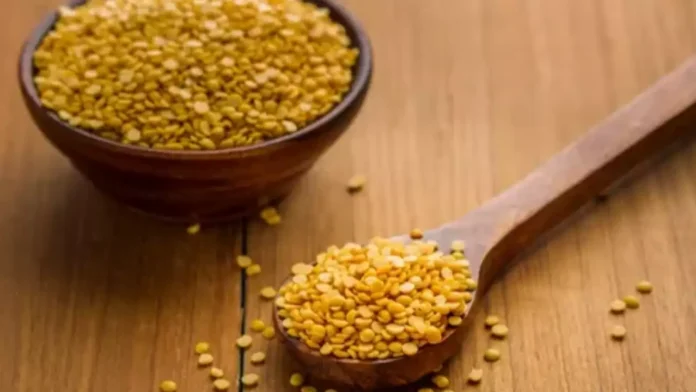
The report highlighted that Tata Sampann in India has successfully maintained a compound annual growth rate of around 20 percent over the last five years. This achievement is attributed to the brand’s commitment to meeting consumer demands for top-notch, wholesome, and nutritious basic food items. Pioneering the branded pulses market in India, Tata Sampann has progressively broadened its presence to include categories like spices, poha, and dry fruits.
We use cookies to ensure that we give you the best experience on our website. If you continue to use this site we will assume that you are happy with it.