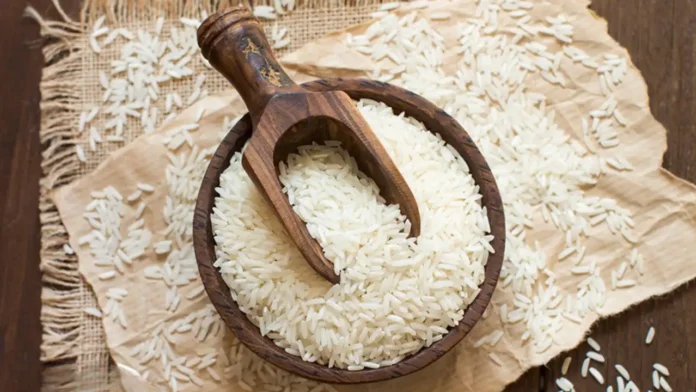
To further stabilize prices of rice, atta, and dal, the government has decided to extend the 20% export duty on parboiled rice indefinitely. Additionally, it plans to sell approximately 30 lakh tonnes of rice and atta under the “Bharat” brand at subsidized rates over the next 4-5 months. Moreover, the government has notified its intention to maintain a zero import duty on yellow peas, provided that the bill of landing is issued by April 30.
On measures being taken to check the prices of essential items, Union food secretary Sanjeev Chopra said, “The sale of Bharat atta has brought down the retail prices. We are hoping to sell 15 lakh tonnes of Bharat atta and another 15 lakh tonnes of Bharat rice in the next 4-5 months. This is the initial phase, we can supply more if there is demand.”
He mentioned that rice prices, currently up by 15% year-on-year, are anticipated to decrease with increased sales of ‘Bharat’ rice and the arrival of the rabi crop starting in March. To date, approximately 3.5 lakh tonnes of atta and 20,000 tonnes of rice under the Bharat brand have been sold.
The government is offering rice under the Bharat brand at a subsidized rate of INR 29 per kg and atta at INR 27.5 per kg through retail outlets, including those operated by farmers’ cooperative NAFED and NCCF.
The grains for retail purposes are being supplied to cooperative agencies by the state-run Food Corporation of India (FCI). Chopra mentioned that random samples of the rice and atta being sold are undergoing testing, and the quality of these cereals is excellent.
When asked if the government intends to permit additional diversion of sugar for ethanol production during the current 2023-24 supply year, the secretary stated that there is no such proposal. In December of last year, the government imposed a cap on sugar diversion at 17 lakh tonnes for the current supply year, spanning from November 2024 to October 2025. This decision permitted the use of both cane juice and B-heavy molasses under the overall cap for ethanol production.
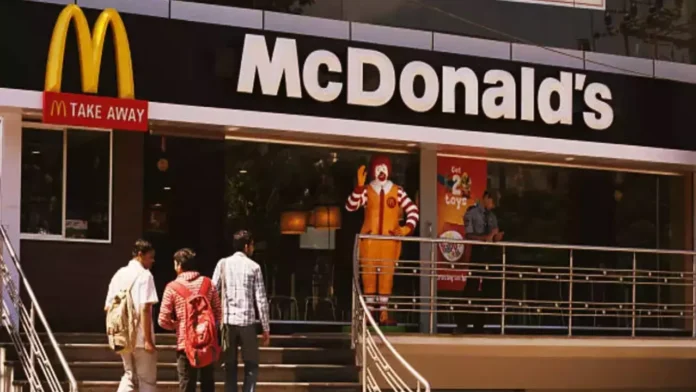
Westlife Foodworld, the operator of McDonald’s establishments in western and southern India, has changed the names of eight items following the suspension of its Ahmednagar outlet’s license by the Maharashtra Food & Drug Administration (FDA). The FDA alleged that the fast-food chain had substituted real cheese with alternatives in its burgers and nuggets.
The outlet’s license was suspended in November, and a suspension order was subsequently issued, prompting the chain to remove the word “cheese” from various items on the menu.
The names of several menu items have been altered: Cheesy Nuggets are now Veg Nuggets, Mc Cheese Veg Burger is now Cheddar Delight Veg Burger, McCheese Non-Veg Burger has become Cheddar Delight Non-Veg Burger, Corn & Cheeseburger is now American Veg Burger, Grilled Chicken and Cheeseburger is now American Non-Veg Burger, Blueberry Cheesecake is now Blueberry cake, Cheese Italian Veg Burger is now Italian Veg Burger, and Cheese Italian Chicken Burger is now Italian Chicken Burger.
These modifications have been implemented within the past month across all of its stores in Maharashtra.
As per a Maharashtra FDA source, routine inspections are currently underway at other quick-service restaurant outlets, and a comprehensive report will be submitted to the authorities in due course.
In a stock exchange filing, Westlife Foodworld said, “Amid recent reports about the removal of ‘cheese’ from our menu at McDonald’s locations in Maharashtra, we want to assure our valued customers that only genuine, high-quality cheese is used in all our cheese-containing products.”
“We are actively engaging with the competent authorities on this issue and awaiting their final clarification. We have always been adhering to stringent food standards and are fully compliant with all applicable food laws. Our commitment to transparency in our ingredients and dedication to providing delicious, high-quality meals to our customers remain unwavering,” it said.
Saurabh Kalra, Managing Director of Westlife Foodworld, stated that the issue arose during the October-December quarter, and the Ahmednagar outlet is still in operation.
“We have changed the name of our products which have cheese a month ago and we are working with the authorities and with FSSAI (Food Safety and Standards Authority of India). From our standpoint, we are in the right, but to make sure the business is continuing we have changed the name of our products from the Maharashtra FDA standpoint,” Kalra said.
Westlife Development is awaiting confirmation from the FSSAI and will subsequently revert to the state FDA.
“We are a global player and source from the best suppliers,” Kalra said, rejecting claims that the company uses vegetable oil-based cheese.
The company has opted to label certain products as “Cheddar Delight” in accordance with the type of cheese used. Furthermore, it anticipates no additional issues at its other outlets, having already adjusted the names of cheese-containing food items to adhere to the updated regulations.
“We are abiding by all the rules and norms by the government,” Kalra added.
Mahindra Holidays & Resorts has entered into an agreement with the Andhra Pradesh government to invest INR 500 crore in the state. Additionally, the top executive of the vacation timeshare company revealed ongoing discussions with authorities in Rajasthan, Gujarat, Tamil Nadu, and Jammu & Kashmir regarding potential investment opportunities.
“We are in active discussions with state governments to see if we can get land parcels or existing resorts. We could also take over and refurbish existing resorts,” stated Kavinder Singh, Managing Director and Chief Executive, in an interview. “If we have to go from 5,000 to 10,000 keys by 2030, our capex is going to be in the order of INR 4,000-5,000 crore. We are really strong on our cash position.”
In the past one year, the Mahindra Group company has signed memorandums of understanding (MoUs) with Tamil Nadu and Uttarakhand, committing investments worth INR 1,800 crore to build new resorts.
“This plan requires us to go all out. It could be acquisitions, greenfield opportunities, and even expansion of existing resorts like our resort Kandaghat (in Himachal Pradesh). We are also looking at larger resorts now in the range of 150-200 rooms,” Singh said.
In the past one year, the Mahindra Group company has signed memorandums of understanding (MoUs) with Tamil Nadu and Uttarakhand, committing investments worth INR 1,800 crore to build new resorts.
“This plan requires us to go all out. It could be acquisitions, greenfield opportunities, and even expansion of existing resorts like our resort Kandaghat (in Himachal Pradesh). We are also looking at larger resorts now in the range of 150-200 rooms,” Singh said.
Leisure branded accommodation is highly underserved in India, he said.
“Smaller places like Bali, Dubai and Phuket beat us hollow. So, we are very confident in our assessment that this is the time to invest, build properties and build a great future for the company,” he said.
“Our occupancies will close at an all-time high this quarter at around 87-88%. We have never seen this momentum in people wanting to holiday despite the fact that we are adding rooms. It’s a great situation to be in, as whatever we are building is getting absorbed,” he added.
The company is additionally exploring the expansion of its portfolio into nearby short-haul markets, driven by demand from India, and is assessing the feasibility of establishing its own properties in those regions.
“We are constantly looking for new opportunities in Thailand, Singapore and Vietnam,” said Singh.
In September last year, Mahindra Holidays & Resorts signed an MoU with the Uttarakhand government to invest INR 1,000 crore and build four to five resorts over the next few years. Then, in January this year, the company announced an MoU with Tamil Nadu, committing to invest INR 800 crore to build three new resorts over five to six years.
The Souled Store, a Mumbai-based direct-to-consumer apparel brand, has expanded its presence into Kerala with the inauguration of its first retail store in Calicut, as announced by an industry official on social media on Friday. The new store is situated at Gokulam Galleria Mall, Arayidathupalam, Kozhikode.
“Kerala’s first The Souled Store now open at Gokulam Galleria, Calicut,” said Noufal A Hamza, head of marketing department at Gokulam Galleria Mall in a LinkedIn post.
Founded in 2013, The Souled Store specializes in streetwear, providing a wide array of products including t-shirts, bottomwear, footwear, backpacks, fashion accessories, and mobile covers.
The online-first brand has extended its reach, now boasting over 22 physical stores across metropolitan and tier II cities in India, including Mumbai, Pune, Ahmedabad, New Delhi, Bengaluru, Indore, Gurgaon, Surat, and Chennai. It also has a consumer base of over six million.
Recently, the retailer has partnered with fintech startup Simpl to enhance its e-commerce platform. This collaboration enables consumers to access a wide range of official merchandise on The Souled Store platforms through Simpl’s 1-Tap Checkout feature.
FMCG companies are now introducing digital or e-commerce-centric product packages at more affordable prices, aiming at the mass market with tailored offerings. This marks a shift from their earlier focus on premium or niche segments for such releases.
Executives from various companies recognize a significant shift towards prioritizing mass-market digital products, driven by the booming e-commerce sector, which has consistently shown rapid growth over several quarters. The aim is to boost sales volume and reduce the operational costs associated with online platforms.
Parle Products, known for its biscuits, is introducing its online packages priced between INR 70-90, down from the previous range of INR 120 and above, or by offering bundled smaller packs. Emami has recently entered the mainstream toothpaste market via digital platforms. Dabur is also adopting a more affordable pricing strategy for its direct-to-consumer (D2C) offerings in segments like baby care and food, contrasting with competitors focusing on premium products. Hindustan Unilever (HUL), India’s largest FMCG manufacturer, has also hinted at a similar transition.
“This was bound to happen since volumes for digital first or digital products will only come when prices come down or there are new products targeting mass segment,” said Parle Products senior category head Mayank Shah. “The cost of servicing ecommerce orders will reduce when order ticket size improves. Companies are trying to grow the basket.”
Last month, Rohit Jawa, the managing director of HUL, informed analysts that the company is refining its strategy for online-only brands, currently concentrated in the premium beauty care sector. HUL aims to expand this model into food, other product categories, and also into the mass market segment.
“And that is what’s going to be also a very important outcome of our experience in the last three years, apart from the fact that we have now two beautiful brands, maybe a third one that would definitely go mass,” said Jawa.
According to industry executives, the expenses associated with fulfilling online orders are considerably higher compared to those of modern or general trade. Delivery costs typically range from INR 50-60 per order for two-wheeler deliveries, but can escalate to INR 160-180 per order for four-wheeler deliveries. These elevated costs render the operation financially unsustainable unless there is a significant total bill value achieved through a combination of premium, mid-segment, and mass products.
The contribution of e-commerce to total sales has seen a significant increase for most FMCG companies, now reaching 12-14%, inclusive of any D2C segment. With the addition of modern trade, this figure has surged past 20%, with companies such as ITC reaching as high as 31%. In its latest investor presentation, ITC emphasized the development of channel-specific assortments in response to the strong growth in alternative channels.
Certain companies have devised strategies to gradually introduce their digital-exclusive or digital-first products into mainstream channels like general trade to expand their reach. For example, Marico has initiated this process with its Beardo brand and intends to extend it to other products. Similarly, Emami plans to introduce its toothpaste to kiranas as part of this approach.
According to Mohit Malhotra, CEO of Dabur, the competition from high-end urban markets and Direct-to-Consumer (D2C) brands hasn’t affected Dabur significantly. This is because Dabur primarily operates within the mass market price range, whereas these competing brands typically have significantly higher price points.
“And because of which they can circumvent or make profits, despite freight costs being very high in D2C. The real battle will be fought with them when they become offline and every startup would want to go offline because that’s where the muscle is,” he said.
Fast food major McDonald’s franchise for west and south India on Friday said it is engaging with the “competent authorities” amid reports of Maharashtra Food and Drug Administration taking action against it for using cheese substitutes in its products.
Hardcastle Restaurant, a subsidiary of Westlife Foodworld Ltd, has the franchisee rights to own and operate McDonald’s restaurants in west and south markets in India.
“We are actively engaging with the competent authorities on this issue and awaiting their final clarification. We have always been adhering to stringent food standards and are fully compliant with all applicable food laws,” said a statement from McDonald’s India (West & South) shared on BSE by Westlife Foodworld.
According to media reports, the Maharashtra FDA has accused McDonald’s of deception using cheese substitutes in burgers and nuggets instead of real cheese and the licence of an outlet in Ahmednagar has been suspended.
The reports further said the action has resulted in McDonald’s removing the word cheese from their menu in several locations, with the Maharashtra FDA asking the fast food chain to remove the usage of word cheese from its menu across India.
“Amid recent reports about the removal of ‘Cheese’ from our menu at McDonald’s locations in Maharashtra, we want to assure our valued customers that only genuine, high-quality cheese is used in all our cheese-containing products,” the statement said.
It further said, “Collaborating with suppliers adhering to global standards ensures top-quality cheese in our product offerings and not cheese analogues or any substitute.”
McDonald’s India (West & South) said, “Our commitment to transparency in our ingredients and dedication to providing delicious, high-quality meals to our customers remain unwavering.”
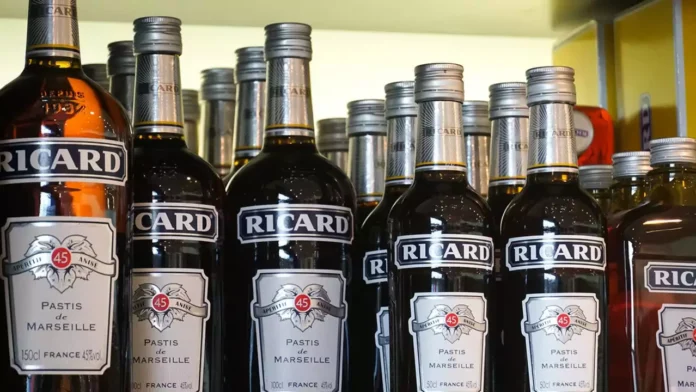
French distiller Pernod Ricard is planning to invest $200 million to construct its largest Asian distillery in Nagpur, Maharashtra, as part of a broader strategy to reduce dependence on malt and scotch imports for the Indian market.
According to the producer of Chivas Regal, Glenlivet, and Absolut spirit brands, the distillery will be capable of producing up to 13 million litres of Indian malt annually. The investment will be distributed over the next decade.
“This investment is the opportunity for us to produce our own malt and not be dependent on any external sourcing for the Indian malt. It is part of our long-term plan and we always look at the development of our business; how much we can procure from our sister company Chivas Brothers, and what is the perception of the local Indian malt thatsome of our competitors have started to do the job of producing quality malt in India,” said Jean Touboul, managing director at Pernod Ricard India.
“It doesn’t mean that we are going to stop importing and we will continue to import Scotch whisky but given the strength of our business, the development of our business, this will be an additional part of our business,” he added.
The company has entered into a Memorandum of Understanding (MoU) with the Maharashtra government for the construction of the distillery. Additionally, it aims to source up to 50,000 tonnes of barley annually from farmers throughout India and collaborate with the state government to enhance barley cultivation, thereby augmenting farmers’ income, as per the company’s statement.
Pernod Ricard presently runs a single distillery in India, located in Nashik, Maharashtra, alongside 24 bottling facilities across the nation. The company noted that it typically invests around 35 million euros annually in India.
Despite having minimal representation in the mass market segment, the company maintains a significant foothold in the Indian market, commanding approximately one-fourth of the total whisky market share. Its substantial portion of business stems from premium and semi-premium brands, notably Blenders Pride, Royal Stag, and Imperial Blue.
Pernod Ricard also owns India’s highest-selling scotch brand, 100 Pipers, with annual sales of 1.5 million cases. Last year, the company launched an Indian single malt, Longitude 77, joining the league of companies such as Diageo and Radico Khaitan that have debuted high-end local brands such as Epitome Reserve and Rampur.
“For our Indian single malt, it is just a fraction of that as we have just launched the product a few months ago. But it’s not only for this brand, it’s for our entire business. It’s also to capture for a possible export. Our Indian whisky is already exported to more than 50 markets. With this additional supply, we will be able to expand the number of countries we export to. So, we are catering for our long-term needs,” Touboul said.
Pernod Ricard considers India one of its top three “must-win” countries globally, alongside the US and China. Presently, India contributes over 10% of the company’s global revenue, totaling 12.1 billion euros, and nearly a third of its global volume. In terms of profit, India ranks as the third-largest market, being the largest in terms of volume. In the fiscal year that ended in March 2023, the company witnessed a 10% increase in its revenue in India, reaching INR 25,142 crore, although net profit declined by 8% to INR 1,343 crore due to higher taxes and promotional expenses.
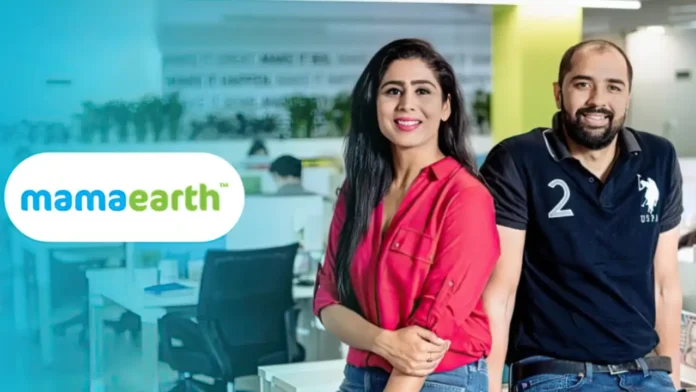
Brokerage firm Citi Research has started covering Honasa Consumer Ltd, the parent company of D2C unicorn Mamaearth, giving it a ‘buy’ rating. The firm anticipates strong growth driven by the company’s brand positioning and the expansive market opportunity.
Citi has additionally established a price target (PT) of INR 550 for the stock, suggesting a potential increase of nearly 24% from its recent closing price on the BSE.
“We expect growth outperformance led by company-specific initiatives and masstige positioning (business less impacted by demand slowdown),” said Citi analyst Vismaya Agarwal in the research note.
The analyst pointed out that Honasa’s strengthening market position through innovation, accelerating growth by extending distribution reach, entering new sub-categories, and gradually expanding margins are key long-term advantages.
It’s worth mentioning that Mamaearth had a subdued debut at INR 324 on the BSE in November last year. Since then, its shares have risen by 37% and are presently trading at INR 444.
During its most recent quarter, Q3 FY24, Mamaearth witnessed a significant 264% surge in its consolidated net profit, climbing from INR 7.1 Cr in the corresponding period last year to INR 25.9 Cr. Additionally, its operating revenue rose by 28% year-on-year to reach INR 488.2 Cr for the quarter.
Despite experiencing a marginal sequential decline in PAT during Q3, Citi pointed out that the startup’s financial performance is on an upward trajectory as it scales up.
The brokerage projects that Honasa’s consolidated revenue will experience a 25% Compound Annual Growth Rate (CAGR) from FY24 to FY26, surpassing the growth projections of its FMCG counterparts. This growth will be propelled by Mamaearth’s offline expansion and robust growth in other brands.
It’s important to highlight that Honasa, the parent company of Mamaearth, also possesses other beauty and personal care brands such as The Derma Co., Ayuga, Aqualogica, and Dr. Sheth’s.
Analyst Agarwal anticipates that Honasa’s EBITDA will accelerate at a rate of 55% CAGR, propelled by its rationalization of ad spending, enhancement of channel mix, and operational leverage.
“We also expect return metrics to improve gradually driven by improving profitability, a lean balance sheet (asset-light contract manufacturing model, limited capex requirement for company EBOs) and prudent working capital management,” Citi’s Agarwal said.
Nevertheless, the brokerage highlighted that the startup, founded in 2016, remains a relatively young company, with its largest brand, Mamaearth, yet to achieve a stable level of profitability.
In fact, Citi has pointed out that one of the key risks to its thesis is Mamaearth’s reliance on contract manufacturers.
It’s worth noting that during its IPO last year, Honasa collaborated with 37 contract manufacturers, a fact that raised concerns for many.
Nevertheless, during that time, Mamaearth founders Ghazal and Varun Alagh explained that manufacturing required significant capital investment, which could potentially limit the company’s resources. They further stated that outsourcing manufacturing would enable the company to swiftly navigate this growth stage.
Additionally, there are other risks to consider, such as increased discounting and competitive intensity, as well as the potential for pre-IPO shareholders of the startup to sell off shares once lock-ins expire.
The six-month lock-in period for Honasa’s pre-IPO shareholders is set to expire in May. Nevertheless, certain shareholders were granted exemptions from this lock-in period based on their percentage of holding.
In December last year, Fireside Ventures sold 60.89 lakh shares, equivalent to a 1.89% stake in a bulk deal. Similarly, last month, Stellaris Venture Partners disposed of more than 32 lakh shares, representing 1% of its stake in the company, in a bulk deal.
Peak XV Partners currently holds the largest stake in Honasa, accounting for 18.84% of the company’s shares. Notably, Sequoia Capital Global Growth Fund holds a 4.38% stake in the D2C unicorn, which is separate from Peak XV Partners’ holdings.
“We note pre-IPO private equity players were holding stake in Honasa. After the promoters, Peak XV/Sequoia is the largest shareholder, with 23% stake in the company. The other PE players together own about 19% and have all sold partially in the IPO. We note the risk of excess supply of Honasa shares coming to the market once the lock-ins for these players expire,” the Citi analyst said.
Nevertheless, Citi anticipates additional upside potential for the stock going forward, driven by the possibility of outperforming its peer group.
In fact, the brokerage also pointed out that while some market segments compare Honasa to Nykaa due to similarities in their operations, target audience, and digital-first approach, direct benchmarking might not be suitable. This is because they have distinct business models—Honasa operates more as a brand while Nykaa functions as a marketplace.
Jefferies brokerage also maintains a ‘buy’ rating on Mamaearth shares with a price target of INR 590.
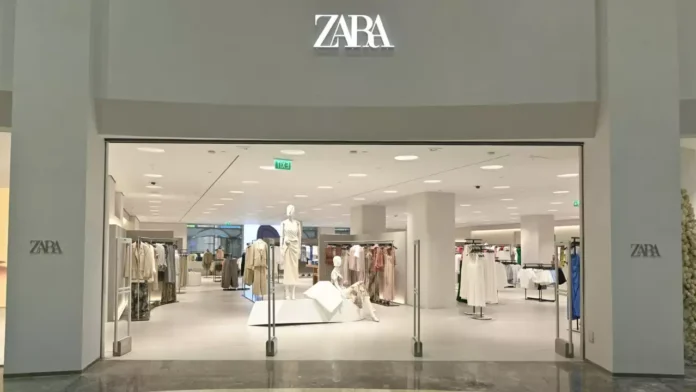
Global fashion brand Zara has unveiled its first store in Ahmedabad, Gujarat, located at Palladium Ahmedabad.
Covering 27,000 square feet, this marks the brand’s second establishment in Gujarat. It presents collections for women, men, and kids across three floors—ground, first, and second—and is furnished with cutting-edge technological amenities.
The brand’s app is seamlessly integrated with various services, such as reserving fitting rooms, accessing a designated area for online order pickups, browsing store inventory online, ordering items for pickup within two hours, and checking stock availability. Additionally, the store features two self-checkout zones for added convenience.
Regarding sustainability, the establishment has been meticulously designed, constructed, and operated to minimize energy and water consumption. Furthermore, the wood utilized in the store, along with paper goods such as bags and labels, bear PEFC or FSC certifications, ensuring responsible and sustainable sourcing practices.
Zara operates under the Inditex Group, an international fashion conglomerate that oversees various retail brands including Pull & Bear, Massimo Dutti, Bershka, Stradivarius, Oysho, and Zara Home.
Inditex manages a comprehensive network of both brick-and-mortar and online stores across more than 200 markets and aims to achieve climate neutrality by 2040. Presently, Inditex operates 23 Zara outlets in India, including the one mentioned.
According to information on Trent Limited’s official website, the company holds two distinct associations with the Spanish Inditex group. One involves a 51% shareholding by Inditex and 49% by Trent, dedicated to operating Zara stores in India. The other association is similarly structured for the operation of Massimo Dutti stores in the country.
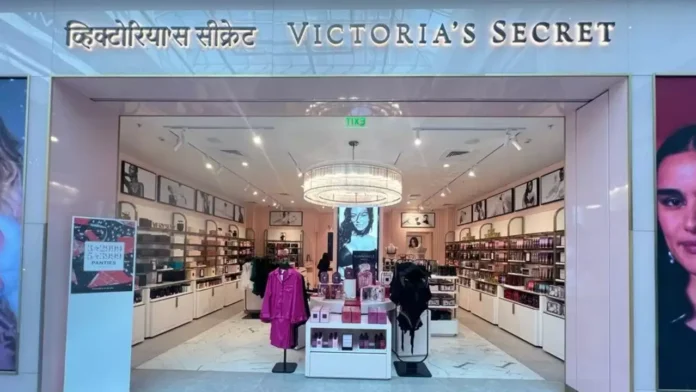
Victoria’s Secret, the renowned American specialty retailer, has recently launched new outlets in Gurugram and Mumbai.
The newly opened stores can be found at Ambience Mall in Gurugram and Phoenix Marketcity in Kurla, Mumbai.
The brand is unveiling the “Store of the Future” concept to provide an immersive shopping experience. Both of the new stores feature the complete range of Victoria’s Secret beauty products and accessories, including the newly launched Bare Rose collection.
“These additions align seamlessly with our vision of offering unparalleled luxury and style to our customers. As we continue to grow and strengthen our presence, we look forward to creating immersive shopping experiences that showcase the iconic allure of Victoria’s Secret. This expansion is a testament to our dedication to curating diverse, trendsetting collections that resonate with the dynamic tastes of our patrons across the country,” said Tushar Ved, President of Apparel Group India.
In 2021, Victoria’s Secret made its debut in the Indian market via a partnership with Apparel Group India. Initially, the international brand launched its presence in India through an e-commerce platform, providing a variety of products such as fragrances, beauty, and personal care items.
During the third quarter of the Financial Year (FY) 2023-24, Victoria’s Secret inaugurated more than four stores, with two located in Pune, and one each in Hyderabad and Bengaluru. Furthermore, the brand launched its inaugural beauty store in Mumbai last month.
In 2022, Victoria’s Secret broadened its presence in India with the opening of its maiden physical store at Palladium Mall in Mumbai. Subsequently, another store was established at Ambience Mall in Vasant Kunj, New Delhi. Continuing its growth trajectory, the brand introduced its first store in Pune at Phoenix Mall of the Millennium in November 2023.
Established in 1977 by siblings Roy and Gaye Raymond, Victoria’s Secret has evolved into a leading American retailer specializing in lingerie, clothing, and beauty products. As per its official website, the company currently operates globally, boasting approximately 1,360 retail outlets across 70 countries.
Apparel Group boasts an extensive network of more than 2,025 stores spanning across 14 countries. They represent and promote over 80 brands, which include renowned names such as Beverly Hills Polo Club, Bath & Body Works, Tim Hortons, Tommy Hilfiger, Nine West, Call it Spring, Charles & Keith, Inglot, La Senza, and R&B Fashion.
We use cookies to ensure that we give you the best experience on our website. If you continue to use this site we will assume that you are happy with it.