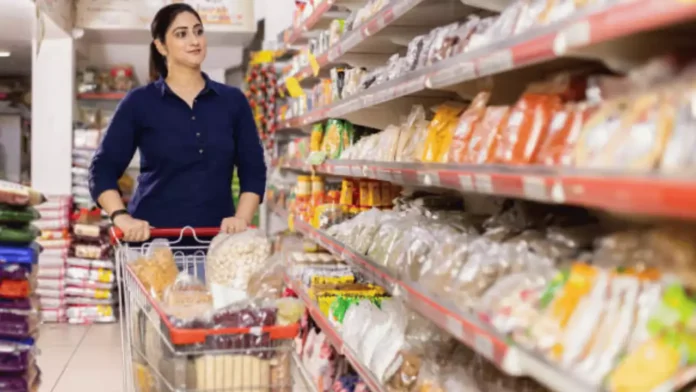
On Friday, Emkay Global Financial Services released a report stating that corporate discussions regarding the Fast-Moving Consumer Goods (FMCG) sector highlighted the subdued demand environment prevailing in Q4FY24, a trend also projected by data agencies for CY24.
“Nielsen, which tracks retail data, is building a case of 4.5 – 6.5 per cent value growth for the sector. Kantar, which tracks household consumption data, echoed the same muted outlook,” the report said.
It said that with the El-Nino effect remaining till May 2024 (agri growth is projected at 1.8 per cent in FY24; a seven-year low), and expectation of no material shift in consumption from elections (as in the past), demand outlook remains weak for 1HFY25.
The report added that the demand is likely to see recovery from 2HFY25 and as per consensus estimates, for large and traditional listed companies, the revenue growth is likely to be in high single to low-double digits, which is factoring demand recovery ahead.
“We see an extended winter as unlikely to aid in primary sales, similarly, summer placement has been delayed, affecting Q4FY24 growth,” the report added.
“Sector valuations have seen de-rating, amid distressed demand setting and surge in competitive intensity in the value segment; though it still maintains a premium to a broader market index, given the promising sector outlook and fundamentals,” it said
It said that the FMCG sector is poised for mid-single-digit growth in CY24, driven largely by volume, as per estimates of Nielsen IQ and Kantar.
“Demand setting is likely to remain muted in 1HFY25 and expected to recover gradually in 2HFY25, as the effects of El Nino subsides,” the report added.
Ironhill India has announced its collaboration with GoGround Beans & Spices, blending the finest Indian cocoa beans with inventive craft brewing experiences.
This partnership seeks to honor the diversity and excellence of Indian cocoa beans while venturing into innovative territories within the craft beer industry.
“Through our partnership with Ironhill India, we’re thrilled to bring the Indian cocoa beans into the spotlight. It is a well-known fact that Indian cocoa beans are renowned for their unique and distinct flavour profile, characterized by rich, earthy undertones with subtle hints of fruity and floral notes. They offer a versatile brewing experience, allowing for the creation of beers that have a harmonious blend of chocolatey richness and subtle undertones, providing a sensory experience that is distinctly Indian,” shared Luca Beltrami, Co-founder of GoGround Beans & Spices.
Led by Teja Chekuri, Ironhill India stands as a leading craft brewery, rapidly emerging as one of the most prominent brands in the nation. The brand has advanced significantly in fostering the segment and elevating the craft brewing experience to new heights.
Partnering with GoGround Beans & Spices, they introduce yet another cocoa-infused brew to their collection. Founded in 2015 by Luca Beltrami and his wife, Ellen, GoGround Beans & Spices has been a pioneering force in backing cocoa farmers in Kerala’s Idukki region. Their mission transcends mere commerce; they aim to bolster farm yields, modernize production methods, and improve the socio-economic conditions of smallholder farmers in the area.
“Craft beer is a realm where innovation is only limited by your imagination. By incorporating Indian cocoa beans into our brews, we’re not only elevating the flavor profile but also shedding light on the incredible potential of Indian agricultural produce and native beans that are pleasing to the Indian palate,” added Teja Chekuri, Managing Partner, Ironhill India.
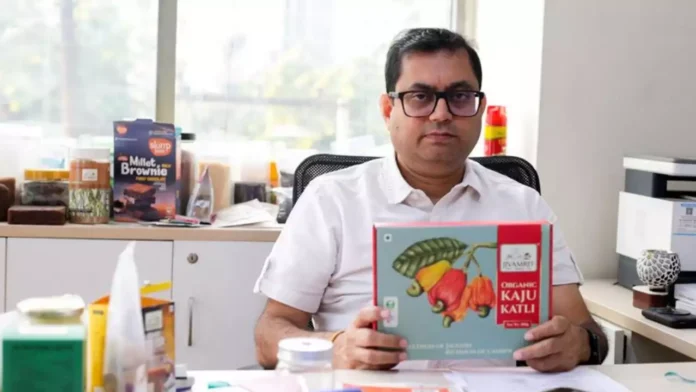
Jivamrit Organic, a trailblazer in the realm of organic food, is set to transform the culinary landscape with its wide-ranging product selection. With a vision to emerge as the premier organic food provider, Jivamrit Organic presents a diverse range of offerings perfect for any mealtime, spanning from breakfast to dinner.
Founded by Mukesh Kumar, Jivamrit Organic takes pride in upholding principles of purity, sustainability, and a farm-to-table ethos. Additionally, Jivamrit collaborates with Farmer Producer Organizations (FPOs), currently engaging with over 2500 farmers across 5 states, providing them employment and cultivating on 12,000 hectares of land. All products by Jivamrit Organic adhere to both Indian and US Organic standards.
The product line, consisting of 62 meticulously crafted organic offerings, encompasses fundamental kitchen essentials such as oil, ghee, dal, and more. Through partnerships with certified Farmer Producer Organizations (FPOs), the company ensures that each product embodies a dedication to sustainable farming practices and upholds the highest quality standards.
Mukesh Kumar, Founder & Managing Director of Jivamrit Organic, expressed his excitement about the launch, saying, “Jivamrit Organic is not just a brand; it’s a commitment to health, sustainability, and the environment. We have carefully curated a diverse range of organic products to cater to the evolving tastes and preferences of our consumers. With our diverse range of 62 products, we aim to make every meal a celebration of health and taste. We aspire to become the largest organic food producer.”
One of its standout offerings, the delicious Kaju Katli, is poised to win hearts as a household favorite. Demonstrating their dedication to research and development, Jivamrit Organic has provided 100 liters of fresh cow milk to IIT Roorkee, signaling the start of a collaborative journey to explore innovative possibilities in organic dairy.
In the competitive realm of organic products, Jivamrit Organic distinguishes itself by supplying vital ingredients to prominent brands such as Organic India, Organic Tattva, Pure n Sure, and others. This strategic partnership emphasizes the brand’s credibility and commitment to advocating for organic lifestyles.
The brand is also gearing up to tap into the B2B hospitality sector and is currently in discussions with renowned hotels such as Taj and Radisson. Additionally, they are targeting B2C consumers and households through platforms like Country Delight, Big Basket, Amazon, Flipkart, and more.
As Jivamrit Organic maps out its trajectory, the company is already strategizing to broaden its product range, providing a wider array of organic options for health-conscious consumers. These products are easily accessible through numerous grocery outlets, ensuring that organic living is within reach for everyone.
According to the company, McDonald’s India North and East offerings will now be accessible through ONDC buyers’ applications, featuring exclusive à la carte and meal selections.
Rajeev Ranjan, the Managing Director of McDonald’s India – North and East, emphasized in a statement that the collaboration aims to accelerate McDonald’s accessibility for existing and new customers.
Following Jubilant FoodWorks Ltd (JFL) operated Domino’s Pizza, McDonald’s becomes the second major fast food services player to join the government-backed ONDC network in recent times.
Since its inception early last year, the ONDC has processed over 7.1 million cumulative orders as of February. Operating in markets including Delhi, Bengaluru, Kolkata, and Chennai, among others, the platform facilitates order services.
Meanwhile, the network is piloting a project to integrate street food vendors, starting with Delhi and Lucknow. The pilot project plans to collaborate with 500 street food vendors in Delhi and Lucknow over the next couple of months, leveraging buyer applications to stimulate demand for the small-scale operators. In Delhi, the pilot has begun with Zomato-backed Magicpin.
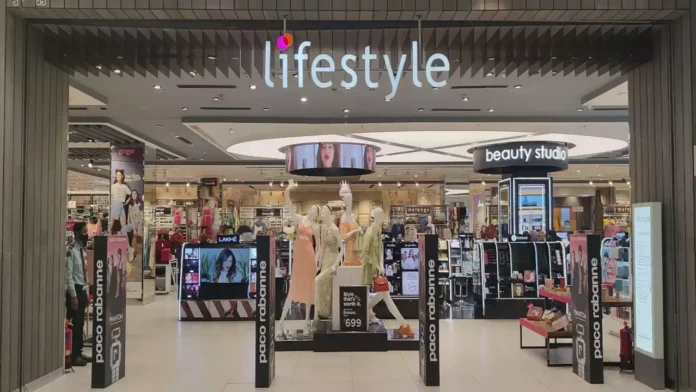
Landmark Group‘s Lifestyle department store chain is actively expanding, with plans to open its 111th store in Surat, located at Aashirwad High Street along Citylight Main Road.
Covering an expansive retail area of 22,800 square feet, this will be the company’s second store in Surat and its 23rd in the Western region.
“We are extremely delighted to launch the second Lifestyle store in Surat. This would be our fifth store in Gujarat and the 111th store in India. We believe that Surat is an evolving and promising market for fashion retail,” said Vivek Thilakan, senior vice president – operations (West) at Lifestyle International Pvt. Ltd.
The latest store introduces self-checkout amenities and offers an omnichannel experience, incorporating features like ‘click and collect’, enabling customers to place orders online and retrieve items from a Lifestyle store of their preference.
“We have robust expansion plans. We aim to add around 4-5 stores in the coming financial year in Gujarat and Maharashtra. These will include stores in new towns as well as new catchments in existing cities,” added Thilakan.
On Thursday, Lifestyle marked the milestone of 110 stores with the launch of its latest store at Raipur City Center Pandri Mall, Chhattisgarh.
This marks the 11th outlet in Central India and the second consecutive store in Raipur within the fiscal year 2024”, said deputy general manager – operations at Lifestyle International in a LinkedIn post.
Lifestyle is a large format department store that offers a variety of products, including apparel, footwear, children’s wear and toys, furniture and home furnishings, and personal grooming items. Typically, a Lifestyle store occupies an area of 20,000 – 50,000 sq. ft., varying based on location and assortment.
The brand showcases an extensive collection of over 350 national and international brands, featuring renowned names such as Louis Philippe, Van Heusen, Arrow, Park Avenue, Benetton, Nike, Adidas, Allen Solly, Levi’s, Tommy Hilfiger, Swatch, Tissot, and Tag Heuer.
In May 2023, the chain marked a milestone with the inauguration of its 100th store. Looking ahead, it intends to broaden its retail presence within the country by launching a minimum of 50 new stores over the next three to four years.
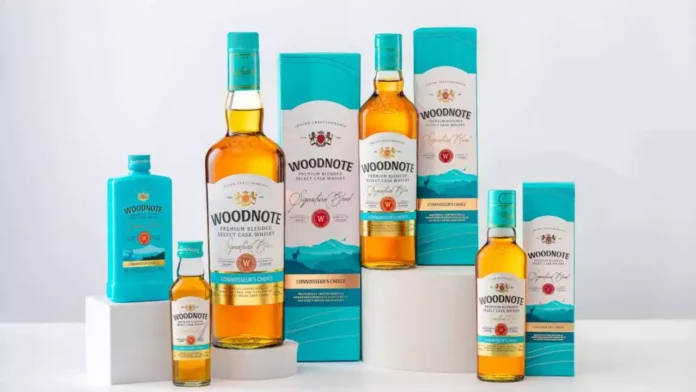
ADS Group, a prominent player in India’s alcoholic beverages industry, has expanded its portfolio into the ultra-premium whisky market by introducing Woodnote Premium Blended Select Cask Whisky in Delhi and Haryana.
Dubbed as “Serenity Uncasked,” Woodnote Premium Whisky seamlessly combines the finest Scotch malts with handpicked Indian grain spirits, resulting in a blend that captures the serene essence of nature’s tranquility through its harmonious flavors.
Woodnote Premium Whisky is available in Delhi and Haryana, priced at INR 1000 and INR 850 per quart (750ml) respectively in these regions. It is also offered in Pint (375 ml) and Nip (180 ml) sizes. In the Delhi market, consumers can find it in miniature bottles (90ml) and a trendy Hip Flask pack (200ml).
In the swiftly expanding premium market, Woodnote Premium Whisky endeavors to enchant whisky aficionados with its sophisticated flavor profile and stylish packaging.
Paras Maan, Chief Operating Officer at ADS Group, expressed, “Woodnote Premium Whisky represents our homage to the untouched tranquility of nature. From its distinctive teal-colored monocarton design, which introduces a refreshing contemporary aesthetic, to its refined flavor profile, every aspect embodies our dedication to delighting whisky enthusiasts with an exceptionally premium product and an elevated sipping experience. We are thrilled by the overwhelmingly positive reception from consumers in Delhi and Haryana.
Initially launching Woodnote Premium Whisky in Haryana and Delhi allowed us to gauge consumer feedback before a nationwide rollout. The high rate of repeat purchases and the praise for its premium packaging and superb blend have surpassed our expectations. Crafted to appeal to the discerning palates of modern consumers, Woodnote Premium Whisky, with its refreshing teal-colored monocarton design and sophisticated flavor profile, is poised to resonate deeply with our target audience as we introduce it to more markets under the banner of ‘Serenity Uncasked’.”
Woodnote Premium Whisky tantalizes the senses with delicate peat and maritime aromas, accompanied by nuances of vanilla and ripe fruit. Upon tasting, it presents a harmonious fusion of gentle peat, vanilla, pepper, and oak undertones, leading to a velvety finish accentuated by the sweetness of oak and fruit.
Following its successful launch in Delhi and Haryana, ADS Group plans to expand the availability of Woodnote Premium Whisky in premium retail outlets and on-premise locations across India.
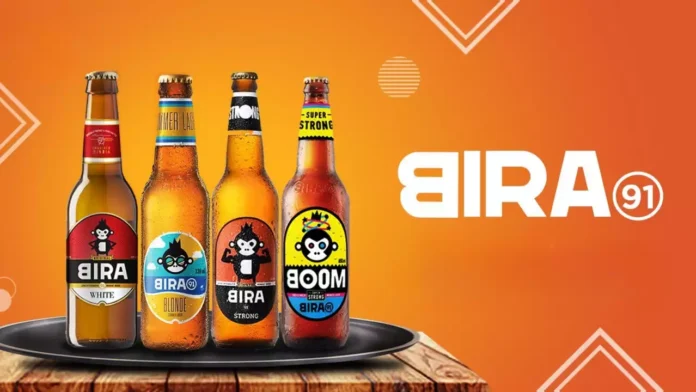
Bira 91, one of the fastest-growing beer brands in the world, has clinched seven awards at The European Beer Challenge, often revered as the Oscars of the beer industry. This recognition signifies the highest level of achievement within the field.
Bira 91 won a total of seven different medals across various categories at this year’s competition, solidifying its position as the most awarded beer company in India. Bira 91 RISE, Gold, and Light secured GOLD in their respective categories, followed by Silver for Bira 91 Superfresh White and Bronze for Bira 91 Blonde Summer Lager. Notably, Hill Station Cider, Bira 91’s venture into the Cider category, captured an unprecedented DOUBLE GOLD and GOLD in the Modern Cider category.
Ankur Jain, Founder, and CEO of Bira 91, said, “We at Bira 91 are immensely proud of our brewers and brewing team for brewing world-class beers in India and putting us on the world map for beers. The European Beer Challenge is one of the world’s most respected beer competitions, and the judges on the panel are at the top of their game. We’re a brand that’s “Imagined in India,” and seeing seven different Bira 91 products getting recognized on a global platform is a huge honor for us.”
Established in 2015, Bira 91 is powered by a dynamic team of over 1600 passionate beer lovers and is supported by leading investors from across the world – including Japan’s leading beer company, Kirin Holdings, Japan’s largest bank, MUFG Bank, Tiger Pacific Capital from New York, Sofina of Belgium, and Peak XV Partners (formerly Sequoia India).
Bira 91 has expanded its reach to over 1000 towns and cities spanning 25 countries, producing its brews across six manufacturing units in India. The company runs four taprooms in Bengaluru and Delhi-NCR, where it unveils a new experimental beer each week, complemented by its curry-shop menu. Additionally, it has recently acquired The Beer Café, India’s top Alco-Beverage chain, to bolster its presence in pubs and taprooms and develop India’s first large-scale direct-to-consumer platform focusing on beer and innovation.
GobbleCube, a brand analytics platform, has raised $1.9 million (INR 15.7 crore) in a seed funding round led by Kae Capital, with participation from CRV and a group of angel investors.
The Gurugram-based startup plans to utilize the fresh capital to enhance its product development capacity and build a product market strategy, starting with India, Southeast Asia, and the US.
“Brands have to manage not just one, but multiple platforms. But they are operating with limited amounts of data. So, solving that puzzle with a limited amount of data was a mammoth challenge for them and I think that was the core purpose with which we built out GobbleCube,” the Economic Times reported, citing the startup’s cofounder and CEO Manas Gupta.
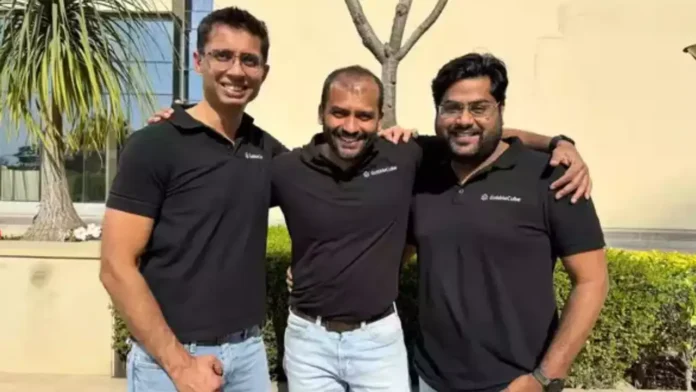
GobbleCube, founded by former Blinkit executives Manas Gupta, Srikumar Nair, and Nitesh Jindal, specializes in offering revenue management solutions to consumer packaged goods (CPG) brands through data automation and decision support across the ecommerce chain.
The offerings of the startup closely resemble those of OopDoor, the new venture by Flipkart co-founder Binny Bansal.
Bansal, through his investment arm Three State Ventures, recently injected $2 million into the startup. OopDoor, a SaaS platform, targets ecommerce companies seeking expansion into new regions. Its services encompass advertising strategies and improved catalog offerings.
Additionally, OopDoor operates in Southeast Asia and the US, though it has not yet initiated operations in India.
Estimates suggest that with a 52% internet penetration rate in India, the potential for ecommerce in the country could reach $400 billion or more by 2030. Reports indicate there are over 5,000 active ecommerce startups in the nation. Given this rapid growth in a fiercely competitive market, strategic planning for market expansion is imperative for brands.
Swiggy, a prominent player in food and quick commerce, has merged its premium grocery vertical, InsanelyGood, with its quick commerce vertical, Instamart, as communicated to users in a notification on Thursday.
“We will have to pause InsanelyGood operations for some time. We will be available at an Instamart store near you super soon,” the notification read.
After downsizing from six cities last year to mitigate cash burn, InsanelyGood now exclusively serves Bengaluru. Typically, orders made on the platform before 11 pm are fulfilled by 7 am the following day.
InsanelyGood, which earlier maintained its own app, underwent integration with the main Swiggy app in July of last year. It was featured as a separate tile on the homepage, akin to how services such as Instamart, Dineout for restaurant bookings, Genie for pick-and-drop service, and Minis for aggregated selling are displayed.
In March of last year, the service formerly recognized as SuprDaily underwent a rebranding, adopting the name InsanelyGood. Prosus-backed Swiggy acquired SuprDaily in 2018, subsequently integrating it into a unit within the parent entity in 2021. This strategic move positioned InsanelyGood in direct rivalry with competitors such as Tata-owned BigBasket’s BB Daily, Amazon Fresh, and Reliance Retail-owned Milkbasket.
“InsanelyGood focuses on high quality assortment of groceries and has seen a tremendous amount of consumer love. Given the great traction, we plan on scaling this up to the entirety of Bangalore and will do this as a separate entry point on Swiggy Instamart,” a Swiggy spokesperson stated.
Phani Kishan, co-founder of SuprDaily and later recognized as a co-founder at Swiggy, took over as the head of Swiggy Instamart last year following the departure of senior leader Karthik Gurumurthy, who had spearheaded the development of Instamart.
The move comes as quick-commerce firms like Instamart, Zepto, and Blinkit diversify and expand their offerings, challenging e-commerce companies with products like apparel and electronics. Swiggy has been experimenting with selling products in categories such as home and kitchen, electronics, and toys through its Swiggy Mall vertical for a few months now.
In January, Swiggy reduced its workforce by 6%, impacting approximately 350-400 roles, as part of its cost-cutting initiatives. Swiggy intends to submit its draft IPO papers in the upcoming months.
A group of Nestle shareholders has submitted a resolution demanding the Swiss corporation to significantly increase the quantity of nutritious food it offers for sale.
The investors, organized by investment advocacy group ShareAction, have called on Nestle to establish an internationally recognized target to raise the percentage of its sales derived from healthier products.
The demand comes as a result of findings from research conducted by Oxford University and BiteBack, revealing that 70% of Nestle’s sales in the UK are comprised of foods high in fat, salt, and sugar.
Investors with $1.68tn in assets under management, including Legal and General Investment Management, are supporting the resolution, which will be voted on at Nestle’s AGM on 18 April.
Catherine Howarth, chief executive at ShareAction, said, “Nestle is the biggest food company in the world and has an enormous influence on billions of people’s diets and lives through the products it makes, advertises and sells to us.
“While the company claims in its mission statement that its products have ‘the power to enhance lives’, in reality, three-quarters of Nestle’s global sales are unhealthy products containing high levels of salt, sugar and fats.
“As Nestle has consistently failed to set out how it will shift the balance of its sales towards healthier food options, concerned investors have been left with no option but to bring forward a resolution at the company’s AGM in April.
“Any move away from sales of unhealthy products by Nestle will inevitably support healthier communities all over the world and in the long-term help economies too.”
The move from ShareAction comes six months after the charity accused Nestle of having a “flawed approach” as the company looked to increase sales of healthier products.
The investors said they were concerned a new healthy food target announced by Nestlé last September “undermines the company’s pledge to lead the food industry in ensuring balanced diets are within reach for people around the world.”
Nestlé had set a 2030 target for increasing the sales of “more nutritious” products by 50%.
The KitKat chocolate and Maggi sauce owner said it had planned to invest “significantly” to renovate existing products and to drive innovation to aid the initiative.
Nestlé aims to increase sales of healthier products by Sfr20bn-25bn ($21.77bn-27.21bn) by 2030, reflecting approximately a 50% growth from 2022 sales levels.
The shareholders contended that this growth strategy already aligned with the KitKat maker’s anticipated overall growth, highlighting that the target encompasses products that may not meet the criteria for being classified as healthy, such as coffee.
In response to the planned AGM resolution next month, Nestlé said ShareAction “are targeting the wrong company”.
It added, “The assertion that three-quarters of our sales come from unhealthy products is wrong: in the first year of our reporting, more nutritious and specialised nutrition products have gone from 57% to 59% of total sales (minus pet care). Or looking at it another way, 50% of our sales now come from coffee, pet care and Nestlé Health Science products, up from 30% a decade ago.
“We also disagree that products such as plain coffee or vitamins, minerals and supplements should be excluded. These are part of our portfolio and consumed by people on a daily basis.
“While we take note of ShareAction’s perspective, we disagree with the notion that we should aim to limit growth in specific areas of our portfolio. A proportional target would require us to weaken valuable parts of our portfolio and create opportunities for competitors without yielding public health benefits. Our goal is to achieve success across all segments of our portfolio, ensuring that we address responsibly the diverse needs and preferences of our consumers. There continues to be space for enjoyment in moderation as part of a healthy and balanced diet.”
We use cookies to ensure that we give you the best experience on our website. If you continue to use this site we will assume that you are happy with it.