ITC has become the second company, after Amazon, to employ inland waterways for commercial transport, as per an official statement.
The statement added that ITC Limited has teamed up with the Inland Waterways Authority of India to transport FMCG products through inland waterways using National Waterway 1.
On March 14th, a ship loaded with eight containers of processed food products (Noodles) from ITC Ltd departed from Kolkata to Patna.
The cargo is being transported using MV Rabindranath Tagore, which boasts a carrying capacity of 16 TEUs.
It is operated by Inland and Coastal Shipping Limited (ICSL), a wholly-owned subsidiary of the Shipping Corporation of India.
In November last year, IWAI signed an MoU with Amazon India Ltd and successfully facilitated the movement of its first e-commerce cargo through National Waterway 1.
Inland Waterways Authority of India is committed towards developing national waterways and make IWT a more viable mode of transportation, the statement said.
According to the statement, Under the Jal Marg Vikas Project, IWAI is developing National Waterway 1 (Ganga-Bhagirathi-Hooghly river system) to improve navigation and facilitate smooth passenger and cargo movement.
As on February this year, total cargo movement on national waterways was recorded at 122.21 million tonnes which is 7.2% higher than the corresponding figures of last year. The collaboration between ITC Ltd and IWAI will pave the way for similar partnerships in future and open new possibilities for private sector to leverage the extensive inland waterways in India.
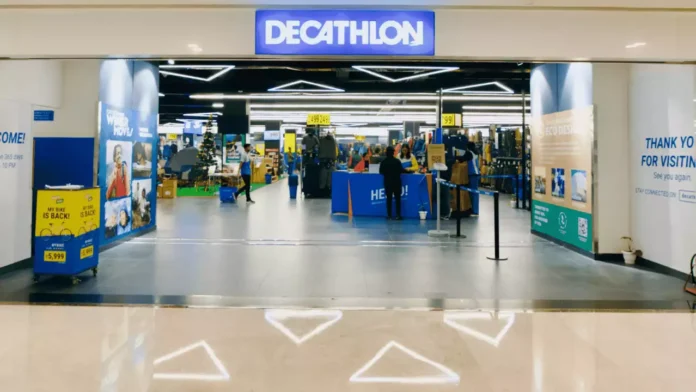
French sports retailer Decathlon is accelerating its investments to ramp up production and enhance its retail presence further in India, one of its “most important” global markets, its Global CEO Barbara Martin Coppola has said.
Decathlon expects to continue its “high growth rate” from the Indian market, which is also emerging as an important manufacturing hub for the sports retailer, from where it currently exports around 65 per cent of production to global markets, she added.
For Decathlon, India is currently among the top ten global markets, growing “twice the rate” of others, where it entered in 2009 and now operates a network of 129 stores, she said.
Coppola said she is “really impressed” with the evolution of the sports culture in India, especially among the middle class, which is gradually getting engaged in different kinds of sports, amid a rise in their income level with the growth of the economy.
“We see a real appetite for overall sports consumption, people wanting to try new experiences. And to be honest, there is an energy that is just beautiful to see at the stores… for Decathlon, (India) for sure is one of the major markets,” Coppola said.
Over investments in India, Coppola said Decathlon has plans to accelerate local production as well as local sourcing and expand its sports retail sales network.
“I can not comment on investment but we are accelerating. We are not only accelerating presence in India from a retail perspective but also from the production perspective,” she said, adding “India is the most important market for Decathlon. We expect to continue the high growth.”
When asked about the outlook and role India could play in Decathlon’s global operations, Coppola said it is “a major country” for the French sporting goods retailer.
“It’s a powerhouse in digital and to be honest, I am inspired by the creativity of the production, the experiences, which makes it interesting for the world,” she said, adding “I am very impressed by the know-how, which has been acquired progressively.”
Manufacturing of bikes is not easy and India is now manufacturing it. It is also manufacturing backpacks, tents to textiles and this range would continue to increase, she added.
Decathlon has plans to increase the local sourcing to 85 per cent in the next two years of the sports goods sold in India from the present 60 per cent.
“Currently 65 per cent of what is produced in India (by Decathlon) is exported. That part would grow bigger and continue to grow,” Coppola added.
When asked about Decathlon’s growth driver in India, she said there are different factors. Now overall society is getting into sports.”
Earlier, only 5 per cent of the Indian population was participating in sports, however, now this is having a high growth with the adoption of different sports.
“This has especially become popular in the middle class,” Coppola said, adding there are more avenues for sporting also in India.
This is also helped by factors such as a rise in income, leading to “more wealth, more spending on sports and leisure”.
“Now India has more unicorns, experiences and know-how that exist in the ecosystem of India, there are fantastic opportunities and sports is one of the industries, which is exploding. There would be many more,” she added.
Decathlon’s app clocked nearly 29 million downloads in India, Coppola said, adding that the brand has been able to offer “one of the best omni-channel experiences”, which includes not only selling sports goods but also offering space for sports-related activities at its stores.
Decathlon, which is the official partner of the Paris 2024 Olympics, would be delighted if India gets a chance to host this major international multi-sport event, said Coppola.
The Indian government is bidding to host the Olympics in 2036.
Decathlon entered India in 2009 as a cash-and-carry retailer and was approved for single-brand retail in 2013 by the government.
For the financial year ended March 31, 2023, Decathlon India’s sales were at INR 3,995 crore, registering a 37 per cent growth.
Zomato, a major player in the foodtech industry, has received a penalty notice for goods and services tax (GST) from Gujarat’s Deputy Commissioner of State Tax, pertaining to fiscal 2018-19.
According to Zomato’s filing, the company has been instructed to pay INR 4,11,68,604 for GST, along with additional interest and penalty charges totaling INR 8,57,77,696.
This order was issued subsequent to an audit of Zomato’s GST returns and accounts.
“This is to inform that the company has received an order for FY 2018-19 pursuant to the audit of GST returns and accounts by the Deputy Commissioner of State Tax, Gujarat raising demand of GST of INR 4,11,68,604, along with applicable interest and penalty totalling to INR 8,57,77,696. We believe that we have a strong case on merit and the company will be filing an appeal against the order before the appropriate authority,” the filing said.
It further added that the demand order has been received in respect of excess availment of input tax credit and short payment of GST on account of audit observations and interest, penalty thereon.
“The company in its response to the show cause notice had clarified on all the issues along with relevant documents, circulars etc. which appears to not have been fully considered by the authorities while passing the order,” the filing said.
The company believes it has a strong case to defend before the appellate authorities and anticipates no financial impact from the matter.
This comes at a time when Zomato is already confronting tax-related challenges. In January, tax authorities issued a notice of INR 4.2 Cr for alleged GST underpayment. Concurrently, the company faced another setback with a show cause notice of INR 401.7 Cr from the Directorate General of GST Intelligence, Pune Zonal Unit, regarding unpaid tax on delivery charges. Zomato disclosed receiving three orders from tax officials in Delhi and Bengaluru, citing GST underpayment along with interest and penalties under various tax acts, totaling INR 4.24 Cr, as detailed in an exchange filing.
Zomato announced its second consecutive profitable quarter, with a notable surge in profit after tax to INR 36 Cr during the September quarter of the financial year 2023-24 (FY24). This marked an impressive 18-fold increase from the PAT of INR 2 Cr in the previous quarter.
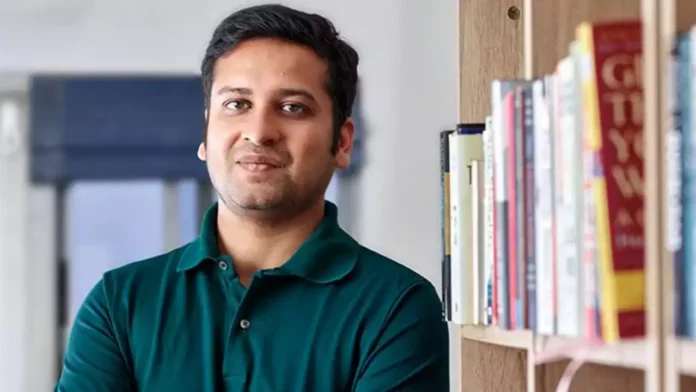
Binny Bansal, co-founder of Flipkart, has reportedly intensified his investment efforts in India following his departure from the company’s board in January. According to sources familiar with the matter cited by ET, Bansal is actively involved in scaling up his investments in the country, particularly in his latest venture, OppDoor.
Following the sale of his remaining stake in Flipkart last year, which yielded approximately $650 million, Bansal has expanded his investment portfolio. He injected an additional $25 million into Curefoods as part of a $60 million funding round, consequently increasing his ownership from 12% to 18% in the Bengaluru-based company. This funding round has placed Curefoods at an approximate valuation of $375 million.
According to sources, Bansal’s investment involved acquiring Cultfit‘s remaining shares in the cloud-kitchen platform, as well as those held by certain angel investors. Additionally, it’s reported that the company received nearly $10 million in primary capital. In a secondary share sale, the capital does not flow directly to the company; instead, it goes to the selling investors.
At the same time, Bansal is actively seeking CEOs to lead his upcoming ventures—OppDoor, as well as a venture focused on providing offshore legal services to US brands aiming for global markets. According to insiders, the IIT-Delhi alumnus is dedicating substantial effort to engage with the boards of prominent startups like PhonePe, Curefoods, and GreyOrange, where he holds significant ownership stakes.
“He has allocated in multiples of tens of millions for OppDoor, and a legal services venture. He is busy finding new executives who will lead these ventures while he will strategically spearhead them,” this person said.
Another source noted that Bansal, who co-founded Flipkart in 2007 with his batchmate Sachin Bansal, is investing more time in companies where he holds a significant stake. “Offlate, he is spending more time on GreyOrange with a new CEO coming in there. He has a large position in PhonePe now also and is guiding the founders after separation from Flipkart,” this person said.
Individuals familiar with Bansal’s plans indicated that he has pinpointed a handful of investments where he intends to hold a substantial stake while also assuming a strategic role alongside the founders.
“More than a week in a month is kept for board meetings only and then he is speeding one full day with founders to work on long-term plans and execution ideas,” this person said.
“Three State Ventures is one focus for investments and other being the new startup,” one of the persons said. Bansal has invested around $100 million in a recent funding round of PhonePe at a pre-money valuation of $12 billion. He was instrumental in PhonePe acquisition by Flipkart in 2016.
Unlike Sachin Bansal, Binny Bansal chose to retain his stake in Flipkart following the Walmart deal in 2018. He proceeded to gradually divest his ownership through multiple funding rounds at Flipkart.
Following Walmart’s acquisition of Flipkart, Binny Bansal resigned from his position as Flipkart Group CEO several months later amidst allegations of significant personal misconduct, as stated by Walmart. Subsequently, he was cleared of the allegations following an internal investigation conducted by the e-commerce company.
Binny Bansal‘s venture fund, Three State Ventures, has injected an extra INR 200 crores into Curefoods, a cloud kitchen startup backed by Accel. This additional investment brings the total funds raised to INR 500 crores, valuing the company at approximately INR 3,000 crores ($375 million) post-money.
The funding will be allocated towards scaling up its offline operations, particularly focusing on well-known brands such as Nomad Pizza and Sharief Bhai Biryani. Curefoods, which encompasses brands like Frozen Bottle, EatFit, and CakeZone, will also benefit from this investment.
Bansal’s decision to increase his investment underscores the strong demand that consumer internet brands are experiencing in an otherwise subdued funding scene.
Binny Bansal’s additional investment is part of the firm’s ongoing funding round initiated in April 2023, during which it secured INR 300 crore (approximately $37 million) from Three State Ventures, IronPillar, and other investors.
Curefoods stated on April 6, 2023, that the funding comprised both primary and secondary equity and debt, with Three State Ventures taking the lead in the round by contributing INR 240 crore.
Neither Curefoods nor Three State Ventures provided any comments on the recent developments.
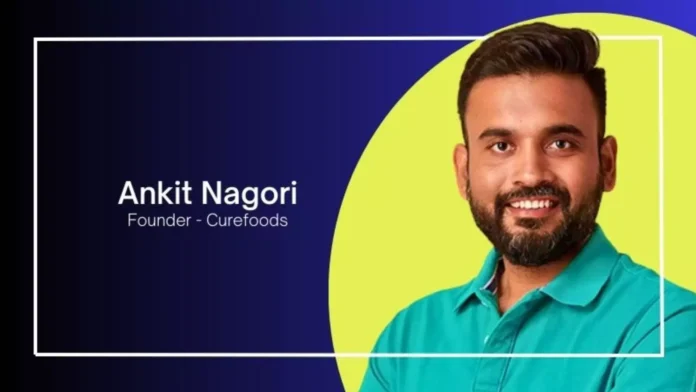
Established in 2016 by Ankit Nagori, a former Flipkart executive, the Bengaluru-based startup competes with firms like Rebel Foods, Biryani by Kilo, and EatClub (formerly Box8), which are leading the way in this industry and are building a house of food brands.
These cloud kitchens acquire food brands and assist in their expansion by leveraging technology, digital marketing, and sales strategies to accelerate growth.
Curefoods concluded its Series C funding round, securing $50 million from a combination of both new and existing investors, spearheaded by Winter Capital. By early 2022, the startup had achieved a valuation of approximately $250 million.
The company has been pursuing inorganic growth through acquisitions as well. In 2023, it acquired the food discovery platform Hogr. Likewise, in October, Curefoods finalized the acquisition of foodtech company Yumlane along with its proprietary technology.
According to filings with the Registrar of Companies (RoC), Curefoods recorded a staggering 400% surge in its operating revenue to INR 382 crore for the fiscal year 2023. Nevertheless, the company incurred losses amounting to INR 342 crore during the same period.
The recent LinkedIn post by Vineeta Singh, co-founder of Sugar Cosmetics, featuring actor Kareena Kapoor Khan and designer-entrepreneur Masaba Gupta among others, garnered widespread attention. They were spotted watching a Women’s Premier League (WPL) match between Delhi Capitals and Royal Challengers Bangalore. Similarly, images of actor Katrina Kaif supporting the UP Warriorz team at a WPL match, donning Kay Beauty jerseys, her cosmetics label, also made rounds on the internet. Kay Beauty has partnered with beauty platform Nykaa as the title sponsor for the team, further amplifying the brand’s presence.
In its second season, the Women’s Premier League (WPL) has witnessed LoveChild by Masaba joining forces with the Mumbai Indians women’s team as an official partner. Additionally, personal care and beauty brands such as Himalaya Wellness and Lotus Herbals have launched fresh campaigns during this period.
Beauty brands have made substantial investments in the WPL, with Royal Challengers Bangalore emerging victorious in the tournament. This demonstrates their pursuit of a first-mover advantage, despite the persistent disparity in viewership between men’s and women’s cricket.
Kaif, co-founder, Kay Beauty, said while announcing the partnership that the brand hopes to be associated with the team “for a long time to come”.Jinisha Sharma, director at Capri Sports, owner of UP Warriorz, said, “We are optimistic about the influence this collaboration will have, as we collectively navigate challenges .. for women in sports.”
Vinit Karnik, Head of Sports, ESports and Entertainment at GroupM, said, “Our women’s cricketers are performing very well and their personal and professional stories are inspiring.. hence marketers are capitalising their popularity. It makes a lot of marketing sense to leverage the league from the beginning and watch it grow over the years.”
Nonetheless, executives note that both viewership and advertising rates for the WPL still lag significantly behind those of the men’s tournament. For instance, during IPL 2023, television broadcaster Disney Star reported a staggering 505 million viewers, as per data from the Broadcast Audience Research Council (BARC) India. In contrast, the finals of WPL 2023 attracted just over 10 million new viewers, as reported by broadcaster JioCinema.
Puma, which brought together Khan, Singh, boxing athlete Mary Kom, and Masaba Gupta to jointly watch a ‘ladies’ night at the WPL match mentioned earlier, said only 18% women who watch men’s cricket, also watch the women’s game.
“It’s disheartening to witness the vast viewership gap between men’s and women’s cricket, and we are committed to changing that narrative,” said Singh of Sugar Cosmetics.
On the gap with the men’s league, Karnik said, “Women’s cricket is at nascent stage and we need at least 5 to 7 yrs for it to get established and reap commercial benefits. I’m confident WPL will deliver positive impact to marketers over 4 to 5 years.”
However, the trend of women’s beauty brands investing in WPL signifies a departure from the past, when it was predominantly fitness and nutrition brands that sponsored women’s sports.
Pratik Mukherjee, brand head of LoveChild Masaba, said with the brand expanding to retail format across metros, the collaboration with Mumbai Indians women’s team would “accelerate awareness and solidify brand presence”.
Various industry reports suggest that beauty and personal care (BPC) companies are seeking out new avenues for investment at a time when the sector is poised for significant growth.
According to a report by Redseer Strategy Consultants and Peak XV, India’s beauty and personal care market is projected to achieve a compound annual growth rate of 10% from 2022 to 2027, reaching $30 billion by 2027. This growth trajectory outpaces markets such as China and Indonesia.
“Growth prospects of the Indian BPC industry are further strengthened in light of how under-penetrated the market is. Similar to the global market, pure-play BPC brands are leading the disruption in India,” the report noted.
Flipkart, the ecommerce giant, has seen a decrease in valuation by $5 billion or approximately INR 41,000 crore since January 2022, according to equity transactions conducted by its parent company, Walmart, a US-based firm. The valuation of Flipkart dropped from $40 billion in the fiscal year ending January 31, 2022, to $35 billion as of January 31, 2024, reflecting changes in Walmart’s equity structure for Flipkart.
Flipkart attributed the decline in valuation to the demerger of fintech firm PhonePe into a separate company. Sources, however, peg the current valuation of Flipkart in the range of $38-40 billion.
In the fiscal year (FY) 2022, Walmart diluted 8 percent of its equity in Flipkart, generating $3.2 billion, which underscored the e-commerce platform’s enterprise value of $40 billion.
In FY2024, the US retail giant augmented its ownership stake by 10 percent, reaching approximately 85 percent, through a payment of $3.5 billion. This transaction indicated Flipkart’s enterprise valuation at $35 billion.
“During fiscal 2024, the company paid $3.5 billion to acquire shares from certain Flipkart noncontrolling interest holders and settle the liability to former noncontrolling interest holders of PhonePe. The company’s ownership of Flipkart increased from approximately 75 per cent as of January 31, 2023, to approximately 85 per cent as of January 31, 2024,” Walmart said.
Flipkart, however, responded to the valuation decrease reported by Walmart, characterizing it as an “appropriate adjustment” in the company’s valuation.
“This interpretation is incorrect. The PhonePe separation was completed in 2023, which saw an appropriate adjustment in Flipkart’s valuation,” a Flipkart spokesperson said.
Flipkart sources said the enterprise valuation exercise was last done in 2021 and the total value of the firm included fintech firm PhonePe’s valuation as well.
The source said that there is no change in the organic valuation of Flipkart.
“Last valuation exercise was in 2021 when Flipkart raised funds. Since then PhonePe was hived off from Flipkart at a certain valuation (reflecting 2021 value). PhonePe’s valuation has increased subsequently because they raised funds (valuation exercise is part of the fund raise). Flipkart’s valuation remains at what it was in 2021 adjusting for PhonePe hive-off,” a company source said.
Following an $850 million fundraising round involving investors such as General Atlantic, Tiger Global, Ribbit Capital, and TVS Capital Funds, PhonePe’s valuation has surged to surpass $12 billion.
According to the Flipkart source, the GMV of the company grew significantly in the range of 25-28 per cent on a year-over-year basis in the range of $29-30 billion in 2023 as festival sales were softer in 2022.
The growth in GMV is expected to have increased the valuation of Flipkart at present.
“In reality, if the valuation was to be done now for Flipkart, it would have gone by to the vicinity of $38-40 billion considering the growth in GMV (Gross merchandise value) and near profitability. But no such valuation exercise has happened for Flipkart since 2021,” the source said.
In FY23, Flipkart reported a net loss of INR 4,846 crore alongside a consolidated net total income of INR 56,012.8 crore. The company’s total expenses amounted to INR 60,858 crore for the fiscal year.
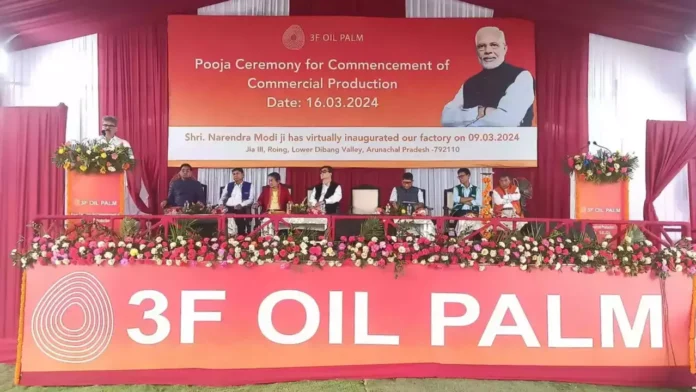
India’s first integrated Oil Palm Processing Unit, established by 3F Oil Palm, has commenced its commercial operations, marking a significant milestone.
Located at Roing in the lower Dibang Valley of Arunachal Pradesh, the factory advances Mission Palm Oil, symbolizing a crucial stride in India’s pursuit of self-sufficiency in edible oils, catalyzed by the National Mission on Edible Oils – Oil Palm (NMEO-OP).
The integrated Oil Palm project includes a cutting-edge oil palm factory consisting of a Palm Oil Processing and Refinery, a zero-discharge effluent plant, a palm waste-based power plant, and additional structures and warehouses for support purposes. This factory marks the first Oil Palm facility in Arunachal Pradesh and India’s initial Oil Palm Factory under NMEO-OP.
On March 9th, Prime Minister Narendra Modi virtually inaugurated the 3F Oil Palm Processing Unit in Arunachal Pradesh, symbolizing the beginning of a transformative venture.
Addressing the Viksit Bharat – Viksit Northeast event in Arunachal Pradesh, Prime Minister Narendra Modi emphasized the government’s commitment to Mission Palm Oil, particularly in the Northeast region. He underscored its significance in achieving self-reliance and enhancing farmers’ livelihoods. Expressing gratitude to the farmers in the Northeast for their dedicated involvement in palm cultivation under the Palm Mission initiative, he hailed it as a pathway to a prosperous future.
Talking about the prospects of Palm Oil in India, Sanjay Goenka, Managing Director & CEO, 3F Oil Palm Pvt Limited., stated, “With the ever-increasing demand for edible oils, palm oil has become an important component to ensure food security of the nation. The commencement of operations of country’s first oil palm processing unit by 3F Oil Palm in Arunachal Pradesh is in line with the objective of encouraging domestic oilseeds production. Northeast holds immense potential for palm oil production, and we have already invested INR 100 crores in the region and have planned investments of INR 1100 crores in Assam and Arunachal Pradesh by 2030 creating jobs for 1,700 people. We express gratitude to Prime Minister Narendra Modi for his vision and emphasis on Mission Palm Oil. 3F Oil Palm is proud to play a pivotal role in this transformative journey of India’s economic development. We thank the State Government of Arunachal Pradesh for its continued support and ensuring ease of doing business in the state.”
In Arunachal Pradesh, 130,000 hectares of land suitable for oil palm cultivation have been identified, with the Northeast region alone encompassing a significant 33% (9.6 lakh hectares) of the government-designated cultivable area. Presently, only 4% of this potential in the Northeast has been utilized for oil palm development. Despite this extensive potential, India faces a significant challenge in achieving self-sufficiency in edible oils, as it currently imports a staggering 96% of its required palm oil. This accounts for 67% of the country’s edible oil import bill, surpassing INR 1 lakh crores.
To tackle this pressing concern, Prime Minister Narendra Modi introduced the visionary initiative NMEO-Oil Palm Policy. This policy aims to diminish reliance on imported edible oils by incentivizing domestic oil palm cultivation, with a special emphasis on the Northeast region. It provides financial, technical, and infrastructural support to foster the growth of the industry.
The state-of-the-art Integrated Oil Palm Processing Unit of 3F Oil Palm is engineered to transform fresh fruit bunches (FFBs) into premium palm oil, boasting an impressive capacity of 10 metric tons per hour. Currently, 2,500 hectares of oil palm are under cultivation, engaging a farmer base of 500 individuals. 3F Oil Palm Pvt Ltd stands out as a trailblazer and leader in Arunachal Pradesh’s oil palm development initiative.
In Arunachal Pradesh, the company stands as a pioneer, being the first to import high-quality hybrid variety seed sprouts from specialized and recognized international firms. Additionally, 3F Oil Palm is leading the way as the first oil palm company to provide agricultural inputs to farmers in the region. These initiatives are expected to significantly enhance farmer yields and streamline the planting process. Leveraging these pioneering efforts and the momentum generated by the Oil Palm Factory, the company aims to expand by 5,000 hectares annually over the next five years in Lower Dibang District, Arunachal Pradesh.
3F Oil Palm has solidified its footing in Andhra Pradesh, Karnataka, Chhattisgarh, Assam, and Arunachal Pradesh. Presently, the company is focused on crafting a resilient growth strategy tailored for the Northeastern region, specifically targeting Arunachal Pradesh and Assam. The inauguration and initiation of operations represent a pivotal milestone in advancing toward this objective.
Mother Dairy will invest INR 650 crore to set up two new plants for processing of milk as well as fruits and vegetables to expand its business amid rising consumer demand. Additionally, the renowned milk supplier in Delhi-NCR will invest an additional INR 100 crore to enhance the capacities of its current facilities.
“In our endeavour to expand our distribution and reach to our consumers, we have earmarked a capital expenditure (capex) outlay of over INR 750 crore to enhance our dairy and F&V (fruits and vegetables) processing capacities across key locations,” stated Manish Bandlish, Managing Director of Mother Dairy Fruits and Vegetables Pvt Ltd.
Mother Dairy is coming up with a big dairy plant in Nagpur, Maharashtra with an investment of around INR 525 crore, he said.
The greenfield plant will have a processing capacity of 6 lakh litres of milk per day, which can be expanded up to 10 lakh litres a day.
This upcoming plant will serve the markets of central and southern regions.
“We also plan to commission a new fruit processing plant in Karnataka with an investment of over INR 125 crore under our Safal brand,” Bandlish said.
These two plants are expected to be completed in about two years.
“In addition to these new greenfield plants, we are also strengthening our capacities in our existing facilities with an outlay of around INR 100 crore,” Bandlish said.
Currently, Mother Dairy operates nine company-owned processing plants for dairy, with a total milk processing capacity of more than 50 lakh liters per day.
It also undertakes processing at third party facilities.
For the horticulture (fruits and vegetables) segment, the company has its own four plants, while for edible oils it manufactures through 15 associated plants.
Mother Dairy’s turnover in the 2022-23 fiscal stood at around INR 14,500 crore.
On the expected turnover for this fiscal, Bandlish said, “despite a challenging year amid subdued summer season last year, deflation in the edible oil sector, the company is likely to exit 2023-24 with a moderate growth rate of around 7-8 per cent in volume terms.”
Mother Dairy was established under the initiative of ‘Operation Flood’, world’s biggest dairy development program launched to make India a milk sufficient nation.
Mother Dairy, one of the leading dairy players in India, manufactures, markets and sells milk and milk products including cultured products, ice creams, paneer, ghee, etc. under the ‘Mother Dairy’ brand.
The company also has a diversified portfolio with products in edible oils under the ‘Dhara’ brand and fresh fruits & vegetables, frozen vegetables & snacks, unpolished pulses, pulps & concentrates, etc. under the ‘Safal’ brand.
On-demand beauty and home service provider Urban Company has partnered with Blinkit to offer delivery services for its newly launched water purifiers, Native M1 and M2, to customers.
In a recent post on X, Albinder Dhindsa, Co-founder of Blinkit, a company owned by Zomato, announced that the purifiers would be delivered within minutes.
“Excited to partner up with @urbancompany_UC to deliver their new line up of Native M1 and M2 water purifiers within minutes. Customers will also get free and instant installation from Urban Company. A very cool thing about these purifiers is that they don’t need service till 2 years!,” said Dhindsa’s post on X (formerly Twitter).
Excited to partner up with @urbancompany_UC to deliver their new line up of Native M1 and M2 water purifiers within minutes.
Customers will also get free and instant installation from Urban Company. A very cool thing about these purifiers is that they don't need service till 2… pic.twitter.com/658xtpknMa
Once delivered, consumers will receive a call from Urban Company to arrange a convenient installation slot. The team will then come over and install the purifier for free, as explained by Dhindsa.
Blinkit has initiated deliveries in parts of Delhi-NCR, Mumbai, Bengaluru, Kolkata, and Hyderabad.
Urban Company has recently expanded its range of services to include wall panelling, woodwork, wallpaper application, and premium wall painting.
“There are constantly several service categories in development. I am particularly enthusiastic about these two or three categories,” said Abhiraj Singh Bhal.
Last year, Blinkit partnered with Apple reseller Unicorn Info Solutions to offer the Apple iPhone 15 series, including the iPhone 15 and iPhone 15 Plus, to customers in India. They committed to delivering them within 10 minutes on the launch day.
We use cookies to ensure that we give you the best experience on our website. If you continue to use this site we will assume that you are happy with it.