Produced, blended, and packaged at the Poonamallee plant by Enrica Enterprises, Veeran is classified within the “ordinary range” segment, catering to cost-conscious consumers.
Authorities indicate that several additional liquor options within the affordable range are set to be introduced to the market shortly.
“Twelve brands including four beer varieties have been approved by Tasmac board and they will hit the shops post elections. The approval for Veeran came much before the model code of conduct,” said Tasmac official.
Since the price increase in 2022, budget-friendly options have constituted approximately 50% of the liquor corporation’s total sales. Tasmac has raised the maximum retail price (MRP) twice within the past two years.
The latest hike, implemented on February 1st, saw increases in the prices of both ordinary and medium-range liquors. For 180ml bottles, the cost of ordinary range and medium range increased by 10, while for 375ml bottles, the increase was 20, and for 750ml bottles, it was 40. Premium liquor varieties also became pricier by 20, 40, and 80 respectively for the same bottle sizes. Currently, Tasmac offers 43 varieties of ordinary range liquor, 49 medium-range liquors, and 128 premium range liquors, along with 35 types of beer and 13 varieties of wine.
Retail shop employees at Tasmac have noted an increase in customers opting for ordinary range liquors, attributing this shift to the comparatively higher prices of medium-range options.
“Daily wage labours who drank medium range have shifted to ordinary range now,” said a worker .
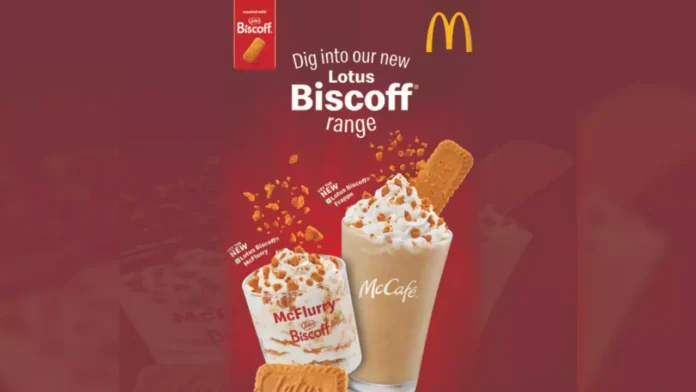
McDonald’s India (West and South), operated by Westlife Foodworld Limited, has announced an exciting partnership with Lotus Biscoff to introduce a new range of desserts, including the Lotus Biscoff McFlurry and Lotus Biscoff Frappe. This limited-time collection is designed to satisfy the sweet tooth of McDonald’s customers.
Fans can enjoy the tempting Lotus Biscoff McFlurry, a blend of McDonald’s famous McFlurry with Lotus Biscoff crumbs, as well as the delicious Lotus Biscoff Frappe from McCafé.
Arvind R.P, Chief Marketing Officer, McDonald’s India (W&S) said, “We are pleased to partner with Lotus Biscoff and offer our fans this delectable range of Desserts. We believe this exciting collaboration exemplifies our commitment to constant menu innovations, bringing to India a range of global flavours. We are hopeful that our customers will be delighted by these three mouth-watering indulgences. At McDonald’s India, we are committed to making delicious feel-good moments easy for everyone.”
Kathleen Buyst, Global Brand Director Biscoff said, “We’re excited to announce the launch of the Biscoff McFlurry in India. Through this partnership between Biscoff and McDonald’s India, we’re introducing a new taste sensation to Indian consumers. The unique caramelized taste and crunchy bite of our beloved Biscoff cookie, combined with McDonald’s creamy McFlurry, promises a truly delightful experience for all. Already a big hit in numerous markets, we’re thrilled to bring this popular treat to India.”
Available at all McDonald’s India locations in West and South India, customers can enjoy these crispy treats for a limited time, including through the McDelivery service.
McDonald’s India’s menu is based on the ‘Real Food-Real Good’ philosophy, highlighting quality ingredients without artificial additives. Using cheese from globally recognized suppliers and soft-serve made from real milk with low-fat content, McDonald’s India guarantees an authentic dining experience. Get ready to savor the crunch, enjoy the rich flavors, and appreciate the distinctiveness with each delicious bite.
Unilever has declined to comment on a media report suggesting that the FMCG titan has reached out to private-equity firms to assess their interest in its ice-cream business.
As announced this week, Unilever is considering a potential demerger of its ice-cream unit into a separate listed company, though no final decision has been made. The Financial Times reports that the company behind Magnum is working with advisors to attract interest from private-equity firms.
Unilever, through a spokesperson, stated today that the company “had no comment to share” on whether it had approached potential private-equity suitors or if it had enlisted Morgan Stanley and JPMorgan Chase as advisors, as reported by the FT yesterday.
The FT, quoting “people familiar with the matter”, said “deliberations remain at a preliminary stage”, with the publication’s sources putting a value on Unilever’s ice-cream business of around €10-15bn ($10.8bn-$16.2bn).
According to sources from the Financial Times, CVC Capital Partners is reportedly showing potential interest in the ice-cream division, with the news indicating that the private-equity firm “may consider making a bid.”
In 2022, CVC Capital Partners finalized the purchase of Unilever’s tea business, Ekaterra, for €4.5bn. In contrast, Unilever sold its spreads operations to KKR in 2017 for €6.8bn.
Announcing the spin-off of ice cream this week, Unilever said, “A demerger of ice cream is the most likely separation route and, in that case, we expect the company to operate with a capital structure in line with comparable listed companies.
“Other options for separation will be considered to maximise returns for shareholders. The costs and operational dis-synergies relating to the separation of ice cream will be determined by the precise transaction structure chosen.”
However, the complete separation of the ice cream division is not anticipated until the end of 2025.
Karel Zoete, an analyst at the financial services firm Kepler Cheuvreux, indicated that a private-equity transaction would be the most probable route if Unilever opts to sell its ice cream division.
“I don’t see a strategic buyer. Unilever is larger than the other top five players combined,” Zoete suggested, adding that “capital gains tax implications might be significant” from a sale of ice cream.
Unilever’s decision to separate its ice cream division has sparked speculation about the future of the company’s remaining food portfolio, which encompasses brands like Knorr soups, Hellmann’s mayonnaise, and Colman’s mustard under its nutrition division.
After divesting its ice cream business, Unilever would remain with four divisions: nutrition, beauty and wellbeing, personal care, and home care.
Last year, Unilever’s ice cream business generated €7.9bn in turnover, whereas the nutrition division accounted for €13.2bn. The beauty and wellbeing, personal care, and home care divisions brought in €12.5bn, €13.8bn, and €12.2bn, respectively.
This week, analysts at Barclays, headed by Warren Ackerman, noted that ice cream had negatively impacted Unilever’s historical performance. They indicated that the spin-off “is another move to further align its portfolio with HPC [home and personal care].”
The Barclays analysts wrote in a research note, “Overall, this is firm action that the market has been looking for. It still has a big job to improve competitiveness but we think it is moving in the right direction. There will now be inevitable questions about the future of its nutrition division, which is also dilutive to growth (although not to margins). It is very clear that Unilever’s future is HPC.”
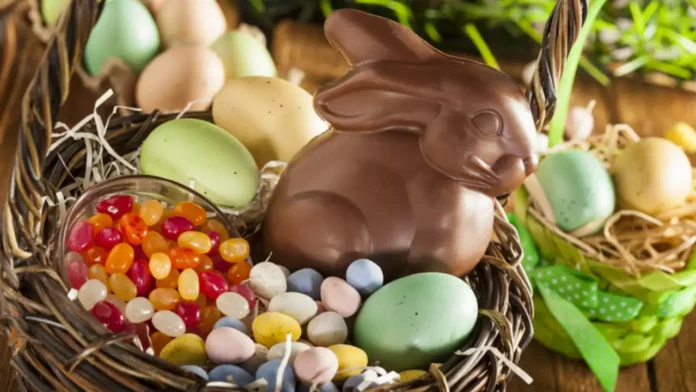
This year, consumers may face a bitter price hike for their sweet Easter baskets due to the soaring cost of cocoa reaching record highs.
Cocoa futures have skyrocketed this year, nearly doubling since the beginning of 2024. Adverse weather conditions and rising temperatures have adversely affected and damaged crops in West Africa, the region responsible for over 70% of the world’s cocoa production.
Sugar prices are on the rise as well. Futures for a pound of sugar have increased by approximately 8% in 2024, following a 2.7% rise in 2023.
Major chocolate corporations such as Hershey’s and Mondelez, the maker of Cadbury, have been transferring these expenses to consumers, and even more so: Hershey’s saw its net profit margins increase to 16.7% in 2023 from 15.8% in 2022, while Mondelez experienced a surge to 13.8% in 2023 from 8.6% in 2022.
Both companies noted declining sales volumes for their latest quarters as consumers become increasingly weary of paying elevated prices.
The National Retail Federation anticipates a decrease in Easter spending this year, although the overall amount remains substantial compared to historical norms. According to its recent survey, consumers are projected to spend $3.1 billion on candy this Easter, averaging $24.78 per person. This is a decline from $3.3 billion, or $26.31 per person, compared to last year.
Mondelez, which owns Easter basket staple Cadbury, has been relying on price increases to counter the surge in cocoa prices. The company has said it commands a 13% share in the global chocolate market. It acknowledged price increases of up to 15% within its chocolate category in 2023, and higher prices will likely be a key factor in meeting revenue growth forecasts for up to 5% in 2024.
“Pricing is clearly a key component of this plan,” said Luca Zaramella, chief financial officer at Mondelez, in an conference call in January. “Its contribution will be a little bit less than we have seen in 2023, but it is higher than an average year.”
Last year, Hershey implemented price increases across its chocolate range in response to surging inflation, and it further raised prices on select grocery and food service items at the beginning of 2024. The company anticipates sales growth of up to 3% this year.
The company has indicated it will raise prices to offset inflation, although much of this increase is a carryover from previous adjustments.
The cost of candy and other sweets increased by 5.8% in February compared to the previous year, as per the government’s recent consumer price report. Prices have been hovering around this level since late 2023.
Inflation has been moderating overall but remains higher than what economists anticipated at this stage in 2024. Analysts are becoming increasingly concerned about the effects of persistently high inflation and elevated interest rates on consumer spending and overall economic growth.
Mondelēz International, has unveiled the fifth edition of its annual State of Snacking report. This global consumer trends study provides yearly insights into consumer snacking preferences and decision-making. The latest report shows that despite persistent global economic instability, consumers still prioritize, buy, and favor snacks.
Developed in collaboration with The Harris Poll, this report was first introduced five years ago to further Mondelēz International’s commitment to shaping the future of snacking. Over the past five years, the report has consistently tracked attitudes and behaviors of thousands of consumers across 12 countries, revealing an ongoing trend of consumers favoring snacks over traditional meals.
This year, Mondelēz is also rolling out a standalone, complementary “State of Snacking: Future Trends” report. This report highlights long-term consumer macro trends that are shaping the future of snacking. The identified macro trends encompass a changing demographic landscape, evolving lifestyles, a growing emphasis on sustainability and environmental impact, the widespread focus on health and well-being, and the resurgence of the experience economy. These macro trends offer a broader perspective on shifting consumer behaviors and provide insights into the potential evolution of the snacking industry in the future.
This year’s State of Snacking report indicates that snacking behaviors are on the rise, with a significant increase in mindful snacking observed. Notably, the chocolate category is strongly linked with feelings of joy.
Consumers are snacking:
Consistently:Snack spending has remained consistent, with 66% of consumers indicating that they have not significantly altered their snack expenditures, even though they are more price-conscious.
Mindfully: 85% of consumers state that they often enjoy the taste, flavor, and texture of snacks while eating them; meanwhile, 78% indicate that they value snacks more when consumed with mindfulness.
Adventurously:Surveyed consumers are utilizing social media (62%) and actively seeking novelty, with six out of every ten identifying as “snack adventurers” who enjoy experimenting with new snacks.
Purposefully: More than two-thirds of global consumers indicate that they frequently select brands that resonate with their values, driving an increasing demand for snacks that offer sustainability benefits.
Dirk Van de Put, Chairman and CEO of Mondelēz International, said, “The trend lines of the past half-decade of our State of Snacking report reinforce that despite a continued dynamic environment and changing preferences, snacking remains an integral pillar in the lives of global consumers.”
“As a more intentional consumer evolves, embracing mindful snacking, we continue to help empower them with choices across our brands as we aim to become a global snack leader,” he added.
The survey highlights an increasing consumer demand for snacks that provide both enjoyment and resonate with personal and environmental values. A significant portion of consumers turn to snacks for benefits like boosting energy (75%), enhancing mood (74%), and supporting fitness objectives (70%). Moreover, 63% of the surveyed consumers look for snacks that aim to reduce their environmental footprint.
Further insights from the report reveal:
The Evolving Snacking Mindset: Snacking continues to be a favored eating pattern, with 88% of consumers stating they snack daily. Six out of 10 respondents prefer having multiple small meals throughout the day rather than a few large ones.
Mindful Snacking: Portion control is gaining importance, as 67% of consumers express a preference for portion-controlled snacks. Seven out of 10 respondents indicate they would opt for a smaller portion of a rich snack over a larger serving of a low-fat/sugar alternative. Additionally, 72% of those surveyed believe that a “world without chocolate would be a world without joy,” a sentiment that resonates consistently across generations and regions.
Snack Curation:Social media is pivotal in snack discovery, as more than half of the surveyed consumers show interest in an “instant buy” option for snacks discovered online. 74% indicate that the uniqueness of flavor and texture combinations is a significant factor when selecting a snack. Furthermore, 56% of consumers find new snacks through social media, a figure that is even more pronounced among younger generations.
Snacking with Purpose: 63% of the surveyed consumers look for snacks that aim to reduce their environmental footprint through practices like using carbon offsets, emphasizing local ingredients, and optimizing supply chains for sustainability. 74% indicate that they frequently recycle their snack packaging, marking a notable three-percentage-point rise from the previous year. Millennials are the most inclined to prioritize snacks with minimal plastic packaging to start with, at 71%.
“We have seen that snacking has helped consumers navigate the last five years,” said Martin Renaud, Chief Marketing and Sales Officer at Mondelēz International. “At Mondelēz International, we continue to work towards meeting the rising demand for more sustainable snacking options and mindful snacking, as the category remains a consistent daily ritual.”
Subko Coffee, a specialty coffee roasting and craft bakehouse company, has secured INR 80 crore in its latest funding round. The investment was led by Zerodha co-founders-backed NKSquared, according to two sources familiar with the deal. Additionally, several individual investors, along with Blume Ventures and Progressive LLP, also participated in the financing round.
“NKSquared has put in around INR 70 crore whereas the remaining INR 10 crore came from other investors,” disclosed one source to Entrackr, requesting anonymity as discussions are not yet public.
According to Subko Coffee’s regulatory filings with the Registrar of Companies (RoC), the company has secured $5.5 million (INR 45 crore), with NKSquared having already invested INR 34.2 crore.
Blume Ventures and Progressive Strategies LLP together contributed INR 4.75 lakh to the investment. Additionally, Pallavi Dempo, Suprapadh S Manohar, John Abraham, Kalpathi Ratna, and Suparna Gupta participated in the financing round.
According to sources, NKSquared has acquired a 25% stake in the Mumbai-based firm. The person quoted above stated that Subko Coffee has been valued at approximately $35-40 million post-money.
Queries sent to Subko Coffee, NKSquared, and Subko Coffee did not receive an immediate response.
NKSquared, founded by the Kamath brothers in 2019, became active last year and has since backed several companies, including Nazara Games.
Founded in 2020 by Rahul Reddy, Subko Coffee offers a range of caffeinated beverages, baked goods, and coffee roasts. According to its filings, the company attracted investments from various celebrities, including Gauri Khan, Tiger Shroff, and others, between June 2022 and December 2023.
Subko Coffee has been experiencing rapid growth, as evidenced by its performance in the last fiscal year. The company’s revenue surged by 94%, reaching INR 13.57 crore in FY23, up from INR 7 crore in FY22, while its losses amounted to INR 9.86 crore during the same period.
Subko Coffee competes with brands like Third Wave Coffee, Blue Tokai, Rage Coffee, Slay Coffee, Sleepy Owl, and Seven Beans Co. It’s worth noting that Third Wave Coffee is also supported by Zerodha’s co-founder, Nikhil Kamath.
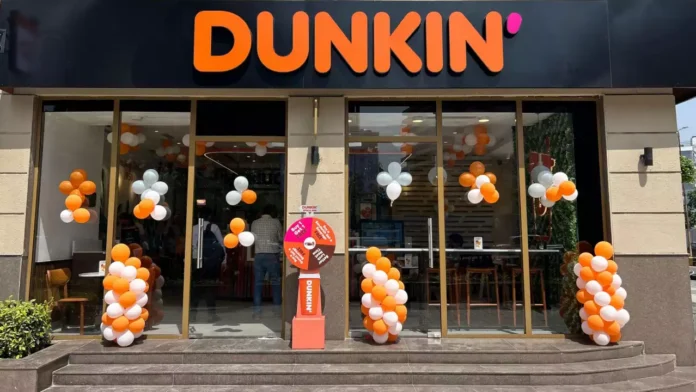
Dunkin’, the American multinational coffee and donut chain, has launched a new outlet in Lucknow. This marks the second location for the chain operated by Jubilant FoodWorks Ltd (JFL) in the city of Nawabs. The new store is located in Vibhuti Khand, as announced by the company on social media.
“Since the opening of the first store in Lulu Mall, the love for the brand has been immensely overwhelming,” JFL said in a LinkedIn post on Friday.
“Taking this a step further, Dunkin’ is all set to welcome all coffee lovers to its second store at Vibhuti Khand, Lucknow, which is the brand’s 29th store across India.”
Since its introduction to India in 2012, Dunkin’ has revised its business model and branding multiple times to discover a successful formula tailored for the Indian market. According to the company’s website, JFL manages the Dunkin’ coffee chain in cities such as Gurugram, New Delhi, Bengaluru, Dehradun, Noida, Hyderabad, Lucknow, and others.
JFL is among India’s leading food service companies and is affiliated with the Jubilant Bhartia Group. Established in 1995, the company possesses the exclusive master franchise rights from Domino’s Pizza Inc. to expand and manage the Domino’s Pizza brand in India, Sri Lanka, Bangladesh, and Nepal.
In India, JFL boasts a network of 1,928 Domino’s outlets spread across 407 cities. Additionally, the company holds exclusive rights to develop and run Popeyes restaurants in India, Bangladesh, Nepal, and Bhutan, as well as Dunkin’ restaurants in India. Currently, JFL operates 32 Popeyes outlets in 10 cities and over 25 Dunkin’ establishments across eight cities. ‘Hong’s Kitchen’ represents the company’s first proprietary restaurant brand in the Chinese cuisine sector, with 25 locations now open across four cities.
At the time of writing, shares of Jubilant FoodWorks Ltd. were trading at Rs 451.50, reflecting a 0.27% increase.
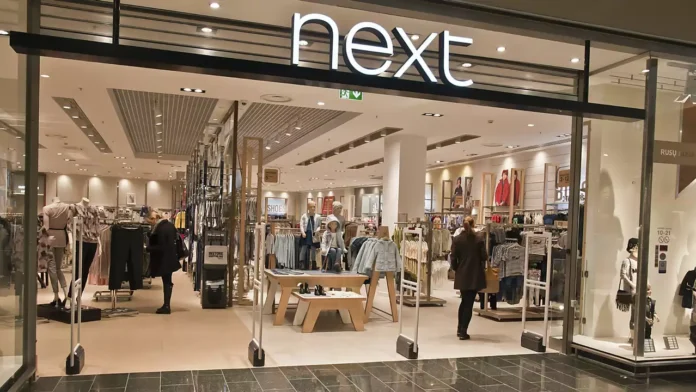
Myntra has expanded its international fashion presence with NEXT after securing franchise rights for the UK’s largest fashion retailer. Meanwhile, NEXT plans to tap into the vast market of the Asian nation, where conglomerates like Reliance and Tata are also increasing their presence in the clothing market.
This partnership allows NEXT to access the vast, varied, and continually evolving Indian market. Through an arrangement with Myntra Jabong Pvt Ltd, NEXT can distribute its products wholesale, facilitating the brand’s efforts to build a robust consumer base through various independent third-party franchise partners and distributors.
NEXT, a leading UK fashion brand, has granted Myntra Jabong the rights to distribute and oversee its products. Additionally, the e-tailer will enhance NEXT’s omni-channel presence in India, as announced by the company.
Under this franchise agreement, Myntra’s wholesale business will set up NEXT branded stores across India. The brand will provide a variety of apparel for children, women, and men both in-store and on their online platform.
During the initial years of operation, 8-10 NEXT stores will be inaugurated in key Indian cities like Delhi, Mumbai, and Bengaluru, complemented by a robust online presence on the Myntra platform.
The partnership enables NEXT to venture into the vast Indian market.
“We are thrilled to deepen our association with NEXT and strategically build its omni-channel presence in the country. With a strong playbook in exponentially building adoption for global brands ground-up, we are looking forward to unlocking the next phase of growth in the brand’s India scale-up journey,” said Nandita Sinha, Chief Executive Officer, Myntra.
Simon Wolfson, the Chief Executive of NEXT, expressed excitement about partnering with Myntra in one of the world’s fastest-growing markets.
Fit & Flex, a trailblazer in the FMCG industry, is transforming the way people think about breakfast and snacking. Based in Ahmedabad, Fit & Flex is known for its expertise in creating 100% baked, oat-based breakfast cereals and snacks. What distinguishes Fit & Flex is its steadfast dedication to developing products that are both tasty and nutritious, ideal for individuals leading hectic lives.
Since its establishment in December 2019, Fit & Flex has swiftly evolved from a startup to an industry frontrunner. The company launched with its signature product: 100% baked granola, offered in four unique flavors. Equipped with advanced European machinery in a spacious 4-acre facility, Fit & Flex has a production capacity of 375 metric tons, setting it apart as a trailblazer in India’s FMCG sector.
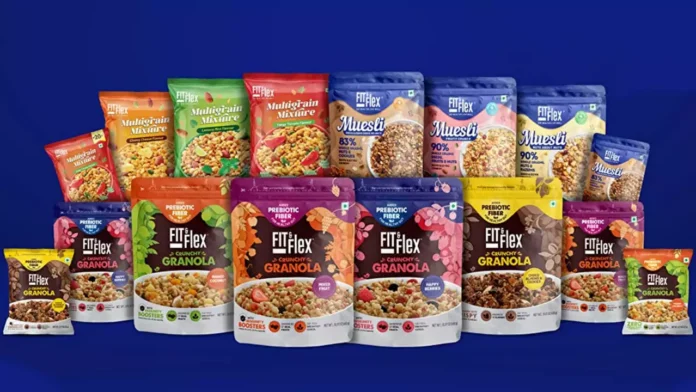
Over time, Fit & Flex has expanded its product range, launching muesli in 2021 and entering the snacking market in 2022 with oat-based baked multigrain blends and chocolate mini bites. Currently, Fit & Flex provides a varied portfolio that includes granola, muesli, oats, multigrain blends, and mini bites. These products are available in over 5000 GT & MT stores across the country and are also exported to numerous outlets in the UAE, Africa, and the Maldives.
In a recent interview, Pathik Patel, the founder of Fit & Flex, highlighted the brand’s unique selling proposition (USP), growth strategy, and competitive analysis. With a dedication to innovation, product excellence, and customer contentment, Fit & Flex endeavors to emerge as India’s leading snacking brand in the better-for-you category, fostering deep affection among consumers.
The expansion of Fit & Flex can be credited to evolving market dynamics and changing consumer tastes. Urbanization, globalization, and hectic lifestyles have spurred a rising need for convenient yet healthy breakfast choices. Fit & Flex meets this demand by offering nourishing products made with high-quality ingredients. Additionally, the brand’s founder, Pathik Patel, recognized a market void for nutritious and convenient breakfast alternatives, which inspired the creation of Fit & Flex.
Fit & Flex offers a diverse product lineup featuring 100% Baked, Oat-Based breakfast cereals and snack items across 35 SKU’s. Patel emphasizes that their inventive slow bake technique guarantees a distinctive crunch and texture, distinguishing them from rivals. Prioritizing both health and flavor, Fit & Flex presents choices such as muesli crafted from 90% whole grains, nuts, and seeds, alongside granola enriched with Added Prebiotic Fiber for digestive wellness. Their snack assortment, including Baked Multigrain blends and mini bites, strikes an ideal harmony between indulgence and nourishment.
Fit & Flex has adopted strategic measures to solidify its market presence and sustain competitiveness. Through the expansion of its distribution channels and collaborations with key players in the modern trade industry, Fit & Flex guarantees broad accessibility of its products. Additionally, the brand prioritizes rigorous quality control standards and actively participates in promotional campaigns to boost brand awareness and foster consumer interaction.
Patel said, “We want to make Fit & Flex, India’s most loved snacking brand in the better-for-you category. For this, we are working on expanding our portfolio across ranges to offer our customers a one-stop-shop. Also, our focus is on innovation in terms of formats & flavors to break the current monotony available in the market. Apart from this, building a strong GT network is of primary focus this year to reach a large number of homes and become a familiar brand.”
While discussing the competitive landscape, Patel highlighted, “In the granola sector, we find ourselves with limited competition, primarily comprising large commercialized brands that may not prioritize ingredient quality and taste. Our Mini Bites stand out as a unique offering, unmatched by any other product in India. This places us in a strong position at the brand level, excelling in product format, taste, and overall quality compared to our competitors.”
Despite encountering obstacles during the Covid-19 pandemic, Fit & Flex has flourished and intends to launch new offerings such as Ready to Eat meals, flavored High Protein Oats, and millet-based high protein snacks. With aggressive expansion strategies into GT markets and plans to inaugurate approximately 10,000 new outlets, Fit & Flex aspires to establish itself as India’s preferred healthy snacking brand by 2025.
The growing consumer interest in healthy snacking choices has driven Fit & Flex’s expansion in both offline and online channels. Anticipating a 50% revenue growth in FY25, Fit & Flex plans to leverage this trend to solidify its market standing.
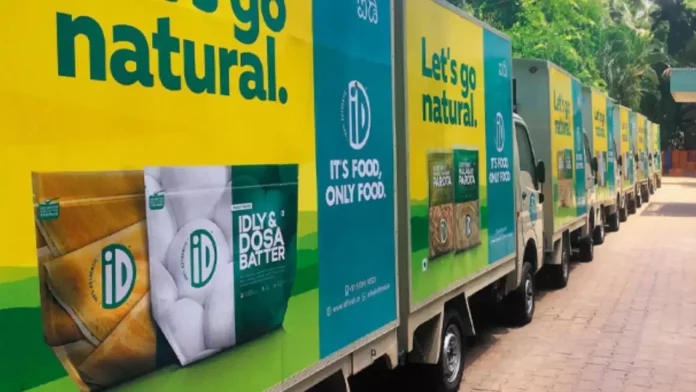
iD Fresh Food, India’s leading fresh food brand, has announced a partnership with Tata Motors, India’s largest commercial vehicle manufacturer, to transition its entire delivery fleet to electric vehicles. By 2025, 50% of iD Fresh Food’s delivery vehicles will be electric, with the remaining 50% to follow by 2027. The company has already procured its first batch of Ace EVs for their Bengaluru, Mumbai, and Delhi markets. The objective is to electrify the entire fleet across India, as well as in the US and UAE markets.
The shift towards electric vehicles is not only targeted at minimizing environmental impact and enhancing efficiency but also part of the company’s broader initiatives to adopt sustainable business practices in line with its ESG commitments. Moving towards a more eco-friendly transportation mode resonates with iD Fresh’s fundamental brand values of promoting the health and well-being of both people and the planet.
The new Ace EV, developed in close collaboration with its users, has successfully completed rigorous real-world market trials. Backed by a carefully crafted ecosystem, the Ace EV offers a comprehensive solution for seamless e-cargo mobility, along with a 5-year all-inclusive maintenance package. Its reliable performance, boasting 100% uptime, has garnered an overwhelmingly positive response from customers. The Ace EV’s supporting ecosystem encompasses the development and implementation of charging infrastructure, establishment of specialized Electric Vehicle Support Centers to ensure maximum fleet uptime, deployment of Tata Fleet Edge – the cutting-edge fleet management solution, and the backing of Tata UniEVerse, the established supporting ecosystem of relevant Tata Group companies. Additionally, partnerships have been formed with the country’s leading financiers to facilitate funding options.
Commenting on the company’s green transition, Rajat Diwaker, India CEO, iD Fresh Food, said, “With the demand for nutritious ingredients and environmentally-conscious sourcing becoming more pronounced, businesses today are taking steps to phase out artificial ingredients, such as flavours, colours, and preservatives. iD Fresh has been ahead of the curve in many ways. We aspire to evolve into a fully sustainable business by partnering with diverse stakeholders and nurturing an all-inclusive outlook that includes the people and the planet. That’s something our consumers value as much as we do! We couldn’t have asked for a more committed partner than Tata Motors, the market leader in the EV segment, to help drive iD Fresh’s green transition.”
With increasing greenhouse gas emissions, urban air pollution, and dependence on oil imports, environmental awareness has become paramount. However, these are not the only factors driving the growing appeal of EVs worldwide. Reduced production costs, ease of maintenance, and rising fuel prices are also significant contributors to this trend.
Vinay Pathak, Vice President & Business Head – SCV&PU, Tata Motors, said, “Tata Motors is committed to democratise e-cargo mobility solutions in the country. Our partnership with iD represents another significant milestone in our journey that benefit both our customers and the environment. The Ace EV has surpassed its customers’ expectations for its best-in-class performance, and we are confident that iD Fresh Foods will enjoy benefits of ACE EV ecosystem with lower TCO, best-in-class uptime and better driving comfort, while making its supply chain greener.”
Transitioning to an electric, zero-emission approach will not only enable businesses to more effectively tackle the climate change crisis but also offer a cost-effective, efficient, and sustainable path for their growth.
Currently, iD Fresh serves over 45 cities through 30,000 retail stores across India, UAE, GCC, US, and UK. The brand offers an extensive range of natural and healthy products, including Idly and Dosa Batter, Rice Rava Idly Batter, Malabar Parota, Wheat Parota, Homestyle Paratha, Wheat Chapati, Soft & Creamy Paneer, Creamy Thick Curd, ‘Squeeze and Fry’ Vada Batter, Cow Ghee, Butterstick, Frozen Fruit Blends, customized blends of Instant Filter Coffee Liquids, and iD Instant Coffee Breakfast Blend.
We use cookies to ensure that we give you the best experience on our website. If you continue to use this site we will assume that you are happy with it.