Karnataka has imposed a ban on the use of artificial food colours, including Rhodamine-B, in cotton candy and gobi manchurian due to health concerns, announced Health Minister Dinesh Gundu Rao on Monday. Flouting this directive could result in a jail term of up to seven years and a fine of up to INR 10 lakh.
During a press conference, Dinesh Gundu Rao announced the ban, stating that cotton candy and gobi manchurian “across the southern state” were found to be of poor quality due to the use of food colours, which in turn, are “adversely affecting the health of people”.
#WATCH | Karnataka Health Minister Dinesh Gundu Rao says, "If anyone is found using Rhodamine-B food colouring agent, then severe action will be taken against them under the Food Safety Act." pic.twitter.com/XnJpR8OAs2
Out of 171 samples of gobi manchurian gathered, 64 were deemed safe, whereas a staggering 106 were deemed unsafe. Meanwhile, 25 cotton candy samples were collected, with 10 deemed safe and 15 deemed unsafe.
Tartrazine, Carmoisine, Sunset Yellow, and Rhodamine-1B were among the artificial colors detected in the samples.
“Samples were collected from hotels, (and) roadside shops, among others. Many have turned out unsafe. Using Rhodamine as colouring agent is banned. Eateries use this (colouring agent) to make (food items) look more red,” Dinesh Gundu Rao said at the presser.
Taking to X later, the Karnataka Health Minister wrote, “Based on these findings, an order has been issued banning the use of prohibited artificial colours, including Rhodamine-B, in gobi manchurian and cotton candy. Consumption of snacks containing these artificial colours may pose long-term health risks, including cancer. Therefore, the health department has taken this necessary action. I urge the public to prioritise health and hygiene above all else.”
The state commissioner of food safety has issued a statewide directive, ordering the prohibition of all artificial colors in gobi manchurian and cotton candy.
Samples of gobi manchurian were obtained from 3-star hotels in Karnataka, and they too were found to be unsafe.
Karnataka’s move came a month after Goa’s decision. Last month, the Mapusa Municipal Council banned Gobi Manchurian in the region, aligning with several other Goan civic bodies in taking action against this widely popular Indian dish.
Meanwhile, Tamil Nadu and Puducherry implemented measures against cotton candy last month, following the ban on the food item due to the detection of the cancer-causing chemical Rhodamine-B in tested samples.
Tanishq, the jewellery brand under the Tata Group‘s Titan Company, has recently unveiled its 15th international store in the United States, as confirmed by a company official on social media. Situated in Chicago at 4300E Aurora, this new store occupies an impressive 5000 sq. ft. space.
This marks the brand’s first establishment in the Midwest region and its fourth presence throughout the United States.
“Proud to share the exciting news of our latest launch in the USA,” said Aditya Singh, head – jewellery international business at Titan Company Ltd. in a LinkedIn post.
“Our fourth Tanishq store in the US and our 15th store outside of India, was launched in Chicago – our first in the Midwest, by the Mayor of Aurora, CG of India, city council members and other dignitaries from the local community,” added Singh.
In July 2023, Titan announced its plans to open 18 new international stores for Tanishq, with a primary focus on expanding in the Gulf region, thus raising the total count to 25 by the end of fiscal year (FY) 2024. Looking further ahead, Titan plans to establish 50 boutiques worldwide, with a particular emphasis on growth in the United Kingdom, Australia, and Malaysia.
In fiscal year 2023, the jewellery retailer expanded its international store count from two to seven.
As per Singh’s post, the company is currently preparing to inaugurate its 16th global store at Oman Avenues Mall in Oman.
Established in 1994, Tanishq emerged as a segment of Titan’s jewellery division, which encompasses a range of brands including CaratLane, Zoya, and Mia by Tanishq.
In 1996, Tanishq opened its first retail showroom in Chennai, followed by its first international store in Dubai in 2020. Currently, the retail chain proudly boasts over 400 exclusive outlets spread across more than 240 cities nationwide, alongside international boutiques located in the UAE, USA, Qatar, and Singapore.
Noida International Airport (NIA) has partnered with Travel Food Services Pvt. Ltd. (TFS), awarding them two key agreements. TFS will enhance the airport’s dining experience by creating and operating a range of multi-cuisine eateries, including restaurants, cafes, bars, and franchises within the terminal.
Additionally, they will curate a world-class lounge experience, offering passengers an elevated level of comfort and luxury at the airport. This strategic collaboration underscores NIA’s commitment to delivering a superior travel experience to passengers.
Patrons can anticipate an exhilarating culinary journey, featuring an extensive selection of specially crafted options that embody the essence of the locale, honoring its diverse and vibrant culinary heritage. These establishments will deliver an inspiring yet accessible dining venture, promising a touch of novelty and vibrancy.
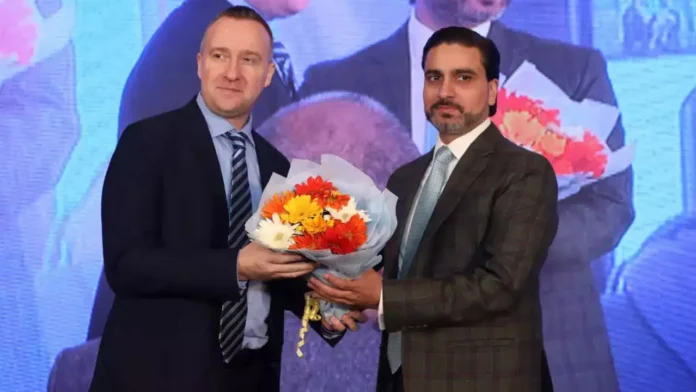
Commenting on the occasion, Christoph Schnellmann, Chief Executive Officer, Noida International Airport, said, “Our partnership with TFS underscores the commitment to providing exceptional hospitality to passengers, elevating the overall travel experience. This collaboration is set to be a significant milestone in our vision of transforming passenger experiences at Noida International Airport. Our focus remains on forging strong connections with passengers by providing a diverse range of offerings tailored to everyone’s needs and preferences.”
Varun Kapur, Executive Director, TFS said, “We are thrilled to embark on this exciting journey in collaboration with Noida International Airport. Our approach aims to draw on the rich legacy, as well as reflect the aspirations of this culturally rich and vibrant region, providing a truly immersive experience for the passengers. Recognising the discerning palate of Indian travellers, we have curated a blend of renowned international brands and beloved local favourites to enhance the culinary landscape of NIA.”
According to recent regulatory filings in Singapore, Binny Bansal, the founder of Flipkart, has injected nearly $2 million into his latest venture, OppDoor, through the venture fund Three State Ventures.
OppDoor is a software services platform with the goal of assisting up-and-coming online retail brands in their global expansion efforts.
The investment entity Three State Ventures, which is backed by Bansal’s personal capital, has deployed the funds through several installments over recent months, as indicated by the filings. The most recent injection of capital occurred in February.
While the most recent investment might be comparatively modest in scale, it underscores the confidence that the IIT-Delhi alumnus is placing in his new venture.
In January, Bansal resigned from Flipkart’s board, formally ending his ties with the company. He has since been using capital from the Flipkart share sale to fund his ventures, which in turn invest in other startups.
An email sent to Bansal failed to prompt an immediate response. It remains uncertain whether Bansal intends to seek capital from external investors for his venture.
OppDoor has engaged in discussions with former senior executives from the Flipkart group to bring them on board. Additionally, the company has made multiple hires in Bengaluru across various roles. Presently, OppDoor is providing ecommerce business services to Amazon‘s US brands in international markets.
Following his departure from the operational role at Flipkart in 2018, Bansal relocated to Singapore. However, he has been a regular visitor to Bengaluru over the past year.
Several months subsequent to Walmart‘s acquisition of Flipkart in 2018, Bansal resigned from his position as Flipkart Group chief executive. This decision came in the wake of allegations of significant personal misconduct, as stated by Walmart in November of that year. However, following an internal investigation conducted by the etailer, Bansal was cleared of the accusations.
Bansal retained his position on the board. Towards the end of last year, he divested his remaining stake in the company, yielding approximately $650 million. Prior to his complete exit, he had been gradually selling portions of his stake to Walmart and other investors in Flipkart. Presently, the US-based retailer Walmart holds an 80.5% stake in Flipkart.
Curefoods, PhonePe, and Acko stand out as prominent startup investments made by Bansal, with substantial funding allocated over the years.
NourishCo, the liquid beverage division of Tata Consumer Products Ltd, is set to conclude FY24 with revenues between INR 900 crore to INR 1,000 crore, while also reaching the break-even point. Approximately 19 percent of the company’s revenue originates from products launched within the past 36 months.
Vikram Grover, Managing Director, NourishCo Beverages said, “From a turnover of just about INR 180 crore in FY 20-21, we have scaled up the business substantially and we expect to end this fiscal with a turnover of INR 900-1000 crore. We have not just been able to garner hyper-growth over the last 3-4 years but we have also significantly upped the game as far as profitability is concerned and we expect to reach break even by the end of this fiscal.”
The company’s growth has been fueled by its expansion in distribution, manufacturing capacity, and product portfolio. Among its product lineup are well-known brands like Tata Copper Plus, Gluco Plus, Fruski, and Himalayan Natural Mineral Water. Lately, it has ventured into new segments such as energy drinks with Say Never and ready-to-drink Tata Coffee Cold Brew.
Addressing a question regarding profitability, Grover clarified that for the Himalayan brand, the company’s go-to-market strategy revolves around targeting profitable customers and implementing price increases. These measures are aimed at achieving break-even point for the company.
“The growth in scale has helped cut down on our fixed costs. We have also upped our game in cost savings across the supply chain. We have also become more efficient with our back end. We have been able to manage the balance between expansion and profitability by focusing on a differentiated portfolio,” he added.
Talking about future plans, Grover said, “The water space remains a key area for us and we feel there remains potential to launch more products in this space. The per capita consumption in India in terms of RTD beverage remains quite low and with Fruski we believe there is a huge potential to upgrade consumers from the unpackaged to packaged drinks space. We also have a strong differentiation with the cup format that enable us to offer affordable products in a differentiated packaging with an elevated consumer expierence, with the way liquid beverage can be gulped to quench thirst.”
The company offers products like Say Never and Tata Gluco Plus in cup formats and is actively exploring additional product offerings.
Talking about the summer season, he said, “We believe our distribution expansion and innovative products will provide us with many tailwinds for growth this summer season. Our innovation to sales ratio is nearly 19 per cent, which is at the higher end of the curve in terms of the industry average.”
NourishCo Beverages’ combined direct and indirect distribution spans approximately one million outlets. Grover commented, “Some of the major players cover nearly 3 million outlets. Thus, we aim to substantially expand our distribution channels in the future.”
Cities throughout India are experiencing the onset of the early summer season, marked by intense heat and temperatures surpassing the usual. This seasonal transition has prompted both FMCG companies and local Indian convenience stores (kiranas) to swiftly replenish their stocks with products tailored for the summer months.
According to a recent survey conducted by India’s Kirana Community, Kirana Club, it has been revealed that Maharashtra stands out as the sole state where retailers are observing comparable sales figures for both national and locally-produced cold drink brands. Kirana proprietors in Maharashtra have reported that the sales of local cold drink brands are on par with those of well-known national brands such as Pepsi, Coke, Thums Up, and Sprite.
According to the report, a majority of 68 percent of kirana stores across India report that cold drinks from national FMCG brands outsell those from local brands.
A parallel trend is observed in Uttar Pradesh, Madhya Pradesh, and Bihar, where 75 percent of retailers note that national brands outsell local ones. In Rajasthan and Chhattisgarh, 60 percent of retailers share a similar viewpoint, the report further mentioned.
When considering the popularity of cold drinks and packaged juices among children during the summer season, Frooti emerges as the top choice, with 24 percent of retailers reporting its sales to surpass those of other brands. Following closely is Maaza at 19 percent, trailed by Sprite at eight percent, with Dew and Sting each capturing six percent of the market. Coke holds five percent, while Pepsi and Thums Up each secure three percent. Appy Fizz and Jeera Soda each claim two percent. Additionally, other favored brands among children include 7UP, Appy Fizz, Fanta, Paper Boat, Slice, Limca, Amul Kool, Priya Lassi, and Fundaaz, among others.
Kirana stores are also replenishing their shelves with various other summer-specific products, including dairy items like ice creams and curd, accounting for 16 percent of sales. Additionally, talcum powder makes up seven percent of purchases, while Glucose and Rasna contribute six percent each.
As per the report, energy drinks represent an emerging category, gaining popularity notably in Uttar Pradesh, Bihar, Maharashtra, and Jharkhand.
Kirana Club founder Anshul Gupta said, “Over the years we have witnessed significant growth of the beverage industry during summer months. This year we are witnessing a change in consumer preference with kirana owners in Maharashtra indicating the growing popularity of local cold drink brands as well. A kirana owner knows the pulse of the consumer and taking cue from our survey among retailers on Kirana Club platform, we see an increased potential for such regional brands in the years to come across various states in India given that they cater to the hyperlocal preferences of consumers.”
The Punjab cabinet has approved the excise policy for 2024-25, with the goal of generating revenue of more than INR 10,000 crore from the sale of liquor. This decision was made during a cabinet meeting led by Chief Minister Bhagwant Mann.
Finance Minister Harpal Singh Cheema said the cabinet has approved the new excise policy — the third such policy of the Aam Aadmi Party (AAP) government.
“For the first time, more than INR 10,000 crore will be generated from it,” Cheema said.
He said during the previous Congress regime, the revenue from liquor sale was merely INR 6,151 crore.
The new excise policy envisages allotment of liquor vends through a draw of lots, the minister said, adding that instead of 172 groups, 232 groups have been formed this time.
“Liquor vends will be allotted through a draw of lots,” he said.
In another decision, the cabinet also gave its approval for allowing colonisers to pay the pending external development charges (EDC) in three instalments in a year and a half, Cheema said.
The EDC is collected by development authorities from the promoters of projects in accordance with the rates notified by the government from time to time.
These charges are utilised by the authorities to provide new infrastructure and strengthen the existing infrastructure in the vicinity of these projects.
It has been decided to reschedule the payment of the overdue EDC in three six-monthly instalments by charging interest at the rate of 10 per cent per annum, an official spokesperson said in a statement.
Tasmac has advised retail stores against selling alcohol in large quantities, as sales exceeding 30% could draw attention from the election commission during the enforcement of the model code of conduct.
The district managers of the liquor corporation have issued a circular to all supervisors, stating that liquor stocks should be kept at 50%, with orders based on average sales.
“About 25% increase in sales in a day compared to the previous year is considered normal. Anything above will be viewed with suspicion,” said a Tasmac official.
Management has additionally directed vending shops and attached bars to adhere strictly to working hours, from noon to 10 pm, and emphasized that retail shops should not store liquor in bars.
Stone Sapphire India, a manufacturer of toys and stationery based in New Delhi, plans to invest INR 1,000 crore in establishing a manufacturing facility in Baroda for homeware products such as glassware, sippers, dinnerware, and more. According to Vick Rana, the Chairman of Stone Sapphire India Pvt. Ltd. (SSPL), the homeware market in India currently lacks options for middle-class consumers, with products catering either to the lower class or the elite segment.
“Our work on new plant and capacity expansion has already begun in Baroda which is focused on the homeware segment. We are investing INR 1000 crore on this expansion,” Rana said.
According to him, the Baroda facility will produce small kitchen appliances, metal cookware, and drinkware. This move aims not only to boost production capacity for the Indian market but also to increase exports by a minimum of 50 percent, thereby positioning India as a global manufacturing hub for these products.
Rana added that this expansion is projected to elevate the company’s turnover to INR 1,000 crore by the fiscal year 2025-26, up from the current INR 250 crore.
He said, “Ever since our association with global dinnerware giant Corelle USA, the brand sales have increased by 20 per cent. The massive support from our retail fraternity has been overwhelming, further strengthening our belief in the home segment. The 27,000 retailer touchpoint base is constantly increasing and we aim to increase it to 50,000 touchpoints in the next 5 years.”
The company possesses a land parcel of approximately 1.3 million square feet in Baroda, with only 40 percent of it currently utilized.
“The green factory structure is already ready, and we are in advance talks for the import of machinery,” he stated.
Almost four years ago, the company entered the home segment by becoming the exclusive importer and distributor of Corelle USA, a global dinnerware giant. Presently, the company is leading the charge in capturing the Indian market share for international brands within the highly varied and fragmented market.
SSPL markets many homeware brands such as USA’s Instant Brands (the house of Corelle, Pyrex, Visions, Corning ware), BergHoff (Belgium), LAV ( Turkey), and its own Peggy Oliver, with end-to-end support, greater depth, and penetration through its robust distribution and marketing infrastructure in India.
The company has established a solid presence through traditional Indian brick-and-mortar outlets, encompassing more than 27,000 retailers, including modern trade and specialty counters. These outlets have been retailing SSPL’s toys and stationery for over seven years, since the company’s inception.
In its seven years of operation, Stone Sapphire India has emerged as a major player in the Indian market, offering exclusive end-to-end distribution of a wide range of international brands. These include Disney, Mattel, Marvel, Viacom, Peppa Pig, Paw Patrol, Winfun, and numerous others, all conveniently available under one roof.
SSPL stands as India’s premier manufacturer and distributor of toys and stationery, offering a diverse array of both imported and proprietary brands and licenses from various international brands within the toys and stationery sectors.
Premium spirits and wine importers’ body ISWAI has urged state governments to implement an inflation-based pricing model, highlighting that industry margins have shrunk due to a rise in raw material costs.
As the cost of raw materials used to produce alcohol has gone up substantially and the MRP of liquor has not been revised in recent years, very little is left for the trade and manufacturers while state governments are taking away as high as 60-80 per cent of the share, according to International Spirits & Wines Association of India (ISWAI) CEO Nita Kapoor.
ISWAI is additionally advocating for the streamlining of excise duties levied by certain state governments, emphasizing that attempts to maximize revenue collections through such means will not contribute to volume growth.
“The industry and manufacturers are now facing a lot of pressure. It’s like their back against the wall because if in the MRP, states share is roughly about 60 to 80 per cent, then what is being left on the trail and the sub-manufacturer is to share 20 per cent. The gross margins are diminishing,” Kapoor said.
The liquor industry stands as the primary revenue generator for state governments, second only to state taxes on petrol and diesel. However, state governments are hesitant to raise the Maximum Retail Price (MRP) out of concern for potential declines in sales volume.
“The states are saying that if we maximise our collections and do not want the volumes to drop, we will hold the MRP. So when they would hold the MRP, how will I give the sub-manufacturers a price increase,” she said.
As per the association, the costs of raw materials like ENA (extra neutral alcohol) have surged by 53 percent from 2018 to 2024. Likewise, the prices of other materials such as glass, labels, and paper packaging have seen increases of 79 percent, 29 percent, and 31 percent respectively during the same period.
“The inflation is going up y-o-y. If the manufacturers do not get the price increase, if the manufacturers do not ask if the industry does not have an inflation-based pricing model, where will this industry go,” said Kapoor adding “Let us not kill the golden goose..
ISWAI is advocating for a transparent inflation-based pricing model that relies on industry-submitted data.
“The industry has reached the bottom of the margins. you can not kill it. It contributes 2 per cent of the GDP. So you (state governments) need to balance ambitions,” she added.
Kapoor observed a notable growth trajectory within the alcoholic beverage segment, particularly in the premium category, where products priced above INR 900 to INR 1,000 per 750ml bottle are experiencing accelerated demand. ISWAI members are spearheading this trend with domestic brands and finished products (imported/bottled at origin). Additionally, there is a robust market for low-value liquor.
“As per my estimates by the end of the year, the industry will grow roughly about 2 to 3 per cent… The growth will be primarily polarising- INR 900 and above and the other will be cheap liquor, which will be roughly about INR 500 or INR 600 and below,” she said adding “so we are going to see a polarized growth, a trend that started after COVID and is just picking up.
“This industry is expected to touch about USD 63 billion in the next 3 to 4 years. Currently, it is somewhere between USD 53 billion and USD 55 billion. So it is going to be a pretty good growth from a value perspective,” Kapoor added.
When asked about the competition faced by global brands from Indian manufacturers, which are launching their single malts, she said “the more the merrier” as the segment is very minuscule.
“If I was to include all the brands all imported brands including bottled in India, you need many more brands to come in to be able to grow the top end… There is room for everybody. I would welcome as many domestic brands being developed. Our members are also doing,” she said.
ISWAI boasts members such as Bacardi, Beam Suntory, Brown-Forman, Campari Group, Diageo-United Spirits, Moët Hennessy, Pernod Ricard, and William Grant & Sons, all renowned global leaders in the spirits and wine sectors.
Various ISWAI members, including Diageo India and Pernod Ricard, have introduced Indian single malts to the market.
“It’s good for consumers and industry… It is also good for the government’s exchequer as the taxes on premium products are far higher. So if that grows, the states will be able to have a different strategy for revenue collections,” she said.
Regarding the ongoing negotiations between India and the UK for the signing of a Free Trade Agreement (FTA), Kapoor noted that the industry has presented its case, and the final decision now rests with the two governments.
We use cookies to ensure that we give you the best experience on our website. If you continue to use this site we will assume that you are happy with it.