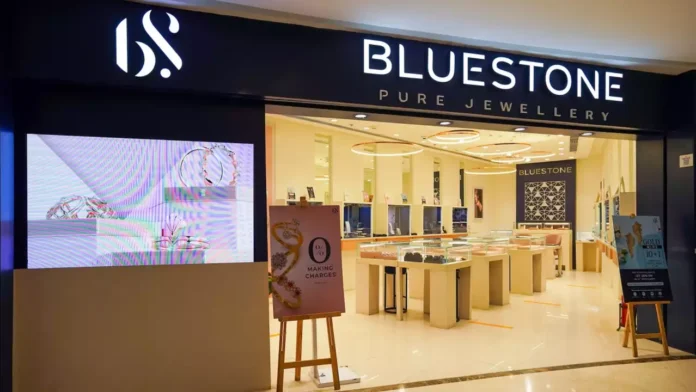
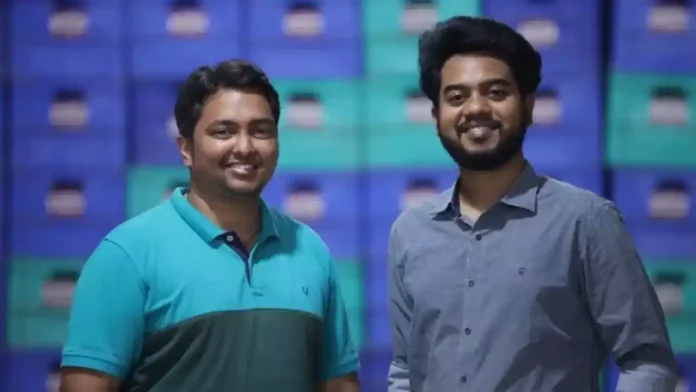
The omnichannel jewellery startup BlueStone is looking to raise approximately $16.5 million (INR 137.7 crore) in total through debt and equity financing. Recently, the company’s board passed two separate resolutions to raise INR 100 crore in debt and secure equity funding of INR 37.7 crore by issuing Series G compulsory convertible cumulative preference shares (CCPS) to its investors.
The debt will be raised from Innoven Capital, while the equity capital will come from investors like Ashwin Kedia, Sankar Bora, and Innoven Capital India, among others.
The startup plans to use the new funds for its business operations and growth initiatives.
An inquiry email sent to BlueStone regarding the new fundraising did not receive a response at the time of publishing this article.
The recent development follows closely after BlueStone secured $9 million (approximately INR 75 crore) in debt from the venture capital firm Trifecta Capital.
A few months ago, there were reports that the startup aimed to raise approximately $65 million or INR 550 crore from a group of investors, including Nikhil Kamath, Zomato founder Deepinder Goyal, Info Edge, and Manipal Group’s Ranjan Pai, at a valuation of around INR 3,600 crore (about $440 million).
Additionally, the startup is reportedly considering a public listing. As per an Economic Times report, the jewellery startup intends to raise INR 2,000 crore through its initial public offering (IPO). The IPO will include a fresh issuance of shares and an offer-for-sale component, with existing shareholders collectively selling a 10-15% stake in the company.
Established in 2011 by Gaurav Singh Kushwaha and Vidya Nataraj, BlueStone is an omnichannel jewellery startup that boasts over 8,000 designs spanning rings, pendants, earrings, and other products. Last year, the chief operating officer, Sudeep Nagar, was promoted to the position of co-founder.
During the fiscal year 2023, the startup experienced a 183% increase in its loss (excluding one-time losses), reaching INR 167 crore from INR 59 crore, whereas its operating revenue surged by 67% to INR 771 crore.
BlueStone competes with emerging startups such as GIVA, CaratLane owned by Tata, and Melorra.
Unilever has secured $20.9 million from the US Department of Energy to reduce carbon emissions at four of its ice cream factories in the US.
The US Department of Energy chose this project for negotiation as part of the ‘Industrial Demonstrations Program’ because of its ability to lower emissions, contribute to local communities, and set an example for broader decarbonization efforts within the food and beverage industry.
The proposed project seeks to reduce 14,000 metric tons of carbon emissions annually, making a substantial contribution to Unilever’s efforts to achieve carbon neutrality for facilities that produce brands such as Ben & Jerry’s, Talenti, Magnum, and Breyers.
Unilever’s ice cream division intends to substitute natural gas boilers with electric boilers and industrial heat pumps that include waste heat recovery. Having attained 100% renewable grid electricity worldwide in 2020, Unilever is committed to transitioning all its facilities to 100% renewable energy.
The site improvements will result in a substantial decrease in carbon emissions and lay the groundwork for addressing 100% of heat-related process emissions at the factories in Missouri, Tennessee, and Vermont.
Chief Product Supply Chain Officer for Unilever’s ice cream division Sandeep Desai said, “We are making progress in our efforts to decarbonise our ice cream business, and these significant enhancements will result in a major reduction in emissions.” “This effort brings us closer to our sustainability goals while also representing a significant investment in both our business and our planet’s future.”
The new products are crafted from ingredients such as whole milk yogurt, fruits, and vegetables. The company’s Senior Brand Director, Jon Harrington, stated that they aim to offer “fun and flavorful food choices that discerning parents seek.”
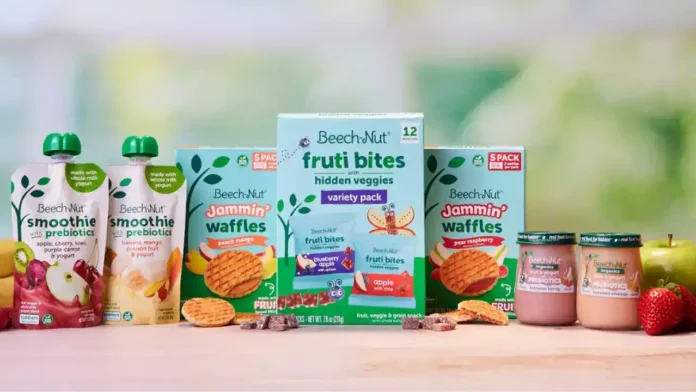
“Organic Fruit and Yogurt Jars with Prebiotics” will come in two flavors: banana berry and banana orange, designed for babies six months and older. These jars are USDA-certified organic and crafted with whole milk yogurt, fruit, and non-GMO ingredients.
For babies 12 months and older, “Smoothies with Prebiotics” come in two flavors: apple, cherry, kiwi, purple carrot, and yogurt; and banana, mango, passionfruit, and yogurt. These smoothie pouches, made with fruit and whole milk yogurt, are free from added sweeteners.
Additionally, two new portable snack lines are being introduced, crafted with real fruit.
‘Jammin’ Waffles’ offer a duo of toasted mini waffles with a fruity filling. Available in two flavors – pear raspberry and peach mango – these waffles are free from artificial flavors and perfect for babies 12 months and older. Each flavor is packaged in boxes containing five packs, with two waffles per pack.
Lastly, a mixed pack of ‘Fruit Bites with Hidden Veggies’ will include blueberry apple quinoa and apple chia flavored fruit chews. The larger pack consists of 12 individual serving-sized bags, appropriate for toddlers 18 months and older. They have no artificial colours or flavours, are non-GMO, and are free of gluten.
The products will be available this month at Walmart and other retailers throughout the US.
The startup plans to use the new funding to expand its logistics network in major cities such as Bangalore, Mumbai, Pune, and NCR, and to initiate operations in Hyderabad.
The funding will also act as a foundation for the startup’s growth strategy to expand to 8-10 Indian cities over the next 3-4 years, according to a statement from the company.
Founder Mansi Mahansaria stated, “Over the past 2 years, more than 70 F&B companies have entrusted their logistics to JustDeliveries, benefiting from our last-mile efficiencies and dependable operations. With a robust management team equipped with the right skills and passion, we are confident in our ability to lead the intracity logistics sector for perishables.”
Established in 2022 by Mansi Mahansaria, JustDeliveries asserts itself as a key player in organizing the logistics sector for F&B brands. The startup has quickly gained momentum in the industry by partnering with prominent QSRs, café chains, and brands specializing in fresh and frozen products.
The startup asserts that it has devised a cold chain solution and formed partnerships with QSRs, café chains, and brands specializing in fresh and frozen products.
Recently, Ayekart, another provider of supply chain solutions focused on agriculture, secured $6.5 million (approximately INR 53 crore) in a Series A funding round. The funding aims to support its nationwide expansion and serve a broader customer base, including FPOs, food manufacturers, distributors, and retailers.
Additionally, supply chain management firm Rupyz raised $1.2 million (approximately INR 9.9 crore) in seed funding. The funding will be used to enhance its core technological capabilities, providing robust and scalable solutions to meet the changing needs of MSMEs.
According to a market study, the Indian supply chain management industry surpassed $3.4 billion in 2023 and is expected to grow at a CAGR of 11.1%, reaching a value of $6.4 billion by 2030.
The funding will be used to enhance the company’s AI-powered technology infrastructure and support its business expansion. Kaarigar Mandi aims to grow its operations tenfold over the next two years.
Kaarigar Mandi simplifies the process, enhancing transparency across the supply chain, reducing expenses, and enhancing productivity.
They offer comprehensive support to small footwear manufacturers and artisans, aiding in the growth of their cottage and micro-enterprises. They ensure artisans stay updated with the latest technology trends by providing training in current footwear techniques and styles, and facilitate their access to the internet.
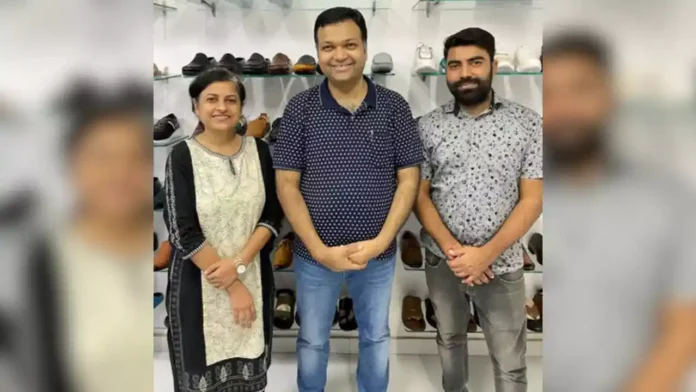
Established by Ankit Kumar, Gagan Mukhi, and Hifza Afaq, Kaarigar Mandi is a startup backed by IIM Ahmedabad and IIM Calcutta, revolutionizing footwear sourcing from design to delivery.
Kaarigar Mandi serves as a comprehensive solution by meeting diverse requirements within the footwear industry. It facilitates trade in finished footwear, raw materials, essential machinery and tools, and offers financial solutions across the footwear supply chain.
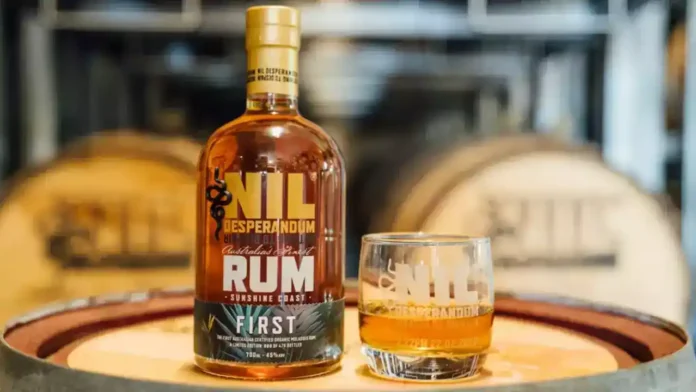
Australian distillery Cavu Distilling is gearing up to introduce its rum brand, Nil Desperandum, to the UK market.
The Queensland-based privately-owned business is in preliminary discussions with potential customers, co-founder Matt Hobson revealed.
Established in 2019, Cavu Distilling commenced production a year later. The company promotes Nil Desperandum and Sunshine & Sons, a vodka-to-gin brand, with the latter being the more prominent in terms of sales.
In collaboration with Australian distributor Proof Drinks, the distillery distributes both brands in its domestic market, notably through major off-premise channels like Endeavour Group and Coles.
Speaking at the IFE trade show in London, Hobson mentioned that the UK is the initial international market where Cavu Distilling is aiming to introduce Nil Desperandum.
“Really, we’re trying to understand the market and choose the best partners with whom to premiere. However, initially, we don’t plan to compete for shelf space in stores like Tesco,” he commented.
Advanced discussions are underway with a number of boutique retailers who are excited about the relatively unknown Australian rum market. In stores like Selfridges, Harrods, and other establishments, maybe, is where we hope to establish ourselves,” he clarified.
Hobson chose not to disclose the retailers currently in discussions with Cavu Distilling. He further mentioned that the company is actively seeking a distribution partner in the UK and has initiated some preliminary talks.
“I cannot provide particular details, but we are hopeful about finding a pathway,” he said.For us, the distribution channel presents difficulties. We’ve joined up with Australia’s Proof Drinks, a significant UK distributor. But they think we’re too little for them. The premium niche market is our main focus.”
“We’re likely looking for a distributor focused on independent off-premise sales, someone who actively promotes exceptional spirits from around the world. In Australia, we primarily promote our brand through the on-trade and direct-to-consumer channels, which then filters down to the mainstream market. Retailers like Sainsbury’s, Marks and Spencer, and Tesco aren’t our primary focus for brand promotion,” he explained.
Cavu Distilling employs a 6,000-litre wash still and a 2,500-litre pot still to craft its molasses-based rum, which meets the Australian Certified Organic Standard. The company ages its rums in Bourbon barrels, previously used for Sherry and Port.
Hobson believes that obtaining listings in the UK could enhance the profile of Nil Desperandum in its domestic market, as he notes that rum enthusiasts there often gravitate towards international selections.
“Our deliberate strategy is to achieve success in the UK. Australian rum hasn’t reached a premium status within Australia,” he explained. “After several years of marketing this product, we’ve found that when Australians choose a rum, they often opt for an exotic rum from places like Venezuela. They’re seeking something unique to impress friends and others,” he added.
“Our goal is to invest in the UK market, flourish there, and then let our domestic market benefit from that success. Australians often look to the UK, the original ‘mother’ country, for guidance, especially to those who are more knowledgeable and discerning in their drinking choices,” he noted.
“This is the first export market for Nil Desperandum. It’s challenging. Some might say we’re ambitious, but it carries significant prestige. While it’s a tougher market, it’s crucial for our brand’s success here. Surprisingly, success here can also stimulate interest in our domestic market,” he explained.
Hobson, who co-founded Cavu Distilling with former brewing and restaurant executive Michael Conrad, declined to disclose the company’s annual sales due to its status as a privately-owned business. He did mention, however, that the company has reached the break-even point.
The two co-own Cavu Distilling and have not yet sought external funding.
“Choosing when to bring in outside finance is a long-standing founder’s dilemma. Hobson added, “There will always be arguments for why it ought to have happened sooner.””We have a bank that is very supportive and believes we can become the next big Australian brand. They recently refinanced us,” he said.
“External funding has always been attractive, especially from those who can support our growth,” he continued. Investment from a partner with a distribution channel is more alluring than direct finance.”
“We’re constantly exploring opportunities. Michael and I have always been of the mindset that we’re content being minority owners of a larger entity. Our vision has never been to remain small. If there’s a trade partner interested in handling, for instance, distribution in the UK and Europe and they want a stake in the company, we’re definitely open to discussions,” he explained.
Nestlé and The Global FoodBanking Network (GFN), a non-profit committed to alleviating hunger and promoting environmental sustainability, have entered into a Memorandum of Understanding (MOU) to strengthen their partnership.
Nina Kruchten, Head of Corporate Giving and Community Engagement at Nestlé, stated, “We address food insecurity by assisting those in need with access to food through initiatives like product donations and shared meals and services. Leveraging Nestlé’s ongoing local support to food banks within the GFN network, which averages 5.2 million kilograms of product donations annually, our enhanced global partnership aims to further bolster this collaboration in pursuit of our shared objective to alleviate hunger in our communities.”
“Food banks are deeply connected to their communities, enabling them to promptly respond to hunger relief needs. Additionally, they play a crucial role in minimizing food loss and waste throughout the supply chain, ensuring that nutritious food reaches families’ tables. We are pleased to collaborate with Nestlé, a major contributor to food banks within our network, to sustain this vital effort in nourishing people together,” commented Ignacio Gavilán, Senior Director of Food Systems Partnerships at The Global FoodBanking Network.
This partnership is designed to further Nestlé’s commitment to enhancing food access across the regions where it operates. In 2023, Nestlé’s global product donations amounted to CHF 135.4 million. Some highlights include:
Nestlé collaborated with its supply chain to develop a special recipe base distributed by Foodbank Australia and New Zealand, assisting individuals in creating meals from the contents of food hampers. More than 1.7 million meals were given to needy groups in both nations in 2023.
In Malaysia, Nestlé donated food and beverages benefiting 630,000 families through its longstanding partnership with The Lost Food Project and Yayasan Food Bank Malaysia.
In partnership with the Egyptian Food Bank, Nestlé supplied over a million servings of relevant products to communities in need in the region. Furthermore, employee volunteer initiatives were organized to complement these ongoing contributions.
In Greece, in the wake of the unprecedented flooding in Thessalia that led thousands of families to lose their homes, Nestlé distributed essential products via the Greek Food Bank during a challenging recovery period and festive season for the affected communities.
To assist the community in Canton de Vaud, Switzerland — Nestlé’s home for over 115 years — Nestlé supports 10,000 individuals and families weekly in collaboration with CA-RL through consistent product donations and volunteer efforts.
In Mexico, after Hurricane Otis devastated Acapulco and left communities in dire need of water and other necessities, Nestlé made a financial contribution of MXN $1 million to Red BAMX (Bancos de Alimentos de Mexico) and the Mexican Red Cross in addition to providing essential products.
This Memorandum of Understanding (MOU) aims to enhance the partnership between Nestlé entities globally and GFN food bank members in relevant regions, expanding the number of collaborations and improving the quality of Nestlé’s assistance to food banks.
Nestlé and GFN continue their global commitment to ensuring food reaches those who need it most.
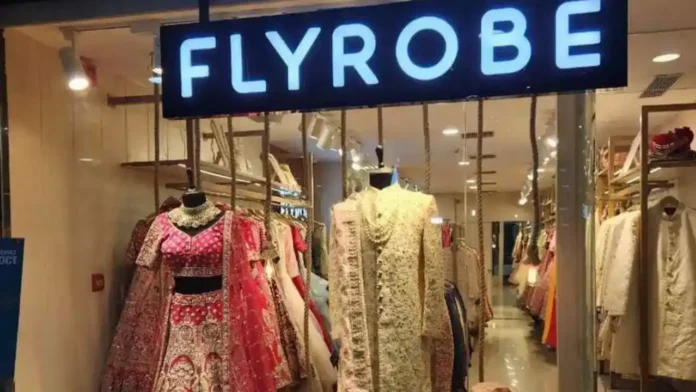
Flyrobe, the fashion rental platform, has inaugurated its second franchise outlet in Bengaluru. Situated in Malleshwaram, the new store covers a retail area of 2,300 sq. ft.
“With the rapid adoption of rental fashion by Bengaluru’s youth and recognizing the robust demand, we are excited to unveil our second store, a significant step in our growth trajectory. The city’s keen interest in our services is evident, and we look forward to expanding our presence with additional stores,” stated Aanchal Saini, CEO of Flyrobe.
The new store provides designer clothing suitable for a range of occasions, from weddings to parties.
“As someone who has long admired Flyrobe’s innovative approach to fashion, I am privileged to join this journey as a franchise owner. With my background in the fashion industry, I recognize the immense growth opportunities in Bengaluru,” remarked Ashwini Gurucharan, owner of Flyrobe Malleshwaram.
Established in 2015, Flyrobe is a fashion rental platform operating in Delhi, Gurugram, Faridabad, Noida, Ghaziabad, Chandigarh, Ludhiana, Jaipur, Mumbai, Pune, Indore, Lucknow, Hyderabad, Ahmedabad, Bengaluru, and Agra.
At present, it operates 12 retail stores nationwide.
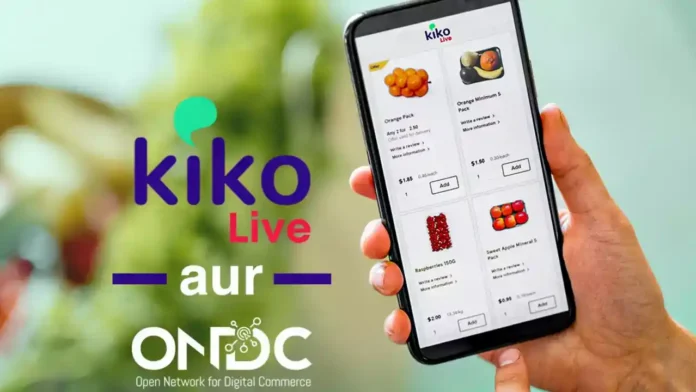
“We are pleased to see the rapid growth of Kiko Live in just two months. By ensuring high fulfilment rates and swift deliveries, it has empowered thousands of local Kirana stores to prosper in the digital economy,” commented T Koshy, Managing Director and CEO of ONDC.
Since joining the Open Network in December 2023, sellers using Kiko have experienced notable business expansion. Just three months ago, they were processing 30-40 orders per day, whereas now, Kiko Live consistently handles over 2500 orders daily.
“We are growing quickly each month; in January 2024, we had 10,000 orders, and by February 2024, we had 40,000 orders. We aim to conclude March 2024 with more than 70,000 orders,” stated Alok Chawla, Co-Founder of Kiko Live.
“We’ve already helped retailers process over 100,000 orders on the ONDC Network and we aim to assist them in managing more than 1.5 million monthly orders by the end of FY25,” he added.
Kiko collaborates directly with Kirana stores to digitalize their operations. In India, approximately 13 million Kirana stores contribute to an annual business of over $800 billion. However, a majority of these stores lack a digital presence. These sellers still rely on orders received via phone calls and WhatsApp for their home delivery services, which account for over 10% of their business. This translates to an existing Kirana-led home delivery business worth over $80 billion, despite the emergence of Quick Commerce, as mentioned in the release.
Utilizing the ONDC Network, Kiko Live has simplified the onboarding process for small stores to start selling online. Kiko Live has achieved high fulfilment rates for retailers, with sellers currently reaching a 99% order fill rate. The platform also emphasizes a cost-effective hyperlocal fulfilment model. As a result, the order cancellation rates are below 1%, and the repeat purchase rate has surpassed 30% of all orders.
Established on 31 December 2021, the Open Network for Digital Commerce (ONDC) is a Section 8 company initiated by the Department for Promotion of Industry and Internal Trade (DPIIT), Ministry of Commerce and Industry, Government of India. With an emphasis on the growth of retail e-commerce penetration in India, ONDC seeks to develop a facilitative paradigm to revolutionise digital commerce.
The Kiko Live app assists local stores across various categories in establishing, managing, and expanding their online and home delivery operations. Sellers can consolidate all their current phone, WhatsApp, and other orders within the Kiko App and utilize the Kiko solution for payments and hyperlocal deliveries.
Anil Thontepu and Neeraj Menta, Co-Founders of SuperK
SuperK, the tech-enabled grocery retail chain, has raised approximately INR 31 crore ($3.7 million) in its Series A round led by Catalyst Trusteeship Limited. This is the Hyderabad-based company’s first fundraising effort for 2024.
According to regulatory filings obtained from the Registrar of Companies, the board of SuperK has approved a special resolution to issue 4,521 Series A CCPS (Compulsorily Convertible Preference Shares) at an issue price of INR 68,569 each, aiming to raise INR 31 crore.
Catalyst Trusteeship led the round by contributing INR 21.65 crore, while the remaining amount was collectively invested by VSS Investment Fund, Veltis Capital, Stargazer Fund, CoralBay Ventures, Silver Needle VenturesHOF Profectus, IA Growth Opportunities, and Abhishek Goyal.
Through these investments, the company aims to bolster its financial position and meet its development and expansion goals.
After receiving the new funds, Catalyst Trusteeship now owns 10.1% of the company, while Silver Needle Ventures and Veltis Capital will have ownership stakes of 1.26% and 1.06%, respectively.
As per TheKredible, a startup data intelligence platform, the company has been valued at approximately INR 198 crore or $24 million (post-money).
To date, the company has secured approximately $15 million in funding, including a noteworthy $5.5 million round led by Binny Bansal-backed 021 Capital in March 2022.
Established in 2019 by Anil Thontepu and Neeraj Menta, SuperK runs a grocery retail chain utilizing an asset-light franchise model. The company asserts a presence of over 100 stores spanning Kadapa and Anantapur.
SuperK reported strong financial performance in the last fiscal year, with its revenue surging 3X to INR 59 crore in FY23 from INR 19.2 crore in FY22. Meanwhile, the firm reported losses of INR 23.5 crore in the same period.
We use cookies to ensure that we give you the best experience on our website. If you continue to use this site we will assume that you are happy with it.