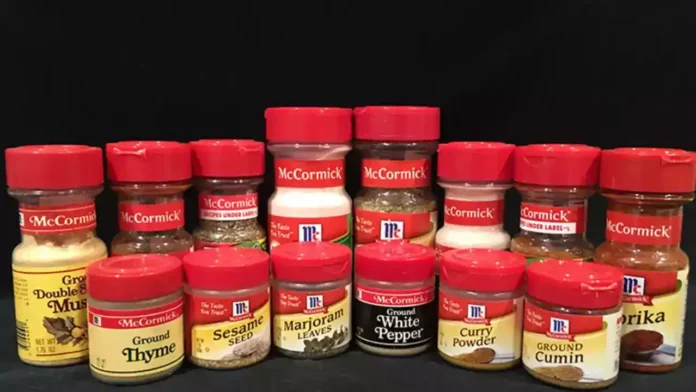
McCormick beat market forecasts for first-quarter sales and earnings on Tuesday. The strong consumer demand for its premium spices and seasonings, despite persistent inflation, boosted its shares by almost 9%.
Demand for McCormick’s hot sauces and other condiments stayed consistent as the company ramped up promotions and implemented strategies to reduce price differences between its branded products and private label items, thereby slowing the rate of volume decline.
The company’s volumes for the quarter decreased by 1%, following a 3% decline in the previous quarter, while its prices increased by 3%, compared to a 5% rise in the previous quarter.
McCormick anticipates that volume trends will continue to improve as the year advances, with CEO Brendan Foley noting during a post-earnings conference call that this will drive volume growth in the second half of the year.
In contrast to Kraft Heinz and International Flavours & Fragrances, which had seen volume decreases as a result of aggressive price increases in prior quarters, the manufacturer of Cholula hot sauce reported higher sales in the first quarter.
The company reported net sales of $1.60 billion, surpassing analysts’ average estimate of $1.56 billion, as per LSEG data.
The company’s cost-cutting measures and pricing tactics helped the gross profit margin for the quarter rise by 140 basis points to 37.4% from the same period the previous year.
McCormick, a supplier to major retailers such as Walmart, reported adjusted earnings per share of 63 cents for the quarter ended Feb. 29, surpassing analysts’ average estimate of 58 cents per share.
The Hunt Valley, Maryland-based company, which also reaffirmed its annual forecast, was poised for its strongest session in a year.
This partnership will offer e-commerce solutions and same-day delivery to AWG’s 3,500 member stores spanning 32 states across the US.
Over 800 AWG members have already benefited from Instacart’s services. With this expansion, an additional 2,300 retailers can now easily join Instacart’s platform.
Instacart and AWG will work together to assist grocers in setting up online shopping and delivery services. This will enable customers to browse and order groceries for same-day delivery or schedule up to two weeks ahead.
In addition to delivery services, Instacart provides AWG members with in-store technology, including Caper Carts.
These AI-driven smart carts utilize computer vision to automatically recognize groceries as customers place them inside.
This removes the need for conventional checkout lines, enabling shoppers to bag items and make payments from anywhere within the store.
Moreover, customers can connect their loyalty programs to the carts for personalized promotions and discounts.
Representatives from both Instacart and AWG view this partnership as a beneficial opportunity for independent grocers.
Nick Nickitas, General Manager of Local Independent Grocery at Instacart, mentioned that the partnership enables these stores to compete effectively in the digital era.
“Through this collaboration, AWG’s retailers gain access to efficient and cost-effective solutions, allowing them to conveniently deliver their stores to their consumers’ doorsteps,” he stated.
Shelly Moore, AWG’s Chief Information Officer, highlighted the benefits that Instacart offers to AWG members.
“That’s why we’re working together to simplify access to the services and technology that our retail partners require to expand through a reliable e-commerce solution,” she explained.
“By collaborating with Instacart, we’re making it easier for our member retailers to embrace the convenience of e-commerce and, in turn, boost business growth,” she stated.
The companies announced that this extended partnership provides independent grocers with the necessary tools to thrive in the changing grocery market, delivering customers the convenience of online shopping and same-day delivery.
This month, UK grocery price inflation dropped to its lowest rate since February 2022. However, industry data reveals that almost a quarter of British households still report financial difficulties.
According to market researcher Kantar, annual grocery price inflation stood at 4.5% in the four weeks leading up to March 17, compared to 5.3% in the preceding four-week period. Kantar noted that prices are experiencing the most significant increases in sectors like sugar confectionery, chocolate confectionery, and vitamins & supplements, while witnessing the steepest declines in butter, milk, and toilet tissues.
“Since reaching a staggering peak of 17% in March 2023, grocery inflation has notably decreased,” stated Fraser McKevitt, Head of Retail and Consumer Insight at Kantar. “Nevertheless, despite this ongoing deceleration, a significant number of British households continue to face financial challenges. Our data shows that 23% of households describe themselves as financially strained, which is consistent with the figure reported in November of last year.”
Kantar reported that year-on-year take-home grocery sales increased by 4.6% over the four-week period. The research firm highlighted that an early Easter contributed to an £88 million ($111 million) rise in sales of seasonal treats in the first quarter of 2024 compared to the same period in the previous year.
According to Kantar, online supermarket Ocado was the UK’s fastest-growing grocer in the 12 weeks leading up to March 17, with a year-on-year sales increase of 9.5%. This growth was attributed to a continuous voucher campaign that aided in attracting customers.
Tesco, the industry leader, and second-ranked Sainsbury’s experienced sales growth of 5.8% and 6.7% respectively, both gaining market share. Meanwhile, Asda, ranked third, showed slower growth with sales up by 0.2%, whereas Morrisons recorded a 3.6% increase in sales. The German-owned discount retailers, Aldi and Lidl, witnessed sales growth of 3.1% and 8.8% respectively.
However, while Lidl’s market share grew, Aldi’s declined slightly.
Moira Beauty, renowned for its fusion of Eastern beauty practices and Western cosmetic know-how, is making significant progress in the Indian retail market. Born from the dynamic beauty culture of the city, Moira Beauty has quickly established itself as a leader in the makeup and skincare sectors.
Ekta Cosmetics has solidified a collaboration with Nykaa, propelling Moira into prominence within India’s retail scene. This strategic decision reflects the widespread acclaim Moira has earned among Indian consumers. Nykaa, esteemed as a premier omnichannel destination for beauty and lifestyle products, attracts a discerning clientele, positioning it as the perfect avenue for Moira’s introduction.
The alliance between Ekta Cosmetics and Nykaa marks a significant milestone in Moira Beauty’s expansion in India. This collaboration not only broadens Moira’s market presence but also reinforces its standing in India’s competitive retail sector. Leveraging Nykaa’s extensive reach and esteemed reputation for quality, Moira is well-positioned to captivate beauty enthusiasts across the nation. For Moira Beauty, this collaboration with Nykaa represents a strategic step forward that aligns with its mission to provide cutting-edge beauty products to the Indian market. As Moira embarks on this exciting journey with Nykaa, it looks forward to sustained success and growth in India’s vibrant retail landscape.
“We are very excited about the collaboration as it will enable more consumers to become part of the Moira family,” said Ravi Mittal, MD of Ekta Cosmetics Ltd. Many people have already embraced and valued our superior goods and services, and Nykaa will improve the overall experience. We can’t wait to get bigger in the Indian market.”
According to a report by the professional networking platform LinkedIn, B2B sellers in the country are increasingly turning to AI to research prospects, pinpoint targets, and identify warm leads with buyers in their selling processes.
Identifying hidden allies, investing in connections, and giving priority to high-potential accounts are the top three characteristics of “deep sellers”.
Approximately 78% of sellers and 82% of buyers anticipate an increase in consumer budgets over the next 12 months, indicating a positive outlook for the B2B sales landscape this year.
The research revealed that 32% of B2B sellers in India are “deep sellers,” who are 1.8 times more likely to surpass their quotas. Additionally, those who utilize social networks to identify key buyers are 2.3 times more likely to exceed their targets.
Deep sellers carry out extensive research, engage with purpose, and place a high value on creating long-lasting relationships. They function as adept navigators in the sales arena. This is the reason why businesses are aggressively looking for deep salespeople who are skilled at using AI and SIG technologies “said LinkedIn India’s Head of Sales Solutions, Abhai Singh.
Approximately 93% of B2B sellers in India believe that meeting in person before finalizing a deal is crucial.
“Meanwhile, 52% of buyers in India indicate that they continue to purchase from the same salesperson even after switching companies. This underscores the significance of relationships in achieving sales success and enduring value,” the report highlighted.
PackVision Expo 2024 is set to showcase the intersection of innovation, sustainability, and efficiency. The event will take place from June 13th to June 15th, 2024, at the Autocluster Exhibition Centre in Pimpri Chinchwad, Pune. This premier gathering aims to be a catalyst for transformation in the packaging industry by uniting industry leaders, innovators, and enthusiasts from around the world.
Taking place in Pune, a vibrant industrial center renowned for its innovation and entrepreneurial ethos, PackVision Expo 2024 will spotlight the newest advancements, trends, and technologies in the packaging industry. Emphasizing sustainability, eco-friendliness, and consumer-centric approaches, the expo seeks to meet the evolving demands of businesses and consumers in today’s rapidly changing market landscape.
Attendees can anticipate discovering a wide array of packaging solutions, encompassing innovative materials, design concepts, machinery, and technologies. From sustainable packaging options to advanced printing and labeling solutions, the expo will showcase exhibitors representing the complete packaging value chain.
“PackVision Expo 2024 is more than just an exhibition; it’s a place for innovation, teamwork, and advancement,” said Ms. Jasmine Chopra, the event’s portfolio director. She continued by saying, “In an era emphasising sustainability and customer experience, this expo will showcase the latest trends and breakthroughs transforming the packaging industry.”
“Packaging is one of India’s fastest-growing sectors. As the demand for packaging in India significantly increases, the PackVision Expo provides an exceptional platform for industry stakeholders to delve into the future of packaging technologies. This event underscores our dedication to fostering collaboration, driving innovation, and tackling the challenges encountered by this industry,” commented Chandrakant Salunkhe, Founder of PIAI.
“We offer our wholehearted support to the PackVision Expo, Pune’s comprehensive packaging technology tradeshow, and wish the event tremendous success. We are confident that this exhibition will be instrumental in stimulating growth and innovation in the packaging industry within the region. “It will highlight the most recent developments and encourage beneficial partnerships for a more promising future,” ASPA President Manoj Kochar said.
“PackVision Expo will provide unparalleled value, as our conference will feature top buyers as speakers and create networking opportunities to enhance the experience for our attendees. We eagerly anticipate welcoming the industry, facilitating meaningful connections, and generating new business opportunities,” concluded Chopra.
Connect with over 150 companies showcasing more than 500 international and Indian brands, specializing primarily in primary packaging, food-grade packaging, and labeling industries. Among them are notable names like Spheretech, HILDA, Swastik, BOBST, Maks Automation, Zhongke, Robus, Indomax, Niswa Engineering, Konica Minolta, HP India, Domino Printech, SSP Packaging, Nichrome, Horizon Packtech, Control Print, Columbia Engineering, Jagannath Extrusion, Worldpack Automation, Pooja Automation, Aarem Engineering, and many others.
Indian exporters have been issued notices by the customs department requiring payment for duty differences on rice exported over the past 18 months, four exporters informed Reuters. This uncommon tax demand could severely impact rice exports from India.
The world’s biggest rice exporter implemented a 20% export duty on white rice in September 2022, and subsequently applied a comparable duty on parboiled rice in August 2023 to manage domestic rice prices leading up to the crucial state and national elections in 2024.
Previously, exporters had to pay a 20% duty based on the rice’s FOB value. Now, the customs department mandates them to calculate the duty based on the transaction value and settle any resulting difference in duty.
The customs department has informed exporters in tax demand notices to pay the export duty, along with any applicable interest, on amounts received exceeding the declared FOB value in the shipping bills.
An exporter from the southern state of Andhra Pradesh stated that they do not have the financial capacity to cover the duty difference for almost two years. Instead, they would opt to shut down their business.
“Now that the government seeks extra duty, no foreign buyer is going to agree to pay us,” he said. Then, how are we going to cover this additional cost of government obligations?”
Requests for comments were not answered by the Central Board of Indirect Taxes and Customs or the Finance Ministry.
A dealer from a global trade house based in New Delhi stated that, based on the government’s new calculations, exporters would be required to pay an extra duty of approximately $15 per metric ton on rice exported over the last two years.
He said the industry estimates the total cost of this extra duty to be approximately 15 billion rupees.
The president of the Rice Exporters Association, B.V. Krishna Rao, stated that the organisation will be approaching the government to convince them that the existing duty demand is unfeasible.They aim to propose implementing a flat duty on future exports to prevent similar confusion.
“Rice exports function on very slim margins. With this tax issue arising, exporters are preparing to take legal action instead of paying the additional amount,” stated an exporter from Raipur in the central state of Chhattisgarh.
Non-basmati rice from India is mostly exported to China, Bangladesh, and a number of African nations, including Benin, Djibouti, Guinea, Liberia, and Togo.
The Food Ministry announced on Tuesday that the government has instructed the NCCF and the NAFED to commence purchasing 500,000 tonnes of onions directly from farmers to meet the country’s buffer requirement, as the Rabi-2024 harvest begins entering the market.
The government has instructed procurement agencies NAFED and NCCF to pre-register onion farmers. This measure aims to ensure that payments for the produce are directly transferred to their bank accounts through the Direct Benefit Transfer system.
The Rabi onion crop plays a vital role in the country’s onion supply, accounting for 72-75% of the annual production. Additionally, Rabi onions are essential for maintaining year-round availability due to their superior shelf life compared to Kharif onions, allowing them to be stored and supplied until November-December.
During 2023-24, the Department of Consumer Affairs, in collaboration with NAFED and NCCF, procured approximately 640,000 metric tonnes of onions for buffer stocking and intervention through simultaneous procurement and disposal. In 2023, onion farmers were guaranteed profitable prices owing to the continuous procurement efforts of NAFED and NCCF.
Following this, last year the Department of Consumer Affairs launched a retail sale intervention to supply onions to customers at a subsidised rate of INR 25 per kg through retail locations and mobile vans run by NCCF, NAFED, Kendriya Bhandar, and other state-controlled cooperatives.This timely intervention and controlled distribution effectively stabilized retail prices without adversely affecting farmers’ incomes.
Due to the global supply situation and the dry conditions caused by El Nino, the government implemented policy measures to regulate onion exports during FY 2023-24. These actions comprised a 40% duty on onion exports introduced on August 19, 2023, the enforcement of a Minimum Export Price (MEP) of USD 800 per MT starting from October 29, 2023, and a complete export ban from December 8, 2023. These steps were taken to guarantee the availability of onions to domestic consumers at reasonable prices.
The recent decision to extend the ban on onion exports is driven by the current domestic availability in relation to international prices and concerns about global availability.
Meanwhile, the government has permitted exports to neighboring countries that depend on India for their domestic onion consumption. These nations include Bangladesh (50,000 MT), Mauritius (1,200 MT), Bhutan (550 MT), Bahrain (3,000 MT), and the United Arab Emirates (14,400 MT, or 3,600 MT per quarter).
Myntra, India’s leading destination for fashion, beauty, and lifestyle, announced that it has experienced robust growth, outpacing the online fashion market significantly since the second half of 2023. During the recent festive season, its GMV growth nearly doubled that of the market.
The company stated that a key factor driving its market-leading growth is a 33 percent increase in Monthly Active Users (MAUs), climbing from 45 million in 2021 to an impressive 60 million by the end of 2023, alongside unparalleled customer growth.
Myntra’s primary drivers for growth include trend-focused offerings, increasing the share of wallet in non-apparel segments, a push towards premiumization in fashion through categories like Beauty, International, and D2C brands, geographical expansion into non-metro areas, specialized offerings for the emerging Gen-Z demographic, and broadening its product range to meet the evolving needs of its upscale, fashion-forward customer base.
Brands on Myntra have seen robust year-on-year (YoY) growth, with the platform’s catalogue size expanding by over 50 percent in the past year. This impressive performance is further boosted by a consistent influx of new customers.
The demand across different categories provides a clear insight into consumer preferences over the past year, with notable year-on-year (YoY) GMV growth in the D2C segment surpassing 80 percent, ‘Runway Icons – Myntra’s Premium Ethnic Wear’ seeing growth of over 100 percent, and the Beauty segment expanding at a rate notably higher than the online beauty market in India.
In February 2024, the Home category experienced a significant 50 percent year-on-year (YoY) growth in GMV, reflecting the broadening interests of Myntra’s diverse customer base, as reported by the company.
Furthermore, Myntra has been consistently expanding its collection of international brands and now showcases over 400 global brands in its Fashion and Beauty portfolio. This includes names like Mango, H&M, Trendyol, Kiabi, Ralph Lauren, Calvin Klein, NYX Cosmetics, DKNY, Tommy Hilfiger, Huda Beauty, Diesel, Birkenstock, and Forever New.
In 2023, Myntra added 50 international brands to its platform and introduced a unique app-in-app feature for Gen-Z Fashion, FWD, featuring over 500 brands. The demand for Gen-Z Fashion on FWD saw a remarkable year-on-year (YoY) GMV growth of over 150 percent in CY23.
Myntra’s technological advancements are in line with its commitment to driving the fashion industry forward and have garnered significant engagement from its customers. At its peak, features like MyFashionGPT, Maya, and AI Stylist attracted up to 2 million monthly users.
“Myntra’s robust market position, bolstered by its expanding customer base, partnerships with both domestic and international brands, cutting-edge tech-driven innovations, and a solid presence among upscale, fashion-forward customers, has enabled its marketplace to achieve EBITDA positivity since the final quarter of CY 2023,” the company stated.
This milestone achievement underscores the platform’s unwavering dedication to sustainable growth and operational excellence, driven by a focus on customer-centricity and pioneering innovation that shapes the industry.
Commenting on the development, Nandita Sinha, CEO of Myntra, stated, “We are delighted to lead the way in fashion, beauty, and lifestyle in India, achieving market-leading growth. Accomplishing this while maintaining profitability not only underscores our dedication to addressing the country’s beauty and fashion demands but also demonstrates the success of our customer-centric approach, our ability to invest in strategic growth initiatives, and our financial resilience, which has consistently supported us.”
Industry reports indicate that India’s fashion and lifestyle e-commerce market is projected to reach a $35 billion opportunity by 2028. This, combined with the country’s advancing trajectory in fashion that is rapidly evolving and expanding, lays a solid foundation for the industry’s promising prospects, with Myntra playing a pivotal role.
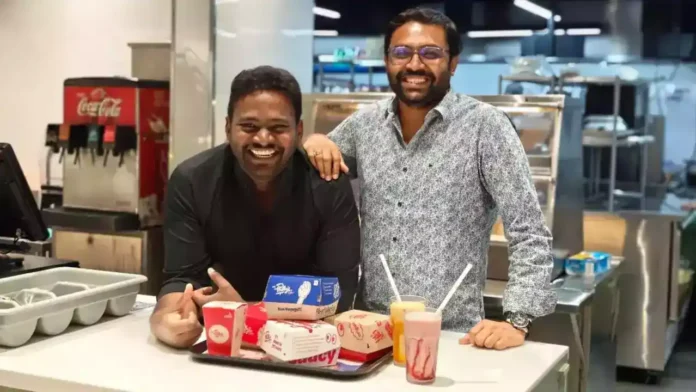
Mr. Philly’s, an all-American pop cuisine brand, has announced its grand opening in Bengaluru. Founded by experienced entrepreneurs and culinary aficionados, Manohar Datta Pulavarthi and Gopichand Cherukuri, Mr. Philly’s offers a delectable range of classic American favorites. Their menu features juicy burgers, flavorful bites, delicious wraps, and hearty bowls, all complemented by decadent milkshakes.
Spanning 1600 sq ft, the restaurant captures the essence of a classic American diner with its nostalgic decor. The interior boasts plush upholstery, personalized booths, and vintage highchairs at the counter, creating an authentic diner atmosphere. Adorning the walls are vibrant pop art pieces that contribute to the lively pop culture ambiance. The timeless diner aesthetics and comfortable seating provide the ideal backdrop for the mouthwatering dishes on the menu. Additionally, the open kitchen offers diners a glimpse into the bustling kitchen, where handcrafted orders are prepared and served to patrons.
Manohar Datta Pulavarthi, co-founder of Mr. Philly’s, commented, “We are excited to bring Philly’s to the vibrant food scene of Bengaluru. Our goal is to establish a place where food lovers can gather to enjoy authentic American flavors at affordable prices, all while maintaining freshness and using high-quality, in-house ingredients.”
“Bengaluru has a reputation for its appreciation of diverse cuisines, particularly burgers. Mr. Philly’s is poised to appeal to the city’s discerning food enthusiasts, offering them an exceptional dining experience. This marks a promising beginning, and we plan to launch additional company-owned outlets across the city’s prime locations in the next six months,” stated Gopichand Cherukuri, co-founder of Mr. Philly’s.
We use cookies to ensure that we give you the best experience on our website. If you continue to use this site we will assume that you are happy with it.