Wednesday, February 4, 2026
Home Blog Page 557

Bundelkhand celebrates as Kathiya Gehu secures its first GI tag

0
wheat
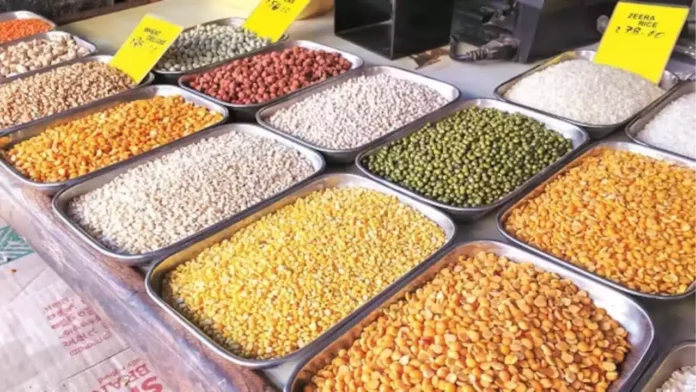
(Representative Image)

Uttar Pradesh’s Bundelkhand district has received the first-ever Geographical Indication (GI) marking for a farm product.

Authorities announced on Monday that the indigenous wheat variety, commonly referred to as Kathiya Gehu (wheat), has been awarded the esteemed Geographical Indication (GI) tag.

Bhupesh Pal, the Assistant General Manager of NABARD Jhansi, stated that an application for the GI certification was submitted in January 2022 by a local FPO, Khatiya Wheat Bangra Producer Company Limited, with the backing of NABARD and technical guidance from Padma Shri awardee Rajnikant Rai, the director of Human Welfare Organisation in Varanasi.

Following a lengthy two-year process, the GI tag was issued with certificate number 585 on March 30, 2024.

Continue Exploring: Odisha’s red ant chutney officially recognized with GI tag

“Getting the GI tag—the first for any farm commodity in the region—is a significant accomplishment for the Bundelkhand region. This will support the promotion of this locally grown wheat variety that is high in protein and requires very little irrigation, according to Pal.

Meanwhile, the director of research at Rani Lakshmi Bai Central Agricultural University (RLBCAU), S.K. Chaturvedi, stated that Kathiya wheat, or Durum wheat, is quite common in this area. It is healthier in addition to being high in nutrients since it is gluten-free.

He mentioned that it can thrive in harsh climatic conditions with minimal water requirements.

Kathiya’s GI tag validation will increase the brand value of the food and encourage the prosperity of the local farmers. “In collaboration with the International Centre for Agricultural Research in the Dry Areas (ICARDA), RLBCAU has initiated a larger study on wheat to obtain new varieties of seed that can increase its output,” said S.K. Chaturvedi.

Continue Exploring: Goa advances with GI tags for fish curry rice and traditional bread varieties

Advertisement

Swiggy Instamart and Park+ join forces for instant delivery of IndusInd Bank FASTags

0
Swiggy Instamart
Swiggy Instamart

Swiggy Instamart, India’s premier quick commerce platform, has partnered with Park+, the leading distributor of FASTags in the country.

The partnership aims to provide IndusInd Bank FASTags to Swiggy Instamart users in less than 10 minutes, establishing a new benchmark in convenience.

For the first time in the realm of rapid commerce and online shopping, customers can now get FASTags delivered directly to their homes. These FASTags will be available to Swiggy Instamart users in 29 cities.

Phani Kishan, Head of Swiggy Instamart, said, “FASTag represents seamless payment and convenience, and its accessibility should reflect that. Previously, acquiring a FASTag meant applying through a bank’s website or visiting a toll booth in person, resulting in waiting periods of 3 to 7 days for card delivery and activation. With FASTag now offered on Swiggy Instamart, users can obtain it anytime, anywhere, reducing the delivery wait time from days to less than 10 minutes.”

Continue Exploring: Swiggy’s Instamart launches ‘Instacafe’ to diversify and boost profits

FASTags have become indispensable for modern car owners, with over 79.8 million FASTags issued in India as of November 2023. Park+’s innovative parking and vehicle management systems allow users to digitally pay tolls or parking fees without the need for cash transactions.

Amit Lakhotia, Founder & CEO of Park+, stated, “At Park+, our primary goal is to reintroduce joy into car ownership. In line with this mission, we have collaborated with Swiggy Instamart to expedite the process for car owners purchasing a FASTag.

As the leading distributor of FASTags in India, we are well-equipped to bridge the existing gaps in the FASTag ecosystem. Our strong partnership with IndusInd bank enables us to provide IndusInd FASTags to customers in under 10 minutes, thanks to Swiggy Instamart.

Additionally, we are actively working with pertinent FASTag issuing partners to educate users on FASTag purchase, renewal, recharge, and more. We remain committed to enhancing the car ownership experience for owners throughout the lifespan of their vehicles and eagerly seek partnerships with other external stakeholders to support us in this initiative.”

The collaboration between Swiggy Instamart and Park+ aims to fill an important market gap by providing a quick and convenient solution for obtaining FASTags.

Continue Exploring: Holi festivities drive record-breaking sales for quick-commerce giants Swiggy Instamart, Zepto, and Blinkit

Advertisement

ABFRL to spin off Madura Fashion & Lifestyle into independent listed company

0
Aditya Birla Fashion

The Board of Directors at Aditya Birla Fashion and Retail Ltd (ABFRL) has granted approval for the company’s management to assess the possibility of vertically demerging Madura Fashion & Lifestyle business from ABFRL to establish it as an independent listed entity.

In a statement, the company announced that the planned demerger would facilitate the formation of two distinct listed companies, each serving as an independent growth driver with unique capital structures and opportunities for value creation.

The Madura Fashion & Lifestyle business segment (MFL) will be split off into a separate listed company. The MFL consists of four main brands: Van Heusen, Allen Solly, Peter England, Louis Philippe; it also includes casual clothing labels American Eagle and Forever 21, athletic company Reebok, and Van Heusen’s innerwear branch.

“The company’s robust financial position will support its goals for future expansion. The demerger will be accomplished through an NCLT plan of arrangement when the required permissions are obtained, and all ABFRL shareholders will have the same number of shares in the newly minted organisation”, according to the statement.

Continue Exploring: NCLAT rejects insolvency plea against Aditya Birla Fashion

Following the demerger, ABFRL will pivot its focus towards segments witnessing a transition from unbranded to branded goods, premiumization trends, the surge in super-premium and luxury markets, and the rapid expansion of Gen Z-oriented digital-first brands, as per the company’s statement. The post-demerger portfolio of ABFRL is expected to encompass value and masstige fashion retail represented by Pantaloons & Style Up, an ethnic wear portfolio, a bridge to luxury and luxury platform comprising The Collective, Galleries Lafayette, and select luxury brands, alongside the digital brand TMRW.

ABFRL plans to enhance its balance sheet by raising growth capital within a year of the demerger’s completion. “Over the years, our fashion and retail business has evolved from 5 brands in 2 categories to a dynamic portfolio of 20+ brands across all lifestyle categories,” stated Kumar Mangalam Birla, Chairman of the Aditya Birla Group. This portfolio’s development has smoothly followed the changes in consumer preferences, with a strategy that takes advantage of every significant opportunity for wealth creation. There’s room to reassess capital structures as the platform moves into its next transformative phase of expansion, optimising various portfolio components. The shift to an architecture that is more streamlined and straightforward is intended to open up new possibilities for value creation. This tactical realignment has the potential to greatly enhance long-term stakeholder value.

“The overhaul will facilitate a more targeted approach, supported by a unique strategy catered to each business segment,” stated Ashish Dikshit, MD of Aditya Birla Fashion and Retail Ltd. Under the direction of each CEO, these companies have all continuously operated independently.” The fashion and apparel industry in India is estimated to be worth over $100 billion and is expected to grow at a double-digit rate in the long run. This simplified organisation best positions the companies for steady expansion and value addition.”

Continue Exploring: Aditya Birla Fashion teams up with luxury shoemaker Christian Louboutin to capture Indian market

Advertisement

Hair care brand Traya secures INR 75 Crore funding from Xponentia Capital

0
Altaf Saiyed & Saloni Anand, Co-Founders, Traya

Traya, a hair care products manufacturer, has secured INR 75 crore in funding from Mumbai-based private equity firm Xponentia Capital.

The company offers a range of products designed to address problems including hair loss. Traya had raised about $3 million from investors, such as Fireside Ventures, Stride Ventures, Kae Capital, and Whiteboard Capital, prior to this funding.

“This funding allows us to advance our mission of offering personalized, effective solutions to meet the distinct hair-related needs of each person. We are committed to assisting individuals in managing hair loss and restoring their confidence,” stated Saloni Anand, co-founder of Traya.

Continue Exploring: Haircare startup iluvia secures undisclosed Series A funding from Fireside Ventures and Multiply Ventures

The company did not provide details regarding the allocation of the funds. However, it asserted that it has amassed over one million customers utilizing its products.

“Traya has acquired proficiency in comprehending hair loss and has showcased achievements in addressing it through inventive blends of Ayurveda, Allopathy, and Nutrition. Our decision to invest in Traya aligns with Xponentia’s strategy to support rapidly expanding and profitable digitally native consumer brands,” remarked Rahul Bahri, Director at Xponentia Capital.

Several consumer brands, particularly in their early stages, have successfully secured funding in recent months. Last month, skincare company Foxtale Consumer raised approximately $14 million, and beauty products and content firm Good Glamm Group raised around $30 million via a rights issue, maintaining a consistent valuation of $1.2 billion.

Continue Exploring: Personal care brand Joy targets INR 750 crore revenue in FY2025; expands distribution and enters new international markets

Advertisement

Cold-pressed juice brand The Fresh Press secures pre-Series A funding from GCCF, eyes nationwide expansion

The Fresh Press
The Fresh Press

The Fresh Press, a Mumbai-based cold-pressed juice brand, has secured a pre-series A round from Gruhas Collective Consumer Fund (GCCF), as revealed by co-founders Dino Morea and Mithil Lodha.

As of March this year, The Fresh Press has become part of the first cohort of Gruhas Gusto – a foodtech accelerator program by Gruhas, Jubilant Family Office, DLF Family Office, and Anthill Ventures.

Continue Exploring: Gruhas Gusto kicks off its first cohort with 7 exciting start-ups selected for accelerator program

With the help of Gusto Accelerators and GCCF, we plan to increase our presence across the country. We believe current funding will enable us to expand our team as well,” said Morea.

With a projected annual growth rate of 7.54%, the cold-pressed juices industry is projected to reach $1.5 billion globally by 2030. Because of rising retail footprint and consumer demand for nutrient-dense fruit juices, the Indian market is flourishing, with a startling 25.43 percent growth rate projected between 2021 and 2028 “. Lodha continued.

The co-founders declined to disclose the amount the brand has raised when questioned.

At present, the brand exclusively conducts online operations in Mumbai through platforms like Swiggy and Zomato. However, it is set to expand its reach to Hyderabad, Bangalore, Chennai, and Delhi in the near future. With a presence in 9 cities, the brand boasts a total of 36 stores, including 24 shop-in-shops and 12 high-street stores.

Additionally, the brand has formed strategic partnerships with PVR-INOX and Reliance, enhancing its market presence and expanding accessibility to a broader audience.

“We want to open 150 stores in the next 18 months, of which 120 will be shop-in-shops and 30 will be high-street stores,” revealed Lodha.

The shop-in-shop stores of the brand cover an area of 100 square feet, while the high-street stores span 250 square feet.

Continue Exploring: Juice Guys Unveils Saket Flagship Store, Plans 200+ Outlets in India

“The capital expenditure required to open a shop-in-shop is approximately INR 5–6 lakh, while the high-street business requires an investment of INR 15 lakh. Shop-in-shop is currently a better choice for us to plug and play,” said Lodha.

Currently, the average order value for the brand is INR 300 at the shop-in-shops and INR 200 at the high-street stores.

During this fiscal year, the brand’s goal is to extend its market reach to cities including Hyderabad, Bangalore, and Chennai, as well as targeting additional regions such as Gujarat, Rajasthan, and Delhi.

“Our plan calls for additional growth into India over the next three years, with a particular emphasis on tier II and tier III cities,” said Lokha.

“Moving forward, we are also strategizing to collaborate with a network of gyms and fitness establishments,” Morea added.

The brand generated revenue of INR 3 crore in FY 22-23, which increased to INR 7.5 crore by the end of the last fiscal year. This fiscal year, it aims to reach INR 15 crore in revenue.

As of right now, our EBITDA is 10%,” the co-founders asserted.

Mithil Lodha and Rahul Jain co-founded the brand in 2019, later joined by actor-entrepreneur Dino Morea, who became an investor and co-founder.

Continue Exploring: A-Listers Spice Up Their Portfolios with Bold Bets on India’s Booming F&B Startups

Advertisement

SOCIAL unveils Rajouri Garden outlet, marking its 53rd establishment in Delhi

0
SOCIAL
SOCIAL

SOCIAL recently unveiled its 53rd establishment, Rajouri Garden SOCIAL, nestled in the vibrant heart of Rajouri Garden, West Delhi. Embracing the essence of Delhi with its distinctive blend of ambiance, Rajouri Garden SOCIAL promises to enrich the social and community landscape of West Delhi.

Drawing inspiration from the vibrant culture of Rajouri Garden market, the new venue is crafted to embody the urban essence that characterizes West Delhi. Rajouri Garden SOCIAL offers guests a sensory adventure, blending mechanical elements and local market aesthetics reminiscent of the lively ambiance of Old Rajouri Garden, complete with its playful charm. The space exudes nostalgia and warmth, featuring a lengthy alley that mirrors the bustling streets of the renowned Rajouri market, beckoning visitors to embark on a journey of exploration.

Continue Exploring: Nestlé India collaborates with SOCIAL and BOSS Burger to debut MAGGI’s plant-based menu across major cities

With thoughtfully designed booths, Rajouri Garden SOCIAL will provide its visitors a special fusion of privacy and community spirit, creating a calm haven amidst the busy atmosphere of a marketplace. The outlet seeks to capture the spirit of serenity amid chaos by reflecting the ups and downs of daily living.

SOCIAL has partnered with Gurpreet Singh Tikku, a prominent figure in Delhi’s F&B scene, to introduce the thrilling “Tikku Ji ka Tikka” to the people of Delhi. This culinary delight is a collaborative creation of Mister Tikku and Chef Shamsul Wahid, Group Executive Chef at Impresario Entertainment & Hospitality Pvt. Ltd.

According to Mayank Bhatt, CEO of Impresario Hospitality & Entertainment Pvt. Ltd., “We are excited to bring Rajouri SOCIAL to the ever-vibrant West Delhi.” “Rajouri Garden SOCIAL embraces the market atmosphere of West Delhi with a unique twist, in true SOCIAL style. We currently operate 15 SOCIAL stores in major cities throughout North India, including Chandigarh, Dehradun, Gurugram, Noida, and New Delhi. The opening of our newest SOCIAL location in Rajouri Garden, a quaint neighbourhood that is well-known in the city, adds to its significance. With its inventive design and unique ambiance, Rajouri Garden SOCIAL aspires to be a gathering place for Delhiites to mingle, meet, and create lifelong memories.”

Continue Exploring: SOCIAL unveils new cloud kitchen brand ‘Aflatoon,’ elevating North Indian cuisine with creative flair

Advertisement

Tax troubles continue for Zomato as INR 92 Cr demand notice adds to mounting woes

0
Zomato
Zomato

Zomato continues to face mounting challenges, as the foodtech company has been ordered to pay a service tax of INR 92 Cr. This comes just a day after receiving a GST notice of INR 23.26 Cr for FY19 from tax authorities in Karnataka.

Zomato has been instructed to pay a service tax amounting to INR 92,09,90,306, along with applicable interest and a penalty of the same amount, as stated in the company’s regulatory filings.

Continue Exploring: Zomato’s GST saga continues: Karnataka tax authority slaps INR 23 Crore demand 

The directive has been issued in accordance with Regulation 30 of the Listing Regulations by the Commissioner, Adjudication, Central Tax, Delhi, covering the period from October 2014 to June 2017.

The sum has been calculated based on sales conducted by the company’s foreign subsidiaries and branches to customers located outside of India.

The notification stated, “Company (Zomato) had clarified the allegations along with supporting documents and judicial precedents in its response to the show cause notice, which seems to not have been appreciated by the authorities while passing the order.”

Continue Exploring: Fresh trouble for Zomato as tax authorities seek INR 4.2 Crore in unpaid GST

As mentioned, Zomato is confident in its ability to present a compelling case to the appropriate appellate authority and foresees no financial repercussions for the company.

Zomato has been consistently receiving tax-related notices from the government in recent months, including a GST penalty notice of INR 8,57,77,696 from Gujarat’s Deputy Commissioner of State Tax in March 2024, and a show cause notice of INR 401.7 Cr from the Directorate General of GST Intelligence, Pune Zonal Unit, concerning unpaid tax on delivery charges collected from customers between October 29, 2019, and March 31, 2022, issued in December 2023.

Continue Exploring: Zomato faces INR 8.6 Cr GST penalty notice from Gujarat State Tax Authority

Despite the ongoing tax concerns, Zomato issued a total of 15,16,229 stock options to eligible workers through the Foodie Bay Employee Stock Option Plan 2014 (“ESOP 2014”) and the Zomato Employee Stock Option Plan 2021 (“ESOP 2021”).

The granted stock options cover 30,30,203 equity shares having a face value of INR 1 apiece, as per the regulatory filing. This includes any necessary changes resulting from company actions as specified in the ESOP programmes.

In the September quarter of the fiscal year 2023–24 (FY24), Zomato reported its second consecutive profitable quarter, with a profit after tax (PAT) of INR 36 Cr. Compared to the prior quarter’s PAT of INR 2 Cr, this represented an 18-fold rise.

Continue Exploring: Zomato reports remarkable surge in profit, achieving second consecutive profitable quarter in FY24

Advertisement

Pricey cocoa, coffee, palm oil, and sugar spike dining costs: Restaurant bills set to increase by 5-8%

0
Cafe Restaurant
(Representative Image)

Dining out and delivery services are becoming more expensive, as are chocolates. Bills at fast-food joints and upscale restaurants could see a 5-8% increase starting this month due to surges in cocoa, coffee, palm oil, and sugar prices over the last quarter. This marks the first notable increase in about 1.5 years, according to industry executives and restaurateurs.

Cocoa and coffee prices have reached record highs, while palm oil has increased by 10% year-on-year. Executives from several restaurant and café chains have indicated they are considering implementing price increases this month.

Aseem Grover, the owner of the high-end The Big Chill Cafe and dessert chain The Big Chill Cakery, is closely monitoring expenses.

“Commodity prices have sharply risen, and inflation is making it more challenging to maintain profitability,” Grover stated. “We are closely assessing the situation.”

Continue Exploring: Global cocoa supply shortage pushes Cadbury and major chocolate brands to consider price hikes

Cocoa prices have reached a record high of $10,000 per tonne, driven by disappointing harvests in major producing countries like Ghana and Ivory Coast. Cocoa prices have doubled in the January-March quarter compared to the previous quarter.

“Unfortunately, we’re halting production of our milk chocolates and raising prices for our dark chocolates… Because genuine quality comes with a genuine cost,” wrote Shashank Mehta, founder and CEO of The Whole Truth, a packaged health food company, on LinkedIn last week.

He further mentioned that cocoa prices are currently at their highest in 45 years. In just one year, the price of the commodity has surged by over 150%, and cocoa butter has seen a 300% increase.

Describing it as a “devastating season for cocoa farmers,” Mehta remarked, “There is an unprecedented supply shortage. Farmers are voicing their concerns loudly as none of the profits are reaching them. Cocoa futures are in turmoil.”

The surge in commodity prices is causing packaged food prices to rise and jeopardizing pack sizes, as well as leading to potential reductions in portion sizes at restaurants.

Anjan Chatterjee, chairman of Speciality Restaurants, which operates Mainland China and Sigree, stated, “With most commodity prices rising, we are facing higher input costs. As a result, we are evaluating our prices, and if this trend continues, we may have to raise our menu prices.”

Executives indicated that companies are caught in a dilemma: either accepting a hit to profitability or risking the loss of market share by raising prices.

“The market is highly competitive, so we’ve implemented an overall price increase of only 5%, even though the impact on our costs is much greater due to rising input costs,” stated Saurabh Khanijo, managing director of the Kylin restaurant chain.

Manufacturers of chocolates and other sugar-based confectionery are also considering price hikes or reducing pack sizes.

Continue Exploring: Cocoa prices skyrocket to 45-year high amid expected crop shortages

“The cocoa price hike is significant, so we either have to raise prices or consider reducing pack sizes,” stated Jayen Mehta, managing director of Gujarat Cooperative Milk Marketing Federation (GCMMF), the producer of Amul chocolates and flavored beverages. “We plan to adjust prices in a measured way to minimize the impact on consumers.”

Palm oil prices, a crucial ingredient for the hotel, restaurant, and café (HoReCa) sector, have increased by 10% in the past three months due to decreased supply from Malaysia and Indonesia. “The price hike is expected to continue until early June,” stated Sandeep Bajoria, CEO of the oil trading firm Sunvin Group.

Jubilant FoodWorks, the company behind Domino’s Pizza and Dunkin Donuts, chose not to comment, as did café chains Tata Starbucks and Barista.

Quick service restaurants (QSRs) are considering price hikes, even as listed companies face competition from low-priced offerings by hyperlocal chains. This competition has led many chains to introduce menu items at reduced prices, such as KFC’s INR 149 lunch combos and Pizza Hut’s Melts thin crust pizza starting at INR 169.

Continue Exploring: India’s palm oil imports reach four-month high in December, fueled by competitive prices and increased demand for refined variants

Some are considering more affordable alternatives.

“We’ve received requests from certain café chains to substitute cocoa with less expensive alternatives and to use chocolate flavour instead of actual chocolate,” stated an executive from a leading cocoa supplier who preferred to remain anonymous. “We’re optimistic that this is a temporary situation.”

The cost of coffee is also on the rise. The farmgate price of raw Robusta coffee berries reached a record INR 172 per kg in Kerala last week, compared to INR 115 per kg during the same period the previous year. The spot price of Robusta coffee beans has risen to INR 315 per kg, up from INR 210 in the same period in 2023. According to Motilal Oswal’s latest commodity insight report, due to unseasonal rainfall, a labor shortage, and increased demand, coffee inflation has surged by 15.3% year-on-year (2.5% quarter-on-quarter). Additionally, sugar prices rose by 10.8% in FY24 compared to FY23, with current prices at INR 3,800 per quintal.

However, tea prices have declined due to weak export demand and sluggish rural consumption, dropping by 10.2% year-on-year and 21.1% quarter-on-quarter. Nonetheless, the new season of Darjeeling teas, which have recently entered the market, are commanding high prices due to the production of a premium variety. Recently, a kilogram of Darjeeling tea fetched a price of INR 31,000.

Wheat prices have risen by 2.6% year-on-year due to the government’s increase in the minimum support price, although prices have decreased by 2.4% quarter-on-quarter.

Advertisement

Zepto in talks for $300 Million funding, eyes valuation jump to $3 Billion

0
Zepto
Kaivalya Vohra & Aadit Palicha - Co-Founders of Zepto

In the midst of the increasingly fierce competition in the quick commerce arena, Zepto is reportedly in early-stage discussions to secure a minimum of $300 million from global investors, according to sources cited by ET.

The Mumbai-based startup could potentially achieve a valuation of at least $2.5-3 billion based on current market metrics, sources familiar with the conversations suggest. This marks a significant increase from its previous valuation of $1.4 billion when it attained unicorn status last year.

As per insights gathered from recent investor presentations, Zepto is striving to attain EBITDA positivity by September. It’s reported that the company presently boasts an annualized gross sales run-rate of $1.2 billion.

Although still in its initial phases, the upcoming fundraising initiatives are poised to fortify the company’s financial position while simultaneously establishing a substantial reserve for confronting market leader Zomato-owned Blinkit and Swiggy Instamart. Additionally, Walmart-owned Flipkart is gearing up to venture into quick commerce within the next two months.

Continue Exploring: Quick commerce unicorn Zepto raises $31.25 million in Series E funding, supported by Goodwater Capital and Nexus Venture Partners

“We are negotiating with international investors, such as sovereign wealth funds”. A person with knowledge of the matter has stated that a board meeting later this month will address the new fundraising plan and its parameters.

Zepto, having achieved a $1 billion gross sale run rate last month, is actively scaling its operations and has ambitious ecommerce strategies in place. Despite receiving a term sheet from at least one growth stage fund recently, the company has decided not to proceed with it.

“Zepto wants to move up the timeline to reach the positive Ebitda mark by a few months. That will improve its situation going into the next round. A group of investors who have forward-looking plans on key metrics have been given access to the company’s financials, according to a source.

“They (Zepto) have ambitious plans for a total rise and are undoubtedly considering a new round. According to someone with knowledge of the dynamics, the company appears to have increased its market share in some of the nation’s most competitive cities, accounting for the majority of the growth in rapid commerce.

Based on financial records, Zepto operates about 340 dark stores, more than 200 of which have positive Ebitda. While Swiggy Instamart has more than 500 dark stores in comparable places, Blinkit has more than 450 dark stores spread over 25 cities.

Aadit Palicha, co-founder and CEO of Zepto, stated that the company is currently not engaged in active fundraising efforts, and there are no ongoing discussions with investors.

“Strong execution, not capital raising, is the objective at the moment because we are about to be Ebitda positive after closing a sizable round a few months ago,” he continued.

Our mature stores currently make up 6-7% of Ebitda, with the potential to reach 13-14%. We are increasing at a rate of 140% annually. Palicha commented on company expansion, “so these stores are able to generate their own cash.”

He mentioned that Zepto has expanded its business by more than 100% since its previous fundraising round in October, with Ebitda showing a 600 basis points improvement.

Last month, Zomato CEO Deepinder Goyal remarked that Blinkit has the potential to surpass food delivery and emerge as a larger business. This highlights the long-term prospects of Blinkit. As a market leader in major metropolitan areas, Blinkit is broadening its range of stock keeping units (SKUs) to include fashion, jewellery, toys, beauty products, and electronics. Similarly, Zepto is also expanding its offerings within these categories.

Continue Exploring: Quick commerce platforms Blinkit and Zepto expand into e-commerce, targeting fashion, beauty, electronics, and more

Over the past year, Zomato has invested approximately $240 million in Blinkit. Blinkit has achieved a gross merchandise value (GMV) of more than $1 billion in the first nine months of fiscal year 2024. Zomato holds nearly $1.5 billion in cash reserves.

A senior ecommerce executive who is keeping tabs on the growth of quick commerce platforms stated, “These players will need financial resources to scale up the infrastructure for an ecommerce play which is linked to the funding talks.”

Swiggy has directed its capital investment towards Instamart, as its food delivery business has reached a point of stability in terms of investment requirements. The company earmarked a $700 million investment for Instamart.

Swiggy has been focused on bolstering its financial position in anticipation of a potential IPO later this year. According to a Reuters report, the company recorded a loss of $200 million for the first nine months of 2023, with revenue totaling $1.02 billion. Blinkit is projected to achieve break-even in the first quarter of fiscal year 2025, as per earlier guidance provided by Zomato.

Continue Exploring: Blinkit to outgrow Zomato within a year, says CEO Deepinder Goyal

Advertisement

Zomato pilots new last-mile delivery service for office goers in corporate parks

0
Zomato
Zomato

Zomato, a leading player in the foodtech space, is reportedly piloting a new initiative that offers last-mile delivery to office goers within corporate parks.

According to Entrackr, Zomato has established kiosks at “approximately five to six” corporate parks in Gurugram. At these kiosks, a delivery executive hands off the food parcel to the stationed team. Following this, a designated “walker” is assigned to deliver the item to the customer’s specific floor or location.

According to the report, Zomato has likely joined forces with corporate parks to “whitelist” these last-mile delivery providers. Furthermore, the foodtech company has promised “no calls from delivery partners” to customers and has assigned specific “walkers” to each floor.

The company chose not to respond to inquiries regarding the matter.

Continue Exploring: Zomato launches in-hall food delivery service at PVR Cinemas in Gurgaon, enhancing movie-goers’ experience

“The initiative is presently in an experimental stage, and based on the pilot’s results, the organisation plans to expand this offering to the top five cities,” according to a source mentioned in the report.

Meanwhile, according to another individual familiar with the situation, these kiosks are reportedly processing approximately 100 to 150 orders daily, with the company anticipating a rise in this figure in the coming days.

With this initiative, Zomato aims to adopt a model similar to that seen in China, where companies like Meituan station their teams at areas housing corporations and startups to streamline deliveries.

This development comes at a time when Zomato has been experimenting with a range of new offerings to bolster its revenue. Last year, the company introduced a platform fee (which now ranges from INR 3-5) and followed this by partnering with the Indian Railway Catering and Tourism Corporation (IRCTC) to deliver pre-ordered meals to railway passengers.

In February, reports suggested that the foodtech company was considering expanding its quick commerce division, Blinkit, by incorporating more brands across different categories to compete with ecommerce giants like Amazon and Flipkart.

Meanwhile, the company maintains strong financial performance, with its third consecutive profitable quarter reported in Q3 FY24. Its net profit surged fourfold sequentially to INR 138 Cr in Q3 FY24, while operating revenue increased by 15% quarter-on-quarter to INR 3,288 Cr.

Continue Exploring: Zomato reports third consecutive profitable quarter with INR 138 Cr PAT in Q3 FY24

It has also gained favor among investors, with Jefferies including the stock in its “top picks” list for the next five years.

On Monday (April 1), Zomato’s shares concluded 1.21% higher at INR 184.55 on the BSE.

Continue Exploring: Zomato among Jefferies’ top picks for next five years, anticipates 2.5X share price increase by 2029

Advertisement