Friday, February 6, 2026
Home Blog Page 554

Dabur reports sluggish demand trends in March quarter, notable uptick in rural growth

0
Dabur
Dabur

Dabur, a leading FMCG company, stated that demand trends during the March quarter were subdued, but there was a noticeable uptick in rural growth. The company anticipates an improvement in consumption in the upcoming months, buoyed by a favorable rabi crop harvest and predictions of a regular monsoon. The surge in rural growth is attributed to price reductions in staple food items, which have contributed to narrowing the gap between rural and urban areas, according to the company’s quarterly updates.

“Taken into account the bright outlook for the rabi crop harvest and the forecast of a normal monsoon, we anticipate consumption to pick up in the coming months,” Dabur stated.

It additionally stated, “Although the previous year posed challenges in terms of consumer demand, we anticipate an enhancement in consumption moving forward, given the robust nature of macro-economic indicators.”

The company, which owns brands like Dabur Chyawanprash, Dabur Honey, Dabur Pudin Hara, Dabur Lal Tail, Dabur Amla, Dabur Red Paste, Real, and Vatika, is anticipated to achieve mid-single digit growth in consolidated revenue during Q4 FY24.

Continue Exploring: Dabur announces INR 135 Crore investment for new greenfield facility in South India

The growth in revenue is also supported by its spice brand, Badshah, acquired by the Burman family-led company in October 2022.

Additionally, Dabur’s gross margins are expected to “continue to expand” due to lower input costs and cost-saving measures.

In the domestic market, Dabur’s HPC (home & personal care) segment is projected to grow by high-single digits, whereas the healthcare and F&B segments are anticipated to achieve low single-digit growth.

“F&B faced a challenging comparison with a high base from last year, and the healthcare portfolio was affected by a delayed winter. However, Badshah Masala maintained strong performance and is anticipated to achieve robust volume-driven growth in the high teens. We consistently increased our market share across all categories due to effective market execution,” the statement read.

Continue Exploring: Dabur India’s Q3 profit rises 6.2% to INR 506.44 Cr, records 7% revenue growth at INR 3,255.06 Cr

Dabur’s international business is projected to see double-digit growth in constant currency terms, driven by solid momentum in the MENA region (Middle East and North Africa), as well as in Egypt and Turkey.

“However, due to currency depreciation in Turkey and Egypt, the translated revenue in INR terms is expected to show growth in the mid-single digits,” the statement read.

Dabur stated that with the expansion in margins, the company plans to increase its investment in branding and marketing.

“We anticipate larger A&P spending, which are in line with our brand investment approach. The operational profit is expected to expand somewhat faster than revenue, resulting in higher year-on-year operating margins,” the statement added.

Continue Exploring: Rural FMCG sales outpace urban growth for first time in three years, signaling demand recovery

Advertisement

Amazon takes U-turn, decides to discontinue Just Walk Out tech at Fresh stores

0
Amazon Fresh
Amazon Fresh

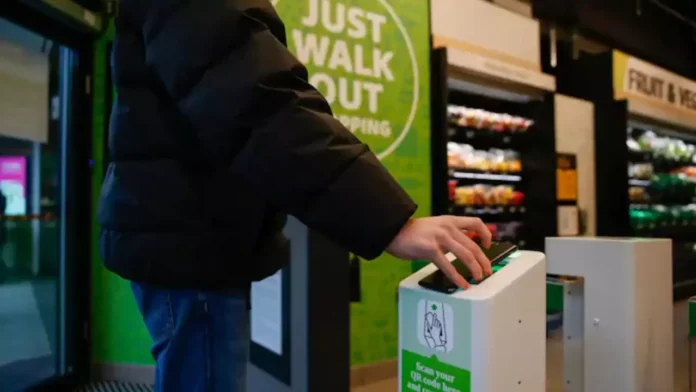
Amazon, the e-commerce behemoth, has decided to discontinue the use of cashierless Just Walk Out technology at its Fresh grocery stores.

Bloomberg’s report indicates that the decision is in line with the company’s strategy to revamp its current Fresh stores and expand with new locations throughout 2024.

The Just Walk Out system was initially launched by Amazon in 2018 at the 10,400 square feet Amazon Go Grocery store located near its Seattle headquarters.

The idea offered a frictionless shopping experience. Amazon Prime members could simply enter the store using a QR code, select their items, and exit without the need for conventional checkout procedures.

Cameras and sensors recorded their purchases, and customers were subsequently billed through their Amazon account.

Continue Exploring: Amazon Fresh expands customer base: Non-Prime members can now order groceries

However, despite its futuristic allure, the technology has encountered notable challenges.

The high installation and maintenance expenses are believed to be among the reasons why the technology was only partially adopted. According to a report by the New York Post, out of the 40 large-scale Amazon Fresh stores in the country, only 27 utilize it.

Privacy concerns, mishandled orders, and delays in sending receipts after purchase have also contributed to the issues faced.

The cameras and sensors have the capability to gather biometric data, leading to a class action lawsuit filed in New York, alleging Amazon’s improper collection of such information from consumers.

Allegedly, around 1,000 human operatives based in India have been reported to be scanning the camera feeds to ensure precise checkouts.

Amazon plans to discontinue the Just Walk Out system in larger Fresh stores; however, it will remain a feature in Amazon Go outlets and smaller-format Fresh shops in the UK.

Furthermore, the company plans to continue licensing the technology to other retailers.

The Information was the first to break the news about the discontinuation of the Just Walk Out technology in Amazon Fresh US stores.

Amazon recently introduced a new application for its Amazon One service—a contactless palm recognition system that enables customers to hover their palm over the device to make payments.

Continue Exploring: Amazon Fresh expands presence in India, now serving 60 cities with fresh food delivery

Advertisement

IHCL and Merlin Group join forces to unveil new IBIZA resort in Kolkata, set to open in October 2025

IHCL and Merlin Group

The Indian Hotels Company (IHCL) has collaborated with Merlin Group to launch a new resort located near Joka on Diamond Harbour Road in Kolkata.

IBIZA, a part of IHCL SeleQtions, will feature 130 rooms, including eight suites, set across 11 acres in Kriparampur, a sought-after tourist spot. Additionally, the property will offer a 5,400 sq. ft. ballroom, conference halls, pre-function spaces, meeting rooms, and picturesque outdoor venues.

“The current resort will undergo renovation and expansion under a new brand, with an anticipated opening in October 2025. A total investment of INR 60 crore will be allocated for this expansion,” stated Sushil Mohta, Chairman of Merlin Group, suggesting that the company might explore further opportunities with IHCL.

With the addition of this resort, IHCL will have seven hotels in Kolkata under various brands like Taj, SeleQtions, Vivanta, and Ginger, with two more currently in development.

Continue Exploring: IHCL triples hotel signings in FY24, surpassing expansion targets ahead of schedule

“This agreement marks another stride for IHCL in broadening its presence in Kolkata, a bustling state capital. It will cater to the demand for nearby getaway destinations from the city, capturing the growing interest in both leisure and MICE,” commented Suma Venkatesh, Executive Vice President – Real Estate & Development at IHCL.

Kolkata, the capital of West Bengal, stands as a significant commercial hub for East India. Recognized as an artistic and cultural epicenter, the city has attracted numerous luxury hotel brands to establish their properties.

As per JLL, the hotel industry has experienced a remarkable upswing since the previous calendar year (2023). In 2023, a record-breaking number of hotel signings and openings occurred, with 25,176 keys signed and 12,647 keys launched. Notably, there is a growing interest in hotel development activities in Tier-2 cities, accounting for 54% of the total signings in these areas.

Although management contracts remain prevalent, constituting 78% of the total number of keys signed, there has been a significant rise in lease and revenue share models across various tiers, encompassing 4% of the total keys signed.

“The strong performance of the commercial sector has directly impacted major urban areas, with Tier 1 cities witnessing the highest number of keys signed since 2020, marking a significant increase of 31% compared to 2022,” the report stated.

Continue Exploring: Hotel giants bet big on India: Radisson, Marriott, Hilton, IHG, and Wyndham compete in intense race for expansion

Advertisement

Amazon India’s largest seller Appario acquired by Clicktech as ecommerce giant reduces seller ownership

0
Amazon
Amazon

Clicktech, a major seller on Amazon India, is set to acquire its counterpart Appario as Amazon aims to reduce its ownership in sellers on its platform.

VCCircle was the first to break the news of the development.

After the closure of Cloudtail, Appario has become the largest seller on Amazon India, handling a substantial volume of orders for the platform.

This marks the second instance of Amazon reducing its stake in a seller entity to adhere to local ecommerce regulations.

Continue Exploring: Amazon India adjusts seller fees, impacts various categories starting April 7

Amazon will take full control of Frontizo Business Services, the holding company of Appario, from its joint venture partner, Patni Group.

As a result, Appario will become the exclusive property of Clicktech, while Frontizo will become a fully-owned subsidiary of Amazon.

“Clicktech plans to grow by expanding its range of goods in the market. As a result, the board chose to acquire Appario’s firm in order to broaden their product offerings,” according to Raj Jain, the company’s executive director.

Backed by the Vinod Poddar group, Clicktech is recognized for its involvement in steel and coal processing, real estate, and plastics.

Appario was the last major seller in which Amazon had an ownership stake.

In October 2022, Amazon announced plans to delist Appario from the platform, facing opposition from smaller sellers and regulatory pressures. In November of the same year, Amazon and Patni Group were exploring different avenues for Appario Retail to continue its presence on the marketplace.

Continue Exploring: Amazon rolls out enhanced generative AI for effortless product listing creation

As a seller on the ecommerce platform, Appario generates most of its revenue from the sale of traded goods, which includes damaged items.

Several companies, including Clicktech and Cocoblu Retail, purchased Cloudtail’s inventory. Additionally, many of Cloudtail’s employees and management transitioned to these new entities, which later became prominent sellers on Amazon.

Advertisement

IPO-bound Swiggy appoints Titan’s Suparna Mitra as independent director

0
Suparna Mitra
Suparna Mitra

Swiggy, a leading player in food delivery and quick commerce, has appointed Suparna Mitra as an independent director to its board.

Mitra is the CEO of the watches and wearables division of Titan Company, a subsidiary partly owned by Tata Sons. She joins three additional independent directors on Swiggy’s board.

These include Anand Kripalu, who is the board chair and also serves as the managing director and chief executive of specialty packaging company Essel Propack; Shailesh Haribhakti, the chairman of financial services firm Shailesh Haribhakti & Associates; and Sahil Barua, the co-founder and chief executive of the listed logistics giant Delhivery.

Continue Exploring: Swiggy reports robust 40% revenue growth to INR 8,264 Cr in FY23, despite net loss crossing INR 4,000 Crore mark

“Given her remarkable career and extensive background in lifestyle and retail industries, coupled with her refreshing leadership perspectives, we’re confident that she’ll offer valuable insights and expertise to our Board as our business embarks on its next phase of growth,” remarked Swiggy cofounder and group chief executive Sriharsha Majety regarding Mitra’s appointment.

This decision comes after Tractor And Farm Equipment Ltd (TAFE) chairman Mallika Srinivasan resigned as an independent director in February of this year. Swiggy stated at the time that Srinivasan had decided to step down due to “increasing business commitments,” but provided no other explanation. Srinivasan, Barua, and Haribhakti were the first independent members to join the Swiggy board in February 2023.

Continue Exploring: Swiggy faces another high-profile departure as independent director Mallika Srinivasan steps down ahead of IPO

Until then, Swiggy’s board comprised Sriharsha Majety, the CEO and co-founder of Swiggy; Nandan Reddy, co-founder of Swiggy; Larry Illg, CEO of Prosus’ Edtech and Food divisions, the largest investor; Ashutosh Sharma, head of investment for India at Prosus Ventures; Sumer Juneja, managing director for India and EMEA at SoftBank Investment Advisors; and Anand Daniel, a partner at Accel.

The shifts within Swiggy’s board come ahead of the company’s public market debut, with draft public offering papers set to be filed in the next few months. The firm has been diligently working to bolster its metrics and curtail cash burn, particularly within its quick commerce division, Instamart.

Continue Exploring: Swiggy prepares for IPO with name change to Swiggy Private Limited

Advertisement

Pansari Group reports 39% volume growth and 20% value surge in FY24

0
Shammi Agarwal, Director, Pansari Group

Pansari Group, a fast-moving consumer goods (FMCG) firm, has reported a 20% surge in value and a 39% increase in volume in FY24.

At present, the company’s value-added products make up 12-15% of total sales and are projected to grow by 20% over the next two years. Additionally, Pansari Group anticipates a change in regional contributions, with the North predicted to represent 60% of the business, while the West and South regions are expected to contribute 40% collectively in the upcoming fiscal year.

Continue Exploring: Rural FMCG sales outpace urban growth for first time in three years, signaling demand recovery

Shammi Agarwal, the Director of Pansari Group, commented, “Despite facing challenges in international markets due to government regulations impacting wheat flour and rice duties, we stayed committed to diversification. We seized opportunities in the B2B segment, launching HoReCa International for our esteemed customers, and expanded into private-label offerings beyond commodities.”

The brand has recently launched its ‘Mojee’ cocktail syrups, along with Pansari Chai and the TVOY Green Tea range. It plans to focus on the TVOY tea line, targeting INR 100 crore in sales and a 70% year-on-year volume growth in the next two years.

Currently, the brand collaborates with over 800 distributors and strategically separates its distribution channels for commodities and value-added products to ensure streamlined operations.

Continue Exploring: Small regional competitors erode market share of larger FMCG companies in Q4: Elara Securities Report

Advertisement

Good Glamm Group joins forces with Tennis star Serena Williams to launch ‘Wyn Beauty’ in the US

0
Serena Williams
Serena Williams

Serena Williams, a former tennis player and entrepreneur, has teamed up with the content-to-commerce platform The Good Glamm Group to launch her beauty brand, “Wyn Beauty by Serena Williams,” in the US market.

WYN strives for inclusivity in skin tones and will therefore provide makeup products in 91 shades across 10 unique product lines for the face, lips, and eyes categories, the brand announced in a statement.

“As I developed and continued to be active on and off the court, I needed products that I could apply at 7 am before a hectic day of meetings, spending time with my family, making time for the things I love, and still look good at the end of the day,” Williams continued. What I really wanted was makeup that moved with me. The goal of WYN BEAUTY is for individuals to enhance their natural beauty and live in it every day of their lives.

Darpan Sanghvi, the founder of Good Glamm, commented, “It’s an honor to collaborate and embark on this joint venture with Serena, working together to realize her vision for WYN BEAUTY and crafting products that genuinely offer high performance, reflecting her values.”

Last year, actor Akshay Kumar partnered with Good Glamm to introduce a men’s personal care brand. Additionally, the company enlisted Dia Mirza as an investor in BabyChakra.

Continue Exploring: Dia Mirza invests in BabyChakra to promote sustainable parenting and safe baby care products

The Good Glamm Group was established in 2021 through the merger of three brands: MyGlamm, POPxo, and BabyChakra.

Sanghvi launched the D2C brand MyGlamm in 2017, Priyanka Gill founded the digital media platform POPxo in 2013, and Naiyya Saggi established the online parenting startup BabyChakra in 2015.

Since then, The Good Glamm Group has acquired nearly a dozen brands, including ScoopWhoop, Organic Harvest, and Sirona.

According to sources, The Good Glamm Group is in the advanced stages of discussions to secure $70 million in funding for its Series E round, as it prepares for its upcoming initial public offering (IPO) next year. The round is anticipated to involve existing investors along with some new participants. This move is expected to value the group at $1.2 billion, the same valuation as its previous funding round.

Continue Exploring: Good Glamm Group sharpens focus on profitability ahead of anticipated IPO

Advertisement

Mall hypermarkets scale down as quick commerce apps gain momentum, sales decline prompts closures, say operators

0
Quick Commerce
Quick Commerce (Representative Image)

Hypermarkets in malls are reducing their space, with some even closing down, as sales have dropped due to the growing popularity of quick commerce apps like BlinkIt and Zepto, according to three mall operators.

One mall operator mentioned that Spar India, part of the Landmark Group, has downsized stores and shuttered some locations in Delhi-NCR and Bengaluru due to declining sales. Another operator noted a similar trend with Reliance Smart Bazaar, experiencing a roughly one-third decrease in sales. Additionally, Deerika Hypermart, with outlets across Delhi NCR, has closed three stores. Despite inquiries, Reliance, Spar, and Deerika remained unresponsive.

According to Muhammad Ali, CEO of Retail at Prestige Group, impulsive purchases at hypermarkets have declined, with people now only purchasing essential items.

He said, “By reducing space, companies save on rent while sales remain the same.”

Continue Exploring: Quick-commerce sector on track to compete with e-commerce giants, says Glade Brook Capital Founder

The Prestige Group manages Forum malls located in southern India.

According to a retail industry expert, buyers are no longer willing to tolerate the inconvenience.

The person remarked, “Who will endure traffic, parking, and queues for billing? Consumers’ shopping habits are evolving rapidly.”

Hypermarkets were originally envisioned as the main attractions in malls, drawing in crowds. However, this trend has changed. Numerous companies have opted to surrender 15-20% of the leased space in order to reduce rental expenses.

It’s reported that dining has become the new attraction factor.

“Restaurants are now the main drivers of foot traffic for malls and have taken on the role of new anchors,” stated Harsh V Bansal, co-founder of the Unity group, which oversees operations of over half a dozen malls in Delhi and Punjab. “With various delivery apps offering instant service, shoppers are hesitant to visit malls for grocery shopping.”

According to one mall operator, a hypermarket that previously recorded sales of INR 6 crore per month has now decreased to INR 3-4 crore. Another mall operator reduced the size of its hypermarket from 60,000 sq ft to 40,000 sq ft.

“Deerika hypermarket has temporarily closed three stores in Delhi, Ghaziabad, and Faridabad,” stated Abhishek Bansal, Managing Director of Pacific Malls, which manages multiple malls in the NCR region. “In general, the category now occupies less space compared to before.”

Continue Exploring: Quick-commerce giants grab 30-50% of FMCG sales, kirana stores witness slowdown

The Lulu Group from the UAE, recognized for its chain of hypermarkets, is expanding its operations by positioning its outlets as family-friendly destinations in Kerala and Uttar Pradesh. The company is contemplating the development of small-scale malls with a focus on hypermarkets in cities such as Prayagraj, Gorakhpur, Kanpur, and Varanasi.

In tier 2 cities, experts noted that hypermarkets are still regarded as destinations, but the trend has reversed in metro cities.

The same-store sales growth of the grocery leader Dmart was also affected by lower-than-anticipated festive season sales in non-FMCG (fast-moving consumer goods), alongside significant inflation within FMCG in agricultural staples.

As per the Boston Consulting Group, a deceleration in growth was evident across sectors in recent quarters, with grocery experiencing the most pronounced impact. Sales slowed to 16% in the March quarter from 23% in the corresponding period of the previous year.

Continue Exploring: Quick commerce platforms Blinkit and Zepto expand into e-commerce, targeting fashion, beauty, electronics, and more

Advertisement

Small regional competitors erode market share of larger FMCG companies in Q4: Elara Securities Report

0
FMCG
(Representative Image)

In Q4FY24, the demand for FMCG products continued to face challenges, impacting volume growth, as reported by Elara Securities.

Factors like reduced farm income and the emergence of small regional competitors are negatively impacting larger companies. The brokerage also noted that a delayed winter could affect seasonal categories like beverages.

“It was observed that Chyawanprash sales slowed down in Q3 due to the delayed onset of winter, and there has been no significant recovery in Q4,” stated the report.

Food categories remain stronger performers compared to home and personal care products. The revival of rural demand is essential for the FMCG sector, and companies are banking on a favorable monsoon to boost the rural economy.

Continue Exploring: Rural FMCG sales outpace urban growth for first time in three years, signaling demand recovery 

The report mentioned that regional companies, especially in sectors like biscuits and laundry, continue to pose challenges to larger competitors, benefiting from favorable commodity prices.

In Q4, essential commodities like crude oil and palm oil have seen a sequential rise. Nevertheless, the year-on-year growth has been modest, not significantly impacting margins. Companies have prioritized offering enhanced schemes to boost volume, without implementing any additional price reductions.

According to the brokerage, the FMCG coverage universe is anticipated to show a year-on-year revenue growth of 2.8 percent and volume growth of 3.6 percent in Q4FY24. This is compared to a five-year compound annual growth rate (CAGR) of 8.8 percent, slightly lower than the 9.0 percent recorded in Q3FY24.

Continue Exploring: FMCG companies and Kirana stores gear up for summer: Dairy and beverage sales spike across India

Advertisement

Godawan single malt whisky grows Its market presence, enters Punjab, Chandigarh, and Madhya Pradesh

0
Godawan
Godawan

Godawan, an artisanal single malt whisky that defies conventional norms while honoring tradition, has made a significant expansion by entering Punjab, Chandigarh, and Madhya Pradesh. This move strengthens its nationwide presence across seven markets in India, bringing its unique production techniques and accolades to a broader audience.

Conceived by The Good Craft Co. of Diageo India, Godawan is creating a unique single malt that pushes boundaries and breaks away from traditional whisky-making conventions.

Distilled in Alwar, an area traditionally not associated with whisky production, Godawan utilizes Rajasthan’s high temperatures, time-honored methods, and distinctive botanicals to produce a range of Indian single malts that cater to diverse tastes – from the delicate and floral to the fruity and spicy, the rich and rounded, and the full-bodied and smoky. Achieving this through a versatile and flavorful mother liquid, it is evident in each distinct expression. The brand has introduced two outstanding varieties – 01 Rich and Rounded and 02 Fruit and Spice – priced between INR 2800 and INR 6000.

Continue Exploring: Tasmac unveils new budget-friendly brandy ‘Veeran’, plans to introduce 12 more affordable liquor brands

“As India’s whisky craftsmanship garners global acclaim, maintaining innovation and consistently upholding exceptional quality standards is paramount. With Godawan, we are redefining whisky production through advanced techniques and unique ingredients, fostering a culture of exploration and innovation within the industry.

“We are excited to launch in Punjab, Chandigarh, and Madhya Pradesh, three important markets where customers continue to favour whisky. Our national expansion is well-timed, as the Indian single malt category is growing at a pace of 42 percent annually.

“Moving forward, our commitment lies in delivering superior product quality and strengthening our presence in crucial markets,” says Vikram Damodaran, Chief Innovation Officer of Diageo India.

Godawan made its global premiere at the 75th Cannes Film Festival in 2022, highlighting a major achievement in Indian craftsmanship and reinforcing the brand’s dedication to the Make in India initiative. Additionally, the brand has recently received two awards: one for Best Packaging – Graphics at the esteemed Ambrosia Awards and another Gold award for Best Use of PR for a Product Launch at AFAQS CommuniCon. These accolades further solidify its pioneering status in the Indian single malt industry.

Inspired by the methods of Rajasthani craft liqueur artisans, Godawan utilizes slow-trickle distillation from locally sourced six-row barley to achieve the best sensory qualities in the liquid. It undergoes a unique maturation process at temperatures surpassing 100°F, leading to a higher Angel’s Share (the portion of liquid lost to evaporation). This results in a whisky with a rich and intricate character. The spirit is then finished in specially treated casks infused with two Indian botanicals, Rasna and Jatamansi, chosen from over 5000 options for their ability to enhance the whisky’s flavor profile.

Godawan takes its name from the Great Indian Bustard, a majestic bird that was once abundant across India but is now classified as Critically Endangered on the IUCN Red List. With only around 150 remaining in India, these majestic birds have found their last sanctuary in Rajasthan.

With each bottle of Godawan purchased, the company contributes to the preservation of these birds’ habitats, aiding in their conservation and flourishing.

Continue Exploring: Diageo and AB InBev gear up to navigate liquor sales disruptions during general elections

Advertisement