Wilde Brands, the snack manufacturer, has secured $20 million in funding to accelerate its growth and foster innovation.
KarpReilly spearheaded the funding round with additional investments from American musicians Jack Harlow and MGK, along with The Family Fund, Grey Space Group, and other existing strategic investors.
The investment will enable Wilde to capitalize on its achievements, expanding its retail footprint, amplifying marketing initiatives, and nurturing innovation as it aims to double its business in 2024.
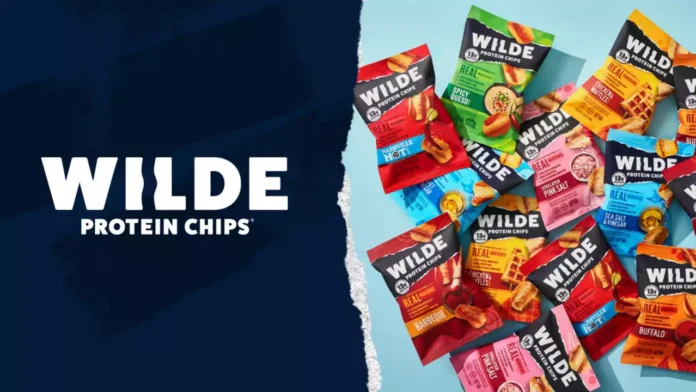
Established in 2018, Wilde Brands prides itself on crafting what it asserts as the ‘world’s first’ chip composed of chicken breast, egg whites, and bone broth. Wilde offers seven flavors: Buffalo, Barbeque, Chicken & Waffles, Himalayan Pink Salt, Sea Salt & Vinegar, Nashville Hot, and Spicy Queso.
The chips can be found at major retailers across the nation, such as Target, Whole Foods, Walmart, Costco, and Kroger. They are manufactured in Wilde Brand’s USDA-certified facility located in Kentucky, USA, which has recently undergone expansion to meet the demands of its rapid growth.
Jason Wright, the founder and CEO of Wilde, commented, “Prior to Wilde, there was no product that combined the crunch of a chip with the protein, flavor, and real ingredients we offer. We’ve disrupted the snacking landscape, and our growth reflects that.”
“My aspiration was to craft a chip that’s not only crunchy but also packed with nutrients, but the journey wasn’t straightforward. It requires significant effort to pioneer something entirely new, to redefine a whole category. Witnessing the enthusiastic embrace of our journey by both consumers and retailers is the motivation that drives us forward. This funding will enable us to stay focused on what truly matters to us—empowering our fans to live Wilde-ly.”
Josh Wand, general partner at The Family Fund, expressed, “We’re committed to collaborating with the founders we support to build successful companies, and we’re thrilled to partner with the Wilde team. They’re primed for exponential growth and generating excitement for their brand, and we’re fully prepared to stand by them throughout their journey.”
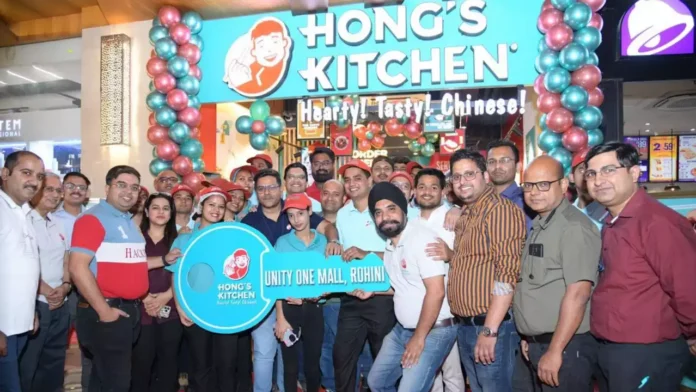
Jubilant Foodworks Ltd (JFL) has unveiled a new outlet of the Chinese food chain Hong’s Kitchen in Delhi, as disclosed by a company executive on social media. Positioned at Unity One Mall, Rohini, this marks the 28th venture of Hong’s Kitchen.
Prem Chhabra, Deputy Manager of Business Development at JFL, shared on his LinkedIn profile: “Excited to announce the opening of Hong’s Kitchen at Store no. 28, located in Unity One Mall, Rohini.”
Other outlets of Hong’s Kitchen include those situated at Unity One Mall in Delhi’s CBD Shahdara and Omaxe Chowk in Chandni Chowk.
JFL is the proprietor of Hong’s Kitchen as well as the operator of fast-food chains such as Domino’s Pizza and Dunkin’ Donuts. Hong’s Kitchen made its debut in India at Eros Mall, Gurugram, in 2019 under JFL’s management.
Established in 1995, JFL stands as one of India’s premier food service enterprises, operating under the umbrella of the esteemed Jubilant Bhartia Group.
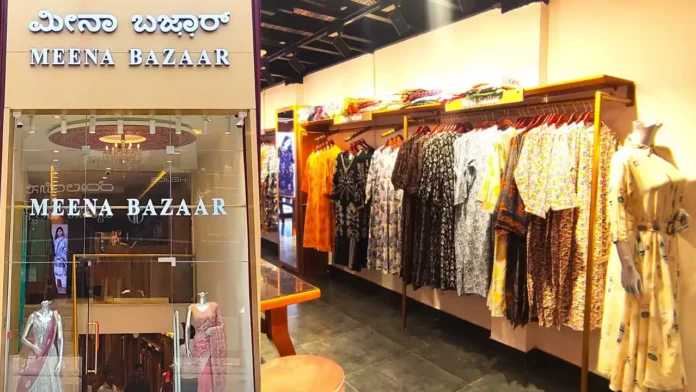
Meena Bazaar, a Delhi-based ethnic wear retailer, has inaugurated its fifth retail store in Bengaluru, as disclosed by a company official on social media. The new high-street store is nestled in the heart of Commercial Street, a bustling shopping destination in the city.
In a LinkedIn post, Manish Jeetwal, business head at Meena Bazaar, expressed his excitement, stating, “We are delighted to declare the grand opening of our latest establishment at Bengaluru’s Commercial Street. This signifies our fifth venture in the lively city of Bengaluru, and we are thrilled to broaden our footprint in this dynamic market.”
Founded in 1970 by Suresh and Vishnu Manglani, Meena Bazaar specializes in a range of ethnic wear essentials, encompassing lehengas, kurta sets, sarees, and suits.
Starting as a modest shop in Chandni Chowk vending printed sarees, the company has now expanded to over 70 locations across India and the United States. Meena Bazaar has set its sights on establishing more than 250 Exclusive Brand Outlets (EBOs) by 2025.
The Tourism & Hospitality Skill Council (THSC) will be organizing the IndiaSkills 2024 Hospitality Competitions, a three-day event scheduled from April 27 to April 29. The event will take place at the Institute of Bakery and Culinary Arts, and Hotel Saket 27 in New Delhi. The competition serves as a cornerstone of the Ministry of Skill Development & Entrepreneurship’s IndiaSkills 2023-24 program, spotlighting the emerging talents in five key hospitality skills: Bakery, Cooking, Restaurant Services, Patisserie and Confectionery, and Hotel Reception.
To participate in the IndiaSkills Track-II Competitions in Delhi in 2024, competitors from all over the nation battled for a spot. In the five hospitality skill sets, 194 individuals made the short list after a demanding screening procedure that included physical competitions and an MCQ-based examination. IndiaSkills 2024 is the route to the coveted WorldSkills competition, which is the most prestigious skills event globally and is commonly referred to as the “Olympics of Skills.”
Rajan Bahadur, CEO of THSC, emphasized the importance of IndiaSkills 2024, stating, “These competitions play a crucial role in identifying and nurturing vocational talent in India. We’re thrilled to participate in an event that not only showcases skill development but also enables young professionals to represent our nation on the global stage. Our partnership with the National Skill Development Corporation (NSDC) and other industry stakeholders underscores our dedication to cultivating the future generation of skilled champions.”
These competitions aim to pinpoint and cultivate promising talent through guidance and mentorship provided by a diverse team of experts hailing from colleges, academies, industries, and institutes. Among the winners in each of the five skills at the IndiaSkills Competition, the top three will undergo rigorous training and engage in two additional physical contests. These additional challenges will determine the singular competitor who will earn the prestigious opportunity to represent India at the WorldSkills event in Lyon, France.
Young professionals have a rare opportunity to demonstrate their abilities and win recognition across the country through the IndiaSkills 2024 Hospitality Competitions. To ensure a thorough and impartial evaluation, a panel of industry experts from top universities, academies, & institutions will analyse the participants.
The Tourism and Hospitality Skills Council (THSC) was founded in 2014 and is India’s premier body on skill development and vocational education. Over a million kids have been successfully certified by THSC since its inception in 2014, and over 1.5 million have been enrolled. Through its network of more than 2000 industry members, more than 100 colleges, and more than 600 institutes, THSC hopes to meet its mission of assisting millions of beneficiaries in finding decent jobs that fulfil their needs by fostering a strong industry-aligned skilling ecosystem.
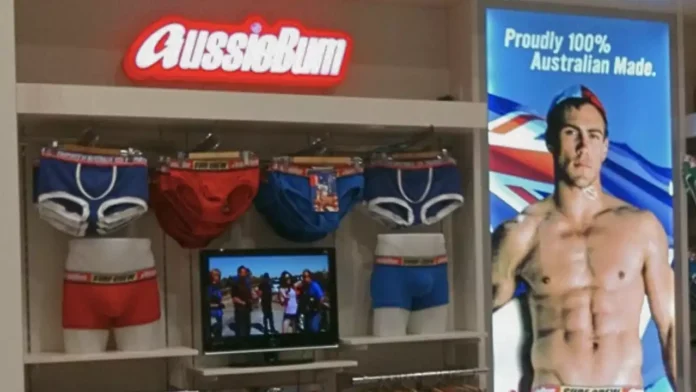
AussieBum, the renowned Australian label specializing in men’s swimwear, underwear, and apparel, plans to establish its own manufacturing unit in India, as announced by Sean Ashby, the company’s founder and CEO. This strategic move aims to cater to both domestic and global markets.
Ashby stated, “By localizing production, we’ll generate employment opportunities and seamlessly integrate Indian talent and resources into aussieBum’s design and innovation process.”
Established in 1999 by Sean Ashby, AussieBum evolved from a modest swimwear venture into a renowned global brand.
“We acknowledge India’s potential as an emerging fashion hub, where global and local styles intersect. Our brand aims to meet the style preferences of contemporary Indian men, offering apparel that seamlessly combines fashion, functionality, and sustainability,” the executive emphasized.
Indian consumers are showing a growing preference for sustainable fashion options. In October 2023, an Australian-based men’s innerwear and athleisure brand commenced its operations in India.
The brand operates manufacturing facilities in China, Bangladesh, Thailand, and Vietnam.
The innerwear market in India is valued at approximately INR 48,123 crore and is expected to grow at a compound annual growth rate (CAGR) of 11.5%, reaching a market worth of INR 26,952 crores by 2025.
Taking heed of the government’s advisory against marketing beverage mixes and drinks like Bournvita, Horlicks, and Boost as “health drinks,” a category not officially recognized in food regulations, e-commerce platforms have initiated the classification of these products as “nutrition drinks.”
For example, BigBasket has begun eliminating the term “health drinks” from its search options. While consumers may still encounter beverages labeled as “health drinks” on other company websites and apps, achieving full compliance will take some time. Industry executives explained that this process involves extensive adjustments to product listings and backend systems across various companies.
Beyond e-commerce platforms, consumer goods companies are also adjusting their product positioning internally to adhere to government directives. Hindustan Unilever, for instance, is now categorizing its brands Horlicks and Boost as “functional nutrition drinks” internally. This marks a shift from their previous labeling as health food drinks in investor presentations until the December quarter.
“We updated the labels as necessary to ‘functional nutrition,’ which I also believe is the appropriate…much improved way to refer to the category,” stated Rohit Jawa, CEO & MD of HUL.
“We see a significant role for the functional nutrition category within the community, addressing micro-nutrient deficiencies and providing consumers across all income levels with appropriate daily nutrients. Additionally, the market for this category remains relatively untapped, presenting ample opportunities for growth,” Jawa remarked. He added that the company continues to observe increasing penetration of Boost and Horlicks.
A company insider clarified that there has been no alteration in the packaging of its products, as Horlicks and Boost packs were never labeled as health drinks to begin with.
Regarding the e-commerce sector, executives noted that changes to mobile apps are being implemented more swiftly compared to websites, although it may take some time for these modifications to be reflected on the website.
On the BigBasket website, the listing for Horlicks Millet Chocolate is characterized as both a malt-based food drink and a health food drink. Meanwhile, on the Swiggy Instamart app, the listing for Horlicks Classic Malt Refill drink mix has been described as the “ultimate health and nutrition drink for kids.”
Walmart’s Flipkart indicated that the “reclassification” is still ongoing. “We are currently collaborating with brands regarding the directive on listing healthy drinks,” stated a spokesperson for the company. Amazon has already labeled the majority of products as “nutrition” drinks or, in some instances, as malt-based food drinks. A company insider confirmed that the term “health drinks” is no longer in use.
Queries directed to Swiggy, Zepto, and Blinkit remained unanswered.
“BigBasket has discontinued health drinks as a category as well as removed this as a search term and from product descriptions,” a company spokesperson said.
Puru Gupta and Sreejith Moolayil, Co-Founders, True Elements
In a world where health is wealth, a Pune based company, True Elements stands as a beacon of hope, offering wholesome breakfast alternatives and snacks that nourish both body and soul. Founded in 2014 by Puru Gupta and Sreejith Moolayil, True Elements emerged from a shared vision to promote preventive healthcare. What began as an aggregator of health food brands blossomed into a private label and eventually evolved into the True Elements brand we know today.
In an exclusive interview with the SnackFax team, Puru Gupta shared the insights behind True Elements’ remarkable journey and its mission to promote preventive healthcare while empowering individuals to prioritize their well-being.
Gupta shared that True Elements’ journey began with a simple yet profound realization: people often prioritize health only when faced with adversity. Determined to change this narrative, Puru and Sreejith embarked on a mission to redefine the breakfast and snack landscape in India.
“Personal challenges motivated Sreejith and me to pursue preventative healthcare. We saw a common pattern: people prioritise their health only when it’s too late or someone close to them becomes unwell. This is how we founded Healthy World, which was originally an aggregator of healthy food companies. It eventually evolved into a private label called True Elements. Today, True Elements is a nutritious breakfast and snack brand that produces Food That Does Not Lie,” he explained.
True Elements emerged as a healthy breakfast and snacks brand, aiming to offer ‘Food That Does Not Lie’. While recognizing the sensitivity of taste preferences in the country, the brand is focused on developing breakfast and snack options that prioritize health without compromising on flavor, shared Gupta.
“The goal was to motivate people to eat clean, healthy breakfasts and snacks from 8 a.m. to 5 p.m. The name True Elements implies that we are true to what we stand for. Being transparent and sustainable is in the brand’s DNA, so what you see in the ingredient list on the package is precisely what’s inside. For example, if there is sugar in the product, we name it explicitly without disguising it or using jargons to make it complicated.”
Gupta highlighted that quick commerce has emerged as one of their fastest-growing channel clusters. Additionally, their Seeds and Seed Mixes, alongside trail mixes, have been instrumental in acquiring a significant number of customers for the brand. Reflecting on the past year, Gupta shared that 2023 was a journey marked by both challenges and triumphs for True Elements, shaping its trajectory. “Our work in millets got recognition,” Gupta emphasized.
True Elements began 2023 by representing India at The Saveurs & Métiers Expo in Belgium, hosted by APEDA where Sreejith raised awareness about indigenous millets. This was followed by numerous national and state level trade events. They were featured in the President’s coffee table book on Millets. The brand got award as the runner up for Best Millet Startup Award by FICCI for innovating – Cereal Biscuit Jowar (an upcycled cereal biscuit made from Jowar, without sugar, jaggery or honey).
“We wrapped up 2023 with another international Millet event: ASEAN-India Millet Festival in Indonesia. This is just the start; we have a long way to go in turning our ‘Har Din Millet’ dream into a reality,” he said.
However, amidst the accolades, True Elements faced two key challenges: navigating a crowded market saturated with health-focused brands and managing escalating channel costs. “Firstly, clutter of numerous brands joining the bandwagon, it can be difficult to ensure that consumers are not misled by false information. Secondly, with similar businesses entering the market, channel costs become burdensome. As a result, a low-margin category experiences additional cost pressure from greater channel margins,” he told us.
Despite these hurdles, the brand persevered, launching a diverse range of products—from millet-based innovations to clean peanut butter and flavored dry fruits—that resonated with health-conscious consumers nationwide.
“Recently, we have launched a super oats and oats pro range. In the Year of Millets, we’ve developed new millet products such as Jowar Poha, Ragi Huri Hittu, Cornflakes Pro, Millet & Pulse health mix, and Millet Shake. We have also entered the spread category. Our clean peanut butter is manufactured from 100% slow-roasted peanuts and has no palm oil, emulsifiers, or artificial preservatives. We introduced a new line of flavored dry fruits and nuts, Baked Cashews and Almonds, in four delicious flavors to meet the growing demand for nutritious snacks. We launched Panch Ratna Trail Mix, a blend of 5 premium dry fruits suitable for snacking, yoghurt topping, and baking,” informed Gupta.
As demand for nutritious breakfast options rises, driven by increased health-consciousness and busy lifestyles, the global breakfast food market is projected to grow substantially. Between 2022 and 2027, it is expected to increase by USD 125 billion, with a CAGR of 5.31%. Notably, the US dominated the market in 2017, generating an estimated annual revenue of USD 83.60 billion.
While witnessing the shift in a dynamic health food industry, True Elements remains at the forefront of innovation, constantly adapting to changing market trends and consumer preferences. Leveraging data insights and consumer feedback, the brand pioneer’s new product offerings that cater to diverse needs and tastes.
“We use Amazon Pi to provide a holistic view of our brand’s data into category trends, search patterns, and our competitive positioning. This enables us to introduce new products and combinations based on consumer purchasing patterns, identify trends, and to improve the brand. Many of our innovative product ideas stem from direct interactions with consumers,” he said.
True Elements launched peanut butter driven by feedback from Rolled Oats consumers seeking a clean peanut butter option. This feedback, coupled with the observed protein deficiency in the market, led them to develop the product. Similarly, consumer interactions at gyms highlighted a lack of easily accessible vegetarian, plant-based protein options for everyday use. This insight inspired the launch of Super Oats and Super Muesli.
Similarly, recognizing regional preferences, they introduced Oats Pro range, featuring flavors like Desi Masala, tailored for markets like Kerala and Tamil Nadu, who find plain oats boring. The approach with millets follows a similar strategy, incorporating nutritious grains into regional delicacies like Jowar Poha, Ragi Huri Hittu, and Mysore Millet Dosa Mix to cater to the diverse Indian palate.
In 2024, True Elements is set to launch exciting new products as an extension of their Oats range. This includes Oats Pro Chilla, a quick, protein-packed breakfast option. Other additions to their Oats-based products include Oats biscuits and Oats chocolate shakes made with clean, gluten-free ingredients.
Furthermore, True Elements will expand its muesli portfolio with Muesli Fruity Delight, featuring nuts, dried fruits, oats, and millets, sweetened naturally with jaggery powder and beetroot powder.
Highlighting the company’s dedication to sustainability, Gupta emphasized that sustainability extends beyond its product offerings to its operations, packaging, and sourcing practices. Through initiatives such as contract farming, plastic upcycling, and advocating indigenous millets, the brand champions environmental stewardship and social responsibility. By empowering farmers, minimizing plastic waste, and promoting eco-friendly ingredients, True Elements demonstrates an approach to sustainability that benefits both people and the planet.
“Direct sourcing, contract farming with farmers in rural Maharashtra, we eliminated middlemen, resulting in excellent raw materials and a 20% increase in income for farmers. Additionally, we collect empty packets from clients and recycle them in our facility to produce biofuel for communities in Maharashtra. We have recycled approximately 40,000 kgs of plastic thus far,” Gupta explained.
Looking ahead, True Elements remains steadfast in its vision to become the preferred brand for nutritious and transparent food choices in every household. In the short term, the brand aims to establish leadership in key product categories and consolidate its market share. In the long term, True Elements seeks to embody authenticity, integrity, and wellness, becoming a trusted companion on every individual’s journey to better health.
“In the short term, we would like to build leadership in the Seeds / Dried Fruits and Nuts aisle in the store, along with commanding share from the leader brands in Oats. In the long term, we aspire to be the brand in every household for any of their 8am-11am-5pm food needs with a solution that is True to them. Whenever a customer thinks of eating food that does not lie, they should think of True Elements,” he pointed out.
Hyper-local delivery company Blinkit is now valued higher than Zomato‘s core food delivery business, as per a recent report by Goldman Sachs. Goldman Sachs has valued Blinkit at INR 119 per share with an equity valuation of 13 billion dollars. It has surpassed the food delivery business of Zomato, which is valued at INR 98 per share.
After Zomato acquired Blinkit for $568 million in 2022, analysts at Goldman Sachs note that the hyper-local delivery company’s implied valuation has soared to $13 billion due to its improved performance.
Goldman Sachs recently revised Blinkit’s valuation to $13 billion, up from their previous estimate of $8 billion. This upgrade comes as Goldman Sachs anticipates a roughly 50 percent increase in the company’s gross order value (GOV) compared to estimates from one year ago.
Goldman Sachs pointed out in their note that Blinkit’s implied valuation within Zomato’s sum of the parts (SOTP) has surged to nearly $13 billion, a significant leap from $2 billion in March 2023. They highlighted that the per-share implied value of INR 119 for Blinkit now surpasses that of food delivery, which stands at INR 98, marking the first time this has occurred.
Goldman Sachs maintained its ‘buy’ recommendation on the stock and raised the price target for the food delivery aggregator to INR 240 from the previous INR 170. Among the 28 analysts covering Zomato, 24 advise ‘buy’, while the remainder suggest ‘hold’. The brokerage firm is of the opinion that the market is currently underestimating Zomato’s growth prospects and profit potential in the online grocery sector.
According to regulatory filings, the startup’s IPO will comprise a fresh issue of shares valued at INR 3,750.1 Crore (approximately $449 million) and an offer-for-sale component amounting to INR 6,664 Crore (about $799 million).
While Moneycontrol reported on Swiggy’s confidential filing for its IPO, the company has refuted the claim.
It’s worth noting that last year, hospitality giant OYO also opted for a confidential pre-filing approach when reapplying for its IPO with SEBI. According to SEBI’s recent notification regarding draft IPO documents, the startup’s IPO remains in the pre-filing stage even after a year.
Opting for the confidential pre-filing route grants companies additional time and flexibility to strategize their public debut. Moreover, it permits them to adjust the primary issue size by up to 50% until an updated DRHP is submitted to SEBI.
In contrast to the conventional method of submitting draft offer documents for an IPO, the particulars of the IPO are not publicly disclosed in the case of a pre-filing.
Moreover, unlike the conventional IPO filing process, which mandates companies to launch their IPO within 12 months of SEBI’s approval, the confidential filing permits companies to launch their IPO within 18 months of SEBI’s final comments.
Established in 2014 by Sriharsha Majety, Nandan Reddy, Phani Kishan Addepalli, and Rahul Jaimini (who left the company in 2020), Swiggy initially operated as a food delivery startup. Subsequently, it introduced its quick commerce division, Swiggy Instamart, and expanded its services to include a courier service known as Swiggy Genie.
Ahead of its IPO, Swiggy integrated Swiggy Mall, a platform selling various non-grocery items such as footwear and electronics, into its quick commerce service, Instamart.
As part of its preparations, the company also appointed Anand Kripalu as an independent director and the chairperson of its boards in December last year.
Swiggy’s IPO stands out as the largest and most eagerly awaited in 2024, a year projected to witness the public debuts of at least 10 startups.
In FY23, Swiggy recorded a net loss of INR 4,179.3 Crore, reflecting a 15% year-on-year increase.
Reports suggest that the decacorn is on track to report approximately INR 10,000 Crore in revenue for FY24, buoyed by the surge in its Instamart orders, platform fees related to food delivery, and growing traction for its dining-out business.
India’s gem and jewellery sector has been granted the Authorised Economic Operator (AEO) status by the finance ministry. This designation will streamline the export and import processes, ensuring quicker cargo release times. Additionally, AEO-certified entities will benefit from a 50% reduction in bank guarantee requirements compared to non-AEO counterparts. Moreover, it will expedite the resolution of customs, central excise, and service tax cases, further enhancing efficiency within the industry.
Following the initiatives of the Gem & Jewellery Export Promotion Council (GJEPC) to address the matter with the finance ministry, the sector has attained this status. The AEO program was initially introduced as a pilot project in 2011 (referenced in Circular No. 37/2011 – Customs dated August 23, 2011).
As a pivotal component of the wider ease of doing business campaign, the AEO program has played a vital role in streamlining export procedures across diverse sectors, leading to notable time and cost reductions for exporters. However, despite its advantages, the gem & jewellery sector initially faced exclusion from the AEO program.
Nonetheless, by actively engaging with pertinent ministries, the GJEPC effectively lobbied for the inclusion of the gem and jewellery industry in the AEO program.
As a result, the Ministry of Finance has announced that entities in the gem and jewelry sector are now able to seek enrollment in the AEO program, granting them access to its accompanying advantages.
Around 20 companies have already submitted applications for AEO status. Among these applicants, Asian Star, a prominent manufacturer of diamonds and diamond jewellery, has been awarded AEO status, making it the first recipient of the certificate within the Indian gem and jewellery sector.
We use cookies to ensure that we give you the best experience on our website. If you continue to use this site we will assume that you are happy with it.