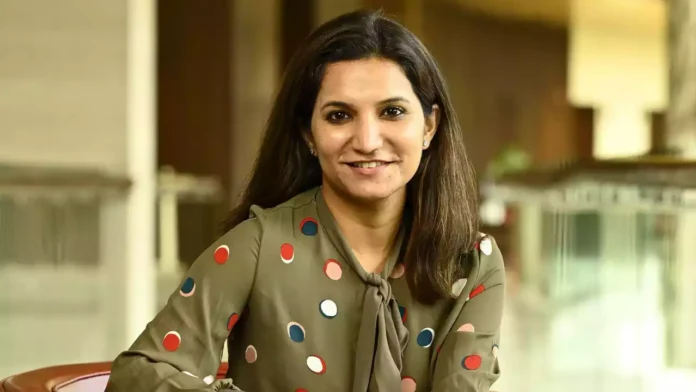
In a bid to amplify business growth in the region, Bacardi India Private Limited has elevated Sameeksha Uniyal to the position of regional head of brand for AMEA (Asia, Middle East & Africa).
Having shaped the success of Bacardi India’s rum portfolio since 2016, Uniyal formerly held the position of Brand Lead for BACARDÍ in India, driving growth for associated brands within the country. Over her seven-year tenure, she has spearheaded numerous significant marketing endeavors, including overseeing the recent launch of BACARDÍ’s It’s A Mood campaign in India. In her new capacity, she will oversee marketing and business operations for BACARDÍ’s rum brands across the wider AMEA region.
Commenting on her new position, Uniyal remarked, “Throughout my career, my tenure at Bacardi has been fueled by passion and the drive to innovate; I am thrilled to be part of the collaborative effort to enhance the Bacardi brand portfolio throughout the AMEA region. This marks the start of an exhilarating new chapter, and I am eager to apply my expertise in working with our outstanding teams to cultivate deeper consumer connections and enthusiasm for our brands across a spectrum of cultures and markets.”
Stepping into Uniyal’s shoes, Ashish Jha will assume leadership of the BACARDI rum portfolio in India, advancing from his former role as senior brand manager for BACARDI rums and BREEZER.
Bacardi Limited, the world’s largest privately owned international spirits company, manufactures and distributes globally acclaimed spirits and wines. Established over 162 years ago in Santiago de Cuba, the family-run Bacardi Limited now boasts around 9,000 employees worldwide, runs production facilities in 10 nations, and markets its brands in over 160 countries. Bacardi Limited encompasses the Bacardi group of companies, which includes Bacardi International Limited.
OatMIK, a plant-based milk brand, is charting a path for growth by prioritizing four key avenues: target groups, geographical locations, distribution channels, and product line expansion. Additionally, the brand is gearing up to venture into international markets such as UAE, APAC, EU, and USA in the coming years.
In just a year since its market debut, OatMIK has experienced nearly a 21-fold increase in revenue. Presently, the brand has established a strong presence across major marketplaces including Amazon, Zepto, Blinkit, Flipkart, and more.
Akash Wadhwani and Rishabh Gupta, Co-Founders of OatMIK, reflected, “Our initial hurdles revolved around mastering food science, delving into the nuances of the industry, and crafting a product that not only tasted great but also stood up to global standards. Our next challenge was selling the OatMlk we had painstakingly developed. Without significant marketing budgets or a clear understanding of D2C brand operations, we lacked the know-how to drive sales.
We were unfamiliar with running ads or acquiring our first customers. Our approach was simple: we put ourselves in the shoes of the consumer. We embarked on a mission to sample our product extensively, ensuring that every individual had the opportunity to taste, understand, and evaluate it. This grassroots strategy has remained integral to our brand identity and has facilitated the growth of a loyal customer base.”
With a valuation of $21 million, the plant-based dairy sector in India stands in stark contrast to the $140 billion animal-derived dairy industry. Forecasts predict a robust expansion, with the sector projected to grow at a compound annual growth rate (CAGR) of 20.7 percent, reaching $63.9 million by 2024.
“We’re progressively transitioning from the launch phase to a growth trajectory. This entails growing our user base by catering to various user personas, targeting tier I cities while also expanding into tier II and tier III towns. We’re using a variety of channels, including HoReCa, retail, and institutions, to engage chefs, celebrities, baristas, and influencers. Furthermore, our aim includes expanding our product line beyond unsweetened oat milk to include a few new options,” Akash explained.
The brand is presently focused on a substantial expansion strategy aimed at achieving a strong foothold in the Indian market.
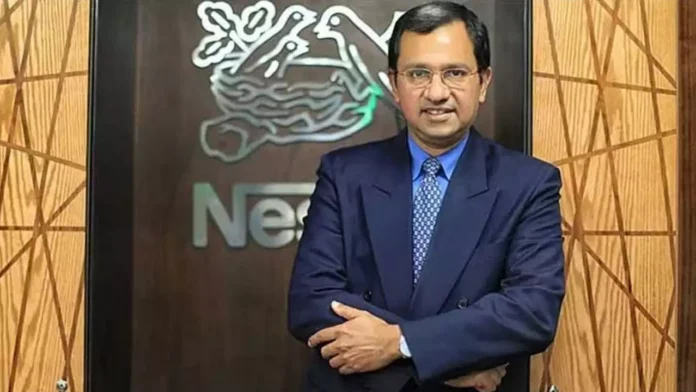
Suresh Narayanan, chairman and managing director of Nestle India
Nestle India is intensifying its efforts to boost volume growth in the face of an inflationary market. The company has announced plans to further expand its distribution network, a crucial driver of growth, aiming to reach approximately six million touchpoints within the next 4-5 years, up from the current 5.1 million touchpoints.
Suresh Narayanan, Chairman and Managing Director of Nestle India, expressed that the consumer goods industry stands to gain from increased private consumption, driven by favorable monsoon conditions and the injection of capital into the market following the formation of the new government post-elections.
Narayanan noted that inflation continues to influence the market. While there were hopes for increased consumption due to elections, the hot summer weather might lead to it being perceived as “just another normal month.” He emphasized that the market eagerly awaits a good monsoon and the injection of capital by the new government, which would stimulate consumption.
The company, which achieved a domestic sales growth of approximately 9% in the March quarter, reported a volume growth rate of around 4-5%. “The success of consumer goods companies in the future will depend on their ability to reach more households with a wider range of products and for various occasions,” he remarked.
According to Narayanan, the company’s future strategy calls for faster volume growth. The company has adopted a penetration-led volume growth approach. I thus want to return as soon as possible to volume growth and not drag on with merely value growth,” he continued.
The company is enhancing its focus on premium offerings by investing in nutraceuticals and pet foods segments, as well as launching the Nespresso portfolio in India. Discussing the recent decision to establish a joint venture with Dr. Reddy’s Laboratories in the health science nutraceuticals sector, Narayanan mentioned that currently, this business operates within a relatively modest space, generating revenue of approximately INR 50 crore. “We are aiming at doubling or tripling this business in the next 4-5 years,” he remarked.
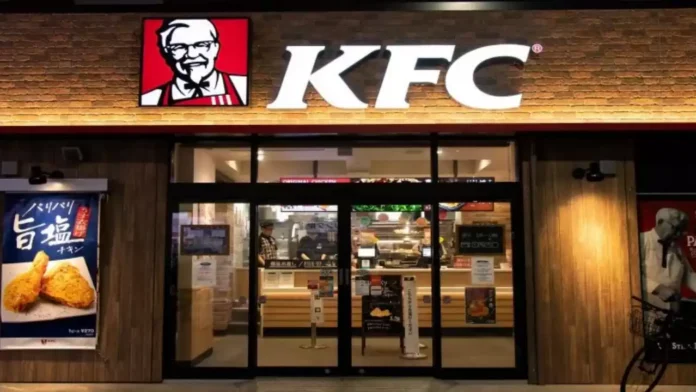
The Carlyle Group, an American private equity firm, is currently in talks to purchase Mitsubishi‘s 35% ownership stake in KFC Holdings Japan, which oversees the operation of the Kentucky Fried Chicken brand within the country.
Mitsubishi is in the advanced stages of a deal for its shares, anticipated to be concluded by the end of next month.
Carlyle plans to privatize KFC Japan thereafter.
Japanese restaurant operator Colowide and other interested parties participated in the bidding process, but Mitsubishi opted to move forward with Carlyle.
If Carlyle finalizes the deal, it is anticipated to initiate a takeover bid for the remaining shares.
This development comes after Mitsubishi’s announcement in February 2024 of its intention to divest its 35% equity stake in KFC Holdings Japan, as part of a strategic reshuffle of assets aimed at strengthening its earnings capacity.
The sale is expected to yield tens of billions of yen.
KFC Japan’s roots can be traced back to 1970 when it was established as a joint venture between the then-US-based KFC Corporation and Mitsubishi. Mitsubishi took over as the parent company in 2007 but reduced its ownership to 35% in 2015.
Yum! Brands, the owner of the KFC brand, and KFC Japan have no financial ties. Their franchise chain agreement permits them to utilize the same brand and certain products.
As a result of the agreement with Yum!, KFC Japan’s operations are limited to Japan.
As of December 2023, KFC Japan operates 1,230 outlets, approximately 40% of the total number of McDonald’s outlets in Japan, with only a 5% increase over the past decade.
Tata Group‘s subsidiary, Trent Limited, has reported a surge in consolidated net profit, reaching INR 712.09 crore in the fourth quarter (Q4) ended March 2024. This increase can be attributed to accelerated expansion efforts and focused execution strategies. According to regulatory filings, the company’s consolidated net profit in the same quarter of the previous fiscal year was INR 44.95 crore.
In Q4 FY24, the company’s total income surged by 48.7 percent, reaching INR 3,374.57 crore, compared to INR 2,268.06 crore in the corresponding quarter of the previous fiscal year.
According to the BSE filing, Trent’s total expenses rose to INR 3,073.54 crore in Q4 FY24, compared to INR 2,207.89 crore in Q4 FY23.
Regarding the overall performance, the company stated, “The shift in revenue distribution among our formats is in line with our strategic goals and initiatives. The gross margin trends for Westside and Zudio remain consistent with previous patterns. In Q4 FY24, the Operating EBIT margin stood at 8.2 percent, compared to 2.8 percent in Q4 FY23.”
The growth of Westside.com alongside the company’s offering on the Tata Neu platform has remained profitable. This joint online presence has contributed to over 6 percent of Westside’s revenues.
According to a media release, the company’s fashion concepts experienced a like-for-like (LFL) growth of well over 10 percent in Q4FY24 compared to Q4FY23. The release also stated, “We are committed to delivering consistent value to customers through appealing product offerings across all our brands. Additionally, despite accelerated expansion, our stores maintain an elevated brand experience.”
The categories of beauty & personal care, innerwear, and footwear have continued to attract customers’ interest. These emerging categories now account for over 20 percent of Trent’s standalone revenues.
Gauri Khan and Jayanti Khan Chauhan, vice chairperson, Bisleri International.
Bisleri International, the packaged drinking water company, has teamed up with Indian film producer and fashion designer Gauri Khan to introduce a special limited-edition label for the Vedica Himalayan Sparkling Water line.
In this partnership, Khan infuses her design expertise to craft an exclusive label for Vedica Himalayan Sparkling Water. The brand unveiled the creative process behind the label’s inception with a short film.
“Gauri Khan, known for her embodiment of grace and modern aesthetics, perfectly complements this collaboration. Her designs, blending contemporary flair with timeless elegance, reinforce our positioning of Vedica Himalayan Sparkling Water among our discerning audience,” stated Jayanti Khan Chauhan, Vice Chairperson of Bisleri International.
The exclusive bottle will be accessible through specific channels and markets nationwide.
“I’m thrilled to collaborate with Bisleri Vedica, which is recognised for its seamless adaptability to changing trends and customer expectations. Inspired by my recent mountain excursion, the label design includes golden elements that represent the celestial beauty of the night sky, providing a sumptuous touch,” Khan explained.
In 2023, Bisleri’s high-end beverage category, Vedica, broadened its range with the introduction of Vedica Himalayan Sparkling Water.
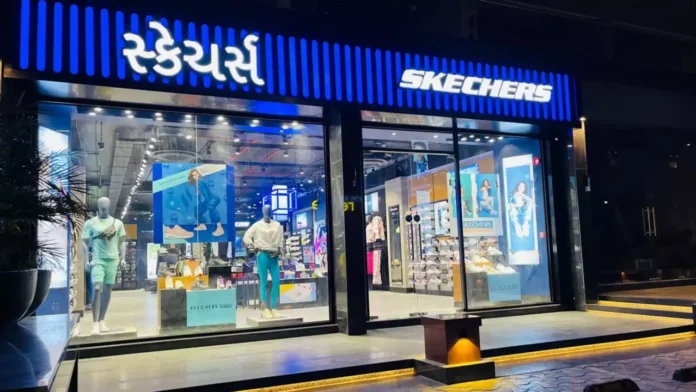
Skechers, the renowned footwear retailer, has inaugurated a new store in Gujarat, as shared by an industry official on social media on Monday.
Situated at Shyamal Crossing in Ahmedabad, the latest store marks the retailer’s 21st establishment.
Dinesh U Khangani, Director of Business Development at Shivera Lifestyle Pvt. Ltd, took to LinkedIn to share the exciting update, “Great news for all shoe enthusiasts in Gujarat! Skechers has launched its 21st store at Shyamal Crossing, Ahmedabad.”
In his post, he added, “Congratulations to the incredible team responsible for this successful launch, including Rahul Vira, Manish Chandra, Samson Budden, Hemant Maitey, Nikhil Shwetabh, Kailash Gianani, and the KS Ruchilifestyle team. Here’s to your hard work and dedication!”
Recently, Skechers and Kanika Goyal collaborated to unveil their streetwear apparel capsule collection, “Retroverse,” during Lakme Fashion Week, which was organised by the Fashion Design Council of India (FDCI).
Established in 1992, Skechers South Asia operates as a subsidiary of Skechers USA. Specializing in lifestyle and performance footwear, apparel, and accessories for men, women, and children, the retailer designs, develops, and markets its products globally, catering to 180 countries.
The price target (PT) suggests an upside of around 28% from the stock’s last close at INR 430.95 on the BSE on Monday.
In its report dated April 28, the brokerage noted that Honasa’s business model exhibits greater agility and lower risk compared to traditional beauty and personal care (BPC) companies.
According to the report, Varun and Ghazal Alagh-led startup’s digital-first approach enables faster product launches and efficient resource allocation for marketing and distribution.
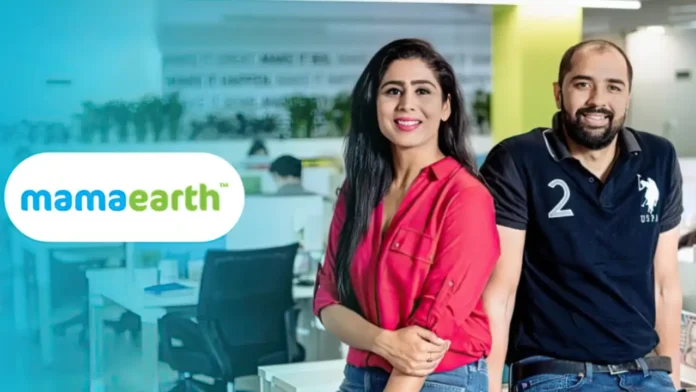
Established in 2016, Honasa offers a diverse array of BPC products spanning hair care, body care, and makeup categories. Alongside Mamaearth, its portfolio encompasses brands such as The Derma Co, Aqualogica, and Ayuga. Additionally, the company has acquired brands like Dr. Sheth’s, BBlunt, and Momspresso over the years.
Although Honasa recently closed down two verticals of the content platform Momspresso, the brokerage highlighted that the newer brands are showing robust growth and now contribute approximately 32% to Honasa’s revenue. ICICI Securities anticipates these brands to achieve a compound annual growth rate of 45% during FY24-FY26.
It’s worth noting that Honasa announced last week that its skin care brand, The Derma Co, achieved an annual run rate of INR 500 Cr.
ICICI Securities indicated that Honasa operates within the expanding BPC market, projected to witness double-digit growth in the coming years. The startup caters to both the ‘masstige’ and premium price segments, which are experiencing faster growth rates (around 15% CAGR) compared to the mass market (around 7% CAGR). Consequently, Honasa’s product portfolio is anticipated to benefit from favorable industry trends.
Nevertheless, the report highlighted that expanding its offline distribution presents a relatively greater challenge for Honasa compared to online channels. Additionally, its specialized focus on natural ingredients might restrict the overall addressable market.
Honasa’s shares debuted on the stock exchanges in November last year and have since soared by almost 33% from their initial listing price. Despite reporting a net loss of INR 151 Cr in the financial year 2022-23 (FY23), the startup witnessed a nearly twofold increase in profit after tax, reaching INR 29.4 Cr in Q2 FY24.
Earlier this month, the board of Honasa approved the amalgamation of two of its wholly owned subsidiaries, Just4Kids Services Private Limited and Fusion Cosmecutics Private Limited, with the company. This strategic move aims to prevent cost duplication.
Suresh Narayanan, chairman and managing director of Nestle India
On Monday, Suresh Narayanan, Chairman & Managing Director of Nestle India, emphasized that the formulation of the company’s infant food for children under 18 months is consistent globally. He dismissed the allegation of racial stereotyping as “unfortunate” and false. Speaking to reporters, he clarified that the sugar content in infant foods is tailored to meet the nutritional needs of specific age groups universally.
“There is nothing in this item that renders it a product that is possibly of any risk or any sort of harm to the child,” he explained.
Regarding Nestle’s standpoint, he mentioned that the majority of sugars in the product are natural sugars.
Narayanan asserted that Nestle is 7.1 grams, significantly falling below the established standards and maximum limits.
Earlier this month, the Swiss FMCG giant Nestle faced allegations of selling products with higher sugar content in less developed nations.
According to research conducted by the Swiss NGO Public Eye and the International Baby Food Action Network (IBFAN), Nestle marketed baby products with high sugar levels in less developed South Asian countries like India, as well as in African and Latin American nations, compared to its European markets.
In response to the accusations, Narayanan stated that all formulations for child food under 18 months are developed on a global scale.
“There’s no regional approach to conducting nutritional adequacy studies… Recipes are developed globally to meet the needs of growing children who require energy-dense products. Thus, there’s no differentiation between a child in Europe, India, or anywhere else in the world,” Narayanan explained. He added that Cerelac fully complies with Codex requirements.
He added that how this formulation is adapted into a local product depends on various factors such as local regulatory requirements, the availability of raw materials, and maternal feeding habits.
“I want to emphasize that both added-sugar and no-added-sugar products are available in both Europe and Asia. So, the regrettable claim of racial stereotyping is unfounded and untrue,” he stated.
Clarifying the reasoning behind the inclusion of added sugar in Nestle’s baby food in India, Narayanan mentioned that ensuring adherence to the “nutritional profile” might necessitate variations, including different ingredients.
“The reason we’ve included this in India is because there’s a demand for it, but at levels significantly lower than even those specified by the local regulator. It’s essential to trust that the local regulator is aware of what we’re incorporating. Therefore, it’s not a significant departure from the norm,” he explained.
So, he emphasized, “We acknowledge that added sugar is present, and its content is clearly stated on our packaging. Over the last five years, there has been a 30 percent reduction, and we are committed to further reducing it to the absolute minimum.”
Additionally, Narayanan stated, “Our priority is to create a product for Indian infants that aligns with global standards. This objective is achieved by using ingredients at safe levels.”
He acknowledged that the food regulator FSSAI has requested information on the sugar content in Cerelac from Nestle India through a “set of questions.”
The Codex is a set of globally accepted norms, rules, codes of conduct, and other recommendations about food, food production, food labelling, and food safety that were released by the Food and Agriculture Organisation of the United Nations. The Codex committee includes India as well.
A recent study by IMARC Group reveals that the Indian market for baby food and infant formula surged to USD 5.4 billion in 2022. Projections indicate it’s poised to escalate further, reaching USD 8.1 billion by 2028, boasting a compound annual growth rate (CAGR) of 5.7% between 2023 and 2028.
In India’s rapidly expanding baby food sector, Nestle competes with Danone, Abbott, Gujarat Cooperative Milk Marketing Federation, Raptakos Brett, and several other contenders.
Manmohan Singh Duggal, the Founder and Managing Director of Mac Duggal
American luxury designer label Mac Duggal has stepped into the Indian market, making its debut in the 52nd country. With a well-defined plan for the first five years of operations in India, the brand aims to achieve a turnover of INR 500 crore by the end of this period, according to Manmohan Singh Duggal, the founder and managing director of Mac Duggal.
The brand has collaborated with multi-brand retailers such as Ogaan, Aza Fashions, and The White Crow to introduce its presence in India. Additionally, the brand’s products will be accessible to consumers through its website.
“I believe now is the opportune moment to venture into India. Previously, we were diligently seeking the right partners, given the complexities of establishing and retailing a brand in India. Presently, we’ve aligned with multi-brand outlets (MBOs) strategically located across various tier I and tier II cities, in addition to our online sales channels,” he explained.
“Coupled with this, there’s a growing awareness in India due to the free flow of information from around the world. Indian consumers are increasingly prepared to embrace these changes,” he elaborated.
The ready-to-wear couture label is renowned for offering affordable luxury and places significant emphasis on size inclusivity, providing sizes ranging from 0 to 30.
The brand, founded in 1984 in Chicago, USA, has introduced 400 SKUs to start with in cities like Mumbai, Hyderabad, Pune, Kolkata, Chandigarh, Delhi, and Raipur.
“By the end of the fiscal year 2025, our objective is to establish our flagship stores. Although India remains a burgeoning market for us, our overseas sales already reach several hundred million dollars. Consequently, I anticipate that our sales percentage here will be relatively smaller, given our presence in 52 countries,” he emphasized.
Being a private company, Mac Duggal declined to share the investment figures in India. Instead, he said, “We maintain half a million pieces in inventory along with half a million pieces in production at any given time.”
The brand, boasting mid-double digits EBITDA, generates 70 percent of its revenue from its largest market, the USA.
Internationally, the brand has collaborated with retailers such as Saks Fifth Avenue, Nordstrom, Bloomingdale’s, Macy’s, Anthropologie, and Galeries Lafayette, among others.
We use cookies to ensure that we give you the best experience on our website. If you continue to use this site we will assume that you are happy with it.