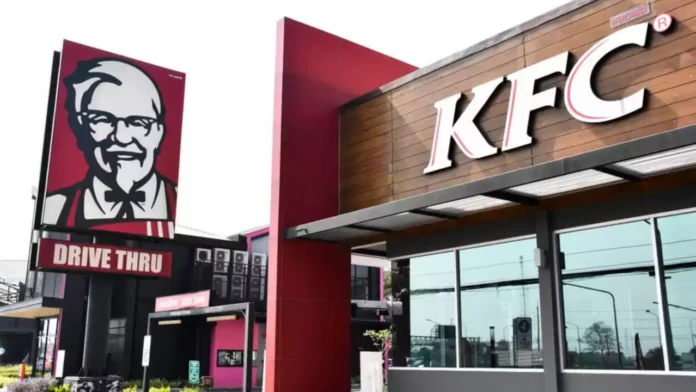
KFC Malaysia has decided to temporarily shut down its outlets across the country, attributing the move to challenging economic circumstances. This decision follows reports in local media suggesting that the closures were prompted by boycotts over perceived connections between the fast-food chain and Israel.
As a predominantly Muslim nation, Malaysia strongly backs the Palestinian cause. Consequently, certain Western fast-food brands within the country, like in other Muslim-majority nations, have faced boycott efforts due to Israel’s military actions in Gaza.
QSR Brands (M) Holdings Bhd, the operator of KFC and Pizza Hut franchises in Malaysia, announced the temporary closure of KFC outlets, citing “challenging economic conditions” as the reason.
“In response to rising business costs and to concentrate on high-engagement trade zones, QSR Brands and KFC Malaysia have proactively opted to temporarily close outlets,” stated a late Monday release.
Although it didn’t provide exact figures, the company didn’t specify the number of affected stores. However, local media outlets reported that over 100 outlets had been temporarily shut down.
QSR Brands stated that employees from the impacted stores were given the chance to transfer to outlets located in areas with higher customer engagement.
FirstCry, a kids-focused omnichannel retailer, recorded a consolidated net loss of INR 278.2 Cr for the nine months ending December 2023 in the financial year 2023-24 (FY24).
The Pune-headquartered startup reported a consolidated net loss of INR 486 Cr for the entire financial year 2022-23 (FY23), marking a 518% surge from INR 78.6 Cr in the preceding fiscal year.
According to the latest DRHP, FirstCry has recorded INR 4,814 Cr in revenue from operations for the initial nine months of FY24. The startup, preparing for an IPO, saw its operating revenue surge by 135%, reaching INR 5,632.5 Cr in FY23 compared to INR 2,401.2 Cr in the preceding fiscal year.
It’s worth noting that the omnichannel marketplace refiled its draft red herring prospectus (DRHP) on Tuesday (April 30) following a directive from the Securities and Exchange Board of India (SEBI). SEBI asserted that certain crucial indicators were omitted in the draft papers filed last December.
Meanwhile, during the period under review, FirstCry disclosed a total expenditure of INR 5,159.8 Cr. This contrasts with the company’s total expenditure of INR 6,315.6 Cr in FY23.
“We may experience losses in the future. We have experienced losses for the nine months that ended on December 31, 2023, as well as for the fiscal years 2023 and 2022. “The company stated in its DRHP that it lost INR 278.2 Cr during the nine months that ended on December 31, 2023, as a result of its total expenses surpassing its total income.
In the period, the startup’s primary expenditure remains its procurement cost, amounting to INR 3,108.1 Cr. During FY23, the startup incurred a procurement cost of INR 3,935.3 Cr.
FirstCry allocated INR 370.4 Cr towards staff salaries, gratuity, PF, and other employee welfare benefits. In FY23, it disbursed INR 769.8 Cr for employee benefit expenses. Moreover, an employee share-based payment expense of INR 133.8 Cr was registered during the period.
Additionally, the startup allocated INR 365 Cr towards its advertising and sales promotion efforts. Throughout FY23, its advertising expenses totaled INR 416.4 Cr.
Established in 2010 by Supam Maheshwari and Amitava Saha, FirstCry operates as an omnichannel marketplace catering to baby and kids products. The startup transitioned into a public company last year, marking the initial phase of its journey towards listing on the stock exchanges.
To date, FirstCry has secured more than $700 Mn through various funding rounds, with notable backers including SoftBank, Chrys Capital, and Vertex Ventures.
In its IPO, the SoftBank-supported startup plans to raise INR 1,816 Cr through the issuance of fresh shares. Additionally, the offer-for-sale (OFS) segment involves shareholders selling 5.4 Cr equity shares.
Participating in the OFS are a number of shareholders, including SoftBank, Premji Invest, TPG Growth, and Mahindra.
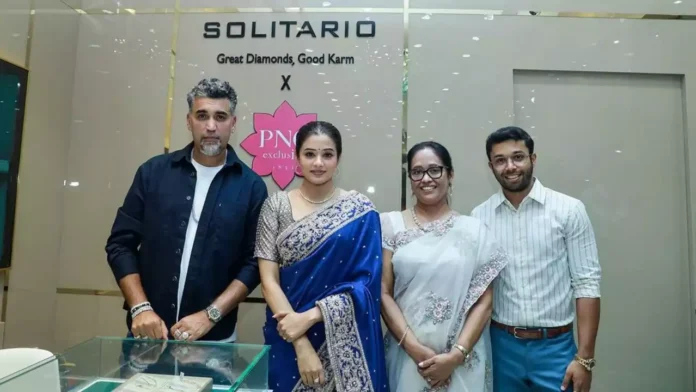
Solitario, the brand known for its lab-grown diamonds, has made its debut in Chennai by opening its first store at Phoenix Market City Mall. Situated within the upscale Palladium of the mall, spanning 600 square feet, this boutique joins a collection of over 70 retailers in this luxury enclave.
The recently inaugurated store marks the brand’s 15th retail outlet across India.
The launch took place in the presence of Indian actress Priyamani and Ricky Vasandani, the chief executive officer of Solitario.
“We are thrilled to open our first store in Chennai, a city well-known for its appreciation of elegance and sophistication. We are determined to make this a successful endeavour, thus this is a significant step for us as it is our 15th store in India,” Vasandani added.
Solitario currently runs 16 stores across several cities, including Pune, Mumbai, Goa, Chandigarh, Ludhiana, Hyderabad, Bengaluru, Kochi, and Dubai.
Tata group-backed Indian Hotels Company (IHCL) has set its sights on achieving double-digit topline growth this fiscal year. With aspirations to unveil 25-30 new hotels, IHCL is poised not only to expand its footprint domestically but also to venture into international markets. Nonetheless, its core emphasis will remain steadfastly on India’s flourishing hospitality industry.
“Our dedication encompasses the upkeep of zero net debt alongside the accumulation of cash reserves, strategically positioning us for forthcoming investments in cash deployment, capital expenditures, mergers and acquisitions, or strategic reserves,” remarked Puneet Chhatwal, Managing Director of IHCL.
He expressed that FY25 will mark a ‘breakthrough year’ for the company’s international expansion, emphasizing that the primary focus will continue to be on the Indian subcontinent. “Our international expansion targets at least three hotels outside of India, with contracts already finalized, including two in Bhutan. Additionally, discussions are ongoing for potential locations such as Dubai, London, Frankfurt, and others. Concurrently, we have two hotels under construction in Dhaka, with several negotiations underway in the Indian peninsula, Sri Lanka, and neighboring regions,” he elaborated.
He mentioned that IHCL, renowned for brands such as Taj, Ginger, and Vivanta, is actively pursuing opportunities in Southeast Asia while also vigilantly monitoring developments in the European market.
“Although we’re exploring potential ventures in the Middle East, including Bahrain, Saudi Arabia, and Abu Dhabi, we’re proceeding cautiously, focusing solely on opportunities that harmonize with our strategic objectives,” remarked Chhatwal. He emphasized that despite ambitious expansion initiatives, South Asia will account for 95% of IHCL’s portfolio, with only 5% located outside of this region.
“This strategic approach will remain the same emphasising our commitment to investing in the Indian subcontinent rather than sending funds elsewhere,” he stated. Chhatwal stated that there is a “vast” and still-untapped potential for expansion in the Indian market.
“Presently, India boasts a branded hotel inventory of 200,000 rooms, poised to surge to a million within the next 7-10 years—an exponential growth of 5x. With emerging destinations and a plethora of new airports on the horizon, the demand for accommodation is skyrocketing,” he explained.
“With the arrival of 1,000 new aircraft in India and the ongoing expansion of infrastructure such as highways and high-speed trains, mobility is set to soar, paralleled by a surge in hotel demand. Moreover, the imminent infrastructure boom, featuring new airports, highways, and rail networks, further underscores the need for our business to attain full infrastructure status, in line with government objectives. This alignment presents a win-win scenario; increased private investment will complement governmental initiatives, fostering a resilient growth trajectory,” he elaborated.
IHCL recorded a 29% year-over-year increase in net profit to INR 438 crore during the fourth quarter of its fiscal year. The revenue for the quarter that ended on March 31 increased by 17% compared to the same period last year, reaching INR 1,905.3 crore. Moreover, IHCL had previously said that it would launch the redesigned Gateway, a full-service hotel in the high-end market that it thinks will be a “perfect fit” for seizing expansion prospects in developing metro areas & tier-II as well as tier-III cities.
Shoppers Stop, the departmental store chain, has promoted Kavindra Mishra to the position of managing director and chief executive officer. Previously, Mishra held the role of executive director and CEO within the company.
He has been appointed for a three-year term starting from April 29, 2024.
Prior to this, he served as the chief commercial officer and CEO of Homestop within the company. Preceding his tenure at Shoppers Stop, he held the positions of managing director and CEO at House of Anita Dongre, overseeing brands such as AND, Anita Dongre, and Global Desi.
Shoppers Stop’s board of directors has sanctioned both the appointment and alterations in the designation of directors during its meeting on April 29, 2024. These changes take effect immediately and will remain in force until the forthcoming General Meeting of the company.
Ashish Hemrajani has been appointed as a non-executive independent director of the company for a tenure of five years.
Hemrajani is the founder and CEO of Big Tree Entertainment, which operates BookMyShow, a leading online entertainment platform in India. Offering tickets and end-to-end management for live events, movies, sports, games, musicals, and more, BookMyShow is a prominent name in the industry.
The board of Shoppers Stop has additionally named Purvi Sheth as a non-executive independent director for a five-year term, and Nirvik Singh as a non-executive director, for the same duration.
FirstCry, the Pune-based omnichannel marketplace, has refiled its draft red herring prospectus (DRHP) after the Securities and Exchange Board of India (SEBI) stated that the firm, led by Supam Maheshwari, failed to disclose several critical indications in draft documents filed in December.
According to the recent DRHP filing, the IPO offer remains unchanged. The startup plans to raise INR 1,816 Cr through the issuance of fresh shares, while the offer-for-sale (OFS) component involves shareholders selling 5.4 Cr equity shares.
Shareholders such as SoftBank, Premji Invest, TPG Growth, and Mahindra, among others, are set to participate in the offer-for-sale (OFS).
The startup, in coordination with the Book Running Lead Manager (BRLMs), is considering raising a Pre-IPO placement of approximately INR 363 Cr from select investors. If the Pre-IPO Placement is finalized, the amount raised through it will be deducted from the fresh issue.
As per the DRHP, the startup disclosed its plans to utilize the proceeds from the fresh issue for:
In its Draft Red Herring Prospectus (DRHP), the startup outlined its plans for utilizing the funds raised from the fresh issue. These include investing INR 388.2 Cr in its subsidiary, Digital India, to establish new modern stores under the FirstCry brand name and other home brands, as well as covering lease payments for existing FirstCry stores.
Additionally, the company intends to allocate INR 173.5 Cr to invest in its subsidiary, GlobalBees Brands, for acquiring additional stakes in its step-down subsidiaries. Another portion of the funds, amounting to INR 140.7 Cr, will be directed towards setting up new modern stores under the brand name “BabyHug” and establishing new warehouses.
Furthermore, INR 150 Cr is earmarked for sales and marketing initiatives to further expand its market presence. Lastly, INR 57.6 Cr will be dedicated to covering technology and data science costs, including expenses related to cloud and server hosting.
During the initial nine months of FY24, the startup recorded sales totaling INR 4,814 Cr, accompanied by a loss amounting to INR 278.2 Cr. Notably, the largest expenditure for the startup remains its procurement cost, reaching INR 3,108.1 Cr, constituting 60% of the startup’s overall expenses, which amounted to INR 5,159.7 Cr during the first three quarters of FY24.
Shoppers Stop, a prominent department store chain, saw nearly a 53% rise in fourth-quarter profit, fueled by strong demand for beauty products and luxury items.
The early initiation of end-of-season sales and events like Valentine’s Day led to heightened sales volumes. Moreover, high-income urban consumers favored luxury makeup and fragrances for social and professional engagements, further boosting top-line growth.
The Mumbai-based chain reported a profit before exceptional item and tax of 300.7 million rupees ($3.60 million) for the three months that ended on March 31, compared with 197.1 million rupees a year earlier.
Additionally, the company recorded an exceptional item of 15.9 million rupees during the quarter.
Shoppers Stop, known for offering brands such as Swarovski, Versace, Michael Kors, and Bobbi Brown, reported a 13.3% increase in revenue from operations, reaching 10.46 billion rupees.
Trent, a peer company owned by the Tata Group, saw a five-fold increase in quarterly profit. Meanwhile, Arvind Fashions and Aditya Birla Fashion and Retail have yet to release their results.
Shoppers Stop’s shares finished 0.6% higher yesterday, ahead of the report. During the March quarter, they increased by 9.3%.
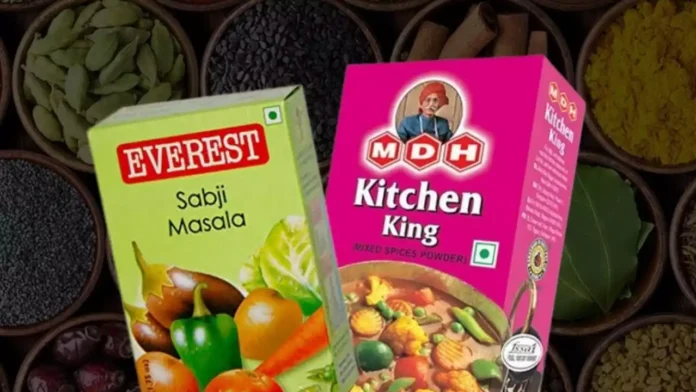
MDH and Everest Spice Mixes (Representative Image)
Food Standards Australia New Zealand (FSANZ) said that it is examining allegations of contamination involving spice mixes produced by Indian companies MDH and Everest. This could result in a recall of these products in Australia, as has happened in Hong Kong and Singapore.
Recently, Hong Kong suspended the sale of three MDH spice blends and one Everest mix designed for fish curry. Similarly, Singapore recalled the Everest mix due to high levels of ethylene oxide, a chemical associated with cancer when exposure is prolonged.
In a statement, FSANZ mentioned, “We are collaborating with international counterparts to comprehend the issue and coordinating with federal, state, and territory food enforcement agencies to assess if additional measures are necessary in Australia.” The agency emphasized that ‘ethylene oxide is prohibited as a treatment for foods sold in Australia.’ Possible further steps may involve recalling affected products.
Both MDH and Everest, well-established spice brands in India, maintain a substantial presence across Europe, Asia, and North America.
The Food and Drug Administration (FDA) in the United States is also conducting an investigation into the issue, while Indian authorities have recently conducted inspections at the production facilities of both MDH and Everest.
The rising scrutiny surrounding these spice brands reflects growing concerns regarding food safety standards and international regulatory responses to potential health risks. As the investigation unfolds, Australian consumers are advised to stay informed about possible recalls and ensure the safety of their food purchases.
Gillette India saw a nearly 4% decline in third-quarter profits due to intense competition in the domestic market, which subdued demand.
Gillette India, renowned for its Mach 3 line of shaving razors, disclosed a profit of 990.9 million rupees ($11.9 million) for the January-March quarter, marking a decrease from 1.03 billion rupees reported in the previous year.
Consumer goods manufacturers are encountering heightened competition from smaller producers, who, benefiting from declining commodity prices, are better positioned to secure shelf space.
Revenue from Gillette’s primary grooming segment, constituting 82% of the total, surged by almost 14% to reach 5.58 billion rupees, accompanied by a 6.3% decrease in the cost of raw materials utilized.
In April, Procter & Gamble Co, the parent company and consumer goods behemoth, revised its annual core profit forecast upwards, attributing the increase to price hikes and steadfast demand.
Gillette India’s shares dipped 0.8% ahead of the results, whereas they rose 1.2% in the March quarter, compared with a 5.3% fall in the Nifty FMCG index.
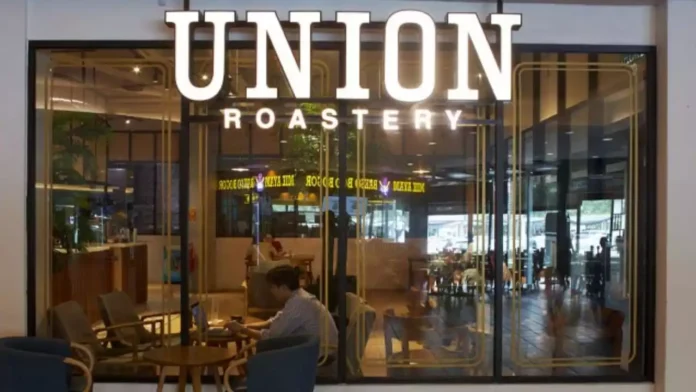
Union Artisan Coffee, the renowned artisanal coffee chain from Malaysia, has unveiled its first café in India, situated in the prestigious locale of Worldmark, Aerocity, New Delhi.
Led by Village Food Concepts as the master franchise, this significant launch marks a major milestone for the brand as it expands its presence into the dynamic Indian market.
Suraj Arora, Managing Partner at VFC, expressed, “The journey of Union Artisan Coffee from Malaysia to India showcases our commitment to spreading our passion for coffee across diverse global communities. We are excited to collaborate with Union in this endeavor, introducing their unmatched expertise and dedication to quality to the Indian market.”
Reflecting the fundamental principles of Union Artisan Coffee, the fresh establishment in Aerocity embodies the brand’s dedication to impeccable coffee craftsmanship and cultivating community spirit. With a steadfast focus on procuring the finest beans and highlighting the artistry of coffee preparation, every cup narrates a tale of passion and expertise.
Alongside its renowned artisanal coffees, Union Artisan Coffee in Aerocity presents a delightful range of culinary delights, extending from breakfast to dinner. Featuring a live pasta bar and freshly crafted sandwiches, guests are welcomed to indulge in a culinary adventure designed to delight their palates. Teaming up with Le Clairé Patisserie, the café offers a selection of exquisite pastries and desserts, enhancing the culinary journey even more.
Tham Lih Chung, Group CEO of Incite Innovations, commented, “Our debut in India signifies a thrilling phase in the Union Artisan Coffee narrative. We are thrilled to acquaint the Indian community with our distinctive coffee culture, accompanied by an imaginative and varied menu of culinary treasures, enhancing every moment for you.”
We use cookies to ensure that we give you the best experience on our website. If you continue to use this site we will assume that you are happy with it.