Ouchcart, a UP-based home decor and furnishing brand, has set its sights on achieving INR 30 crore in revenue for the financial year (FY) 2025. This target represents a substantial increase of around 200% compared to the previous fiscal, during which it recorded approximately INR 10 crore in revenue.
“Our mission is to revolutionize the furniture industry by delivering exceptional products that not only elevate the aesthetics of living spaces but also ensure unparalleled comfort and enduring durability,” stated Atif Shamsi, the founder and CEO of Ouchcart. However, he did not elaborate on the strategies the company plans to employ to attain its ambitious growth target.
Established in 2018, the brand achieved a revenue of INR 3 crore in FY 23.
Established by Atif Shamsi as a bootstrap venture from Saharanpur, Uttar Pradesh, Ouchcart now provides a range of home furniture, decor, and furnishings via its website and various marketplaces.
Walmart-backed PhonePe is revamping its ecommerce strategy on the Open Network for Digital Commerce (ONDC). It is discontinuing several categories such as fashion, grocery, and electronics, except for food delivery on the network, according to individuals briefed on the matter. The company has already communicated with the government-backed ONDC network, and the changes are now in effect as of Tuesday.
On the PhonePe app, only unreserved ticket booking will be available through ONDC.
“PhonePe Payment Technology Services Private Limited (Pincode) has asked ONDC to limit its subscription solely to the Food and Unreserved ticket booking domains on the ONDC registry. They intend to explore other domains after adjusting their internal strategy,” stated an internal note from ONDC. “Consequently, starting from April 23, 2024, Pincode will no longer be subscribed to other domains except for Food and Unreserved ticket booking.”
As per people cited above, PhonePe has chosen to narrow down its focus on segments operating within ONDC and is realigning its priorities accordingly. Multiple sources have indicated that the end consumer experience still does not match up to other consumer delivery apps, which has also influenced PhonePe’s decision-making process.
Last year, PhonePe introduced its ecommerce venture, Pincode, on ONDC, providing a range of categories such as grocery, food delivery, medicines, fashion, and electronics on the network. After initially launching in Bengaluru, the services were expanded to 10 cities.
A representative from PhonePe’s Pincode declined to provide a comment.
According to reports, PhonePe has invested INR 90 crore in Pincode over the past year, divided into two installments – one in July 2023 and the second earlier this month.
According to a senior government official, ONDC has been experiencing challenges with grocery deliveries due to the lack of standardization among general trade and smaller modern trade kirana stores.
“The likes of Zomato and Swiggy in food delivery have succeeded in standardizing and training restaurants extensively to manage online ordering, packaging, and inventory effectively, ensuring an optimal customer experience,” the official stated. “However, similar efforts haven’t been made with grocery stores, resulting in a lack of improvement in the quality of experience.”
“In general, complaints revolve around incorrect items being shipped or inadequate packaging resulting in damaged items before delivery,” the official added. “The ecosystem must collaborate to address these issues before ONDC can scale up grocery deliveries significantly.”
By the end of March, nearly 600,000 food orders had been fulfilled through ONDC on a cumulative basis, with almost 200,000 grocery orders being processed.
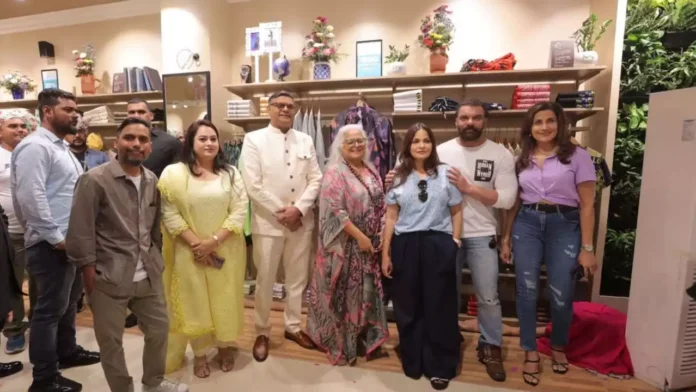
Reid & Taylor Apparel, a Mumbai-based textile manufacturer, has opened its 2nd store at Vallabagh Lane, Ghatkopar, Mumbai, as announced by a top company executive on social media.
In a LinkedIn post, Subrata Siddhanta, CEO of Apparel & Retail at Reid & Taylor, expressed, “Today marks the opening of our second store at Vallabagh Lane, Ghatkopar, Mumbai. Mr. JD Barman, Director of the Textiles Committee at the Ministry of Textiles, honored us with his presence. The journey of Reid & Taylor Apparel persists… Thank you to the entire team.”
The CEO had previously announced on LinkedIn that the brand plans to open 7 stores in Mumbai within a month. According to reports, the brand previously opened its store at Borivali in Mumbai.
Reid & Taylor made its debut in India in 1988 with a cutting-edge mill situated in Mysore, Karnataka. Specializing in premium suiting and shirting, the brand provides a spectrum of options, catering to both formal and casual wear for men.
Mars-owned pet nutrition brand Royal Canin has opened its new packaging center in Bhiwandi, Maharashtra.
This development is the culmination of the Memorandum of Understanding (MoU) signed between Royal Canin and the Government of Maharashtra in April 2023.
Cecile Coutens, Global President of Royal Canin, stated, “India boasts one of the most rapidly expanding petcare markets, with a Compound Annual Growth Rate (CAGR) of approximately 15%. Pet owners today are showing growing concern for their pets’ health and happiness, aspiring to offer them the finest nutrition and care available.”
Operating across over 120 countries, the brand manages 16 factories, 2 pet centers, 1 R&D center, and 7 laboratories. The new packaging center in India marks the brand’s 17th facility within its manufacturing network, enhancing its supply chain within the country.
Edible oil manufacturing company BN Group has ventured into the wellness and fitness oil category with the launch of Nutrica, as announced by Anubhav Agarwal, CEO & MD of BN Group.
The company will introduce the brand across three categories: Nutrica Pro Immunity Oil, Nutrica Pro Energy Oil, and Nutrica Pro Fitness Oil enriched with Vitamin C.
“Given the shifting culinary preferences of a growing health-conscious consumer base, we’ve invested INR 95 crore in Nutrica. Our aim is to capture 10 percent market share, resulting in a turnover of INR 500 crore within three years,” he explained.
“By the end of this fiscal year, we’re aiming for INR 120 crore in revenue from Nutrica, which will represent approximately 8-10 percent of our total business,” he added.
The company has invested in the technology for this brand, upgrading its plant and establishing a new production line at its existing Gandhidam facility.
Initially, the brand has formed a network of 600 distributors to retail at 50,000 modern and general trade outlets in markets like Delhi, Chandigarh, Mumbai, and Pune, alongside quick commerce and e-commerce platforms.
“We also have plans to enter Ahmedabad and South India in the near future,” he affirmed.
“We’re positioning the brand as an affordable option within its market, with pricing comparable to competitors. Distribution will be a key driver of our growth. In the first year, we plan to enter 8-10 cities, with plans to expand the network in the future,” he elaborated.
Additional edible oil brands under the BN Group umbrella include Simply Fresh, positioned as a commodity brand, and Healthy Value, specializing in mustard oil.
BN Group concluded the previous fiscal year with revenue of INR 4,500 crore and aims to achieve INR 8,000 crore in the current fiscal year.
Quaker Oats, a brand under the PepsiCo umbrella, has broadened its Protein lineup by introducing a new peanut butter flavor.
Quaker stated that the launch will enable retailers to meet the increasing consumer demand for protein, a vital nutrient essential for everyday wellness.
Furthermore, Quaker Protein Peanut Butter will debut with a new taste-driven visual identity, a design that will also be rolled out across the broader Protein range.
Divesh Parmar, General Manager of Quaker UK at PepsiCo, remarked: “There’s a significant shift in how protein porridge is perceived. It’s now reaching a broader audience beyond just athletes aiming to enhance performance. Protein porridge is becoming a staple for everyday consumers seeking to boost their overall health and wellness. As the leading brand in hot cereals, we’re well-positioned to inject more enthusiasm into the category and assist shoppers in maintaining active lifestyles through our new product development.”
He added, “Our new packaging design aims to attract Gen-Z and Millennial consumers by highlighting the taste qualities of our range, ensuring visibility on shelves. Alongside the taste-focused design, our new packaging emphasizes the health attributes consumers seek, such as ‘high in protein,’ ‘100% wholegrain,’ and ‘natural energy release.’ We believe the revitalization of our Quaker Protein range will contribute to category growth and strongly appeal to the targeted Gen-Z and Millennial demographic, aligning with their lifestyle objectives.”
Quaker’s Protein Peanut Butter sachets will first hit the shelves at Asda stores, priced at £3.50 per pack. Subsequently, they will be introduced to additional grocery and convenience stores.
The Coca-Cola Company has inked a $1.1 billion agreement with Microsoft aimed at enhancing its cloud computing infrastructure and integrating the tech giant’s cutting-edge generative AI capabilities on a global level.
In their five-year “strategic partnership,” Coca-Cola and Microsoft will collaboratively explore new technologies such as Azure OpenAI Service to create “innovative generative AI applications across multiple business sectors,” as stated.
Coca-Cola has transitioned all its applications to Microsoft Azure, with the majority of its major independent bottling partners doing the same.
The beverage company has been utilizing generative AI for almost a year and has already integrated Azure OpenAI Service across various areas, spanning from marketing to manufacturing, and extending into the supply chain and beyond.
“Through our long-term partnership, we’ve achieved notable strides in propelling systemwide AI transformation throughout The Coca-Cola Company and its global network of independent bottlers,” remarked Judson Althoff, Chief Commercial Officer at Microsoft.
“We’re delighted to assist Coca-Cola as it keeps embracing the era of AI & looks to solutions like Azure OpenAI Service & Copilot to drive innovation across all facets of its business.”
According to a statement released on April 23, the owner of Sprite is exploring the utilization of generative AI-driven digital assistants through Azure OpenAI Service. Their aim is to enhance customer experiences and optimize operational efficiency for employees.
“This new agreement further underscores Coca-Cola’s dedication to continuous digital transformation, building upon the successful partnership strategy with Microsoft,” stated John Murphy, CFO of The Coca-Cola Company.
In 2020, the company entered a five-year agreement valued at $250 million to utilize Microsoft’s cloud infrastructure and business software solutions.
Josep Bori, research director at GlobalData, commented, “This represents a classic move in the technology realm, where a major player leverages its dominant position in one product or service to support a nascent offering. Microsoft has previously employed this strategy with products like its Internet browser, media player, and even its cloud computing services.”
“Microsoft has made a significant investment in OpenAI technology and is currently exploring avenues to monetize it. Leveraging key customers like Coca-Cola to explore potential applications from both a technological and marketing standpoint seems like the right approach. For example, if Coca-Cola decides to adopt CoPilot for Microsoft 365 internally after successful testing, it would serve as a strong reference for future sales opportunities.”
Meanwhile, Coca-Cola HBC, a prominent bottler operating across 29 countries in Europe and Africa in partnership with The Coca-Cola Company, has recently been focused on optimizing its operations and enhancing sustainability by investing in technology.
In a recent interview, Mourad Ajarti, the Chief Digital and Technology Officer, elaborated on the company’s collaboration with Microsoft and its utilization of digital twins technology.
He mentioned, “We’re currently implementing a plan to expand into 50 or more product lines by 2027, applying the same digital twin and AI technology across each line.”
“We’re addressing energy efficiency, water efficiency, and changeover efficiency, aiming not only to boost productivity operationally but also to enhance sustainability by reducing energy and water consumption.”
PepsiCo reported robust performance in India, with the snacks segment experiencing double-digit volume growth in the first quarter of CY24. The company’s global quarterly earnings, disclosed on Tuesday, highlighted a high-single-digit volume growth in the beverage segment within the Indian market.
The company also noted an increase in market share within the savory snacks segment, particularly in markets like India, during the first quarter that ended on March 23, 2024.
Discussing the progress of its Africa, Middle East, and South Asia (AMESA) business segment, the company reported a 4.5 percent increase in unit volume within the “convenient foods” category for the region. Notably, South Africa experienced high-single-digit growth, India saw double-digit growth, Pakistan observed mid-single-digit growth, while the Middle East faced a double-digit decline.
Within the AMESA region, the company observed a 2 percent increase in beverage unit volume, largely driven by mid-single-digit growth in the Middle East and high single-digit growth in India and Nigeria. However, this growth was partly dampened by a double-digit decline in Pakistan.
“So far this year, our presence in the savory snack market has expanded in China, India, Brazil, Australia, and several other countries,” the company stated.
In March, Jagrut Kotecha stepped into the role of CEO of PepsiCo India, taking over from Ahmed El Sheikh, who concluded his seven-year tenure leading the India region.
Earlier this month, PepsiCo India disclosed its plans to invest INR 1,266 crore in setting up a new flavor manufacturing facility in Madhya Pradesh for the beverage segment. This marks the company’s second flavor manufacturing plant in India.
Swiggy, a foodtech major, has unveiled its latest marketing tool named ‘Smart Links.’ The new tool allows restaurants to seamlessly guide customers from their social media posts and advertisements straight to their menu pages on the food delivery app.
“Smart Links are personalised links that restaurants can distribute via their social media channels, guiding customers directly to their menu page on Swiggy. This ensures that when you come across enticing content on platforms like Instagram, you can effortlessly place an order from the featured restaurant without the hassle of searching for it on your food delivery app,” the company explained in a statement.
The foodtech giant stated that the new offering enables restaurants to harness their social media following and efficiently convert their online presence into sales. It further emphasized that the new tool assists restaurants in expanding their online presence, boosting order volumes, and ultimately enhancing revenue streams.
The IPO-bound company also stated that Smart Links provides restaurants with insights into customer behavior. Furthermore, they highlighted that the new product tracks user journeys post clicking on an advertisement.
“Through facilitating this tracking, Smart Links assist restaurant partners in evaluating the effectiveness of their social media campaigns more efficiently,” Swiggy explained. “This data empowers them to refine future campaigns, ultimately resulting in more streamlined and prosperous marketing strategies.”
According to the company, the Smart Links pilot has generated over 4 million menu sessions for over 35,000 restaurant partners to date.
“Smart Links will change the game by enabling restaurants to readily access and configure these links—a feature that Swiggy is personalising for free for all of its restaurant partners. This enables them to track each channel’s performance and compare it all in the owner app, which helps them market themselves more successfully, generate real orders, and learn more about their clients’ behaviour on social media and online platforms, according to Deepak Maloo, assistant vice president for supply at Swiggy.
This new offering comes as the foodtech company readies itself for its much-anticipated $1 billion public listing on the stock exchanges later this year. Just days ago, Swiggy became a public limited company, stating that the transition would facilitate fundraising from the public, including through an IPO.
Ahead of its market debut, the company has been optimizing and consolidating its operations. Last week, the foodtech leader merged Swiggy Mall with its quick commerce platform Instamart. Additionally, in March, Swiggy combined its premium grocery vertical, InsanelyGood, with Instamart.
As Swiggy’s plans for a public offering gain momentum, the US-based fund manager Invesco raised the company’s valuation by 19% to $12.7 billion earlier this month.
In the first three quarters of the financial year 2023-24 (FY24), Swiggy recorded a loss of $207 million (INR 1,720 crore). Its net loss for the entire FY23 amounted to INR 4,179 crore.
Boba Bhai, a QSR brand renowned for its bubble tea and diverse food offerings, has secured INR 12.5 crore in seed funding. This investment round was spearheaded by Titan Capital, the venture fund led by the Snapdeal founders, along with support from Global Growth Capital UK.
“We’re building the brand for today’s youth, who follow trends and crave new experiences. I’m confident that foreign cuisines, particularly Korean food, will find a significant market in India,” shared Dhruv Kohli, Founder of Boba Bhai.
Boba Bhai runs 25 outlets in cities such as Bengaluru, Delhi, Hyderabad, and Chennai, all of which are owned by the company.
Kohli mentioned that the fresh funds will facilitate their ambition to grow to 100 outlets within the upcoming 12 months. “Our strategy involves expanding into tier-1 cities within the next six months, followed by penetration into tier-2 and tier-3 cities.”
The company currently boasts an annual revenue run rate (ARR) of INR 24 crore, calculated based on its current performance, with an average monthly order volume of 50,000. Over the next 12 months, it aims to increase this to an ARR of INR 100 crore, as stated by him.
Nearly 70% of Boba Bhai’s orders originate from the company website and online platforms like Zomato, Swiggy, and ONDC, while the remaining 30% are from its physical outlets.
Kohli mentioned that the company plans to use the funds to incorporate cutting-edge technologies into its offerings and to expand its workforce.
The company employs around 200 people, including kitchen staff.
According to the company, Boba Bhai holds a significant market share of 90% in the bubble tea industry in cities like Bengaluru.
This funding round is in line with a larger trend wherein many homegrown food and beverage brands are drawing investments from early-stage institutional investors and affluent individuals.
Examples include Haryana-based Pizza Wings, which secured $4 million in funding from Gruhas, a venture capital fund by Zerodha cofounder Nikhil Kamath, along with investments from angel investors such as Sujeet Kumar, co-founder of Udaan. Additionally, Burger Singh’s pre-Series-B round was led by Turner Morrison Ltd, with participation from Homage Ventures LLP. AKU’s, backed by Burger Co, raised funds from Vikram Bakshi, former managing director of a McDonald’s joint venture operating the chain’s outlets in North and East India. Furthermore, Wow! Momo Foods raised INR 350 crore in January from Khazanah Nasional Berhad, Malaysia’s sovereign wealth fund.
Boba Bhai offers approximately 18 to 19 bubble tea flavors. In the coming weeks, it plans to introduce five to six new flavors and expand its dessert offerings.
Bipin Shah, a partner at Titan Capital, expressed, “The team’s dedication to customizing a variety of bubble teas to suit the diverse tastes and preferences of Indian consumers has rapidly propelled its popularity. We are delighted to collaborate with a brand that envisions establishing a significant food brand in India, backed by robust taste, demand, and efficient distribution.”
We use cookies to ensure that we give you the best experience on our website. If you continue to use this site we will assume that you are happy with it.