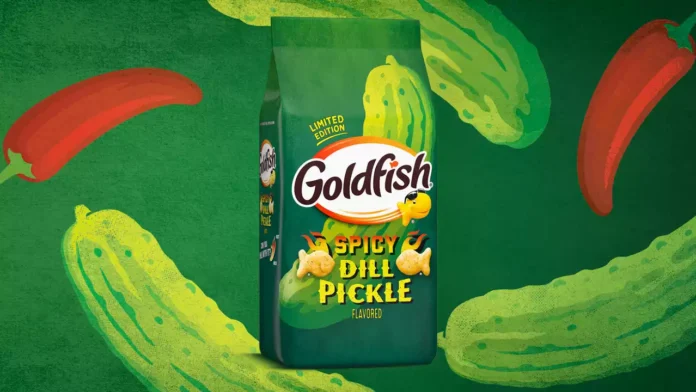
The Campbell Soup Company is capitalizing on America’s fondness for pickles and spicy tastes by introducing its latest offering: the limited-edition Goldfish Spicy Dill Pickle crackers.
This comes as pickle-related content on social media platforms like TikTok has surged past 300 million posts, while 53 million US consumers are actively seeking out spicier food options, according to the company.
“In response to ongoing requests from Goldfish and pickle enthusiasts on social media, one single post about pickle-flavored Goldfish garnered over 30,000 likes,” Campbell’s stated in a release.
The recently launched Goldfish Spicy Dill Pickle crackers aim to meet this escalating consumer demand by blending the tanginess of dill pickles with a spicy twist on the iconic fish-shaped snack.
“Given the overwhelming presence of pickle-related content on TikTok, exceeding 300 million posts, and the preferences of 53 million Americans seeking spicier options, Goldfish Spicy Dill Pickle crackers are designed to meet both flavor expectations and fan demand with this latest limited-time offering,” the company stated.
Launch Details: Availability and Pricing
Starting this June, the limited-time offering will be available at national retailers with a suggested retail price of $3.69.
The decision reflects Campbell’s commitment to innovation and growth within its beloved Goldfish brand, ensuring alignment with evolving consumer preferences, especially regarding flavor profiles that spark considerable social media excitement and interaction.
Since its introduction in 1962, Goldfish has emerged as one of Campbell’s most iconic snack brands, establishing a strong presence in the fiercely competitive $24 billion US cracker market.
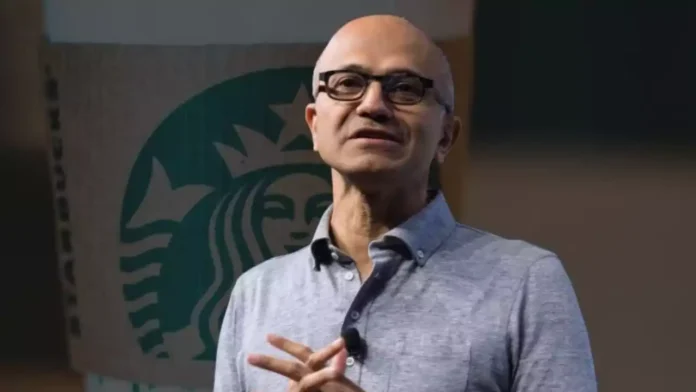
Satya Nadella, the CEO of Microsoft, has announced his resignation from the Starbucks board of directors, a position he has held since 2017.
In a regulatory filing, the coffee giant confirmed the departure, indicating that the board’s size would subsequently diminish.
In his resignation letter, Nadella conveyed his admiration for Starbucks’ development and transformation throughout his tenure.
He refrained from providing a specific reason for his decision but assured that he would remain one of the company’s most ardent supporters, cheering it on from the sidelines.
“Throughout my time,” he remarked, “I’ve observed the remarkable evolution of Starbucks, and I carry the pride of our collective achievements with me.”
“As I resign,” he expressed, “I wish to extend my heartfelt gratitude for the chance to contribute and learn from the myriad ways Starbucks has flourished, evolved, and persevered.”
Nadella additionally conveyed his confidence in Starbucks CEO Laxman Narasimhan and the company’s senior leadership team.
“I have full confidence in Laxman and our senior leadership team. Their steadfast dedication and strategic prowess reassure me that Starbucks is in capable hands, positioned for a future brimming with innovation and triumph,” the letter stated.
Satya Nadella’s Tenure and Contribution to Starbucks Board
Nadella’s tenure on the Starbucks board commenced concurrently with the appointment of his former Microsoft colleague, Kevin Johnson, as Starbucks CEO.
His proficiency in technology and international operations was regarded as a valuable asset to the board at that time.
Shein, an online fashion retailer, is set to submit a prospectus to Britain’s Financial Conduct Authority for approval. This step is in preparation for a potential listing on the London Stock Exchange, which could value the company at around 50 billion pounds ($63.70 billion), according to a report by Sky News.
The report, citing sources, added that the confidential filing could occur as early as next week.
Queries directed towards Shein did not receive a response.
Regulatory Challenges and U.S. Opposition
Shein, which was valued at $66 billion during a funding round last year, started working with the teams of its financial and legal consultants headquartered in London earlier this year to explore the possibility of a listing on the London Stock Exchange, sources told Reuters in May.
After encountering regulatory obstacles and opposition from U.S. lawmakers in its attempt to go public in New York, the fast-fashion company intensified its preparations for a listing in London.
However, prominent British legislators are calling for closer examination of Shein and questioning the company’s eligibility for a London listing. Shein has responded by reiterating its commitment to strengthening governance and compliance protocols.
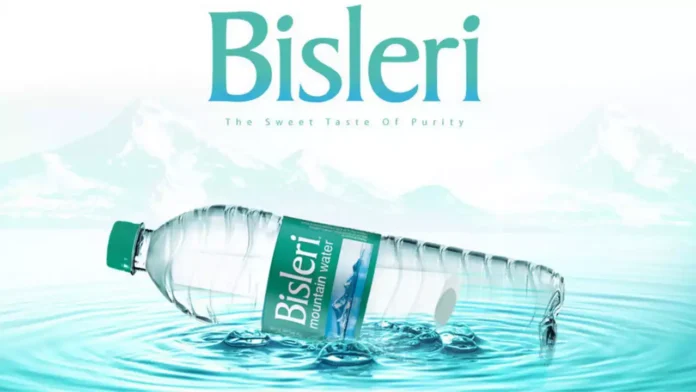
Bisleri, a well-known brand of packaged water, is exploring the concept of water credits, akin to carbon credits, aiming to enhance accountability among beverage producers regarding their water consumption.
The company has collaborated with the TERI School of Advanced Studies to undertake a study assessing the beverage industry’s dedication to water conservation.
According to the Council on Energy, Environment, and Water, a New Delhi-based think tank, by 2025, 11 out of India’s 15 major river basins will face water stress, with per-capita annual water availability dropping below 1,700 cubic meters. Moreover, India regulates groundwater usage through national and state-level regulations, imposing limits on the volume of water companies can extract for industrial and commercial activities.
The study emphasizes that numerous major beverage manufacturers have faced criticism for extracting water from areas experiencing water stress. In reaction, several companies have started disclosing efforts to replenish the water utilized in their manufacturing operations.
Bisleri’s Water Replenishment Efforts
Bisleri intends to present its findings to the central government, aiming to stimulate discussions and formulate a framework for advancing the concept of water credits within the beverage industry.
Study on Water Trading and Credits
According to media reports, the study sought to examine both national and international practices and policies related to water trading, water credits, and fiscal instruments. Additionally, it aimed to devise a methodological framework for assessing the water footprint of a production unit. The study further conducted tests and estimated the water footprint of two Bisleri production units situated in contrasting terrains.
This initiative comes after the government introduced the Green Credit Program (GCP) in October 2023. The GCP is aimed at encouraging voluntary environmental actions across multiple sectors and involves a wide range of stakeholders, including people, communities, private sector industries, as well as businesses. In its initial phase, the GCP will prioritize water conservation and afforestation efforts.
Gokyo, an emerging player in India’s adventure apparel and gear market, has inaugurated its first in Bengaluru. Alongside its flagship store in Mumbai, Gokyo’s products are accessible in distinguished outdoor stores across Maharashtra, Noida, Srinagar, and Sikkim. The brand intends to further extend its presence in South India with a forthcoming store opening shortly in Hyderabad.
Situated at LV Plaza, 7th Main Rd, HRBR Layout 1st Block, Banaswadi, the new Bengaluru store is a collaboration with the burgeoning outdoor and adventure retail chain “Mountains Within.” This outlet aspires to be the premier destination for adventurers, providing premium-quality apparel and gear for both experienced mountaineers and casual hikers.
The grand opening took place on Saturday, June 1, presided over by former MLA Vinisha Nero. The event showcased an evening with distinguished Everest climbers Sunil Nataraj and Venkatesh Maheshwari, co-founder of Gokyo.
The brand now offers a comprehensive range of outdoor and trekking products, specifically designed for expeditions reaching up to 20,000 feet.
Venki Maheshwari, Co-Founder of Gokyo, stated, “We are thrilled to introduce Gokyo’s cutting-edge, high-quality adventure gear to the Silicon Valley of India. Our objective is to furnish adventurers with premium products and firsthand expertise, guaranteeing they are well-equipped for their forthcoming outdoor escapade. As we broaden our presence across the nation, we aspire to motivate more individuals to embark on exhilarating adventures.”
The brand name “Gokyo” is inspired by Gokyo Ri, a peak celebrated for its breathtaking panoramic vistas of the Everest region. Deriving from the heritage of the Sherpa tribe and the tranquil Gokyo Lake at its base, the brand’s vision and mission are profoundly grounded in this rich cultural milieu.
Gokyo’s Comprehensive Range of Outdoor and Trekking Products
To accommodate the varied requirements of adventurers and furnish a comprehensive experience of its extensive product range, the new store will showcase Gokyo’s Explorer, Alpine, and Sherpa series, each tailored for different climatic conditions and expedition levels.
Sherpa Series: Engineered for adventurers confronting exceedingly cold temperatures spanning from 10°C to -5°C, this series utilizes unique fabrics with bonded and brushed inner layers to optimize comfort, flexibility, and heat preservation.
Alpine Series: Aimed at intermediate adventurers managing mild winter conditions and lower altitudes, this series merges functional styling with protection against cold and harsh UV rays.
Explorer Series: Ideal for beginners, this series provides comfort and protection against mild winters and lower altitudes, safeguarding users from both cold and sun exposure.
By furnishing customized solutions for diverse levels of adventurers, Gokyo guarantees everyone is outfitted with the optimal gear for their expedition.
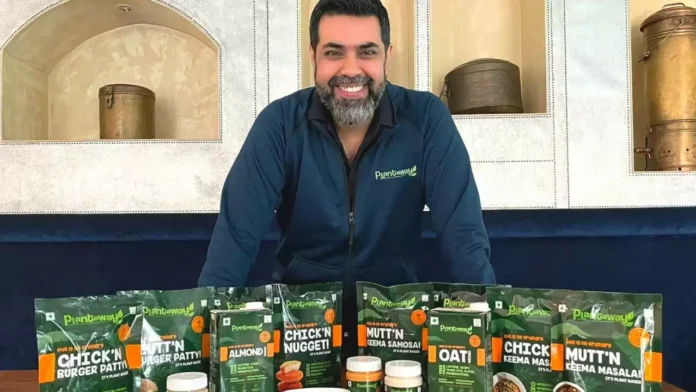
In an era where dietary preferences are shifting rapidly, Graviss Good Foods is making waves with its innovative brand, Plantaway. With the ambitious goal of achieving 250% growth in the 2024-2025 fiscal year, Romil Ratra, CEO Graviss Good Foods, shares insights into the brand’s journey and the burgeoning plant-based food market.
Romil Ratra, with decades of experience in the hospitality industry, has been instrumental in steering Graviss Good Foods towards new horizons. “There’s a huge shift incoming and its driven by people realising how important what they consume is for them,” he states. The COVID-19 pandemic further underscored the connection between diet and health, propelling the company to venture into the ‘better-for-you’ food and beverage space.
In early 2020, Graviss Good Foods initially introduced the Brooklyn Creamery, a healthy ice cream brand that defied the conventional belief that taste, and health are mutually exclusive. The brand quickly adapted to the pandemic by pivoting to a delivery-first model. “When we started, we had just 12 flavors and 20 SKUs. Today, we have over 60 SKUs in multiple formats and four different ranges, including vegan, high protein, and keto options,” says Ratra. This adaptability and consumer-centric approach have seen the Brooklyn Creamery expand to over 1000 points of sale in India and the Middle East.
Building on this success, Graviss Good Foods launched Plantaway, a plant-based food solutions company, about a year ago. While the demand for plant-based options is growing, the brand recognizes that it remains relatively small. Therefore, the focus was on creating products that not only tasted great but were also functional and easy to integrate into existing culinary practices. “We created our first product line with taste, functionality, and application as our primary goals,” Ratra explains.
Understanding this, Plantaway developed the first product in the range: plant-based mylks that would allow chefs/ home consumers to easily incorporate these into their daily usage without sacrificing convenience or quality. The company’s rigorous testing, including trials with local tea vendors and dessert makers, ensured that their plant-based milk was robust and versatile.
The Plantaway range now includes a variety of plant-based alternatives for meats, dairy alternatives like cheese, butter, and mayos and an all new range of indulgent plant-based gelatos, catering to the growing demand for vegan and health-conscious food options. “Our products are designed to make it easy for culinary professionals or the home consumer to incorporate plant-based options into their menu / meals without compromising on quality or taste,” Ratra emphasises.
Consumer awareness and demand for quality have been pivotal in the brand’s growth. “The Indian consumer has evolved so much; they know exactly what they want,” Ratra says. This informed consumer base is driving the category forward, making it essential for brands like Plantaway to stay ahead with innovative and high-quality products.
Reflecting on the groups performance, Ratra reveals that the past year has been a great one. “We did double of what we did in the previous year across both India and the Middle East,” he shares. The company’s success can be attributed to its relentless focus on consumer feedback and continuous improvement. “We conduct consumer conversations every month in different geographies to understand their needs and preferences,” he adds.
The brand anticipates around 250% growth for 2024-25. “We’re being fairly aggressive in our approach and have a range of new products in the pipeline,” says Ratra.
Looking ahead, Ratra is confident about Plantaway’s growth trajectory. The brand’s strategic focus on sampling and consumer engagement, combined with its robust distribution network, positions it well for continued success. “We’re here for the long haul. We’re passionate about what we do, and we’re committed to giving it our best every single day,” he concludes.
The Brooklyn Creamery too is evolving from being the premier better-for-you ice cream brand and expanded into low calorie RTD milkshakes last year. Recognizing the potential in other dairy-related products, they recently launched two specialised milk products: lactose-free milk and India’s first high-protein milk.
As Graviss Good Foods gears up for a promising future, Plantaway stands out as a testament to the power of innovation and consumer-centricity in the ever-evolving food industry. With Ratra at the helm, the brand is set to redefine plant-based eating in India and beyond.
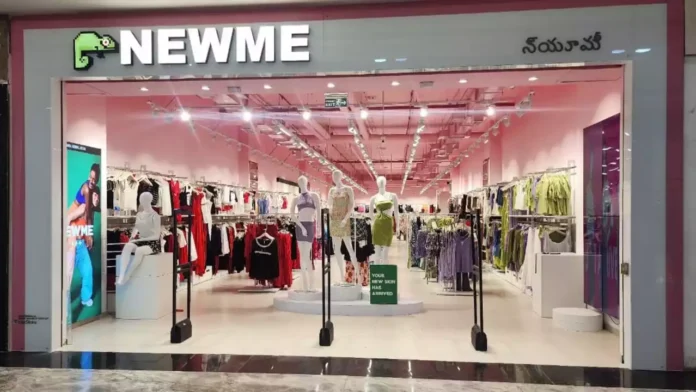
Newme, a Gen Z-focused fashion-tech startup, has expanded its presence in India by opening its largest flagship store to date in Hyderabad, as announced by a company official on social media.
The store, situated on the ground floor of Sarath City Capital Mall in Kondapur, Telangana, occupies an expansive 5,000 square feet of carpet area.
“We’re thrilled to announce our arrival in Hyderabad! Our largest store yet, spanning an impressive 5,000 square feet, is designed to inspire creativity and self-expression through fashion,” said Sumit Jasoria, co-founder of Newme, in a LinkedIn post.
“I never envisioned that within a year of opening our first store in Bengaluru, we would expand to five stores across India in such a short time,” Jasoria continued.
Established in 2022 by Jasoria, Shivam Tripathi, Vinod Naik, and Himanshu Chaudhary, Newme aims to cater to over 500 million Gen Z consumers in India and Southeast Asia. The company introduces more than 500 designs weekly and leverages technology to streamline its supply chain.
Nationwide presence of Newme & future plans
The online-first brand currently operates a total of five stores nationwide, situated at Orion Mall in Bengaluru, Forum South in Bengaluru, Infiniti Mall in Mumbai, Elante Mall in Chandigarh, and the latest addition at Sarath City Capital Mall in Kondapur.
Newme is set to unveil its next store in Indore, with plans to expand to over 12-15 stores across India by the end of 2024.
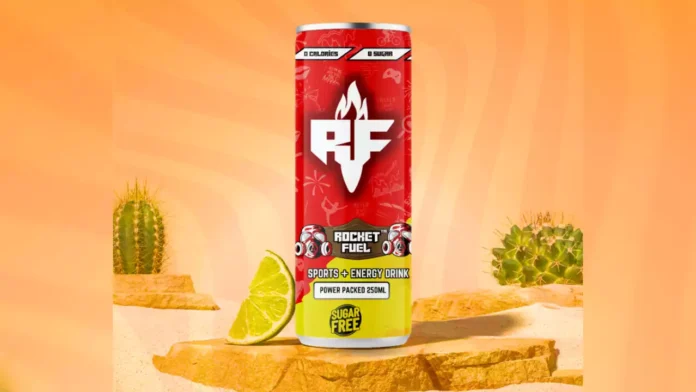
DH Brands, a beverage contract manufacturer with over 20 years of expertise, is proud to introduce its own brand portfolio, featuring Rocketfuel as the flagship brand.
Rocketfuel – Original Punch is a groundbreaking energy drink crafted for the active Indian consumer seeking a powerful yet healthy boost. This zero-calorie, zero-sugar beverage provides a robust energy surge with only eight clean ingredients, making it the leanest option available on the market.
“We’re excited to enter the consumer market with Rocketfuel,” says Chirag of DH Brands. “For decades, my senior partners and I have been trusted to create successful beverage products from our humble plant in Bangalore. Now, we’re leveraging that experience to develop and launch our own innovative products.”
Rocketfuel Original Punch delivers a potent energy boost with its unique blend of Caffeine, Taurine, CoQ10, L-Theanine, BCAA, and Choline L-Bitartrate. Free from artificial colors, it ensures a clean and refreshing taste.
A Competitive Choice
“We understand that consumers are increasingly health-conscious,” says Chirag. “”Rocketfuel is reasonably priced, delivering a powerful and guilt-free energy boost without breaking the bank. This extends to our marketing and social media communication, where our witty, Gen-Z-oriented content has earned millions of likes and shares.”
DH Brands: Bottling Expertise, Branded Innovation
With decades of experience in contract manufacturing for beverage brands of all sizes in the non-alcoholic market, DH Brands is poised to expand its own portfolio. Leveraging this expertise, DH Brands aims to lead in sports nutrition and modern beverage innovation, providing consumers with a variety of innovative and delicious options.
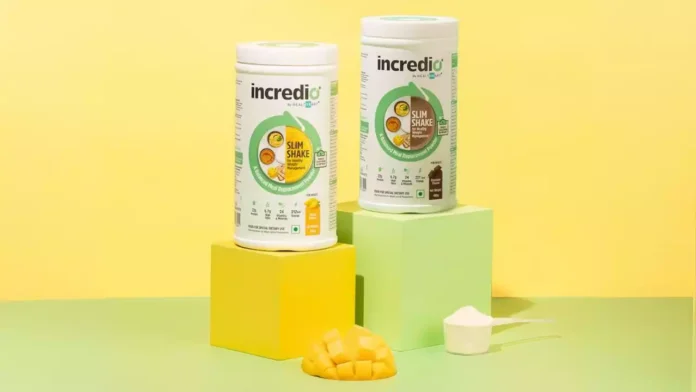
Incredio, a subsidiary of HealthKart, a leading health supplement company in India, is excited to announce the return of its beloved Slim Shake in two delicious flavors – Chocolate and Mango. This reintroduction is designed to provide an efficient and lasting weight loss solution tailored specifically for health-conscious Indian customers.
By offering a nutritious and balanced alternative to traditional weight loss methods, Incredio Slim Shake has become the go-to choice for many in India seeking a sustainable and effective solution. This revolutionary shake helps individuals cut down on excess calories without compromising on essential nutrients, making it a favorite among those looking for a healthier alternative.
Each serving of Incredio Slim Shake is carefully formulated to provide a wholesome meal replacement. It contains an impressive 22 grams of a triple-blend protein, including whey, soy, and casein, which work together to keep you feeling fuller for longer. This helps reduce unnecessary snacking and overeating. Additionally, the shake boasts 6.7 grams of high fiber, which aids in digestion and promotes a sense of fullness. And all of this comes at only 221 calories per serving!
But what truly sets Incredio Slim Shake apart is its focus on nutritional completeness. Enriched with 24 essential vitamins and minerals, it ensures that your body receives the nourishment it needs to support healthy, long-term weight loss. With Incredio, there’s no need for extreme diets or depriving your body of vital nutrients. Instead, you can confidently take a balanced approach to achieving
The product will be offered in a 480gm pack size, starting at a price of INR 799/-. It is available for purchase online through the company’s website and can also be found on popular e-commerce platforms such as Amazon, Flipkart, and Myntra.
On the relaunch of Slim Shake, Incredio Brand Head Ms. Neha Gupta expressed, “We are delighted to reintroduce Incredio Slim Shakes, which cater to the increasing demand for health and fitness among Indians. Our reintroduced shakes in Chocolate and Mango flavours strike a balance between taste and essential nutrition, offering a well-rounded approach to weight loss. We remain dedicated to supporting our customers in their health journey by providing products that are not only effective but also enjoyable.”
A survey conducted by EY India revealed that Indian consumers are becoming increasingly aware of the importance of health, fitness, and comprehensive nutrition. The COVID-19 pandemic has further emphasized the significance of health and immunity, resulting in a notable change in consumer behaviour towards natural food, health supplements, and specialized diets.
This indicates that customers will soon have the option to order from a variety of restaurants and fast food chains like Domino’s and McDonald’s via the Flipkart app.
Flipkart is actively engaging in discussions with ONDC for the integration process, as reported by ET, citing sources.
The report mentioned that food and beverages (F&B) is only the beginning for Flipkart on ONDC, with logistics to come next, offering competitive prices and swift responses. Despite being in the final stages of integration with ONDC in February, Flipkart’s logistics arm, Ekart, has not been very active.
The company plans to operate on the buyer side of ONDC, allowing consumers to order food while browsing fashion and apparel on Flipkart. This new service is expected to make Flipkart’s F&B ordering operations more efficient, as it eliminates the need to maintain a fleet of food delivery personnel or convince restaurants to list their offerings on Flipkart, as per the report.
In April, reports indicated that the government had urged ecommerce giants Amazon and Flipkart to establish ONDC storefronts on their websites to support the network in expanding operations, streamlining deliveries, and resolving any issues or delays.
This comes after ONDC reported rapid growth in May, with a record 89 Lakh transactions across retail and ride-hailing segments, marking a 23% month-on-month (MoM) increase.
Leveraging this platform, the government aims to increase India’s ecommerce penetration to 25%, with ONDC targeting a gross merchandise value (GMV) of $48 billion in the coming years.
Many startups and major companies have joined the ONDC network since its inception to improve their business operations.
In April, Ola was working on a feature that would allow users to buy groceries, fashion items, and apparel directly through its app. Likewise, PhonePe introduced services such as food delivery and ticket booking through the ONDC platform.
Companies like Delhivery, Dainik Jagran, Uber, IDFC Bank, Kotak, Dunzo, and Tata Neu have integrated their services with ONDC. Furthermore, the Adani Group, led by Gautam Adani, is reportedly exploring opportunities to enter the ecommerce and fintech sectors through the ONDC platform.
Reliance Retail, another conglomerate, has reportedly launched a pilot program on the ONDC platform through Fynd to explore opportunities within the network.
Additionally, 12 Indian unicorn startups—including EaseMyTrip, OfBusiness, Zerodha, and PhysicsWallah—signed letters of intent to join the Open Network for Digital Commerce (ONDC), according to a May announcement from the Department for Promotion of Industry and Internal Trade (DPIIT).
We use cookies to ensure that we give you the best experience on our website. If you continue to use this site we will assume that you are happy with it.