Blinkit’s chief financial officer Vipin Kapooria has stepped down from his role, less than two years after joining the quick commerce firm, according to people familiar with the matter. Kapooria is set to return to Flipkart, where he will take up a senior finance leadership position, marking his third stint at the Walmart-owned ecommerce major.
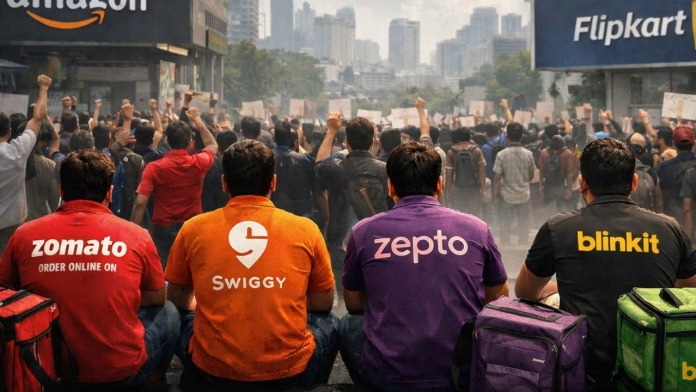
Kapooria had joined Gurugram-based Blinkit in September 2024 from Flipkart, where he served as vice president of finance. His exit comes at a time when Blinkit, owned by Eternal, is navigating an intensely competitive phase in India’s fast-growing quick commerce sector. The company is locked in a high-stakes battle with rivals including Zepto, Swiggy Instamart, Flipkart Minutes and Amazon Now, as platforms race to expand scale, improve unit economics and secure investor confidence.
For Blinkit, Kapooria’s appointment had been significant. He was the first full-time CFO after the position remained vacant for nearly two years following the departure of Amit Sachdeva in 2022, soon after Zomato acquired the company. Kapooria worked closely with Blinkit founder and CEO Albinder Dhindsa and Eternal CFO Akshant Goyal, particularly during the parent company’s Rs 8,500 crore qualified institutional placement completed last year.
His move back to Flipkart coincides with the ecommerce giant’s preparations for a public listing in 2026. Flipkart is currently completing its redomiciling process, shifting its headquarters from Singapore to India, and has also stepped up its push into ultra-fast deliveries through its Minutes service.
The leadership change reflects the churn at the top as India’s quick commerce market attracts heavy capital and sharp competition. Over the past year, the sector has seen aggressive fundraising, with Swiggy raising Rs 14,500 crore through an IPO and a subsequent QIP, while Zepto has confidentially filed for a proposed Rs 11,000 crore public issue.
Neither Blinkit nor Flipkart commented on the development. Eternal’s shares were trading lower on Tuesday, reflecting broader market caution amid heightened competition in the segment.