Home Blog Page 4

Ставки на спорт в Pin Up: понимание механики и основных рынков

0

Ставки на спорт в Pin Up: понимание механики и основных рынков

Ставки на спорт в казино Pin Up привлекают множество игроков благодаря своей доступности и разнообразию предложений. В данной статье мы подробно рассмотрим основные механизмы ставок и ключевые рынки, которые предлагает данная платформа. Понимание этих аспектов не только повысит ваши шансы на успех, но и сделает процесс ставок более увлекательным.

Основные механики ставок на спорт

Ставки на спорт — это процесс предсказания результатов спортивных событий и размещения на них ставок. Платформа Pin Up предлагает своим пользователям несколько основных механик, которые делают ставки более увлекательными и интерактивными. Вот несколько ключевых аспектов:

  1. Выбор событий: игроки могут делать ставки на разнообразные спортивные мероприятия, включая футбол, баскетбол, хоккей и другие виды спорта.
  2. Типы ставок: доступно множество типов ставок, таких как одиночные ставки, экспресс-ставки и системы.
  3. Коэффициенты: коэффициенты представляют собой вероятность исхода события, и их понимание является важным для успешного беттинга.
  4. Live-ставки: возможность делать ставки в реальном времени во время игры, что добавляет элемент азартности.

Основные рынки ставок в Pin Up

На платформе Pin Up доступно множество рынков для ставок, что позволяет пользователям выбрать наиболее подходящие варианты. Знание основных рынков значительно увеличивает шансы на успех. Рассмотрим основные из них:

  1. Маркет на победителя: это самый распространенный рынок, где нужно просто предсказать, кто выиграет матч.
  2. Фора: ставка с учетом стартового преимущества одной из команд, которая предоставляет более справедливый шанс на выигрыш.
  3. Тотал: ставки на общее количество очков, голов или других статистических показателей в матче.
  4. Пари максимально допустимого времени: ставки, основанные на том, что события произойдут до определенного времени в матче.

Как сделать успешную ставку?

Для успешных ставок важно учитывать несколько факторов, которые могут повлиять на исход спортивных событий. Применение аналитического подхода значительно повысит вероятность выигрыша. Вот несколько рекомендаций:

  1. Изучите команды: ознакомьтесь с формой команд, их историей встреч и составами.
  2. Оцените статистику: анализ актуальной статистики поможет вам понять, как команды играли в предыдущих матчах.
  3. Следите за новостями: травмы, дисквалификации и изменения в тренерском штабе могут серьёзно повлиять на результат.
  4. Управляйте банкроллом: разумный подход к управлению финансами поможет снизить риски потерь.

Преимущества ставок в Pin Up

Ставки на спорт в Pin Up имеют ряд преимуществ, которые стоит учитывать. Вот некоторые из них:

  • Широкий выбор: Pin Up предлагает множество спортивных событий и различных видов ставок.
  • Доступность: сайт доступен в любое время, а также есть мобильное приложение.
  • Бонусы и акции: регулярные предложения для новых и постоянных игроков делают ставки более выгодными.
  • Безопасность: платформа обеспечивает высокий уровень защиты данных пользователей.

Заключение

Ставки на спорт в Pin Up предоставляют уникальные возможности для любителей спортивных азартных игр. Понимание механизмов и основных рынков ставок позволит вам более уверенно подходить к процессу беттинга и увеличивать свои шансы на удачу. Помните о стратегиях ставок, анализируйте команды и результаты, а также пользуйтесь преимуществами платформы для получения максимальной выгоды Пин ап Казино.

Часто задаваемые вопросы

1. Как зарегистрироваться на платформе Pin Up для ставок на спорт?

Регистрация на Pin Up проста и занимает несколько минут. Необходимо заполнить форму с личными данными, подтвердить аккаунт и внести первый депозит.

2. Какие виды спортивных ставок предлагаются в Pin Up?

В Pin Up доступны различные виды ставок, включая ставки на победителя, форы, тоталы и live-ставки, что позволяет игрокам выбирать наиболее подходящие варианты для себя.

3. Как работают коэффициенты на спортивные события?

Коэффициенты отображают вероятность события, рассчитанную букмекерами. Чем более вероятен исход, тем ниже коэффициенты, и наоборот.

4. Можно ли делать ставки в реальном времени в Pin Up?

Да, в Pin Up доступны live-ставки, которые позволяют ставить на события во время их проведения, что делает беттинг еще более увлекательным.

5. Как управлять своим банкроллом при ставках?

Управление банкроллом включает выставление лимитов на ставки, регулярную оценку своих ставок и отказ от азартных решений в случае неудач.

Advertisement

Проверка билетов на участие в лотереях Столото, Русское лото, Жилищная лотерея, Золотая подкова, а также результаты тиражей 6 из 36.

0

Для выигрыша квартиры нужно лишь наличие билета с пятью номерами, которые выпали в первых пяти ходах и расположены в одной линии. У меня никогда не было выигрыша более 200 рублей в лотереях, и особого интереса к ним тоже не было. Он позволяет быстро узнать, выиграл ли билет после розыгрыша, и предоставляет другую важную информацию. Более того, результаты розыгрыша, включая угаданные числа, доступны игроку при проверке онлайн.

Advertisement

Список лицензированных онлайн-казино, предлагающих безопасную игру на деньги.

0

В России клубы (такие как эти), занимают лидирующие позиции по выплатам. Рейтинг включает популярные площадки для любителей высоких ставок на слоты и рулетку. Хайроллеры получают лучшие бонусы, более высокие лимиты на вывод и приоритет в скорости получения выигрышей. Игроки должны получать качественные бонусы от лицензированных казино.

Онлайн-рынок все еще менее строго регламентирован, что создает уникальные условия для его функционирования.

Advertisement

Игры с живыми дилерами и лайв казино, доступные для игры на деньги.

0

Бонус в размере 200% начисляется на первый депозит, а также в течение первых 30 минут после регистрации пользователю доступен дополнительный бонус на депозит в 100%. Максимальная сумма депозитных бонусов, которую может получить игрок, достигает 1140%. Нельзя не упомянуть, что игроки получают доступ к полноценной системе вознаграждений, помимо приветственного предложения. Максимальные ставки на кэшбэк (до 40%) и рейкбэк (до пятнадцать%) увеличиваются с ростом уровня игрока.

Advertisement

The Founding of YouTube A Short History

0

YouTube is one of the most influential platforms in modern media, but its origin story is surprisingly simple: a small team wanted an easier way to share video online. In the early 2000s, uploading and sending video files was slow, formats were inconsistent, and most websites weren’t built for smooth playback. YouTube’s founders focused on removing those barriers—making video sharing as easy as sending a link.

Who Founded YouTube?

YouTube was founded by three former PayPal employees: Chad Hurley, Steve Chen, and Jawed Karim. They combined product thinking, engineering skills, and a clear user goal: create a website where anyone could upload a video and watch it instantly in a browser.

  • Chad Hurley — product/design focus and early CEO role
  • Steve Chen — engineering and infrastructure
  • Jawed Karim — engineering and early concept support

The Problem YouTube Solved

At the time, sharing video often meant emailing huge files or dealing with complicated players and downloads. YouTube made video:

  1. Uploadable by non-experts (simple interface)
  2. Streamable in the browser (no special setup)
  3. Sharable through links and embedding on other sites

Early Growth and the First Video

YouTube launched publicly in 2005. One of the most famous early moments was the first uploaded video, “Me at the zoo,” featuring co-founder Jawed Karim. The clip was short and casual—exactly the kind of everyday content that proved the platform’s big idea: ordinary people could publish video without needing a studio.

Key Milestones Timeline

Year/Date
Milestone
Why It Mattered
2005YouTube is founded and launchesIntroduced easy browser-based video sharing
2005“Me at the zoo” is uploadedBecame a symbol of user-generated video culture
2006Google acquires YouTubeProvided resources to scale hosting and global reach

Why Google Bought YouTube

By 2006, YouTube’s traffic was exploding. Video hosting is expensive—bandwidth and storage costs rise fast when millions of people watch content daily. Google’s acquisition gave YouTube the infrastructure and advertising ecosystem to grow into a sustainable business.

What YouTube’s Founding Changed

YouTube didn’t just create a popular website; it reshaped how people learn, entertain themselves, and build careers online. Its founding helped accelerate:

  • Creator-driven media and influencer culture
  • How-to education and free tutorials at massive scale
  • Music discovery, commentary, and global community trends

From a small startup idea to a global video powerhouse, YouTube’s founding is a classic example of a simple product solving a real problem—and changing the internet in the process.

Advertisement

Cadence’s Retail Blitz: The Hydration Challenger Races Past 6,000 Stores

0

Cadence, the fast-rising hydration startup founded by entrepreneurs Ross MacKay and George Heaton, has officially crossed the 6,000 retail store milestone less than six months after its aggressive retail expansion began. The latest breakthrough came through a nationwide rollout into CVS Pharmacy refrigerators, marking another major step in the brand’s transformation from niche D2C startup to mainstream hydration contender.

The speed of Cadence’s retail growth has positioned it as one of the fastest-scaling players in the “modern hydration” category, a segment currently experiencing explosive momentum as consumers shift away from traditional sugary sports drinks toward cleaner, performance-focused alternatives.

What makes Cadence particularly notable is the caliber of its founding team. Ross MacKay previously built plant-based food disruptor Daring into one of the most recognizable challenger brands in the alternative protein space, while George Heaton is best known as the founder of Represent, the globally influential streetwear label with deep roots in fitness and performance culture.

Together, the duo has combined sports nutrition functionality with premium lifestyle branding — a formula increasingly proving successful across modern consumer categories.

Cadence’s 2026 strategy has centered around what industry observers are calling a “speed-to-shelf” expansion model. Rather than scaling slowly through regional retail tests, the company aggressively pursued simultaneous distribution across mass retail, specialty fitness channels, and convenience-focused pharmacy networks.

The biggest milestone came with the brand’s rollout into CVS Pharmacy, placing Cadence products directly inside high-traffic refrigerated sections across more than 6,000 locations nationwide. The move significantly broadens the brand’s accessibility, especially among consumers making impulse hydration purchases during daily routines rather than specifically shopping within sports nutrition aisles.

Earlier in the year, Cadence also secured major placements inside:

  • Target,
  • Walmart,
  • GNC,
  • and The Vitamin Shoppe.

This multi-channel strategy allows the company to compete across both lifestyle and performance-oriented retail environments simultaneously.

Target and Walmart provide mainstream scale and household visibility, while GNC and Vitamin Shoppe reinforce Cadence’s credibility within serious athletic and supplementation communities. The balancing act is strategic: maintaining “high-performance” authenticity while achieving mass-market accessibility.

The company is now targeting 8,000 retail doors by the end of Q4 2026, a pace that would place it among the fastest-growing hydration brands in recent years.

Product positioning has played a major role in the company’s rapid traction.

Unlike traditional sports drinks built around sugar-heavy replenishment, Cadence emphasizes what it describes as “precision hydration.” Each 355ml can contains:

  • 500mg sodium,
  • 190mg potassium,
  • and 30mg magnesium,

creating a formula designed specifically for endurance athletes, high-intensity training, and extended recovery periods.

The beverages are also entirely sugar-free and calorie-free, relying on Reb M stevia for sweetness instead of artificial sweeteners or syrups.

This formulation aligns closely with the current “performance optimization” movement dominating younger fitness communities. Consumers are increasingly prioritizing hydration products that feel functional without carrying the excessive sugar loads traditionally associated with legacy sports drinks like Gatorade or Powerade.

Equally important to Cadence’s success is its branding.

George Heaton’s design background has heavily influenced the product’s minimalist “premium utility” aesthetic, helping the brand resonate strongly with culturally influential fitness subcultures such as:

  • Hyrox,
  • CrossFit,
  • endurance racing,
  • and performance lifestyle communities.

The packaging intentionally avoids the loud, hyper-aggressive visual identity common in older sports nutrition brands. Instead, Cadence presents itself more like a premium fashion or wellness product — a strategy increasingly common among modern functional beverage startups targeting Gen Z and millennial consumers.

The company has also benefited from strong founder-led storytelling and community-driven growth. Before entering large-scale retail, Cadence built organic awareness among marathon runners, hybrid athletes, and creators within the fitness ecosystem. That early credibility appears to have accelerated retailer interest, creating demand pull rather than relying solely on paid marketing.

High-profile support from investors such as Steven Bartlett has further amplified the brand’s visibility, particularly among digitally native consumers already familiar with founder-led challenger brands.

Industry analysts increasingly view Cadence as part of a larger structural shift within hydration itself.

Hydration is no longer being marketed purely as thirst relief or sports recovery. It is evolving into a daily “performance ritual” tied to:

  • energy,
  • productivity,
  • recovery,
  • focus,
  • and lifestyle identity.

That broader cultural repositioning has opened the door for premium hydration startups to compete directly against legacy beverage giants despite significantly smaller marketing budgets.

The CVS rollout is especially important because it moves Cadence closer to everyday consumption occasions. Rather than existing only in fitness-centric environments, the brand is now entering convenience-driven purchasing behavior — a critical step for any beverage company seeking long-term scale.

Ultimately, Cadence’s rapid rise reflects how modern challenger brands are increasingly built not just on product functionality, but on community, aesthetics, and cultural positioning. In less than a year, the company has evolved from a startup hydration experiment into one of the most closely watched brands in the next generation of performance beverages.

Advertisement

Zevia’s Breakout Quarter: Profitability Momentum Meets the “Cardi B” Era

0

Zevia PBC, the zero-sugar soda company built around naturally sweetened beverages, delivered one of the strongest quarters in its history as the brand continues its transformation from niche wellness product to mainstream beverage contender. Reporting its Q1 2026 earnings on May 6, the company posted record net sales of $46.1 million, marking a 21.2% year-over-year increase and signaling that its multi-year restructuring strategy is finally beginning to compound.

The results represent a major milestone for CEO Amy Taylor, the former Red Bull North America executive who took over the business during a period of operational instability and slowing growth. Since then, Taylor has focused on rebuilding Zevia’s retail presence, simplifying the company’s cost structure, and repositioning the brand as a culturally relevant lifestyle beverage rather than a purely “health-focused” soda alternative.

The strongest signal from the quarter was that Zevia’s growth is now being driven primarily by volume rather than pricing. Net sales growth was fueled by a 20.4% increase in volumes, suggesting that consumer demand for zero-sugar, naturally sweetened soda continues to accelerate despite broader inflationary pressures affecting the beverage industry.

The company also reported a dramatic improvement in profitability metrics. Net losses narrowed to $2.4 million, compared to a loss of $6.4 million during the same period last year. More importantly, adjusted EBITDA turned positive at $0.9 million — marking the company’s first meaningful EBITDA-positive quarter in recent history and reinforcing investor confidence that Zevia’s turnaround strategy is entering a more sustainable phase.

While the top-line momentum was impressive, Zevia still faced margin pressure from rising commodity and logistics costs. Gross margin slipped slightly to 48.4%, down from 50.1% a year earlier, primarily due to higher aluminum pricing and fuel-related expenses. However, management successfully offset much of that pressure through aggressive operational optimization and tighter marketing efficiency.

One of the most important drivers behind the quarter was Zevia’s evolving distribution strategy under Taylor’s leadership. The company has increasingly prioritized high-velocity retail channels capable of rapidly scaling household penetration.

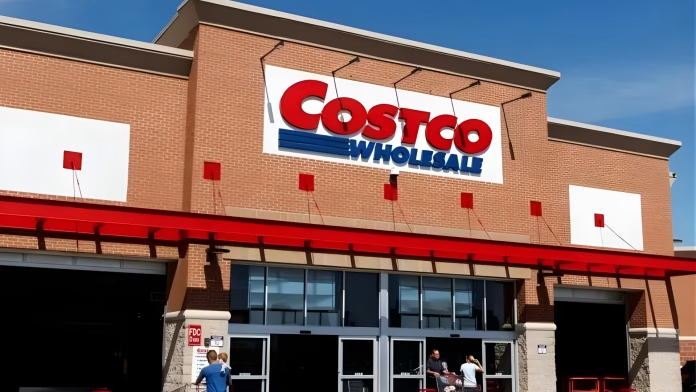
The biggest contributor was the “Club Channel,” particularly a successful national rotation at Costco. The placement significantly expanded Zevia’s consumer reach and introduced the brand to a broader mainstream audience beyond its traditional wellness-focused demographic.

At the same time, Zevia continued strengthening its shelf presence across major grocery and mass retail accounts including Kroger and other large-format chains. E-commerce also remained a strong contributor, with the company reporting double-digit digital growth as Zevia continues to perform strongly within the “Better-for-You” beverage category on Amazon.

However, the quarter’s most visible growth catalyst was undoubtedly the company’s new partnership with rapper and cultural icon Cardi B. The two-year collaboration represents one of the most aggressive marketing pivots in Zevia’s history and reflects the company’s attempt to fundamentally reshape consumer perception around zero-sugar soda.

Historically, Zevia’s branding leaned heavily into “health-conscious” consumers, often attracting shoppers focused on wellness, fitness, or clean-label ingredients. While effective in building early loyalty, that positioning limited the company’s mainstream cultural reach.

The Cardi B partnership changes that narrative entirely.

Within its first week, the campaign reportedly generated over 152 million media impressions, helping Zevia tap into a younger, more culturally engaged consumer base. The collaboration is designed to “age down” the brand and reposition zero-sugar soda as an aspirational lifestyle choice rather than simply a dietary substitute.

Simultaneously, the company is rolling out a broader visual refresh aimed at modernizing packaging and improving shelf standout. The redesign is intended to make Zevia feel more emotionally relevant within the increasingly competitive “modern soda” category, where brands like Olipop and Poppi are aggressively competing for younger consumers through aesthetics, storytelling, and functional positioning.

Industry analysts increasingly view Zevia as part of a much larger structural shift within the global beverage market. Traditional soda consumption patterns are evolving rapidly as consumers seek:

  • lower sugar,
  • cleaner labels,
  • functional ingredients,
  • and more transparent formulations.

Stevia-based beverages, once considered niche alternatives, are now becoming increasingly mainstream as shoppers grow more skeptical of artificial sweeteners and high-calorie soft drinks.

What makes Zevia’s current moment especially important is that the company appears to be balancing growth with operational discipline — something many emerging beverage brands struggle to achieve. Selling and marketing expenses dropped significantly as a percentage of net sales, falling from 40% to 31.5%, highlighting the effectiveness of the company’s broader productivity initiatives around warehousing, logistics, and retail execution.

Ultimately, Zevia’s Q1 performance signals that the company may finally be moving beyond its identity as a specialty wellness soda brand. Under Amy Taylor’s leadership, the business is increasingly positioning itself as a legitimate long-term challenger within the mainstream beverage industry — one aiming to build a “third lane” in soda culture alongside legacy giants Coca-Cola and PepsiCo.

Advertisement

NAD4Me Bets on “Cellular Energy” as Longevity Drinks Enter the Mainstream

0

NAD4Me, a new entrant in the rapidly expanding longevity beverage market, has officially launched its line of caffeine-free cellular energy drinks, bringing one of the wellness industry’s most discussed molecules into a ready-to-drink consumer format. Founded by beverage veteran and food scientist Waldemar Schlemmer, the company is positioning itself at the intersection of functional hydration, preventative health, and modern “bio-optimization” culture.

The launch reflects a major shift currently reshaping the global beverage industry. Consumers are increasingly moving away from traditional stimulant-heavy energy drinks and toward products that promise long-term wellness, metabolic support, and sustained mental clarity. Instead of relying on caffeine spikes and sugar-driven stimulation, NAD4Me is marketing itself as a “cellular restoration” beverage designed to support energy production at the mitochondrial level.

At the center of the brand’s positioning is NAD+ (Nicotinamide Adenine Dinucleotide), a coenzyme widely associated with cellular repair, metabolism, and healthy aging. Over the last few years, NAD+ therapies have gained massive popularity across longevity clinics, wellness influencers, and biohacking communities, often appearing in the form of expensive IV drips or supplement protocols. NAD4Me’s core proposition is simple: turn that premium wellness concept into an accessible, shelf-stable beverage.

The biggest technical challenge for the category has always been stability. NAD+ molecules are notoriously fragile and degrade quickly when exposed to heat, light, or oxidation. According to the company, NAD4Me solves this issue through a proprietary nanocapsulation process that protects the active ingredients and allows the drinks to remain shelf-stable without compromising efficacy.

This technological positioning is central to the brand’s credibility. In a market increasingly crowded with “functional” beverage claims, scientific defensibility has become one of the most valuable differentiators. By emphasizing food science and ingredient stabilization, NAD4Me is attempting to separate itself from trend-driven wellness drinks that rely heavily on branding but lack meaningful formulation depth.

The beverages are also intentionally caffeine-free, a strategic decision that directly challenges the traditional energy drink industry. Instead of “borrowing energy” through stimulants, the company frames its products as supporting the body’s natural energy systems. This message strongly aligns with the growing “sober-curious” and wellness-first consumer movement, particularly among younger professionals seeking focus and productivity without anxiety, crashes, or sleep disruption.

Beyond NAD+, the formulation includes a blend of ingredients commonly associated with cognitive support and metabolic function:

  • L-Tryptophan,
  • Trigonelline,
  • Ergothioneine,
  • Inositol,
  • and Vitamins C, B3, B5, and B12.

Together, the formula is designed to position the beverage somewhere between an energy drink, a nootropic stack, and a recovery supplement.

The company launched with three flagship varieties:

  • Minty Lime Spark,
  • Tropical Wave,
  • and Cellular Water.

Minty Lime Spark targets consumers seeking a sharper, more refreshing sensory profile, while Tropical Wave is positioned as a broader mainstream flavor play aimed at lifestyle-oriented wellness consumers. Cellular Water, meanwhile, takes a minimalist approach focused on hydration and “clean functionality,” avoiding added sugars and artificial sweeteners entirely.

Pricing places NAD4Me firmly within the premium functional beverage category. The products retail at roughly $4 per can, with multi-pack bundles priced around $49.99. While significantly more expensive than traditional energy drinks, the pricing reflects the brand’s attempt to compete with high-end wellness supplements and recovery products rather than mass-market soda.

Industry analysts view NAD4Me as part of a much larger “proactive longevity” movement now entering mainstream consumer markets. The global NAD+ market is projected to surpass $12 billion by 2033, fueled by growing awareness around aging, metabolic health, and preventative wellness. At the same time, the broader functional beverage industry continues to evolve beyond simple hydration into increasingly specialized niches such as cognitive enhancement, stress management, gut health, and recovery optimization.

The timing may also be particularly favorable due to the rise of the “GLP-1 era.” As weight management medications and metabolic health conversations reshape consumer behavior, shoppers are becoming far more ingredient-conscious and increasingly skeptical of traditional high-sugar, high-caffeine beverage formats. Functional stacking — combining multiple wellness benefits into a single daily ritual — is rapidly becoming one of the strongest growth drivers across premium CPG.

For NAD4Me, the long-term opportunity extends far beyond wellness enthusiasts and biohackers. The company is effectively attempting to normalize longevity-focused nutrition as an everyday consumer habit rather than an elite clinical service. If its stabilization technology proves scalable and scientifically credible, the brand could emerge as one of the first serious contenders in the emerging “cellular beverage” category.

Ultimately, NAD4Me’s launch represents more than just another functional drink debut. It signals the continued transformation of the beverage aisle itself — from a category once dominated by sugar and stimulation into one increasingly defined by optimization, recovery, and long-term health performance.

Advertisement

Fashinza Enters Its “FactoryOS” Era as Pawan Gupta Exits for AI

0

Fashinza, one of India’s most closely watched B2B fashion-tech startups, is entering a major new chapter following the departure of co-founder and CEO Pawan Gupta. The Accel-backed company confirmed that Gupta has officially stepped down from his leadership role to launch a new venture focused entirely on Artificial Intelligence, marking one of the most significant founder transitions in India’s startup ecosystem this year.

The move leaves Abhishek Sharma as the sole remaining original founder and the new CEO of the Gurugram-based supply chain platform. While leadership changes often signal instability in high-growth startups, insiders suggest this transition had been gradually unfolding behind the scenes since late 2025, when Gupta reportedly became non-operational in the business.

Gupta’s exit reflects a broader trend currently reshaping the global startup ecosystem: the migration of top founders and operators toward the AI sector. According to Gupta, the rapid acceleration of generative AI and automation convinced him that the next two decades of technological innovation would be fundamentally shaped by artificial intelligence. The opportunity to build something “AI-native” became too compelling to ignore.

At the same time, Fashinza itself has undergone a dramatic transformation since its early years. Initially positioned as a software-led platform simplifying apparel sourcing and manufacturing, the company has increasingly evolved into a deeply operational business centered around factories, logistics, and physical supply chains. That transition appears to have played a major role in Gupta’s decision to move on.

In many ways, Fashinza’s journey mirrors the evolution of several Indian B2B startups that began as “asset-light marketplaces” before eventually moving deeper into infrastructure ownership. Over the last two years, the company has aggressively expanded its manufacturing footprint, integrating technology directly into production clusters across India, Bangladesh, and China.

The clearest signal of this shift came in April 2026 when Fashinza acquired manufacturing player Qckin, strengthening its push toward vertical integration. The acquisition highlighted the company’s larger ambition of controlling more of the design-to-delivery cycle for global fashion brands seeking faster and more efficient production timelines.

Under Abhishek Sharma’s leadership, Fashinza is now doubling down on what insiders describe as its “FactoryOS” strategy — embedding software, workflow automation, and data systems directly into manufacturing operations rather than functioning purely as a sourcing intermediary.

This operational pivot represents a significant strategic evolution for the company. Instead of simply connecting brands with suppliers, Fashinza is positioning itself as a technology-enabled manufacturing infrastructure platform capable of managing the complexities of global apparel production at scale.

Despite the leadership transition, the company’s financial position remains relatively stable compared to many venture-backed startups navigating today’s funding environment. Fashinza has raised more than $120 million from major investors including Accel, WestBridge Capital, and Prosus, giving it one of the strongest institutional backings in India’s B2B commerce sector.

Financially, the company also appears to be moving closer toward operational sustainability. According to filings referenced in U.S. disclosures, Fashinza reported consolidated revenue of approximately ₹200 crore in FY25 and posted a reported profit of ₹1 crore during the same period — a notable milestone for a business operating in a traditionally margin-heavy manufacturing ecosystem.

The transition also reflects a deeper phenomenon often described in startup circles as the “Founder-Market Fit Lifecycle.” Early-stage founders who thrive during the “zero-to-one” phase of company building are often strongest in product design, software development, and rapid experimentation. However, as companies mature into operationally intensive businesses, the required leadership skill set changes dramatically.

For Fashinza, the challenge is no longer simply building software. It now involves:

  • factory operations,
  • manufacturing quality control,
  • labor management,
  • sourcing complexity,
  • and global logistics coordination.

That evolution naturally favors operators with deep execution capabilities over product-first founders.

Gupta’s departure therefore appears less like a breakdown and more like a strategic divergence driven by changing company dynamics and personal ambition. By leaving during Fashinza’s operational stabilization phase, he joins a growing wave of second-generation Indian entrepreneurs pivoting into AI after building successful commerce and fintech startups.

Across India’s startup ecosystem, former founders and senior operators from companies like Swiggy, BharatPe, and Udaan are increasingly redirecting their attention toward generative AI infrastructure, workflow automation, and enterprise intelligence tools. Gupta’s move places him directly within that emerging founder cohort.

For Fashinza itself, the road ahead is becoming increasingly clear. The company is no longer positioning itself merely as a “fashion-tech startup.” It is evolving into a manufacturing operating system designed to power global apparel supply chains through a blend of physical infrastructure and embedded technology.

If successful, that shift could fundamentally redefine how Indian manufacturing platforms compete on the global stage — not just through low-cost labor, but through speed, software integration, and production intelligence.

Advertisement

Vantara Creamery Rolls Into Mumbai: Turning Nostalgia Into a Premium Dessert Experience

0

Vantara Creamery, a new-age artisanal dessert brand, has officially entered Mumbai’s premium food landscape with the launch of its experiential “Vantara Truck” at Jio World Drive in Bandra Kurla Complex. Instead of debuting through a traditional retail outlet, the brand has chosen a mobile, event-driven format that blends craft desserts with storytelling, positioning itself at the intersection of nostalgia, luxury, and social-first food culture.

The launch reflects a growing shift in India’s D2C food ecosystem, where consumers are increasingly gravitating toward brands that offer emotional connection and cultural identity alongside premium quality. Vantara is not attempting to compete with mass-market ice cream chains on scale or affordability. Instead, it is targeting urban consumers seeking highly curated, “memory-driven” dessert experiences that feel both familiar and elevated.

At the heart of Vantara’s strategy is what the brand calls “emotionally familiar, yet unexpected” flavor storytelling. Rather than focusing purely on indulgence or novelty, the company is building its identity around Indian memories, regional inspirations, and shared cultural moments. This approach mirrors a broader “Modern Heritage” movement currently reshaping India’s premium consumer brands, where startups are successfully reinterpreting traditional Indian experiences for younger, aspirational audiences.

The decision to launch through an ice cream truck rather than a permanent café is equally strategic. The Vantara Truck creates a sense of discovery and exclusivity that aligns perfectly with modern consumer behavior, particularly among Gen Z and millennials. By turning the launch into a limited-time event rather than a static retail experience, the brand generates urgency, footfall, and strong social media engagement. In the Instagram and TikTok era, the truck itself becomes part of the product narrative.

Operating at Jio World Drive also places the brand directly within one of Mumbai’s most premium lifestyle ecosystems. The location is known for attracting affluent urban consumers, luxury shoppers, and food-forward audiences who actively seek emerging experiential brands. For Vantara, this provides an ideal environment to establish cultural relevance before considering larger retail or quick-commerce expansion.

The residency is being hosted across two weekends:

  • May 9–10
  • May 16–17

with operations beginning daily from 11:00 AM onward.

This “pop-up residency” format follows a playbook increasingly common among premium global food brands. Rather than rushing into large-scale expansion, brands are first building scarcity-driven hype and organic community traction through immersive activations. Companies like Salt & Straw, Van Leeuwen, and various global craft dessert labels have used similar models to establish strong lifestyle positioning before scaling distribution.

Vantara appears to be applying a similar strategy to the Indian market, particularly within the growing “masstige” dessert segment — products that combine mass appeal with prestige branding. Mumbai consumers have rapidly shifted toward gourmet desserts over the past few years, embracing flavors and concepts that move beyond traditional vanilla-and-chocolate formats. Sea salt caramel, indigenous fruit infusions, burnt butter, and craft dairy profiles have become increasingly mainstream within urban premium retail.

This shift has created a significant white space for brands capable of combining artisanal quality with narrative depth. Vantara’s storytelling-first positioning gives it a differentiator beyond flavor alone. The company is effectively selling a mood, memory, and cultural experience rather than just frozen desserts.

The mobile launch format also provides operational flexibility. Unlike traditional cafés that require heavy fixed investments, the truck model allows Vantara to test neighborhoods, consumer response, and flavor demand with lower upfront infrastructure costs. It also creates opportunities for future collaborations, event activations, and citywide “tour-style” expansions that align naturally with social commerce and influencer marketing.

Industry observers see strong potential for Vantara to eventually expand into premium retail, gourmet grocery placements, and quick-commerce partnerships. Platforms like Zepto, Blinkit, and Instamart are increasingly prioritizing high-margin artisanal food brands, especially within desserts and indulgence categories where impulse ordering behavior remains strong. If Vantara successfully converts its launch buzz into repeat customer loyalty, the brand could become highly attractive within the premium quick-commerce ecosystem.

The timing of the launch is particularly favorable. India’s premium food and beverage market is undergoing a broader “experience economy” transition, where consumers are willing to pay significantly more for products that feel personalized, culturally rich, and socially shareable. In this environment, brands are no longer competing solely on taste or convenience. They are competing on emotional resonance and identity creation.

Ultimately, Vantara Creamery’s Mumbai debut represents more than just another artisanal dessert launch. It reflects the evolution of Indian consumer culture itself — one where nostalgia, storytelling, scarcity, and premiumization are increasingly becoming the core ingredients behind the next generation of food brands.

Advertisement