Home Blog Page 2

BlaBliBlu Scales Rapidly to ₹100 Crore Run Rate, Targets Affordable Luxury Fragrance Segment

0

Emerging fragrance startup BlaBliBlu has reported a sharp early growth trajectory, achieving an annual revenue run rate of ₹100 crore within just six months of launch. The company is currently clocking around ₹8 crore in monthly revenue, reflecting strong consumer traction in the affordable luxury segment. Founded by Palash Arneja along with Rajat, Kushal, and Durgesh, the brand is positioning itself at the intersection of premium product quality and accessible pricing, with most of its perfume offerings priced below ₹1,000. This pricing strategy is aimed at capturing demand from young, value conscious consumers who are increasingly seeking premium experiences without a high price barrier.

At the core of BlaBliBlu’s product proposition is a relatively high fragrance oil concentration of around 25 percent, which the company claims enhances longevity and overall performance, bringing it closer to premium category benchmarks. By focusing on formulation quality while maintaining competitive pricing, the brand is attempting to differentiate itself in a crowded and highly competitive fragrance market. This approach is complemented by a strong product led growth strategy that prioritizes trial and discovery as key drivers of customer acquisition.

A significant contributor to the company’s early scale has been its use of affordable trial packs, typically priced at around ₹399, which allow consumers to experience multiple variants before committing to a full sized purchase. This model not only lowers the entry barrier for first time buyers but also helps improve conversion rates by enabling informed decision making. In addition, it supports more efficient customer acquisition by reducing hesitation and aligning expectations with actual product experience. The brand has also built an active consumer feedback loop, engaging with approximately 3,000 to 4,000 users to refine its product offerings and better align with evolving fragrance preferences. This continuous feedback driven approach allows the company to iterate quickly and stay relevant in a category where personal taste and trends play a significant role.

According to Palash Arneja, reaching a ₹100 crore run rate within such a short time frame indicates a clear market opportunity for high quality yet affordable fragrances in India. The brand’s performance reflects a broader shift in consumer behavior, where aspirational categories such as perfumes are witnessing increased demand from younger demographics, particularly in urban and semi urban markets. With rising disposable incomes and greater exposure to global trends, consumers are becoming more experimental and brand conscious, creating space for new age players like BlaBliBlu to disrupt traditional pricing and positioning models.

Looking ahead, the company is planning to expand its portfolio beyond core perfume offerings into niche fragrance segments as well as adjacent product categories. These include body washes, roll ons, and car fragrances, indicating a strategy to evolve into a broader fragrance led personal care brand. By extending its presence across multiple use cases and touchpoints, BlaBliBlu aims to increase customer lifetime value while strengthening brand recall.

Overall, BlaBliBlu’s rapid scale underscores the effectiveness of combining accessible pricing, product quality, and consumer centric innovation. As the company continues to invest in product development and category expansion, its ability to sustain growth while maintaining brand differentiation will be critical in building a long term presence within India’s evolving fragrance and personal care market.

Advertisement

MARS Cosmetics Expands Offline Presence with 50 Kiosks, Strengthens Mall Focused Retail Strategy

0

MARS Cosmetics has achieved a key milestone in its offline expansion journey, scaling its retail footprint to 50 kiosks across India as it deepens its presence in high footfall mall environments. The latest addition at Bhartiya Mall further reinforces the brand’s focus on premium, high traffic locations, complementing its existing presence across prominent retail destinations such as Lulu Group malls, Phoenix Mills properties, Inorbit Malls, and Pacific Malls. This expansion reflects a deliberate strategy to build stronger consumer visibility and engagement by positioning the brand at key urban shopping hubs.

The kiosk led model has emerged as a central pillar of MARS Cosmetics’ retail approach, enabling the brand to create compact yet high impact touchpoints that drive product discovery and trial. In a category such as beauty and cosmetics, where tactile experience and visual appeal play a critical role in purchase decisions, these kiosks offer consumers the opportunity to interact directly with products before making a purchase. This experiential format is particularly effective in attracting impulse buyers and first time users, while also reinforcing brand recall in a competitive marketplace.

MARS Cosmetics has built its positioning around affordability combined with trend driven innovation, allowing it to resonate strongly with value conscious consumers, particularly younger demographics. By offering products that align with current beauty trends at accessible price points, the brand has been able to carve out a distinct space within the mass premium segment. The offline kiosk expansion complements its broader omnichannel strategy, bridging the gap between digital discovery and physical experience.

According to Rishabh Sethia, reaching the 50 kiosk milestone is not only a reflection of scale but also a validation of the brand’s approach to meeting consumers where they are. The emphasis on mall led retail ensures consistent footfall, enabling the brand to engage directly with its target audience in environments that encourage browsing and experimentation. This approach also allows for more agile expansion compared to traditional store formats, as kiosks typically require lower investment and can be deployed quickly across multiple locations.

The broader trend of kiosk based retail is gaining traction across categories, particularly in segments like beauty, accessories, and quick service products, where customer engagement and convenience are key drivers. For MARS Cosmetics, this model supports both rapid expansion and deeper consumer interaction, helping the brand build loyalty while maintaining cost efficiency.

As the company continues to expand its offline presence, the focus is likely to remain on strategic locations that offer high visibility and strong consumer traffic. By combining affordability, trend relevance, and experiential retail, MARS Cosmetics is positioning itself to strengthen its foothold in India’s evolving beauty market while creating a more direct and engaging connection with its customers.

Advertisement

The Hazelnut Factory Crosses ₹100 Crore Revenue Mark, Expands Café Mithai Concept Across India

0

The Hazelnut Factory has surpassed the ₹100 crore revenue milestone, marking a significant achievement within seven years of its inception and reinforcing its growing presence in India’s organised food and beverage space. Founded in 2019 by Ankit Sahni, the brand has carved out a differentiated niche by combining specialty coffee with premium mithai in a modern café format. What began as a single outlet in Lucknow has now expanded into a network of 18 stores across 10 cities, supported by a workforce of over 1,000 employees, highlighting the company’s rapid scale and operational growth.

The brand’s expansion has been driven by a clear focus on premiumisation, product innovation, and an experience led retail approach that resonates with evolving consumer preferences. By reimagining traditional Indian mithai within a contemporary café setting, The Hazelnut Factory has successfully tapped into a segment of consumers seeking both familiarity and novelty in their dining experiences. This hybrid positioning has allowed the brand to stand out in a competitive market, where differentiation is increasingly driven by experience, ambience, and product quality rather than just pricing.

In FY26, the company recorded approximately 85 percent growth, reflecting strong same store performance as well as the contribution from new outlets. This growth trajectory underscores increasing consumer acceptance of organised and branded mithai formats, particularly in urban markets where demand for premium and hygienic offerings continues to rise. The café format further enhances customer engagement by encouraging longer dwell times and higher average order values, combining indulgence with a social experience.

Looking ahead, The Hazelnut Factory is preparing for its next phase of expansion, with plans to open 12 to 15 new outlets over the coming year. This rollout is expected to support a targeted revenue growth of around 70 percent, indicating continued confidence in market demand and scalability of the business model. The expansion strategy is likely to focus on strengthening presence in existing markets while selectively entering new cities with strong consumption potential.

To support this growth, the company is also investing in strengthening its backend capabilities, including supply chain integration, production infrastructure, and operational systems. These investments are aimed at ensuring consistency in product quality and service standards as the brand scales, while also improving efficiency and cost management. Building a robust backend is particularly critical in the food and beverage sector, where maintaining uniformity across multiple locations is essential for sustaining brand trust.

According to Ankit Sahni, the ₹100 crore milestone reflects the effectiveness of the company’s approach, which is built on delivering quality, consistency, and a distinctive customer experience. Co founder Badal Sahni emphasized that the brand remains committed to redefining traditional mithai for modern consumers while building a future ready organisation capable of sustained growth.

Overall, The Hazelnut Factory’s journey highlights a broader shift within India’s food and beverage landscape, where traditional categories are being reinvented through contemporary formats and premium positioning. By blending cultural familiarity with modern retail experiences, the brand is well positioned to capture the growing demand for organised, experience driven dining while continuing to expand its footprint across the country.

Advertisement

Ochre Spirits Expands Gin Portfolio, Targets ₹145 Crore Revenue with Pan India Growth Push

0

Ochre Spirits is strengthening its premium portfolio with the launch of two new gin variants, Original Dry Gin and Plum Citron Gin, as it accelerates its expansion strategy and targets ₹145 crore in revenue over the next three years. The Goa based craft spirits player, which already has a presence in markets such as Goa, Maharashtra, Karnataka, and Puducherry, is now preparing for a broader national rollout, with plans to expand into seven states and 34 cities in the coming fiscal year. This move reflects the company’s intent to capitalize on the growing consumer shift toward premium and craft alcoholic beverages in India.

The newly introduced products are positioned to cater to distinct consumer segments within the evolving gin category. The Original Dry Gin, with its classic botanical profile, is aimed at consumers seeking a more traditional and refined gin experience, while the Plum Citron Gin offers a fruit forward flavour designed to appeal to younger, experimental audiences. Both variants are bottled at 40 percent ABV and are aligned with global quality benchmarks, reinforcing the brand’s premium positioning. Through these launches, Ochre Spirits is looking to deepen its engagement within both on trade channels such as bars and restaurants as well as modern retail environments where premium spirits are gaining traction.

The company’s revised revenue target of ₹145 crore, up from an earlier projection of ₹100 crore, underscores the strong momentum within the craft spirits segment. According to founder John Royerr, the category is witnessing a shift from initial experimentation to more consistent consumer preference, with buyers increasingly opting for differentiated and high quality offerings. This transition is being driven by changing consumption patterns, rising disposable incomes, and greater exposure to global drinking trends, particularly among urban consumers.

Ochre Spirits’ broader portfolio already includes products in the rum and vodka categories, allowing it to build a diversified presence within the premium spirits space. The addition of gin further strengthens its offering and enables the brand to participate in one of the fastest growing segments within the alcohol industry. In recent years, gin has seen a resurgence in India, supported by the rise of craft distilleries and increasing demand for artisanal, flavour driven beverages.

The company’s expansion strategy is focused on scaling distribution and ensuring availability in markets where demand for premium spirits is growing. By entering new states and cities, Ochre Spirits aims to build stronger brand visibility and capture a larger share of the organised alcohol market. This approach also involves strengthening partnerships with on trade establishments and modern retail platforms, which play a crucial role in driving product discovery and consumer trial in the premium segment.

Overall, Ochre Spirits’ latest product launches and expansion plans highlight its ambition to emerge as a significant player in India’s craft spirits landscape. By combining product innovation with a focused distribution strategy, the company is positioning itself to leverage the ongoing premiumisation trend while building a scalable and future ready business in the evolving alcoholic beverages market.

Advertisement

Swiggy Partners Sarvam AI to Launch India’s First Voice-First Commerce Engine

0

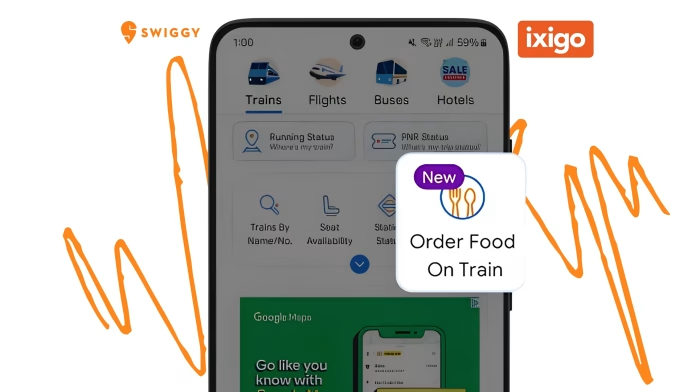
In a major step toward redefining digital commerce in India, Swiggy has partnered with Sarvam AI to introduce a multilingual, voice-led shopping experience across its platforms, including food delivery, Instamart, and Dineout. The collaboration marks a shift from traditional app-based navigation to conversational commerce, designed to make online ordering more accessible to millions of users across the country.

At the core of this partnership is the idea of breaking the long-standing “English-first” barrier in Indian digital platforms. While internet penetration and digital payments have grown rapidly, a large segment of users still finds text-heavy, English-centric interfaces difficult to navigate. By enabling voice-based interactions in multiple Indian languages, Swiggy aims to onboard the next wave of users who are more comfortable speaking than typing.

One of the most notable innovations is the introduction of phone call-based ordering. Users can now place orders simply by making a call—without needing a smartphone app or even internet access. This feature has the potential to unlock commerce for users in low-connectivity areas and for those with limited digital literacy, effectively bridging a critical gap in India’s digital ecosystem.

In addition, Swiggy is integrating its services with “Indus,” Sarvam AI’s conversational chat platform. This allows users to complete the entire shopping journey—from discovery to payment—within a single chat interface. Whether searching for a dish, comparing options, or placing an order, the process becomes more intuitive and conversational, closely mimicking real-world interactions.

The technology powering this system is built specifically for India’s linguistic diversity. Sarvam AI’s models support 11 languages, including Hindi, Tamil, Telugu, Kannada, Bengali, and Marathi, and are optimized for mixed-language usage such as Hinglish. This ensures that the AI can understand not just words, but context, accents, and regional nuances—an essential requirement for scaling voice commerce in India.

To complete the transaction loop, Swiggy has partnered with Razorpay to enable agent-driven payments. This allows the AI assistant to handle UPI transactions within the conversation itself, removing the need for users to switch between apps and simplifying the checkout process.

The strategic importance of this move lies in the massive untapped market. While India has hundreds of millions of internet and UPI users, only a fraction actively engages in e-commerce. Voice-led interfaces could significantly lower entry barriers, making digital services more inclusive and expanding the overall user base.

For Swiggy, this initiative signals a transition from being a convenience platform to becoming a technology-driven ecosystem focused on accessibility and scale. For Sarvam AI, it represents a real-world deployment of “sovereign AI”—technology built specifically for India’s unique linguistic and cultural landscape.

As voice interfaces become more sophisticated, the future of commerce may shift away from screens altogether. Swiggy’s early bet on voice-first interaction positions it at the forefront of this transformation, where ordering food or groceries could soon be as simple as having a conversation.

Advertisement

CaratLane Plans Measured Store Expansion and Global Push to Sustain Strong Growth Momentum

0

Tata Group backed jewellery brand CaratLane is gearing up for a steady phase of retail expansion, with plans to open around 40 new stores in FY27 as part of its broader growth strategy. The company, which currently operates approximately 369 stores across India, intends to take a calibrated approach to this expansion, focusing first on identifying the right locations before accelerating store rollouts later in the financial year. According to Managing Director Saumen Bhaumik, the first quarter will primarily be dedicated to evaluating potential markets and store opportunities, while the second quarter is expected to mark the beginning of active expansion. Around 10 percent of the upcoming stores will be company owned, reflecting a balanced strategy between owned and franchise operated outlets, while maintaining capital efficiency.

At present, roughly 13 percent of CaratLane’s existing store network is company owned, and the brand appears committed to maintaining a similar mix going forward. Geographically, the upcoming expansion will be skewed towards North, East, and South India, where the company sees stronger headroom for growth and increasing consumer demand. In contrast, the western region will witness a relatively slower pace of store additions, as the brand has already established a significant presence there. The current focus in the west is on improving store level productivity and ensuring that existing outlets exceed their expected performance benchmarks before any aggressive expansion is resumed in that market. This region specific strategy highlights the company’s emphasis on optimizing returns rather than pursuing uniform expansion across all geographies.

The planned store additions will be funded entirely through internal accruals, underscoring CaratLane’s strong financial position and disciplined capital allocation approach. While the company has not disclosed the exact capital expenditure for the expansion, its ability to self fund growth initiatives reflects robust cash flows and operational stability. In FY25, CaratLane reported revenue of ₹3,983 crore, and it is now targeting high double digit growth in the current financial year. This optimistic outlook is being driven by a combination of factors including consistent product innovation, accessible pricing, and sustained marketing efforts that have helped build strong consumer demand. The company has focused on launching new collections at regular intervals while maintaining affordability, ensuring that it continues to attract a wide customer base across different segments.

Beyond domestic expansion, CaratLane is also strengthening its international footprint as part of its long term growth vision. The brand already operates a physical retail store in New Jersey in the United States and is preparing to launch its second store in Dallas in the near future. In addition to its brick and mortar presence, CaratLane has built a robust global shipping network, catering to customers across nearly 30 countries including the United States, Canada, the United Kingdom, and Australia. As part of its next phase of international growth, the company is actively exploring opportunities in West Asia, a region that offers significant potential given its large base of Indian diaspora and strong affinity for jewellery consumption. This international expansion strategy reflects the brand’s ambition to evolve from a domestic leader into a globally recognized jewellery retailer.

On the manufacturing front, CaratLane continues to invest in strengthening its backend capabilities to support future growth. The company currently operates three manufacturing units, two located in Mumbai and one in Chennai. The Chennai facility has recently undergone a comprehensive revamp, with an investment of approximately ₹24 to ₹25 crore funded through internal accruals. Once fully operational, the upgraded unit is expected to employ between 200 and 300 people initially, contributing to both production capacity and employment generation. These investments in manufacturing infrastructure are aligned with the company’s broader strategy of maintaining quality control, improving operational efficiency, and supporting its expanding retail and international operations.

Overall, CaratLane’s growth roadmap reflects a well balanced approach that combines disciplined domestic expansion, strategic international forays, and continued investment in product innovation and manufacturing capabilities. By prioritizing market specific strategies and leveraging internal resources, the company is positioning itself to sustain strong growth while maintaining operational efficiency and financial prudence in an increasingly competitive jewellery retail landscape.

Advertisement

KitKat Shipment Theft in Europe Sparks Investigation and Online Buzz

0

A significant cargo theft incident involving KitKat has come to light in Europe, where more than 12 tonnes of chocolate bars were stolen while being transported between Italy and Poland. The consignment, owned by Nestlé, was en route from a production facility in central Italy and was intended for distribution across multiple European markets before reaching its final destination. The company has confirmed the incident and stated that it is working closely with local authorities and logistics partners to investigate the circumstances surrounding the theft, which is being treated as a major supply chain breach.

Despite the scale of the incident, Nestlé has reassured consumers that there are no safety concerns associated with the stolen products and that overall supply remains unaffected. The company emphasized that the stolen batch does not pose any risk to public health and that its broader distribution network continues to operate smoothly. This clarification comes as the incident quickly gained traction online, prompting both concern and curiosity among consumers and industry observers. The theft also highlights ongoing vulnerabilities within logistics and transportation networks, particularly in cross border supply chains where goods move across multiple jurisdictions.

According to the company, the shipment had departed from its manufacturing unit the previous week and was part of a routine distribution cycle aimed at meeting demand across Europe. While the exact details of how the theft was carried out have not yet been disclosed, the scale of the stolen cargo suggests a well coordinated operation. Industry experts note that cargo theft has been an increasing concern globally, especially for high value and fast moving consumer goods such as confectionery, electronics, and pharmaceuticals. The timing of the incident is also noteworthy, as it occurred just days ahead of the Easter season, a period typically associated with heightened demand for chocolate products across Western markets.

Interestingly, while the incident is being taken seriously by authorities and the company, it has also triggered a wave of humorous reactions on social media. Users across platforms have responded with memes and witty commentary, with many playing on KitKat’s iconic “take a break” tagline in the context of the theft. Some users joked about the unusual nature of the crime, calling it one of the most unexpected heists in recent times, while others highlighted the irony of such a large quantity of chocolate going missing during a festive season centered around confectionery. Even the brand appeared to acknowledge the lighter side of the situation, with a spokesperson humorously remarking on the “exceptional taste” of those responsible, while still underscoring the seriousness of the investigation.

From a broader perspective, the incident underscores the growing importance of supply chain security in today’s interconnected global economy. As companies expand their distribution networks across regions, ensuring the safe and timely movement of goods has become increasingly complex. Events like this not only result in financial losses but can also pose reputational risks if not managed effectively. In this case, Nestlé’s prompt communication and reassurance regarding consumer safety appear to have helped contain potential concerns, allowing the focus to remain on the investigation rather than product integrity.

Authorities are continuing their probe into the theft, and further details are expected to emerge as the investigation progresses. For now, the incident stands out as both a serious logistical breach and an unusual story that has captured public imagination, blending elements of corporate risk, global trade, and internet culture into a single headline making event.

Advertisement

Solitario Expands Global Footprint with Strategic Entry into Maldives Luxury Retail Market

0

Sustainable luxury jewellery brand Solitario has marked its entry into the Maldives, further strengthening its international presence as it continues to scale its global retail strategy. This move represents the brand’s eighth international market and aligns with its broader ambition to tap into high value luxury tourism destinations. As part of this expansion, Solitario has partnered with Essence Retail to introduce its lab grown diamond collections across premium hospitality locations through a shop in shop format. The brand is targeting a curated network of luxury resorts, including renowned properties such as Taj Exotica Resort & Spa Maldives, Ozen Reserve Bolifushi, and JW Marriott Maldives Resort & Spa, allowing it to directly engage with affluent global travellers.

This market entry is designed to position Solitario at the intersection of sustainability and experiential luxury, catering to a growing segment of environmentally conscious consumers who are increasingly seeking ethical alternatives in fine jewellery. Founder Ricky Vasandani highlighted that the Maldives expansion reflects the brand’s vision of creating meaningful and responsible luxury experiences in destinations that attract discerning international audiences. By leveraging the shop in shop model within established luxury resorts, the company is able to efficiently scale its presence while maintaining a premium brand environment and minimizing upfront infrastructure investments.

As part of its initial rollout phase, Solitario plans to establish a strong footprint across key island locations, culminating in the launch of a flagship boutique spanning approximately 1,200 square feet at CROSSROADS Maldives Marina. This flagship store is expected to serve as the central hub for the brand’s operations in the region, offering a comprehensive showcase of its product portfolio while reinforcing its positioning in the sustainable luxury segment. The choice of CROSSROADS, a prominent lifestyle and retail destination in the Maldives, underscores the company’s intent to anchor itself within high traffic, premium environments that attract international visitors.

Looking ahead, the brand has outlined an aggressive second phase of expansion aimed at deepening its presence within the Maldivian market. This includes the addition of more than 15 new shop in shop locations across luxury resorts, as well as the establishment of a second flagship boutique to further strengthen brand visibility and accessibility. This phased expansion strategy reflects a measured yet ambitious approach, enabling Solitario to build brand equity while scaling operations in a controlled manner.

The Maldives, known for its high spending турист demographic and strong luxury tourism ecosystem, presents a strategic opportunity for premium jewellery brands seeking global growth. By aligning its retail strategy with this environment, Solitario is positioning itself to capture demand from international consumers who value both exclusivity and sustainability. The company’s focus on lab grown diamonds also differentiates it within the traditional jewellery landscape, offering a modern alternative that resonates with evolving consumer preferences.

Overall, Solitario’s entry into the Maldives highlights its continued commitment to expanding across global luxury markets through innovative retail formats and strategic partnerships. With a clear roadmap that combines flagship experiences and distributed retail presence, the brand is well positioned to strengthen its foothold in the international jewellery segment while capitalizing on the growing demand for sustainable luxury.

Advertisement

The Indus Valley: From Kitchen Mishap to ₹200 Cr Cookware Challenger

0

The rise of The Indus Valley is a compelling example of how deeply personal problems can evolve into category-defining businesses. What began in 2016 as a simple kitchen accident—when founders Jagadeesh Kumar and Madhumitha Uday Kumar witnessed a plastic container melt under heat—sparked a larger realization about the hidden risks in everyday cookware. Today, that moment has translated into a ₹200 crore revenue brand that is steadily challenging the dominance of traditional non-stick cookware in Indian households.

At the heart of The Indus Valley’s success lies its sharp identification of an “invisible problem” in Indian kitchens. For decades, convenience-driven choices like non-stick cookware—often coated with PTFE—have been widely adopted. However, concerns around PFOA and PFAS, commonly referred to as “forever chemicals,” have grown, especially as studies suggest these coatings can degrade under high heat or damage, potentially leaching harmful substances into food. Despite this, consumers historically had limited alternatives: either continue using chemical-coated cookware or switch to traditional materials like cast iron, which were often seen as cumbersome and difficult to maintain.

The Indus Valley’s breakthrough came from reimagining these traditional materials rather than replacing them. Instead of creating another synthetic solution, the brand leaned into age-old cookware formats—cast iron, tri-ply stainless steel, and clay—and applied modern engineering to make them more accessible for contemporary consumers. For instance, while traditional cast iron required labor-intensive seasoning, the company introduced pre-seasoned cookware ready for immediate use. It also optimized weight and thickness for compatibility with modern induction cooktops, addressed durability issues through improved casting techniques, and ensured safety through NABL-certified toxin-free materials.

This “modernizing tradition” approach has proven highly effective, aligning with a broader shift in consumer behavior where health-conscious choices are extending beyond food to include cooking tools and kitchen ecosystems. The brand’s growth trajectory reflects this shift. By FY26, The Indus Valley crossed ₹200 crore in revenue, built a customer base of over one million households, and expanded beyond its initial direct-to-consumer roots into major marketplaces like Amazon and Flipkart, along with premium offline retail channels.

Backing this growth is Rukam Capital, which has supported the company through multiple stages of funding, contributing to a total capital raise of around $8 million. Rukam’s investment thesis centers on “founder-problem fit”—a belief that founders who have personally experienced a problem are more likely to build enduring solutions. In this case, the founders’ lived experience translated into a long-term commitment to toxin-free cookware, rather than a short-term pursuit of market trends.

Looking ahead, The Indus Valley is positioning itself for the next phase of growth by expanding beyond core cookware into a broader “holistic kitchen” ecosystem. This includes innovations like smart cookware equipped with temperature sensors to prevent overheating, as well as adjacent categories such as non-toxic storage solutions and organic cleaning products. The company is also exploring international markets, particularly in the US and the Middle East, where demand for premium, health-oriented kitchenware is rising.

In essence, The Indus Valley’s journey underscores a larger transformation in India’s consumer landscape—where functionality alone is no longer enough, and safety, transparency, and authenticity are becoming central to brand value. By bridging traditional wisdom with modern usability, the company is not just selling cookware, but reshaping how Indian consumers think about what goes into—and around—their food.

Advertisement

Fullife Healthcare Raises ₹300 Cr to Expand Global Nutrition Play

0

Mumbai-based consumer health company Fullife Healthcare has raised ₹300 crore in funding from Elev8 Venture Partners, marking a significant step in its growth journey as it looks to scale both in India and internationally. The company, which owns well-known nutrition and wellness brands like Fast&Up and Chicnutrix, plans to use the capital to expand into new health-focused categories and strengthen its existing portfolio.

Founded in 2011, Fullife Healthcare has built a diversified product lineup with over 100 SKUs spanning hydration, metabolic health, beauty nutrition, and performance supplements. With this fresh investment, the company is now entering adjacent high-growth segments such as digestive health, sleep support, and protein-based nutrition—categories that are witnessing increasing consumer demand as health awareness rises.

The funding will also be directed toward scaling manufacturing capabilities, enhancing product innovation, and strengthening distribution channels. Fullife aims to further develop its brands into a global fast-moving health and wellness goods (FMHG) platform, combining science-backed formulations with digital-first consumer engagement.

Currently present in over 40 countries, the company is now setting its sights on deeper expansion into key international markets including the UK, GCC region, and the United States. Alongside global growth, it is also looking to reinforce its domestic footprint by improving retail distribution and accelerating its direct-to-consumer channels.

CEO Varun Khanna noted that the partnership with Elev8 Venture Partners will enable the company to build stronger brands and scale more efficiently as it enters its next phase of growth. From the investor’s perspective, the bet reflects confidence in the long-term structural shift toward preventive healthcare and nutrition, as consumers increasingly take a proactive approach to fitness and wellbeing.

Fullife Healthcare already counts prominent investors such as the late Rakesh Jhunjhunwala, Sixth Sense Ventures, and Morgan Stanley Private Equity Asia among its backers. For Elev8 Venture Partners, this marks its first investment in the D2C space from its current fund, signaling a strategic move toward consumer-facing, science-led brands.

As the global wellness industry continues to expand, Fullife’s focus on innovation, category diversification, and international scaling positions it well to capitalize on evolving consumer preferences and emerge as a leading player in the nutrition and health supplements space.

Advertisement