Tuesday, March 3, 2026
Home Blog Page 2

Starbucks Expands Retail Portfolio with High-Protein Bottled Coffee Line

0

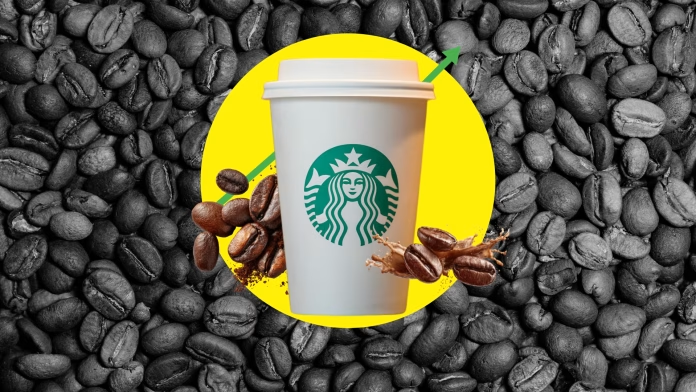
Global coffee chain Starbucks is extending its protein-focused beverage strategy from cafés to supermarket shelves with the launch of Starbucks Coffee & Protein, a new ready-to-drink (RTD) bottled range. Developed in partnership with PepsiCo through the North American Coffee Partnership (NACP), the products will roll out across US retail outlets beginning March 23, 2026.

The new launch builds on the strong consumer response to Starbucks’ in-store Protein Lattes and protein-infused Cold Foams, which were added as permanent menu items in late 2025.

A Functional Twist on Morning Coffee

Designed for health-conscious consumers, the 12-ounce bottled beverages aim to combine caffeine with nutritional benefits. With protein consumption becoming a priority for a large segment of American consumers, Starbucks is positioning the range as a functional, wellness-oriented alternative to traditional sugary bottled coffees.

Each bottle contains:

  • 22 grams of complete protein
  • 5 grams of prebiotic fibre
  • Just 2 grams of sugar
  • Five essential vitamins and minerals

The formulation reflects growing interest in muscle support, satiety and gut health, while maintaining a low-sugar profile.

Launch Flavours and Retail Rollout

The Coffee & Protein line will debut with two flavours inspired by popular café offerings:

  • Classic Caffè, featuring a smooth, coffee-forward taste balanced with creamy protein
  • Caffè Mocha, combining cocoa notes with Starbucks’ signature Arabica blend

The beverages will carry a suggested retail price of $3.99 per bottle and will be available in grocery stores, convenience outlets, gas stations and online platforms nationwide. An exclusive 11-ounce Caffè Mocha version, offering 20 grams of protein, is set to launch at Sam’s Club locations in April.

Part of a Wider Retail Revamp

The protein beverage range is part of Starbucks’ broader “Back to Starbucks” transformation strategy, aimed at modernising its ready-to-drink portfolio.

Other products launching on March 23 include:

  • Doubleshot Energy Zero Sugar in French Vanilla and Dark Chocolate
  • Frappuccino Lite Chocolate Hazelnut Gelato with 100 calories and no added sugar
  • Iced Espresso Lite multiserve bottles in Vanilla Latte and Caramel Macchiato, featuring zero added sugar and 90 calories per serving

By entering the high-protein, low-sugar RTD segment, Starbucks is expanding its presence in the functional beverage category and positioning its retail offerings to compete with nutrition-focused and fitness-oriented brands, redefining the role of morning coffee in consumers’ daily routines.

Advertisement

BPCL and Burger King India Forge National Alliance to Transform Fuel Stations into QSR Hubs

0

State-run energy major Bharat Petroleum Corporation Limited (BPCL) has entered into a strategic national alliance with Restaurant Brands Asia Limited, the master franchisee of Burger King India, to roll out quick service restaurant (QSR) outlets across BPCL’s retail network.

The partnership aims to convert select fuel stations and highway wayside amenities into integrated travel destinations by introducing Burger King dine-in formats, drive-thrus and BK Café concepts within BPCL premises.

Converging Fuel and Food

For BPCL, the collaboration supports its strategy to grow non-fuel revenues and enhance customer engagement at fuel stations. For Burger King India, the alliance offers access to a vast, ready-made retail footprint spanning highways and urban centres, enabling deeper penetration beyond traditional mall and high-street locations.

The rollout will prioritise high-traffic highway corridors and urban fuel hubs, offering travellers the convenience of quality dining without detouring from their route. Depending on the site, formats will vary from full-service dine-in restaurants to compact, high-speed drive-thru models.

Many of these outlets are expected to align with BPCL’s broader “Wayside Amenities” initiative, which includes upgraded infrastructure such as clean restrooms, EV charging points and secure parking facilities.

Supporting Burger King’s Expansion Goals

The alliance comes at a pivotal time for Burger King India, which has crossed over 575 restaurants nationwide and is targeting 800 outlets by FY2029. BPCL’s network of more than 21,000 fuel stations offers scalable “plug-and-play” real estate, particularly in Tier-II, Tier-III and highway locations.

The move also follows recent ownership changes at Restaurant Brands Asia, which was acquired by Inspira Global. The new promoters have outlined a strategy centred on sustainable expansion and operational efficiency, with the BPCL partnership emerging as a key growth lever.

Fuel Stations as Retail Destinations

India’s fuel retail landscape is increasingly evolving into a competitive convenience and lifestyle hub, mirroring global trends where gas stations double as food and retail centres. With private players expanding food partnerships, the BPCL-Burger King collaboration strengthens the public sector oil major’s positioning in the QSR-led “pit stop” ecosystem.

By blending nationwide fuel infrastructure with organised fast food, the alliance signals a shift in how Indian highways and urban fuel stations cater to the country’s growing, convenience-driven consumer base.

Advertisement

Home Essentials Raises $8M to Scale Omnichannel Play in India’s Fragmented Home Market

0

D2C home and kitchen brand Home Essentials has secured $8 million (₹70 crore) in a Pre-Series B funding round led by 360 ONE Asset, with continued participation from early investor India Quotient. The capital infusion marks a pivotal moment for the fast-scaling startup as it transitions from a digital-first challenger to a broader omnichannel retail brand.

Founded in 2024 by brothers Tanishq Jain (CEO) and Divyam Jain (CMO), the Gwalior-born company was built to bridge the gap between expensive luxury home décor and low-quality, unbranded utility products. In just two years, Home Essentials has expanded from its small-town origins to a Gurgaon-headquartered operation serving more than one million customers nationwide.

The brand’s proposition centres on “design-first utility” — offering aesthetically appealing yet functional products across categories such as storage solutions, cookware, bathroom accessories and home organisation. With over 1,000 SKUs, it targets aspirational middle-income consumers seeking premium aesthetics at accessible price points.

Omnichannel Expansion in Focus

With fresh funding, Home Essentials plans to deepen its retail presence through a structured offline push. The company aims to open 20 experiential stores by 2026 across Tier I and Tier II cities, allowing customers to engage with its products physically — a key step in building brand trust in the home category.

The capital will also support category expansion into kitchen improvement and loose furniture segments, areas still dominated by unorganised players. Strengthening supply chain capabilities to integrate online and offline inventory systems forms another core focus, enabling a seamless omnichannel experience.

Targeting ₹500 Crore Revenue

India’s home and kitchen market, estimated at $31 billion, remains highly fragmented. By emphasising capital efficiency and disciplined growth, Home Essentials has positioned itself as a scalable alternative to both legacy players and informal market operators.

Sumit Jain, Senior Fund Manager at 360 ONE Asset, highlighted the founders’ execution capability and strong unit economics as key investment drivers. Looking ahead, the company aims to reach five million households and achieve ₹500 crore in annual revenue within the next three years.

As consumer demand shifts toward organised, design-driven home products, Home Essentials is betting that its blend of affordability, functionality and omnichannel reach can help it emerge as a leading destination for the modern Indian home.

Advertisement

OoMee Raises $13M to Take Seaweed-Powered Nutrition Mainstream

0

Marine nutrition is gaining momentum in the functional beverage space. Aqua Theon, founded by Forbes Japan 100 honoree Alissa Miky, has closed a $13 million seed funding round, with $5 million specifically allocated to scale its beverage brand OoMee.

The investment follows rapid early traction for OoMee, which has sold more than 100,000 units within its first six months and secured placement in over 700 retail outlets, including Sprouts Farmers Market, Raley’s, and Bristol Farms.

Betting on Marine-Based “Seabiotics”

Unlike many prebiotic sodas that rely on land-based fibres such as inulin or chicory root, OoMee’s formulation is powered by Seabiotics™, a proprietary technology derived from agar-agar, a red seaweed traditionally used in Japanese cuisine. Aqua Theon has adapted this ingredient into a smooth, non-carbonated beverage format designed to support gut health and satiety.

Agar-agar functions as a soluble fibre that expands slightly in the stomach, promoting fullness and helping manage snack cravings. The drink is also positioned as gentler on digestion compared to carbonated “prebiotic” beverages. Each 12-ounce can contains 20 calories, under 5 grams of sugar sourced from fruit juice and monk fruit, and no caffeine.

Expanding into the Matcha Category

With dedicated capital earmarked for beverage growth, OoMee is now entering the ready-to-drink matcha segment. Its upcoming canned matcha line blends organic green tea with its seaweed-derived fibre, combining the antioxidant and L-theanine benefits of matcha with Seabiotics’ digestive support.

New flavours include Lemon Mint, Passionfruit & Yuzu, and Berry, positioning the brand as a multi-functional hydration option for wellness-focused consumers.

Sustainability at the Core

Aqua Theon’s marine-based model is also rooted in sustainability. Seaweed grows rapidly—up to 12 inches per day—and captures significantly more carbon dioxide than many terrestrial plants while requiring no freshwater or fertilisers. The company operates a zero-waste process in which agar extraction byproducts are fermented and repurposed into agricultural fertiliser, producing more than 2,800 tons annually.

Riding the Blue Economy Wave

The $13 million raise reinforces Aqua Theon’s ambition to lead in marine-based nutrition, a segment gaining attention as consumers seek alternative functional ingredients beyond traditional superfoods. Following recognition as “Best New Drink Concept” at the Beverage Digest Awards and an expanding retail footprint, OoMee is positioning seaweed not as a niche health ingredient but as a mainstream hydration staple for 2026 and beyond.

Advertisement

From Street Stall to Global Brand: How The Betel Leaf Co. Modernised India’s Paan Industry

0

What began in 2019 as a simple recommendation from a nutritionist has evolved into one of India’s most distinctive food startups. The Betel Leaf Co., founded by Prem Raheja and co-led by Payal Raheja, has transformed the traditional paan market by introducing hygiene, standardisation and premium positioning into a largely unorganised sector.

Positioned as India’s first FSSAI-certified, 100% tobacco-free paan brand, the company has reimagined paan not as a roadside indulgence but as a curated, dessert-style experience suitable for modern retail and global export.

Reframing a ₹3,000–4,000 Crore Market

India’s paan industry, estimated at ₹3,000–₹4,000 crore, has long operated through fragmented local vendors with limited standardisation. Consumers often faced inconsistent taste, hygiene concerns and the stigma associated with tobacco.

The Betel Leaf Co. identified an opportunity to premiumise the category by eliminating tobacco, improving preparation standards and introducing consistent recipes. By repositioning paan as a refined post-meal digestive rather than a street-side habit, the brand created a new aspirational segment within an age-old tradition.

Quick Commerce as a Growth Catalyst

Recognising that paan is typically an impulse purchase, the company adopted a dark kitchen model and partnered with Blinkit, Swiggy, and Zomato to enable rapid delivery. Today, nearly 55% of its revenue comes through online quick-commerce channels.

A key innovation has been its nitrogen-flushed, triple-layer packaging, which preserves freshness for up to 48 hours without refrigeration and extends shelf life up to nine months for its “ARID” product line. This packaging breakthrough has enabled national distribution and export readiness.

Expanding Footprint, Global Ambitions

From its base in Bengaluru, The Betel Leaf Co. now operates 45 kitchens and aims to scale to 100 within the next year. Internationally, it exports to Singapore, Malaysia, the UK, the US, Nairobi and the UAE, signalling growing global demand for standardised, hygienic paan.

The brand is also strengthening its offline presence through experiential retail formats and partnerships with major chains such as Reliance Retail and SPAR.

Growth Metrics and Investor Backing

The company has raised $4.44 million to date, including a recent $1.2 million bridge round, backed by investors such as Inflection Point Ventures, Venture Catalysts, and 100Unicorns.

In FY24, it reported revenue of ₹7.52 crore and currently produces up to 1,80,000 paans per month across more than 50 flavour variants — ranging from traditional blends to experimental offerings like Tiramisu, Coffee and Cognac.

Beyond Paan: Building a Dessert Ecosystem

To expand its share of the digestive and dessert market, The Betel Leaf Co. has diversified into paan-inspired products including Betel Tea, dark chocolate Betel Bars, paan ice creams and confectionery lines. The strategy positions the brand to extend beyond a single product category into a broader “modern Indian dessert” ecosystem.

By applying food safety compliance, brand storytelling and quick-commerce agility to a 5,000-year-old tradition, The Betel Leaf Co. has demonstrated how even deeply entrenched, informal sectors can be modernised. What was once confined to street corners is now being served in global markets — packaged, preserved and redefined for a new generation of consumers.

Advertisement

VCs Score Multi-Bagger Returns as FMCG Giants Snap Up D2C Health Brands

0

Venture capital firms have enjoyed outsized returns after a wave of acquisitions by established fast-moving consumer goods companies eager to buy into direct-to-consumer health and wellness brands.

Early backers who invested relatively modest sums—typically in the Rs 25–100 crore range—have realized exit values in the Rs 170–850 crore band within three to four years, according to people familiar with the deals. Investors including Fireside Ventures, Eight Roads Ventures and Peak XV Partners were among those who profited from stakes in brands such as Wellbeing Nutrition, Oziva and Minimalist.

Strategic buying to capture growth

Legacy FMCG players are using acquisitions to accelerate entry into high-growth categories such as nutrition, personal care and supplements. Rather than building new brands from scratch, incumbent companies are acquiring digitally native players that already command consumer loyalty and direct sales channels.

For the buyers, the appeal is clear: instant access to younger audiences, data-driven customer acquisition models and products that sit squarely in the premium, higher-margin segment. For VCs, these exits validate a thesis that nimble D2C operators can scale rapidly and become attractive takeover targets.

Who made the gains

Fireside Ventures, Eight Roads Ventures and Peak XV Partners are among the venture investors that saw substantial uplifts from their placements. Their portfolio companies—Wellbeing Nutrition, Oziva and Minimalist—were acquired by larger FMCG groups looking to broaden portfolios and fast-track capability in the wellness space.

Initial investments in these startups ranged from roughly Rs 25 crore to Rs 100 crore. Exit values were reported in the neighborhood of Rs 170 crore to Rs 850 crore, generating multi-fold returns over a relatively short holding period of three to four years.

What this means for the market

The recent transactions underscore a broader realignment in consumer goods: distribution and brand ownership are shifting as digital-first companies prove they can build powerful, direct relationships with shoppers. This accelerates consolidation and raises the bar for incumbents that must now compete on agility and digital marketing prowess.

For the venture ecosystem, successful exits of this scale are likely to attract more capital into the D2C category. That could lift valuations and stimulate the next wave of startups focused on niche, higher-growth segments such as sports nutrition, herbal supplements and specialized skincare.

Risks and uncertainties

Despite the headline exits, the path ahead is not without pitfalls. Integrating D2C brands into large, traditional organisations can dilute the entrepreneurial culture and slow innovation. Brand authenticity may erode if consumers perceive a loss of independence.

There are also market risks: a shift in consumer preferences, increased competition, tighter regulations in health and wellness categories, or a correction in startup valuations could temper future returns. Buyers and investors alike will need to manage execution risk carefully to sustain growth post-acquisition.

Overall, the recent deals highlight how quickly value can crystallize in the D2C space—and how strategic acquisition has become a preferred route for FMCG majors seeking relevance in an evolving market.

Advertisement

Eatopia and the Rise of Gastro‑Entertainment: Can Celebrity‑Curated Dining Power Retail Growth?

0

Eatopia is positioning itself at the vanguard of a new retail trend that blends high‑end food with curated experiences. The chain emphasizes premium cuisine and a deliberately designed customer journey, promising consistent flavors and service no matter which location a guest visits.

Celebrity collaboration at the core

A key pillar of Eatopia’s concept is its partnership with singer Shankar Mahadevan, who has worked with the brand to curate each dish. The collaboration goes beyond a name on a menu: recipes and plating have been developed jointly to reflect a particular culinary identity tied to the partnership.

Standardization to scale the experience

Eatopia relies on tightly standardized recipes and operational processes to replicate that curated dining across outlets. The company says these systems are designed to preserve taste and presentation so diners receive an identical experience regardless of location.

Why gastro‑entertainment is catching on

Retailers are increasingly looking for ways to differentiate physical locations as e‑commerce captures more basic spending. Gastro‑entertainment — combining food, ambiance and often performance or storytelling — offers higher ticket items and longer dwell times, which can drive ancillary sales and brand loyalty.

Industry impact

If successful, Eatopia’s model could accelerate a shift in the foodservice sector toward experience‑led formats. Operators may invest more in menu development, themed design and partnerships with celebrities or influencers to create distinct propositions. This has cascading effects on supply chains, as standardized recipes require more controlled sourcing and training; on real estate, as operators seek locations that support both dining and experiential elements; and on unit economics, where higher average spends must offset increased capex and operating complexity.

Risks and uncertainties

The concept faces several practical challenges. Celebrity ties can boost initial curiosity but may not guarantee repeat visits. Maintaining uniform quality at scale is operationally demanding and can raise costs. Consumer tastes can shift, and higher‑price experiential formats are vulnerable during economic slowdowns. Finally, regulatory and local sourcing constraints could complicate the standardized approach Eatopia relies on.

Eatopia’s push into gastro‑entertainment reflects a broader industry test: can differentiated, experience‑driven dining sustain premium pricing and scale, or will operational friction and changing consumer habits limit growth? The answer will shape how many retailers choose to place food and experience at the center of their growth strategies.

Advertisement

Gut Clinic Raises $1M Seed Round to Build India’s Integrated Gastro-Metabolic Care Platform

0

Gut Clinic, a specialised healthcare platform focused on integrated gastroenterology, liver and metabolic care, has raised $1 million (approximately ₹9 crore) in a seed funding round. The round was backed by a consortium of over 15 strategic investors spanning healthcare and industry leadership.

Notable participants include Dr. Amitoj Singh, a Harvard-trained preventive care specialist from the University of Arizona; Dr. Aman Rajpal of the University of California, San Francisco and a recognised fatty liver expert; Ankur Kathuria of Alpha Wave Global; Juhi Bhatnagar of Forj Capital; and Deepak Garg, Senior Executive Vice President at Reliance Industries.

The capital infusion comes amid rising lifestyle-related digestive and metabolic disorders in India, where an estimated 70 million people are affected. With gastrointestinal diseases on the rise, liver disease among the leading causes of mortality, and fatty liver impacting nearly one in three Indians, the current hospital-centric and reactive care model is increasingly under strain.

Founded by Dr. Akshat Kumar, a US-certified physician and Wharton MBA who previously led McKinsey’s global clinical operations practice, Gut Clinic aims to shift care “upstream” through early diagnosis, protocol-driven treatment and long-term disease management. The outpatient-first model combines specialised centres with day-care and hospital partnerships, supported by technology-enabled clinical systems.

“This funding allows us to strengthen the clinical systems required to deliver consistent, high-quality outpatient care at scale,” said Dr. Kumar. “We aim to complement hospitals by managing chronic and preventive gastro, liver and metabolic conditions more effectively outside acute settings.”

The venture builds on the clinical legacy of Dr. Ajay Kumar, a B.C. Roy Awardee and Chairman of Pan Max, Gastroenterology & Hepatology India. The advisory board includes prominent figures such as Dr. Nageshwar Reddy, Chairman of AIG Hospitals, and internationally renowned pancreatologist Dr. Suresh Chari. The founding leadership team also includes Dr. Manav Wadhawan as Chief Strategy and Medical Officer, bringing expertise in liver and metabolic health.

Currently operating in Delhi NCR, Gut Clinic plans to expand into Chandigarh, Punjab and other parts of Northern India, with a near-to-medium-term target of establishing more than 20 centres. The broader ambition is to build India’s largest integrated gastro-metabolic platform, tapping into a preventive healthcare market estimated at $197 billion and improving long-term patient outcomes through structured, specialist-led outpatient care.

Advertisement

Throne Sport Coffee Raises $10M, Lands Big Geyser to Power NYC Expansion

0

Functional beverage startup Throne Sport Coffee has secured $10 million in fresh funding as it accelerates plans for nationwide growth. The round marks a significant milestone for the performance-focused ready-to-drink (RTD) coffee brand, which counts NFL star Patrick Mahomes among its backers.

Alongside the capital raise, Throne has signed a Direct Store Distribution (DSD) agreement with Big Geyser, one of the largest independent beverage distributors in the New York City metropolitan area. The partnership gives the young brand access to more than 24,000 retail accounts across New York City, Long Island and Westchester — a major foothold in one of the most competitive beverage markets in the U.S.

A Performance-Led Coffee Play

Founded in 2024 by beverage executive Michael Fedele, formerly of BodyArmor, Throne Sport Coffee was designed to bridge the gap between traditional RTD coffee and functional sports drinks. Its “Coffee Plus+” formulation targets active consumers seeking energy without the heavy sugar loads typical of many ready-to-drink coffees.

Each can contains 150mg of natural caffeine, electrolytes for hydration, B-vitamins to support energy metabolism, and BCAAs aimed at muscle recovery. Sugar levels range between 1g and 8g of natural cane sugar — significantly lower than many conventional RTD coffee offerings.

The brand’s lineup currently includes Black, French Vanilla, Salted Caramel, Mocha Java and Mint Mocha varieties, positioning it within the rapidly expanding functional coffee category.

Why the NYC Distribution Deal Is Critical

In the beverage industry, distribution partnerships often determine survival and scale. Big Geyser is widely regarded for its hands-on merchandising and sales support, having helped scale brands such as Celsius and Poppi. The alliance provides Throne with both retail visibility and on-ground execution support in a high-velocity market.

The New York launch is expected to serve as a blueprint for further expansion, with Throne planning to replicate the DSD-led model across other major U.S. cities throughout 2026.

Funding to Fuel National Growth

The $10 million infusion will support production scaling, expanded marketing efforts — including leveraging Mahomes’ visibility during the NFL season — and team expansion to manage the complexities of a growing national distribution network.

As the functional beverage segment continues to blur the lines between energy drinks, sports hydration and coffee, Throne Sport Coffee is positioning itself as a hybrid contender. With fresh capital and a strategic New York distribution partner, the brand is aiming to convert everyday caffeine consumption into a performance-driven ritual.

Advertisement

Basil Raises $2M to Reinvent the Indian Lunchbox with Design-First Bento Boxes

0

D2C kitchenware startup Basil has raised $2 million (₹18.2 crore) in a Pre-Series A funding round led by Prime Venture Partners, with continued participation from Appreciate Capital and IIMA Ventures. The investment underscores rising investor interest in lifestyle-driven home and kitchen brands catering to India’s expanding urban workforce and school-going demographic.

Founded in 2023 by Mahesh Muraleedharan and Harini Rajagopalan, Basil is reimagining everyday carry-ware with a design-led approach. The brand has built its identity around modern, compartmentalised bento boxes that blend aesthetic appeal with functional durability. By combining leak-proof formats, premium BPA-free materials and stainless steel finishes, Basil aims to transform the traditional Indian tiffin into a stylish, health-conscious accessory.

Operating primarily through its own website and major marketplaces including Amazon, Flipkart, Myntra, and FirstCry, the startup claims delivery reach across more than 20,000 pincodes nationwide.

With fresh capital in hand, Basil plans to diversify beyond lunchboxes into adjacent categories such as water bottles and insulated bags, positioning itself as a comprehensive “on-the-go dining” brand. The funds will also be deployed toward strengthening supply chain partnerships, accelerating fulfilment capabilities, expanding product design teams, and increasing digital marketing investments to build broader brand recall.

The funding comes at a time when India’s estimated $20 billion home and kitchen market is witnessing a shift from unorganised to branded players. As office attendance and school routines normalise post-pandemic, demand for durable yet design-forward carry solutions has surged.

Backed by Prime Venture Partners, known for scaling consumer and tech-led ventures, Basil is betting that functionality combined with aspirational design can carve out a strong position in India’s evolving kitchenware landscape.

Advertisement